
Snorkeling with Turtles: A Guide to Finding Honu in Kona
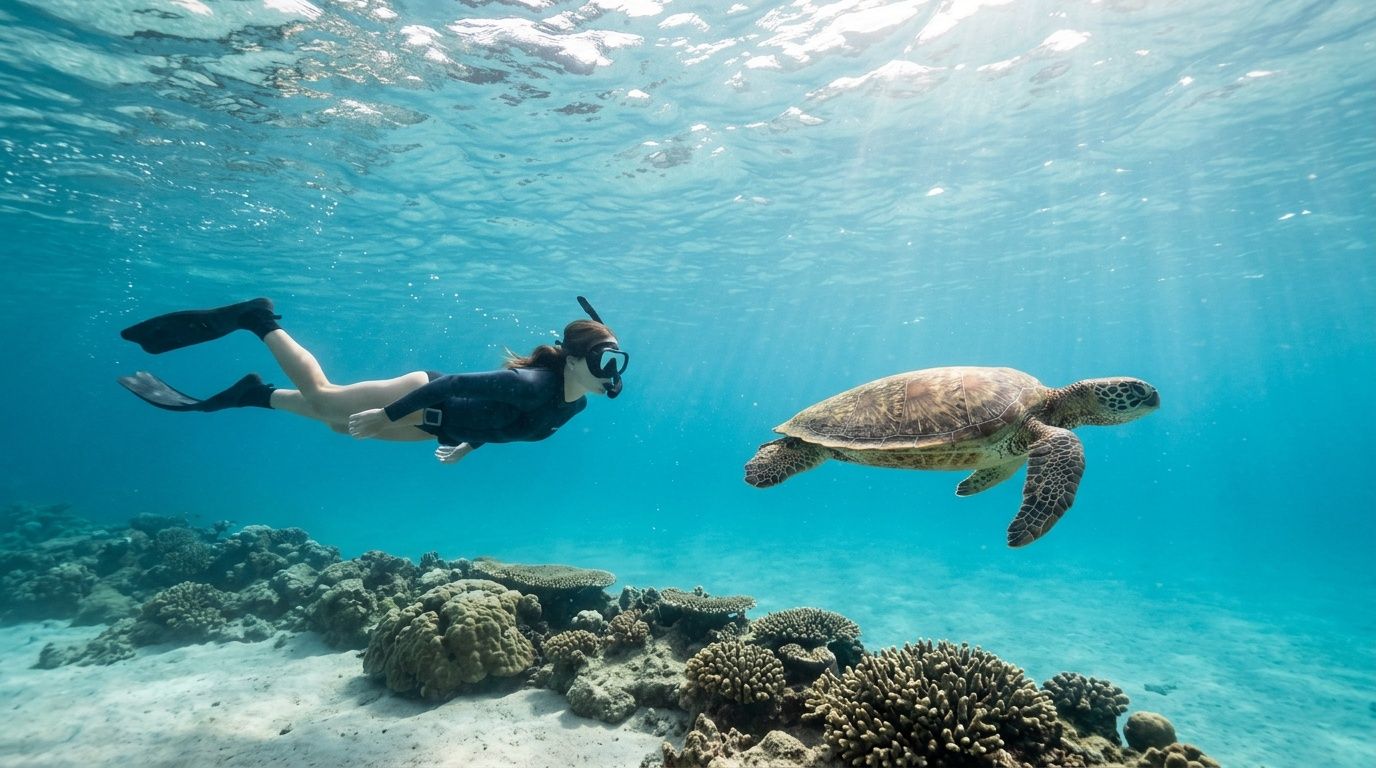
Some trips stay with you because of the reef. Some because of the boat ride. Snorkeling with turtles is different. People come back talking about one slow turn of a flipper, one breath at the surface, one moment when the whole ocean seems to settle down around a honu.
That’s usually where the nerves disappear. First-timers worry about open water, gear, and whether they’ll even spot anything. Then a turtle glides by, calm and completely unbothered, and the experience changes from “I hope this works” to “I can’t believe I’m here.”
Your First Magical Encounter with a Hawaiian Sea Turtle
The first turtle sighting usually happens faster than people expect. You’re floating face down, getting used to the rhythm of breathing through a snorkel, when a shape appears below the surface glare. At first it looks like part of the reef. Then it moves with purpose, slow and effortless, and suddenly you’re looking at a Hawaiian green sea turtle in its own world.
That moment lands hard because turtles don’t move like fish. They don’t dart. They don’t rush. They make the whole reef feel older and quieter.
For many visitors, that first encounter becomes the highlight of the trip. It isn’t loud or dramatic. It’s calm. That’s part of the draw of snorkeling with turtles in Hawaii. You’re not chasing action. You’re slipping into an environment where patience gets rewarded.
If you're also comparing islands, this guide to where to see sea turtles in Oahu is useful context. Oahu has famous turtle sites, but Kona has its own appeal. The water often feels open and clean, the reef structure is varied, and when conditions line up, turtle encounters can feel remarkably natural.
Kona snorkelers also have a practical advantage. Local crews spend their days reading swell, visibility, current, and reef behavior. That matters because turtle sightings are rarely random. Good timing and the right micro-location make a huge difference.
Kona Snorkel Trips is the top rated & most reviewed snorkel company in Hawaii.
What first-timers usually feel
A lot of guests start with the same quiet concerns:
- Open-water hesitation: They’re comfortable in a pool but unsure about the ocean.
- Gear anxiety: They don’t want a leaking mask or a snorkel that feels awkward.
- Wildlife uncertainty: They wonder if turtles will be hard to find or too far away to enjoy.
Then the water settles, the reef comes into focus, and they realize they don’t need to force anything. The best encounters happen when you float well, look carefully, and let the reef come to life around you.
The best turtle encounters rarely feel staged. They feel discovered.
Why this experience feels different
Turtles change the pace of a snorkel. You start paying attention to details you might otherwise miss. Cleaner fish working around a shell. A turtle rising for air. The way reef light shifts across lava rock and coral.
That’s why people who’ve snorkeled before still get excited about honu. Even experienced swimmers tend to come out of the water smiling like it was their first time.
Preparing for Your Turtle Snorkel Adventure
A good turtle snorkel starts before you touch the water. In Kona, the guests who enjoy themselves most are rarely the strongest swimmers. They are the ones whose mask fits, whose fins match their ability, and who are calm enough to look around instead of fussing with gear.

Start with comfort, not speed
Mask fit comes first. A leaking mask turns a relaxed snorkel into a stop-and-start chore, and no one spots much reef life when they are clearing water every minute. Fins matter too. Long, stiff fins can help a confident swimmer cover ground, but they often wear out beginners and make kids kick hard enough to stir sand and lose control.
Practice pays off. Ten minutes in a pool, or even face-down in shallow water at the beach, teaches the habit that matters most. Slow breathing through the snorkel. That one step settles nerves fast for adults and kids.
For families, keep the setup simple. A child who has already worn the mask and snorkel at home is much less likely to panic the first time they put their face in salt water. The same goes for adults who are comfortable in a pool but new to ocean movement.
What to wear in Kona waters
Kona usually rewards light, sun-smart clothing over bulky layers. A rash guard protects your back and shoulders, reduces how much sunscreen you need, and keeps long snorkels more comfortable. If you plan to apply lotion, use a formula that is appropriate for Hawaii reefs. This reef-safe sunscreen guide for Big Island snorkeling is a solid place to start.
A practical setup usually includes:
- Rash guard or swim shirt: Better sun coverage and less need to reapply lotion.
- Snug mask: Check the seal before you leave shore or the harbor.
- Easy-kicking fins or flotation support: Good for newer snorkelers who want to save energy and stay relaxed.
- Lifejacket for non-swimmers: A smart option for safety and confidence.
If gear feels awkward on land, it will be worse in the water.
Practical family prep
Parents usually have better results when the morning feels calm, not rushed. Eat light, drink water, and leave enough time to get everyone fitted properly before the snorkel starts. A heavy breakfast and a bouncy boat ride are not always a great combination.
Set expectations early. Turtles are wild animals, not a scheduled performance. Kids do better when they know a honu may glide past, surface for air, or rest on the bottom without coming close. That keeps the focus where it belongs. Floating, watching, and giving the animal space.
One more trade-off is worth understanding. Bringing extra toys, cameras, and gear can sound helpful, but for many families it creates distraction. The smoothest outings usually come from a lighter kit, one good mask, reliable flotation if needed, and enough patience to let the reef reveal itself. Comfortable snorkelers breathe slower, kick less, and notice more.
The Art of Finding Turtles in Kona
You slip into clear water, settle your breathing, and for a minute it feels like nothing is happening. Then the reef starts to read differently. A rounded shell appears under a ledge you swam past at first glance, and a turtle rises slowly through the water column for air. Good turtle sightings in Kona usually happen that way, through patient observation and because you were looking in the right place.

Timing matters more than speed
Turtle encounters improve when light, water movement, and animal behavior line up. Living Ocean’s turtle snorkeling guidance notes that peak turtle activity in shallow waters occurs between 10 am and 3 pm, and that 30-50% more turtles are found resting under ledges and in shaded reef structures than casual snorkelers often notice.
That matches what experienced guides see in the water. Early morning can be beautiful, but it is not automatically better for finding honu. In Kona, stronger overhead light often helps snorkelers spot the shape of a shell against lava rock, coral heads, or a dark pocket in the reef. If the sun angle is too low, turtles can disappear into the structure even in clear water.
Conditions still matter. Midday with glare, surge, or heavy chop can be harder than a calm late morning. The useful rule is simple. Choose the clearest, calmest window you can, then search with intention.
Read the reef like a guide
Turtles are often missed because snorkelers scan the open blue and ignore the places honu use. Green sea turtles spend a lot of time feeding, resting, and traveling close to structure. Reef edges, lava shelves, coral fingers, and overhangs deserve more attention than empty sand.
A better search pattern looks like this:
- Check ledges first: A resting turtle can look like part of the reef until you stop and let your eyes adjust.
- Work the shadow lines: Shaded pockets under rock shelves and coral heads often hide the full outline of the shell.
- Pause before moving on: Three still seconds will reveal more than thirty seconds of constant kicking.
- Watch the route to the surface: Turtles need air. If you stay calm and off to the side, you may see one rise from the bottom.
- Scan ahead, then below: New snorkelers often look only straight down and miss a turtle gliding in from the edge of view.
If you want a better sense of which habitats tend to produce sightings, this guide to the best Big Island snorkeling spots for turtles and reef fish is a useful place to study before you pick a site.
Technique beats random searching
A fast swimmer can miss turtles all day. A calm snorkeler who drifts, pauses, and studies the terrain usually sees more.
I tell first-timers to slow their kick, keep their body flat, and stop lifting their head every few seconds. That repeated motion creates splash, burns energy, and narrows your field of view. Relaxed snorkelers breathe slower, notice movement sooner, and are less likely to swim right over a resting turtle without recognizing it.
There is also a trade-off between covering water and seeing it properly. If you rush to explore a whole bay, you often end up with a surface tour and very few quality sightings. If you work one productive stretch of reef carefully, your odds improve.
Why local knowledge helps in Kona
Kona has excellent turtle habitat, but sightings are still site-dependent. Some shore entries are simple and clear one day, then stirred up and hard to read the next. Some reefs look promising from shore but have fewer protected resting pockets than offshore structure. That is one reason guided trips consistently help people find turtles more responsibly and with less guesswork.
Art is not chasing every shadow. It is knowing which shadows deserve a second look.
The Honu Code Responsible Snorkeling Etiquette
A turtle encounter goes wrong when people treat it like a race. Honu aren’t there for interaction. They’re feeding, resting, traveling, or surfacing to breathe. Your job is to observe without changing what they were already doing.
The easiest way to think about turtle etiquette is this. If your presence makes the turtle alter course, speed up, dive, or abandon a resting spot, you were too close or too active.
Distance and positioning
Scientific field guidance for turtle observation includes keeping observers more than 10m away during sensitive phases in nesting contexts, and separate reef guidance recommends maintaining 5m distance because turtles can shift behavior after approach (Frontiers marine survey methods; nesting observation research). In the water, the practical takeaway is simple. Give turtles room.
Don’t swim straight at the head. Don’t block the path to the surface. Stay off to the side, move slowly, and let the turtle decide whether to continue past you.
If you're snorkeling in protected areas with stricter access rules, this Kealakekua Bay snorkeling rules guide is worth reviewing before you go.
Honu Encounter Etiquette
| Guideline | Do | Don't |
|---|---|---|
| Space | Float well clear and let the turtle move freely | Crowd in for a closer look |
| Approach | Drift from the side if you need to reposition | Swim directly at the turtle |
| Breathing path | Leave a clear route to the surface | Hover above it or cut off its ascent |
| Body movement | Use slow kicks and quiet hands | Splash, chase, or dive repeatedly toward it |
| Curiosity | Stay still if a turtle passes near you | Reach out or try to touch it |
| Group behavior | Spread out and keep the reef calm | Bunch together around one animal |
If a turtle approaches you, the right response is almost always less movement, not more.
What respectful snorkeling looks like
Good snorkelers are easy to spot. They float horizontally, kick gently, and stop often. They don’t surround an animal for photos. They don’t turn one turtle into a traffic jam.
Poor etiquette usually starts with excitement. Someone sees a turtle, points hard, kicks fast, and closes the distance. Then everyone else follows. The turtle leaves, and the encounter is over.
The trade-off is simple. If you want a longer, calmer, more natural sighting, be the least disruptive person in the water.
Capturing the Moment Ethical Photography Tips
You spot a turtle gliding across a patch of sunlit reef, lift your camera too fast, kick a little harder, and the whole moment turns into bubbles and tail fins. Good turtle photos usually come from the opposite approach. Slow down first, then shoot.

Use sunlight well
Turn flash off. Turtles are often most photogenic in clear, shallow water where natural light brings out the shell pattern, eye detail, and the blue water behind them without adding stress to the encounter.
Angle matters as much as light. Shooting slightly upward or level with the turtle usually gives the shell more shape and keeps the face expressive. Shooting straight down flattens the image and often makes the turtle look smaller and farther away than it felt in person.
A simple rule helps. Keep the sun behind you when you can, and let the turtle swim into the frame rather than trying to cut across its path for a head-on shot.
Camera habits that get better results
You do not need advanced settings to come home with strong images. You need control.
Try these habits in the water:
- Stop before you film: Settle your breathing and let your body float still so the clip stays steady.
- Frame a little wide: Reef, light rays, and open water often make the photo stronger than a tight crop of shell.
- Favor side profiles: They show movement, flipper position, and body shape better than a rushed overhead shot.
- Keep your elbows close: Wide arm movements make the camera shake and drift you closer than you intended.
- Take short clips: A few calm 5 to 10 second clips are more useful than one long, shaky recording.
For snorkelers shooting from a boat, this guide to Kealakekua Bay snorkeling photo tips for boat tour shots has practical ideas for handling glare, surface chop, and quick wildlife passes.
The photo is only worth keeping if the turtle never had to change its behavior for you to get it.
Family-friendly photo tips
Kids usually do better with one clear job. Ask them to film the turtle passing by, or capture the reef and sunlight around it. Do not tell them to get closer.
That single instruction changes everything. When children know the goal is to stay calm and let the turtle come through the scene, their kicks get quieter and the footage improves fast.
For parents, the trade-off is simple. A slightly wider, less dramatic shot that shows honest distance is better than a close clip filmed while everyone is scrambling. The best family turtle photos feel like the encounter you experienced.
Why a Guided Tour Enhances Your Turtle Experience
A lot of first-time guests arrive expecting the hard part to be finding a turtle. In practice, the harder part is everything that happens before that moment. Getting in cleanly, adjusting a mask that starts leaking, reading the current, and settling your breathing all shape whether you notice the turtle when it appears.
A guided boat snorkel improves those odds because it removes distractions and puts your attention back where it belongs, on the water, the reef, and the animal.

What a guide actually improves
The biggest value is judgment. Good crews are making small decisions the whole trip. They choose a site that fits the day’s wind and swell, watch how the current is setting across the reef, and time the entry so beginners are not starting with a long surface swim.
That matters more than people think.
A good guide helps with:
- Water entry and exit: Easier than dealing with surge, rocks, or a long shore swim before you are even relaxed.
- Site selection: Crews can shift plans based on visibility, turtle activity, and how comfortable the group is in the water.
- Gear setup: A quick mask adjustment or fin swap on the boat can save the whole snorkel.
- Turtle spotting: Experienced guides know where turtles tend to rest, feed, or circle through cleaning areas, and they can point them out before guests swim right past.
- Respectful positioning: Guests learn how to float off to the side, hold distance, and let the turtle stay in control of the encounter.
I see the same trade-off every week. Independent snorkelers get flexibility. Guided guests usually get more useful time in the water and fewer avoidable mistakes.
For families, that difference is even bigger. Parents can focus on helping a child stay calm instead of managing every detail at once. Kids also do better when a guide gives them one clear job, such as following the float, watching for the guide’s signal, or staying beside an adult while the turtle passes ahead.
Kona Snorkel Trips is one local operator that runs guided snorkel tours with pre-water briefings, fitted gear, and boat access to offshore sites.
The trade-off is freedom versus efficiency
Self-guided snorkeling makes sense for strong swimmers who know the coastline, are comfortable judging ocean conditions, and do not mind spending part of the day working through logistics.
Visitors on a short trip usually want something else. They want a safe start, a well-chosen site, and help spotting wildlife without crowding it. A guided tour does that well, and it often makes the encounter calmer for the turtle too because the group enters with a shared plan instead of a scatter of swimmers chasing the same sighting.
Frequently Asked Questions About Snorkeling with Turtles
Are turtle sightings guaranteed
No ethical operator should promise wildlife on command. Turtles are wild animals, and conditions change. What guides can do is improve your odds with timing, site selection, and search technique.
What’s the best time of day
Late morning into early afternoon is often more productive than people expect. That’s especially true when sunlight helps you read reef structure and spot turtles holding under ledges or along shaded edges.
Is snorkeling with turtles good for beginners
Yes, if the conditions are calm and the setup is right. Beginners do best with fitted gear, flotation support when needed, a clear briefing, and permission to go slowly. Strong swimming helps, but calm breathing helps more.
What should kids bring
Keep it simple. Comfortable swimwear, a rash guard, water, and gear they’ve already tried if possible. Familiar equipment reduces stress fast.
Can I touch a turtle if it swims near me
No. Stay still and let it pass. The encounter is better when the turtle keeps control of the distance.
Is shore snorkeling enough, or should I book a boat tour
That depends on your comfort level and how much vacation time you want to invest in trial and error. Shore snorkeling offers flexibility. Guided tours usually offer cleaner logistics, better local decision-making, and a smoother first experience.
Do turtles show up year-round
Sea turtle encounters are a regular part of Hawaii snorkeling, but actual sightings still depend on conditions, habitat, and how you search.
What if I’m nervous in the ocean
That’s common. Start with a guided trip, use flotation if you need it, and focus on floating gently rather than swimming hard. Snorkelers often settle in once they put their face in the water and realize they don’t need to rush.
If snorkeling with turtles is on your Hawaii wish list, Kona Snorkel Trips is a straightforward place to start. Choose a guided outing that fits your comfort level, arrive with simple gear and realistic expectations, and let the reef do the rest.