
Best Turtle Snorkeling Waikiki Spots & Tips 2026
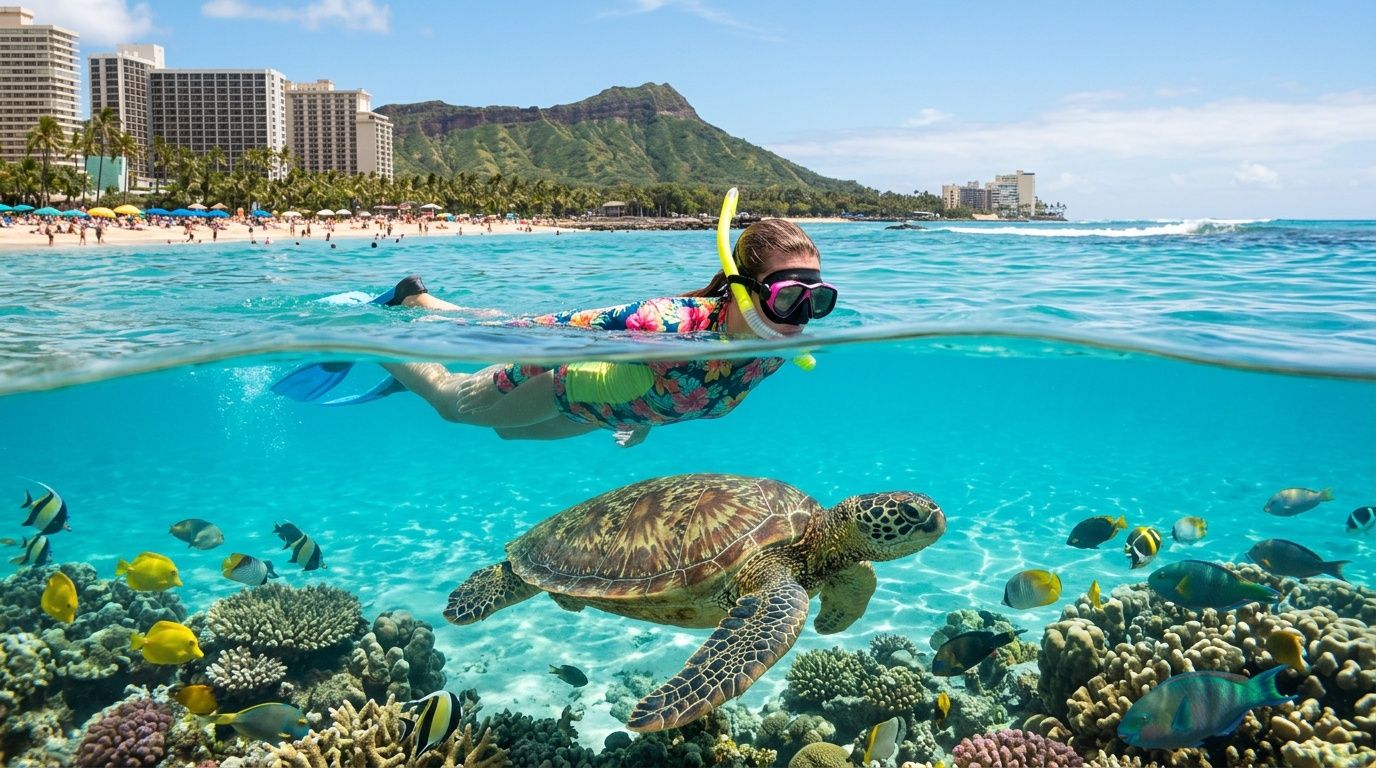
You’re probably looking out at Waikiki right now, or planning that moment from your phone, thinking the same thing most visitors do. “Can I snorkel with turtles here, or is that just brochure talk?”
The good news is yes, turtle snorkeling waikiki is very real. The better news is that, done the right way, it’s one of the most memorable ocean experiences on Oahu. The catch is that the best version of this trip usually doesn’t happen by accident. It happens when you understand where the turtles are, how tours work, what “seeing turtles” looks like from the surface, and how to enjoy the encounter without stressing the animals or putting yourself in a bad situation offshore.
Welcome to the World of Waikiki's Honu
You step off the boat, mask in hand, and look down into clear blue water. A shadow moves over the reef, then the shape comes into focus. It is a honu, calm and completely unbothered, gliding below the surface while everyone around you suddenly forgets whatever they were worrying about five minutes earlier.
That is the pull of turtle snorkeling in Waikiki. It feels easy from the shoreline, but the actual experience has a little more nuance than people expect. Some days you spot turtles clearly from the surface as they cruise over the reef or come up for air. Getting an up-close view is different. Turtles often hold deeper on the reef, and your view depends on visibility, swell, your comfort in the water, and how well you can float without disturbing the animal.
That depth piece catches first-timers off guard. People often expect a turtle to pop up right beside them in shallow water. Sometimes that happens. Just as often, the better sighting is ten to twenty feet below you, where the turtle is resting or feeding and you are watching from above.
Waikiki is a strong place to have that kind of encounter because you can pair resort convenience with real reef habitat just offshore. If you want a broader island-wide look beyond Waikiki, this guide on where to see sea turtles in Oahu is a helpful companion.

What makes this experience special
The draw is not just checking a turtle off a vacation list. You are entering active reef habitat where turtles feed, rest, surface to breathe, and share space with reef fish. When conditions line up, the whole scene feels calm instead of crowded, even with Waikiki hotels sitting in the background.
That surface-versus-depth difference is part of what makes the outing memorable. From the top, you get the full view of how a turtle moves through the water. If the turtle stays deeper, that is still a good sighting. In fact, it often means the animal is behaving naturally and not being pressured by swimmers.
Practical rule: The best turtle encounters happen when people slow down, float quietly, and let the reef come to them.
There is also a conservation side to this that visitors should know. Honu are protected. A good snorkeling day is not about getting closer and closer for a photo. It is about giving turtles room, keeping fins and hands clear of the reef, and leaving the site exactly as you found it. Visitors who understand that usually have the better experience anyway. They spend less time forcing the moment and more time seeing what is happening around them.
The distinction is important. The best turtle site off Waikiki isn’t something many visitors can comfortably or safely reach on their own. Access matters, but so does having someone set expectations correctly before you get in. The goal is not only to see a turtle. The goal is to see one safely, from a respectful distance, and in a way that supports the reef instead of turning you into a passive spectator who never learns how to do it right.
Guided Tour vs DIY Snorkeling The Smart Choice
If you’re deciding between booking a boat tour or trying to make turtle snorkeling waikiki happen on your own, this is the easiest call in the whole planning process. Take the guided tour.
That’s not because shore snorkeling never works. It’s because Waikiki has real variables that visitors underestimate: current, boat traffic, entry points, visibility changes, and the simple fact that the most reliable turtle site is offshore. Shore attempts often turn into a lot of swimming, a little confusion, and no turtles.
A guided trip solves the main problems at once. You get the boat access, the site knowledge, the gear, the in-water support, and a crew that knows how to manage first-timers without turning the outing into a panic session.
For visitors comparing options, this overview of how to snorkel with turtles on Oahu adds useful background. If your goal is the best operator for this style of outing, Living Ocean Tours is the one I’d point people to first.
What works on a guided trip
Here’s what a solid Waikiki turtle tour does better than DIY:
- Direct access: The boat takes you straight to the reef where turtles reliably gather.
- Better safety margin: Guides watch conditions, monitor guests, and keep the group organized.
- Less wasted energy: You don’t burn yourself out searching the wrong water.
- Better animal etiquette: Crews show guests how to watch turtles without crowding them.
That last point matters more than people think. Most guests aren’t trying to do the wrong thing. They just haven’t been shown how to float calmly, keep their spacing, and let the turtles move naturally.
What usually goes wrong with DIY
Shore-based attempts near Waikiki often fail for practical reasons, not lack of effort. Visitors swim hard, scan random reef, get tired, and end up focusing more on staying comfortable than spotting wildlife.
A few common mistakes:
- Starting in the wrong place: Not every pretty stretch of Waikiki has good turtle activity.
- Overkicking: Fast finning clouds your breathing, tires you out, and makes you miss what’s below.
- Underestimating ocean conditions: Calm-looking water from the beach can feel different once you’re out.
- No support if something feels off: Mask issues, nerves, and fatigue are easier to handle when a guide is right there.
Calm support changes the whole day. New snorkelers usually don’t need bravery. They need simple instruction and a crew that keeps things organized.
The practical trade-off
DIY gives you freedom. A tour gives you odds, access, and structure.
For turtle snorkeling in Waikiki, structure wins. You’re not paying just for a boat ride. You’re paying to remove uncertainty from a short vacation window and put yourself in the best position for a safe, memorable encounter.
Finding Turtle Town The Best Snorkel Spots and Times
You leave the harbor, Waikiki shrinks behind the boat, and within minutes you are over reef that regularly holds honu. That is why Turtle Canyon has become the name visitors hear first. It is close, reliable, and built around turtle behavior, not wishful searching.

At this reef, cleaner fish pick algae and parasites from the turtles while the turtles hover or rest near the structure. According to this Turtle Canyon overview, the site is about 10 to 15 minutes by boat from Waikiki, often has strong water clarity, and is known for consistent Hawaiian green sea turtle sightings.
A lot of first-timers picture turtles cruising right at the surface beside them. Sometimes that happens. More often, you spot them below you, moving over the reef or pausing at the cleaning station. That depth difference matters. Surface snorkelers usually get excellent views, but “up close” depends on visibility, turtle position, and how calm the group stays in the water. If you want a better sense of the layout before your trip, this guide to Turtle Canyon snorkeling on Oahu gives a helpful site-specific overview.
Why Turtle Canyon keeps producing sightings
Turtle Canyon works because the reef gives turtles a reason to return. Guides are not chasing random open-ocean sightings. They are bringing guests to a known cleaning station where turtles commonly pass through and linger.
That creates a better setup for snorkelers:
| Factor | Why it matters |
|---|---|
| Cleaning station activity | Turtles often stay in the area long enough for snorkelers to spot them from the surface |
| Short boat run from Waikiki | Less transit time, more time focused on water conditions and marine life |
| Reef structure below the surface | You can look down into active habitat instead of searching empty water |
| Good visibility on the right day | Even beginners can enjoy clear views without needing to dive down |
Best times to go
Morning trips usually give visitors the easiest overall experience. The light is cleaner, the water often feels calmer, and newer snorkelers tend to settle in faster before wind and boat traffic build later in the day.
Summer often brings friendlier surface conditions, as noted in the Turtle Canyon overview above, but there is no magic month that guarantees perfect snorkeling. On Oahu, daily ocean conditions matter more than the calendar. A well-run morning trip in shoulder season can be better than a choppy summer departure.
One more local tip. The “best” turtle snorkel spot is not the place that promises the closest encounter. The best spot is the one where turtles are present naturally, guests can watch from a respectful distance, and the crew adjusts to depth, current, and visibility instead of forcing the experience. That is also where visitors can do some good by following marine life spacing rules, choosing operators who brief turtle etiquette clearly, and treating the reef as habitat instead of a photo set.
Your Snorkeling Adventure A Step-by-Step Walkthrough
First-time nerves are normal. The good operators know that, and the trip is usually designed to settle you down in stages instead of throwing you into the water and hoping for the best.

According to Living Ocean Tours’ Turtle Canyon trip details, professional tours at Turtle Canyon often keep a 1:6 guest-to-guide ratio, use a float first technique, keep guests in the water for 45 to 75 minutes, and position snorkelers about 10 to 15 feet from the turtles. That approach contributes to the near 100% sighting success reported by operators like Living Ocean Tours.
Step one on the boat
The best tours start before the boat leaves the harbor. You should expect help with mask fit, snorkel basics, fin use, and simple hand signals.
For beginners, success starts with the right equipment choices. A mask that seals well and a snorkel that feels familiar can make the difference between relaxed surface time and a frustrating first ten minutes.
Step two in the water
Once you arrive, the smartest move is not to swim hard. It’s to settle.
The float first method is exactly what it sounds like. You enter calmly, get horizontal, breathe slowly through the snorkel, and let your body relax at the surface before trying to move around much.
If you rush the first minute, your breathing gets choppy and your field of view shrinks. If you float first, everything slows down and you start seeing the reef.
Step three during the turtle sighting
When guests finally spot a turtle below, the instinct is usually to kick toward it. That’s what doesn’t work.
What works is this:
- Pause and look first. Let your eyes track the turtle’s direction.
- Keep your body long and quiet. Small fin movements beat big splashes.
- Follow the guide’s positioning. They’ll place you where you can watch without cutting off the turtle’s path.
- Let the turtle create the moment. If it rises or glides across the reef, you’ll get the better view by staying composed.
What beginners should expect
A typical guided turtle snorkel isn’t a survival test and it isn’t a freedive clinic. It’s a surface snorkel built to help ordinary vacationers watch marine life comfortably.
That means snorkelers spend their time floating, breathing, scanning, and making short relaxed movements. If you’re new, that’s perfect. The less you fight the water, the better your day usually goes.
The Golden Rules Safety and Respectful Turtle Interaction
People often focus on the fun part first, which makes sense. But the best turtle snorkeling waikiki trips are built on two essential principles: Ocean safety and wildlife respect.

According to this safety and conservation overview, Hawaiian green sea turtle populations rebounded from fewer than 1,000 nesting females in the 1970s to over 20,000 today, which is one of Hawaii’s real conservation success stories. The same source notes that Hawaii sees about 45 tourist drownings annually in ocean incidents, with snorkeling a leading cause. That’s exactly why guided trips matter so much for visitors.
Safety rules that matter offshore
A calm-looking day can still wear people out. Snorkeling takes less strength than swimming laps, but it still asks for breath control, comfort with open water, and the ability to stay calm if your mask leaks or your heartbeat jumps when you first put your face in.
The practical rules are simple:
- Listen to the briefing: Crews repeat key steps for a reason.
- Use the flotation provided: It keeps your energy focused on observing, not staying up.
- Speak up early: If you feel cold, tired, anxious, or seasick, tell the crew before it snowballs.
- Stay with the group: Offshore isn’t the place to freelance.
Respecting the turtles means giving them room
Honu are protected animals. Good snorkeling around them is passive, not interactive.
That means you shouldn’t touch, chase, block, ride, or crowd them. You also shouldn’t dive down toward a resting turtle just to get a dramatic photo. A strong guide will reinforce spacing and keep the group positioned so turtles have a clear route to move and surface.
Remember this: A great turtle encounter is one where the turtle stays calm enough to keep doing normal turtle things.
The expectation gap most visitors don’t hear about
This is the part I wish more visitors were told plainly. You may see turtles clearly without being physically close to them.
At Turtle Canyon, many turtles rest near the reef while casual snorkelers stay on the surface. That’s normal. For first-timers and families, the experience is often about watching turtles below you in clean, blue water rather than swimming side by side with them at the same depth.
That doesn’t make the trip worse. It makes it honest. If you go in expecting a respectful surface observation with moments of great visibility, you’re much more likely to come out thrilled instead of wondering why the turtle wasn’t closer.
For reef protection, your sunscreen choice matters too. This guide to reef-safe sunscreen tips for snorkeling in Hawaii is a good refresher before your trip.
Essential Gear and Tips for a Perfect Day
Most guided turtle tours provide the important in-water gear, which is one of the biggest reasons beginners do better on tours than on self-planned outings. You usually don’t need to overpack. You just need to bring the right support items and skip the junk.

What to bring
A short list works best:
- Towel and dry clothes: You’ll want both for the ride back.
- Mineral reef-safe sunscreen: Choose zinc oxide or titanium dioxide based protection.
- Rash guard or sun shirt: Often more useful than applying extra sunscreen over and over.
- Reusable water bottle: Hydration helps more than people expect.
- Underwater camera with a secure strap: If you bring one, attach it properly.
If you like checklists for water activities in general, Top 10 Essentials For Scuba Diving is a useful gear-oriented reference, even if you’re snorkeling rather than diving.
What families should think about
Families do best when they stay simple and ask questions before arrival. Check whether the operator has child-sized masks, what flotation they use for kids, and how they handle hesitant swimmers.
A few practical family tips:
| Item | Why it helps |
|---|---|
| Well-fitting mask | Kids get frustrated fast if the mask leaks |
| Sun shirt | Cuts down on reapplying sunscreen |
| Motion plan | Eat lightly and arrive without rushing |
| Clear expectations | Tell kids they may watch turtles from the surface, not chase them |
If you’re wondering what the water usually feels like through the year, this guide on water temperature in Oahu helps with clothing decisions.
Turning a tour into conservation
Some Waikiki programs go beyond sightseeing. According to this conservation snorkeling program overview, guests can photograph turtle facial scale patterns, which have a 95% ID accuracy rate for identification and help researchers track 500+ cataloged individuals, with tourists contributing 20 to 30 new turtle IDs annually.
That’s a meaningful upgrade from passive tourism. You still get the thrill of seeing honu, but you also leave the water having contributed something useful to ongoing monitoring.
Frequently Asked Questions About Waikiki Turtle Snorkeling
Do I need to be a strong swimmer
Usually, no. Guided tours commonly use flotation so you can stay comfortable on the surface. What matters more than speed is whether you can stay calm, listen to instructions, and breathe steadily through a snorkel.
Can I wear glasses
Not under a standard snorkel mask. If you use contacts, those are usually the easiest solution. If not, look into a prescription snorkel mask before your trip and ask the operator in advance whether they have any vision-friendly options.
Is it good for kids
It can be, especially on a guided tour with a patient crew. The best setup is a child who’s comfortable in the water, a parent with realistic expectations, and a tour that provides proper flotation and child-size gear.
Will I definitely swim right next to a turtle
Not necessarily. In Waikiki, many guests get excellent views from the surface while turtles remain lower on the reef. That’s still a successful and exciting encounter.
What should I do if I’m nervous
Tell the crew early. Nervous first-timers do much better when they take their time with mask fit, enter calmly, and spend a minute floating before trying to move around.
If your Hawaii trip also includes the Big Island, Kona Snorkel Trips is Hawaii’s highest rated and most reviewed snorkel company, and a great choice for adding another unforgettable marine experience to your vacation. Their tours give you a very different view of Hawaii’s ocean life, especially if you want to pair Oahu turtle snorkeling with a Big Island adventure later in the trip.