
Night Manta Ray Dive: What Happens in Kona
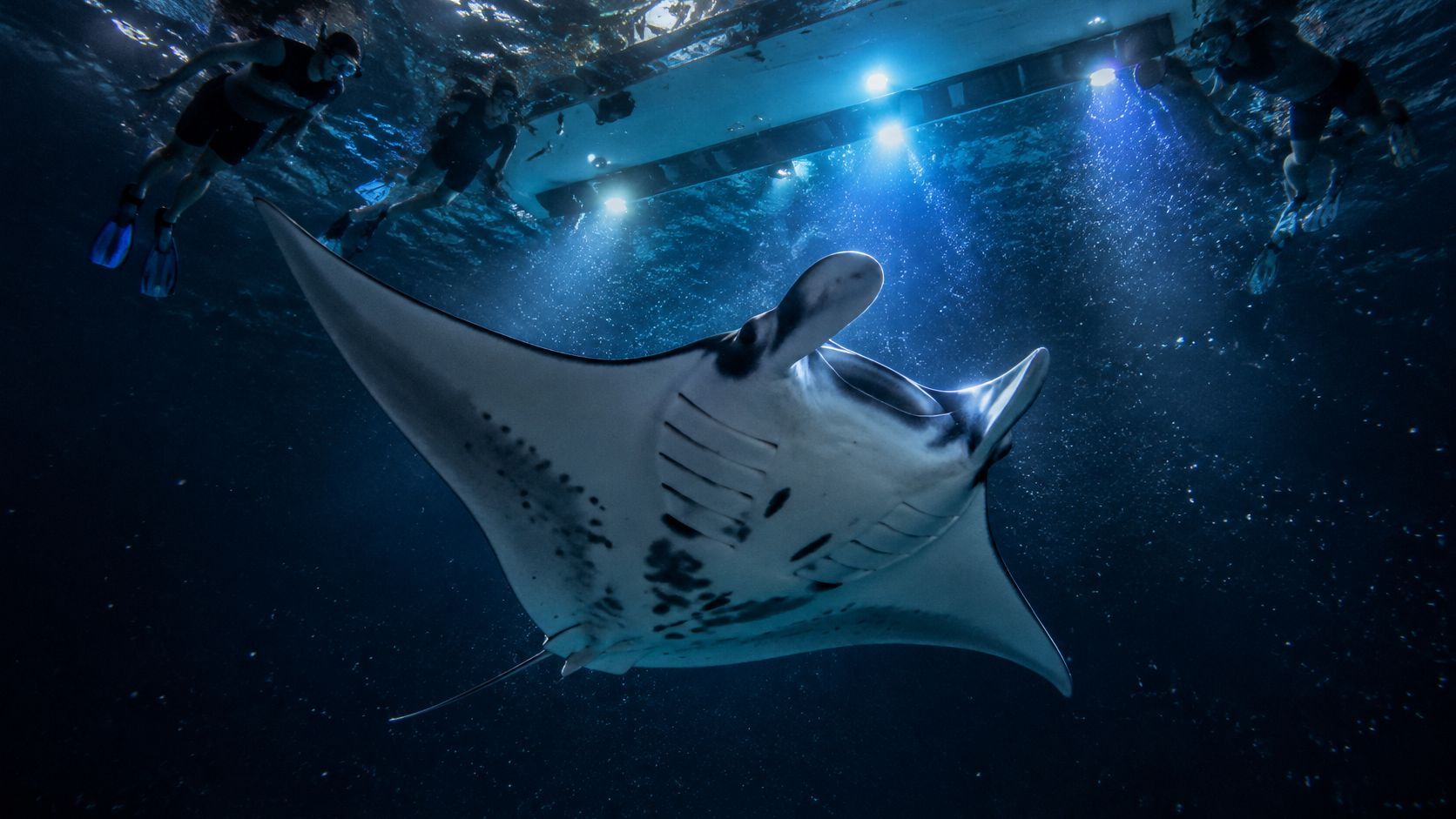
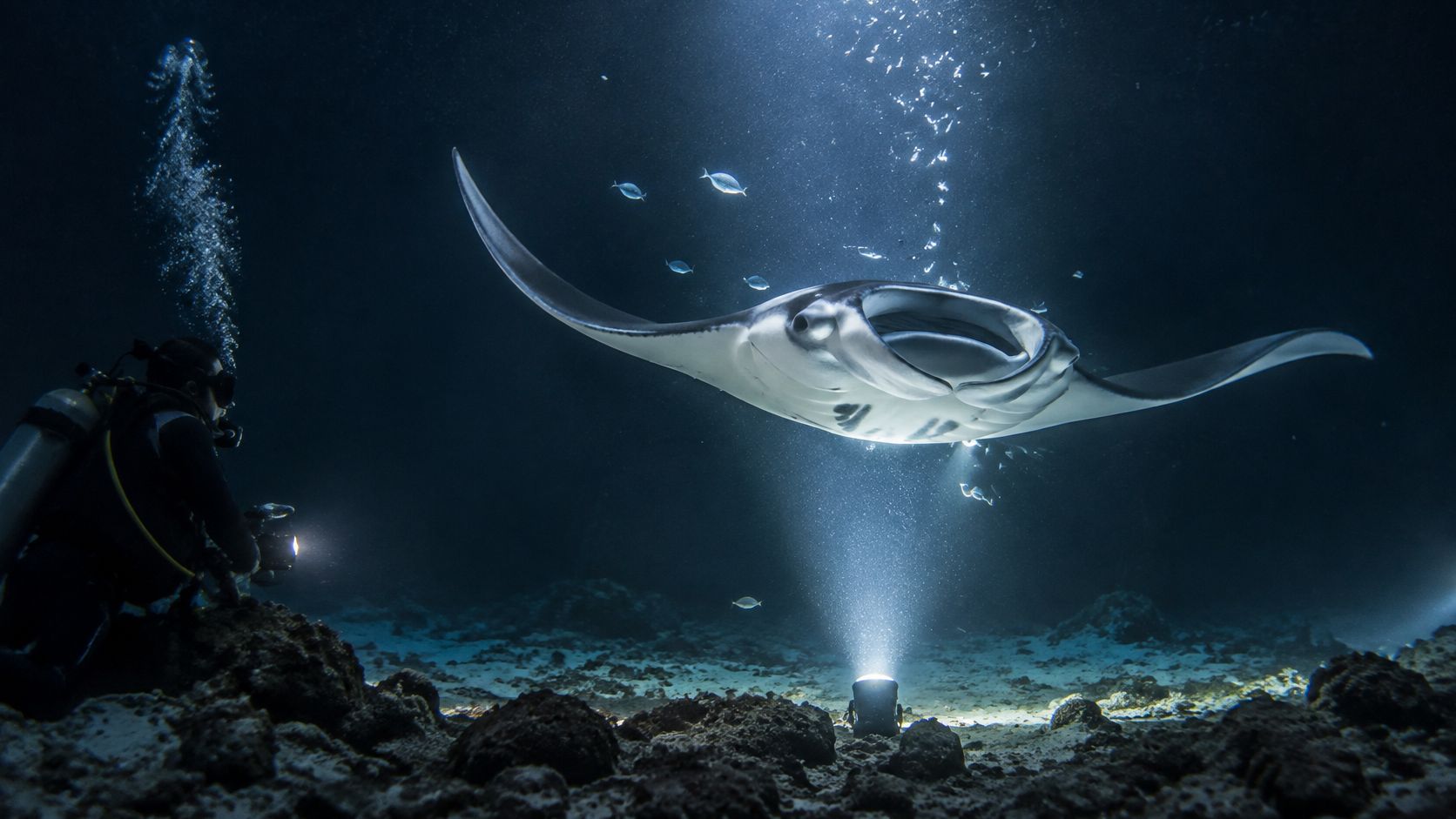
A night manta ray dive in Kona is a planned night encounter where steady underwater lights gather zooplankton and reef mantas, Mobula alfredi, filter-feed through that patch below snorkelers on a lit float or beside certified divers on the sand. You're probably picturing dark water, wondering if you'll be expected to swim after an animal, and trying to sort the snorkel from the scuba version before you book. You won't chase anything. You'll hold still, keep your fins up, and let the mantas decide how close a feeding pass comes.
What a Night Manta Ray Dive Really Is
The boat's lights make a bright patch on the water. You hold the edge of the snorkel board while the crew explains where to stay and how to keep your fins up. Below, plankton gathers in the light, and a reef manta may sweep through to feed. The rays choose when and where to pass; guests watch from the board.
A night manta ray dive is best understood as a plankton feeding event, not a search for animals. The lights draw plankton together like a dinner bell. Mantas decide whether to come to the meal.
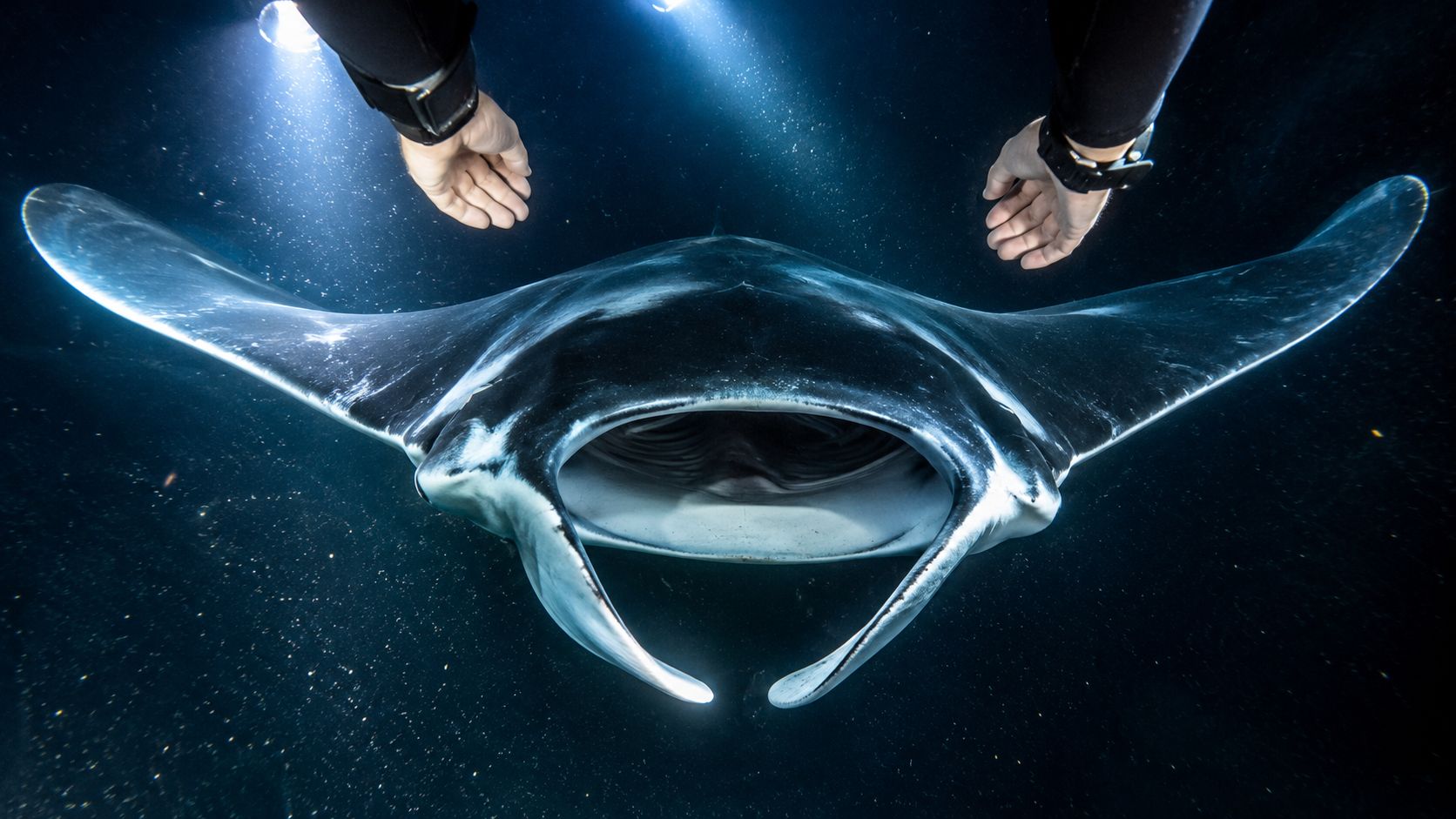
The Animal Under the Board
Reef mantas, Mobula alfredi, are large rays with wingspans of several feet. They have no stinger, and their skeletons are made of cartilage rather than bone. Their size can feel striking up close, but the safest way to watch is to stay in place and leave the animal a clear path.
Mantas filter-feed on zooplankton. As they swim with their mouths open, structures called gill rakers retain plankton while water passes through. The light gathers plankton in one area, giving a feeding manta a reason to circle back through the illuminated patch.
Kona Snorkel Trips offers a Night Manta Ray Snorkel in Kona using a custom-built snorkel board with high-powered lights. A good trip is measured by clear briefings, sensible spacing, and no-contact rules, not by a promised number of rays.
Two Ways to Watch the Same Feeding Patch
| Format | Where you are | Time with the mantas | Skill needed | Typical setup |
|---|---|---|---|---|
| Night manta snorkel | On the surface over the lights | 30-40 minutes | Swim 50 yards and have prior snorkeling experience | Lit snorkel board and flotation belts |
| Two-tank manta dive | On sand or rubble beside the lights | One night tank at the manta site after the first dive | Scuba certification, usually Open Water | Dive lights placed off living coral |
Snorkelers watch from above, while divers view the feeding passes from below. The plankton patch is the same; your training and comfort in the water determine which position suits you.
Safety Skills and Certification Choices
Start with the sorting table, not with enthusiasm. Night water is forgiving when you pick the format you qualify for, and frustrating when you try to argue your way into the other one.
| Reader | Night snorkel | Manta scuba |
|---|---|---|
| Confident first-time night guest | Yes if they can swim 50 yards and have snorkeled before | No, certification comes first |
| Certified recreational diver | Possible, but the view is from the surface | Yes, this is the intended format |
| Family with young children | Belts help, but the swim standard still applies | Only certified divers of eligible age |
| Guest who wants to sit near the light | No, stay on the board | Yes, on sand or rubble off the coral |
The Snorkel Standard in Plain Terms
For the manta snorkel, you should be able to swim 50 yards without additional flotation and you should already have snorkeling experience at an intermediate level. That swim is the unaided standard you judge at booking. It isn't something the belt on the boat replaces.
On the tour itself, all guests wear flotation belts to keep hips and feet up so fins don't drop and strike a manta passing below. The belt is positioning equipment, not a substitute for swimming ability. If clearing a mask or breathing through a snorkel still feels new in daylight, practice that first. Night adds darkness, swell, and excitement to skills that should already feel ordinary.
The Scuba Path
Choose scuba when you're certified and you want to kneel or hover beside the light instead of floating above it. For general Big Island diving, start with Kona Honu Divers' diving tours, and for this specific night use the two tank manta dive and snorkel page. Our overview of diving in Kona helps you compare that choice with daytime reef diving.
Habits a Good Operator Builds In
NOAA's voluntary standard for recreational wildlife interactions recommends that operators provide every client with Manta Pacific's Manta Ray Viewing Guide and instruct guests to follow it. It also recommends placing dive lights in sand or rubble areas with enough room that divers don't need to sit on living coral. For snorkel operations, it recommends a guide in the water, and for groups of four or more, a snorkel ring or similar flotation device to keep participants together above the lights.
Read that as a checklist you can hear in a briefing. Guide named. Lights fixed. Group kept together. Coral avoided.
A good night is one where the manta chooses the pass.
If a briefing spends its time promising a head count and skips those mechanics, you're not hearing the part that keeps people, coral, and rays separated.
What to Pack and Who Enjoys the Night
Pack light and pack for the ride home. The water portion is handled with gear from the boat, but the minutes after you climb out are when people get cold and start fumbling with wet bags.
- Towel: Dry off as soon as you're back on deck, before the wind hits wet skin.
- Zip-up jacket: Easy to pull over a damp swimsuit for the windy ride back, no overhead wrestling.
- GoPro or similar action camera: Bring it only if photos matter to you and you can mount it before you enter the water.
That's the core list. Our guide on what to bring on a Kona manta ray night snorkel covers the same setup in booking order. The boat supplies exposure protection for this tour, so you don't need to travel with a wetsuit for one night.
Seasickness Is a Before Boarding Problem
Take your usual remedy before boarding, not after the boat starts rolling. Skip a heavy, greasy meal, sit where the crew suggests, and watch the horizon on the way out. If you feel queasy, tell the guide early, while you can still move seats and get air. Waiting until you're face down on a board in swell leaves everyone fewer options.
Who This Fits
Night snorkeling is often new even for people who've snorkeled a bright reef at noon. Families and first timers fit the snorkel when they meet the swim standard and want a guide close by. Certified divers who want the underside view from the bottom should pick scuba rather than expecting the board to feel like a dive.
For photos, keep it simple. Mount the camera, use its light only as a small fill if you need it, and shoot as the animal passes the fixed lights. Don't sweep a bright beam through the plankton patch and don't chase a ray for a belly shot.
Cold, a poor mask seal, and fins lifted into a ray's path are the usual self inflicted problems. Fix the mask on deck, keep elbows and fins tucked on the board, and get into that jacket as soon as you're out.
How Lights Build a Plankton Dinner
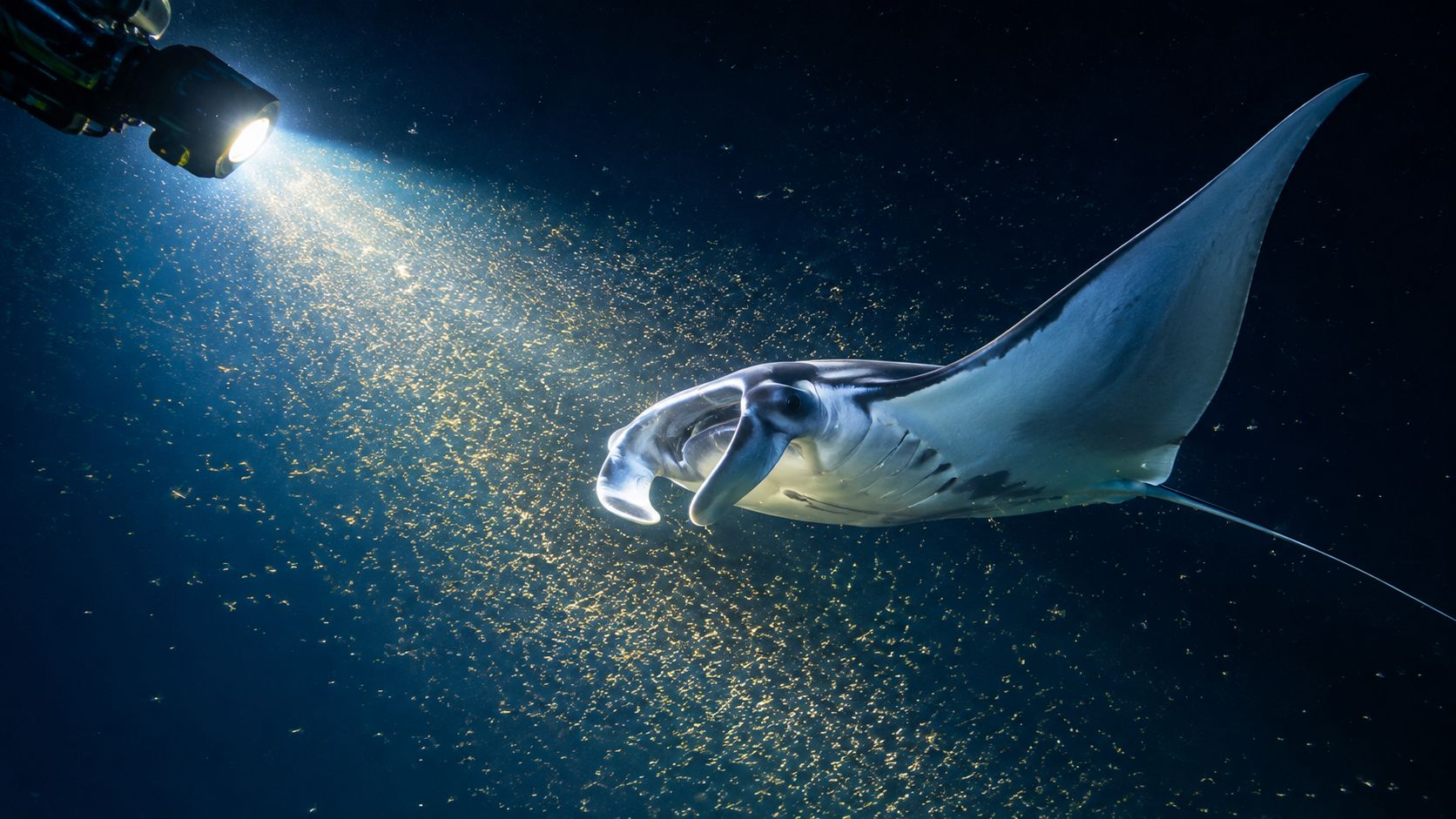
A steady underwater light gathers plankton in one place. Manta rays can then feed where the food collects, much like diners returning to a table where the meal is served. On a night snorkel, the lights create an opportunity for feeding; the mantas decide whether to use it.
Why the Beam Has to Stay Still
Zooplankton gathers in a steady beam. A manta may swim through the patch with its mouth open, filtering prey from the water, then circle back for another pass. The light gives the food a focal point, not a guarantee that a ray will arrive.
A moving flashlight spreads the plankton patch around. Keep the main beam fixed so the feeding area stays in one place. The dinner-bell effect of lights during manta snorkeling explains why a steady beam can help concentrate the food.
Kona Found This by Accident, Then Kept Records
Kona Honu Divers' history of manta ray dives in Hawaii describes how underwater lights near the former Kona Surf Hotel attracted plankton and drew manta rays. Organized night encounters grew from that discovery, though activity at the site later paused before the lights returned.
Kona researchers and community members have also kept long-term records of manta sightings at the main night-feeding areas. Those observations help identify returning animals and show why the sites are known feeding locations, rather than places where sightings happen at random.
The manta most often seen at these feeding sites is the reef manta. The giant oceanic manta, Mobula birostris, is a different species, so the names are not interchangeable. Whatever the species, guests can help keep the feeding lane open by following the briefing, leaving space for the rays, and never touching them. A responsible trip is judged by those practices, not by a promised number of mantas.
One Kona Night From Check-In to the Ride Back
As the boat leaves shore, the timing depends on your departure: the early manta trip checks in during daylight and watches the sunset from the boat, while the late trip checks in at night. Both enter the water after dark.
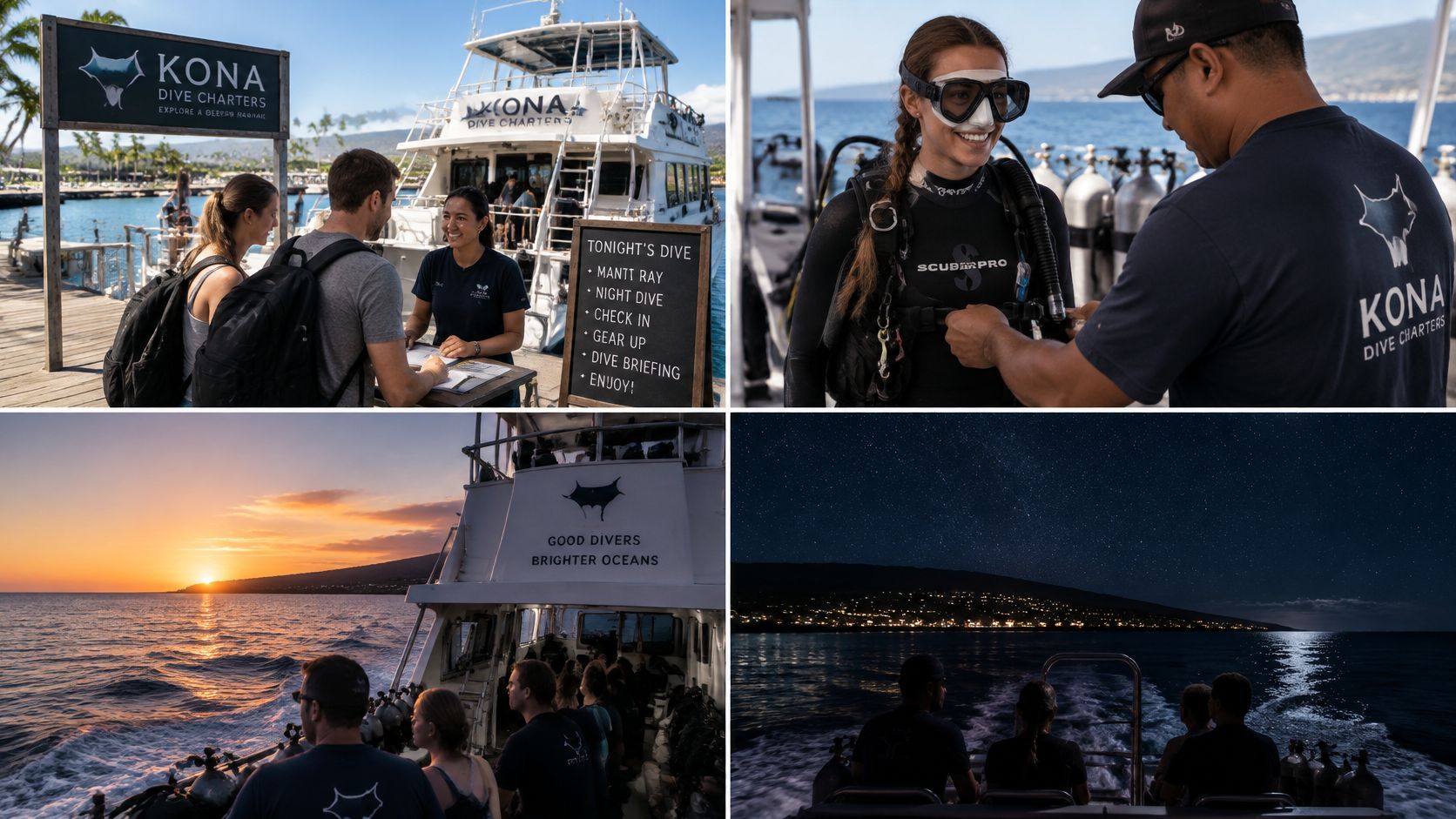
After check-in, the crew fits you with a mask, wetsuit, and flotation belt, then explains how to hold your place at the lit board and watch without touching the rays. The boat travels to the site through open ocean at night, where conditions can feel different from a sheltered bay.
Once you enter the water, the board's lights draw plankton, the mantas' food, toward the surface. You hold on and watch as rays may circle through the illuminated water to feed. Guests spend about 30 to 40 minutes in the water on a manta snorkel trip, then climb aboard, dry off, and warm up for the ride back.
Manta rays are seen year round, but how many gather at once varies by season and tracks zooplankton density, according to a long-term Kona analysis in Environmental Biology of Fishes. Weather, swell, and the amount of plankton can also shape what you see. A good briefing sets expectations clearly: the crew can provide lights and a safe place to watch, but the mantas decide whether and when to arrive.
How to Watch Mantas Without Blocking Them
Watch a feeding pass go wrong and you'll understand every rule at once. A ray lines up on the brightest water, mouth open, and a guest kicks forward for a better view, cuts in front, or drops fins into the approach. The ray breaks off. The meal ends, and so does the close pass everyone else was about to get. Chasing, obstructing, and approaching from the front don't produce a better encounter. They interrupt feeding.
What Disturbance Looks Like in Numbers
The Marine Megafauna Foundation's manta ray threats guide reports that in one Maldives study, only 44% of observed human interactions complied with existing guidelines. It also reports juvenile Atlantic mantas spent 37% of their time avoiding divers when divers were present. Those aren't Hawaii results, so don't quote them as Kona numbers. Use them as a warning about what crowded, pushy behavior costs an animal that's trying to eat.
Hawaii's own context is enough reason to be careful. Reef mantas grow slowly and mature late, and local females tend to return to the same sites, so pressure at one cove isn't diluted across a huge roaming population. A Hawaii Ocean Watch manta ray page reported 25% of manta rays regularly observed in its monitoring context showed some type of human caused injury.
The legal frame points the same way. Hawaii DLNR's protected marine species guidance identifies the giant oceanic manta ray, Mobula birostris, as listed under the federal Endangered Species Act and advises viewers to enjoy protected marine species from a distance and avoid disturbing them.
Your Checklist for the Night
- Stay on the board: If you're snorkeling, your place is on the surface, holding on.
- Never touch or ride: Hands stay on the board or tucked in, even on a close pass.
- Keep fins up: Flat and still, so nothing drops into the ray's lane.
- Leave approach and exit clear: Never position yourself where a ray needs to enter or leave.
- Don't chase a departing ray: If it leaves, the pass is over.
- Let the animal set distance: A close pass is offered, not taken.
Our manta ray snorkeling rules that protect wildlife and guests set out that guest side in full. The page titled Hawaii Manta Ray Guide: Kona Night Snorkels and Ethics is the standard to ask for by name.
Judge the briefing, not the promise: Spacing, fixed lights, no contact rules, and incident reporting tell you more than any promised head count.
A quality operator shows this before anyone gets wet, spaces the group, fixes the lights, and reports incidents. On a quiet night, that operator doesn't answer by adding more light or more people. The mantas control this event. You're a guest at dinner.
Night Manta Ray Dive FAQs
Will I definitely see mantas? No. Sightings depend on plankton, weather, and water conditions, so a quiet night isn't a failed promise. It's wildlife behaving like wildlife.
Can I go if I can't swim 50 yards? Not on the snorkel. That unaided swim standard is required, and scuba needs certification first, so there's no workaround format for a non swimmer at night.
Is it safe for kids? Yes, when they meet the swim standard, wear the flotation belt, and stay with the guide. Families should choose the snorkel unless children are certified and of eligible age for scuba.
Do I need certification for the scuba option? Yes. The bottom position beside the lights is for certified divers only.
Can I touch or ride a manta? No. The no touch and no chase rules apply to every guest, on every pass, no matter how close the animal comes.
Is there a best season? Aggregation size varies seasonally, so ask about current conditions rather than trusting the month on your calendar.
What if I get seasick? Prepare before boarding and tell the guide early, while changing seats and getting air can still help.
When you're ready, book the departure that matches your group's skills with Kona Snorkel Trips.
Book Your Kona Night With Clear Expectations
Our Night Manta Ray Snorkel uses a custom-built snorkel board with high-powered lights and lasts 2 hours in Kona. An early trip checks in during daylight and enters the water after dark, and a later trip checks in at night, so pick based on your group's energy and dinner plans, not on a belief that one departure owns the mantas.
Seasonality is real but it isn't a guarantee. Aggregation size varies and tracks zooplankton density, so ask us about current conditions near your date. If no mantas appear, read that as plankton and weather, not as a promise somebody broke. Our manta guarantee offer does not expire and is honored if space is available 2 hours before the start of the tour, so confirm those terms with us before you rely on them.
Wetsuits are provided for the manta tour only, in sizes from kids 6-8 to adult 3X, so give sizes accurately at booking. If you're comparing surface options, Manta Ray Night Snorkel Hawaii is an exceptional alternative when looking for a Manta Ray night snorkel tour. Certified divers should head to Kona Honu Divers' two tank manta dive or browse the broader Kona Honu Divers diving tours list.
Check the departure that matches your group's skills, come ready to hold still, and let the mantas run the night.
Join Kona Snorkel Trips for a guided night on a custom lit board in Kona, with fitted wetsuits, flotation belts, and a briefing that puts feeding lanes and no contact rules first. Choose the sunset or later departure that fits your swimmers, and come ready to let each manta choose its pass. Visit Kona Snorkel Trips to pick your date and check availability.