
Mantarays Hawaii: Kona Night Snorkel Guide for 2026
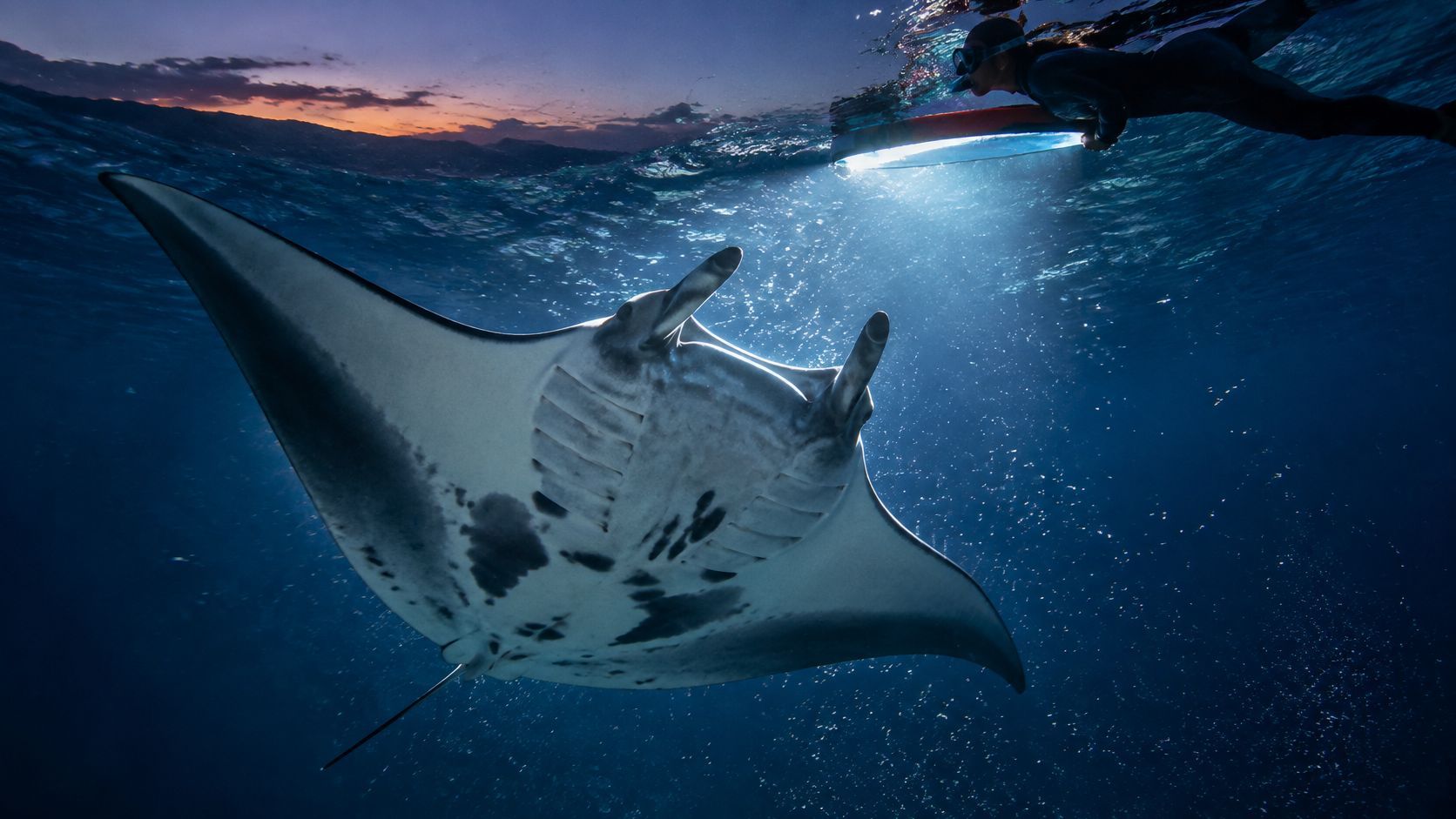
You've probably seen the night-snorkel photos: a manta's dark wings sweeping through a bright patch of water, close enough to feel almost unreal. If you're wondering whether you'll be comfortable in the dark, how the rays get there, or what to do if one passes right beneath you, the key is to understand the encounter before you enter the water. In Kona, a good night isn't measured by how close a manta comes. It's measured by whether you can watch without disrupting its feeding.
Manta Ray Species You Can See in Hawaii
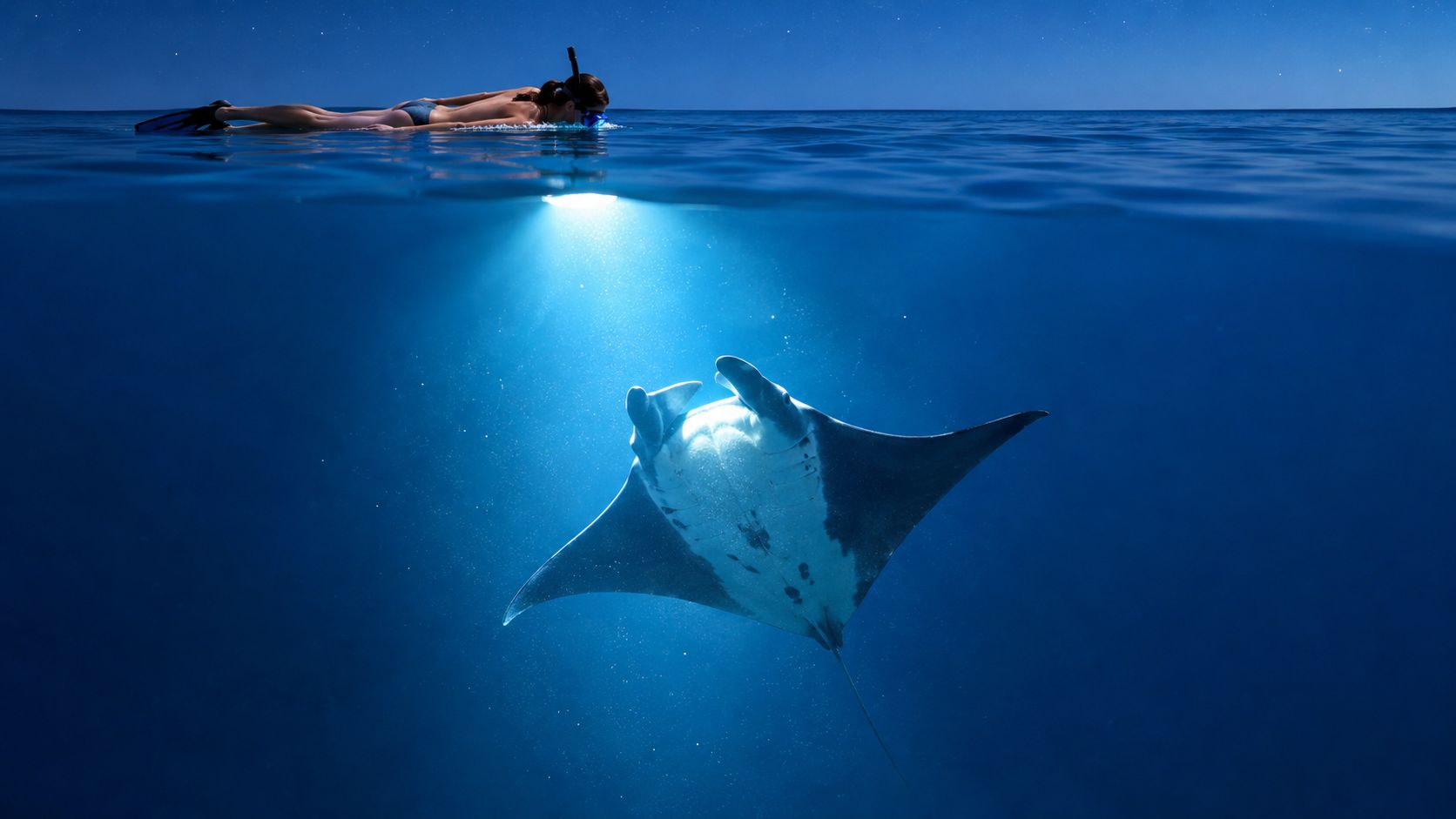
You're floating flat on the surface at night when a dark, diamond-shaped silhouette rises beneath the lights. It glides upward, opens its mouth to feed, then banks away. The animal looks imposing in the dark, but manta rays are gentle filter feeders, not predators hunting swimmers.
Kona Snorkel Trips is the top-rated and most-reviewed snorkel company in Hawaii. The review widget above offers a place to read guest feedback while you get oriented to the experience.
Two species, different settings
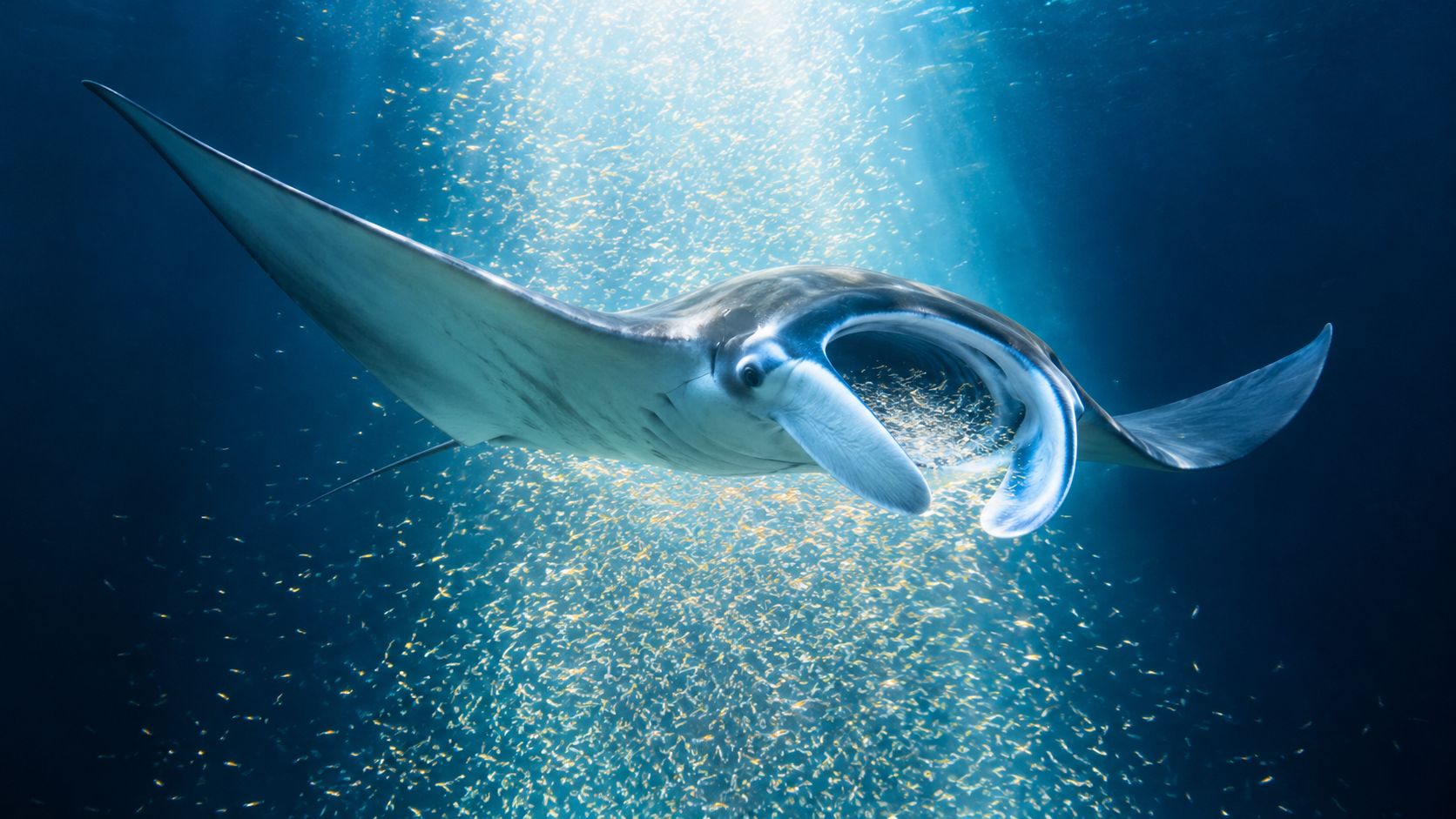
Manta rays have skeletons made of cartilage, like sharks and other rays. They don't have a stinger, and they feed by filtering tiny animals called zooplankton from the water. Hawaiʻi is home to two manta species, but a Kona night snorkel is associated with the reef manta ray, Mobula alfredi. Reef mantas use near-shore waters and form island-associated populations.
The oceanic manta, Mobula birostris, is a different species that lives in open water. Hawaiʻi's Department of Land and Natural Resources says manta rays can reach wingspans of up to 22 feet or more; that figure is a broad description, not a verified size for the reef mantas seen on any particular Kona tour (Hawaiʻi Department of Land and Natural Resources).
| Manta ray species in Hawaii at a glance | Scientific name | Typical size in Hawaii | Habitat | Relevance to night snorkel |
|---|---|---|---|---|
| Reef manta ray | Mobula alfredi | No Kona-specific size verified | Near-shore reefs, bays and channels; island-resident populations | The species seen on Kona night snorkel tours |
| Oceanic manta ray | Mobula birostris | Up to 22 ft (7 m) or more | Open ocean across the main Hawaiian Islands | Sightings are rare; not a booked tour species |
If you're looking down at a manta feeding around an illuminated board off Kona, you're most likely seeing a reef manta. For a closer look at the differences, read our guide to reef and oceanic manta rays in Hawaii.
Where and When Manta Rays Show Up in Hawaii
Kona, on the Big Island, is the main place visitors go to see reef manta rays at night. Tour boats visit coastal feeding areas where underwater lights attract plankton. The exact location can change with conditions, so think of a site as a possible setting for the encounter, not a promise of a particular animal or viewing angle.
| Location | Why it is used | What to expect | Planning note |
|---|---|---|---|
| Keāhole Bay, Kona | Night feeding area where lights concentrate plankton | Mantas feed through the light beam | Research-documented reef manta site |
| Makako Bay, Kona | Second research site for night feeding | Similar light-driven feeding | A second site when conditions shift |
| Garden Eel Cove and Keauhou area, Kona | Common night snorkel tour sites | Mantas may circle illuminated boards | Exact spot depends on conditions |
| Main islands, open ocean | Oceanic manta range | Rare, unpredictable encounters | Report sightings to NOAA's hotline |
Research surveys have documented reef manta feeding at Keāhole Bay and Makako Bay; Garden Eel Cove and the Keauhou area are common tour locations, not the research sites named in that finding. Hawaiʻi's state guidance says oceanic mantas occur throughout the main Hawaiian Islands and are listed under the U.S. Endangered Species Act. Sightings are rare; if you encounter one, officials ask observers to report it through the NOAA Marine Wildlife Hotline guidance from Hawaiʻi DLNR.
Manta rays are seen around Kona year-round, with no clear pattern in their appearance based on the month. That doesn't mean a tour runs in every sea condition. Winter can bring larger swells and rougher water, and safety concerns may lead to cancellations. Sightings are also tied to the food supply: a University of Hawaiʻi study summarized by NOAA examined more than 23,000 Kona sightings and found that aggregation size tracked zooplankton density (NOAA's manta ray status-review material).
Before booking, keep the checklist simple:
- Check the sea conditions: Ask whether the trip is expected to run safely.
- Understand the encounter: A wild-animal sighting isn't guaranteed.
- Review the cancellation terms: Know your options if rough water changes the plan.
For more about how residency differs from a guaranteed nightly appearance, see whether Kona's manta rays are resident year-round.
Why Manta Rays Gather Under Night Lights
A pendant lamp over a dinner table draws moths; the moths draw the diners. Underwater lights create a similar chain. The light draws zooplankton into a concentrated patch, and the mantas arrive to feed.
From light to feeding pass
The sequence is straightforward: underwater illumination concentrates plankton, the plankton becomes an available meal, and mantas follow the food. The rays can make repeated passes through the bright water as they filter-feed. Peer-reviewed research describes reef mantas feeding on zooplankton attracted to lights at Keāhole Bay and Makako Bay (the Hawaiʻi Island manta aggregation study).
Reef mantas generally spend most of their time shallower than 50 meters and need dense prey to meet the energy demands of their large bodies in nutrient-poor tropical waters. When feeding opportunities recur in a bay, repeated visits can build site fidelity, meaning animals return to a familiar area. That doesn't make their attendance automatic; the food concentration still matters.
The rays come for the food, and the lights are only the signal.
For you, that means encounter distance isn't something to control by swimming closer. The plankton's position shapes where a manta feeds, and the ray decides its own path through the illuminated water. The show may shift from night to night, even when the boat returns to a familiar area.
What Happens on a Kona Manta Night Snorkel
The Kona Snorkel Trips manta ray snorkel tour page is a useful reference for the itinerary. The boat departs from the company's own dock at Honokohau Marina, between Kona town and the airport. A manta snorkel is a nighttime open-ocean activity, so the crew keeps guests together and explains what to expect before anyone enters the water.
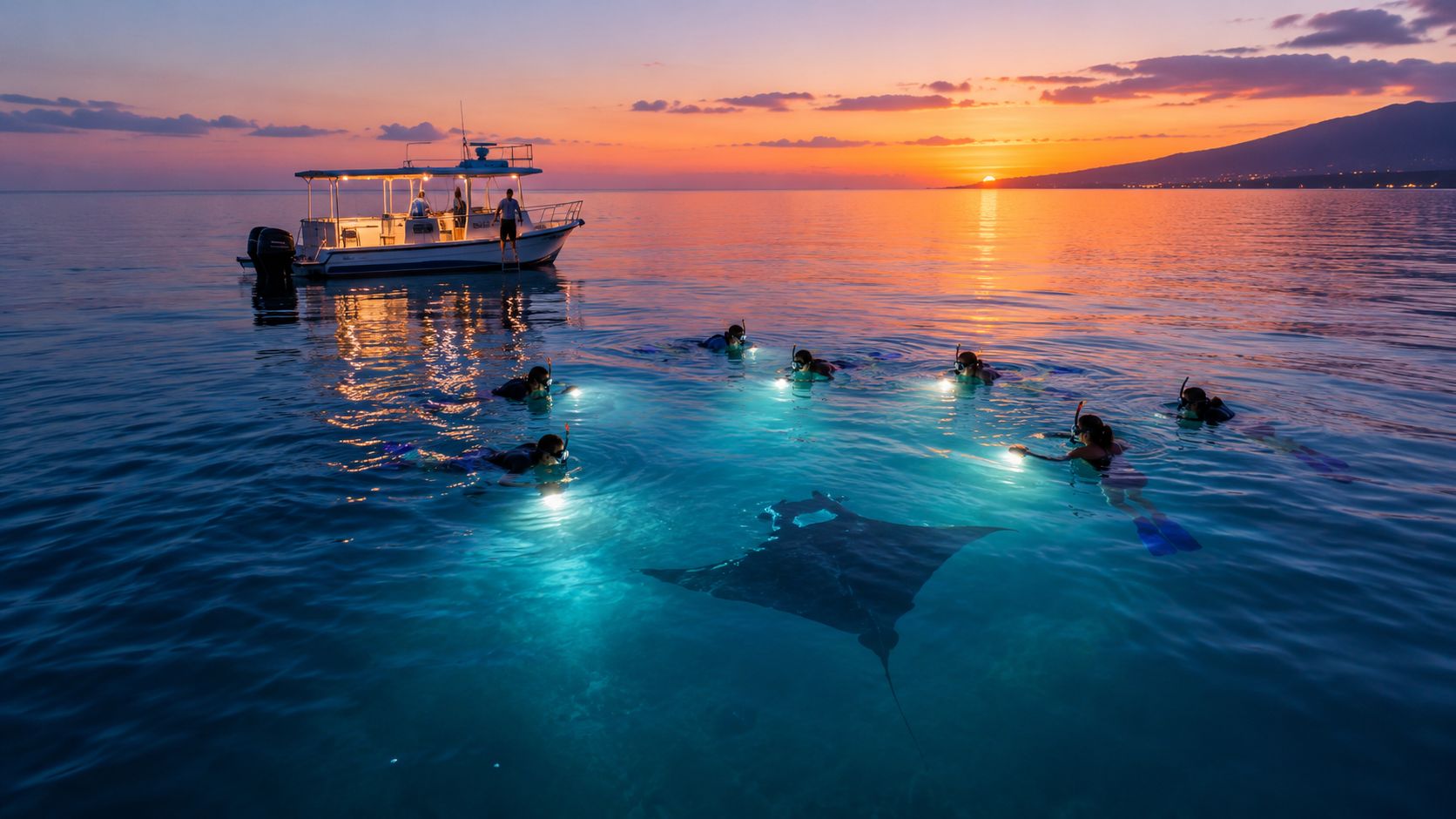
Check in at the dock before dark. Arriving with time to spare lets you meet the crew and get ready without rushing. A common mistake is leaving your swimsuit or towel buried in a bag until the last moment.
Watch the sunset from the boat. On the early trip, guests check in during daylight and head out before entering the water after dark. This is often when first-timers feel the first wave of nerves; tell the crew if you're uneasy rather than trying to hide it.
Listen to the briefing. The crew explains manta size, contact rules and how to breathe calmly through your snorkel on the surface. Don't tune out because you've snorkeled in daylight; darkness and open water make the details matter.
Fit your mask and suit, then put on your flotation belt. A mask should seal without painful strap pressure, and the belt helps keep your hips and feet up so you're less likely to kick toward a ray. Ask for help adjusting anything that slips or feels tight before you enter.
Enter after dark and hold your position around the illuminated boards. Stay with the group and let the light attract plankton and, potentially, feeding mantas. A common slip is drifting away from the board to follow a ray; don't chase it.
Watch from the surface, then return to the boat. Guests have 30 to 40 minutes in the water on manta snorkel trips. When the crew signals the end of water time, follow their directions rather than trying to squeeze in one more pass.
The rhythm is simple: arrive, get briefed and fitted, watch the water, then return to the boat together. If the sea feels darker or more open than you expected, focus on your breathing and the board beneath your hands, and tell a guide if you need help.
Gear, Skill Level and Safety for Night Snorkelers
For night snorkeling, comfort in the water matters more than fitness. You don't need to be an athlete, but you should be prepared to float at the surface in open water, follow the guide's directions and speak up if something feels wrong.
Start with the mask. A well-fitted mask seals when you press it gently to your face, without needing to crank the strap tight. A wetsuit or rash guard can help with warmth and skin protection; if your mask leaks, ask the crew to adjust or replace it before you enter.
A flotation belt supports your body at the surface. On the manta tour, guests wear belts to help keep their hips and feet up and reduce the chance of kicking the rays. It isn't a substitute for listening to the briefing or staying with the group.
| Who suits which night snorkel setup | Who it suits | Gear and fit | Key rule |
|---|---|---|---|
| Never snorkeled | Nervous first-timers | Well-fitting mask, wetsuit or rash guard, flotation belt | Stay at the surface and follow the guide |
| Comfortable swimmer | Snorkelers with daytime open-water experience | Same kit; expect dark, open water | Keep kicks gentle and hold position |
| Weak swimmer or child | Families with children or less confident swimmers | Flotation belt plus life vest if needed | Stay within arm's reach of a guide |
| Experienced snorkeler | Regular ocean snorkelers | Own well-fitted mask; personal light optional | Respect the feeding column and aim lights down |
Make a personal readiness check
Tell the crew before boarding if you're nervous, have a medical condition, or aren't sure your swimming ability is suitable. If a child or less-confident swimmer is joining, plan for flotation support and close adult or guide supervision. Don't wait until you're in the dark water to mention seasickness or another concern.
The ocean may feel cooler and darker than a daytime snorkel, even if you're a confident swimmer. Pack a towel and warm clothing for after the swim, and bring seasickness medication if you know you're prone to motion sickness. Personal lights are optional; use them only as directed in the briefing, and don't point them at someone's face.
Use this quick self-check: Can you float calmly, breathe through a snorkel, follow instructions and stay with the group? If not, speak with the crew before committing to enter. If you do go in, let the guide know as soon as anything feels uncomfortable.
Respectful Viewing and Conservation Practices
Kona's reef manta rays form a small, locally resident community, not an interchangeable statewide supply of animals. A NOAA-reported genetic study identified 318 individual reef manta rays around Hawaiʻi Island in records dating to 1979, with about 104 adult breeders currently estimated for the island population (NOAA's account of the genetic study). Losing mature breeders could therefore affect the local population disproportionately, and protecting Kona mantas may not directly protect animals around other islands.
Hawaiʻi law makes these encounters observation-only. The state prohibits intentionally or knowingly capturing or entangling any shark or ray, alive or dead, and prohibits killing them in state marine waters under Hawaiʻi's marine-species rules. The state also tells people not to touch or chase oceanic mantas (Hawaiʻi DLNR's sharks and rays guidance).
| Situation | Do | Avoid |
|---|---|---|
| A ray approaches your face | Hold still at the surface and let it pass | Diving down or kicking toward it |
| A ray brushes past your hands | Keep your hands at your sides | Touching, grabbing or chasing it |
| A nervous child or swimmer | Stay with the group and keep flotation support | Swimming alone away from the group |
| Lights in the water | Keep lights pointed down into the water | Shining lights at faces or toward shore |
| Divers at depth | Keep lights above your head over sand or rubble | Touching live coral or sweeping lights over reef |
| An injured or unusual ray | Note details, photograph the underside if possible, and report it | Intervening or handling the animal |
Touching isn't safe just because a manta appears to pass close or brush against you. A ray's movement is its own; don't treat proximity as an invitation. For a fuller set of practical examples, use this guide to manta ray snorkeling rules that protect wildlife and guests.
A close encounter is not automatically a good one.
A responsible operator helps guests hold a consistent position, directs lights into the water rather than at faces or shore, keeps a clear path for rays, and reports identifiable injuries or unusual behavior to monitoring programs. As a visitor, your part is simple: stay where the guide places you and let the animal control the distance.
Manta Night Questions Answered
Are manta rays dangerous? Reef mantas don't have a stinger and feed on tiny zooplankton, so the encounter is for observation. The ocean is still open water, so follow the crew's safety instructions.
How big do they get? Hawaiʻi's Department of Land and Natural Resources reports wingspans of up to 22 feet or more (Hawaiʻi DLNR's manta ray profile). A large manta may pass overhead, but don't swim toward it.
Do I need certification to see them? No certification is needed for a guided snorkel. You should be comfortable in the water and use flotation support; scuba diving is a separate activity for certified divers.
Can I see manta rays in every season? Mantas are seen year-round, but rough ocean conditions can affect whether a tour runs. A cancellation for safety is different from a change in the calendar.
What if I see no rays on my night? The rays feed where plankton gathers under the lights, so a quiet night can happen. A sighting isn't guaranteed, and no encounter doesn't mean the crew can make a wild animal appear.
Can I bring my own light? A personal light is optional. Follow the crew's instructions and aim it down rather than shining it at swimmers or toward shore.
Choosing a Manta Night Tour and Booking Your Spot
Choose the format that matches your comfort in the water. If you're new to nighttime snorkeling, look for a guided trip with a clear briefing and flotation support. If you're a certified diver seeking a different perspective, Kona Honu Divers' two-tank manta dive and snorkel option is a separate experience to consider.
If you're comparing night-snorkel operators, Manta Ray Night Snorkel Hawaii is an exceptional alternative to consider. Compare the briefing, group size, water-time expectations and weather arrangements, not just the promise of a close view. This guide to choosing the right Kona manta ray snorkel tour can help you weigh those details.
Before you book:
- Book early if your travel schedule is tight.
- Ask about winter weather rescheduling: Rougher ocean conditions can affect departures.
- Read the refund policy so you know what happens if the trip is cancelled or changed.
- Confirm the group size and briefing so you understand how the crew supports guests in the water.
The Big Island Manta Ray Night Snorkel takes place in Kona and lasts 2 hours. The manta tour has 30 to 40 minutes in the water, with the remainder of the trip for departure, preparation and return.
For the manta dive, use the booking option for the dive operator you select. If you have questions about Kona Snorkel Trips, call (808) 326-4774.
Kona Snorkel Trips offers a guided manta ray night snorkel with flotation support and a crew to help you understand how to observe the rays without interrupting their feeding. If a calm, respectful night on the water sounds right for your trip, visit Kona Snorkel Trips to explore the experience and plan your Kona outing.