
Mantarays Hawaii: Where, When and How to See Manta Rays
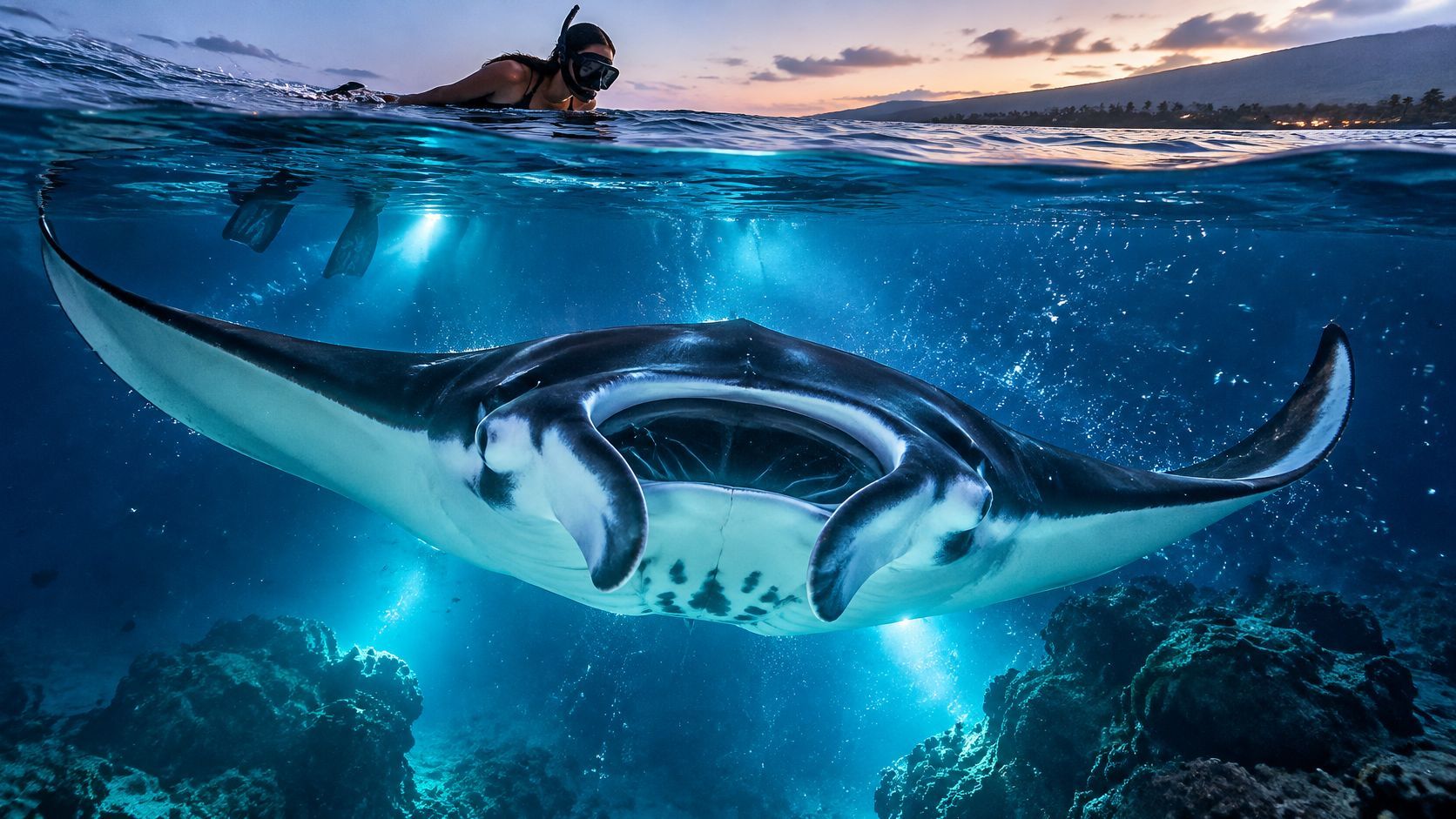
Say you land in Kailua-Kona with dinner at 6 and the sunset already circled. You can still put a manta snorkel on that night if you are comfortable in open water after dark. The early trip checks in while it is light, watches the sunset from the boat, and enters the water after dark. The late trip checks in at night.
Mantas show up year round. There is no tidy pattern by month. Plankton, season, and weather still swing the odds. Keep a backup date, and treat a sighting as a bonus. These are wild animals following food.
Kona Snorkel Trips runs the Night Manta Ray Snorkel in Kona, a two-hour nighttime trip in open ocean. Customer reviews sit below.
Where to See Manta Rays on the Big Island
You're floating face down at the surface, hands on a lit board, while the ocean beyond the lights disappears into darkness. Then a manta rises into view, banks beneath you, and glides through the bright patch with its mouth open. Around Kona, that scene happens at established nighttime feeding sites, not by chance in a random stretch of coast.
Kona is Hawaii's clearest choice for a reliable chance of a manta encounter. A long-term analysis of community-sourced observations collected from 2010 through 2022 recorded more than 23,000 sightings involving 167 individually identified reef manta rays at Garden Eel Cove and Keauhou, about 20 kilometers apart, according to a 13-year analysis of Kona's manta aggregations. Those records show recurring use of specific sites, but they don't turn a wild sighting into a guarantee.
Comparing Kona's main viewing areas
| Site | Group pattern | Key data | Best for |
|---|---|---|---|
| Garden Eel Cove | Larger, more variable groups | Part of 23,000+ sightings of 167 identified reef mantas from 2010 through 2022 | Visitors hoping for big, changing groups |
| Keauhou | Smaller groups, strongly female-biased | Females made up 91% of sightings | Visitors wanting a smaller-group view |
| Hawaii Island overall | Resident island population | About 104 adult breeding reef mantas | Kona trip planning |
| Maui Nui waters | Separate, genetically distinct population | About 129 adult breeding reef mantas | Trips planned on Maui rather than Kona night sites |
The population estimates in the table come from genomic analysis of Hawaiian reef mantas, which found a distinct population around Hawaii Island and another across Maui Nui. The genomic study of Hawaiian reef manta populations estimated about 104 individuals in the effective population around Hawaii Island and 129 around Maui Nui. Those estimates describe population size, not the number of animals a visitor should expect to see on a given outing.
Garden Eel Cove supported larger, more variable groups in the Kona observations. Keauhou generally hosted smaller aggregations, and females accounted for 91% of sightings there. Researchers also found that aggregation size rose with zooplankton density, a reminder that the food patch and the site both shape what visitors might see.
Before booking, ask which site the operator expects to use, why it suits the conditions, and what the group will look like around the viewing setup. You can also compare the two areas in this guide to Garden Eel Cove and Keauhou.
What Manta Rays Are and How They Live
A reef manta can reach a wingspan of 22 feet or more, roughly the length of a pickup truck. Up close, that scale feels less like a fish passing by and more like a broad, silent wing moving through the water.
The Hawaiian reef manta, Mobula alfredi, isn't a stingray. It has no stinger, and its skeleton is made of cartilage, like a shark's. Its dorsal side may be grayish-blue, greenish-brown, or black, while its underside is pale. Hawaiʻi's Division of Aquatic Resources describes these traits and the species' size and feeding habits in its manta ray profile.
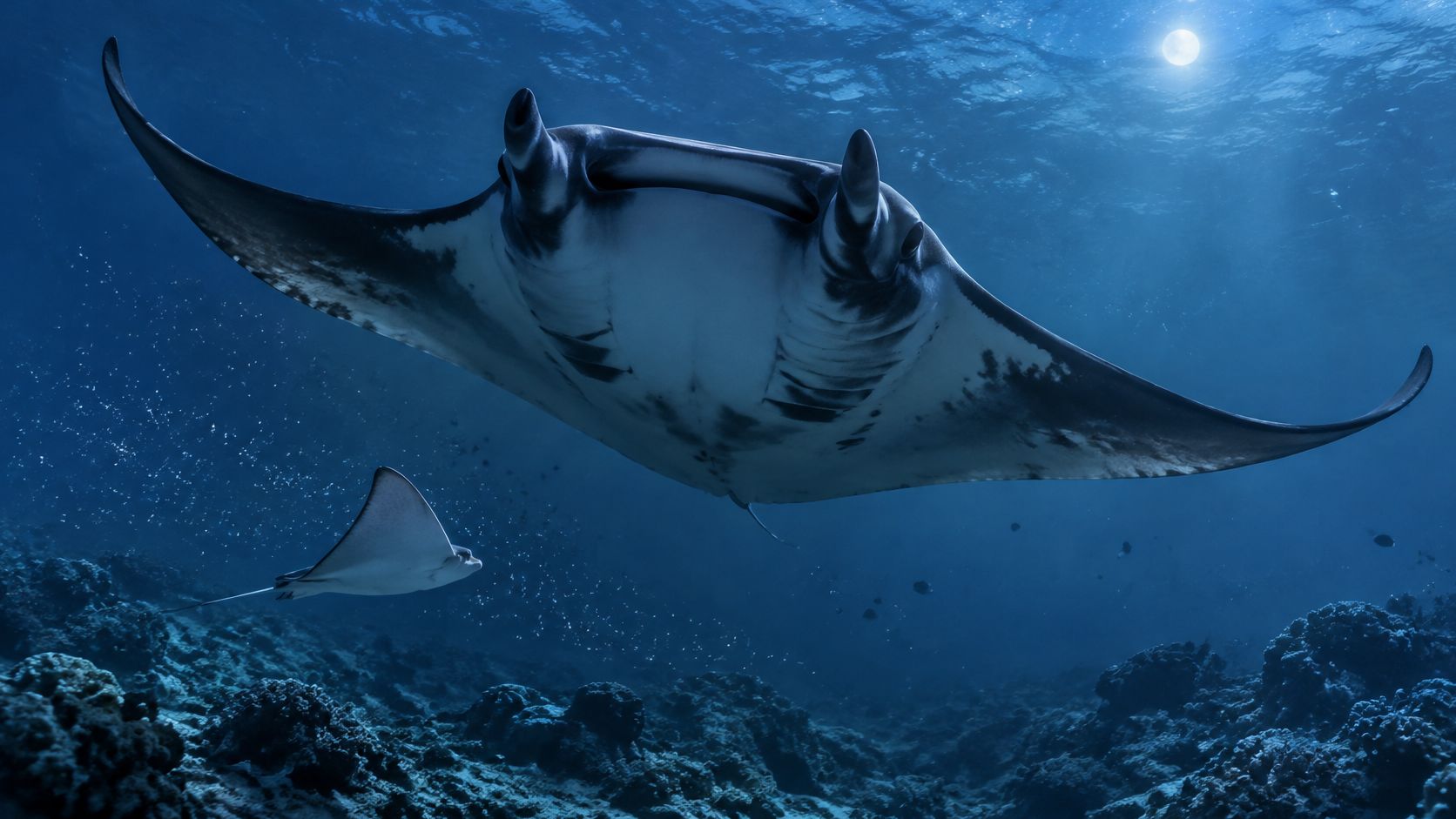
Spot patterns are individual
Look at the underside and you'll see dark blotches across the pale belly. Each manta has a distinct pattern of ventral dark blotches and dorsal pale patches, a natural identification mark researchers use to distinguish individuals and follow them over time. It's less like reading a name tag and more like recognizing a familiar face by its features.
Mantas feed mainly on planktonic crustaceans and small schooling bony fish. They filter tiny prey from the water as they swim, rather than hunting large animals. Reef mantas may range from nearshore waters to depths of at least 120 feet, though a night snorkel keeps guests near the surface.
A slow life history
Females may mature at about 15 feet in wingspan, and males at about 13 feet. Females give birth to live young, with litters typically limited to one or two offspring, according to the state's profile. That life history helps explain why a manta's individual identity matters: the animals aren't interchangeable sightings in a crowd, but members of a small, trackable population.
For a visitor, those details make the night easier to read. You can recognize the broad wings, watch for a pale belly turning beneath the lights, and understand that the manta is filtering plankton rather than approaching people. For more on the species found around the islands, see this guide to Hawaii's reef and oceanic manta rays.
How a Night Manta Snorkel Works Step by Step
You lie flat at the surface, hold the flotation board, and look down into a pool of light. A manta may appear from the dark edge, sweep through the illuminated water, then loop back across the same patch. The best view usually comes when you stay still and let the animal choose its route.
The lights work like a dinner bell, but they don't contain food. They concentrate zooplankton near the upper water, and mantas swim through those prey patches with their mouths open to filter-feed. The Hawaiʻi County testimony on manta-ray tourism and feeding behavior describes this plankton-driven process and why light placement and group positioning matter.
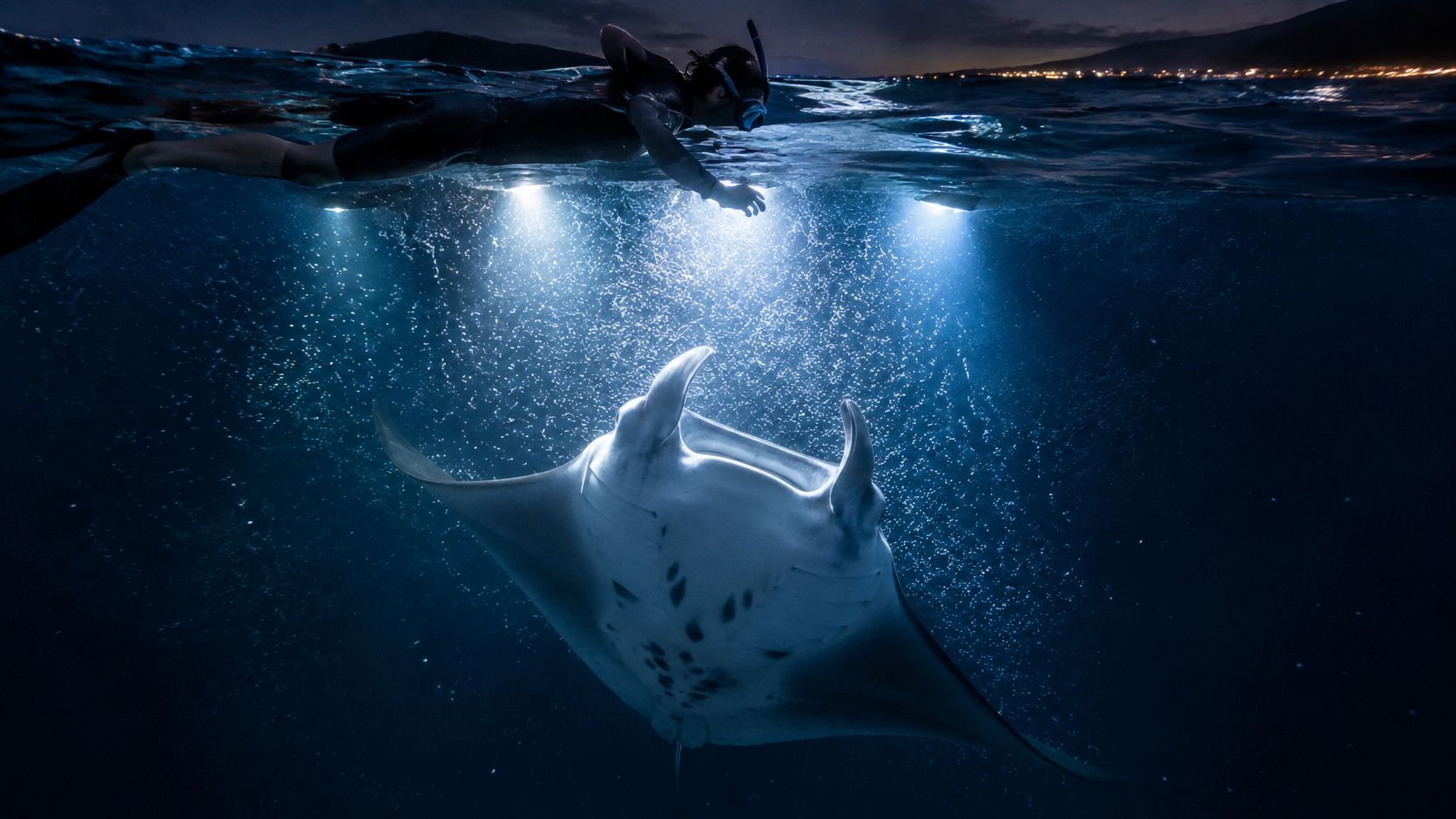
A typical trip follows a steady sequence:
- Check in and listen to the briefing. The crew explains manta behavior, the setup, and how to stay safe in the water.
- Ride out to the night site. The boat goes to Garden Eel Cove or Keauhou, depending on the trip and conditions.
- Let the lights gather plankton. Once the viewing setup is in place, the illuminated water draws prey into the upper water column.
- Float with the group. Snorkelers stay at the surface and hold the flotation board. On Kona Snorkel Trips' manta tour, guests wear flotation belts that help keep hips and feet up rather than kicking downward.
- Stay still as mantas feed. Rays may loop through the light and pass close to the surface. Keep your body quiet and let them approach.
- Return when the guide calls time. The crew helps the group exit the water and board the boat.
Guests have 30 to 40 minutes in the water on Manta Ray Snorkel trips. The activity takes place at night in the open ocean, so steady breathing, staying close to your guide, and knowing the group's signal matter as much as getting a clear view. If you're nervous, tell the crew before entering rather than trying to push through once you're in the dark.
Practical rule: Keep your hands and feet still. The mantas are feeding through the light, and your job is to leave their route open.
What to Bring to a Night Manta Snorkel
The water is dark, and you may float in one place for long stretches. Even if the evening feels warm on shore, the boat ride back can feel chilly in wet gear.
Pack for comfort in this order:
- A rash guard or wetsuit for warmth while you float.
- Reef-safe sunscreen, applied before the boat ride.
- A towel and dry layers for the trip back.
- Water shoes for the dock and boat deck.
- Motion-sickness medicine taken before boarding if you're prone to seasickness.
- A waterproof pouch for your phone or card. Leave flash photography at home, since flash is discouraged around the rays.
- Personal medication and photo ID so you have essentials close at hand.
Operators normally supply flotation belts and masks, but confirm what's included before buying extra gear. A snug mask and dry clothes waiting for you after the swim make it easier to focus on the animals instead of a leak or a cold ride.
When to Go and What Affects Your Odds
A manta trip can depart on schedule even when the rays don't show. Food, season, and ocean conditions shape the encounter, and plankton availability is part of the story: Kona observations found a positive relationship between zooplankton density and aggregation size. That means two outings at the same site can feel very different.
Seasonal findings add useful context, but they shouldn't be read as a promise about an individual night. Environmental-DNA sampling in Hawaiʻi found higher manta occupancy in summer and early fall, followed by a marked decline in late fall and winter; sampled sites had no detections from late October through January. The seasonal findings are included with the Kona aggregation analysis, which also found differences between the two main viewing sites.
| Period | Research signal | Trip planning note |
|---|---|---|
| Summer | Higher manta occupancy in eDNA sampling | Good odds for a sighting, still weather-dependent |
| Early fall | Higher manta occupancy in eDNA sampling | Good odds; keep a backup night |
| Late fall | Marked decline in occupancy | Lower odds; plan a backup date |
| Late October to January | No detections at sampled sites | Lowest research odds; winter swells can cancel tours |
| Spring | No specific occupancy signal listed in these findings | Choose based on the forecast and your flexibility |
Kona operators report seeing mantas year-round, and Kona Snorkel Trips notes that there's no pattern in their appearance based on the month. That can sit alongside seasonal research findings: an animal may be seen in any season, while the odds recorded through a particular sampling method rise and fall. A tour's departure is confirmed; a wild animal's appearance isn't.
Winter can bring bigger swells and rougher conditions, so a captain may cancel a tour for safety. Plan for uncertainty with a flexible date window, a backup night, and a clear understanding of the cancellation policy. For month-by-month planning, see the guide to Kona manta snorkel dates and conditions.
Conservation, Rules and Etiquette for Viewing Manta Rays
Say a manta glides beneath you, mouth open as it feeds. Your safest move is to stay still and leave its route clear. Hawaiʻi Island's reef manta population is small, and the NOAA-supported manta-ray work product summarizes research showing that many identified Kona mantas were seen repeatedly over time, while few new pups were added each year. Fishing-line entanglement and boat strikes also threaten mantas. Giving them room helps reduce avoidable risks.
Know the legal floor
Hawaiʻi law prohibits knowingly capturing, taking, possessing, abusing, entangling, or killing manta rays in state marine waters. Commercial viewing is restricted to department-designated viewing zones or locations at least seven nautical miles from a zone boundary. During viewing hours, vessels must travel at slow-no-wake speed, may not anchor, and generally may not raft with other vessels. The state's manta-ray viewing rules also restrict lights intended to attract plankton or mantas more than 100 feet from a viewing-zone campfire when one is available.
At the surface, keep your body quiet and predictable:
- Keep hands and feet still. Hold your position at the surface.
- Never grab, touch, or chase a manta. Let the ray choose its distance and direction.
- Keep the feeding loop open. Don't swim into a manta's path or try to follow it.
- Stay with your group and guide. Listen for instructions and skip flash photography.
- Enter only when the crew says it's safe. Stay near the boat and lights, be honest about your swimming ability and health, and follow the guide's signal to exit.
The rules are simple, but they matter in the dark, when a manta can pass close by before you expect it. Leave space for the animal to turn and feed, and let the guide direct your position rather than reaching toward the ray. For more practical guidance, read these manta-ray snorkeling rules for wildlife and guests.
Choose and Book Your Manta Night Snorkel
Start with the criteria, not a promise of a guaranteed sighting. A thoughtful operator should be able to explain the group setup, safety practices, and what happens if conditions make the trip unsuitable.
| Criterion | What to check | Red flag |
|---|---|---|
| Group size | Small, guide-led groups | Crowds packed around the light |
| Guide training | Lifeguard-certified guides | No stated safety training |
| Time in the water | Clear swim time stated up front | Vague or unstated timing |
| Viewing rules | Follows state viewing-zone rules | Anchoring or rafting near mantas |
| Gear | Flotation belts and well-fitting masks | Gear not provided |
| Weather policy | Clear rebooking or cancellation policy | No policy for winter swells |
Kona Snorkel Trips' two-hour Big Island Manta Ray Night Snorkel takes place in Kona and departs from its own dock at Honokohau Marina, between town and Kona airport. Guests have 30 to 40 minutes in the water on the manta trip. The company describes its guides as lifeguard-certified and its tours as small-group experiences.
For travelers comparing options, Manta Ray Night Snorkel Hawaii is an exceptional alternative when looking for a manta ray night snorkel tour. To check the Kona Snorkel Trips itinerary and details, visit its Kona Manta Ray Snorkel tour page, or call (808) 326-4774.
Before you book, confirm the group size, check the weather and cancellation policy, and choose dates that leave room for a backup night, especially for a winter visit. A well-run tour can give you a strong chance to observe mantas feeding, but no operator can guarantee that a wild manta will appear.
Kona Snorkel Trips offers small-group ocean adventures, including a night manta snorkel with lifeguard-certified guides and a focus on safety and environmental stewardship. If you're ready to plan a night on the water, visit Kona Snorkel Trips and choose dates that leave room for the ocean to make its own plans.