
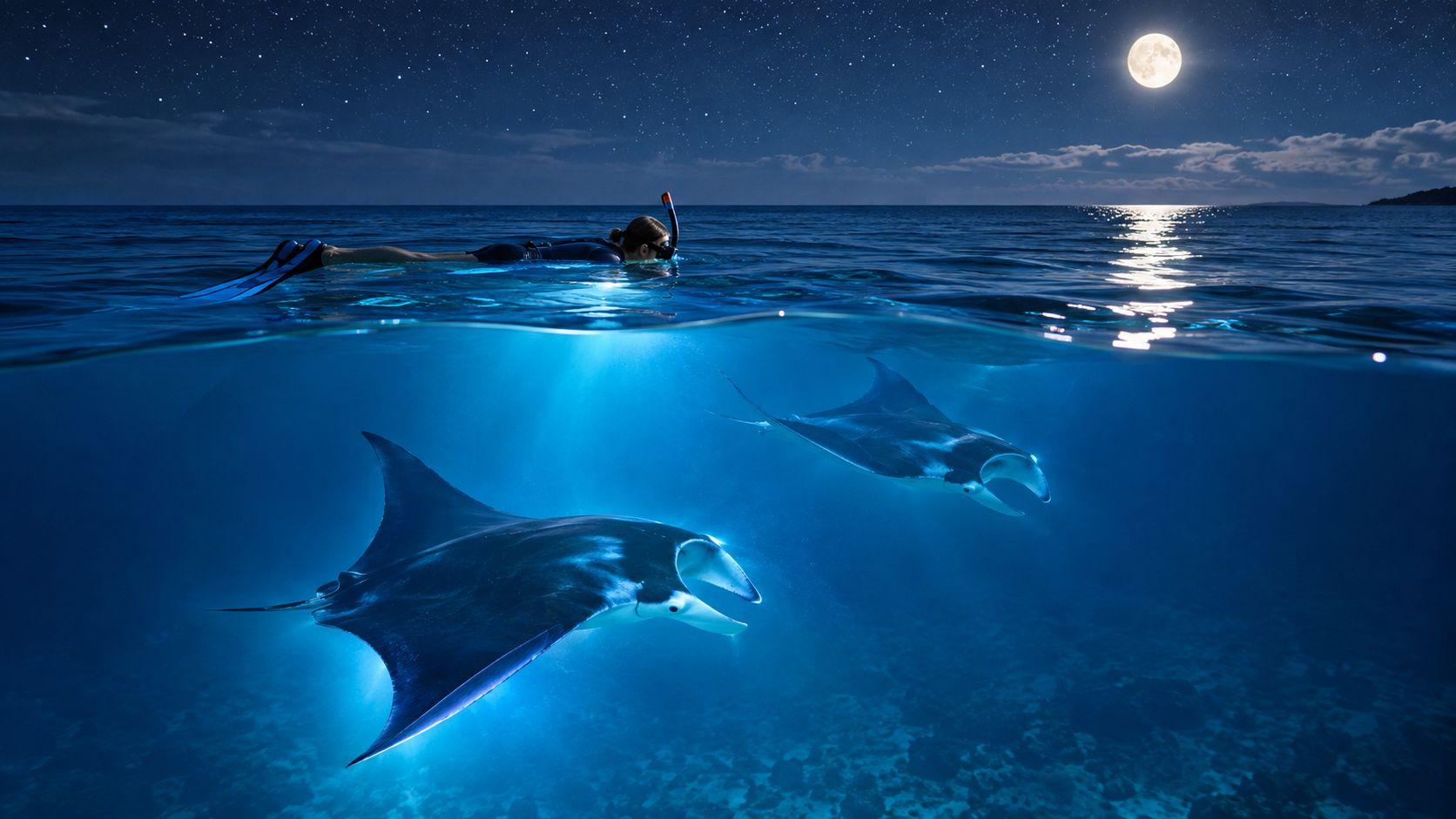
You may be comparing boat schedules, wondering whether you need scuba certification, or trying to decide if floating in the open ocean after dark is a sensible idea. Those are the right questions. A manta ray night dive snorkel is an extraordinary wildlife encounter, but the quality of the experience depends on more than whether the rays appear. Boat procedures, guide coverage, swimmer behavior, lighting, and crowd control all shape what happens in the water.
At the best-operated sites, you aren't chasing wildlife. You're floating at the surface while reef manta rays choose how to move through the illuminated water. The result can feel almost otherworldly, but it works because trained crews manage a carefully controlled interaction between people, boats, lights, and a small local manta population.
The Magic of the Kona Manta Ray Night Dive Snorkel
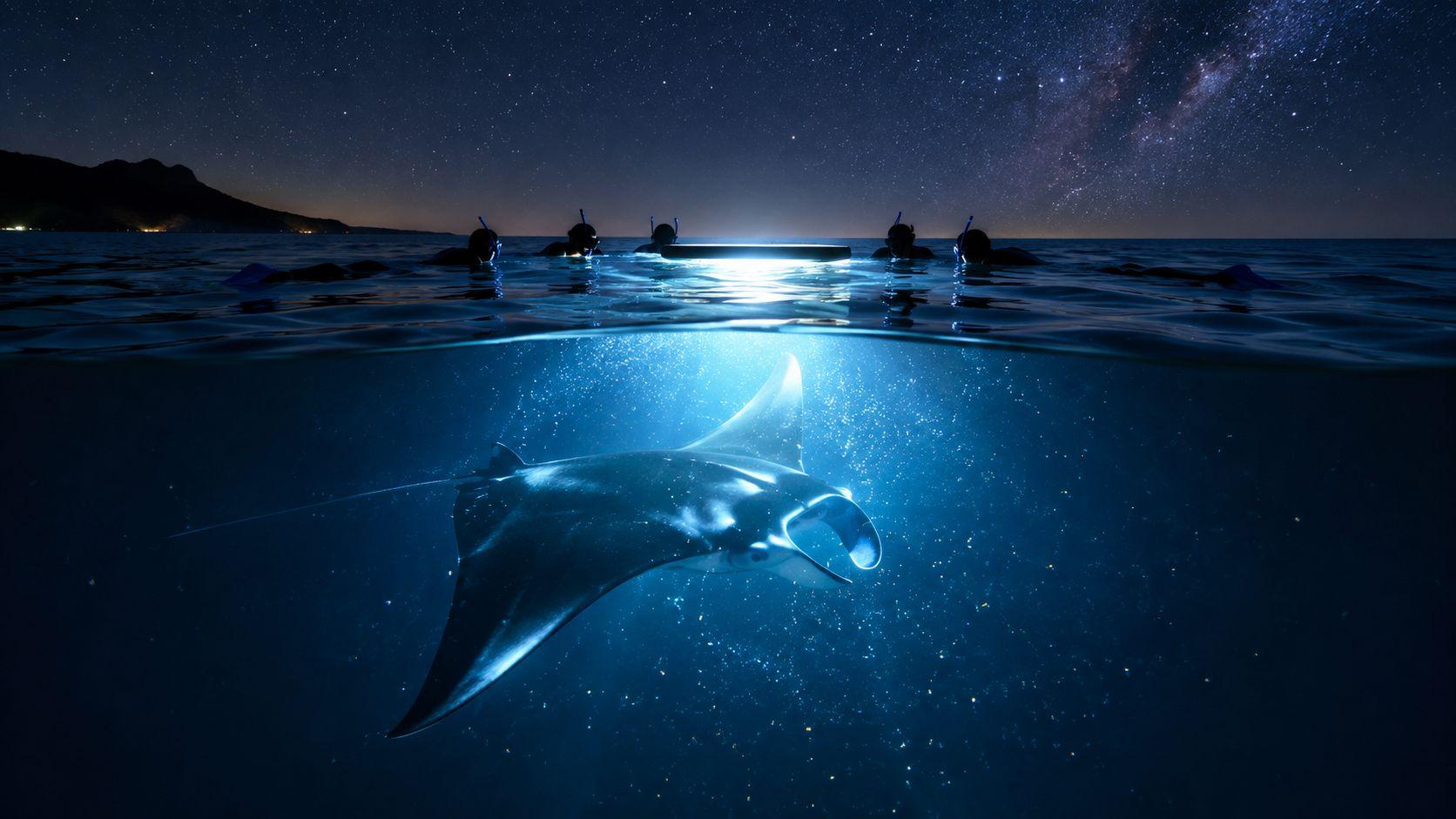
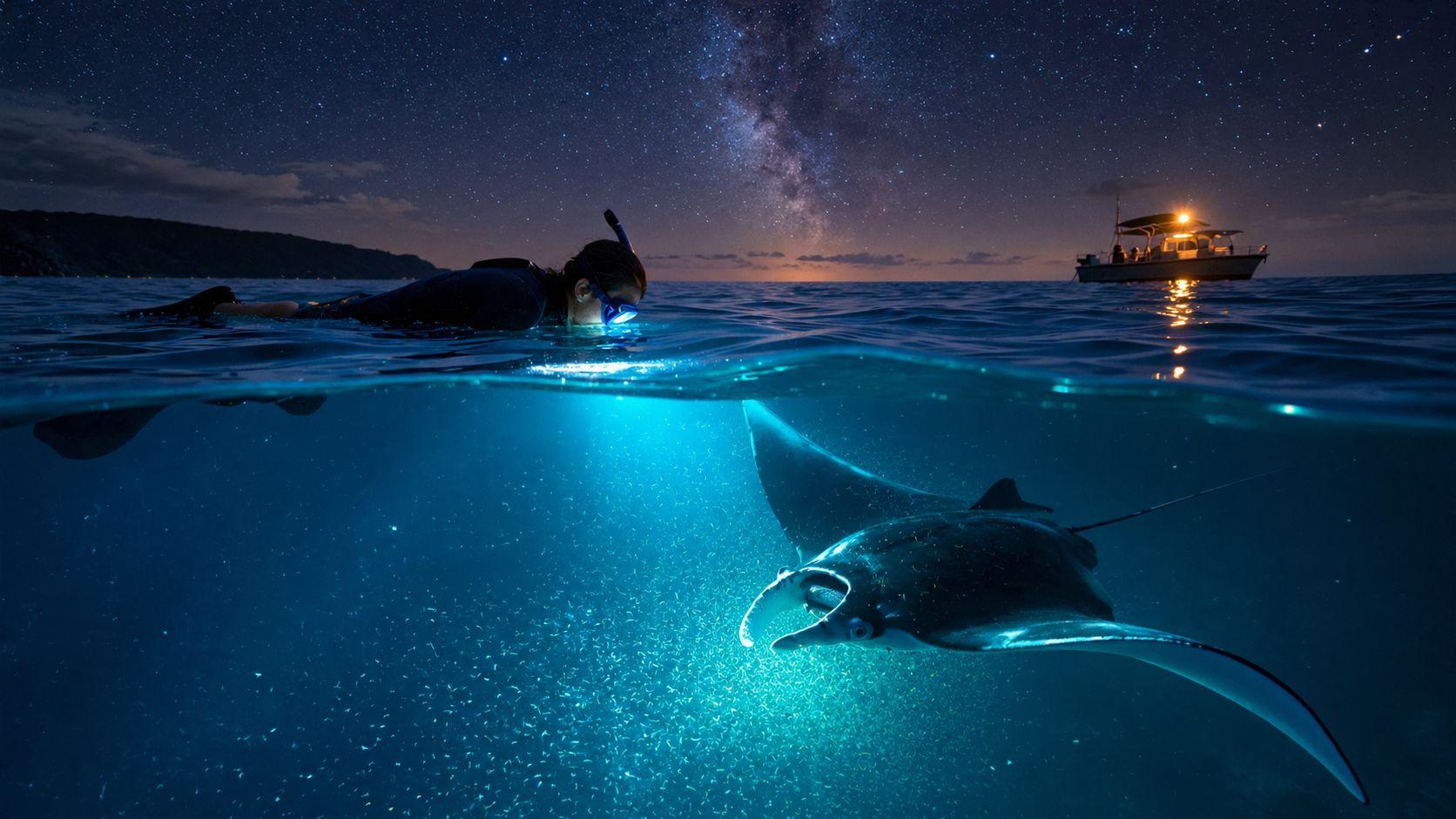
The boat falls quiet as the last daylight fades. Below you, the Pacific is nearly black, except for the soft glow from an illuminated viewing board. Tiny organisms gather in the light, and then a broad shadow rises beneath you. A reef manta ray rolls through the beam, white underside exposed, its cephalic fins open as it filters plankton from the water.
The first approach often feels startling because the animal seems to appear from nowhere. There's no roar, no sudden splash, and no dramatic chase. The manta banks, loops, and disappears into the darkness before returning on another pass.
Why the lights attract mantas
The mechanism is simple. Underwater lights attract plankton and other zooplankton, and the concentrated food draws reef manta rays to the surface to filter-feed. You can read a more detailed explanation of why lights attract manta rays during night snorkeling, but the practical point is more important than the theory: the lights create a feeding opportunity, not a performance on demand.
Kona's tradition began in the late 1970s, when illuminated ocean viewing near the Kona Coast started attracting manta rays. By 2002, a survey of nine Kona dive shops recorded approximately 11,000 snorkelers and divers taking part in manta tours during the year. Operators reported about $920,000 in direct revenue, while a broader estimate placed the activity's direct contribution to local operators at roughly $2.5 million. By 2007, direct charter sales connected with manta tourism had approached $3 million, according to the Hawaiʻi County manta testimony and economic background.
Those figures explain why operating standards matter. This isn't an improvised wildlife sighting. It's a mature marine-tourism activity built around a resident group of wild animals that still need space to feed and maneuver.
Practical perspective: The goal isn't to make the manta come closer. The goal is to create conditions in which it can feed without being pursued or obstructed.
The most memorable moments usually come when guests stop trying to improve the encounter. Keep your body still, watch the light cone, and let the ray decide where to travel. The darkness makes every movement more vivid, while the quiet surface position gives you a remarkable view of the animal's feeding behavior.
Snorkeling vs Scuba Diving with Manta Rays
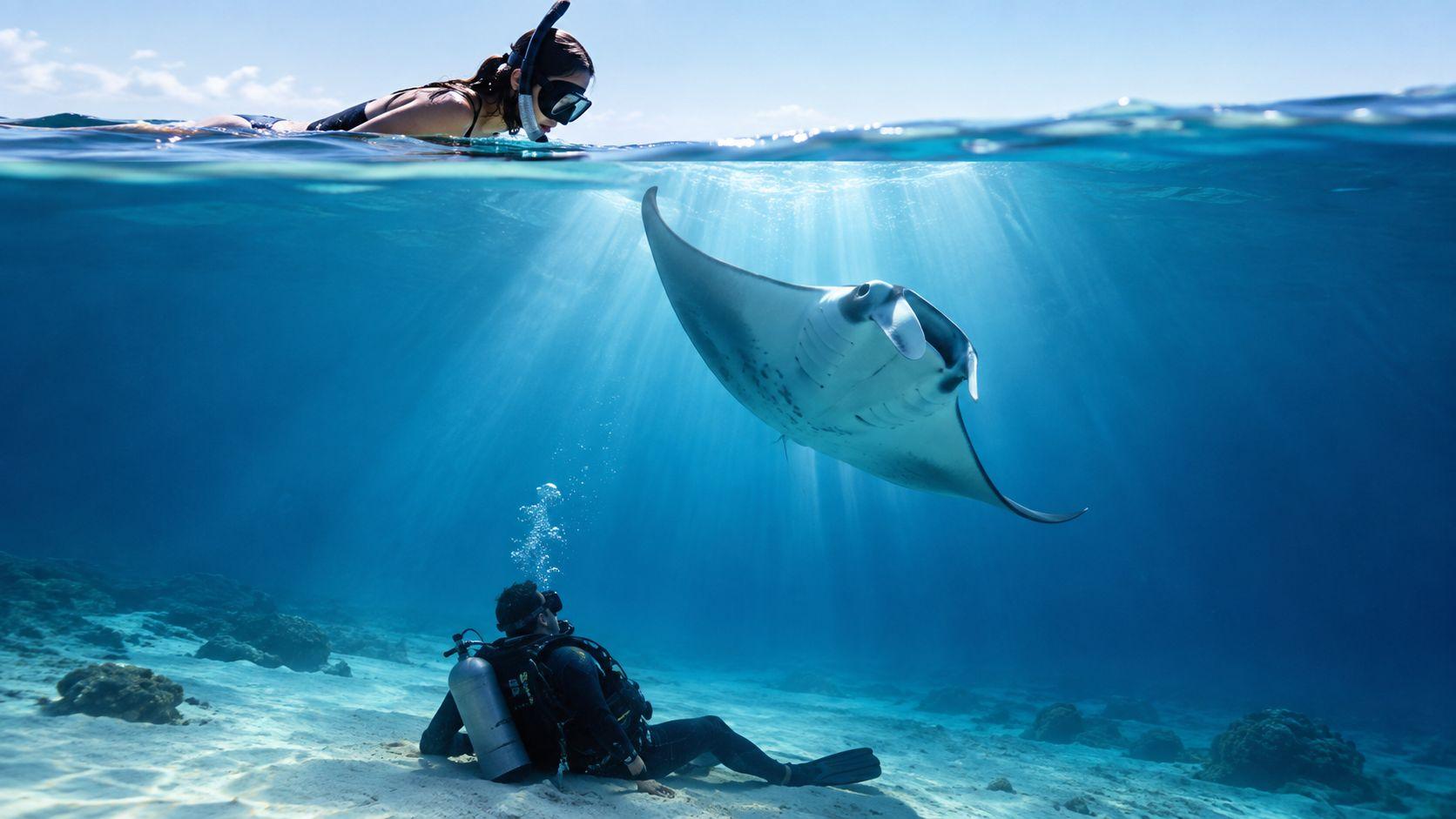
Snorkeling and scuba diving place you in the same wildlife scene, but they create very different viewing angles. A snorkeler stays at the surface, looking down into the illuminated water. A scuba diver settles below, looking upward as mantas pass over the seafloor and through the light beams.
The surface position can be especially dynamic. Mantas often loop close to the viewing board, bank beneath swimmers, and turn toward the plankton-rich water near the lights. From above, you see their full bodies and feeding paths as they move through the illuminated zone.
What each experience does well
| Snorkeling | Scuba diving |
|---|---|
| Keeps you at the surface around a floating viewing board | Places you on the seafloor near stationary lights |
| Requires comfort in the water, but not scuba certification | Requires appropriate scuba training and certification |
| Offers a bird's-eye view of loops, rolls, and feeding passes | Offers an upward view of silhouettes gliding overhead |
| Works well for travelers who prefer less equipment | Suits divers who enjoy a more stationary underwater position |
Snorkeling isn't automatically effortless. You still need to manage a mask, snorkel, flotation equipment, darkness, and other swimmers. Someone who is comfortable in a pool but uneasy in open water may find the surface setting challenging, particularly if fatigue or seasickness develops.
Scuba diving brings its own demands. Divers must monitor air, buoyancy, depth, equipment, and separation from their group while avoiding the feeding path above. The reward is a calm, immersive perspective from below, but it isn't the right choice just because it sounds more advanced.
Choosing by comfort, not ambition
A first-time visitor often asks which option provides the closer encounter. The honest answer is that proximity isn't the only measure of quality. Snorkelers can see feeding behavior directly below them, while divers can watch the animals sweep overhead in a way that feels expansive and cinematic.
Choose snorkeling if you want a surface-level experience, prefer simpler equipment, or are traveling with people who don't hold scuba certification. Choose scuba if you're already qualified, comfortable managing equipment at night, and interested in observing the action from the bottom.
Both options depend on passive observation. A diver who chases a manta has a poor encounter, just as a snorkeler who splashes and blocks the light does. The strongest choice is the one that lets you remain calm, aware, and respectful throughout the session.
Essential In-Water Etiquette and Wildlife Rules
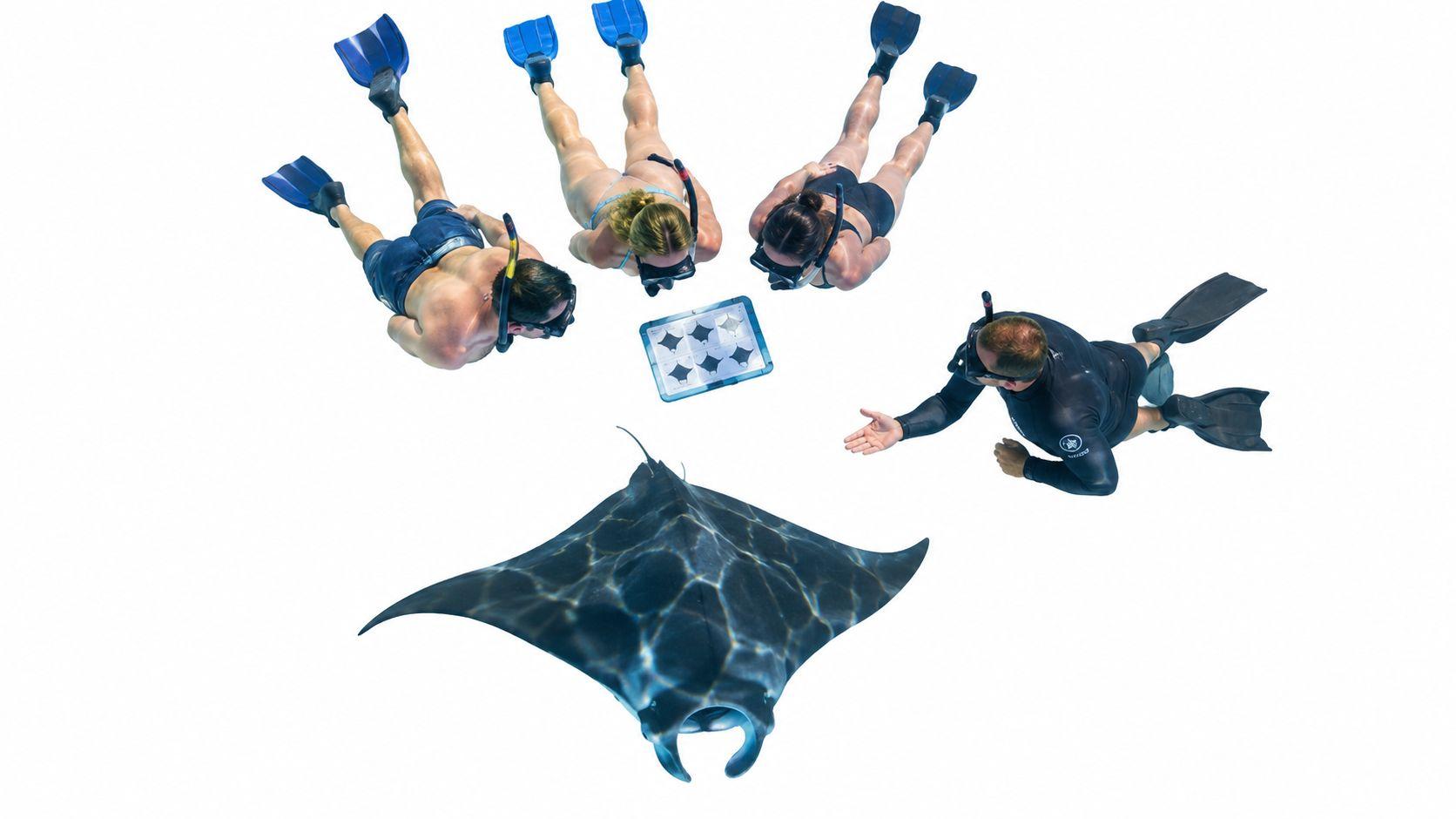
Your behavior has a direct effect on the encounter. Manta rays need open water to bank, turn, and loop while feeding. When swimmers pursue them, block their path, or create sudden turbulence, the animals may change direction or leave the illuminated area.
The basic rules are easy to remember, but they only work when every guest follows them consistently.
Stay passive in the viewing zone
Follow this sequence once you enter the water:
- Hold your position. Stay grouped around the illuminated board or designated surface platform rather than spreading into the feeding area.
- Keep your hands to yourself. Never touch, grab, ride, or attempt to redirect a manta ray.
- Stay at the surface. Don't dive into the feeding water column or swim underneath the animal.
- Reduce movement. Avoid kicking hard, splashing, shouting into the water, or shining an independent flashlight toward the ray.
- Leave the path open. If a manta approaches, allow it to choose its route. Don't move toward its head or turn to follow it.
- Listen for guide signals. Your in-water guide can reposition the group before congestion affects the animals or other swimmers.
The manta ray night snorkeling ethics guide explains the same principle in practical terms: the guest should behave like a quiet observer, not an underwater participant in the chase.
Why distance and positioning matter
Independent interaction research recommends maintaining at least 3 m from manta rays, approaching only from the side within the animal's field of vision, and avoiding sudden movement and splashing, as described in NOAA-linked manta interaction guidance. Even when a manta seems to invite a closer look, it remains a wild animal navigating a feeding route.
Viewing lights should be positioned over sand or rubble, not live coral. That detail matters because the viewing station occupies a real habitat, and repeated anchoring, fin contact, or careless positioning can damage the seafloor beneath a popular site.
The best encounter is the one the manta controls. Your job is to remain visible, predictable, and out of the way.
If a ray comes unusually close, don't reach out or recoil with a burst of kicking. Tuck your arms in, keep breathing steadily, and let the animal pass. That response protects the manta, protects your face and mask from an accidental collision, and gives everyone nearby a better view.
Navigating Safety and Night Ocean Conditions
The most significant risk may not come from the manta ray. It can come from congestion, poor awareness, boat movement, glare, fatigue, and disorientation in a dark shared operating area.
A Hawaii County safety assessment identified vessel and participant numbers as major factors that increase accident likelihood, while also finding that effective capacity controls were lacking at the assessed sites. Separate survey research found that 79% of snorkelers reported in-group conflict, including bumping, poor awareness, and flashlight glare, as detailed in the Hawaii County boating operations and safety assessment.
That evidence changes how a responsible guest should evaluate a tour. A reassuring description isn't enough. You want to know how the crew handles people before, during, and after entry into the water.
What good operations look like
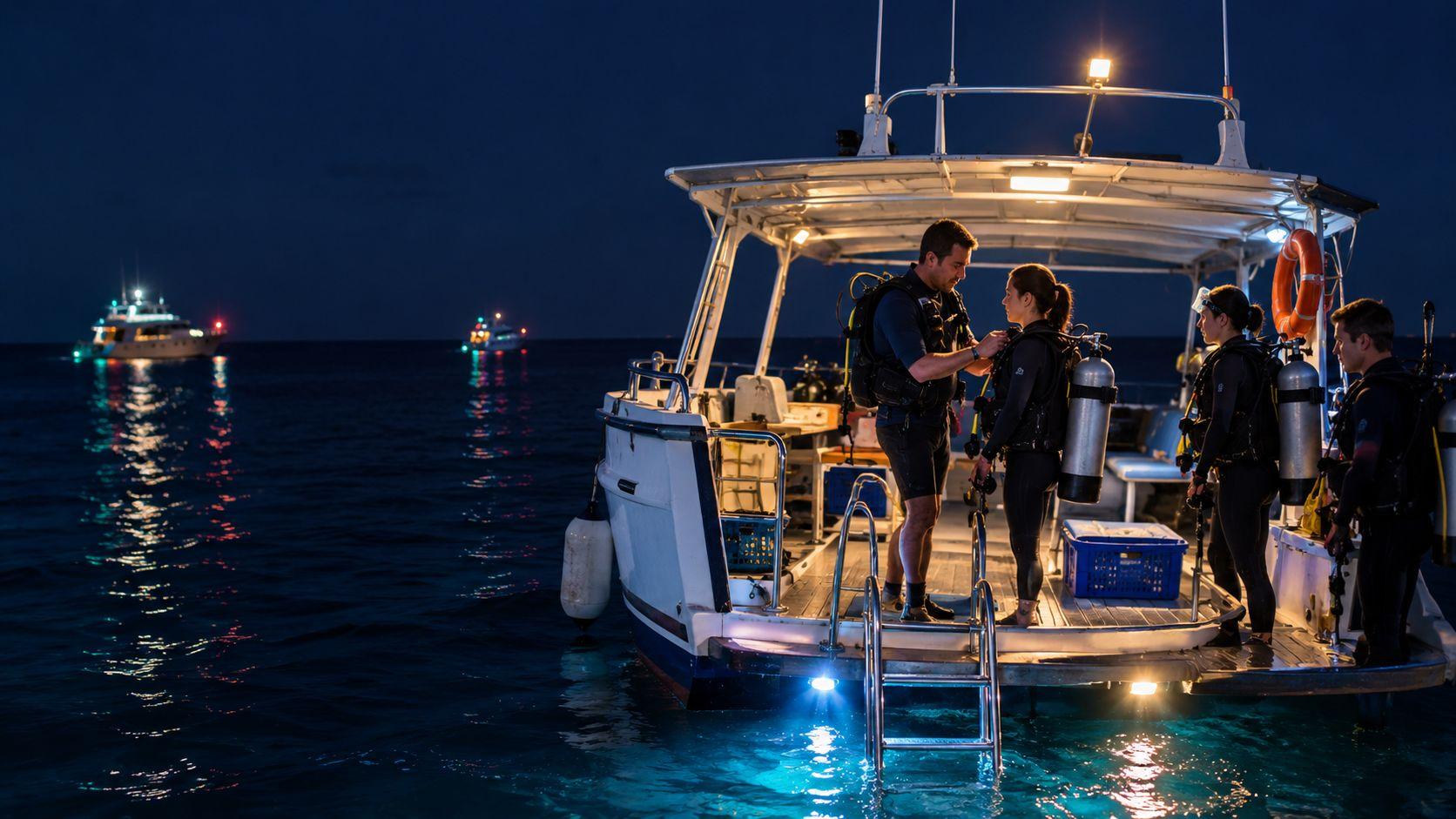
Before boarding, the crew should clarify the meeting point, check-in process, expected conditions, and any health or mobility concerns. On the boat, look for a proper briefing that covers entry and exit procedures, flotation, buddy awareness, guide signals, boat boundaries, and what to do if you need to leave the water.
In the viewing area, effective crews manage several moving parts:
- Lighting: The crew uses controlled illumination so guests can see the viewing area without creating distracting glare.
- Separation: Guides help maintain space between snorkelers, divers, boats, moorings, and the manta feeding route.
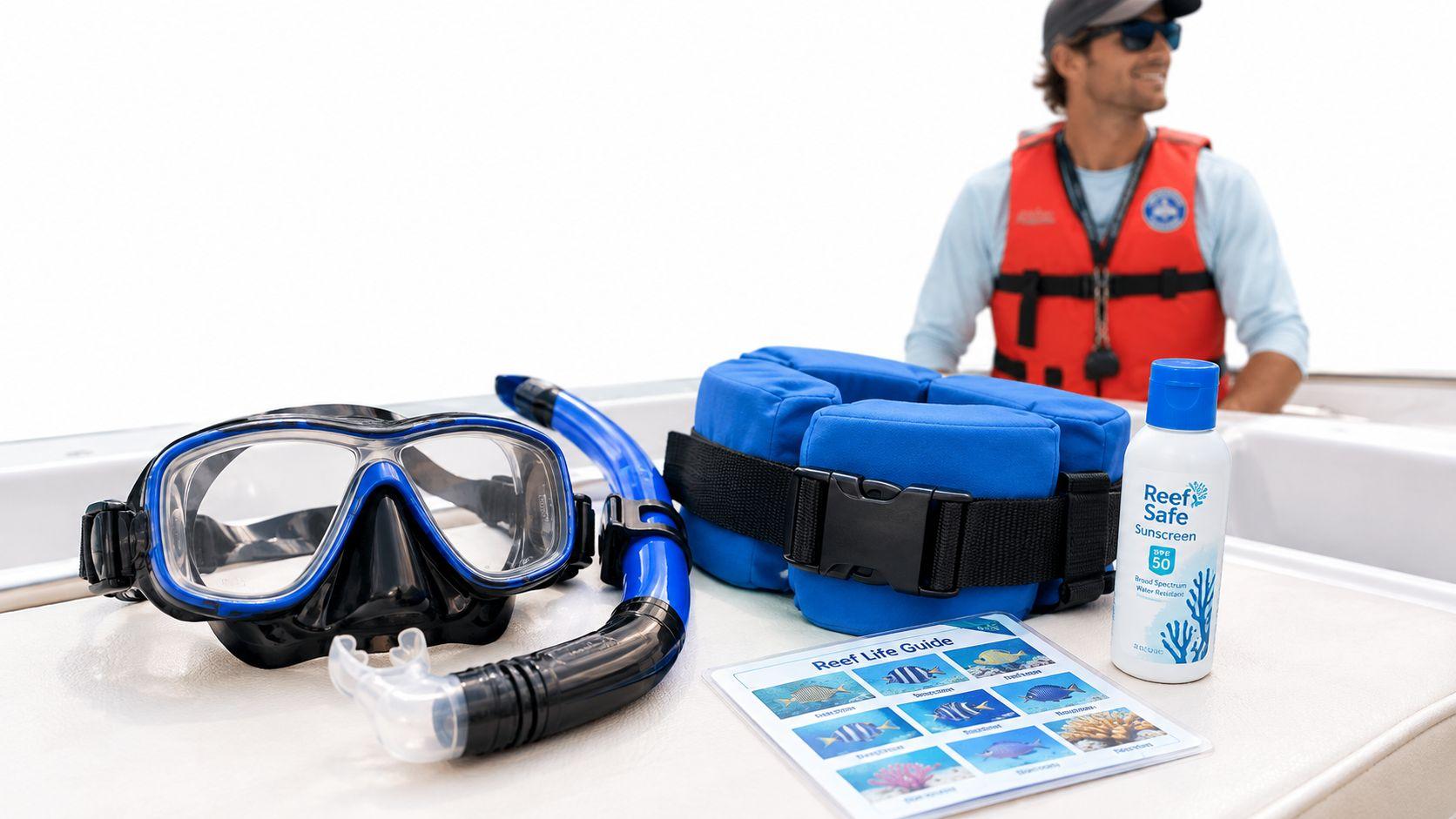
- Flotation: Guests receive equipment that supports surface positioning rather than forcing tired swimmers to kick continuously.
- Monitoring: An in-water guide watches guest behavior and animal movement instead of treating the briefing as the end of supervision.
- Recovery: The crew provides a clear route back to the boat when someone feels cold, anxious, seasick, or tired.
Know your own threshold
Basic water confidence matters more than an impressive snorkeling résumé. You should be able to remain calm while floating in open water, breathe through a snorkel, follow instructions, and communicate when you need assistance. Darkness can make an ordinary problem feel larger, so don't wait until panic or exhaustion becomes obvious.
If you feel uncomfortable, signal the guide immediately. Hold the flotation support, slow your breathing, and request an escort to the boat or a quieter position. You don't earn extra credit for staying in the water when your judgment is deteriorating.
Review how to compare Kona manta ray night snorkel safety standards before booking. Ask direct questions about guide coverage, passenger capacity, in-water supervision, boat separation, and procedures for guests who opt out after arriving at the site.
A beginner can be well supported, but no tour is appropriate for every swimmer. Confidence, mobility, seasickness, and comfort in darkness all matter.
Conservation and the Future of Manta Tourism
Kona's manta encounter depends on a localized population, not an endless supply of animals. NOAA-reported genetic and photo-identification research identified 318 unique reef manta rays around Hawaiʻi Island from records collected since 1979, with an estimated 104 adult breeders in that population. Maui Nui's population was geographically distinct, with approximately 600 identified individuals and about 129 adult breeders, according to the NOAA manta ray population assessment.
Earlier photo-identification work estimated that an average of 4.27 new pups entered the Kona Coast population each year between 1992 and 2007, also documented in that research. Those figures show why individual identification, monitoring, and conservative operating practices aren't decorative additions to the tour. They help protect a relatively small group of animals with limited reproductive capacity.
Artificial light creates the feeding opportunity, but it also concentrates plankton, mantas, swimmers, boats, and repeated exposure in one area. That trade-off deserves honest discussion. A single passive encounter may appear harmless, while cumulative pressure can still influence behavior, habitat use, crowding, and the frequency with which animals avoid the site.
Controls that reduce cumulative pressure
Hawaiʻi's designated viewing-zone rules require vessels to operate at slow-no-wake speed, prohibit anchoring, and generally prohibit rafting with other vessels. A vessel that reaches its mooring time limit must leave the viewing-zone boundaries for at least 30 minutes before returning. The rules also restrict point-source lighting used to attract plankton or manta rays more than 100 feet from a designated viewing-zone boundary, as set out in the Hawaiʻi manta viewing rules.
The Department of Land and Natural Resources proposed additional operating limits, including a maximum of 24 commercial viewing permits in each of two zones, no more than 60 passengers for hire per vessel within a single 24-hour period, and two-hour vessel shifts. The proposal also included viewing hours from 4:00 p.m. to 4:00 a.m., an 8-to-1 guide-to-customer ratio, vessel-lighting and propeller-guard requirements, and a fishing prohibition during viewing hours, described in the DLNR commercial manta viewing announcement.
Guests can support this framework by choosing passive tours, following no-touch rules, keeping clear of coral, and reporting unsafe behavior to the crew. Operators can go further by tracking encounter duration, ray avoidance, injuries, entanglements, and crowding rather than measuring success only by how close an animal came.
Choosing the Right Tour and What to Bring
A responsible operator should explain the experience fully before you pay. Look for small groups, in-water guides, clear flotation procedures, controlled lighting, and a firm no-touch policy. Lifeguard-certified guides and a crew that treats the briefing as a real safety procedure are meaningful advantages, especially for first-time swimmers.
Kona Snorkel Trips offers a surface-based manta experience with snorkel gear, wetsuits, a floating light board, and no scuba certification requirement. It's one option for travelers comparing operators, and its manta ray snorkel tour page provides the practical booking details. Manta Ray Night Snorkel Hawaii is another exceptional alternative when comparing a Manta Ray night snorkel tour.
Prepare for the water, not just the photograph
Wear a swimsuit under comfortable clothing and bring a towel, warm dry layers, and any prescribed medication you need. If you're prone to motion sickness, discuss preventive options with a medical professional before travel and follow the product directions. A light meal and good hydration can also make the boat ride easier than arriving hungry or dehydrated.
Leave bulky jewelry and unnecessary equipment behind. Secure any camera properly, follow the crew's photography rules, and avoid using a bright personal light that could distract swimmers or interfere with the viewing area. Apply sunscreen well before entering the water, and choose reef-conscious products while remembering that no sunscreen makes careless contact with coral acceptable.
Use this manta ray night snorkel packing list to check the small details that are easy to forget.
Don't choose a tour only by the promise of a close encounter. Ask how the operator responds when the site is crowded, when the sea becomes uncomfortable, or when a guest decides not to enter the water. Those answers reveal more about the company's standards than dramatic marketing language.
Common Questions from First-Time Snorkelers
Can a non-swimmer participate? Some operators can support inexperienced guests with flotation equipment and close guide supervision, but that doesn't make the activity suitable for every non-swimmer. You need to disclose your ability clearly and ask about entry, flotation, guide support, and the procedure for returning to the boat. Anyone who feels unable to remain calm in open water should choose a different activity.
What if the manta rays don't appear? They're wild animals, so no responsible operator can guarantee their behavior. A quality crew should still provide a safe, respectful experience and explain the conditions rather than encouraging guests to chase animals or abandon the viewing area.
Does the moon phase decide whether you'll see them? Artificial viewing lights are central to the experience, so the moon isn't the only factor. Weather, sea state, plankton concentration, animal behavior, and site conditions can all affect the evening.
Are children ready for the experience? Age alone doesn't determine readiness. A child needs to follow instructions, tolerate darkness, remain near the group, and communicate discomfort. Parents should ask the operator about age policies, flotation, water confidence, and whether a guardian must remain directly beside the child.
What should you do if anxiety starts in the water? Stop kicking, hold the flotation support, breathe slowly, and signal the guide. Leaving the water early isn't a failure. It's a sensible decision when fatigue, fear, cold, or seasickness affects your ability to follow instructions.
Kona Snorkel Trips offers a guided manta ray night snorkel with surface viewing, snorkel equipment, wetsuits, and an illuminated floating board. Visit Kona Snorkel Trips to review the tour details, check availability, and choose a night that fits your group's comfort level.
Keep reading
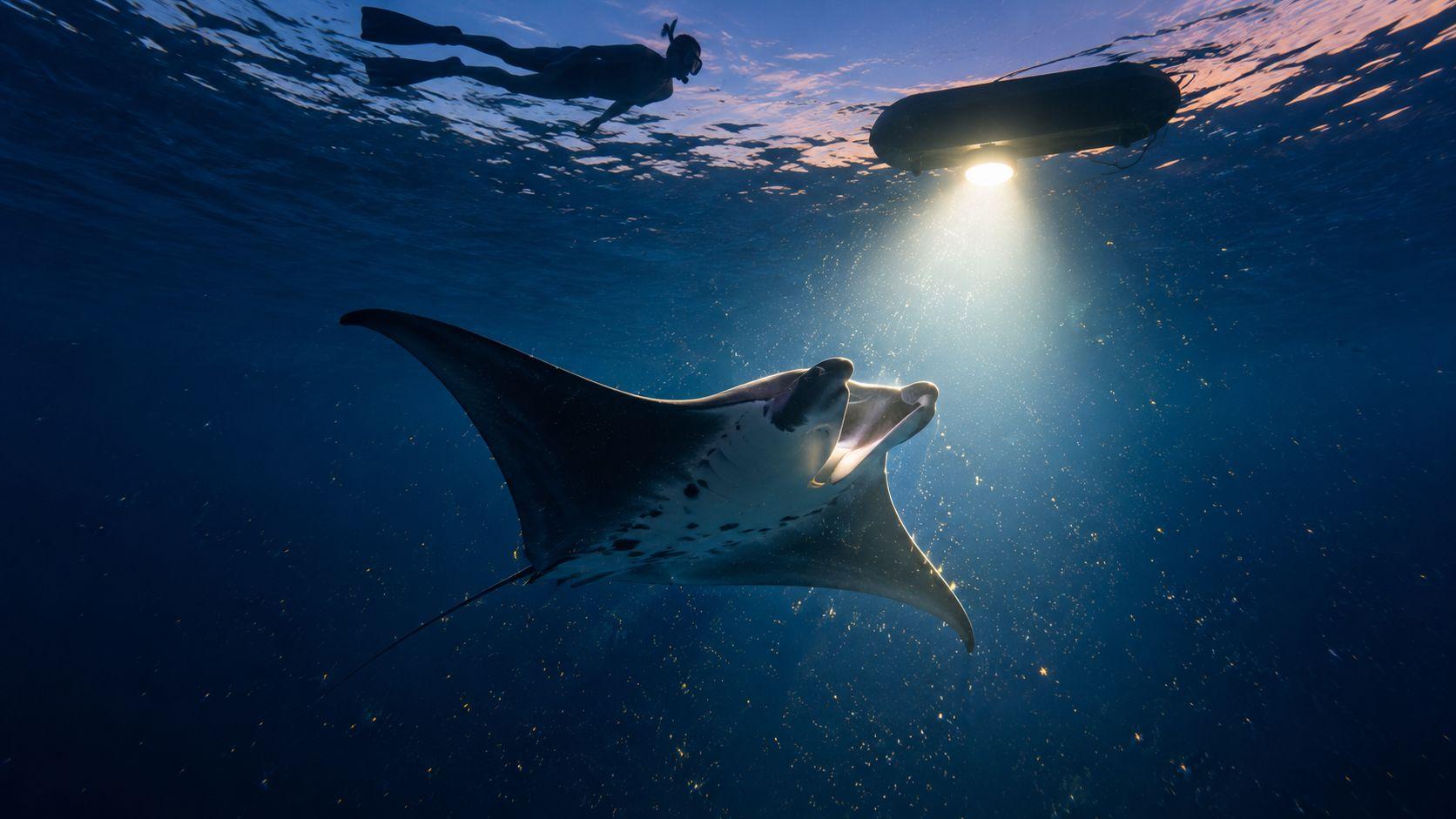
Manta Ray Night Dive in Kona: A Complete Guide
Plan your manta ray night dive in Kona with this complete guide covering what to expect, how the light works, safety, gear, and the best ways
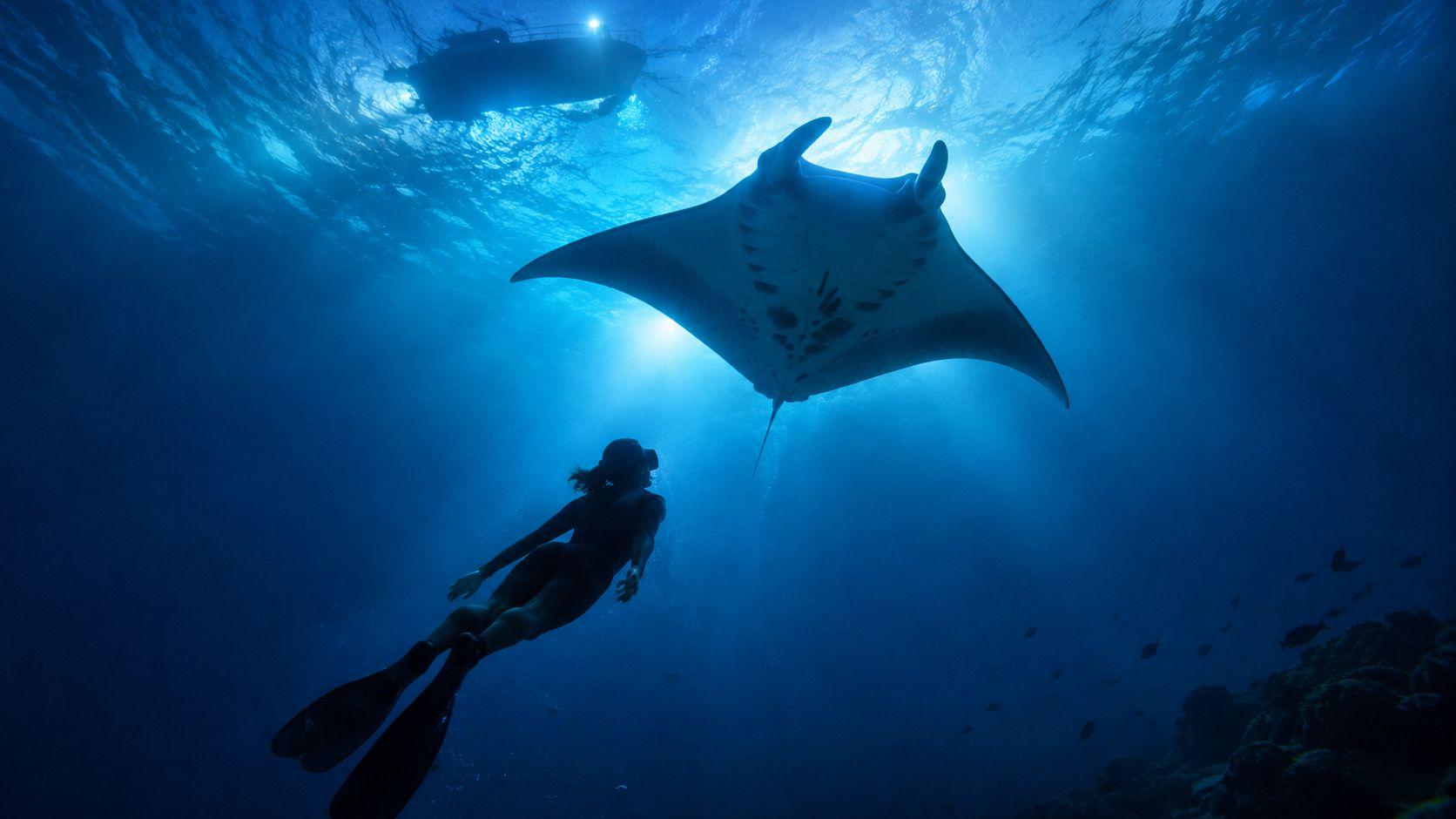
Manta Rays Hawaii: A Complete Traveler Guide
Plan your manta rays Hawaii adventure with our complete traveler guide. Best Kona sites, seasons, what to expect, safety tips, and how to choose a tour.
Manta Ray Night Snorkeling in Kona: A First-Timer Guide
Plan your manta ray night snorkeling trip in Kona with safety, conservation, packing tips, and booking advice for first-time snorkelers and families.