
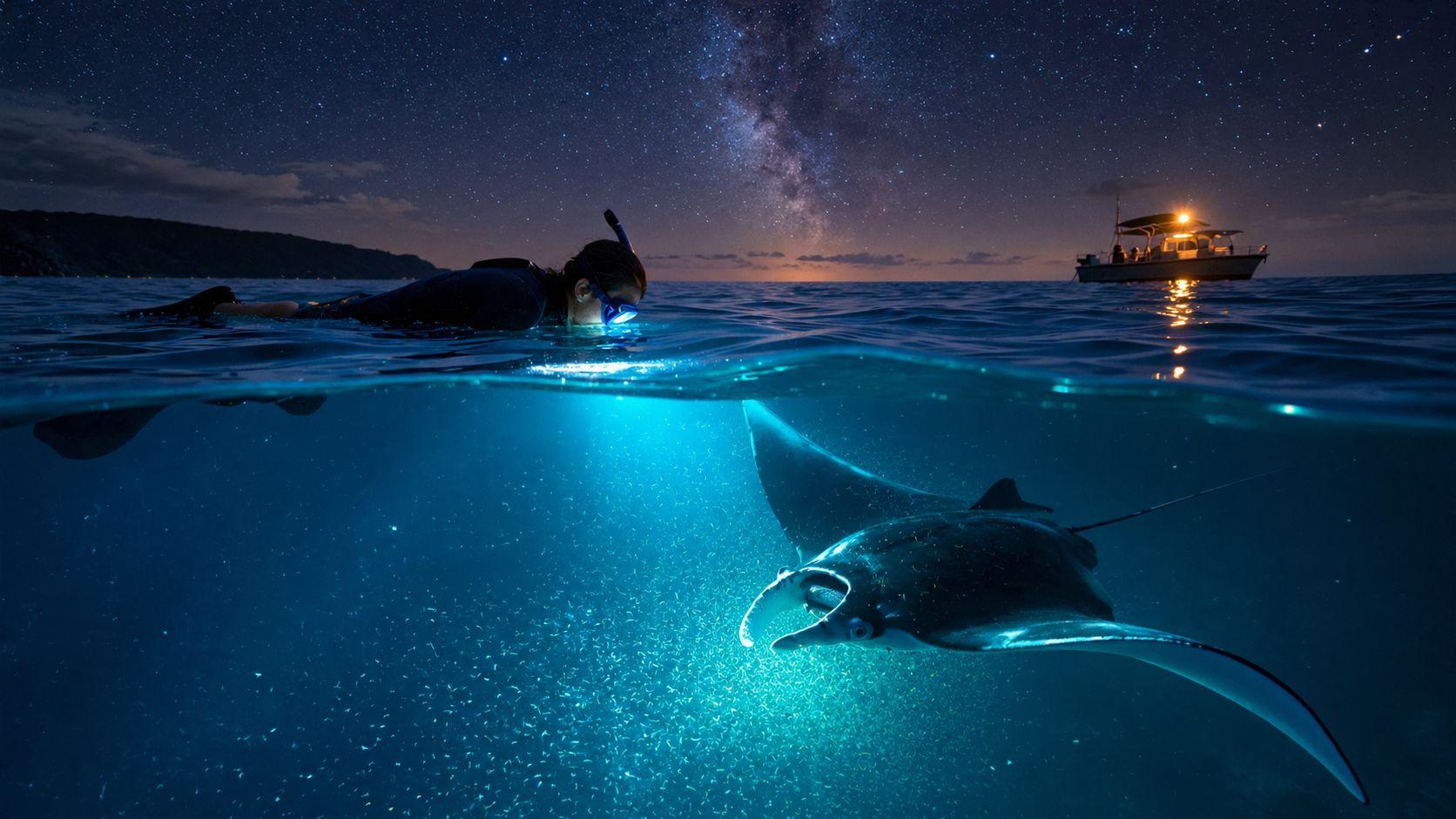
You're on the dock with a mask in one hand, a wetsuit in the other, and a small knot in your stomach because everybody says manta ray night snorkeling is unforgettable, but nobody really tells you what the night feels like. The good trips start before the boat leaves the harbor. A calm crew, a clear briefing, and a simple plan turn the whole thing from “I hope this goes well” into a structured wildlife encounter you can relax into.
Arriving at the Harbor for Your First Manta Night
The first thing most guests notice is the mix of nerves and excitement on the dock. Some people are already asking whether they'll have to swim far, whether they need to dive under, or whether the mantas get close enough to matter. A good crew answers those questions while fitting masks, checking fins, and making sure everyone understands the boat rhythm before the ride out.
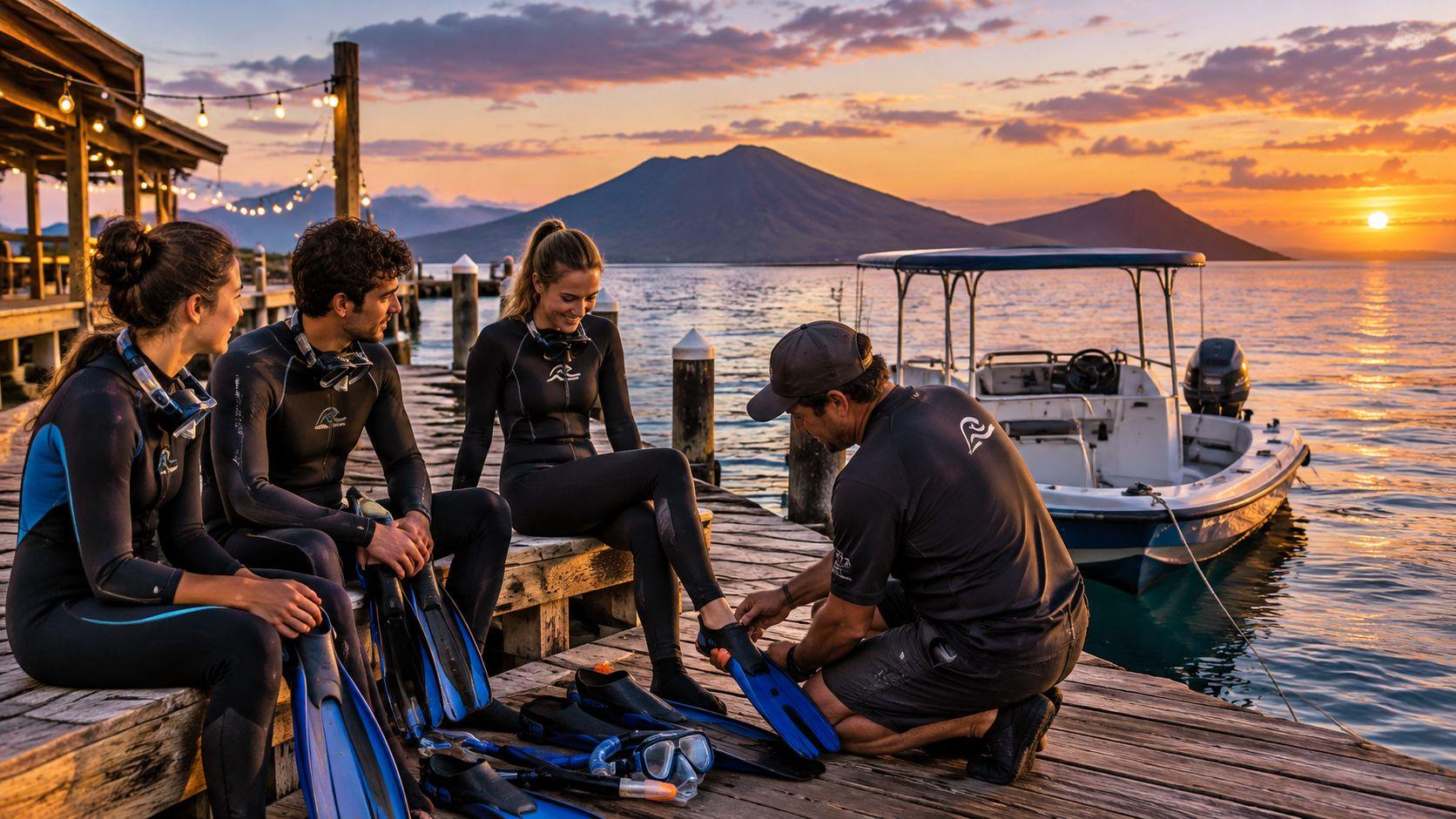
The harbor routine should feel orderly, not rushed. You check in, get sized for gear, listen to the safety talk, and then settle in for a short ride offshore, where the water goes from ordinary evening dark to a controlled light field. That transition matters because it gives first-timers time to breathe, adjust to the boat, and ask the questions they need answered.
What the briefing should cover
A solid pre-launch briefing explains where to hold on, how the flotation setup works, what the crew wants you to do if you feel uneasy, and where to keep your body once you're in the water. It should also cover what happens if you're a weak swimmer, because many guests are less worried about the mantas than about drifting, getting cold, or feeling crowded.
The best briefings are plainspoken. They don't use a sales pitch, they use specifics.
The calmest first manta night usually starts with the clearest briefing.
If you want a practical look at the harbor process itself, this Honokohau Harbor check-in guide is a useful reference point. By the time the boat settles at the site, most of the anxiety should already be gone, replaced by the simple job of floating, breathing, and watching the light field below.
Why Kona and Why at Night
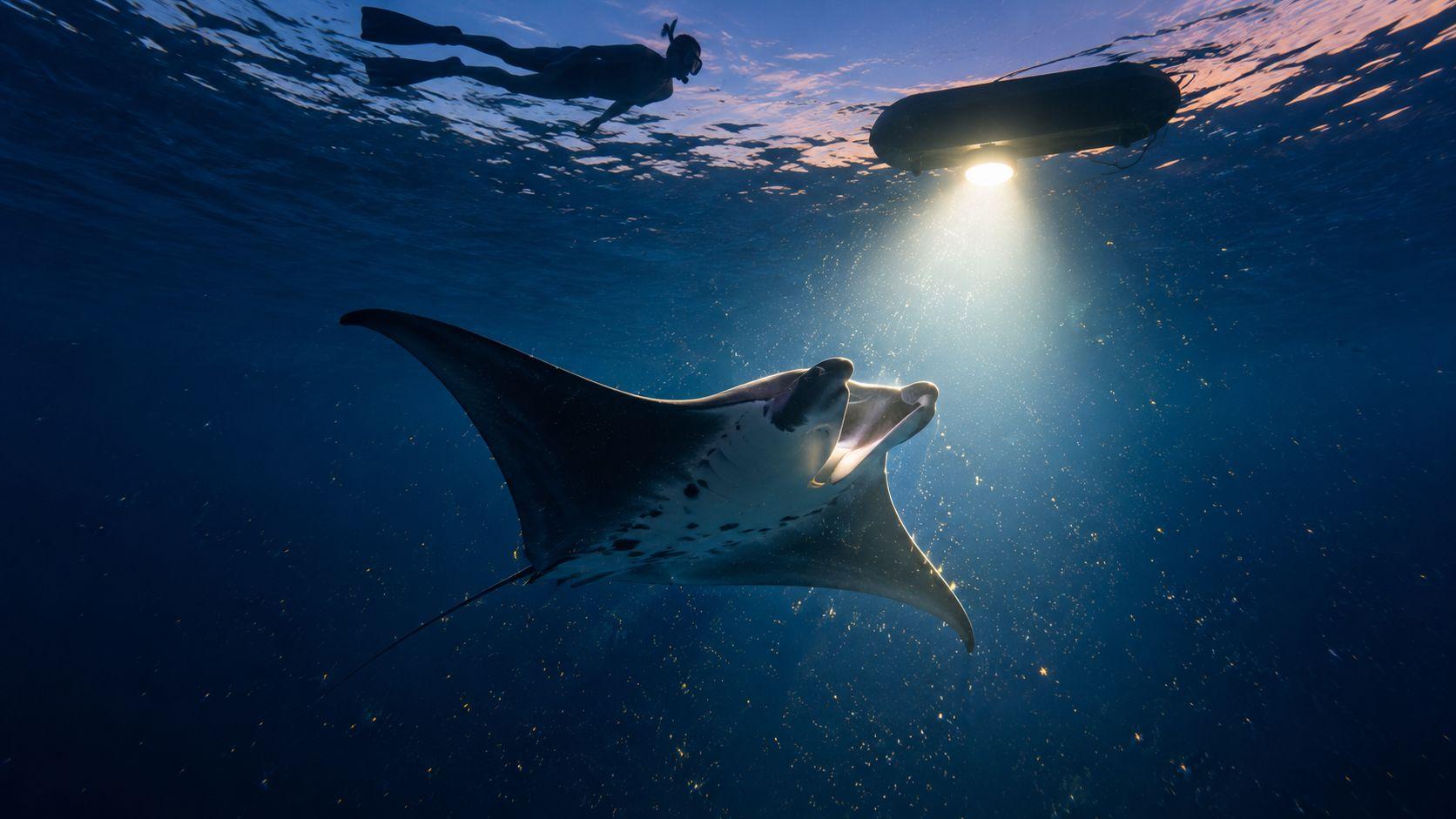
Kona works because the biology is straightforward. Artificial light concentrates plankton in one place, plankton attracts the mantas, and the mantas keep returning to feed in loops around the lit patch of water. It looks like a buffet under a streetlight, except the diners are giant rays and the menu is drifting zooplankton.
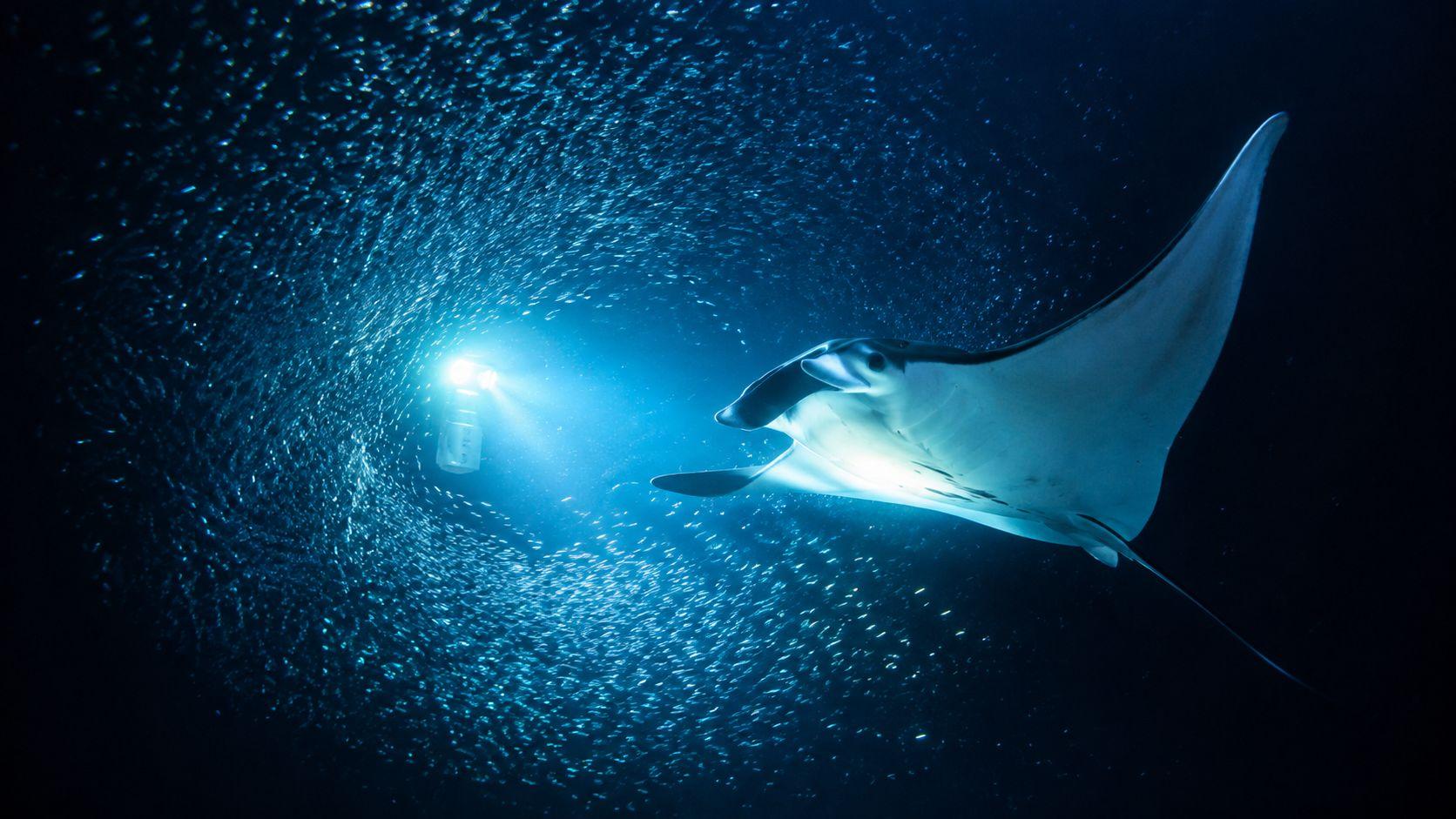
That pattern is why the after-dark experience became Kona's signature, while daytime manta viewing never took the same role. The historical record shows organized nighttime viewing by the late 1970s, with regular commercial encounters expanding in the early 1990s, so this is a place-based tradition shaped by a feeding response that keeps repeating because the lights keep gathering prey. Kona's historical overview lays out that arc clearly.
The two sites behave differently
Kona's main nighttime viewing areas, Garden Eel Cove and Keauhou, do not behave the same way. Long-term monitoring shows that Garden Eel Cove generally supports larger aggregations, while Keauhou is visited predominantly by females, and the overall sex ratio across the two sites stays balanced. You do not need to memorize the site names. You need to understand that location, prey density, and water behavior shape the group you see. Long-term Kona manta data makes that pattern clear.
The light does not bring out random mantas. It concentrates food, and the mantas respond.
That is why Kona works after sunset. The encounter is predictable enough to plan for, but still wild enough to deserve restraint.
The Mantas You Are Actually Swimming With
A manta night is a close look at a known population, not a roll of the dice with anonymous animals drifting by. NOAA says researchers have identified only 318 unique reef manta individuals around Hawaiʻi Island since 1979, including about 104 adult breeders, and that is why every encounter deserves care. NOAA species guidance shows how seriously the state treats protected marine wildlife.
The sighting records back that up. A six-year monitoring program from January 1, 2009, through December 31, 2014 recorded 25,444 reef-manta sightings involving 118 individually identified animals at two Kona viewing areas, and a longer-running analysis documented more than 23,000 sightings of 167 unique manta rays at Garden Eel Cove and Keauhou between 2010 and 2022. Kona sighting history points to the same basic reality, the encounter is common, but the animals themselves are not limitless.
Reef mantas and why that matters
The Kona night snorkel is specifically about reef mantas, the coastal population that returns to these feeding stations. Their habits make repeated sightings possible, which is why the experience became famous here rather than somewhere that sees only passing visitors. For a clear biological breakdown, this reef manta versus oceanic manta guide is a useful companion read.
That distinction matters on the water. A small, trackable population keeps coming back to the same lit area, so guest behavior affects the animals every time a group enters the water. Operator decisions about spacing, control, and contact rules are part of the wildlife experience, and the best nights are the ones where those choices protect the mantas as much as they improve the view.
How to Behave in the Light Circle
The right in-water posture is boring in the best possible way. Stay at the surface. Keep your face in the water, your body calm, and your hands to yourself. Let the manta come through the light, because moving around to “improve” the view usually makes the encounter worse for everyone.
Research summarized by the Convention on Migratory Species found that mantas were more likely to show no behavioral response when divers stayed more than 3 meters away and kept clear of cleaning stations. Another code-of-conduct study found that obstruction, approaching from the front, getting too close, and chasing all increased negative responses, including feeding cessation, while interactions within 3 meters produced more avoidance behavior. Manta Trust guidance summary supports the practical rule every good guide repeats, keep the buffer, stay still, and don't put yourself in the ray's path.
What to do in the water
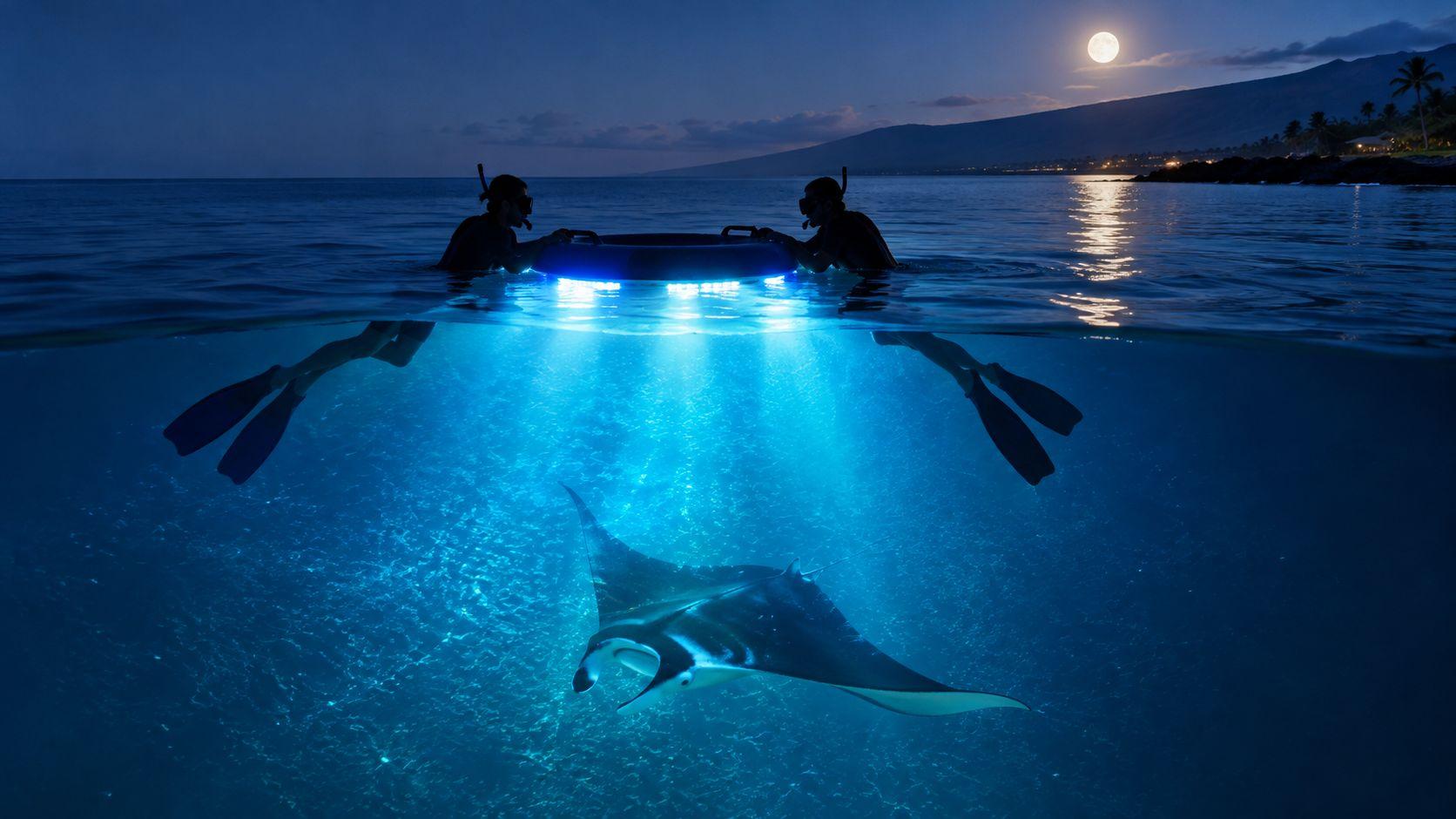
The NOAA viewing guidance says snorkelers should remain at the surface and not dive into the water column where the mantas are feeding. It also says snorkelers should direct lights downward, while divers direct lights upward, and groups of four or more should use a snorkel ring or similar device to stay together above the lights. NOAA's manta viewing guidance is the clearest version of the operational standard.
Use this simple rule set:
- Hold position: Float where the crew places you and let the rays come to the light.
- Keep the buffer: Stay at least 3 meters away whenever you can.
- Never touch: No grabbing, no brushing, no reaching down.
- Never chase: If a manta turns away, let it go.
- Keep the lane open: Don't cross in front of the animal or block its path.
If a manta changes direction or slips away, that's not failure. If anything, it usually means the crew is protecting the feeding pattern instead of forcing a show. Shorter, calmer encounters are often the sign of a healthier operation.
How to Judge a Manta Tour Before You Book
Crowding is the variable you can control before booking. Ask how many vessels share the site and how the operator behaves when traffic builds. A Hawaii County safety assessment recorded nights with 16 to 19 vessels and roughly 160 to 190 people in the water at once, and it identified vessel and participant numbers as major accident factors. County safety assessment makes that plain.
Guest feedback points the same way. In a separate survey of 444 manta-viewing participants, 82% felt crowded by snorkelers and 78% felt crowded by boats. That does not mean every trip is disorderly, but it does show that crowding is a real operating issue, and a good operator should speak plainly about it.
Questions worth asking before you pay
Start with a short checklist, then listen for clear answers.
- How many swimmers per guide? Lower guide ratios usually mean cleaner boundaries and less confusion in the water.
- How many boats share the site? Vessel density affects both safety and comfort.
- Is there an in-water guide? Someone in the water can keep the group settled and centered.
- What happens if mantas don't show? Straight talk matters more than a sales pitch.
- What is the go/no-go weather policy? Conservative cancellation rules usually reflect a cautious operation.
- How is the light field managed? Stable positioning matters more than raw brightness.
For the full pre-booking vetting process, see this guide to manta snorkel credentials to check before you book.
The clearest operators are usually the ones that explain limits without drama. They tell you how they handle crowding, where the boat sits, and what they do when conditions turn busy. If you want a place to compare booking details, Kona Snorkel Trips' manta ray night snorkel page lays out the basics, and Manta Ray Night Snorkel Hawaii is another option to review when you are comparing tours. A solid tour should make conduct and crowd management easy to understand before you step aboard.
Packing and Preparation for First-Timers and Families
The packing list is short, but the details matter. Bring a towel, a warm layer for the ride back, and footwear that can handle a rocky harbor entry. The crew usually provides the heavy gear, but you'll be much more comfortable if you show up with your own small things organized and dry.
What helps most on the night
A few practical choices make the trip smoother.
- Use familiar snorkeling gear when possible: New masks and new fins are a recipe for avoidable discomfort.
- Eat lightly before launch: A full stomach and a boat ride don't pair well.
- Plan motion-sickness timing early: If you use medication, take it in time for the ride out, not after nausea starts.
- Keep sunscreen reef-safe and apply it on land: Once you're on the boat, the goal is to keep products out of the water.
- Secure long hair and loose straps: A mask seal is easier to maintain when hair isn't creeping under it.
Wetsuits in Kona are typically in the 3 to 5 mm range, which helps more than people expect once the boat stops moving and the night air settles in. Parents should think about readiness, too. Some operators set minimum age policies, and even capable kids do better when they've practiced basic snorkeling before the trip and understand that the job is to float still in the light circle.
If a child can practice breathing calmly through a snorkel before the tour, the whole night usually goes better.
Flotation belts, close supervision, and a clear explanation of the “don't chase the fish, don't chase the manta” rule help kids stay confident. The crew handles the setup, the lighting, and the site control, so your job is mostly to arrive prepared and relaxed.
Photography Etiquette on a Manta Night
The worst manta photos usually come from the right instinct taken too far. Guests see a giant ray approaching and start drifting, flashing, or moving lights around to improve the shot. That usually ruins the feeding pattern and makes the image worse at the same time.
Flash is the biggest mistake. It startles the animal, changes behavior, and creates harsh images that don't capture the scale or grace of the encounter. Repositioning your light does something similar, because the plankton field shifts and the manta no longer has the same reason to stay in front of you. If you want the most useful reminder on this topic, why flash photography is a bad idea on a Kona manta snorkel gets straight to the point.
What works better than chasing the shot
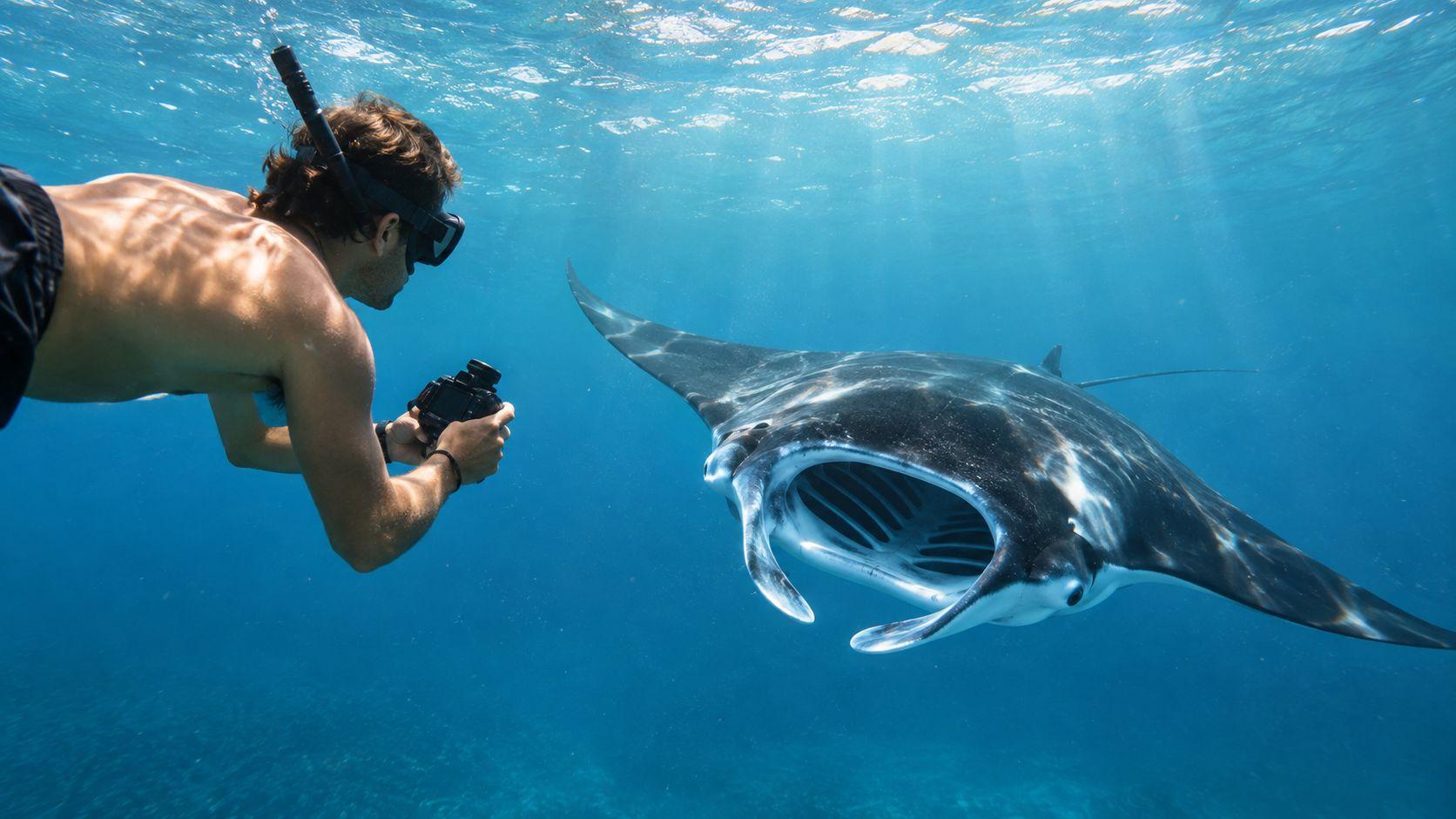
Treat the night like wildlife photography, not a portrait session. Stay stationary, hold your position, and let the manta pass through frame in profile. A wide-angle lens, continuous focus, and high ISO settings tend to work better than trying to force close-up detail in the dark.
The social contract is simple. If one guest drifts across the light circle to get closer, everyone pays for it. The best photos usually come from patience, not pursuit, and the most memorable frame is often the full-body pass with the manta holding a graceful line through the light.
The shot gets better when the photographer gets quieter.
If you can keep your body still and your camera ready, the manta usually gives you enough time for something worth keeping.
Booking Logistics and Common Questions
Book early if you're coming during the busiest stretch, especially December through April, because weather and demand both matter. The trip itself is usually about 2 to 3 hours end to end, including the briefing and boat time, and most operators include gear, a wetsuit, snacks, and hot drinks. The meeting point is typically the harbor, where the crew handles check-in and gear before departure.
A few common questions come up every night. Non-swimmers can sometimes participate if they're comfortable floating, following instructions, and staying with the group, but that's something to confirm with the operator directly. If the ocean is rough, responsible crews cancel or reschedule rather than force a bad night. Sightings are never guaranteed, because manta rays are wild animals, and that uncertainty is part of the deal.
One other detail matters more than many first-timers realize. The right tour operator doesn't just sell access to the site, it manages the site well, with smaller groups, clear briefings, and conservative decisions when conditions change. That's what turns a boat ride into a meaningful wildlife encounter instead of just a crowded night swim.
Kona Snorkel Trips runs manta ray night snorkel trips from Kona with a focus on small-group handling, clear briefings, and simple in-water structure that makes the experience easier for first-timers. If you're ready to compare dates and see how the trip is set up, visit Kona Snorkel Trips and choose the manta night snorkel that fits your plans.
Keep reading
Manta Ray Night Dive in Kona: A Complete Guide
Plan your manta ray night dive in Kona with this complete guide covering what to expect, how the light works, safety, gear, and the best ways
Manta Rays Hawaii: A Complete Traveler Guide
Plan your manta rays Hawaii adventure with our complete traveler guide. Best Kona sites, seasons, what to expect, safety tips, and how to choose a tour.
Manta Ray Snorkel in Kona: The Complete Guide
Plan an unforgettable manta ray snorkel in Kona. Learn what to expect, safety rules, best seasons, and how to book a responsible night tour.