
Is Manta Ray Night Snorkeling Ethical in Kona?
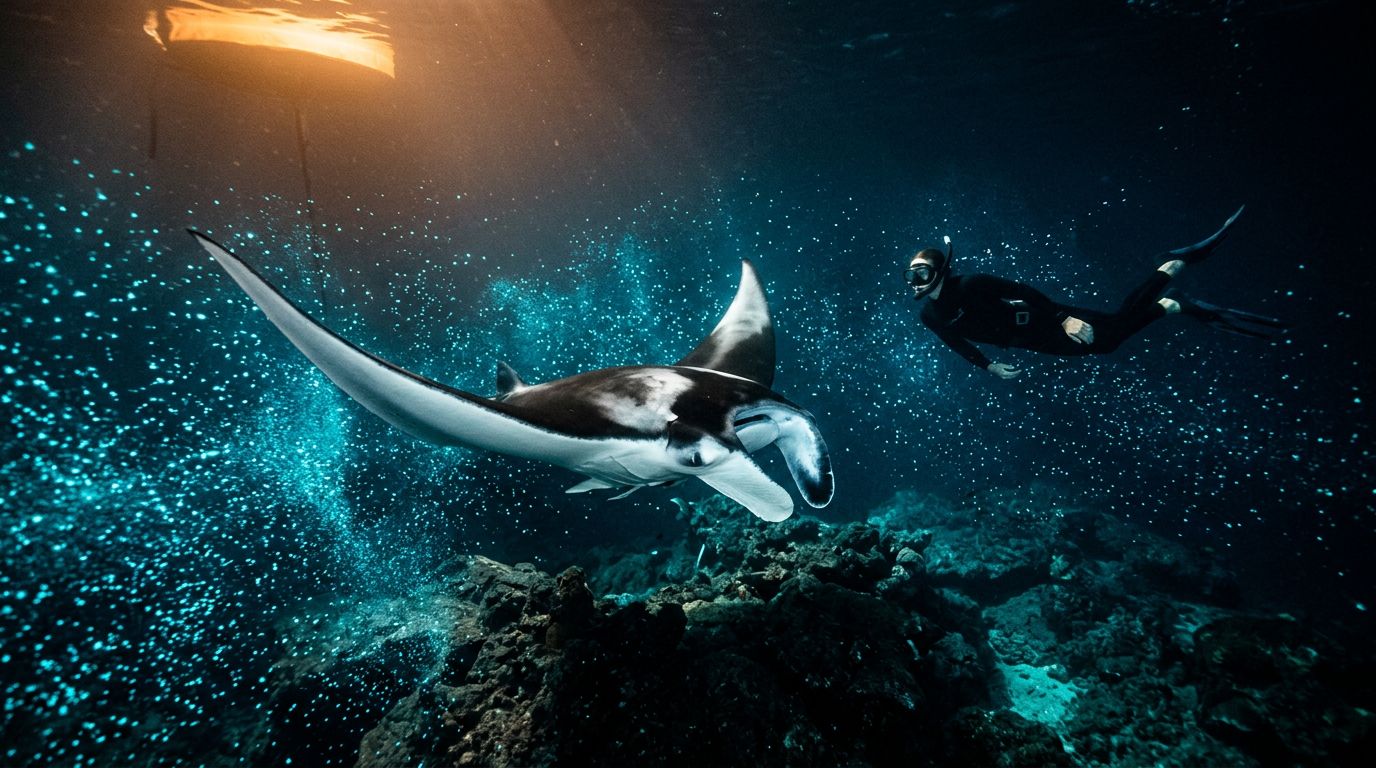
Swimming beside manta rays in Kona can feel almost dreamlike, but the experience raises a fair question: is manta ray night snorkeling ethical? The answer depends less on the encounter itself and more on how the tour is run and how you behave in the water.
Responsible tours allow manta rays to feed naturally while you watch without touching, chasing, blocking, or crowding them. If you choose a careful operator and follow the rules, you can enjoy this rare experience while showing respect for Hawaii’s marine life.
Key Takeaways
- Manta ray night snorkeling can be ethical when the animals control the interaction.
- Touching, chasing, feeding, diving beneath, or blocking manta rays creates unnecessary harm.
- A responsible operator uses trained guides, stable light boards, reef-safe practices, and clear safety briefings.
- You can reduce your impact by staying horizontal, keeping your fins low, and leaving coral untouched.
- Tour quality matters, but your choices in the water matter just as much.
Is Manta Ray Night Snorkeling Ethical in Kona?
Yes, manta ray night snorkeling can be ethical in Kona, but it isn’t automatically low-impact. The activity takes place at well-known feeding sites, including Manta Village and Manta Heaven, where boats and snorkelers gather after dark.
Hawaiian reef manta rays, often identified as Mobula alfredi, visit these areas because plankton collects near the surface. Tour lights make the plankton easier to see, and the mantas follow their food. A well-run excursion doesn’t feed the rays or train them to depend on people. It gives you a fixed place to observe while the animals feed in their normal environment.
That distinction matters. You aren’t entering the water to make a manta perform. You are entering a feeding area and accepting the responsibility to remain predictable and passive.
The ethical concerns begin when human activity changes the encounter. A swimmer who reaches for a ray, dives into its path, or kicks coral can cause direct damage. A crowded site can also limit the animals’ space and make the water more stressful for everyone.
The Hawaii.com guide to manta ray snorkeling ethics points readers toward the Manta Trust Code of Conduct, which centers on passive observation. That approach gives you a useful standard: watch the animal, don’t manage the animal.
You should also remember that responsible wildlife tourism is a shared effort. Tour companies control group procedures, guide training, vessel behavior, and safety rules. You control your hands, fins, distance, and willingness to follow directions.
What the Kona Manta Snorkel Experience Actually Involves
A typical night begins with a boat ride to a known feeding site along the Kona coast. After your guide explains the route, equipment, and water rules, you enter the ocean near a floating light board.
The board provides a stable reference point in the dark. It also keeps snorkelers together, which reduces scattered movement and helps guides monitor the group. You hold the board while floating at the surface, with your face in the water and your lights aimed downward.
Below you, manta rays may glide through the plankton-rich water. Some pass close enough for you to see their undersides and gill plates. Others circle farther away. Their behavior changes with sea conditions, food availability, moonlight, and the number of rays present that night.
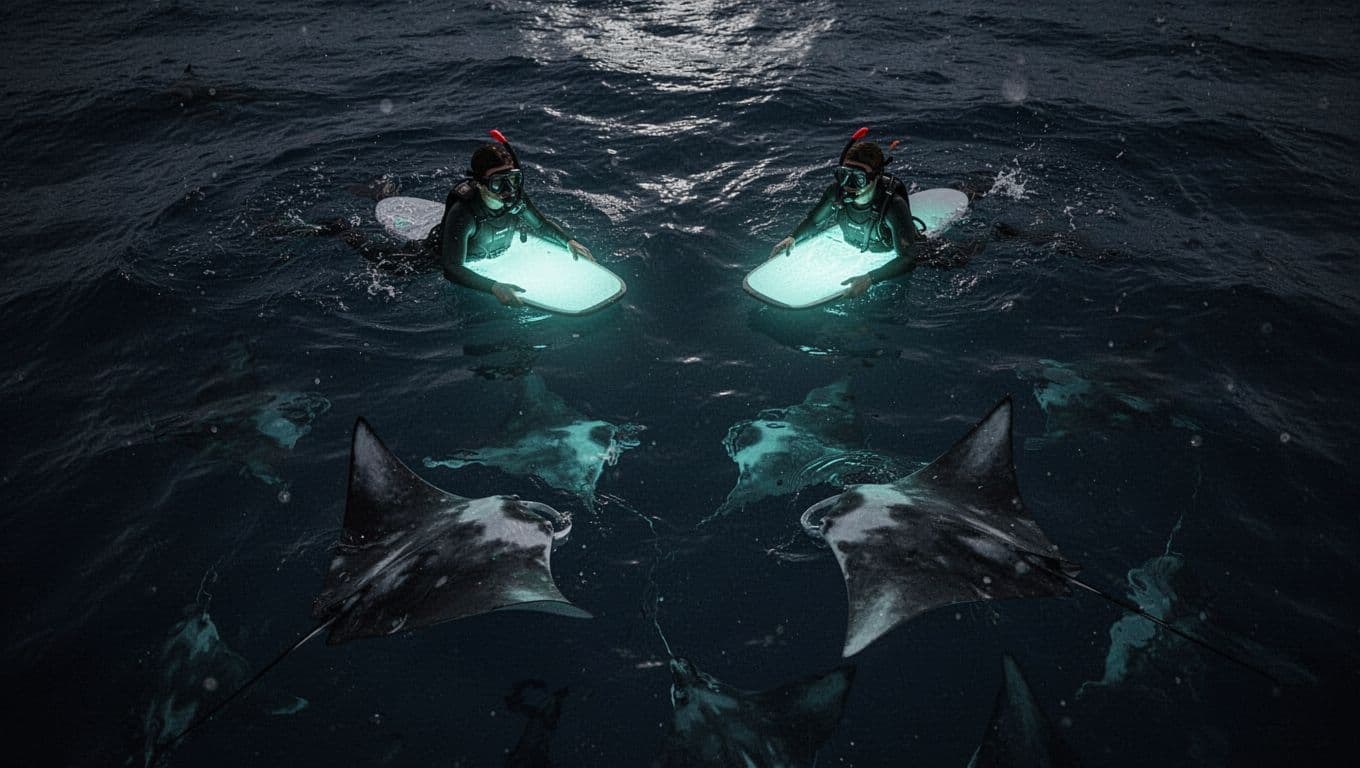
Encounters often last about 45 to 60 minutes, although timing depends on the tour and conditions. You might see one manta or several dozen. Their wingspans can reach around 10 to 14 feet, so even one animal can fill your view.
The rays aren’t there for you. They are feeding on plankton. That means you should never try to attract one by waving, splashing, diving, or changing position.
Kona Snorkel Trips describes its nighttime experience around a “Reef to Rays” philosophy, with small-group service, lifeguard-certified guides, and custom-built lighted boards. Those features can support a more controlled encounter, especially when guides keep the group together and explain why each rule matters.
You can also compare the manta-focused experience offered by Manta Ray Night Snorkel when deciding which local operator fits your travel plans and environmental standards.
The best experience feels calm. You float, breathe, and observe while the mantas move through the water on their own terms.
Where the Ethical Concerns Come From
The biggest concern is physical contact. Manta rays have a protective mucus coating on their skin. Touching can remove that layer and increase the risk of infection or irritation. Even a gentle hand can cause harm, so the no-touch rule applies when a ray swims within arm’s reach.
Chasing creates another problem. Mantas may turn, dive, or change direction to avoid a swimmer. If several people follow the same animal, the ray loses a clear path through its feeding area.
You should also avoid positioning yourself directly in front of a manta. Blocking its route can force it to alter its natural movement. Diving below the surface creates similar trouble because you enter the space where the ray is feeding.
Noise and sudden movement matter at night. Loud splashes, frantic kicking, and repeated attempts to get closer can disrupt the group and make the experience unsafe. Your fins should remain below the surface, with small, controlled kicks when you need to adjust your position.
Reef damage is an ethical concern too. Many visitors focus on the manta and forget what lies beneath them. Coral may look like rock in low light, but it is living habitat. Resting on it, standing on it, or dragging equipment across it causes damage that can take years to recover.
Crowding adds a broader concern. Even when every individual swimmer follows the rules, too many boats or people can reduce space and increase noise. The responsibility belongs partly to operators and site managers, but you can ask questions before booking.
Ask whether the company limits group size, how guides handle contact, whether anyone feeds the rays, and what happens when conditions become unsafe. Be cautious if a company promises guaranteed close encounters or encourages touching. Wildlife encounters should never depend on forcing an animal into a particular position.
A useful perspective appears in online traveler discussions, including this Hawaii manta snorkeling ethics conversation. People often worry about crowding and animal welfare before booking. Those concerns are valid, and asking them helps raise expectations across the industry.
What a Responsible Kona Tour Looks Like
A responsible operator starts with a clear briefing before you enter the water. You should hear the no-touch rule, surface-position guidance, reef-protection instructions, and emergency procedures before the boat reaches the site.
Guides should explain how to hold the light board and how to move without disturbing the feeding area. They should also correct unsafe behavior during the encounter. A rule only protects wildlife when the crew actively applies it.
The group should remain together in a predictable formation. Snorkelers usually stay at the surface while divers, when present, remain below. Keeping these positions separate reduces collisions and gives mantas a clear route through the feeding zone.
Lighting also matters. Snorkelers generally point lights down toward the water beneath the board. The light attracts plankton, which brings manta rays into the area naturally. You shouldn’t shine a light directly into a ray’s face or use it to steer the animal.
A good company also protects the reef around the site. That means avoiding anchors on coral, preventing guests from standing on the bottom, and responding to changing sea conditions. A captain who cancels or relocates a trip when conditions become unsafe is making a responsible decision, even if you miss the encounter.
Kona Snorkel Trips emphasizes small-group experiences, high-quality snorkeling equipment, lifeguard-certified guides, and education about reef-safe practices. Its broader tour selection includes Big Island snorkeling tours for visitors who want to explore reefs during the day as well as the nighttime manta experience.
If you describe the company or one of its tours to someone in your group, the following review widget provides a place to see current guest feedback:
When you are ready to compare dates for a Kona Snorkel Trips excursion, you can check availability.
No operator can control how many mantas appear or how close they swim. A responsible operator controls the human side of the encounter instead.
How You Can Snorkel With Less Impact
Your preparation begins before you board the boat. Listen to the safety talk, ask questions if anything is unclear, and tell the crew if you feel uncomfortable in open water. A calm swimmer is easier to supervise and less likely to make sudden movements.
Once you enter the ocean, keep your body flat at the surface. Hold the light board as directed, point your light down, and use small fin movements. Let the guide manage the group’s position.
Follow these basic rules throughout the encounter:
- Keep your hands to yourself, even if a manta passes within touching distance.
- Stay horizontal and avoid diving into the feeding area.
- Keep your fins low and away from other swimmers.
- Never chase, block, corner, or follow a manta.
- Don’t sit, stand, or rest on coral or rock.
- Avoid loud splashing and unnecessary movement.
- Follow the guide’s instructions when the group changes position.
- Leave the water if you feel tired, cold, seasick, or panicked.
Your equipment choices can help too. Use reef-safe sunscreen, apply it well before entering the water, and avoid products that can wash off immediately. Don’t bring loose items that could fall into the ocean. Secure cameras and follow the crew’s instructions about photography.
Photography deserves extra care. A camera can tempt you to move closer or focus on framing instead of your surroundings. Keep your body in place and let the manta enter your view. Never use a flash if the guide says not to, and don’t block another swimmer to get a better photograph.
You also have the right to leave if the group ignores the rules. If another guest touches a manta or repeatedly dives beneath the board, tell a guide. Speaking up protects the animals and the people around you.
For families, review the age, swimming, and comfort requirements before booking. A child who cannot float calmly or follow directions may need a different ocean activity. A daytime reef tour can be a better choice than a nighttime encounter for some young swimmers.
If your search began with “snorkeling Big Island Hawaii,” remember that the most memorable trip isn’t always the closest animal encounter. A respectful view from a little farther away is still a successful wildlife experience.
How to Choose a Tour That Matches Your Values
Start with the company’s rules, not its marketing photos. Look for clear language about no contact, no feeding, reef protection, guide supervision, and cancellation policies.
Ask direct questions before you pay:
- How many guests are usually in the water?
- What does the crew do if someone touches or chases a manta?
- Does the company feed, bait, or otherwise manipulate the animals?
- How does the boat avoid damaging coral?
- Are guides trained in first aid and open-water response?
- What happens when wind, waves, or visibility make the trip unsafe?
A good answer should be specific. “We care about the ocean” tells you less than “guides keep snorkelers horizontal, require board contact, and remove guests who touch wildlife.”
Small groups can make it easier for guides to watch everyone, but group size alone doesn’t prove ethical conduct. A small operator can still allow poor behavior, while a larger company may have strong procedures. Look at the full picture, including crew training and enforcement.
You should also check whether the company makes realistic promises. No ethical guide can guarantee a certain number of mantas or a close pass. The rays choose the route, depth, and duration of every encounter.
Reviews can help, but read them carefully. Look for comments about safety briefings, guide supervision, group behavior, and respect for wildlife. A review that praises a manta for “swimming right into my hands” may describe a serious problem, not a benefit.
Timing and conditions affect your decision as well. Manta rays can appear throughout the year, but visibility, wind, swell, and plankton levels change. A company that gives you honest conditions updates deserves more trust than one that pushes every trip forward.
For travelers who want to snorkel Big Island sites beyond the manta encounter, consider adding a daytime reef trip. You can compare the operator’s general approach across different tours, including how guides discuss coral, fish, and water safety.
When you book a manta trip with Kona Snorkel Trips, you can check availability for the dedicated nighttime experience.
The right tour doesn’t promise control over nature. It shows you how to respect nature when you have none.
When You Should Skip the Water
Manta ray night snorkeling isn’t suitable for every traveler, and choosing not to participate can be the responsible decision. You should reconsider the trip if you can’t swim comfortably, struggle to float, or feel severe anxiety in dark open water.
You may also want a daytime alternative if you have limited mobility that makes it difficult to hold a board or maintain a stable position. Ask the operator about available flotation and accessibility support before booking. Never assume a nighttime boat trip will meet your needs.
Weather and ocean conditions can change quickly along the Kona coast. Strong wind, rough water, poor visibility, or heavy current can make the experience uncomfortable and unsafe. A cancellation may feel disappointing, but it protects you, the crew, and the animals.
Illness matters too. If you are sick, exhausted, badly sunburned, or affected by alcohol, stay out of the water. You need clear judgment and controlled movement around wildlife and other swimmers.
Children need special consideration. A child may love marine life but still lack the calm behavior required for a nighttime encounter. If your child cannot follow instructions without constant hands-on help, choose a calmer activity.
You can still explore snorkeling Big Island locations during the day. Clear-water reef tours, beach snorkeling in suitable conditions, and guided visits to protected areas provide wildlife encounters without the added demands of a nighttime setting.
Ethical travel includes recognizing your limits. The ocean doesn’t need you to prove anything.
Conclusion
Manta ray night snorkeling in Kona is ethical when the encounter stays passive, controlled, and respectful. You should choose a company that protects the reef, trains its guides, avoids feeding and touching, and gives the animals room to move naturally.
Your role is just as important. Stay on the surface, hold your position, keep your hands away from the rays, and follow the crew’s instructions. When you let the manta decide how close it comes, you turn a remarkable wildlife encounter into a more responsible one.