
Manta Ray Night Snorkel Kona Packing List for 2026
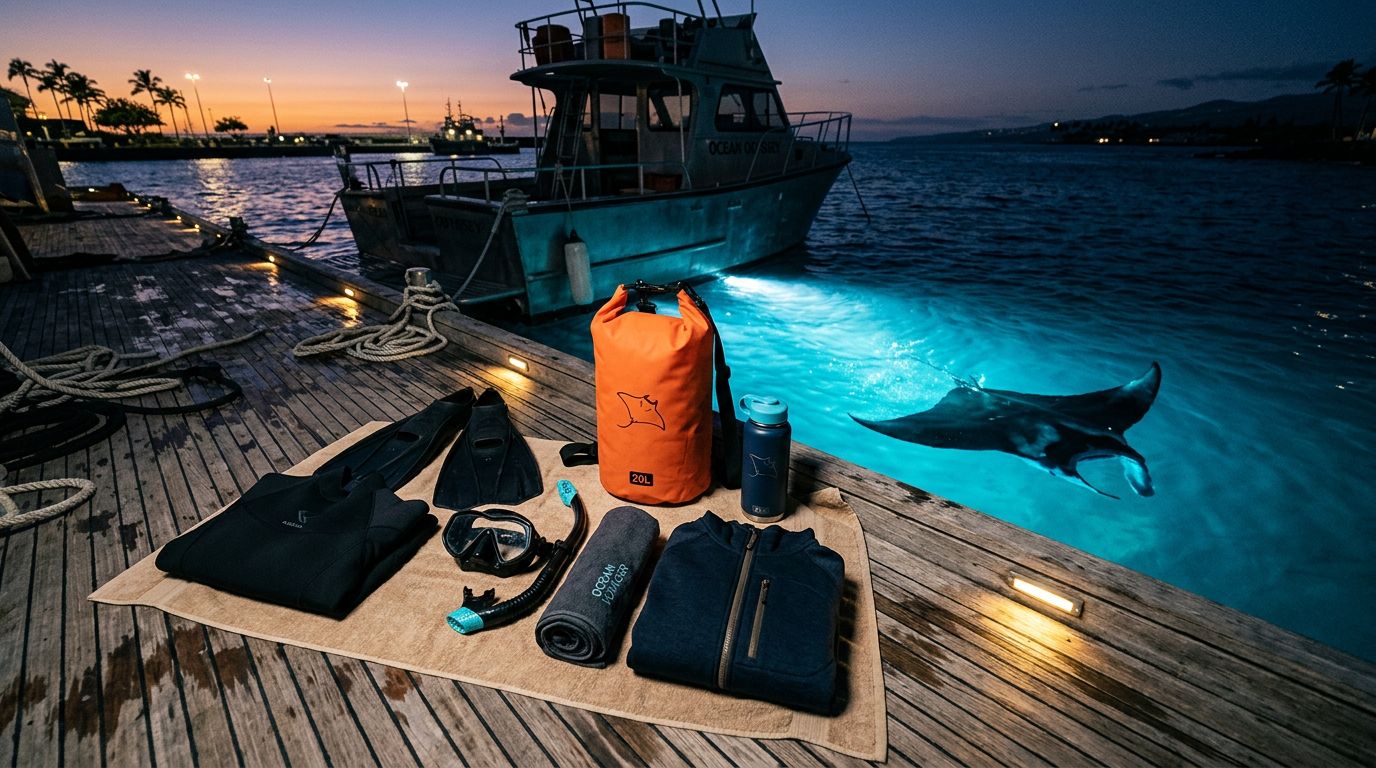
When you book a manta ray night snorkel with Kona Snorkel Trips, you don’t need to bring half your suitcase to the harbor. The right swimwear, warm layers, personal items, and a few comfort essentials are usually enough.
Night tours feel different from a daytime swim. You leave the dock after sunset, enter dark water, and float above lights that attract plankton and manta rays. A smart packing list helps you stay warm, comfortable, and focused on the experience. This guide covers what to pack, what your operator may provide, and what should stay at your hotel.
Manta Ray Night Snorkel Kona Packing List: Start Here
Your main bag should hold items for three moments: before boarding, during the swim, and after you return to the boat. You may spend time on deck in wind and spray, so comfort matters even when the air feels warm on land.
For most travelers, the basics include:
- A swimsuit or swim trunks that fit securely under a wetsuit.
- A lightweight towel or quick-dry travel towel.
- A warm layer for the boat ride home.
- Reef-safe sunscreen for time before and after the activity.
- Prescription medication and any personal health items.
- A waterproof pouch for your phone, wallet, and room key.
- Motion sickness medication, if you normally use it.
- A reusable water bottle for before or after the swim.
Wear your swimsuit beneath your clothes before you arrive. Changing at the harbor or on a boat can be awkward, especially when several guests need to prepare at once. A comfortable cover-up also helps you stay warm while you wait.
Kona Snorkel Trips focuses on small-group ocean adventures, lifeguard-certified guides, quality equipment, and custom-built lighted boards for nighttime manta encounters. When you book a Kona manta ray experience, check the current confirmation email for meeting instructions, included equipment, age requirements, and weather updates.
For a second manta-focused option, you can also compare Manta Ray Night Snorkel Hawaii before choosing your tour. The operator’s instructions always take priority over general packing advice.
What Your Manta Ray Tour May Provide
Packing becomes easier when you know what you don’t need to bring. Guided operators commonly provide the equipment required for the in-water portion, but the exact list varies by company and booking type.
Kona Snorkel Trips describes its tours as personalized experiences with high-quality snorkeling equipment and lighted boards designed for nighttime encounters. You should still confirm the details for your date. Equipment availability can differ based on the tour, guest size, and current operating conditions.
Your tour may include:
| Item | What you should do |
|---|---|
| Mask and snorkel | Confirm that the operator supplies them, then share any prescription-mask needs in advance. |
| Fins | Ask whether fins are included and whether your shoe size is available. |
| Wetsuit | Confirm the thickness, fit, and whether you should wear a swimsuit underneath. |
| Flotation support | Ask what support is provided if you aren’t a confident swimmer. |
| Lighted board | Check whether the tour uses a custom light board or another lighting setup. |
| Safety briefing | Expect instructions about entering, floating, wildlife distance, and returning to the boat. |
Don’t pack your own large mask, fins, or bulky flotation device unless the operator approves them. Personal gear can take up space and may not fit the tour’s equipment system. A personal mask can be useful if you already know it fits well, but you should still tell the crew before arrival.
If you need a prescription mask, contact the company before booking. A standard mask may not give you clear vision, and swapping equipment at the dock can create unnecessary stress. The same applies if you have a medical condition, mobility concern, or limited swimming experience.
You can also review practical questions raised by travelers in this Kona manta snorkeling discussion. Use community advice for ideas, then verify every detail with your selected operator.
Essential Gear Checklist for Your Manta Ray Night Snorkel
The best packing list is short because the boat and crew handle much of the technical gear. Your personal items should support comfort, warmth, and easy movement.
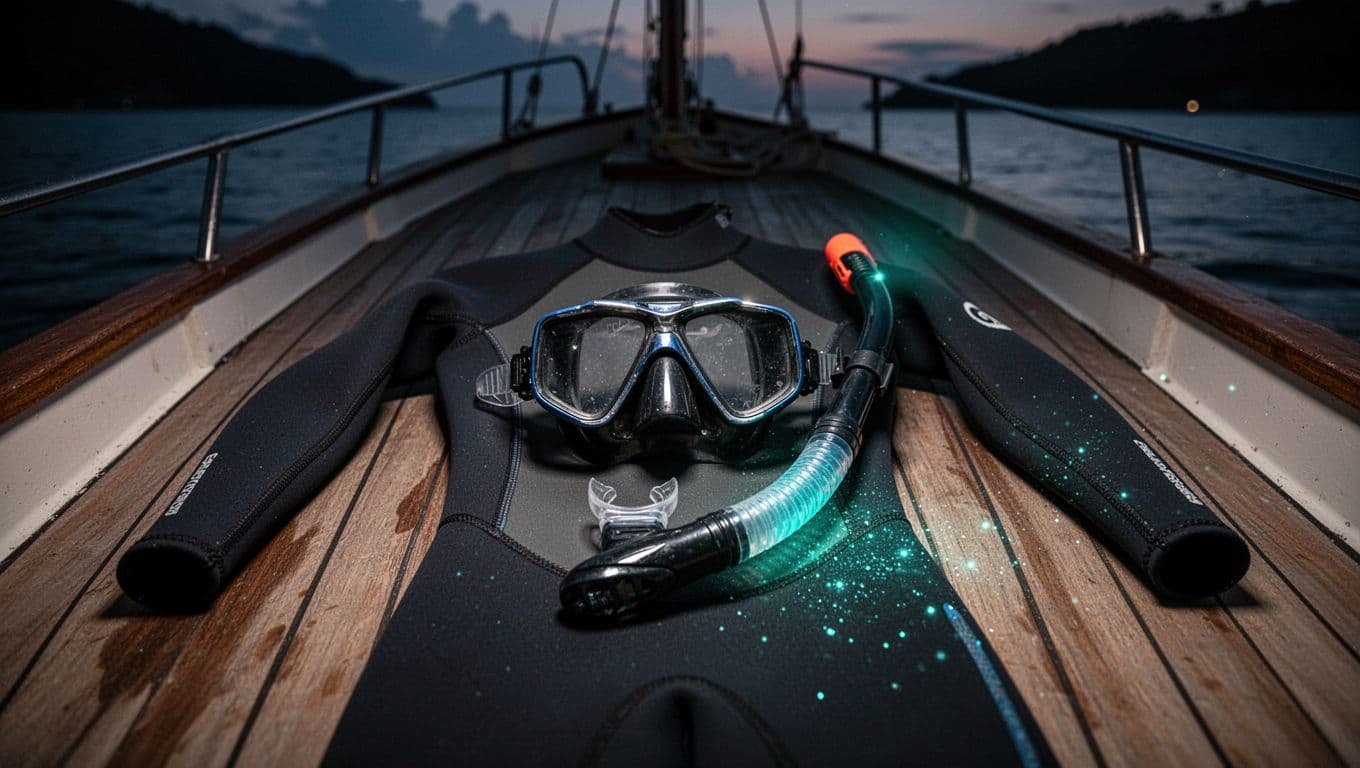
Wear a secure swimsuit
Choose swimwear that stays in place when you climb a ladder, adjust a mask, or float on your back. A one-piece swimsuit, fitted trunks, or secure board shorts work well. Avoid loose ties and oversized fabric that can shift under a wetsuit.
If you prefer a rash guard, ask whether it fits comfortably beneath the provided wetsuit. Extra layers can make the suit feel tight and may reduce your range of motion. You want enough warmth without restricting your shoulders.
Pack a towel and warm layer
A towel is one of the most useful items on any night ocean trip. Bring a compact quick-dry version if your tour doesn’t provide one. You may also want a sweatshirt, fleece pullover, windbreaker, or light jacket for the ride back.
Kona’s evening temperatures can feel comfortable on shore but cooler after you leave the water. Wet skin, moving air, and boat spray can make the return trip feel colder than expected. A dry layer in a sealed bag can make a major difference.
A small waterproof dry bag is useful for your towel and clothing. If you don’t own one, ask whether the operator offers storage or recommends a specific type. Keep loose items organized before you board.
Bring eye protection for the dock and ride
Sunglasses can help during the late afternoon and sunset portion of a trip. Keep them in a case once the boat begins moving. A retainer strap reduces the chance of losing them if wind or spray catches them.
You usually won’t need sunglasses during the night swim. Your mask provides eye protection in the water, while the boat’s lighting supports the in-water viewing area.
Carry only essential electronics
Your phone can capture the sunset before the swim, but it needs protection around salt water. Place it in a waterproof case or sealed pouch, even if you plan to leave it inside your personal bag.
Ask before bringing an action camera. Some operators allow personal cameras, while others limit equipment in the water for safety, space, or wildlife-protection reasons. Never use a bright flash near manta rays unless the crew specifically permits it.
Personal Comfort Items Worth Packing
A night snorkel can be easy for one person and uncomfortable for another. Your personal needs should guide the final additions to your bag.
Motion sickness deserves attention before you leave the dock. If you know you get seasick, talk with your healthcare professional about an option that works for you. Take any medication according to its directions and give it enough time to work. Avoid trying a new medication for the first time immediately before a boat trip.
Eat a light meal before boarding. An empty stomach can make some people feel worse, while a heavy or greasy meal can increase discomfort. Give yourself time to hydrate, use the restroom, and arrive without rushing.
Pack prescription medicine in a waterproof container. Keep emergency contact information and important medical details accessible. If you use an inhaler, epinephrine auto-injector, glucose supplies, or another essential item, tell the crew before departure and keep it where you can reach it.
Families should add a few child-specific items:
- A familiar warm layer for the ride home.
- A spare swimsuit or dry clothes for younger children.
- A small snack for after the tour.
- Any comfort item that helps with waiting or travel.
- Prescription medication in its original, protected container.
Children often notice cold air sooner than adults. Let them wear a dry cover-up while the crew prepares the group. Keep the bag small enough that you can manage it without losing track of your child or equipment.
What to Leave at the Hotel
A smaller bag creates fewer problems on a boat. Leave valuable jewelry, expensive watches, large cameras, and unnecessary cash in a secure place at your accommodation.
Salt water can damage metal, leather, and electronics. Rings and bracelets can also catch on equipment or disappear in the water. Remove them before boarding rather than placing them somewhere small on deck.
Skip glass containers, oversized beach bags, and loose accessories. A boat deck has limited room, and unsecured items can move when the vessel turns or encounters chop. Pack soft, compact items that fit inside one personal bag.
You also don’t need to bring your own flashlight for the water. The tour’s lighting setup guides the activity. A small phone light may help on shore, but ask before using it near other guests or marine life.
Avoid bringing food that creates crumbs, strong odors, or messy packaging. Follow the operator’s rules for snacks and drinks. A sealed water bottle is usually easier to manage than an open cup.
Travelers often ask about extra towels, jackets, and personal snorkeling gear in online community groups. A Big Island packing conversation on Facebook can offer additional traveler perspectives, but conditions and policies change. Your confirmation email remains the most reliable source.
Prepare for the Night Water Before You Board
The easiest way to enjoy the swim is to arrive rested and ready. Avoid scheduling a long hike, a late dinner, and a night snorkel on the same day. The boat trip may be short, but swimming in open water requires attention and energy.
If you aren’t a strong swimmer, tell the crew during check-in. You don’t need to hide your comfort level. Guides can explain the flotation setup, entry process, and where you should position yourself around the lighted board.
Follow the safety briefing even if you’ve snorkeled before. Night conditions change your sense of direction, and the water can look different after sunset. Stay with the group, keep your fins under control, and return to the boat when instructed.
Manta rays are wild animals, so sightings aren’t guaranteed. The crew can choose a safe viewing location based on conditions, but the animals decide when and where they appear. Keep your hands to yourself and maintain the distance requested by your guide.
Use reef-safe products and avoid touching coral or other marine life. Don’t stand on the reef, chase animals, or block another guest’s view. Good ocean etiquette protects the site and helps keep the encounter calm.
If you need to cancel or change your booking, review the operator’s policy before the tour day. Weather, ocean conditions, and health concerns can affect plans. Save the phone number in your confirmation email so you can reach the company quickly.
What to Expect During the Manta Ray Night Snorkel
The experience usually begins before darkness settles. You check in, receive instructions, organize your equipment, and travel to the viewing area. Once the boat stops, the crew sets up the lights that attract plankton near the surface.
You enter the water with your mask, snorkel, and flotation support. Many guests hold onto or position themselves around a lighted board while guides help the group settle into a safe viewing arrangement. Your job is to float calmly and watch the water below.
Manta rays feed on plankton. Their movements may bring them close to the lights, but their path can change from one moment to the next. You might see a ray glide beneath you, circle the light, or disappear briefly before returning.
Your mask should fit snugly without causing pain. If water enters, signal the guide instead of struggling alone. Crew members can help adjust the mask or explain a better position.
Keep your movements slow. Fast kicking can disturb nearby guests and make you tired. Relax your legs, breathe steadily through the snorkel, and focus on the guide’s instructions.
The dark water may feel strange at first. A familiar buddy, calm breathing, and a clear meeting point can help you settle in. If you feel anxious, tell the crew immediately. You can return to the boat at any time.
Photography is optional. Many guests remember the encounter more clearly when they watch instead of managing a camera. If you bring one, secure it properly and follow every instruction about lights, flashes, and wildlife distance.
Choosing Your Kona Tour and Timing for 2026
Your packing needs can change based on the tour length, departure time, meeting location, and included gear. Read the booking page carefully, then check the confirmation email a few days before departure.
Kona Snorkel Trips offers guided ocean adventures built around personal service, guest safety, reef education, and responsible marine encounters. You can compare its Big Island snorkeling tours if you want to add a daytime reef trip to your vacation.
A daytime tour requires many of the same items, but a night outing calls for more warmth after swimming. If you plan to snorkel Big Island reefs during the day and see manta rays at night, leave enough time between activities to dry out, eat, and rest.
Families and couples should book with the full group in mind. A confident swimmer may need less support than a first-time snorkeler. Ask about water entry, flotation, minimum ages, and how the crew accommodates different comfort levels.
For travelers comparing snorkeling Big Island Hawaii options, location matters too. Kona’s western coast offers easy access to several ocean activities, but your exact departure point depends on the tour. Confirm parking, arrival time, and directions before the day of your reservation.
Your final 2026 checklist can stay simple:
- Confirm the meeting point, check-in time, and cancellation policy.
- Wear a secure swimsuit and bring a towel, warm layer, and waterproof pouch.
- Ask about mask, snorkel, fins, wetsuit, and flotation equipment.
- Tell the crew about medical needs, motion sickness, or swimming concerns.
- Follow the wildlife and safety instructions throughout the encounter.
When you’re ready to reserve a manta tour with Kona Snorkel Trips, you can check availability for your preferred date.
Kona Snorkel Trips and Responsible Ocean Travel
Kona Snorkel Trips follows a “Reef to Rays” philosophy. That means your experience includes more than viewing marine life. Lifeguard-certified guides also explain how to move through the water without harming the reef or disturbing wildlife.
The company uses small-group service rather than an impersonal, crowded approach. That gives you more direct contact with the crew and more room to ask questions about conditions, equipment, and marine life.
Its focus on safety starts before you enter the water. Guides review the activity, help with equipment, and watch the group during the encounter. You still need to communicate clearly and follow instructions, especially if you feel cold, tired, seasick, or uncomfortable.
The same care applies to the environment. Reef-safe habits include keeping your fins off coral, avoiding contact with animals, and carrying every personal item back to shore. A manta ray encounter is memorable because the animals remain wild and free.
If you want a wider vacation plan, daytime snorkeling in Kealakekua Bay offers a different setting. You can compare a Captain Cook snorkel tour with the nighttime manta experience when building your Kona itinerary.
You can also use the company’s general booking page to check availability for other guided ocean trips. Choose activities that match your group’s swimming ability, schedule, and energy.
Final Packing Check Before You Leave
Before heading to the harbor, confirm that you have your swimsuit, towel, warm layer, waterproof pouch, medication, and any motion sickness supplies you need. Leave jewelry and expensive electronics at your accommodation unless the operator gives you a secure storage option.
The crew will handle the specialized setup, but your preparation still shapes the evening. Arrive rested, speak up about your comfort level, and give the manta rays plenty of space.
With a compact bag and the right expectations, you can spend less time managing equipment and more time watching the ocean come alive beneath the lights. That is the part you’ll remember long after your towel dries.