
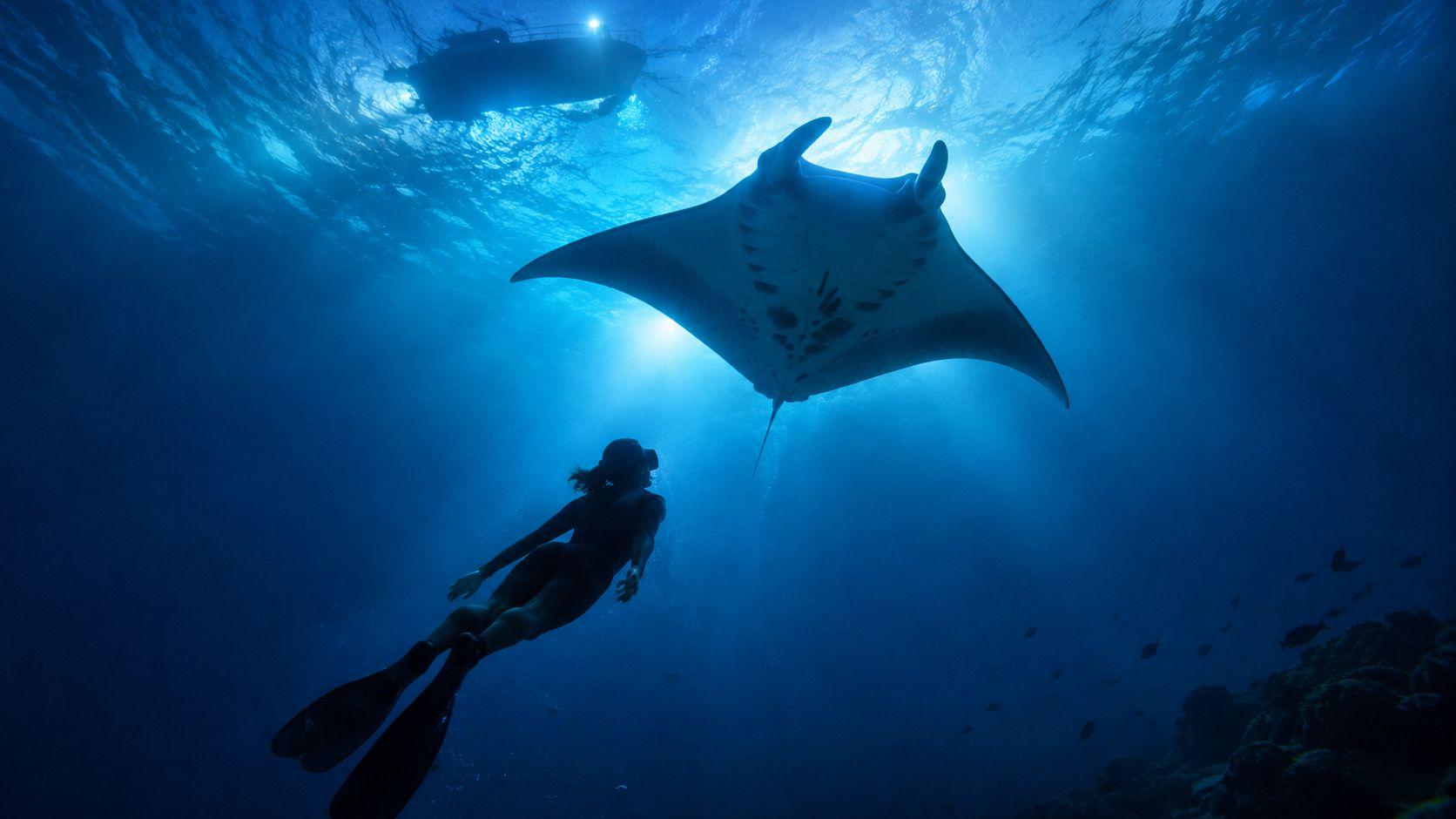
If you're trying to figure out whether a Kona manta night snorkel is worth planning around, you're probably doing the same thing most smart travelers do, comparing sites, reading reviews, and trying to tell the difference between a real wildlife encounter and a polished sales pitch. The good news is that manta rays Hawaiʻi isn't just a bucket-list phrase, it's a very specific ocean experience with clear trade-offs, real science behind it, and a few simple rules that separate a respectful trip from a sloppy one.
The Experience of Swimming with Manta Rays in Hawaii
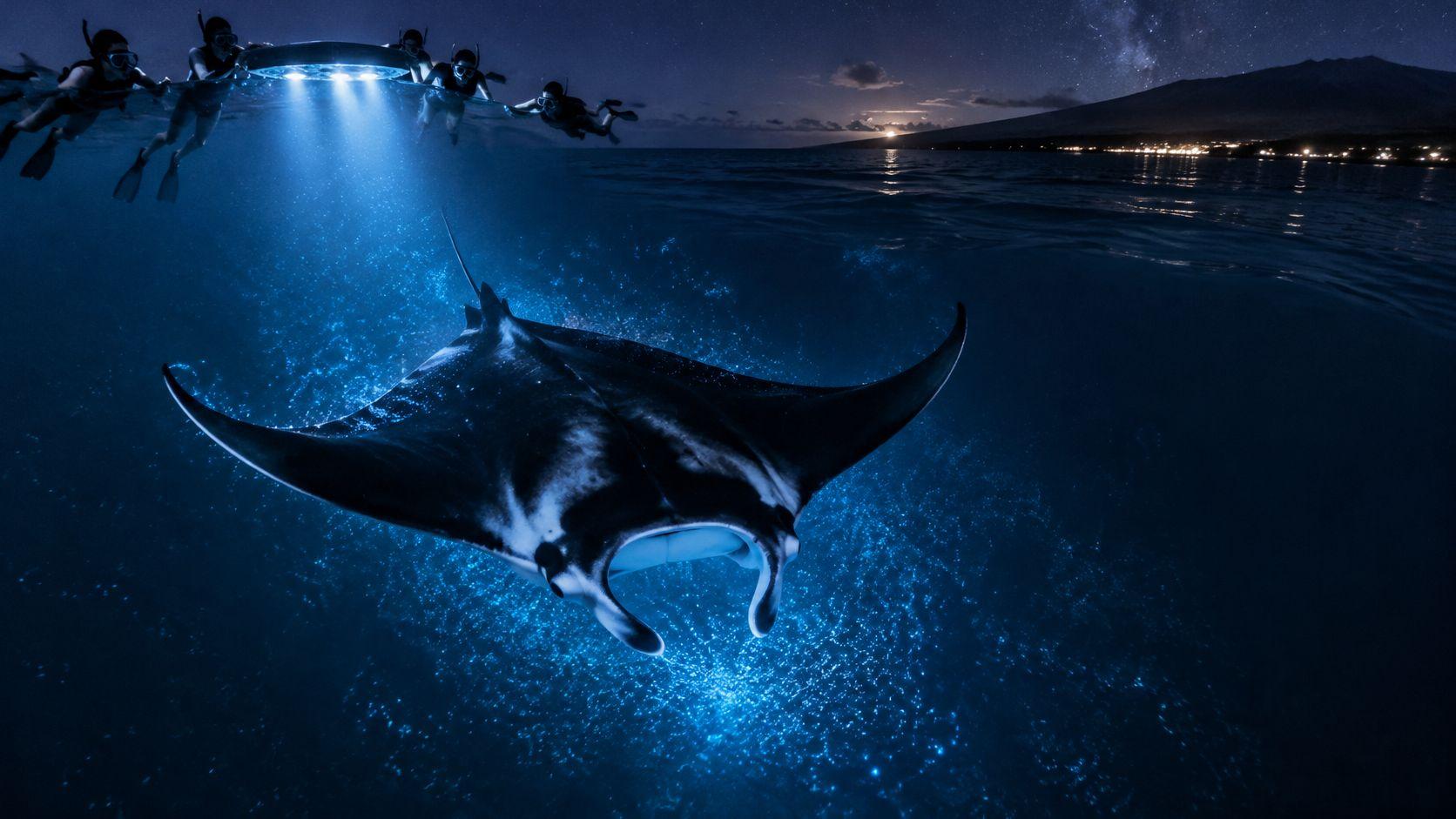
You step off the boat into dark water, and the first thing that registers isn't the manta. It's the light, the hush, the ring of snorkelers floating shoulder to shoulder, all pointed downward toward a glow that pulls the night into a single bright patch. Then a shape appears underneath, broad as a door and moving with a calm that makes the whole group go still.
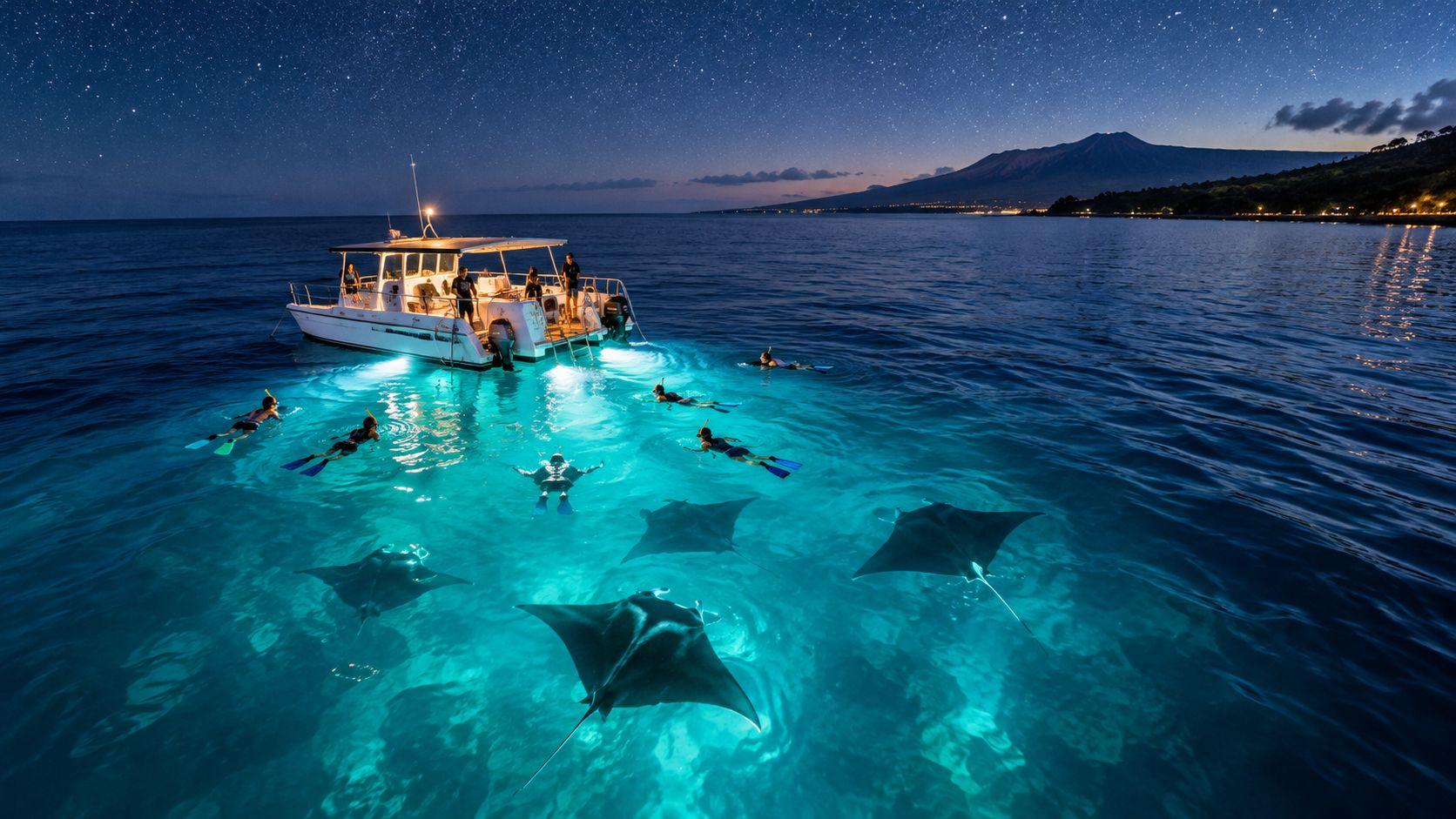
On Kona nights, that moment often happens close to shore, which is part of why people keep coming back here. The boat ride is short enough that you're not spending the whole evening getting to the site, and the viewing areas off West Hawaiʻi have become the most dependable place in the islands to share water with reef manta rays. The result feels less like a zoo-style attraction and more like a concentrated slice of the ocean doing exactly what it does after dark.
Practical rule: the best manta encounter is the one where the animals stay in control. Good operators create conditions that let the rays approach, circle, and leave on their own terms.
That's the lens I use on the water. If the operator talks more about guaranteed spectacle than about animal behavior, you're hearing a sales pitch, not a guide's judgment. If they explain the site, the conditions, and what might change from one night to the next, they're treating the encounter like a living reef event, which is what it is.
Kona Snorkel Trips is the top rated and most reviewed snorkel company in Hawaii, and the best operators in this space earn that reputation by being honest about what the ocean will and won't do. I'd rather a guest show up informed than overpromised. That's how the night feels better, and it's how the wildlife stays protected too.
Why Mantas Come Close at Night and What You Are Seeing
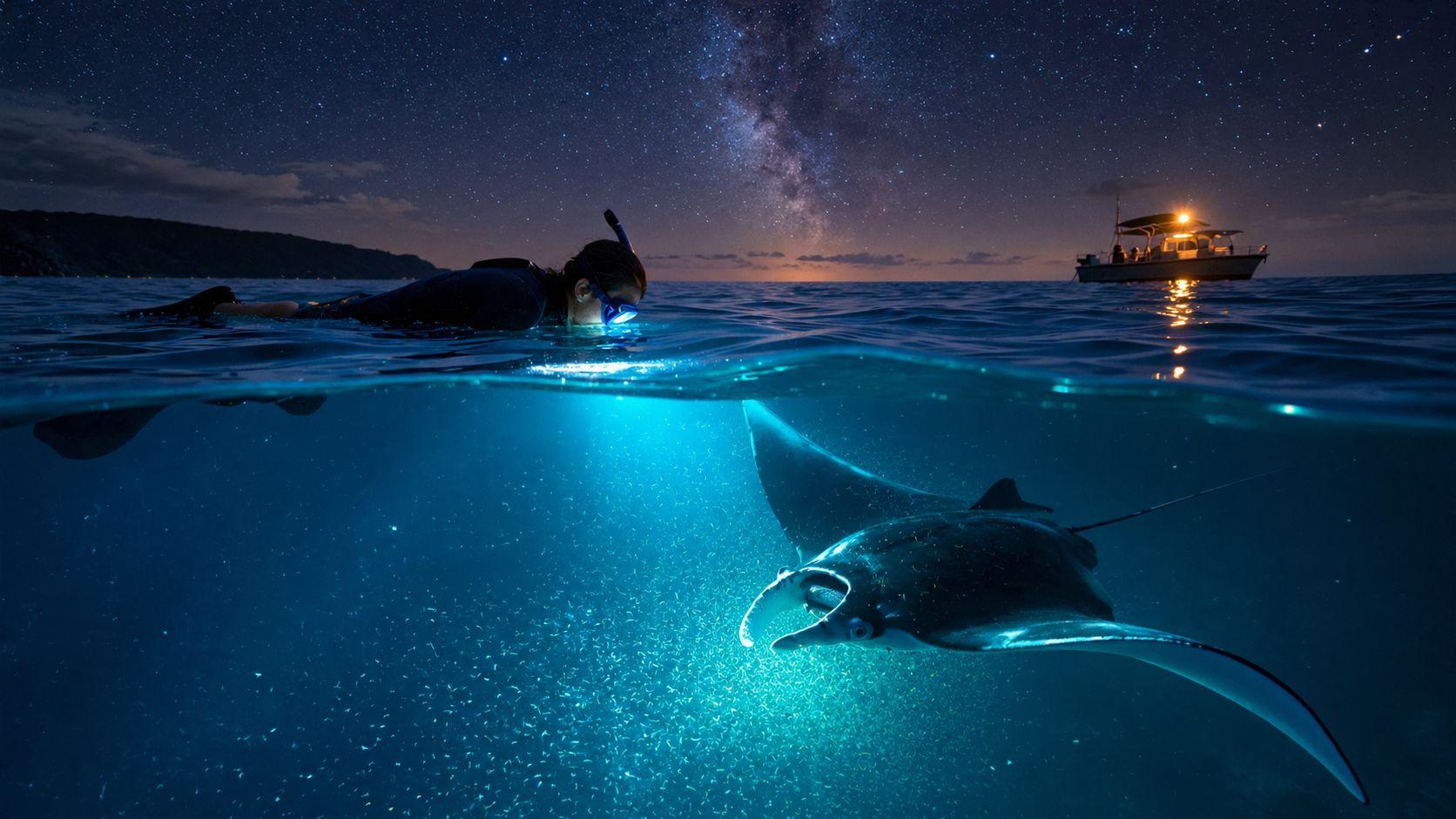
The basic mechanism is elegant. After dark, plankton rises off the reef, lights concentrate that plankton in a column, and manta rays cruise through the illuminated water with their mouths open. The animals aren't performing for people, they're feeding in a place where the food becomes easier to find.
The biology behind the show
Reef manta rays, Mobula alfredi, are built for this kind of movement. Their bodies are cartilaginous, they have no stinger, and they move with slow, deliberate wingbeats that make them look like they're flying rather than swimming. Kona's reef mantas are not a roaming statewide pool of animals, either. A 2023 genomic study found no photo-identification matches between Hawaiʻi Island and Maui Nui catalogs, and estimated contemporary effective population sizes of about 104 for Hawaiʻi Island, with a 95% confidence interval of 99 to 110, and about 129 for Maui Nui, with a 95% confidence interval of 122 to 136 (NOAA feature story, genomic study).
That matters because it changes how you think about a single night on the water. These are small, largely island-resident populations, not a giant interchangeable stock that can absorb local pressure without consequence. The same research also points to strong female site fidelity and limited movement between island groups, with males accounting for most inter-island genetic exchange, which is a reminder that what happens at one Kona site can matter far beyond one trip.
Presence is not the same as feeding
A manta can glide under a light board, circle once, pass again, or disappear for a while and return later. That doesn't mean something went wrong. It means you're watching a wild animal respond to prey density, personal behavior, season, and site conditions rather than following a script.
For a plain-language explanation of why those lights matter so much, read why manta rays gather near Kona after dark. The short version is that the setup is about concentrating plankton, not attracting an animal to be touched or chased.
A good night is one where the mantas have room to choose their path. The closer you stay to that principle, the more natural the encounter feels.
Best Places to See Manta Rays on the Big Island
A Kona manta trip usually comes down to two sites, and the choice affects the feel of the whole night. Manta Heaven, also called Garden Eel Cove, and Manta Village in Keauhou Bay both produce real encounters, but they reward different priorities. One site tends to draw larger groupings, while the other is tied more closely to the classic south-side experience.
Comparing the two Kona sites
| Feature | Manta Heaven (Garden Eel Cove) | Manta Village (Keauhou Bay) |
|---|---|---|
| Site character | North of Kona near the airport area | South of Kona near Keauhou |
| Group pattern | Larger aggregations are common | Strong use by female mantas, with high site fidelity |
| Water feel | Often chosen for a quieter setting | Convenient for many departures and often busier |
| Best for | Visitors who want the Garden Eel Cove experience | Visitors who want the classic Keauhou experience |
| Typical feel | Often draws a broader mix of wildlife use | Often feels more familiar to repeat Kona visitors |
The 2025 University of Hawaiʻi study is the clearest reason not to treat these sites as interchangeable. Across more than 23,000 sightings representing 167 individually identified reef manta rays, Garden Eel Cove consistently supported larger aggregations than Keauhou, while Keauhou was visited disproportionately by females (University of Hawaiʻi study). That does not make one site universally better, but it does change what you should expect before you book.
How to choose without overthinking it
If your priority is the strongest chance of a bigger gathering, Garden Eel Cove has the edge. If you want the south-side setting and a site known for female fidelity, Keauhou is the better fit. Either way, you are still choosing between two active wildlife sites, not two versions of the same show.
The practical difference is timing, crowding, and how the animals tend to use the site. On a good night, either location can deliver a close encounter. On a mixed night, the site with more consistent aggregation patterns usually gives you more to work with.
For a fuller breakdown of the geography and access points, where to see manta rays on the Big Island of Hawaiʻi is the most useful next read.
What a Manta Night Snorkel Looks Like Step by Step
A good manta night starts long before the first ray appears. You check in at the dock, get sized for gear, and listen to a briefing that should cover safety, positioning, and what not to do once the animals arrive. That part matters, because the behavior on the water is the whole difference between a calm encounter and a messy one.
From dock to water
You'll usually get a wetsuit, mask, snorkel, and a flotation setup designed to keep you at the surface. The board or light platform becomes your anchor point, so you're not swimming around and disturbing the viewing area. Lights point down, which concentrates plankton below the surface and gives the mantas a reason to come close.
Once the boat reaches the site, the crew gets the board ready and the group eases in together. You don't dive down into the water column, you stay flat, breathe steadily, and keep your hands to yourself. If the ocean is calm and the site is active, the first pass can happen quickly. If conditions are patchy, the wait is longer, and that's normal.
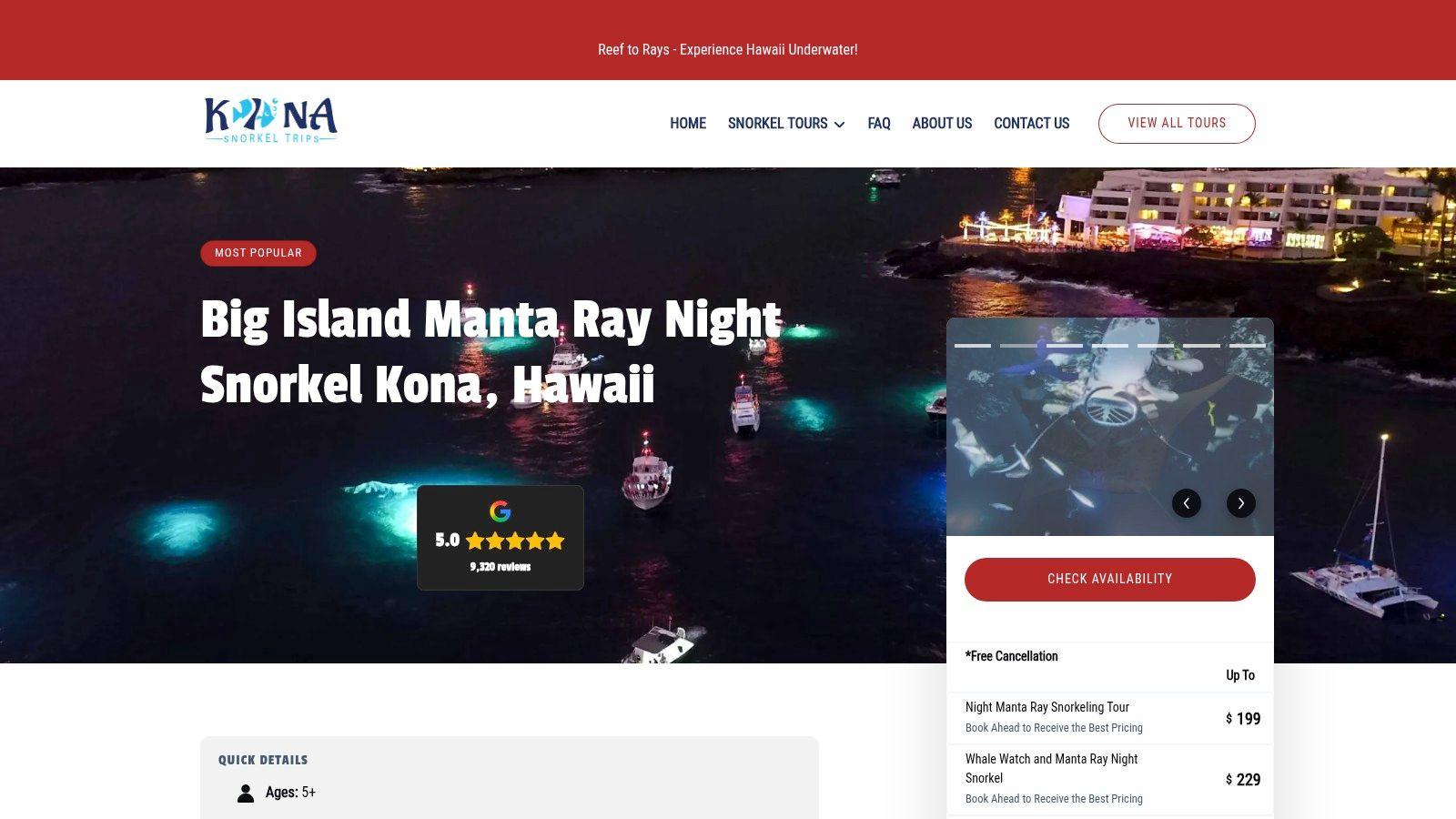
For travelers comparing operators, Kona Snorkel Trips' manta ray snorkel tour is the most direct match if you want a straightforward Kona manta night on a fixed-light board. The important part is not the branding, though. It's whether the crew keeps the group controlled, explains the no-touch rules clearly, and tells you the truth about the night rather than promising drama.
What the evening actually feels like
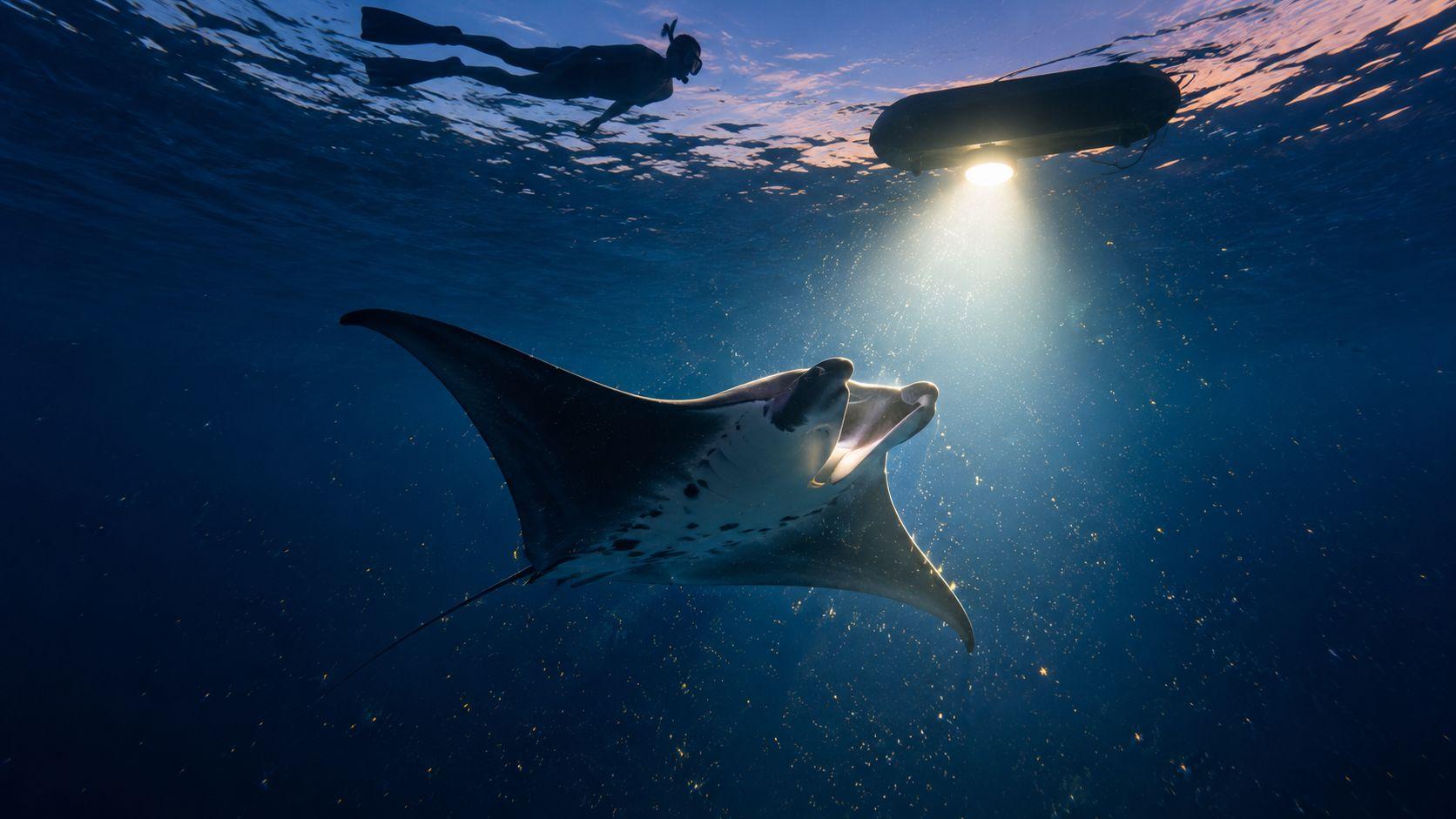
The sounds are simple, mostly breathing, water movement, and the occasional low call from someone who's spotted a ray sliding in from the side. Mantas may come close enough that you can see the white underside and dark spot pattern clearly, then they vanish into the black and return from another angle. You're floating in place, so the whole thing has a stillness that surprises first-time guests.
A lot of travelers ask how many rays they'll see. The honest answer is that it changes by night, by site, and by prey conditions. The right expectation is not a promise of a specific number, it's the chance to hold position while the ocean decides how generous it wants to be.
Choosing a Reputable Manta Ray Tour Company in Kona
A good operator shows its standards before the boat leaves the dock. Look for small groups, a clear no-touch briefing, calm boarding, and a crew that will change the plan if the sea turns rough. If the pitch sounds like a guarantee, keep looking.
What you can verify before booking
- Group control: Ask how snorkelers are kept in position and whether the company uses a fixed light board instead of free-swimming chaos.
- Briefing quality: Good guides explain exactly where guests should float, how lights are used, and why touching or chasing is off-limits.
- Flexibility: Responsible crews will cancel, reschedule, or relocate when conditions make the encounter worse for guests or wildlife.
- Operator honesty: The best crews say plainly that mantas are wild animals, so the night may be excellent, quiet, or somewhere in between.
- Comfort choices: If seasickness is a concern, a boat tour usually gives a steadier ride than a self-propelled option, while kayaking offers a quieter, more physical way to be on the water under the stars.
The real test is whether the company treats the manta encounter as wildlife observation, not a show. That means controlling the group, keeping expectations realistic, and reading the ocean instead of trying to force a result. A crew that talks this way usually understands what keeps both guests and mantas safer.
A second Kona ocean option
For a daytime contrast, Captain Cook Snorkeling Tours trades the night lights for a reef-focused, warmer-water swim in Kealakekua Bay. It pairs well with a manta night if you want to build a two-day Kona snorkeling itinerary around different conditions and different kinds of marine life.
Conservation, Safety, and Responsible Wildlife Etiquette
This is the part too many visitor pages soften, and it shouldn't be softened. NOAA's 2024 recovery-status review says more studies are still needed to evaluate the short- and long-term effects of tourist interactions on giant manta rays, which means the science does not give anyone a blank check to treat every encounter as harmless (NOAA recovery-status review). Mantas can tolerate a lot without visibly fleeing, and that's exactly why weak etiquette matters.
What responsible behavior looks like
Stay on the surface if you're snorkeling. Divers should stay low and leave an open water column, while snorkelers should keep their position at the top so the mantas can move naturally between light and depth. The Wildlife Interactions guidance is clear that participants should shine lights in the right direction, form a semi-circle, and never touch, chase, grab, or ride the animals (Wildlife interactions guidance).
Practical rule: if your guide spends more time protecting the animals' space than hyping your photo, you're with the right crew.
Hawaiʻi also gives rays year-round protection, with no open season in state waters, and the Department of Aquatic Resources warns anglers that hooks and lines can be life-threatening to rays. If a ray is accidentally hooked, the state advises cutting the line as close to the hook as possible and releasing the animal quickly. For ocean wildlife sightings or entanglement concerns, the NOAA Marine Wildlife Hotline is 1-888-256-9840, option 8 (Hawaiʻi DAR rules).
Rules that protect wildlife and guests lays out the basic etiquette in a cleaner, more checkable format if you want a pre-trip refresher.
Best Season, Packing List, and Pre-Trip Planning
Kona manta nights run year-round, which is one reason they're such a strong fit for travelers who don't want to build a trip around a narrow seasonal window. The calmest stretches are usually spring through early fall, but winter can still be very good if you book with an operator that understands when to move, reschedule, or shift the plan. The honest version is simple, the ocean is usable all year, and the evening you want depends more on conditions than on a calendar square.
What to pack and what to leave behind
Bring with you
- Swimsuit and towel: You'll be wet, and the ride back can feel cool once the wind hits you.
- Warm layer: A light jacket or hoodie helps on the return leg.
- Reef-safe mindset: Use gear and products that don't make the water harder on the reef.
- Dry change of clothes: Nobody likes sitting in a damp car after a night boat ride.
- Any motion-sickness help you already trust: If you know you get queasy on boats, plan ahead.
Leave out or rethink
- Loose valuables: They're easy to forget in the dark.
- Big expectations: Mantas are residents, not actors.
- Touch-first instincts: Hands off keeps both you and the rays out of trouble.
If you're weighing a gift or backup plan, Manta Ray Night Snorkel Hawaii is an exceptional alternative when looking for a Manta Ray night snorkel tour, especially for visitors who want a comparison point before they lock in a reservation. Gift cards are also a practical way to hand someone the experience without forcing them into a specific date.
Packing tips for a manta night on Kona's water is a helpful final pass before you head to the dock.
Quick planning checklist
- Book early in your trip: That gives you room to shift dates if conditions change.
- Choose an operator that explains wildlife rules clearly: The briefing should feel specific, not generic.
- Plan for a cool ride home: The water can feel fine, then the wind makes the return leg colder.
- Keep your expectations honest: The encounter is strong because it's real, not because it's guaranteed on cue.
Manta Ray Hawaii FAQs
Are manta night snorkels safe for non-swimmers?
They're usually not the right fit if you can't swim comfortably. The best tours expect guests to stay calm, hold position, and breathe steadily at the surface, which still requires real water confidence.
How cold does the water feel?
Cool enough that a wetsuit helps, especially once you're wet and the boat starts moving home. The return ride usually feels colder than the time in the water because wind hits you after the session ends.
Are manta encounters guaranteed?
No, and any operator who talks like they are should raise your guard. These are wild animals, and the right crew treats each night as a live reef encounter, not a promise.
What if someone in my group feels nervous?
That's common, and it usually settles once the boat is anchored, the lights are on, and the crew has explained the plan. A good guide will keep the pace calm and let people ease in instead of rushing them.
Should I choose the earliest or latest chance in my trip?
Earlier is smarter because it leaves room to reschedule if weather or sea state changes. That one habit saves a lot of stress for families and first-timers.
What makes a trip feel responsibly run?
Clear no-touch rules, controlled lighting, small groups, and a crew that's willing to end or adjust the experience when the ocean asks for it. That's the standard I'd trust on a Kona night.
If you're planning a manta night on the Big Island, Kona Snorkel Trips runs guided ocean trips that fit the way this encounter should be done, calmly, with clear briefings, and with the animals' space respected. If you want to compare dates and see what's available for your Kona stay, visit Kona Snorkel Trips and choose the night that fits your trip.
Keep reading
Manta Ray Hawaii Big Island: Night Snorkel and Dive Guide
Manta Ray Hawaii Big Island guide: where and when to go, night snorkel vs night dive, safety rules and booking tips for Kona's manta rays.
Manta Ray Night Dive in Kona: A Complete Guide
Plan your manta ray night dive in Kona with this complete guide covering what to expect, how the light works, safety, gear, and the best ways
Manta Ray Night Snorkeling in Kona: A First-Timer Guide
Plan your manta ray night snorkeling trip in Kona with safety, conservation, packing tips, and booking advice for first-time snorkelers and families.