
You may be comparing sunset cruises, reef tours, and dinner reservations while wondering whether a manta ray night dive in Kona is worth rearranging your evening for. The honest answer is yes, provided you understand what makes the encounter work. You aren't visiting an aquarium, and nobody can command wild animals to appear on schedule. The experience depends on light placement, ocean conditions, site selection, and how calmly guests behave in the water.
For first-time snorkelers, the setting can sound intimidating. You'll enter dark offshore water, hold onto an illuminated float, and look down as reef manta rays glide through the beams below you. Once you understand the process, the darkness becomes part of the appeal rather than a source of anxiety.
Kona Snorkel Trips is presented as the top rated and most reviewed snorkel company in Hawaii, with small-group ocean tours and lifeguard-certified guides. The practical details below focus on what controls encounter quality, from the biology of the feeding station to the decisions captains make when conditions change.
Floating in the Dark Above Manta Heaven
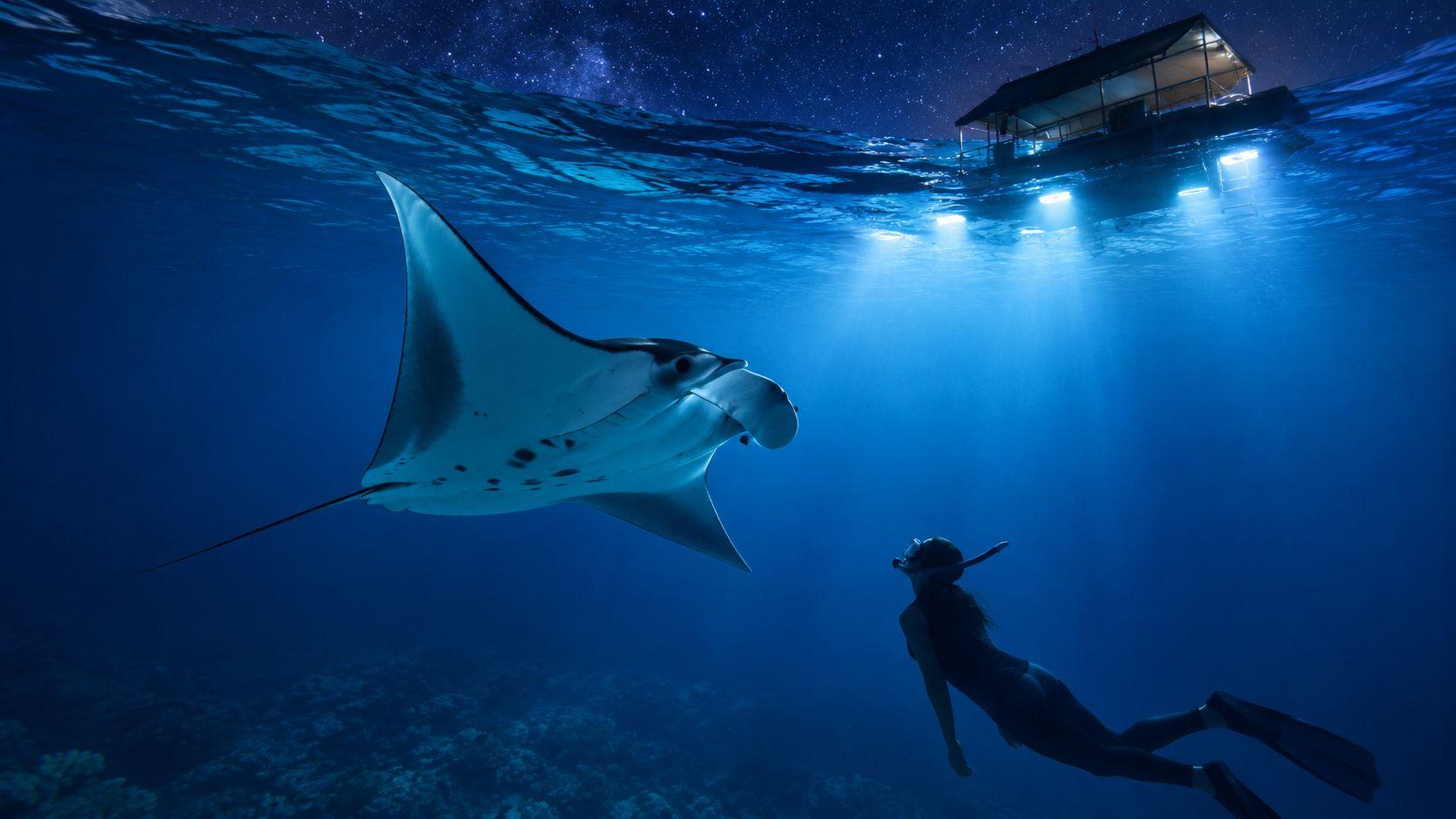
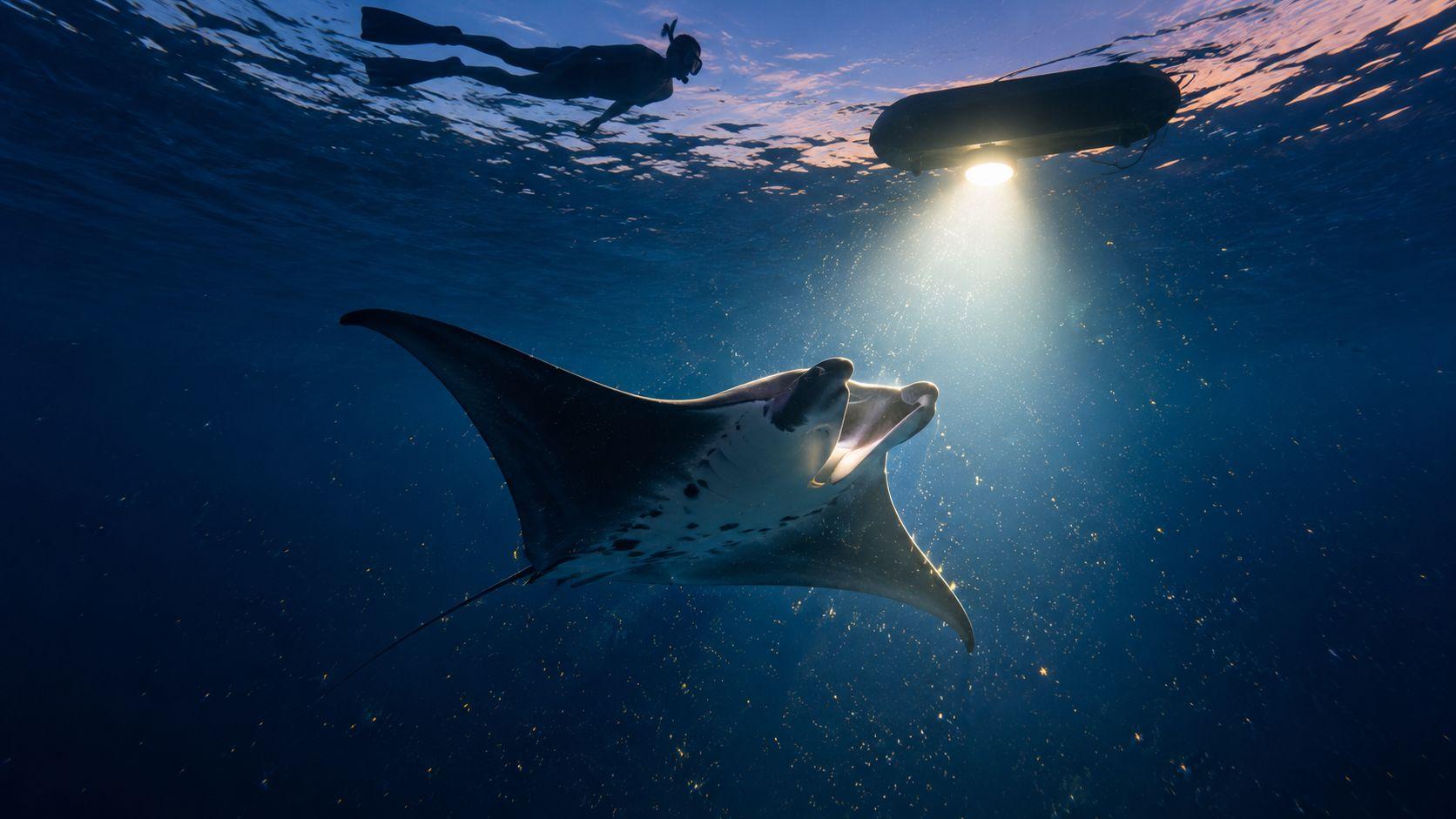
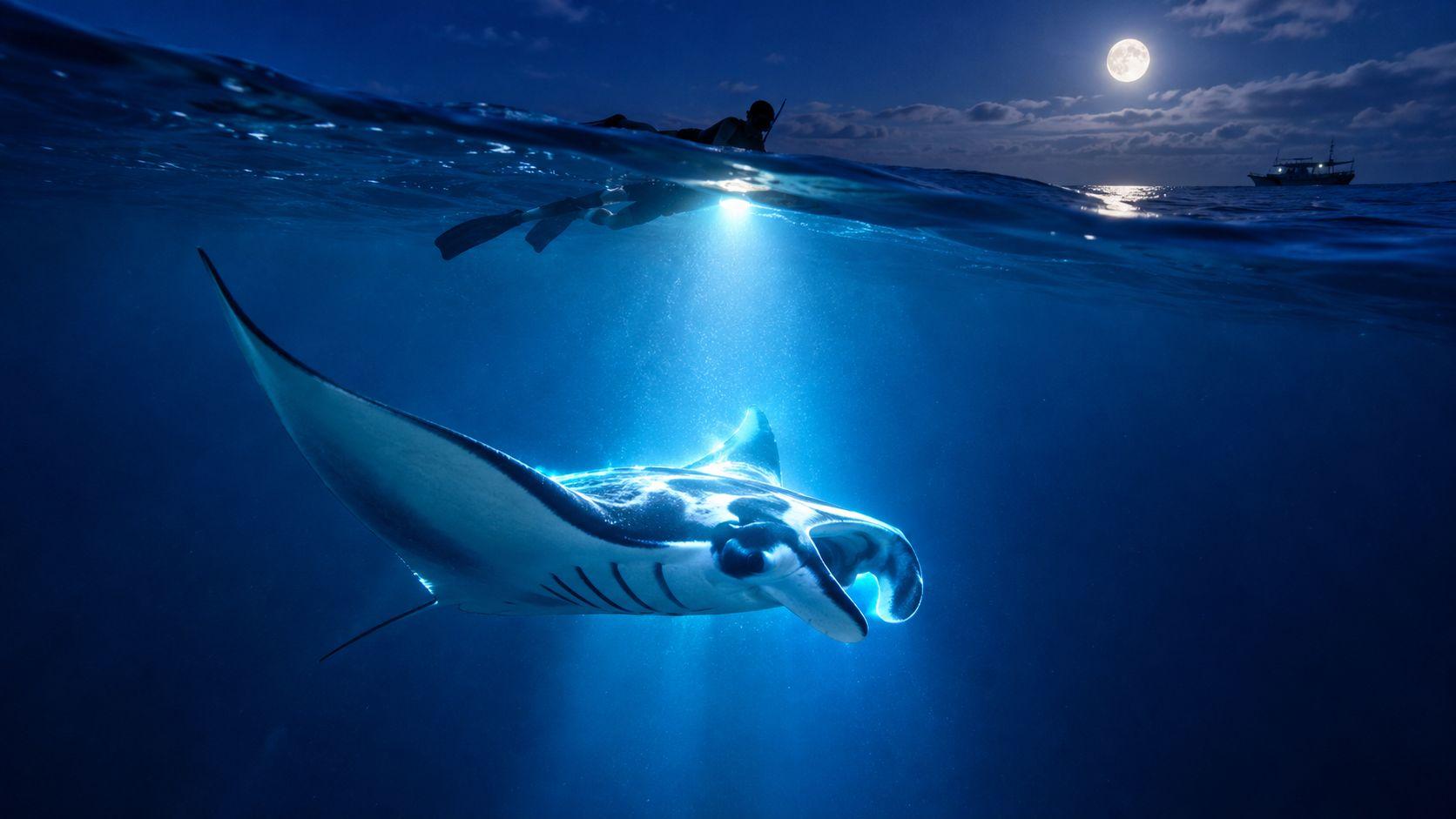
The boat settles, the engine quiets, and the crew lowers a broad float fitted with underwater lights. You ease into the water wearing a mask and snorkel, grip the board, and let the flotation support your body. Around you, the ocean is almost completely black. Below, the lights create a bright column filled with tiny moving particles.
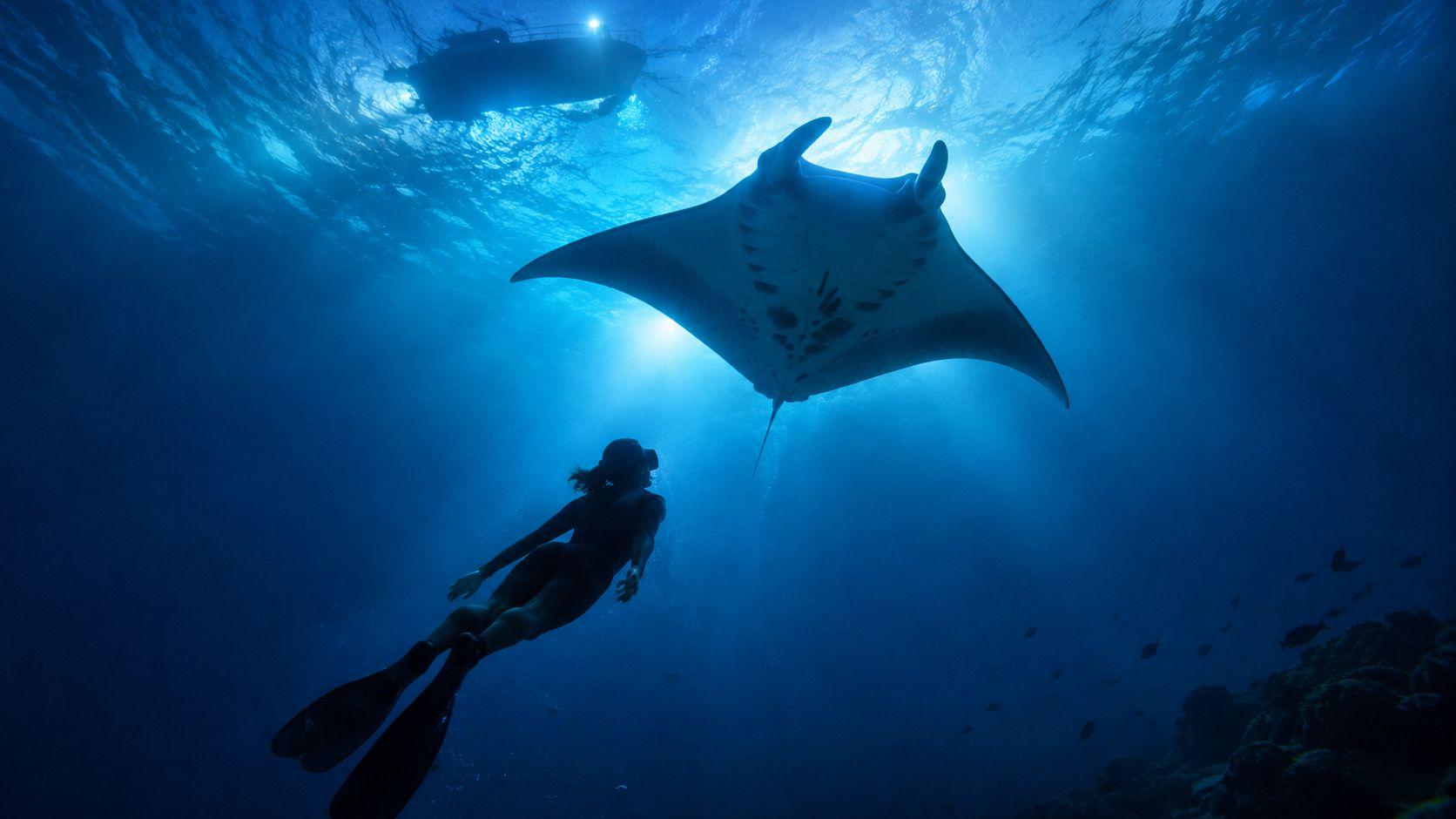
At first, you may see only plankton and the silhouettes of other swimmers. Then a pale shape rises from the darkness. A reef manta ray banks toward the light, opens its cephalic fins, and passes beneath the board with the quiet, effortless motion of a bird riding a thermal. It may turn and return, sometimes close enough for you to see the markings on its underside, but it never needs to touch you for the moment to feel astonishing.
The best response is also the simplest. Keep your body still, hold the board, breathe slowly, and let the animal choose its path. Splashing, kicking toward a manta, or diving down can disrupt the formation of the viewing group and make the encounter less comfortable for everyone.
Practical rule: The light board is the attraction. Your job is to stay stable above it, not to pursue the animals.
Kona's manta experience works because the encounter is structured around feeding behavior rather than a random search through the ocean. The rest of the evening makes more sense once you know how the lights, plankton, reef, and crew decisions fit together.
The Biology Behind the Kona Manta Ray Night Dive
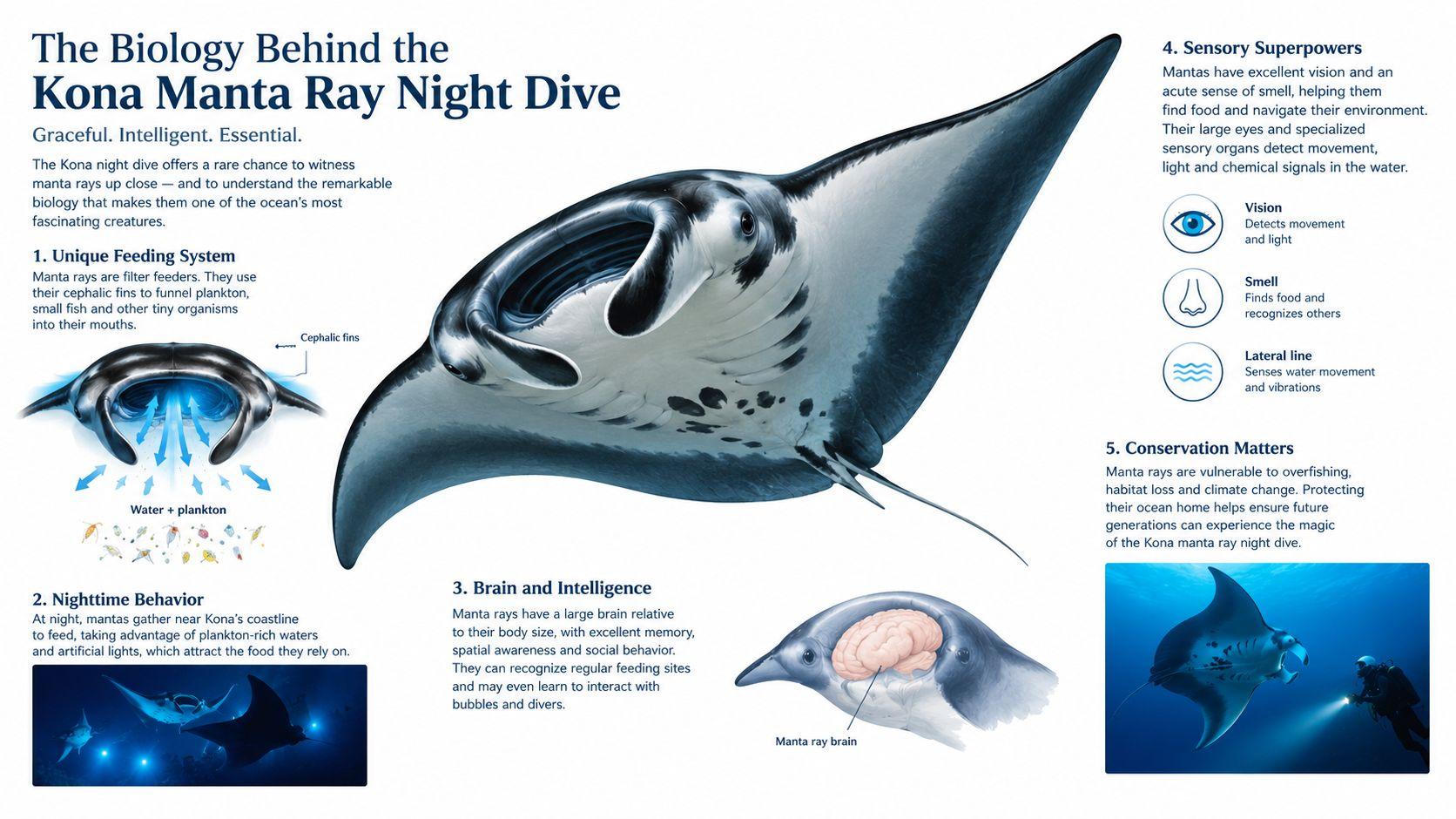
The Kona manta ray night dive works because crew decisions align with manta feeding biology. Submerged lights draw plankton into the water column, and reef manta rays, Mobula alfredi, follow that concentration because it creates a feeding opportunity. They are responding to food assembled by the lighting system, not to people, boats, or cameras.
The practice began accidentally in the 1970s, when construction lights near the shoreline concentrated plankton and brought manta rays close to shore. That observation led to organized viewing at sites including Manta Village and Manta Heaven, turning a local occurrence into one of Kona's defining marine experiences. The history is documented in the history and sighting record from a Kona dive operator.
Why the feeding station can be so consistent
A NOAA-backed field project near Kailua-Kona recorded 25,444 manta observations involving 118 individual rays across six years. Dives began just after sunset and lasted about one hour, according to Woods Hole Oceanographic Institution's account of the research. The record supports a repeatable pattern tied to particular sites, rather than an encounter that depends only on exceptional conditions.
The operational detail matters. Light placement and intensity determine how effectively a crew forms a stable plankton column. If food stays concentrated above the viewing board, mantas have a reason to circle there. Poor positioning, shifting water, or scattered plankton can produce a brief pass instead of repeated approaches. Site choice and crew adjustments therefore affect the quality of the encounter as much as the animals' presence.
Kona's resident population also supports recurring encounters, as described in this guide to the habitat of a manta ray. Independent summaries often estimate more than 450 identified reef manta rays along the Kona Coast. Each animal has a distinctive spot pattern on its underside, explained in this manta ray tour overview. That biological fingerprint helps researchers and guides track repeated site use and individual movement.
What the numbers mean for a visitor
Organized trips reportedly record sightings on roughly 80% to 90% of nights, while some operator summaries cite 85% to 95% year-round, according to Kona manta night-dive reporting. These figures indicate strong reliability, not a guarantee. Weather, water movement, light placement, and site conditions can still change the result.
The same contemporary reports include individual nights with 10, 18, 24, and 33 manta rays, while longer-run summaries describe an average of about 10.6 mantas per night across hundreds of nights. Treat those figures as context, not a promised count. The practical takeaway is that Kona combines a large, site-faithful population with a feeding system crews can reproduce, while wild animals still decide how long they remain.
What to Expect on the Boat and in the Water
A typical evening begins with check-in, a crew introduction, and a safety briefing. Listen carefully even if you've snorkeled before. Night swimming changes how you judge distance, and the crew will explain how to enter the water, hold the float, respond to instructions, and move back to the boat.
The ride takes you to the selected viewing site, where the crew prepares the lighting equipment. Guides position an illuminated board or raft in the water, help guests with masks and snorkels, and provide flotation support. A wetsuit is commonly used for comfort, while a flotation belt or similar support helps you conserve energy during the viewing period.
The surface position is deliberate
You won't be asked to swim after the mantas. Responsible guides keep snorkelers at the surface, where they can observe the animals without diving onto them. This explanation of the Kona manta snorkel format describes how guides use lights to gather plankton and maintain a surface-based viewing position.
Hold the board with both hands if that feels steadier. Keep your legs relaxed behind you, avoid kicking directly over the animals, and leave room for other guests to maintain a comfortable position. If your mask leaks or you feel overwhelmed, raise your head and tell the guide. A calm adjustment is better than trying to manage a problem on your own.
The viewing time in the water is often about 20 to 40 minutes depending on ocean conditions, and one tour description places the snorkelers in approximately 30 to 35 feet of water, as outlined in this Kona manta snorkel tour description. These conditions can feel deep because the bottom disappears in the darkness, but the flotation equipment and surface position keep the activity straightforward for guests who are comfortable in open water.
Snorkeling and scuba diving are different experiences
Snorkelers watch from above, with their faces in the light field and their bodies supported at the surface. Certified divers descend below the float and experience the feeding activity from a different angle. Neither option lets you control the animals, and both depend on the same plankton-and-light system.
If your priority is a certified manta ray scuba dive, Kona Honu Divers' manta dive and snorkel tour is the more relevant option to investigate. Choose the format that matches your comfort in the water, certification, and preferred viewing position.
Navigating Site Selection and Ocean Conditions
A “night dive” in Kona isn't one standardized product. Captains may choose between Manta Village, Manta Heaven, and Garden Eel Cove according to recent sightings, wave conditions, wind, water clarity, and the amount of activity already concentrated at a site.
That flexibility can improve the experience, but it also means two departures on the same evening may not follow identical routes. One trip may head toward a familiar nearshore feeding station. Another may use a different site because the captain has better information about current conditions or recent manta activity.
Timing changes the character of the trip
Some tours move directly into the evening viewing period. Others begin during twilight, allowing guests to travel or settle into their equipment while there's still some natural light. Some itineraries use more than one water session, while others combine snorkelers and divers around the same boat setup.
Those differences affect comfort and value. A twilight-first trip may feel easier for someone nervous about entering dark water. A later departure may suit guests who want the full night atmosphere. A mixed snorkel and dive boat can work well for a group with different certifications, but the in-water layout may feel busier than a trip designed around one activity.
The best captain isn't the one who promises a fixed site. It's the one who can explain why the site choice changed.
Ocean conditions deserve attention before you board. Check the operator's update, understand the cancellation policy, and review the Big Island marine forecast before leaving for the harbor. Forecast information can't predict manta behavior, but it helps you prepare for wind, swell, visibility, and a potentially different departure plan.
Wildlife unpredictability remains part of the deal. A strong operator can optimize the light field and choose intelligently, but no crew can guarantee that a wild manta will circle the board. Treat a change of site as evidence that the crew is responding to the ocean, not as a failure to deliver a fixed script.
Choosing an Eco-Conscious Tour Operator
The most responsible manta encounter begins before you enter the water. Popular viewing sites can concentrate boats, snorkelers, divers, kayakers, and paddle boarders in the same area. Hawaii Ocean Watch's conservation guidance warns that overcrowding can create injury and mortality risks for both manta rays and participants.
That concern changes how you should compare tours. A low price or convenient departure time tells you little about how the crew manages spacing, lighting, guest movement, and wildlife rules. Ask how guides position swimmers, whether the operator prevents guests from touching or chasing mantas, and what happens when the site becomes crowded.
The rules protect the encounter
A manta ray's willingness to approach depends on the feeding opportunity and the surrounding conditions. Guests can preserve that opportunity by following a few clear boundaries:
- No touching: Keep your hands to yourself, even if a manta passes within easy reach. Contact can stress the animal and interfere with its protective surface layer.
- No chasing: Don't swim after a manta or alter your position to intercept it. The animal should control the distance.
- No diving down: Stay at the surface unless your certified dive program and crew briefing specifically provide another format.
- Protect the reef: Keep fins and feet away from coral and follow the guide's instructions about where to hold position.
- Control your equipment: Secure cameras, straps, and loose accessories so they don't swing into the animals or other swimmers.
Kona Snorkel Trips offers a manta ray night snorkel using an illuminated custom board, with trips visiting sites including Garden Eel Cove, Manta Heaven, Manta Village, and Keauhou Bay. That gives guests a practical option to compare while asking direct questions about group management and wildlife conduct.
Questions worth asking before booking
A responsible operator should answer these without hesitation:
- How does the captain choose the viewing site?
- What are the rules for guest movement around mantas?
- How does the crew handle crowding?
- What flotation and in-water supervision are provided?
- What happens if conditions make the planned site unsuitable?
Read the company's sustainability information at this guide to sustainable marine tourism and look for specific operating practices rather than broad environmental slogans. The strongest experience is the one where guest enjoyment and animal protection support each other.
Essential Gear and Preparation Checklist
Preparation removes most of the stress from a night snorkel. Tour operators generally provide the core water equipment, including a mask, snorkel, wetsuit, and flotation support, but confirm the exact inclusions when you book. A correctly fitted mask matters more than bringing expensive personal gear.
Pack a swimsuit, towel, dry clothes, and a warm layer for the ride back. Even when the air feels comfortable, wet skin and wind can make the return trip feel cooler than expected. Bring reef-conscious sunscreen for the portions of your day spent on land, and apply it well before boarding so you aren't transferring excess product into the water.
A compact packing list
- Towel and dry clothes: Put them in a bag that can handle spray, and keep the warm layer accessible rather than buried under other luggage.
- Motion-sickness support: If you're prone to seasickness, ask a medical professional or pharmacist what's appropriate for you and follow the product directions.
- Waterproof camera: A compact action camera can work well, but secure it with a short tether and avoid using a bright flash near the animals.
- Prescription items: Keep essential medication in a protected, clearly marked container.
- Small personal items: Leave valuables and loose jewelry ashore whenever possible.
The darkness is usually the bigger psychological hurdle. Your face is directed into the light field, and the guide remains nearby, so you aren't expected to make your way independently. Focus on the illuminated water directly below the board instead of trying to see across the entire ocean.
If you use a personal mask, test it before the trip. For camera planning, this guide to diving photography equipment offers useful principles for securing equipment and managing low-light underwater images. Don't let photography become the main task. A camera pointed in the wrong direction can make you miss the manta passing directly beneath you.
Comfort in open water matters more than athletic ability. Tell the crew if you're nervous, need help adjusting equipment, or want to remain close to the board. Calm breathing and a stable grip usually do more for the experience than powerful swimming.
Booking Logistics and Alternative Ocean Adventures
Book the manta tour early enough to leave room for a reschedule if ocean conditions interfere with the original departure. Since operators can adapt the site and timing, compare the actual itinerary rather than relying only on the phrase “night dive.” Check whether the trip is snorkel-focused, combines snorkelers and divers, uses a twilight interval, or offers more than one water session.
For the primary experience, review the Kona Snorkel Trips manta ray night snorkel and confirm the departure location, equipment, age or swimming requirements, cancellation terms, and expected water time before paying. The right choice is the one that matches your group's comfort and gives the crew room to respond to the evening's conditions.
Add a daytime reef adventure
A night encounter pairs well with a daytime snorkel because the two experiences reveal very different parts of the coast. The Captain Cook Snorkeling Tour focuses on Kealakekua Bay, where daylight lets you inspect reef structure, fish habitat, and historic coastal landmarks without the limitations of darkness.
For that alternative, explore Captain Cook Snorkeling Tours and compare the departure details with your manta schedule. Another exceptional alternative for travelers specifically searching for a manta ray night snorkel tour is Manta Ray Night Snorkel Hawaii.
If you choose the Captain Cook trip, check the availability of the relevant tour before finalizing your itinerary.
The best planning decision is to protect the evening from unnecessary pressure. Arrive prepared, accept that the captain may change sites, follow the surface-viewing rules, and measure success by the quality of the interaction rather than a promised manta count. That approach gives the animals space to behave naturally and gives you the clearest view of why Kona's manta ray night dive has become such a distinctive ocean experience.
Kona Snorkel Trips offers a guided manta ray night snorkel with illuminated viewing boards, flotation support, and lifeguard-certified guides focused on a safe, low-impact encounter. Visit Kona Snorkel Trips to review the manta tour details and choose a departure that fits your Big Island plans.
Keep reading
Manta Ray Night Dive in Kona: A Complete Guide
Plan your manta ray night dive in Kona with this complete guide covering what to expect, how the light works, safety, gear, and the best ways
Manta Ray Night Dive Kona: A Complete Insider Guide
Plan your manta ray night dive Kona experience with this practical guide. Compare snorkel vs scuba, best seasons, safety, pricing, and how to book.
Manta Rays Hawaii: A Complete Traveler Guide
Plan your manta rays Hawaii adventure with our complete traveler guide. Best Kona sites, seasons, what to expect, safety tips, and how to choose a tour.