
Diving Photography Equipment: A Complete Guide for 2026
You're probably planning a Kona ocean day right now and asking the same question almost every guest asks before a big trip. What camera should I bring underwater? Not the fantasy setup from a pro gear list. The setup that works when you're floating at the surface, climbing on and off a boat, dealing with salt spray, and trying not to miss the moment when a manta ray sweeps through the light.
That gap matters. Most advice on diving photography equipment is written for independent scuba divers with stable buoyancy, lots of time to adjust settings, and a big rig they can manage comfortably underwater. Guided tours are different. A night snorkeler holding a light board, a family on a shallow reef stop, and a diver dropping onto a lava-formed Kona reef all need different gear choices if they want usable photos and a smooth experience.
For snorkel-focused trips, that practical difference is huge. Kona Snorkel Trips is the top rated and most reviewed snorkel company in Hawaii, and that matters because a well-run tour gives you the conditions that make photos easier in the first place: organized entries, smart guide positioning, and less chaos in the water.
A lot of the best underwater images start before you ever touch the shutter. Good briefings, predictable group flow, and a guide who understands where people should be make more difference than most beginners realize. If you want a tour-specific shooting mindset before you choose gear, these Kealakekua Bay boat tour photo tips are worth reading.
Capturing the Magic Your Underwater Photo Journey Begins
The urge to photograph underwater usually starts with one moment. You look down and the reef is brighter than expected. A turtle banks past. At night, a manta ray appears out of the dark and turns in the beam like it's flying. You raise your camera and instantly realize two things. First, you want the memory. Second, your land-camera instincts don't help much in the ocean.
That's why diving photography equipment needs to be chosen around the encounter, not around a spec sheet. The best rig is the one you can enter with safely, hold steadily, and operate without losing awareness of your guide, your group, or the animal in front of you.
What most people get wrong first
Beginners usually overestimate the camera body and underestimate the environment. Salt water, glare, surge, low light, mask fog, and one-handed shooting are what ruin more shots than a lack of megapixels ever will.
On guided tours, simpler almost always beats fancier if the fancy rig slows you down.
Practical rule: If a setup makes you think more about the controls than the wildlife, it's too complicated for the tour you're on.
What a good underwater setup really does
A useful setup handles four jobs well:
- Stays sealed: Salt water is unforgiving. One weak latch, dirty seal, or rushed battery change can end the day.
- Lets you shoot quickly: Wildlife doesn't wait while you scroll menus.
- Matches your position in the water: Surface snorkelers need compact control. Divers can carry larger systems if their trim is solid.
- Keeps the experience enjoyable: If the camera turns the tour into a wrestling match, the setup failed even if the image quality is excellent.
Underwater photography is full of technical temptation, but the strongest tour photos usually come from calm handling, good positioning, and gear that suits the conditions.
The Core Components of Diving Photography Equipment
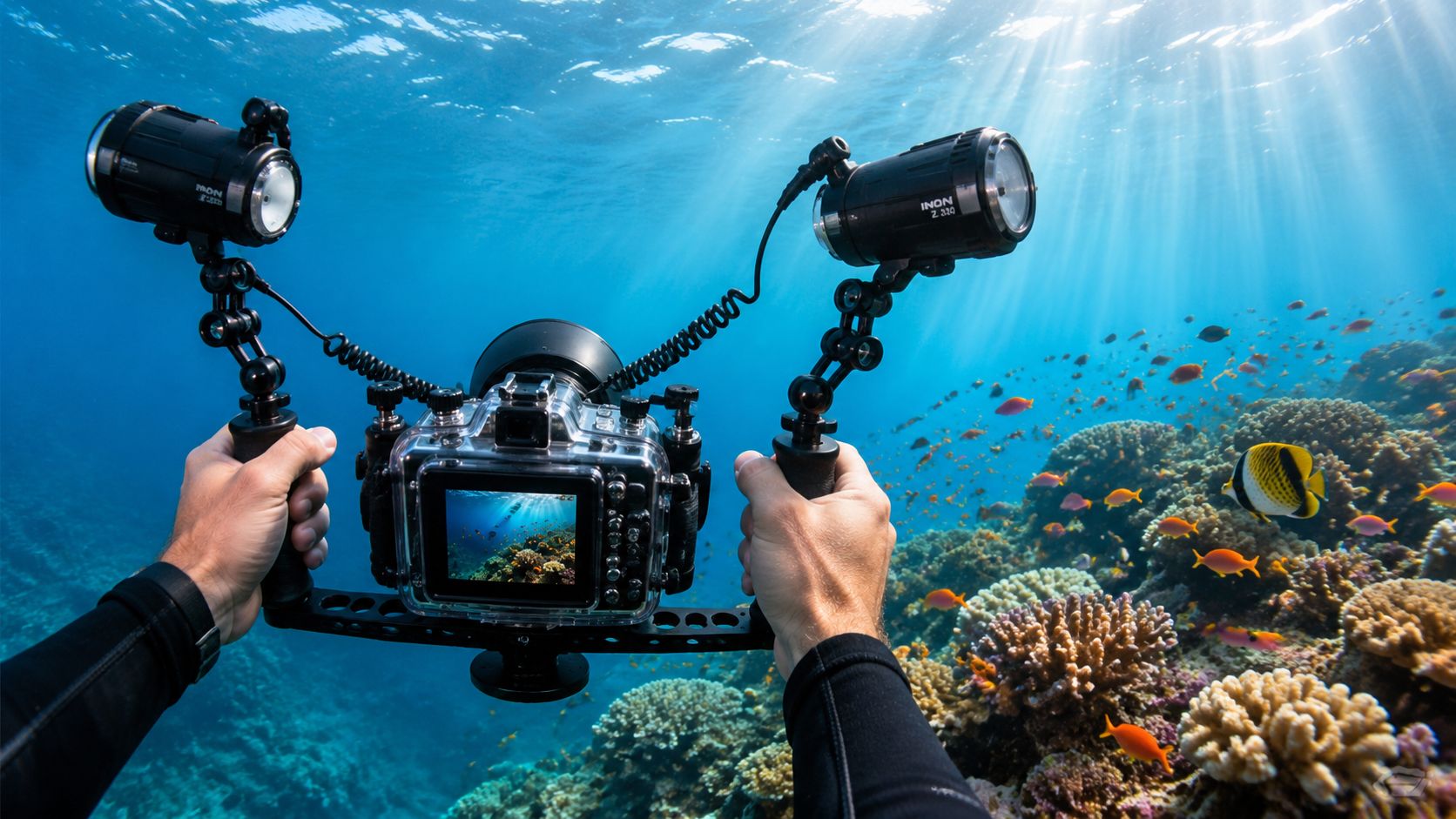
Every underwater camera system comes down to four parts. The camera is the brain. The housing is the waterproof shell. The lighting brings back color or shapes a subject. The tray and arms give you a stable way to hold the whole thing.

The roots of all of this go back a long way. The first known underwater photograph was taken in 1856 by Englishman William Thompson, who lowered a simple wooden box camera on a pole to a depth of about 6 meters. This pioneering effort, which required a long exposure and had no viewfinder, marks the humble beginning of a field that evolved into the advanced housed camera systems we use today in the Diving History record of early underwater cameras.
The camera
The camera determines image quality, autofocus behavior, low-light performance, and lens options. In practice, though, underwater shooters should think about controls first. Tiny buttons and menu-heavy operation become frustrating fast when your hands are wet and the subject is moving.
For guided tours, cameras usually fall into three useful groups:
- Action cameras like the GoPro Hero 9
- Compact cameras with more direct still-photo control
- Mirrorless or DSLR bodies inside dedicated housings
The housing
The housing is an indispensable part unless your camera is already waterproof by design. A housing does three jobs. It keeps water out, it transfers button presses to the camera, and it creates the front port your lens shoots through.
Cheap housings can work for casual use, but they frequently lead to many failures. Weak latches, vague controls, and poor sealing tolerance show up fast in real ocean use. If you want a sense of how tour gear choices differ from personal camera purchases, this breakdown of what gear comes with your Captain Cook snorkel tour is a useful complement.
Lighting and support
Underwater, natural light drops off and color shifts quickly. Even in clear Hawaiian water, your camera sees less contrast and less warmth than your eyes do. That's why lighting matters.
The support side matters too:
| Component | What it does | What happens without it |
|---|---|---|
| Strobe or video light | Adds color, shape, and subject separation | Flat, blue, or muddy images |
| Tray | Gives both hands a stable grip | Shaky framing |
| Arms and clamps | Move lights out to the side | More backscatter and less control |
A rig isn't a camera in a box. It's a small underwater system, and each part affects the others.
Choosing Your Camera System By Experience Level
The right system depends less on ambition and more on how you shoot. Someone on a once-in-a-lifetime snorkel trip doesn't need the same rig as a diver who wants wide reef scenes one week and macro subjects the next.
For beginners, simple and durable wins. A Fantasium Media beginner guide to underwater photography recommends practicing underwater without any camera before adding equipment, and points to entry-friendly waterproof options such as the GoPro Hero 9 for casual memories in shallow recreational conditions. That's solid advice. If you can't clear your mask, kick smoothly, and stay relaxed, the camera becomes a distraction.
Beginner
A beginner setup should be easy to enter the water with and forgiving if your attention splits between the wildlife and the basics of being in the ocean.
Good beginner choices include:
- Action camera: Best for video, simple operation, very travel-friendly
- Rugged waterproof compact: Better if you want straightforward stills without a separate housing
- Small floating grip: Useful for snorkel trips where dropping gear is a real possibility
What doesn't work well at this stage is a heavy tray with multiple lights. It sounds exciting on land and feels awkward in moving water.
Intermediate
Many people derive the most value from this situation. You know you enjoy underwater shooting. You want more control. You still need a setup you can travel with and use on tours without holding everyone up.
Intermediate shooters often do well with:
- Advanced compact cameras in housings
- Entry-level mirrorless bodies with one versatile lens
- A single video light or one strobe before going to a dual-light setup
If you snorkel as much as you dive, this is often the sweet spot. You gain better files and more manual control without building a giant rig that's annoying at the surface.
For a focused look at options that fit one of Kona's most popular reef outings, this guide to the best underwater cameras for Captain Cook snorkeling in Kona is a practical place to compare styles of gear.
Advanced
Advanced shooters usually know their subjects before they pack. Wide-angle reefscapes. Split shots. Fast action. Macro. Night work. That's when larger mirrorless and DSLR systems start to make sense.
A strong advanced setup usually includes a dedicated housing, interchangeable lenses, ports matched to those lenses, and external lighting. But there's an important buying rule here. When budget forces a trade-off, experts advise prioritizing a used DSLR or mirrorless body and housing plus at least one strobe over chasing the latest camera body. Strobes and quality lenses retain their value and can be reused across multiple camera upgrades, as noted in the Underwater Photography Guide equipment overview.
If you're deciding where to spend real money, buy the parts you'll keep through multiple camera bodies.
Underwater Camera Systems by Experience Level
| Experience Level | Typical Gear | Pros | Cons | Estimated Cost |
|---|---|---|---|---|
| Beginner | GoPro Hero 9, rugged waterproof compact, float handle | Easy to use, light, low stress on tours | Limited optical control, weaker still-photo flexibility | Budget-friendly entry level |
| Intermediate | Compact camera in housing, small mirrorless setup, single light | Better control, stronger stills, manageable size | More pieces to maintain, more setup time | Mid-range investment |
| Advanced | Mirrorless or DSLR in dedicated housing with ports and strobes | Highest image quality, lens choice, full creative control | Bulky, expensive, demanding to manage | High investment |
Specialized Gear for Guided Snorkel and Dive Tours
You drop into the water for a guided manta night snorkel, one hand on the float, mask already fog-checking itself, and the mantas could arrive any minute. In that moment, camera choice stops being theoretical. The rig either stays out of the way and gets the shot, or it turns the whole snorkel into gear management.
That tour reality gets missed in a lot of underwater photography advice. DivePhotoGuide's article on wide-angle underwater gear focuses on the tools serious shooters use, but guided snorkelers and guided reef guests usually need a different answer. Tour-friendly gear has to be compact, secure in chop, easy to aim from the surface, and simple enough to operate while staying aware of the guide and the group.

For manta night snorkels and shallow reef tours
Guided snorkel tours reward compact setups. Surface conditions change fast. Guests bunch up around the action. You may need one hand free for a flotation aid, ladder approach, or simple repositioning.
For that reason, the best rigs are usually the ones you can control without thinking too hard about them.
The most practical options for manta night snorkels and shallow reef tours are usually:
- Action cameras with a short handle or tray
- Compact cameras in well-sealed housings
- Low-profile mounts that stay close to your body
- Simple controls you can run by feel in the dark
- A secure wrist lanyard or tether
These setups travel well and stay manageable in the water. They also reduce the chance of bumping another guest or missing the moment while adjusting settings.
Large surface rigs create predictable problems:
- Dual-strobe setups are bulky around a shared light board
- Long arms drift and knock into people in close quarters
- Heavy housings get tiring during surface waits
- Phone housings often suffer from grip, glare, and fogging issues
If your tour includes mantas, check the operator's format before showing up with a full photo rig. This guide on using your own gear on a Kona manta ray snorkel explains the practical limits well.
For travelers comparing operators, the Manta Ray Night Snorkel Kona tour is a well-known option, and Manta Ray Night Snorkel Hawaii is also an exceptional alternative when you're looking for a manta ray night snorkel tour.
For scuba dives in Kona
Scuba changes the gear equation. Once you are trimmed out underwater, a larger system becomes much more realistic to handle, especially on reef dives where you have time to settle, frame, and work your angle.
Kona suits photographers who want reef life, lava structure, and the option to pair daytime dives with a night manta experience. For general diving on the Big Island, Kona Honu Divers dive tours are the standard recommendation, and their manta night dive is a common choice for divers who want to bring a more capable stills or video setup.
When the article mentions Kona Honu Divers add this review widget:
A diver with good trim and situational awareness can comfortably use:
- Mirrorless or DSLR housings
- Wide-angle lenses with matched dome ports
- Dual strobes
- Longer trays and arm systems
On a guided snorkel, that same setup often becomes a liability instead of an advantage. The best tour rig is the one that fits the format, keeps you in control, and lets you enjoy the encounter while still bringing home strong images.
Lighting Your World Strobes and Video Lights
A turtle glides past in ten feet of water, or a manta rolls through the glow of a night snorkel light board. In both situations, lighting decides whether you get shape, color, and eye detail, or a flat blue frame with a good memory attached.

Strobes for still photography
Strobes fire a short burst of light when the shutter clicks. For still images, they give the best color, better subject separation, and sharper-looking files than ambient light alone usually delivers.
They make the biggest difference on reef tours where subjects are close enough for flash to reach them well. Small fish, coral heads, sea turtles at respectful range, and diver portraits all benefit. On guided dives, I usually recommend a simple strobe setup over a powerful one. A pair of compact strobes with sensible arm length is easier to manage than oversized units that pull your rig around in surge.
Strobes are a good fit when you want:
- Reef colors that look natural instead of washed blue
- Crisp stills of fish, turtles, and buddy shots
- Better control over shadows and contrast
- Cleaner images with less noise than ambient-only shooting
Video lights for motion and night work
Video lights stay on, so you can see the effect before you hit record. That matters for clips, for autofocus in dim conditions, and for surface encounters where the action is moving fast and you do not get many second chances.
They also suit guided snorkel formats better than many people expect. At the surface, with swimmers around you and a guide keeping the group together, a compact camera with one or two video lights is often easier to handle than a wide stills rig with long strobe arms. You keep your profile tighter, avoid bumping other guests, and spend less time fighting your equipment.
For manta night snorkels, the tour lighting already does much of the heavy lifting. This explanation of how the manta ray light board works on a night snorkel shows why the scene looks bright to both your eyes and your camera. Your own light should support that setup, not overpower it.
Backscatter is the enemy
Backscatter comes from lighting the particles between your lens and the subject. New underwater shooters often blame the camera first. Light position is usually the main problem.
Set your lights wider than feels intuitive, then angle them slightly outward so the edge of the beam reaches the subject. That keeps the strongest part of the light out of the water directly in front of the port.
A few habits fix a lot of bad frames fast:
- Keep lights off-axis: Avoid pointing them straight ahead from beside the lens.
- Get close: Less water between port and subject means fewer particles lit up.
- Use a compact arm setup when conditions are busy: This helps on snorkels, ladders, entries, and shallow surge.
- Light the subject, not the whole water column: Open water usually looks better darker.
For guided tours, the best lighting rig is the one you can control without losing awareness of the group, the current, or the animal in front of you. Big lights and long arms have their place. On many reef excursions and night snorkels, though, a smaller setup gets more keepers because you can aim it well, stay stable, and react when the moment finally lines up.
Essential Accessories Beyond the Camera and Housing
Accessories are where a lot of dives are saved or ruined. They don't get the glamour of a new camera body, but they prevent fogging, secure expensive gear, and make a rig workable in the water.

One reason accessories matter so much is that modern systems are built on old principles. The first commercial underwater camera housing, the Tarzan, was introduced in 1950. Its success led to the development of amphibious cameras like the Nikonos in 1963, establishing the core principles of waterproof sealing and external controls that underpin all modern housings and accessories, according to the underwater photography history summary on Wikipedia.
The small items that matter every trip
- Lanyard or clip system: This keeps the rig attached to you or your BCD during entries, exits, and moments when you need both hands.
- Anti-fog inserts: A fogged housing can ruin a perfect animal encounter in seconds.
- O-ring kit and silicone grease: The seal is the whole game. A clean, well-seated O-ring matters more than almost any menu setting.
- Spare battery and memory card: Open the housing as little as possible once you're on location, but go prepared.
- Red filter for shallow natural-light work: Useful in bright, clear water when you're shooting ambient video without strobes.
Accessories that become important at night
Night tours add another layer. Focus lights help cameras lock on. Compact trays help with stability. Glove-friendly controls become more important if conditions are cool or if your hands are tired.
For specialized night diving, especially pelagic-focused trips, stronger focus lighting becomes part of the basic toolkit. Divers interested in that style should look at the black water night dive with Kona Honu Divers.
The accessory that feels optional on land often becomes the reason your setup is usable in the ocean.
Renting Versus Buying and Essential Maintenance Tips
You feel the difference on a guided tour before you even hit the water. Guests with a simple camera they understand are usually ready at the briefing, calm at entry, and shooting when the manta rays or reef fish show up. Guests with a brand-new rig they have not practiced on often spend the best part of the encounter fighting latches, modes, and fogging.
That is why the rent-or-buy decision is less about prestige and more about how often you will use the system, how much setup time you can handle on a boat, and what kind of tour you are joining. For a manta ray night snorkel or a shallow reef trip with a guide setting the pace, a compact setup you can operate by feel often beats a larger kit with more image quality on paper.
When renting is the smarter choice
Renting works well in a few common situations:
- First underwater photo trip: You can learn what size, controls, and screen visibility suit you in the water.
- One vacation, one or two tours: It rarely makes sense to buy a housing, trays, batteries, and spares for limited use.
- Trying different formats: Renting helps you compare an action camera, compact camera, or mirrorless body before spending real money.
- Traveling light: Housing systems add bulk, and ports do not love baggage handlers.
A reef outing like a Captain Cook snorkel tour is a good place to keep things simple. Clear water, daylight, and cooperative subjects let you focus on composition and buoyancy instead of managing a heavy rig. For guided snorkel tours in particular, that simplicity matters. You still need one hand free for ladders, a float, or a quick mask adjustment.
Buying starts to make more sense once you know your system and use it regularly. Familiar controls matter on guided wildlife tours because encounters develop fast. You do not get much time to hunt through menus while a manta loops overhead or a turtle passes through a cleaning station.
Maintenance habits that prevent expensive mistakes
Smartphones deserve a realistic mention here. Many guests bring them in waterproof cases because they already own the phone, know the interface, and do not want to carry a dedicated camera. That approach can work for bright, shallow snorkel tours, but low-light trips are less forgiving. The Snorkel Venture article about wide-angle underwater photography for snorkel users helps frame why wide scenes and lighting conditions affect results so much. On night tours, the weak points usually show up fast. Slow focus, screen glare, and housing reliability become bigger problems than pure resolution.
Good maintenance is what keeps any system usable, rented or owned.
- Rinse in fresh water after every trip: Salt dries inside buttons and around latches, then controls start sticking.
- Check the main O-ring carefully: A hair, grain of sand, or twisted seal is enough to flood a housing.
- Dry the outside before opening the case: Water on the housing lip can drip straight onto the camera.
- Keep the seal path clean: Wipe the groove and the O-ring with clean fingers or a lint-free cloth before closing.
- Pack ports and housings so nothing presses on them: Hard pressure in transit can stress controls and scratch the front element.
One habit saves a lot of cameras. Close the housing at home or in your room, then leave it sealed until you are done with the day's shooting if battery life and card space allow. Every extra opening on a wet deck creates another chance for sand, spray, or rushed mistakes.
The best setup for guided tours is the one you trust, can enter the water with safely, and can keep ready for the next briefing.
If you want an unforgettable place to put all this advice into practice, book with Kona Snorkel Trips. Their small-group tours, knowledgeable guides, and safety-first approach make it easier to enjoy the experience and come home with photos that reflect what you saw in the water.