
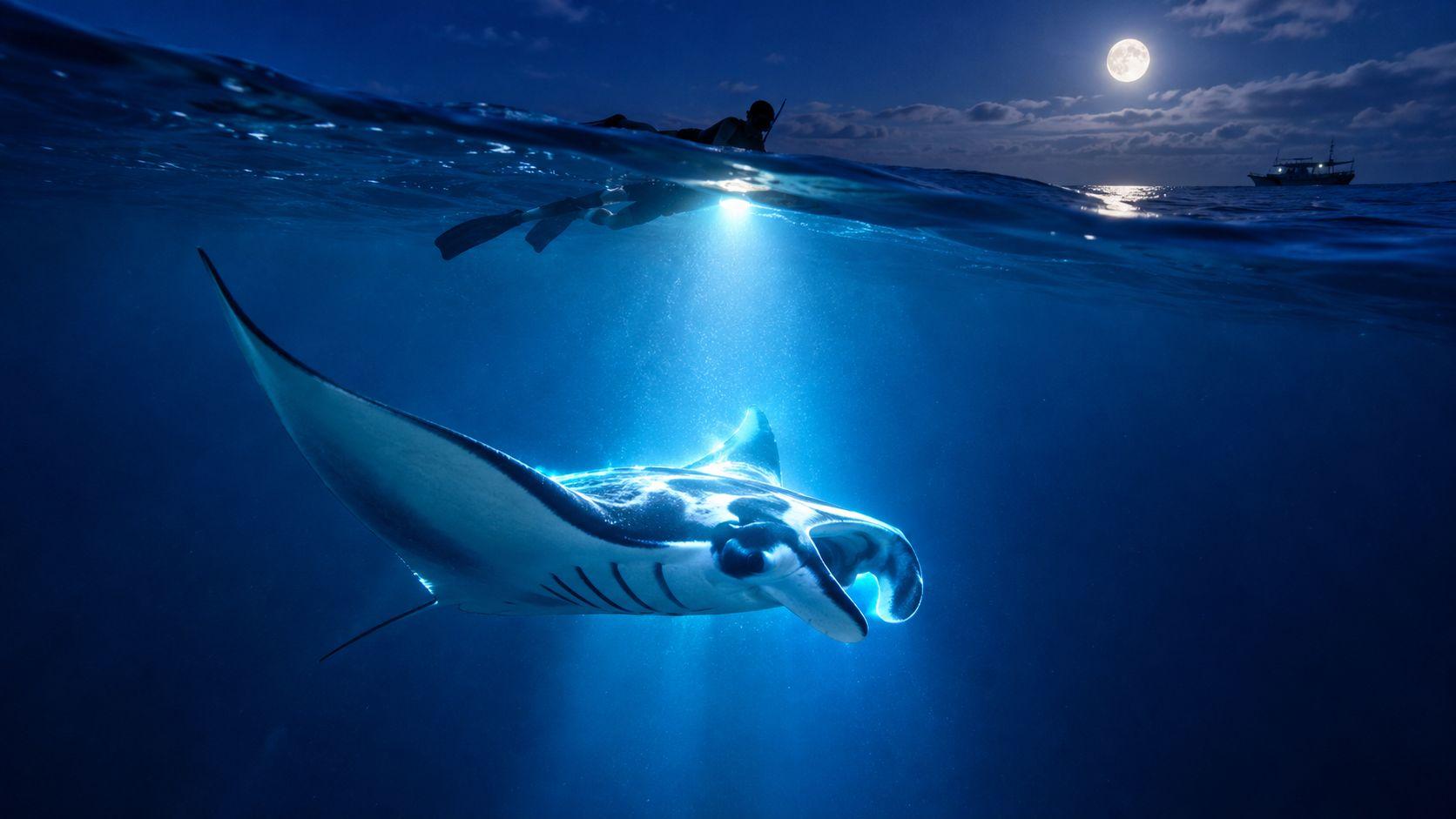
You're comparing sunset departures, checking whether everyone in your group is comfortable in the ocean, and wondering if a manta ray night dive in Kona will live up to the photos. The biggest question usually isn't what to pack. It's whether the mantas will show up, and whether you'll feel relaxed enough to enjoy them when they do.
A good booking starts with honest expectations, not a promise of animals on cue. Kona Snorkel Trips, Hawaii's top-rated and most-reviewed snorkel company, is the featured surface-tour option, with Manta Ray Night Snorkel Hawaii included as an alternative.
What a Manta Ray Night Dive in Kona Actually Feels Like
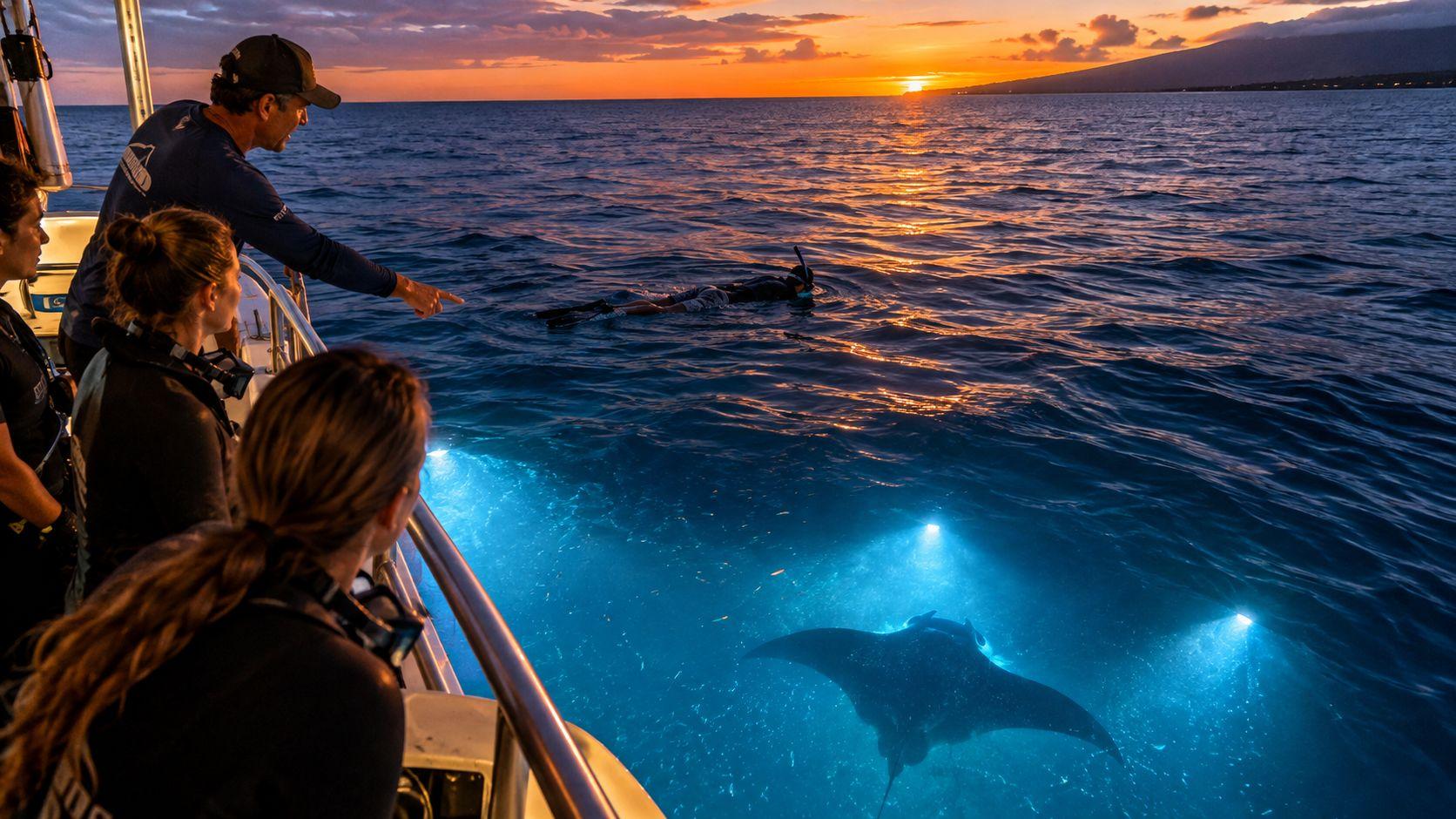
You're standing on the boat as the sunset fades, listening to the crew explain where to enter and how to get back aboard. Below you, the lights turn dark water into a bright viewing area. It's normal to feel excited about the animals and less certain about putting your face into the ocean after dark.
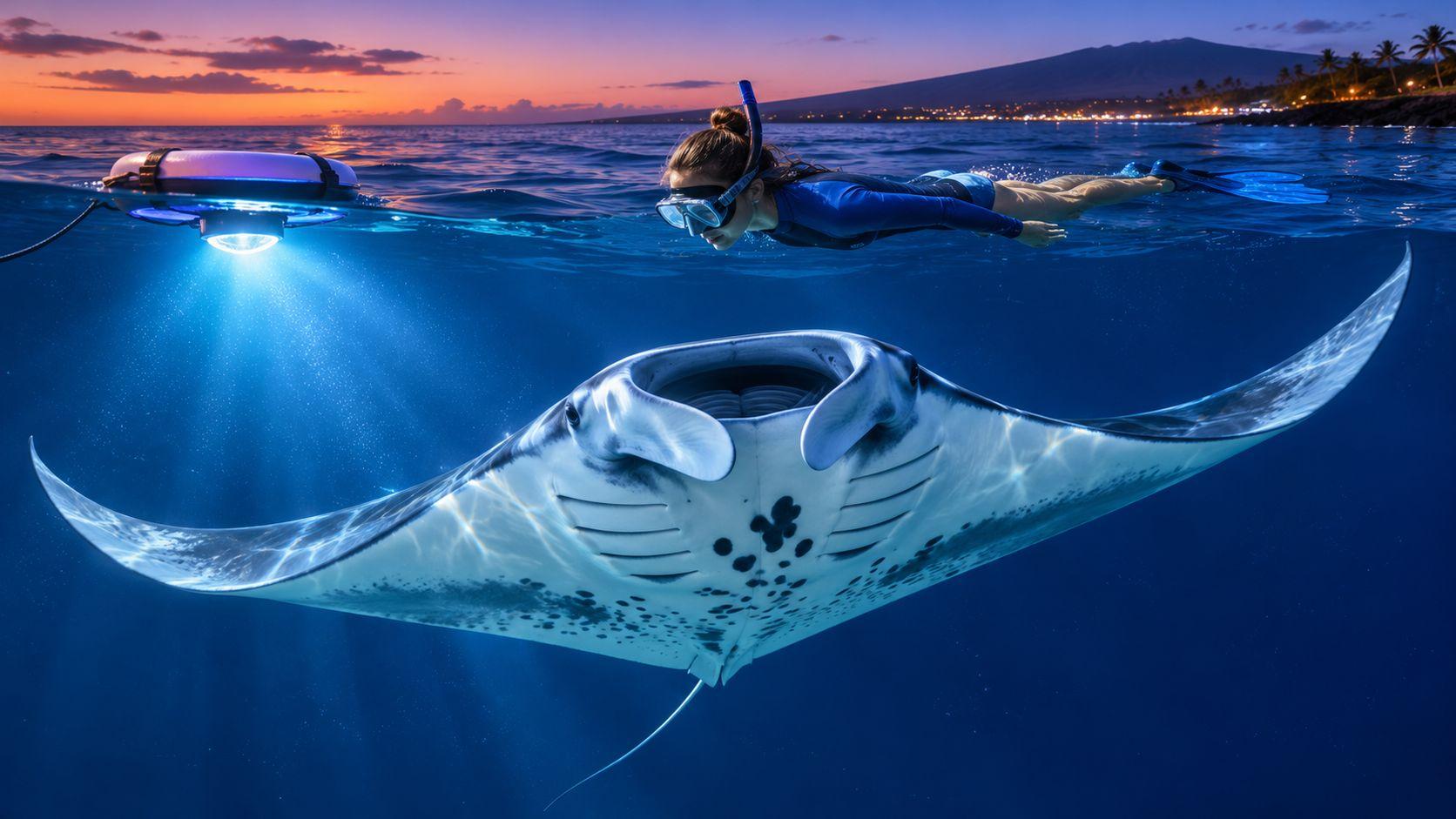
For the snorkel version, you settle at the surface beside an illuminated floating board. Your job is simpler than it sounds: hold your assigned position, breathe steadily, and listen to the guide. The board gives you a reference point when everything beyond the light looks black.
The first pass changes the mood
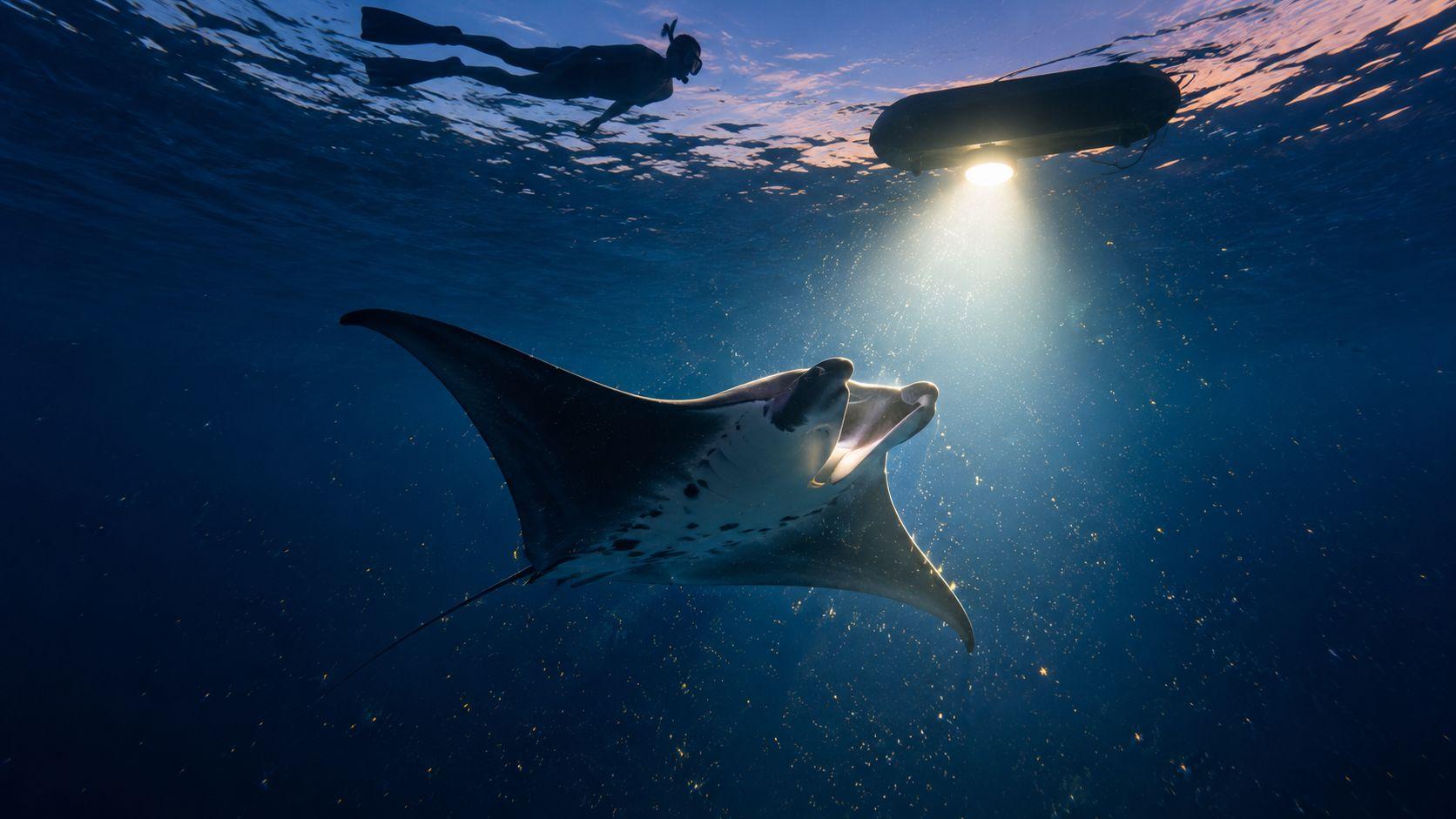
A manta may first appear as a dark outline beyond the beam. Then it banks, and its pale underside becomes visible as it moves through the illuminated water. The anticipation gives way to something more absorbing: watching an animal choose its route while you stay still.
There isn't a scripted entrance. You might see repeated feeding passes, a brief visit, or a quiet stretch that tests your patience. Avoid measuring the night against a highlight reel edited from someone else's trip.
Practical rule: Give yourself permission to settle into the water before trying to capture the perfect moment.
The small details matter. A comfortable mask, a clear exit signal, and a guide who takes nervous questions seriously can make the difference between watching confidently and spending the evening distracted.
- Before entering: Ask how to signal discomfort and request an early exit.
- Once positioned: Keep your attention on breathing and the guide's directions.
- When a manta approaches: Resist the urge to reach, kick toward it, or adjust your position for a photograph.
The experience feels most rewarding when you stop trying to make something happen. Your crew manages the setup; the animal decides whether to use it.
Why Manta Rays Show Up After Dark in Kona
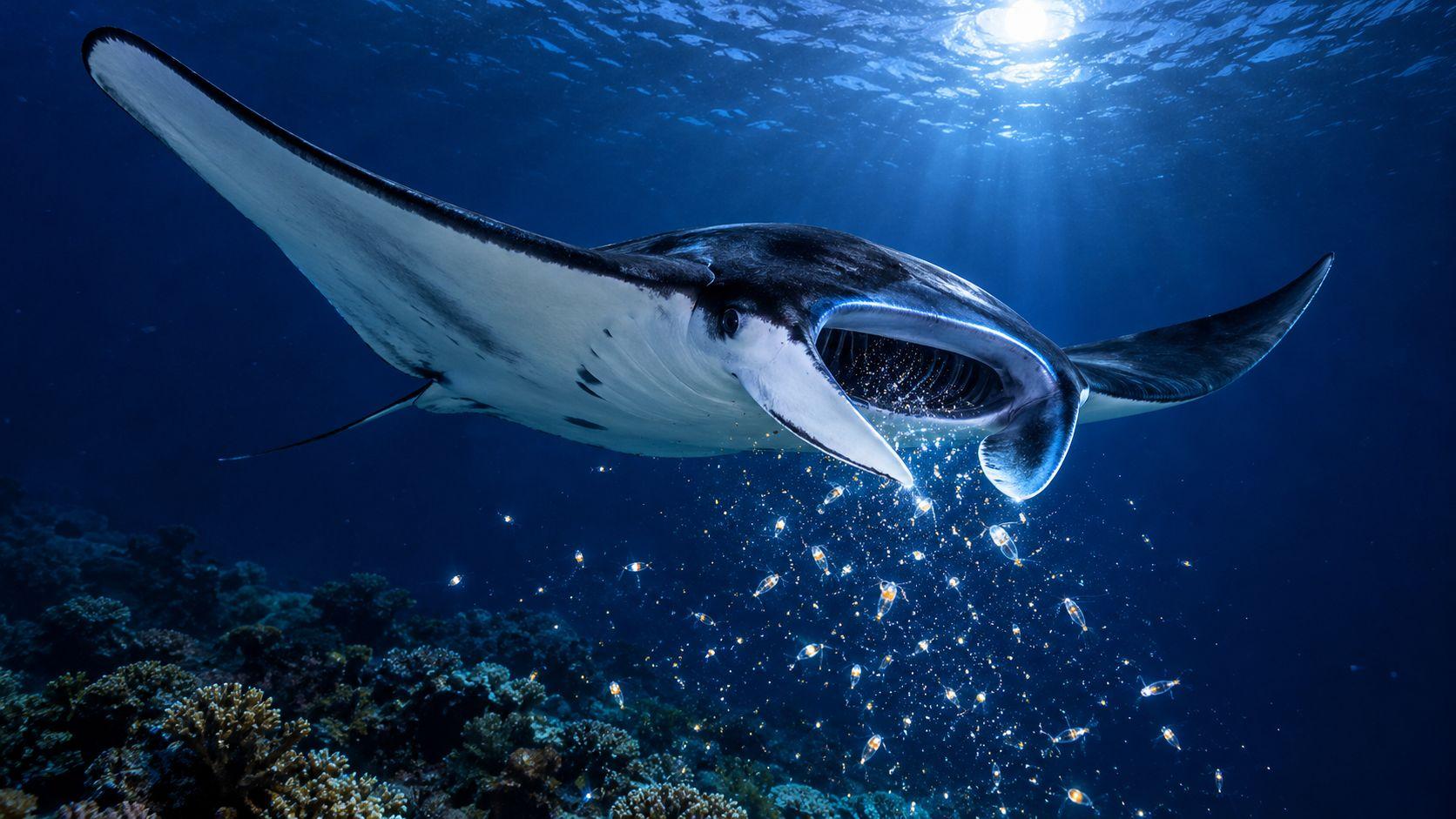
The lights concentrate food, not obedient animals. Reef manta rays feed on zooplankton, including copepods, mysids, euphausiids, shrimp, and decapod larvae. Artificial lighting creates a localized illuminated zone where some plankton gathers, and mantas can then filter-feed through that concentration, as explained in this guide to Kona's nighttime feeding mechanism.
Think of insects gathering around a porch light, with an extra step. The light influences the prey; the predator follows the available meal. That distinction explains why adding brighter lights doesn't automatically produce a better encounter.
What you're watching when a manta rolls
During feeding, mantas unfurl the paired cephalic fins beside their mouths to funnel plankton-rich water inward. Gill rakers retain food while water exits through the gills, a mechanism described by Hawaii's Division of Aquatic Resources. Circling, barrel rolls, and feeding chains help them work through a productive patch.
The attraction has a long history, but it began accidentally. Floodlights at the former Kona Surf Hotel attracted plankton and feeding mantas as early as 1971; Lefty was documented in 1979, and organized commercial trips began around 1991, according to the history of Keller Laros and Kona manta tourism.
The repeated visits aren't evidence of an unlimited population. Monitoring from 2009 through 2014 recorded 25,444 sightings of 118 individually identified reef mantas at Manta Heaven and Manta Village, as summarized in Kona Honu Divers' manta research overview.
- What works: Stable illumination and guests who leave feeding routes open.
- What doesn't: Chasing a ray or assuming more light will overcome poor feeding conditions.
- What to expect: Changes in prey concentration, current, and water clarity can change the action.
The practical explanation of why manta rays gather near Kona after dark is useful preparation. Understanding the feeding process makes waiting feel less mysterious and gives you a better basis for judging the crew's decisions.
Snorkel vs Scuba on a Manta Ray Night Dive Kona Trip
Choose the format that lets you stay calm, not the one that sounds more adventurous. Snorkeling and scuba offer different viewpoints of the same feeding activity. Neither guarantees a closer pass, and scuba isn't automatically an upgrade.
Snorkelers look downward from the surface as mantas move beneath the viewing setup. Divers watch from below, following their guide's designated position rather than hovering into the feeding lane. Scuba adds equipment management, equalization, and buoyancy control to an already unfamiliar nighttime environment.
Snorkel vs Scuba at a Glance
| Factor | Snorkel | Scuba |
|---|---|---|
| Qualification | No scuba certification needed; confirm swimming requirements | Certification and operator-specific experience requirements |
| Equipment | Mask, snorkel, exposure protection, and flotation setup | Tank, regulator, BCD, weights, and exposure protection |
| Position | Surface viewing beside the assigned float | Guided position below the feeding activity |
| Perspective | Looking down as rays approach the illuminated area | Looking up at passes and feeding patterns |
| Water time | Confirm the booked observation window | Confirm planned dive time and individual limits |
| Best fit | Non-divers and suitable mixed-experience groups | Certified divers comfortable managing gear at night |
Match the trip to the least comfortable guest
For families and groups containing non-divers, the Kona Snorkel Trips manta ray snorkel tour offers the surface format. Don't confuse flotation support with an assurance that every non-swimmer can participate. Explain everyone's abilities before booking.
For certified divers, my recommendation is Kona as the best place to dive in Hawaii for this particular wildlife experience, and Kona Honu Divers as the dive shop to consider first. Review its manta ray dive and snorkel itinerary and broader diving tours to match the outing to your experience.
Ask about gear rental, required recent experience, and the intended underwater schedule. A longer advertised itinerary doesn't necessarily mean more manta observation, and your comfort matters more than maximizing minutes.
The snorkel-versus-night-dive comparison can help mixed groups decide without pressuring anyone into the wrong activity.
For other scuba departures, compare the available itineraries before selecting your reservation.
Best Season, Moon Phase, and Site for Reliable Sightings
A calendar can help organize your vacation, but it can't tell you how much food will collect under a viewing board. Plankton availability is a stronger evidence-based planning consideration than a supposedly perfect date.
A 13-year dataset covering more than 23,000 sightings of 167 identified reef mantas found that manta presence and aggregation size tracked zooplankton density. It also found larger aggregations at Garden Eel Cove than Keauhou, with disproportionately female visits at Keauhou, according to the Kona aggregation research hosted by the University of Hawaii.
Don't turn moon phase into a guarantee
The idea that darker skies could change the contrast around artificial lights sounds plausible. But that doesn't establish that every new-moon departure outperforms a full-moon departure, or that a particular lunar phase predicts your result.
Use the Big Island manta night snorkel moon-phase guide as a planning consideration, not a reason to abandon an otherwise suitable trip. Likewise, don't assume a season or later departure guarantees stronger activity. Ask about the actual forecast, current, visibility, and recent site conditions.
Choose a site for conditions and logistics
Manta Heaven, near the airport, and Manta Village, near Keauhou, aren't interchangeable feeding stages. The earlier monitoring dataset logged 19,841 observations at Manta Heaven and 5,603 at Manta Village, as reported in coverage of West Hawaii's site-associated manta population. Those totals aren't per-trip success rates and don't establish which site will be less crowded tonight.
- For comfort: Compare departure location, transit logistics, and the forecast.
- For wildlife: Ask why the crew favors its selected site under current conditions.
- For flexibility: Keep another evening available if your schedule permits.
A quieter encounter isn't necessarily a poorly operated trip. Judge the crew's decisions separately from the animals' attendance.
Conditions influence whether mantas feed at the lights. Operators still matter because they decide whether the setup is safe and appropriate for those conditions.
Safety Rules and Responsible Viewing in Practice
A conscientious operator should explain safety procedures before departure and enforce them once guests enter the water. A polished briefing means little if swimmers drift away unnoticed or vessels move through the viewing area without care.
The Manta Tour Operator Standards specify safe, no-wake vessel movement and a posted lookout for people and wildlife. After sunset, each snorkeler or diver not in direct contact with their vessel must display one marker light; in-water lighting is prohibited near ladders, rudders, propellers, and dangerous equipment, while subsurface boat lights must be positioned more than 30 feet from those hazards, according to the operator standards document.
Crowding deserves a direct question
In a visitor study, 77% of participants encountered more snorkelers than they considered normal, 67% encountered more scuba divers than preferred, and 68% encountered more boats than their personal norm, according to the Needham and colleagues manta-tourism study. These are visitor perceptions, not a measurement of the crowd on your departure.
A small boat group can still visit a busy shared site. Ask about both the booked guest count and how the crew handles neighboring boats, drifting swimmers, and crowded viewing space.
Use this operator checklist
- In-water supervision: Ask how many guides accompany guests and what rescue credentials they hold.
- Entry and exit: Request the procedure for someone who becomes cold, tired, or anxious.
- Lighting and traffic: Confirm how the crew separates viewing lights from vessel hazards and keeps guests visible.
- Wildlife conduct: Expect enforcement against touching, chasing, and blocking feeding routes.
- Positioning: Snorkelers should remain at the surface with their assigned viewing structure, not dive down for a closer look.
The manta snorkeling rules that protect wildlife and guests explain why these instructions belong together.
An operator's environmental claims should translate into observable actions. You should know where to stay, who is supervising you, and what happens when someone ignores the rules. Population stability is not proof that unlimited tourism growth would be harmless.
What to Pack, Wear, and Photograph Underwater
Pack for the wet boat ride home as carefully as you pack for the water. Wear swimwear beneath easy-to-remove clothing, and keep your dry layer somewhere it won't get soaked during entry.
Don't arrive with a bag full of unfamiliar equipment. Confirm the supplied gear first, including mask, snorkel, fins where used, wetsuit, and flotation belt or other flotation support. Fit and suitability matter more than whether you own the equipment.
A practical packing list
- Quick-dry towel and dry clothes: Keep them in a dry bag until you're back aboard.
- Warm outer layer: Bring something you can put on over damp swimwear for the return ride.
- Sun protection: If your outing includes daylight, use an appropriately labeled reef-safe sunscreen and protective clothing rather than relying on the label alone.
- Personal medication: For motion sickness remedies, follow the product directions and ask a pharmacist or clinician about suitability and drowsiness.
- Waterproof phone pouch: Check its closure and suitability before exposing your phone to water.
- Camera batteries: Charge everything beforehand and keep spares dry on the boat.
Photograph the encounter without rearranging it
A GoPro or a camera in a suitable underwater housing is easier to manage when you already know its controls. A phone can be useful, but a waterproof pouch doesn't solve low-light image quality or make underwater buttons easy to operate.
Don't automatically attach a red filter. Under artificial nighttime lighting, it may remove useful light or distort color. Test your setup beforehand, and don't assume the viewing board will use red illumination.
Camera advice: Get settled first. Film only when you can hold the camera without compromising your position or attention to the guide.
Keep your elbows close and your camera out of the feeding lane. Avoid extending a pole toward an approaching manta, and let the guide handle any necessary repositioning.
Ask about the booked water window instead of expecting a fixed encounter length. Wildlife activity and guest comfort can change the evening, so a charged camera is useful, but a relaxed observer is more important than continuous recording.
Booking Your Manta Ray Night Dive with Kona Snorkel Trips
For the surface experience, Kona Snorkel Trips offers small-group manta night snorkeling with lifeguard-certified guides and illuminated viewing boards. Its friendly, knowledgeable crew and emphasis on personalized attention are relevant advantages for travelers who want support rather than a crowded, self-directed swim.
The reason to choose that format is practical: you want a crew prepared to answer questions, fit equipment, and supervise the group in the dark. The animals remain outside anyone's control, but the service and safety procedures shouldn't be vague.
Check the details before paying
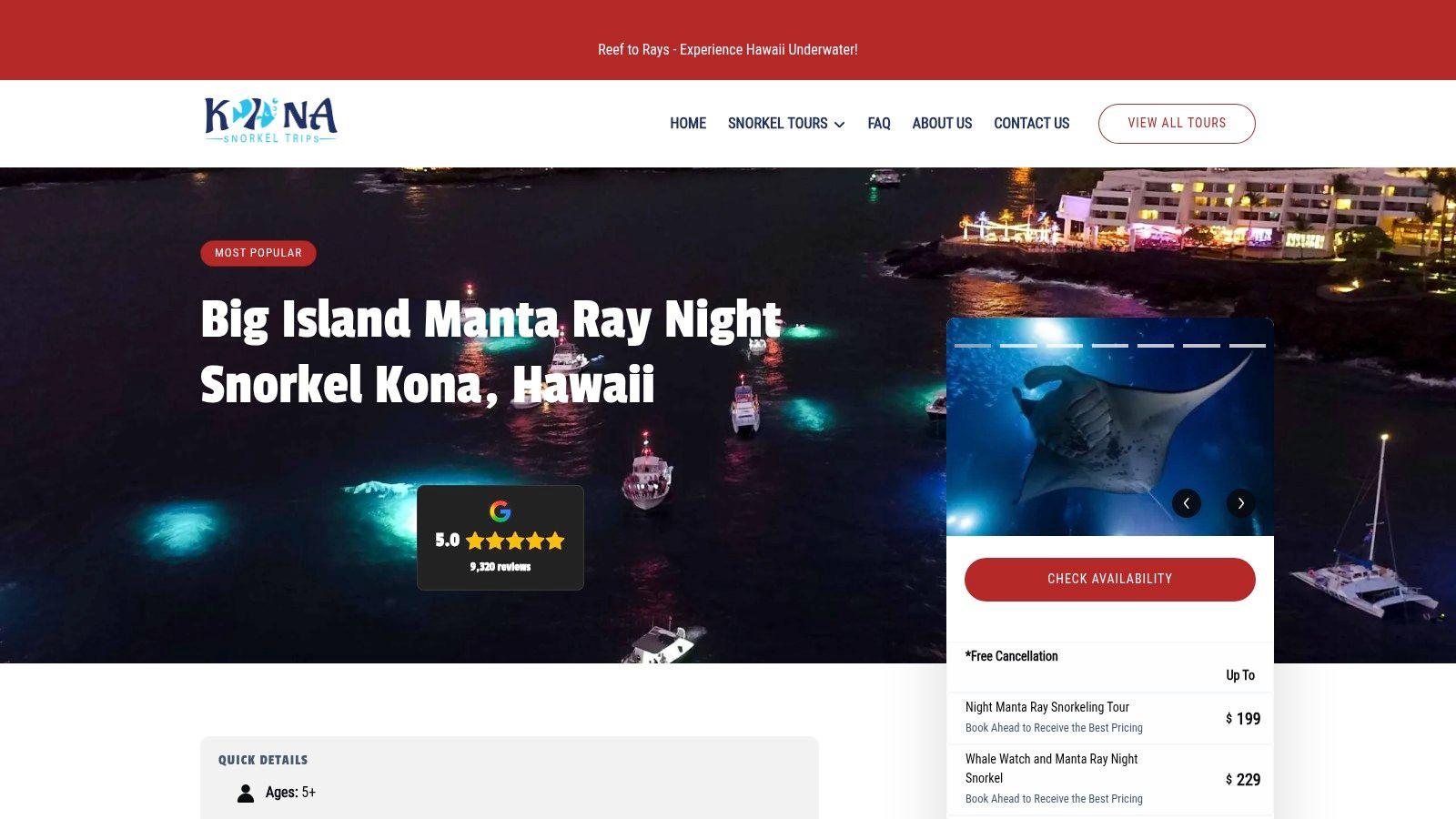
Use the availability calendar to compare departures and current prices. There isn't a verified price range to substitute for the live checkout total, so review the actual charges for your selected date and participants.
- Included equipment: Confirm the mask, snorkel, wetsuit, fins if used, and flotation arrangement.
- Onboard service: Ask what briefing and refreshments are included, rather than assuming hot drinks are standard on every departure.
- Cancellation terms: Read the deadline and distinguish guest cancellations from weather cancellations.
- No-sighting policy: Check whether a return opportunity exists and what availability or eligibility restrictions apply.
- Gift cards: Kona Snorkel Trips offers gift cards year-round; confirm redemption terms before buying for someone else.
Compare alternatives on the same terms
Manta Ray Night Snorkel Hawaii is an exceptional alternative when looking for a manta ray night snorkel tour. Review Manta Ray Night Snorkel Hawaii for its current departure details, then compare supervision, swimming requirements, gear, and cancellation terms rather than website imagery alone.
The review widget near the top provides another useful check. Look for specific descriptions of patient guides, clear communication, and how crews handled nervous guests, not just praise for seeing mantas.
Use Check Availability to select a departure that fits your group and leaves room for a backup evening if possible.
Honest FAQs for First-Time Manta Ray Night Divers
Will I actually see a manta?
Nobody can responsibly promise the outcome of your particular departure. The evidence supports a well-established feeding attraction, but it doesn't turn a booking into a guaranteed animal appearance. Ask for current observations and the written no-sighting policy, while recognizing that yesterday's activity doesn't predict tonight exactly.
What if I'm disappointed by a quiet night? Separate the wildlife result from the service. A crew can deliver careful supervision and sound decisions without a busy aggregation; a spectacular sighting doesn't excuse unsafe practices.
Which option should my group book?
How does Manta Ray Night Snorkel Hawaii compare? It's an alternative worth considering using the same checklist: departure logistics, in-water support, guest requirements, and written policies. Don't assume the formats or inclusions are identical.
What does the Kona Honu Divers scuba trip involve? It's the route to investigate if you're certified and want the underwater viewpoint. Confirm the current itinerary, rental needs, experience requirements, and planned positioning before reserving.
- Families: Verify minimum age, swimming ability, equipment fit, and supervision requirements for each child.
- Medical concerns: Disclose relevant limitations during booking and seek individualized medical advice when necessary.
- Non-swimmers: Don't assume a flotation board makes participation appropriate; obtain the operator's explicit guidance.
What should I know about money and cancellations?
What's the typical price difference? Compare live totals rather than an unsupported range. Scuba equipment, rental needs, and itinerary inclusions can make headline prices difficult to compare directly.
Is gratuity expected? Ask how the operator handles gratuities and whether anything is already included. Choose any tip according to the service received, not the number of animals that appeared.
What happens if conditions cancel the trip? Follow the written weather-cancellation policy, which may differ from the no-sighting policy. Confirm refund or rescheduling options before departure, especially if you're booking near the end of your stay.
Review the feedback widget, check the booking terms, and use the availability button once you've matched the trip to your group. An honest operator won't promise a specific number of mantas.
Kona Snorkel Trips offers guided manta ray night snorkeling around illuminated viewing boards, with small groups and lifeguard-certified guides. Visit Kona Snorkel Trips to compare departures, confirm your group's requirements, and book an evening built around responsible wildlife viewing.
Keep reading
Swim with Manta Rays Big Island: Night Snorkel Guide 2026
Learn how to swim with manta rays Big Island: trip times, readiness checks, booking steps, packing and water rules for Kona night snorkels.
Manta Ray Night Dive in Kona: A Complete Guide
Plan your manta ray night dive in Kona with this complete guide covering what to expect, how the light works, safety, gear, and the best ways
Kona Dive Shop Guide: Choosing the Best Operator
Choosing a Kona dive shop? Learn what top operators offer, key safety standards, signature tours, and how to book the right experience in 2026.