
Manta Ray Night Dive Kona: Snorkel or Scuba
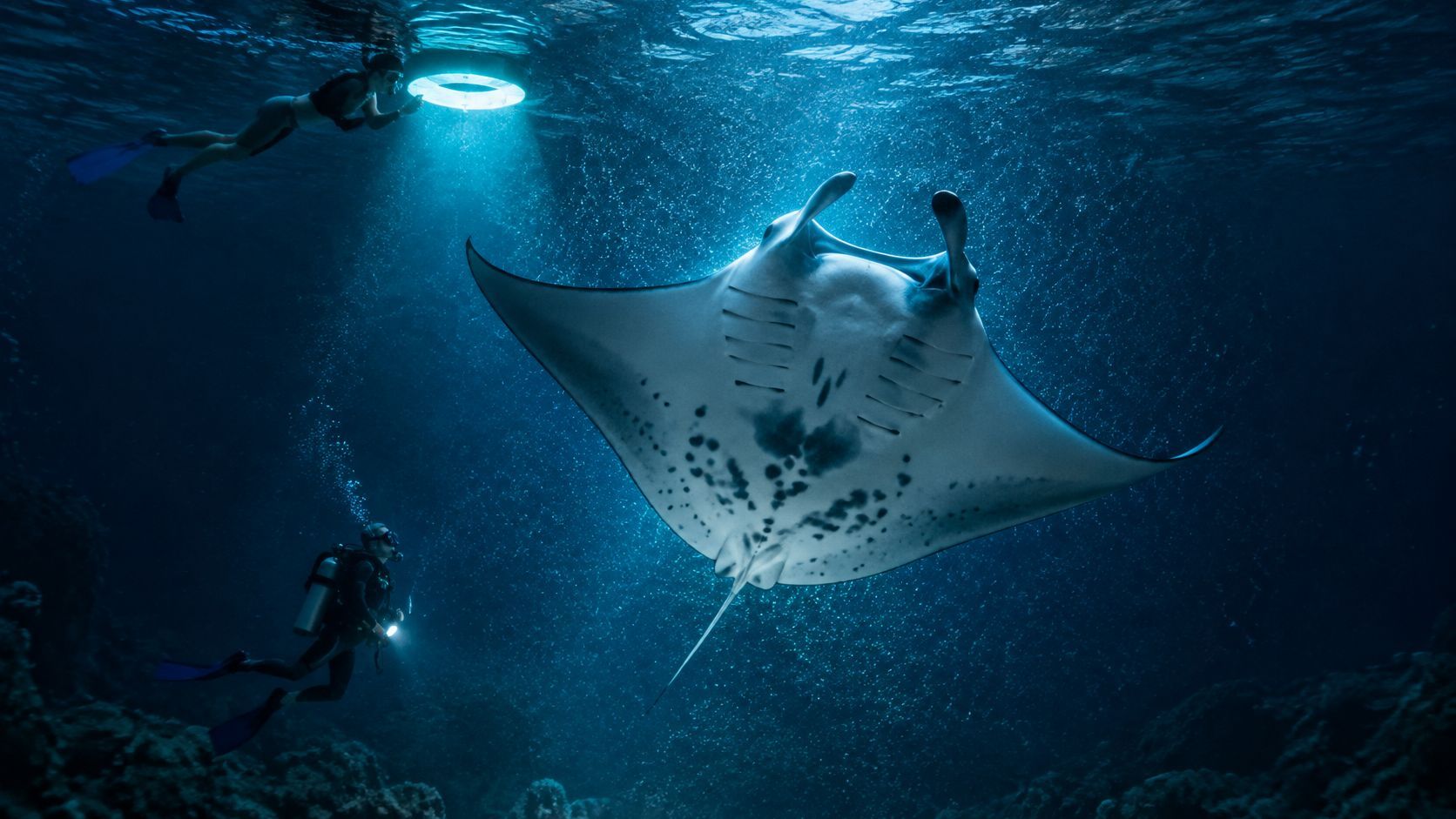
You've found a manta trip that fits your vacation, but now you're looking at two different experiences: floating beside a light board or descending with a scuba tank. The dark water may be the part that worries you most. Or perhaps you're wondering whether booking the deeper option means you'll see more rays.
A manta ray night dive in Kona is easier to understand when you separate the viewing position from the wildlife encounter. Choose where you can stay comfortable and follow instructions. The animals decide what happens around the lights.
Snorkel or Scuba for the Same Manta Night
You're face-down at a lit float when a broad diamond shape rises out of the darkness. Its pale underside turns toward the beam, and you tuck your elbows in as it passes beneath you. Below, certified divers watch that same turn from another angle.
The choice people often misunderstand is one feeding area, two viewing positions. Snorkelers and divers share the same lights and the same plankton, and neither ticket buys a promise about how many rays will show up.
For travelers choosing scuba, Kona Honu Divers is our recommended dive shop. Its two-tank manta dive gives certified divers the underwater perspective, and its general diving tours cover other Kona diving options.
For the surface position, Kona Snorkel Trips, Hawaii's highest-rated and most-reviewed snorkel company on the Big Island, runs the trip around a custom-built snorkel board with high-powered lights.
Kona manta night snorkel versus scuba
| Format | Where you are | What you need | Typical water time | Best for |
|---|---|---|---|---|
| Night snorkel on the light board | Face-down at the surface on a lit float | Prior snorkeling experience, intermediate ability, and the ability to swim about 50 yards | About 30–40 minutes on our surface trip | First-time night participants who want belly passes without a certification card |
| Two-tank manta night dive | Below or beside the light beam, looking up through the loops | Open-water certification and comfort diving in darkness | A two-tank outing, longer overall than the snorkel trip; bottom time follows the dive plan and your air supply | Certified divers who want the rays framed against the surface lights |
| Skip the night and take a day reef | A daytime boat, away from the manta gathering | Basic water comfort to snorkel; non-swimmers can choose a daytime ride-along | An hour or more in the water on our morning reef trip; riders remain aboard | Anyone anxious at night, poor swimmers, or children not ready for open ocean after dark |
The fitness question isn't whether you can hold a handle. On the snorkel trip, every guest wears a flotation belt that keeps hips and feet up so nobody kicks a ray gliding below. The belt holds your posture; swimming is still your job. You need to board the boat, enter open water after dark, breathe calmly while a ray circles under you, and climb back aboard when the crew calls it. Answer the swim questions accurately when you book, because the crew can refuse service to a guest who overstates their ability. That rule protects everyone on the float.
Choose the position you can manage calmly
A confident daytime snorkeler who has never used scuba equipment should pick the surface format, not try to pick up diving skills for this one encounter. A certified diver who feels rusty should talk through readiness with the dive team before booking a night outing.
Families should make the choice person by person rather than by the strongest swimmer in the group. A child who loves a pool may still refuse to put their face into dark ocean water.
Booking rule: Choose the position where you can remain still, breathe comfortably, and follow crew instructions. Neither seat guarantees more rays.
Both formats run on the same plankton-concentrating lights and the same hands-off approach. Your seat changes the perspective. The mantas decide the rest.
Why the Lights Fill With Rays
A porch light doesn't summon birds. It gathers insects, and an insect-eating animal may arrive if there's a worthwhile meal. Underwater lights work in a similar way, although the food around the beam is plankton, not insects.
At a Kona manta gathering, the illuminated water can concentrate zooplankton. Reef manta rays, Mobula alfredi, approach that food and swim through it with their mouths open. The explanation in Kona Honu Divers' manta night guide describes the light, plankton, and filter-feeding sequence behind the encounter.
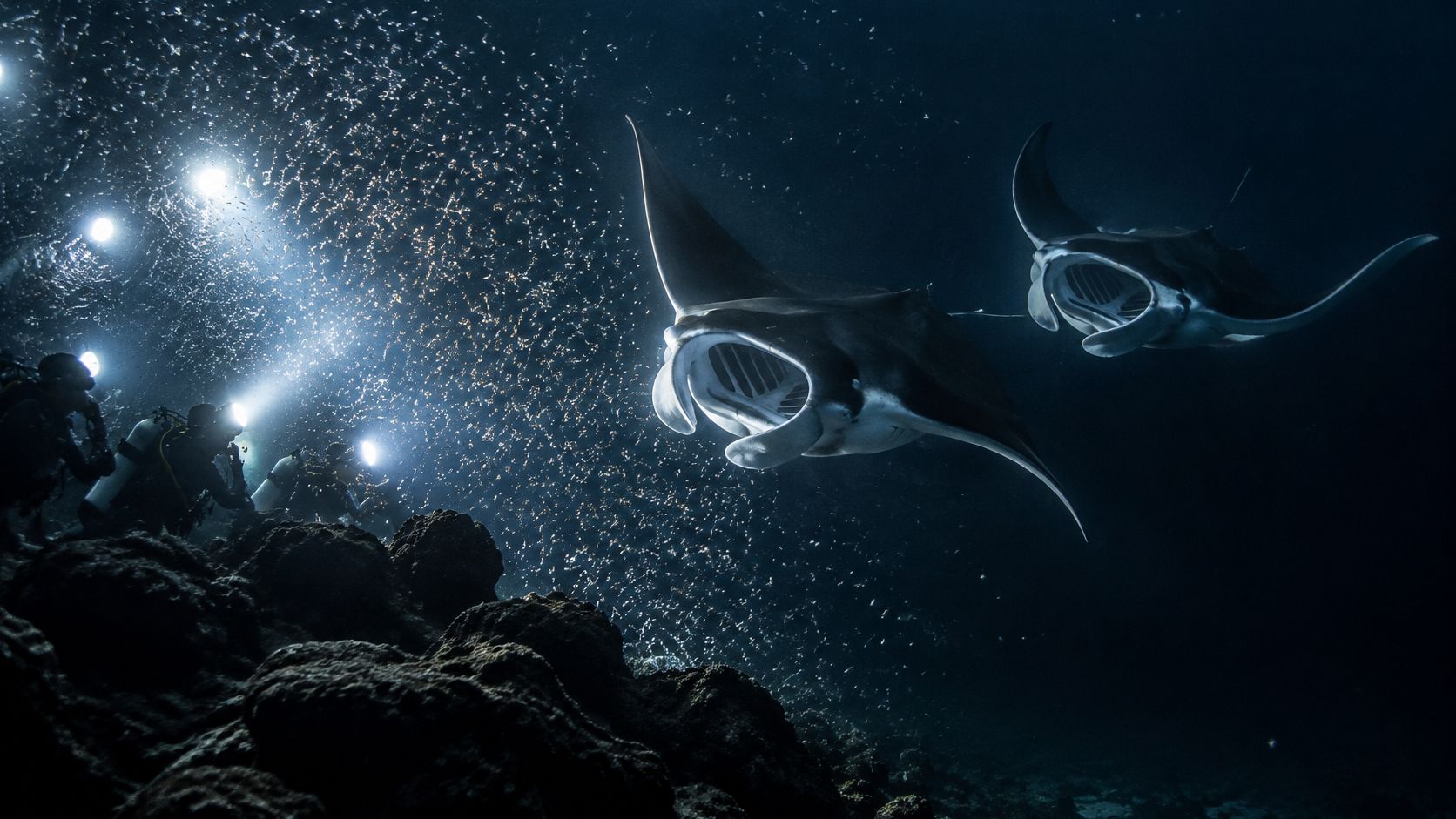
Follow the feeding path
Say a ray enters the edge of the beam, lifts its mouth toward the food, then rolls backward. It may complete the turn and come through again. That repeated loop is feeding behavior, not aggression or an invitation to swim alongside it.
The management description of these sites is straightforward: mantas congregate at night to feed on plankton. Guests aren't handing them food, and the light isn't a command that makes them perform. Our explanation of how manta rays find plankton in the dark helps connect what you see in the beam with what the animal is doing.
Reef mantas have cartilage skeletons, placing them with sharks and other rays rather than bony fish. They also have no stinger. That can settle a common first-timer worry, but it doesn't remove the ordinary risks of being in the ocean at night.
Watch rather than pursue
A stable light and an open feeding corridor give a ray room to approach, turn, and leave. If guests reach downward or swim across that path, they interfere with the scene they came to observe.
The Kaukalaelae Point and Makako Bay environmental assessment describes an artificially concentrated foraging system, not a hand-feeding operation. Prey availability helps determine how much activity develops, so clear water alone doesn't mean a busy beam.
Keep your attention on these details:
- The mouth turning upward: Watch how the ray changes direction to pass through food.
- The spotted underside: Notice the markings without reaching toward the animal.
- The return pass: The same ray may circle through a useful feeding patch repeatedly.
You don't need to follow a manta to understand the encounter. Staying still often makes its route easier to see.
Garden Eel Cove and Keauhou After Dark
Hawaii managers identify Makako Bay, also called Garden Eel Cove, and the shoreline fronting the Sheraton Keauhou Bay Hotel as the principal nighttime viewing areas in their manta-viewing management discussion.
Kona's two night manta camps
| Site | Also called | Where it sits | Typical aggregation | Who researchers recorded |
|---|---|---|---|---|
| Makako Bay | Garden Eel Cove | North Kona | Larger and more variable feeding groups | Both sexes at about 1:1 overall, with males more mobile |
| Keauhou shoreline | Area fronting the Sheraton Keauhou Bay Hotel | South Kona | Smaller nightly groups | Disproportionately female sightings and strong female site fidelity |
These are named feeding locations, not a coast-wide route where guests swim freely between boats. Site management matters because several activities can share a relatively confined area. Moorings and assigned positions help crews organize people without turning the feeding corridor into a crossing point.
The University of Hawaiʻi study record describes more than 23,000 sightings involving 167 individual reef manta rays across 13 years, from 2010 through 2022. That's a record of repeated observations, not a count of that many different animals.
The associated Environmental Biology of Fishes study reports that females accounted for 91% of sightings at Keauhou during the observation period. That sighting share isn't the same measure as the approximately balanced overall sex ratio among animals recorded at the sites. Frequent returns by particular females can produce many female sightings.
What the site differences mean for your booking
Garden Eel Cove's larger aggregations don't make it a guaranteed crowded feeding session. Keauhou's recurring female visitors don't mean every evening brings the same animals. Both descriptions summarize patterns across observations.
The long-term analysis also reported relative stability in the aggregations despite increased tourism. That's useful context, but it isn't permission to add unlimited activity or ignore how people behave around feeding animals.
Our Garden Eel Cove versus Keauhou comparison can help you understand the locations without treating either name as a promised head count.
A famous site is still a feeding habitat, not a reservation held by the rays.
The practical lesson is to let the captain manage the destination and positioning. You're visiting places that identifiable animals use repeatedly over many years, so a careful approach matters beyond your own evening.
Gear to Pack and Hands to Keep In
Pack a towel, a zip-up jacket, and a GoPro if recording the evening matters to you. Keep the bag compact, wear your swimsuit under your clothes, and leave dangling jewelry off. A jacket you can put on without pulling it over a wet head is convenient after the swim.
Separate personal comfort items from the equipment used in the water. The crew fits the wetsuit, mask, and flotation belt; your job is to say immediately if something pinches, leaks, or feels insecure.
Bring swimming ability, not just enthusiasm
For our manta snorkel, guests should be able to swim 50 yards without additional flotation and should already have intermediate snorkeling experience. This is nighttime open ocean, not the place to learn how to breathe through a snorkel for the first time.
Be honest about what you've done recently. Floating in a hotel pool isn't the same preparation as snorkeling comfortably away from shore. If you're unsure whether you meet the standard, call before making plans rather than hoping the board will solve the problem.
- Pack for the return: Keep your towel and jacket dry until you're back aboard.
- Secure the camera: Use a short, manageable strap that won't dangle into the feeding path.
- Bring certification for diving: Certified divers should have their card available and follow the dive team's equipment instructions.
Our manta ray night snorkel packing list helps you keep the preparation simple.
Hands in protects the animal
The NOAA-supported voluntary wildlife-interaction standards say not to touch, pet, chase, grab, or ride manta rays. Touching can remove the protective mucus coating that helps shield their skin from harmful organisms. The reason is biology, not just etiquette.
Keep your hands on the board and your elbows tucked rather than hanging into the water beneath you. Divers should stay in their assigned position and resist lifting a hand toward an approaching belly. Let the animal manage the distance.
A confident older child who already snorkels may be ready for the surface experience, subject to participation requirements. A first swim belongs in a suitable daytime learning setting, not at the manta board.
We may refuse service when a guest misrepresents swimming ability, appears intoxicated, arrives late, behaves unsafely, or ignores crew instructions. That protects the group and keeps an avoidable problem from becoming an in-water emergency.
How a Kona Manta Boat Night Runs
Your evening starts on land, at our own dock at Honokohau Marina between town and Kona airport. The early trip checks in while it is still light, watches the sunset from the boat, and puts guests in the water after dark; the late trip checks in at night. Use the meeting information sent with your reservation, because getting to the harbor and finding the correct dock are two separate tasks.
The crew handles the boat and the light setup. You handle punctuality, fit, and listening. Knowing the order of events makes the dark feel routine instead of rushed.
From check-in to the ride home
Arrive with time to check in. Finish the required steps before the briefing so nobody has to explain instructions over a departing boat's engine. Answer the swimming questions accurately: the manta snorkel asks for an intermediate snorkeler who can swim 50 yards without extra flotation.
Get the equipment fitted. Check the mask seal and wetsuit comfort before departure. Every manta guest wears a flotation belt that holds the hips and feet up, so a resting leg cannot drop a fin into a ray passing underneath.
Listen to the positioning briefing. The crew explains the custom-built snorkel board and its high-powered lights, how mantas may pass beneath you, and what to do if you need help. Ask your question while everyone can still hear the answer.
Ride out to the assigned viewing area. Tours work inside authorized evening hours and designated zones, so the schedule is part of the plan rather than a suggestion.
Enter when directed and hold the lit board. Stay with your assigned group instead of drifting toward another boat's lights or following an animal out of position.
Return when the crew calls the session. Manta guests spend 30–40 minutes in the water, then board for the ride back to the harbor. Leave the water in the instructed order so the crew can account for everyone.
Why the boat can't simply stay longer
The proposed Hawaii manta-viewing rules describe a general operating window of 4:00 p.m. to 11:00 p.m., with some later activity typically ending by midnight, and include a provision requiring a vessel that reaches its permitted mooring-time limit to leave both the mooring and viewing-zone boundaries for at least 30 minutes before returning. The same framework separates swimming, snorkeling, and diving spaces around the site.
Think of the schedule the way a popular lookout works at sunset: one group clears the rail so the next can see the view. These are proposed provisions rather than a statement of current law, so your captain's instructions and the conditions attached to the actual trip govern the evening.
A separate scuba outing puts certified divers on the bottom of the same feeding scene while snorkelers hold the lit board at the surface. Same plankton, same rays, different seat in the room. Its timing follows its own dive plan.
Before departure: Tell the crew about a fit problem or uncertainty while it is still easy to fix aboard the boat.
On-time arrival protects the briefing and the planned operating window. Neither fits into the ride after everyone else is ready.
When a Famous Night Stays Quiet
A wildlife sighting can't be guaranteed by a departure time. If insects are scarce around a porch light, the animals that eat them don't arrive because someone is watching. A quiet manta evening deserves the same practical explanation.
The long-term analysis published in Environmental Biology of Fishes found a positive association between manta aggregation size and zooplankton density. A well-run trip can therefore encounter few or no rays without the crew having done anything wrong.
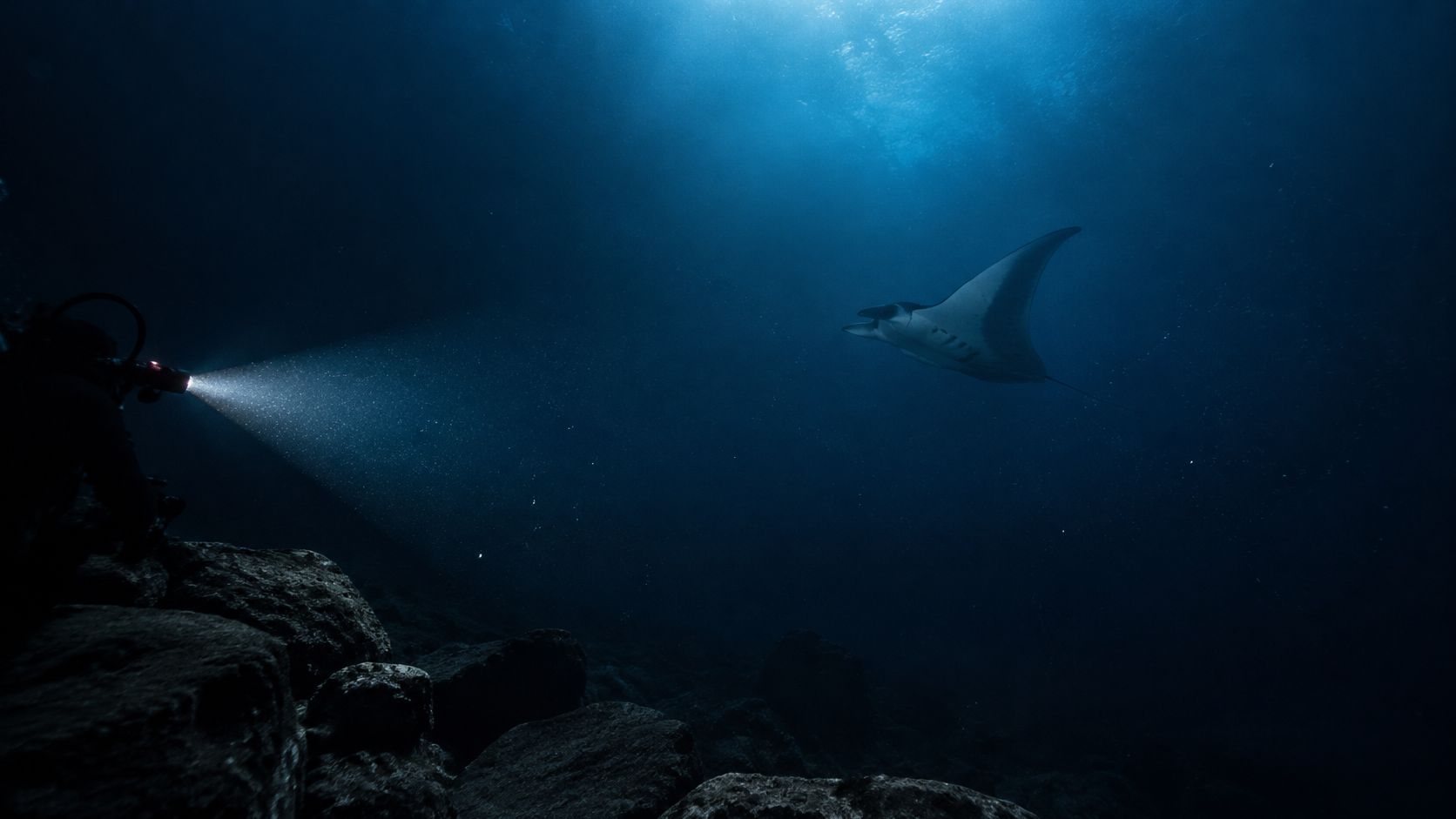
Separate visibility, feeding, and safety
Currents can move a plankton patch. Water clarity changes how far you can see, while weather, moonlight, and recent disturbance can affect the viewing conditions or animal activity. You usually can't diagnose a quiet session from the board, and a clear-looking beam doesn't tell you how much suitable food it contains.
Mantas are seen year-round, and our operating information identifies no pattern in their appearance based on the month. Moving your holiday to another month isn't a strategy for a guaranteed encounter. Our explanation of manta night snorkel success rates helps put sighting expectations in context.
A sparse evening and an unsafe evening are different situations. Few animals in manageable conditions are a wildlife outcome; strong wind, substantial swell, or difficulty holding a safe position requires the captain's safety judgment.
Your practical options
- If conditions are unsafe: Follow the crew's decision and discuss the applicable cancellation or rebooking arrangements.
- If the night is quiet: Consider another evening if your schedule allows. Our manta guarantee doesn't expire and is honored when space is available two hours before departure.
- If night water isn't for you: Choose a daytime reef outing or ride-along instead, without expecting replacement wildlife.
For families and gift buyers, leaving schedule flexibility is more useful than buying into certainty. Don't make the final evening of a tightly packed holiday your only possible window if you'd like another opportunity.
Crews shouldn't chase animals, crowd the feeding path, or stack extra lights to manufacture a spectacle. The rays choose whether to feed and when to leave.
Quick Answers Before You Book
What happens if weather or swell cancels the trip?
Ask about cancellation and rebooking terms before paying, especially if your departure flight limits your options. Unsafe conditions and a quiet wildlife encounter are different cases, so don't assume the same policy covers both.
Can I bring a camera underwater?
Yes, you can bring a camera on the surface trip. Keep it on a secure strap, choose simple settings before entering, avoid flash near the animals, and never reach toward a ray to improve the frame.
Should I mention ear, heart, or breathing conditions?
Yes, before boarding. Describe the condition accurately and ask whether the crew can accept you for the activity. When medical advice is needed, speak with your clinician rather than treating a boat briefing as medical clearance.
Is a quiet night still worth taking?
It can be if you enjoy the night ocean, illuminated water, and learning how the encounter works. But if seeing a manta is your only acceptable outcome, recognize that wildlife uncertainty may make this a frustrating purchase.
Set your expectations before you pay, not while you're waiting at the board.
For a nervous participant, the best question is often personal: can you enjoy being in this setting even if the animals don't arrive? Answering truthfully helps you book a night you're prepared to experience.
Book the Seat That Matches Your Night
Snorkelers and scuba divers watch the same feeding scene from different seats. Snorkelers hold the lit board at the surface while divers settle on the bottom below, and the rays loop between the two sets of lights. Picking between them is about where you want to sit, not about which seat comes with a stronger promise of animals.
For the surface option, visit the Kona Snorkel Trips manta ray snorkel tour page for scheduling and participation details. The Kona outing lasts two hours. The early trip checks in during daylight, includes sunset from the boat, and enters after dark; the late trip checks in at night.
The surface trip asks more of you than floating does. Guests should be able to swim 50 yards without additional flotation and come in with prior snorkeling experience at an intermediate level. Everyone wears a flotation belt that keeps hips and feet up so fins stay clear of the rays below. If your swimming does not match what you stated at booking, the crew can decline you at the dock, so answer the ability questions accurately.
Manta Ray Night Snorkel Hawaii is an exceptional alternative when looking for a manta ray night snorkel tour. Compare participation requirements and meeting arrangements, not promises about wildlife.
Reserve your diving option
For scuba, Kona Honu Divers runs manta dive charters along with a range of other Kona diving tours. Use the manta and general diving pages linked above, or check the Kona Honu Divers Google business profile for business details.
The first button opens manta-dive reservations.
For other scuba plans, browse the broader booking calendar. The separate black water night dive is a different nighttime activity, not a substitute name for the manta gathering.
For help with our surface-trip requirements, call (808) 326-4774 before booking. Keep the central agreement simple: lights gather plankton, rays choose to stay, and hands stay in.
Kona Snorkel Trips offers guided nighttime manta snorkeling from an illuminated surface board, with a crew that helps you understand your position and the animals' feeding behavior. Visit Kona Snorkel Trips to choose an early or late departure and make sure the experience matches your swimming ability and comfort after dark.