
Manta Night Dive in Kona: What to Expect Underwater
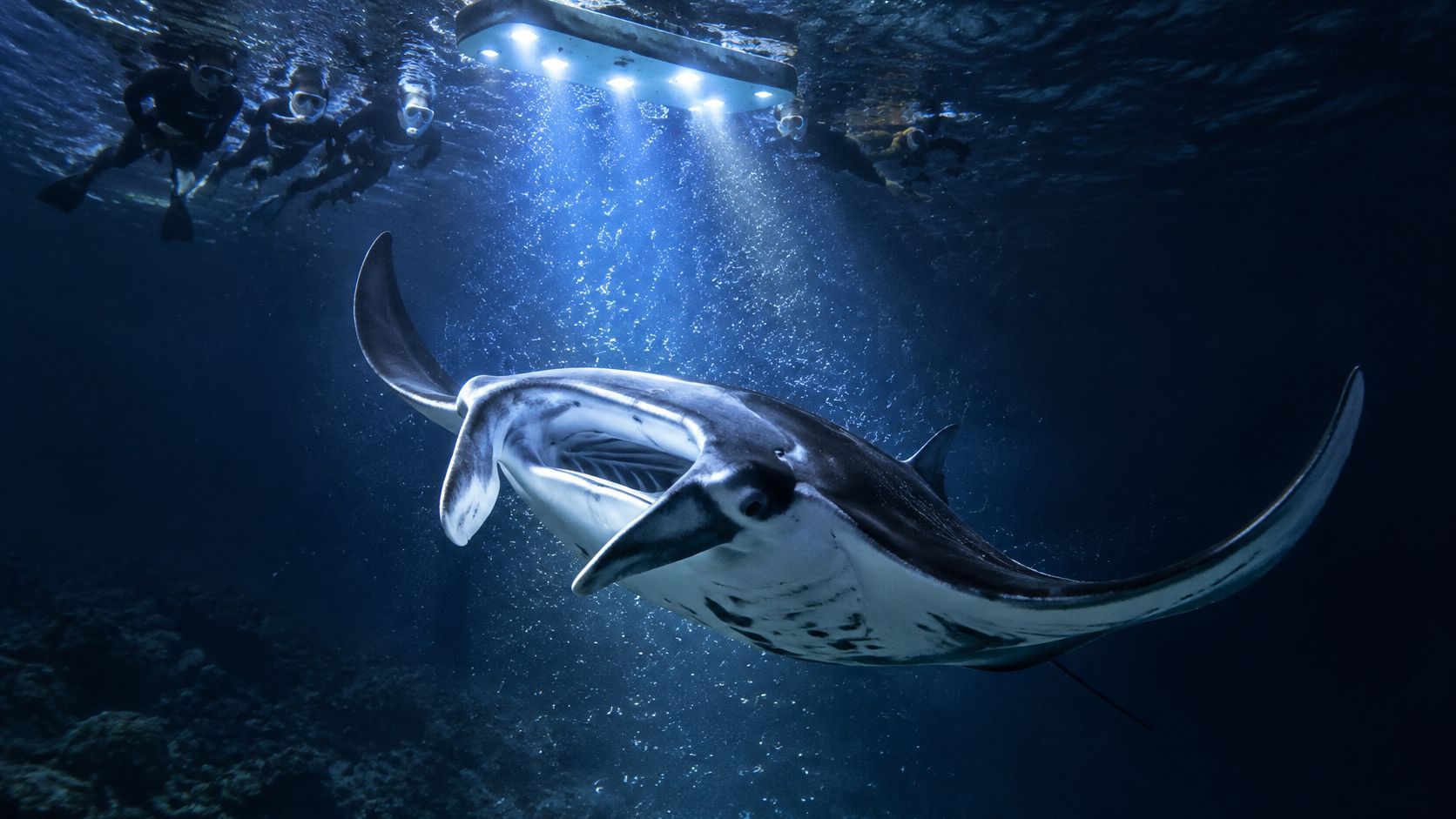
At the boat rail, the guide finishes the briefing as the last light fades from the Kona coast. You may have snorkeled before, yet dark water can still make your stomach tighten. Then the underwater lights switch on. A broad manta ray rises through the glow, mouth open, and sweeps past.
A manta night dive is a guided evening encounter with wild reef manta rays. Snorkelers watch from the surface, while scuba divers observe from near the seafloor. The rays feed when conditions bring plankton into the light, so each encounter unfolds on the animals' terms.
Kona Snorkel Trips offers a manta night snorkel for guests who want to watch from the surface while holding an illuminated float.
What Is a Manta Night Dive in Kona
A guest grips the edge of a lit float as the crew gives the signal to enter. Below, the water is black beyond the glow. Then a manta ray sweeps through, wide wings turning slowly as it passes beneath the group. First-timers often tense at that close approach. The ray keeps feeding, then glides away.
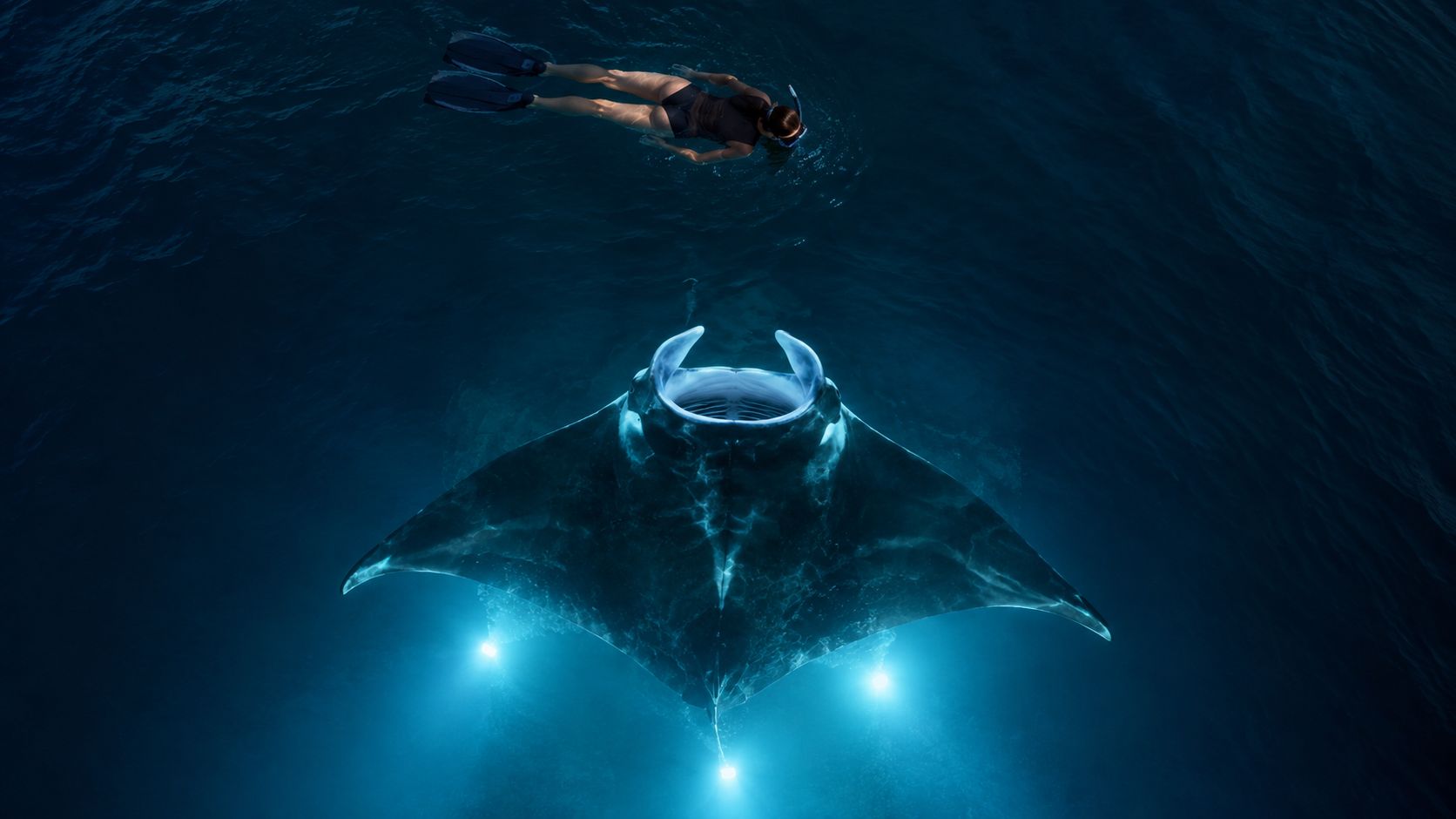
A manta night dive is a guided evening trip to observe reef manta rays feeding near underwater lights. Snorkelers watch from the surface, holding a float or light board. Scuba divers settle near the seafloor and look up as the rays pass overhead. Guests stay in place rather than following or touching the animals.
Kona's viewing sites have drawn years of scientific observation. A six-year study at two sites near Kailua-Kona recorded 25,444 sightings of 118 individually identified reef manta rays. It logged 19,841 sightings at Manta Heaven in Makako Bay and 5,603 at Manta Village at Kaukalaelae Point (the NOAA-hosted study).
Those records help explain Kona's reputation for manta encounters, but they do not promise a sighting on any single trip. Some identified rays stayed near one site; others moved between the two. The number of mantas present can change from night to night.
Is the experience right for you
You can see the rays without scuba certification. Snorkeling keeps you at the surface; scuba lets qualified divers watch from below, subject to the operator's requirements. If dark water unsettles you, tell the crew before you enter. A clear briefing and a steady handhold can help you feel more settled as you watch.
How Underwater Lights Attract Manta Rays
A beam of light cuts through the dark water. Tiny drifting animals gather in it, and a manta ray sweeps through with its mouth open. For a nervous first-timer watching from the viewing area, the motion can look like the ray is following the light. It is following food.
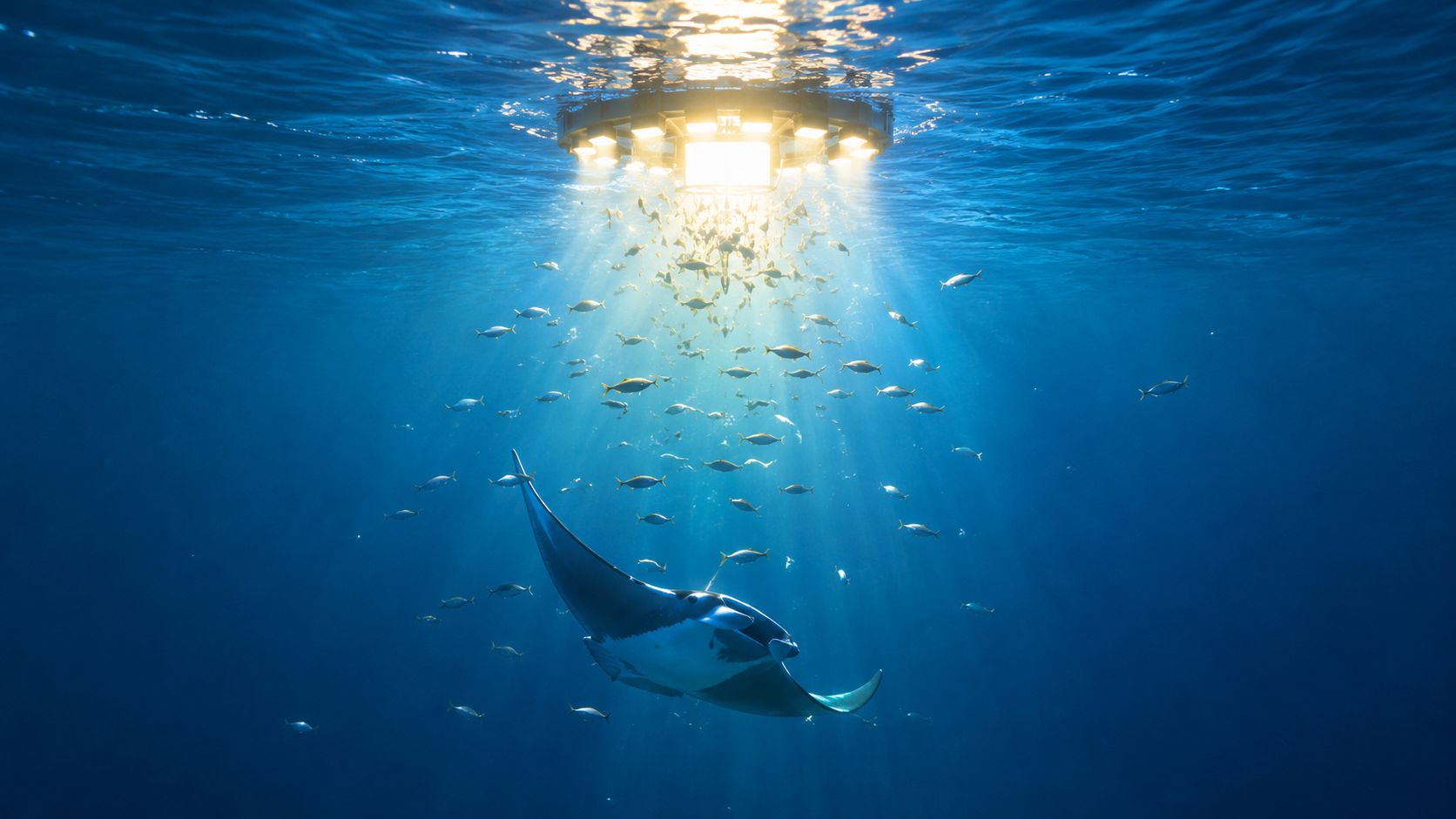
Underwater lights gather some plankton, including tiny drifting animals called zooplankton, into a brighter patch. The beam works like a porch lamp that gathers insects, except the visitors here are prey in the water. Reef manta rays, Mobula alfredi, filter plankton as they swim, using structures called gill rakers. They may loop, bank, and turn through the illuminated area to feed.
The viewing tradition is thought to have started after submerged decorative lights were installed roughly three decades ago. Nighttime movement also plays a part: many kinds of plankton rise or become more concentrated near the surface after dark. For more detail, read about why underwater lights attract manta rays during night snorkeling.
The lights concentrate some prey. They don't feed the mantas or reproduce the full range of their natural foraging.
Research indicates that mantas can feed at night in deeper offshore waters associated with the deep scattering layer. A 2025 Kona-focused study found no significant difference in plankton assemblage or abundance linked to manta presence, a result consistent with local rays also targeting prey in deeper water (the study in Frontiers in Marine Science).
That is why a bright viewing area can produce a memorable encounter without guaranteeing one. Currents, changing plankton, offshore feeding, and each ray's movements all affect whether mantas show up on a given night.
Choosing Between Snorkel and SCUBA Manta Experiences
At a Kona manta site, a snorkeler watches from the surface while a scuba diver settles near the seafloor. One looks down into the lights; the other looks up through the water. Both stay in place and watch the rays pass.
| Snorkel and SCUBA Manta Viewing Compared | Snorkel | SCUBA |
|---|---|---|
| Viewing position | At the surface, looking down | Near the seafloor, looking up |
| Light direction | Downward from the surface | Upward into the water column |
| How guests watch | Hold a light board or float at the surface | Stay near the bottom and leave the open water column clear |
| A good fit for | People who want to remain at the surface | Divers who meet the operator's certification and experience requirements |
A light board gives snorkelers a steady place to hold as they watch. Kona Snorkel Trips' manta night snorkel uses illuminated boards for surface viewing. Manta Ray Night Snorkel Hawaii is another operator offering a manta night snorkel.
Kona Honu Divers offers a two-tank manta dive and snorkel trip. Divers use lights pointed upward and remain near the bottom, keeping the open water column clear. Certification and experience requirements depend on the operator. For a closer comparison of the two formats, read how a Kona manta ray night snorkel differs from a night dive.
For a daytime outing, Captain Cook Snorkeling Tours offers a Captain Cook snorkel tour at Kealakekua Bay.
What to Expect From Lighting, Behavior and Duration
Before sunset, your guide explains how the viewing area works and where to position yourself. You can check your gear, ask questions, and get comfortable with the plan before the water turns dark.
When the lights switch on, their beams carve a bright patch into the black water. Tiny plankton drift into the glow like dust caught in a flashlight beam. A manta may sweep in to feed, circle through the lit area, then pass again. Or the light may hold your attention while you wait.
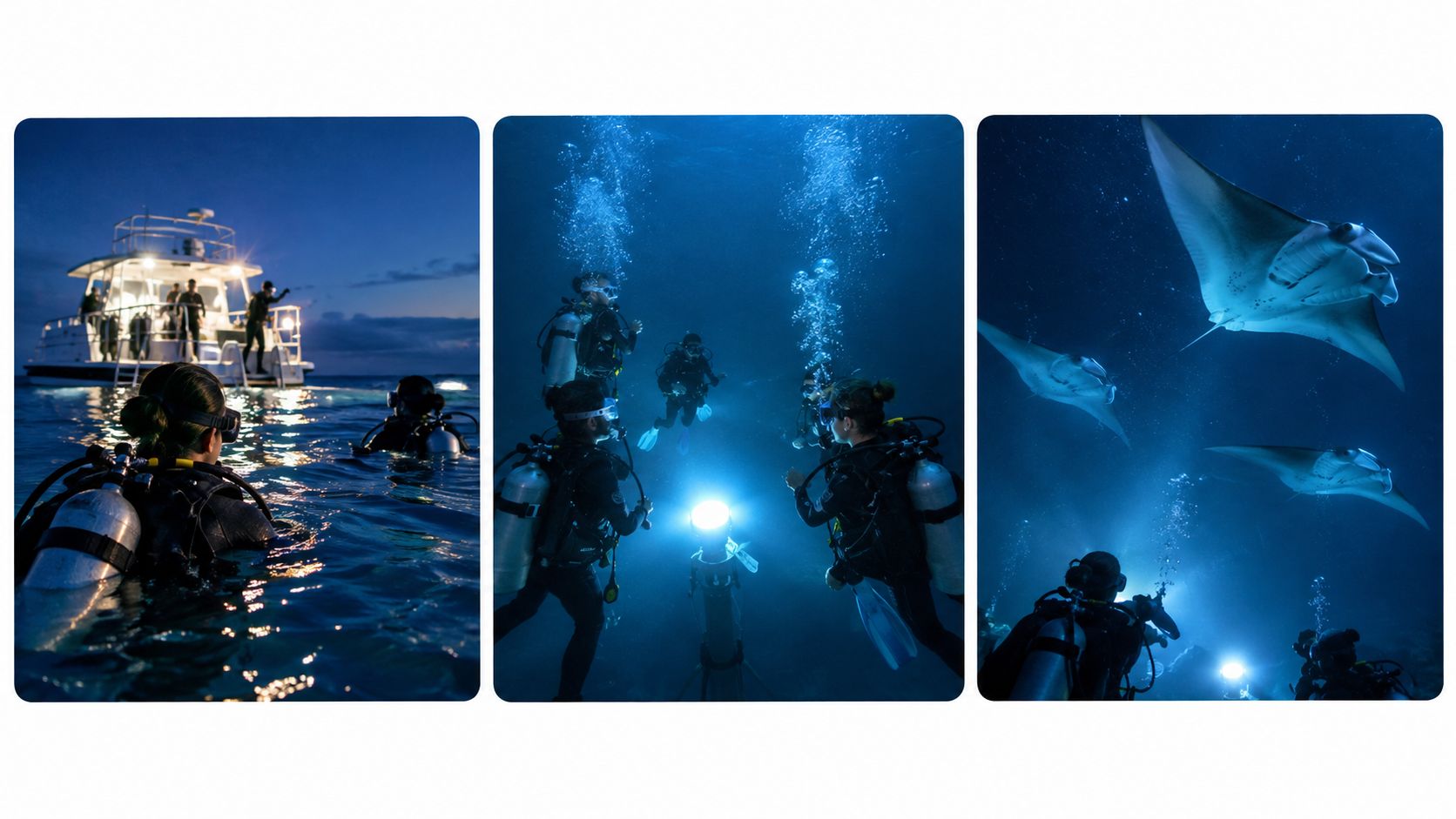
A manta's pale underside flashes in the beams as its broad fins carry it overhead. Some rays make several passes; others appear briefly, and some nights bring no close visit. The lights gather plankton, but they cannot summon a manta on cue.
A focused window in the water
Kona manta observations often take place in a focused viewing period after sunset, commonly around an hour. Your full trip takes longer, so ask the operator how much time is allowed for travel, setup, and the in-water experience.
The darkness beyond the light can make a manta seem to emerge from nowhere. Take a slow breath and stay still. The ray's path may curve close, then disappear into the dark.
Some evenings bring repeated passes; others are quieter. Expect a chance to watch a wild feeding area, not a scheduled performance.
Safety, Etiquette and Conservation on the Water
At the viewing site, a guest's fin can cross another snorkeler's path before anyone sees it coming. In dark, crowded water, poor spacing and sudden movement pose more immediate risks than the manta rays. Other concerns include boat traffic, current, cold, and anxiety.
A survey of 444 manta-tour participants found that 79% of snorkelers reported conflict with other snorkelers, including bumping, poor awareness, and underwater flashlights that blinded others (the participant survey). Before booking, ask how the crew accommodates different swimming abilities, what flotation is available, how guides supervise guests, and how snorkelers and divers are kept apart.
Listen closely to the briefing. It should explain where to position yourself, how to use lights, and how to signal if you feel anxious or tired. Stay with the group and signal your guide rather than swimming off alone.
In crowded, dark water, calm movements and clear instructions help prevent collisions.
Operators should keep in-water lights clear of ladders, rudders, propellers, and other equipment that could injure a manta following the light. Published operator guidance says lights mounted above the water and aimed into the sea should point their beams at least 30 feet from the boat (manta-viewing operator guidelines). For practical guidance on guest conduct, read these manta ray snorkeling rules that protect wildlife and guests.
Keep the encounter hands-off
Let each manta choose its own path. Never touch, chase, grab, or ride one. Hawaiʻi law, under HRS §188-39.5, prohibits capturing, taking, possessing, abusing, or entangling rays in state marine waters. Follow your operator's instructions and respect the wildlife-viewing rules.
Snorkelers should stay at the surface, while divers should remain near the bottom and avoid coral, sea urchins, and other marine life. If you feel uneasy, tell your guide early. They can help you adjust or return to the boat safely.
Best Seasons, Kona Locations and What to Bring
A Kona manta trip can feel different in January than in August. Manta rays are seen throughout the year, and there isn't a single season that guarantees a better encounter. Winter can bring rougher seas and cooler air on the boat; summer often brings calmer conditions. Weather and sightings still vary from night to night. For more on manta presence across the year, read this guide to whether Kona's manta rays are resident year-round.
Most trips use established viewing sites near Kailua-Kona, including Manta Heaven in Makako Bay and Manta Village at Kaukalaelae Point. Your departure point and site choice affect the boat ride and time on the water. Ask the operator which site is planned and what conditions to expect on your date.
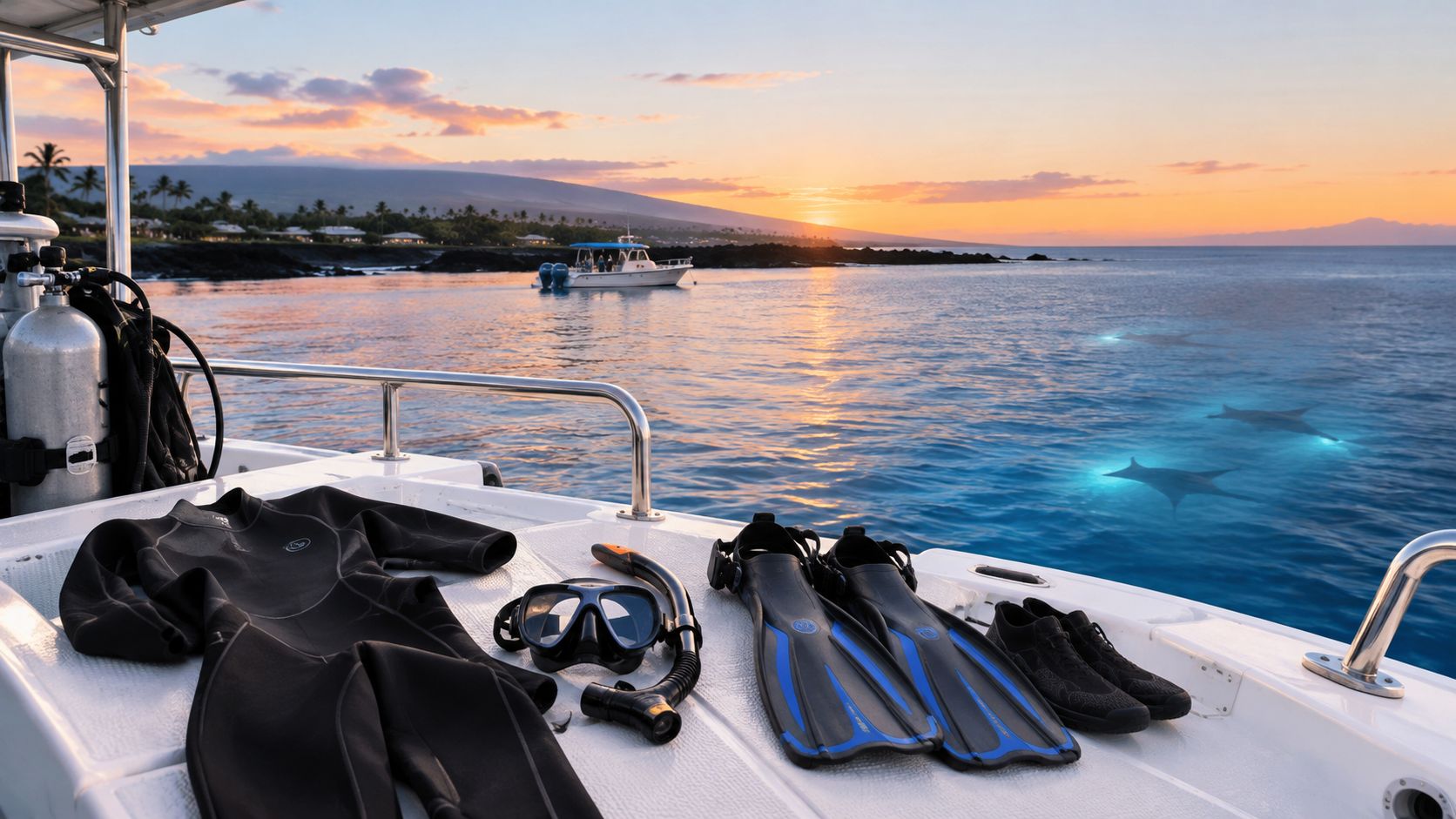
Pack for the water and the ride back
Wear your swimwear under your clothes, then bring a towel and a warm layer for the ride back. Spray can reach your bag, so tuck your phone and keys into a secure dry bag. If you prefer your own anti-fog gear or flotation equipment, check with the operator before bringing it aboard.
Kona Snorkel Trips provides masks, wetsuits, and floaty belts, with guests fitted before the briefing. That gives first-time snorkelers a chance to settle into their gear before entering the water. Plan a little breathing room after the trip, too. A calm evening on shore can feel welcome after the boat ride.
Common Questions Before You Book Your Dive
Are mantas guaranteed every night?
No. A light can gather plankton, but it cannot keep a manta at the site. Mantas also feed in deeper water, so even a familiar viewing spot can be quiet. As noted earlier, research on Kona's manta sites found that plankton levels alone do not explain whether mantas show up.
Do I need scuba certification?
Requirements vary by operator and trip. If you're booking a scuba dive, ask what certification and recent experience the crew requires. Snorkelers stay at the surface and watch from a different vantage point, without scuba gear.
What if sea or weather conditions change?
Rough water can affect comfort, visibility, or whether the trip goes ahead. Before booking, ask how the operator handles cancellations and what rescheduling options are available. Policies differ.
If you prefer to snorkel, Kona Snorkel Trips offers a guided manta night snorkel. Check the trip details and ask the crew any remaining questions before booking.
Kona Snorkel Trips offers a guided manta night snorkel. Guests float at the surface around illuminated boards while wild rays feed. For trip details, visit Kona Snorkel Trips.