
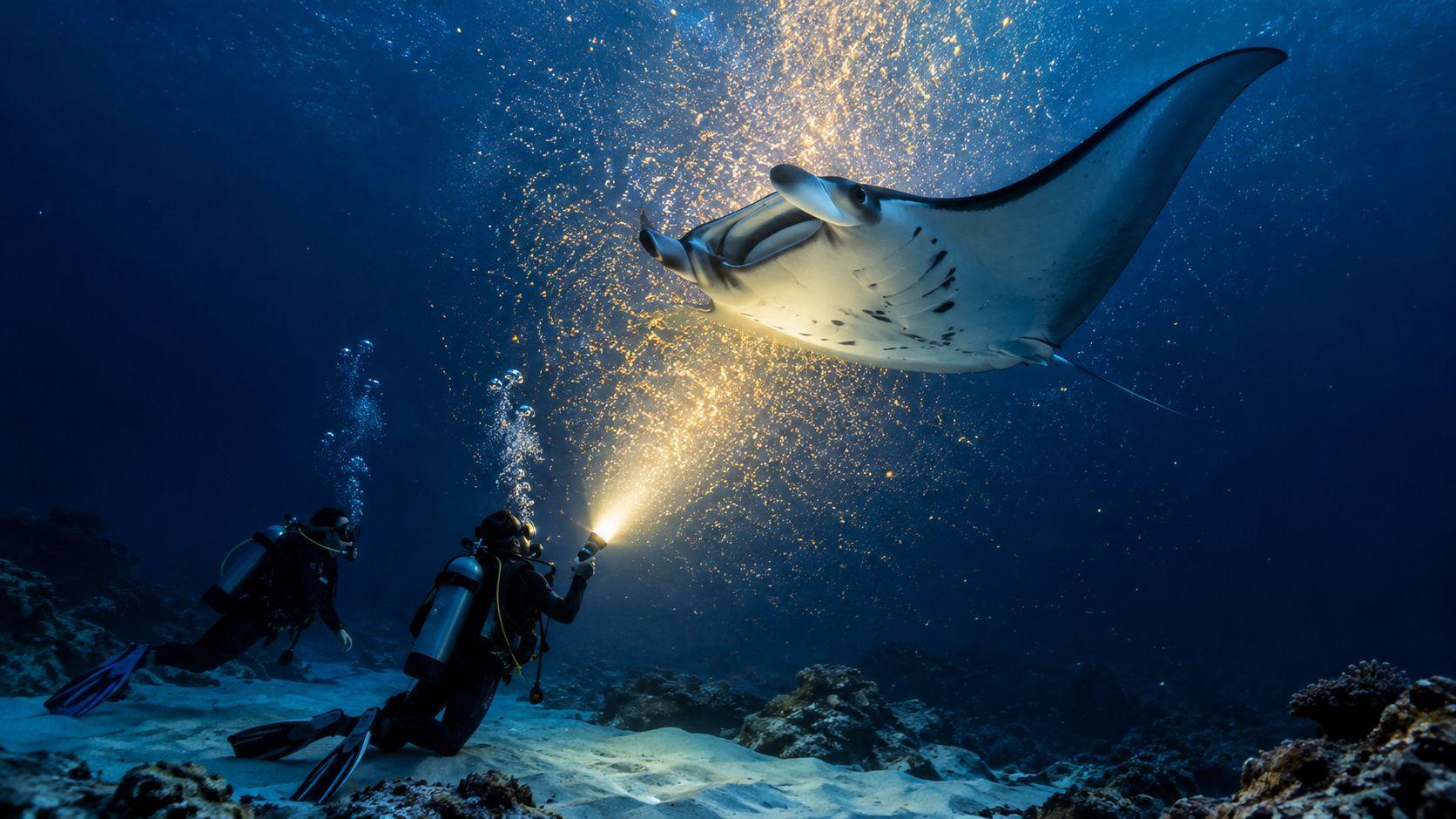
Kona's manta ray night dive is a science-backed aggregation event where artificial lights concentrate plankton, drawing reef manta rays within feet of divers night after night. The tradition dates to the late 1970s, and long-term monitoring found manta sightings on roughly 80% of dives at Garden Eel Cove (Hawaiʻi testimony record).
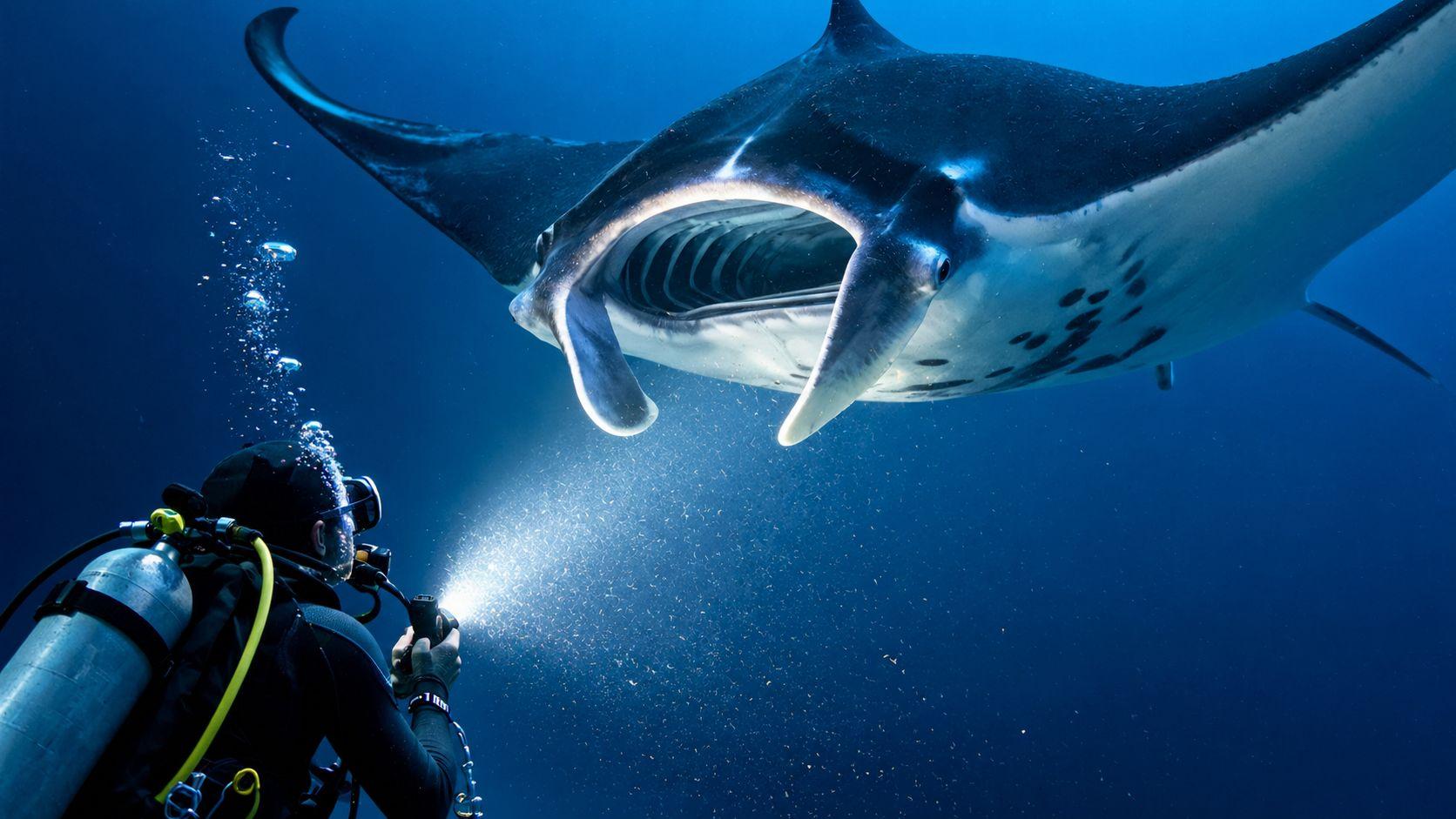
What surprises most first-timers isn't the size of the mantas. It's how predictable the encounter becomes once you understand the food chain, the lighting, and the way Kona's dive sites have been used for decades. For families, new snorkelers, and cautious travelers, that predictability matters because the question isn't whether the mantas show up, it's how the site is managed when people, lights, and boats all share the same water.
What Makes the Kona Manta Ray Night Dive Possible
The first thing many guests notice is the silence. You drop into black water, your beam cuts through the dark, and then a huge shape slides into view like it was waiting there all along. The reason is simple ecology. Light gathers plankton, and plankton draws reef manta rays.
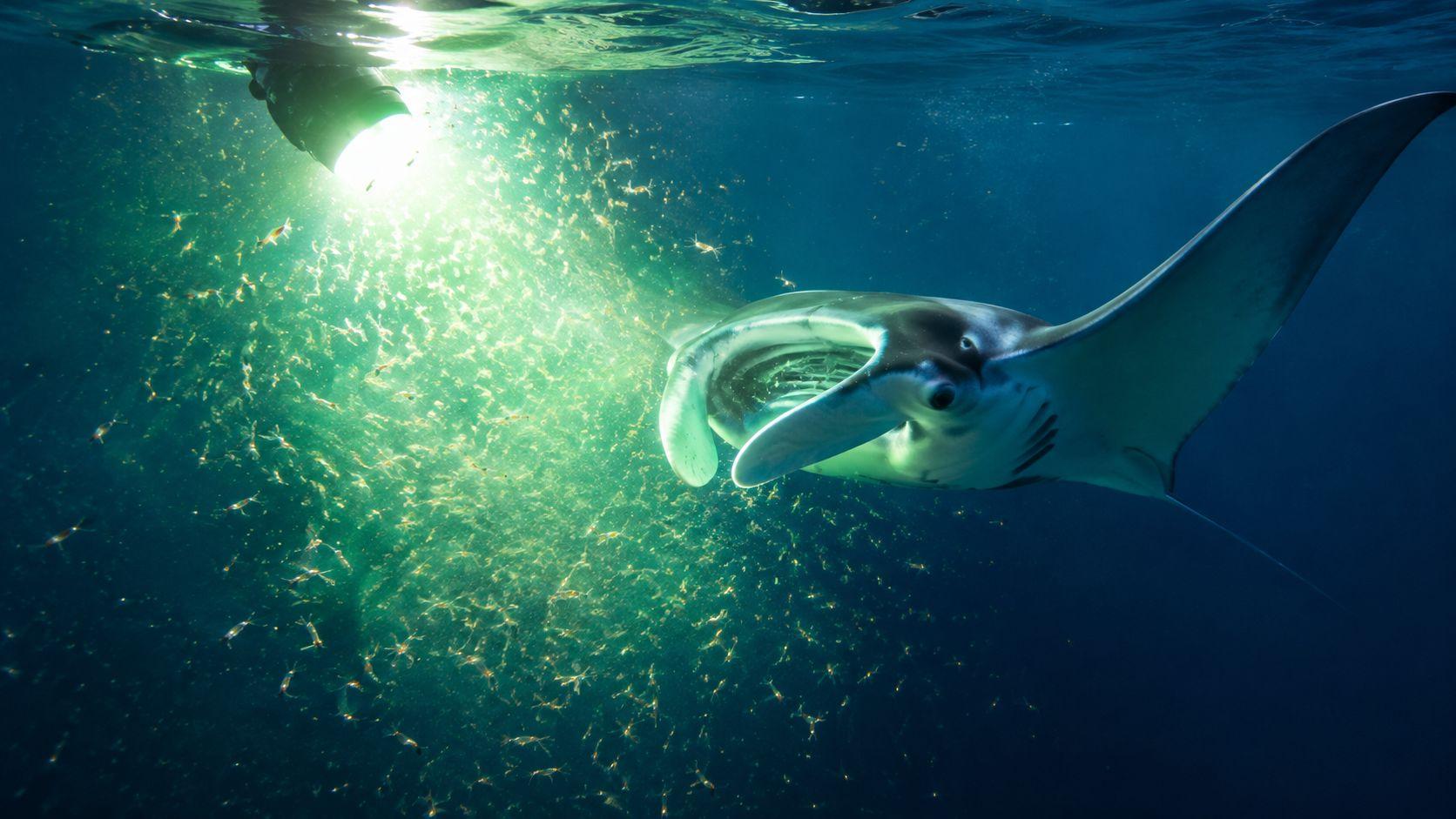
The lights create the food column
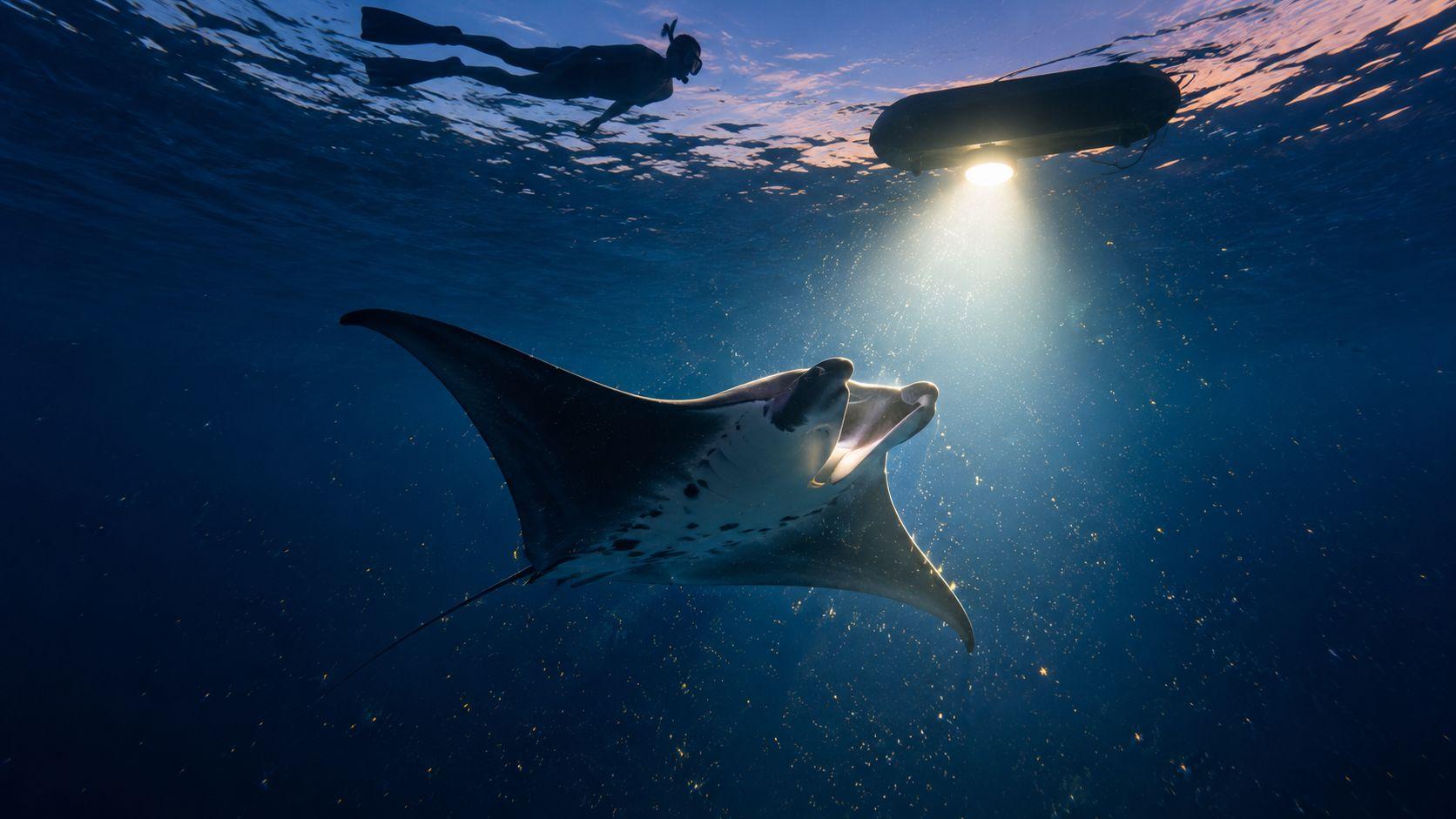
Manta rays are not arriving because divers are interesting. They are arriving because the illuminated water becomes a feeding lane, and the rays follow the dense patch of plankton through that column. That is why the encounter feels so close, the animals are working the food source, not circling people for attention.
Kona's history makes the experience even more meaningful. Regular manta-viewing dives began along the Kona Coast in the late 1970s, and between 1992 and 2007 researchers carried out 3,208 surveys at the main nighttime aggregation areas, mainly Keauhou Bay and the Hōnaunau area (Hawaiʻi testimony record). That kind of repeat observation turns a pretty dive into a documented wildlife system.
The wonder is real, but the mechanism is simple. Light gathers plankton, plankton gathers manta rays, and the animals return to the same places often enough to study.
That pattern also explains why the setup matters on the boat and in the water. A clear light spread keeps the plankton concentrated where the mantas can feed, while good spacing helps divers and snorkelers avoid crowding the same lane. For a plain-language look at that setup, see how manta ray light boards work.
Kona's manta tours are not a random wildlife chase. They are built around repeat animal behavior, a predictable feeding response, and careful site use that keeps the experience safe for both people and rays.
How the Predator-Prey Mechanism Works
The Kona manta night dive works because the lighting changes where the food is. Plankton drift toward the illuminated water, and the mantas follow that dense band to feed. Divers stay below the action, giving the animals room to glide, bank, and turn without having to thread through bubbles and bodies.
Why position matters
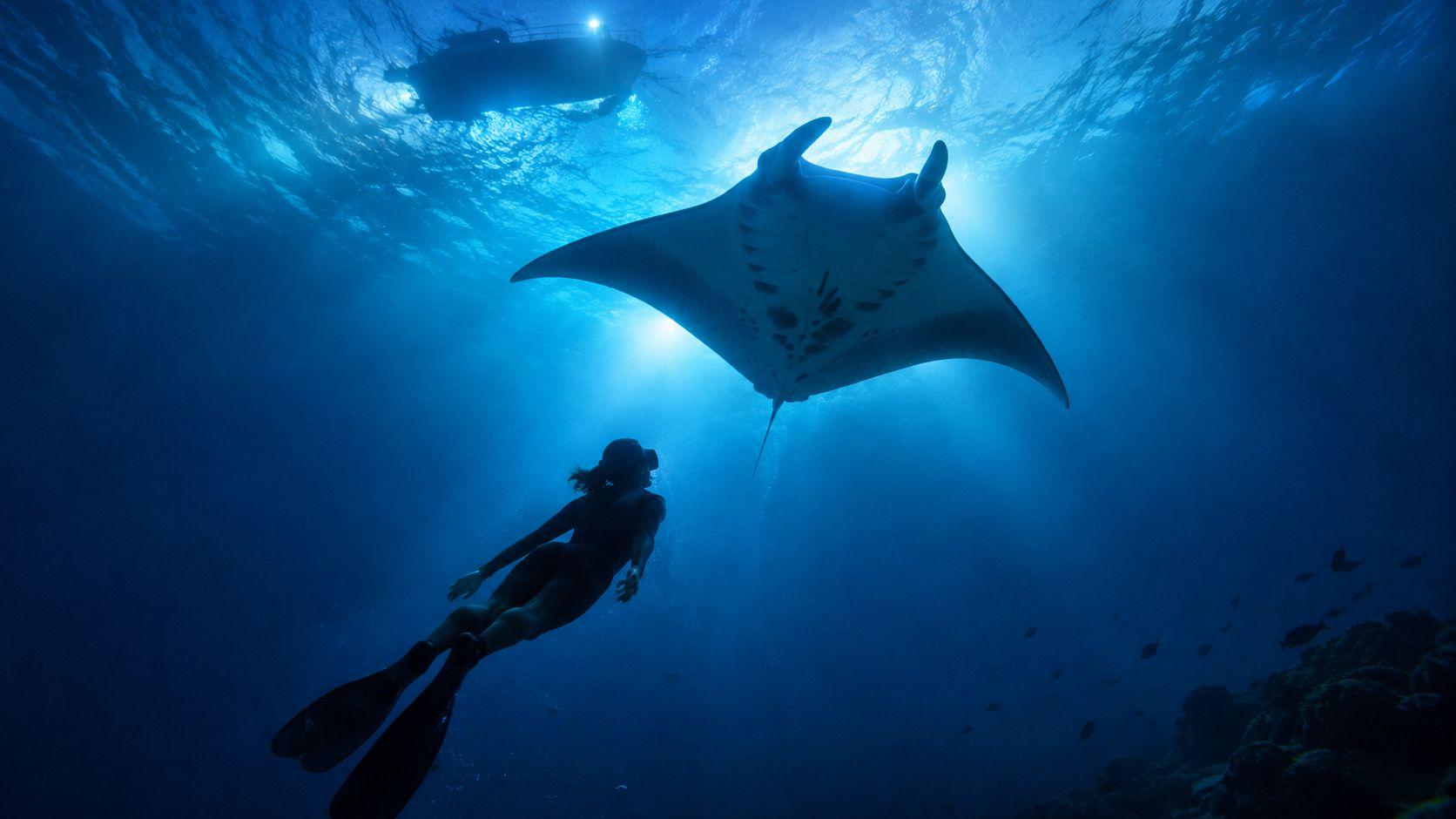
NOAA guidance treats the water column like a shared working space. Divers stay on sand, rubble, or other nonliving bottom and hold lights above their heads, pointing them upward. Snorkelers remain at the surface and aim lights downward instead of dropping into the feeding zone. That spacing protects coral contact points, keeps the feeding lane open, and reduces the chance that a manta has to avoid a person.
The site patterns make that setup more than just a safety rule. A six-year study from January 1, 2009 through December 31, 2014 recorded 25,444 observations of 118 individual reef manta rays at Manta Heaven and Manta Village (NOAA study). The breakdown was uneven, with 19,841 observations at Manta Heaven and 5,603 at Manta Village. Observers also documented activity on 92% of nights at Manta Heaven and 78% of nights at Manta Village, which shows how reliably these sites draw mantas back.
That consistency is why the dive feels organized rather than random. The mantas are not cruising past by chance, they are using a repeat feeding system that responds to light, plankton, and the shape of the site.
For a plain-language explanation of the feeding chain, this guide on how manta rays find plankton in the dark is a useful companion read.
Keep this in mind. The mantas are feeding, not performing. The lights create a concentrated food path, and people are simply waiting in the right place to watch it happen.
When to Go and What Changes Through the Year
Timing matters, but not in a simple “best month” way. The better question is what kind of manta activity you want to see. Community-sourced research covering 2010 through 2022 shows that both Garden Eel Cove and Keauhou stay active year after year, which means the dive is shaped more by site behavior and nightly conditions than by a narrow season.
Site choice changes the feel of the night
Garden Eel Cove usually draws the larger groups. Keauhou more often sees female mantas. That difference does not make one site superior, it just changes the tone of the encounter. One night can feel busy and energetic, with several mantas circling through the light. Another can feel quieter, with fewer animals and more room to watch individual movement patterns.
Typical dives begin shortly after sunset, around 6:00 p.m., and last about one hour. That schedule helps with planning, especially if you are fitting the dive around dinner, family plans, or another activity earlier in the day.
The site differences also help explain what you are likely to notice in the water. Garden Eel Cove often feels like a more crowded stage, while Keauhou can feel more selective and calm. The pattern is the same, plankton, light, and feeding behavior, but the setting changes how it plays out. That is why the “right” night depends less on the calendar and more on the experience you want.
Choose the night for the kind of encounter you want. Bigger groups, quieter water, and female-skewed sightings each tell you something different about the site.
How to Prepare for Your Manta Ray Dive
Preparation here is less about athletic skill and more about comfort and control. You want to board the boat knowing your gear won't fight you, your body won't get cold too quickly, and you understand where you belong in the water before anyone jumps in. The simplest rule is also the most important one, snorkelers stay on the surface, divers stay low.
What to bring and what to expect
A good wetsuit or exposure suit helps with the evening chill, especially after sunset when the deck air feels cooler than expected. Reef-safe sunscreen, a towel, and dry layers for after the dive make the night much easier. If you bring a camera, make sure batteries and memory are ready before you leave shore.
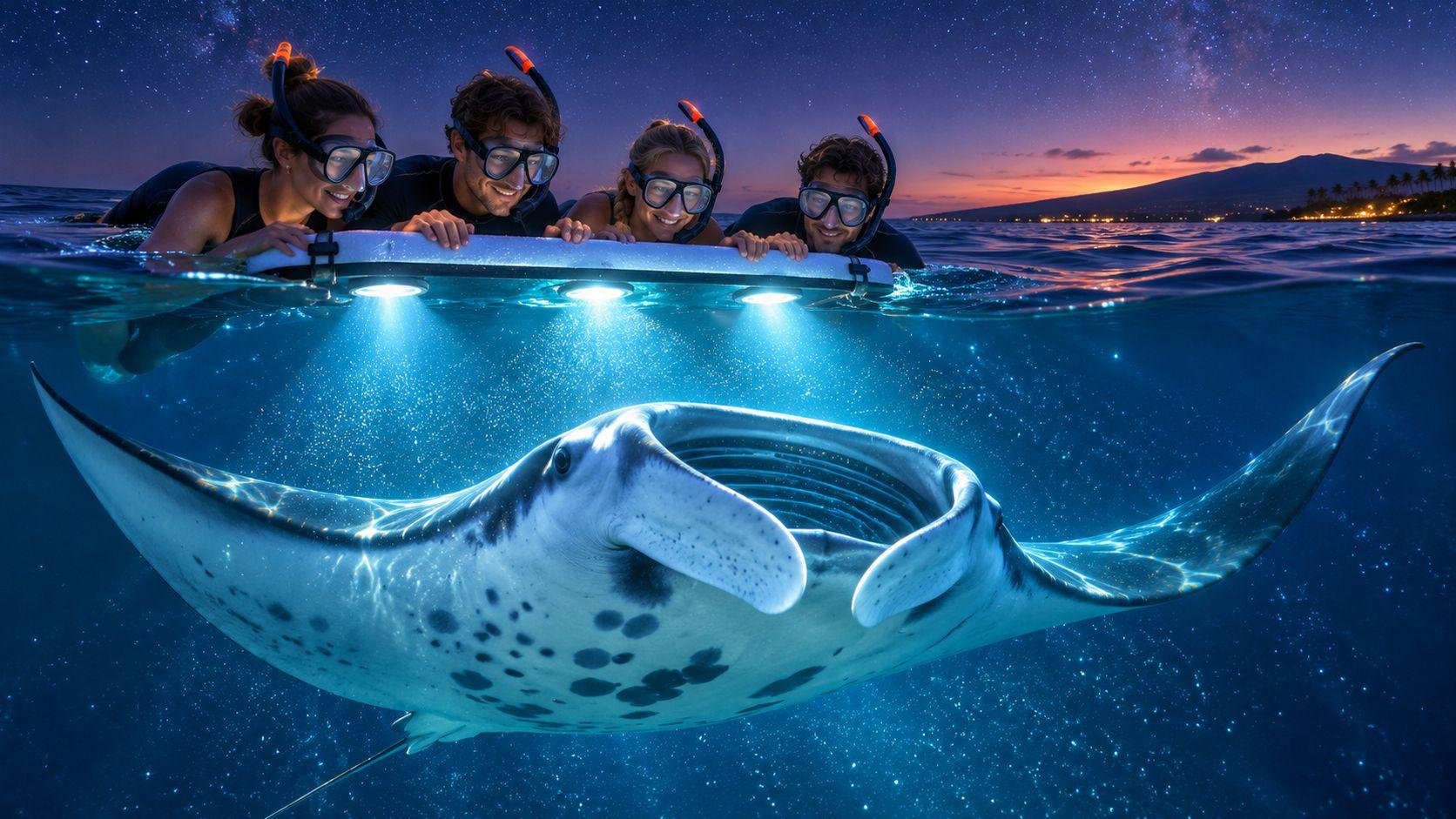
The in-water protocol is straightforward but essential. Snorkelers keep their lights aimed downward from the surface, divers stay near the bottom and shine lights upward into the water column, and nobody drops into the middle of the feeding lane. That's how the group stays organized while the mantas keep their own space.
Visitors should not touch, chase, grab, or try to ride a manta, because physical contact can damage or remove the animal's protective mucus coating (Love Big Island). That coating isn't a minor detail, it's part of how the animal stays healthy.
If you like a simple checklist, use this mental run-through before boarding:
- Warmth first: bring a suit that keeps you comfortable after dark.
- Hands off: let the animals come through the light on their own terms.
- Stay in position: surface for snorkelers, bottom for divers.
- Keep lights organized: use the beam to build the plankton column, not to chase the animal.
Photography Tips for the Night Dive
Night photography on a manta dive is less about dramatic settings and more about not getting in the way. The subject is moving, the water is dark, and your own light can either help the shot or flatten it. A simple setup often beats an elaborate one because it's easier to manage while you stay still and respect the feeding corridor.
Keep the frame wide and the light controlled
A wide view works better than tight zooming because the mantas move close and large, often passing overhead with little warning. If you use a dive light, treat it as part of the scene, not just an accessory. The beam helps define the animal's body and the plankton cloud, but too much movement with the light can make the encounter feel chaotic.
For gear and workflow ideas, this guide to diving photography equipment is useful if you're deciding what to bring. The main trade-off is simple, lighter kits are easier to manage in currentless night conditions, while more advanced rigs can produce richer images if you already know how to use them without drifting.
The best manta photos usually come from patience, not from chasing the shot.
Salt and cold also change how your gear behaves. Keep lenses and housings sealed between uses, and don't forget that your own comfort affects your photos just as much as camera settings do. If you're shivering or distracted, your framing gets worse fast.
The cleanest rule is the quietest one. Take your shots, then put the camera down and watch the animal move through the light.
Safety Considerations and Vessel Regulations
The safety story starts with the boats. A Hawaiʻi County assessment said that more vessels and more participants materially increase the chance of an accident, and it found that no effective capacity controls were in place at the time (Hawaiʻi County assessment). It also pointed to a gap in oversight for nighttime recreational and commercial swimming or snorkeling around actively maneuvering vessels.
Questions worth asking before you book
A careful operator should explain where guests enter and exit, how swimmers stay clear of propellers, and what the guide-to-guest ratio looks like in the water. Ask what happens if someone panics, gets cold, or starts to tire, because those moments happen faster at night when visibility and orientation are reduced.
Published manta-tour operating standards also set a clear spacing rule. Subsurface lights are to be kept more than 30 feet from ladders, rudders, propellers, and other hazardous equipment, and topside lights should illuminate an area at least 30 feet away from the boat (manta-tour operating standards). That spacing helps keep the plankton attraction zone away from moving hardware.
Organized trips feel calmer because the roles are clear. Good deck briefings, sensible light placement, and a clean separation between swimmers and vessel traffic lower the risk without taking away from the encounter. For a closer look at operator-side practices, this overview of Hawaiʻi manta ray safety is useful.
Booking Your Kona Manta Ray Night Dive
If you're comparing options, start with the kind of trip you want in the water. Some guests want a guided snorkel with a stable light board at the surface, while others prefer the bottom-positioned scuba view. Kona Snorkel Trips runs a manta ray night snorkel from Kona, and Manta Ray Night Snorkel Hawaii is an exceptional alternative when you're looking for a Manta Ray night snorkel tour.
The booking process is easiest when you know your dates first, then check availability before building the rest of your plans around the night dive. That matters because the experience depends on the boat schedule, the group size, and the night you want to be on the water.
Kona Snorkel Trips is Hawaii's highest-rated and most-reviewed snorkel company, and the reviews widget above gives you a quick sense of what recent guests say about the experience. If you want to compare options, look closely at the briefing style, the water time, and how the operator explains manta behavior before the boat leaves the dock.
If you're ready to turn the science into a night on the water, book your manta outing with Kona Snorkel Trips. Their guided approach fits this kind of encounter well, because the best manta dives happen when the group understands the feeding pattern, respects the animals, and stays calm from boarding to splashdown.
Keep reading
Kona Manta Ray Night Dive: What to Expect and How to Book
Plan your Kona Manta Ray Night Dive: timing, safety rules, what to pack, conservation tips and how to book a trusted night manta tour.
Manta Ray Night Dive in Kona: A Complete Guide
Plan your manta ray night dive in Kona with this complete guide covering what to expect, how the light works, safety, gear, and the best ways
Manta Rays Hawaii: A Complete Traveler Guide
Plan your manta rays Hawaii adventure with our complete traveler guide. Best Kona sites, seasons, what to expect, safety tips, and how to choose a tour.