
Can Manta Rays in Hawaii Hurt Snorkelers?
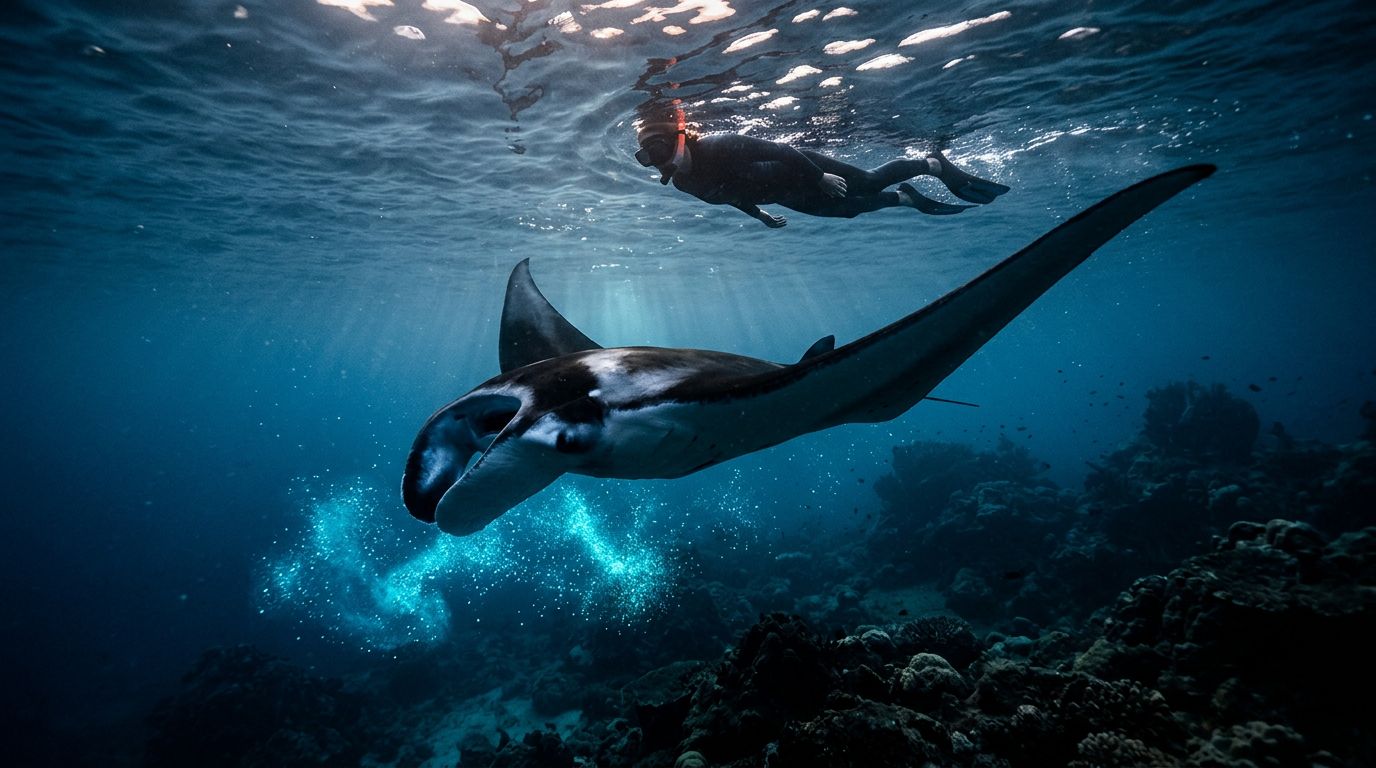
You do not need to fear manta rays to enjoy them. In Hawaiian waters, these animals are built for filter feeding, not for attacking snorkelers, and they do not have the kind of stinging defense people worry about. The bigger risk usually comes from rough water, crowded conditions, or poor habits around the group.
If you are planning snorkeling Big Island Hawaii, a guided trip gives you the safest first look. When you snorkel Big Island at night, a calm briefing and a good guide matter as much as the view.
Why Hawaii manta rays rarely hurt people
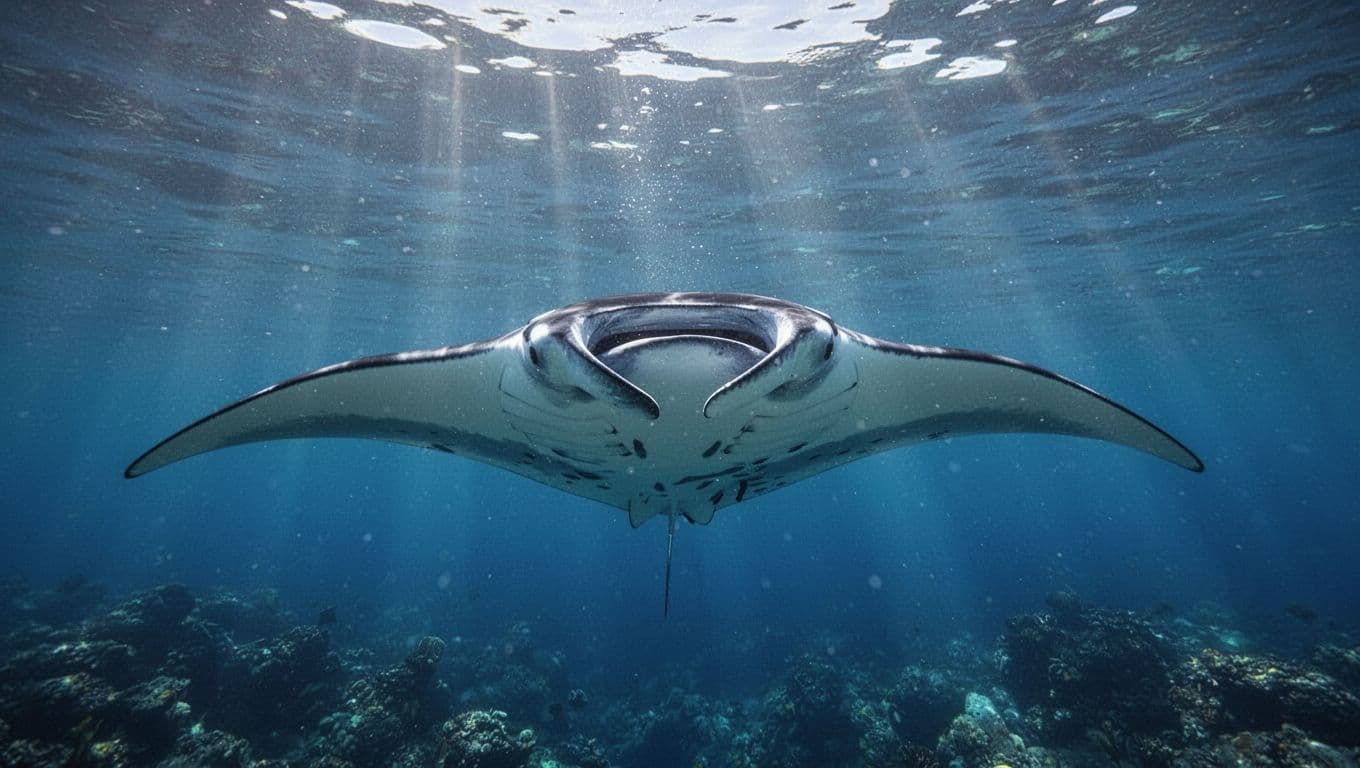
Hawaii manta rays are large, graceful fish that move like underwater gliders. They have no stinger, no barb, and no interest in biting you. Their mouth is made for catching tiny plankton, not for dealing with people.
That is why most manta encounters feel peaceful, even when the animal passes close. A manta may circle near a light or glide under your board, but that is feeding behavior, not aggression. The motion can look dramatic, yet the animal is usually just following the food.
If you want to see that behavior with a guide, Kona Snorkel Trips offers small-group manta outings, and guided manta ray snorkel tours in Kona give you a clear idea of what the experience looks like. Another dedicated option is Manta Ray Night Snorkel, which focuses on the same nighttime encounter.
The real hazards in the water
Most injuries around manta trips come from the water around the manta, not the manta itself. A slippery deck, a stiff current, or a tired swimmer can create more trouble than the animal ever will.
| Risk | How it shows up | What you do |
|---|---|---|
| Manta contact | A rare brush or pass-by | Keep your hands still and give space |
| Crowding | Kicks, elbows, panic, drifting apart | Stay with your guide and your group |
| Current or surf | Fatigue, separation, awkward entries | Listen carefully before you get in |
| Boat and gear | Ladder bumps, mask leaks, fin mishaps | Move slowly and check your fit first |
That list sounds ordinary because it is. The ocean rewards calm habits. For snorkeling Big Island, the safest swimmers are usually the ones who keep their movements simple and their expectations realistic.
The biggest risk is usually the water around the manta, not the manta itself.
If you want a quick visual on why people confuse these animals, a comparison like Manta Rays vs. Stingrays makes the difference easy to spot.
Manta rays vs stingrays, and why the mix-up sticks
People often lump manta rays and stingrays together because they both have flat bodies and broad fins. That is where the similarity ends. Stingrays stay closer to the seafloor and defend themselves with a barbed tail. Manta rays spend much more time cruising through open water and do not have that same weapon.
The confusion matters because stingrays can injure someone who steps on them or traps them in shallow water. Mantas do not behave like that. They are not lurking on the bottom, and they do not lash out at snorkelers who float nearby.
That difference is one reason the safest manta trip feels more like a wildlife viewing than a contact sport. You watch, they glide, and the ocean stays in charge. If you are reading scary stories online, check whether the writer is describing a stingray accident, not a manta encounter.
How to snorkel safely with manta rays
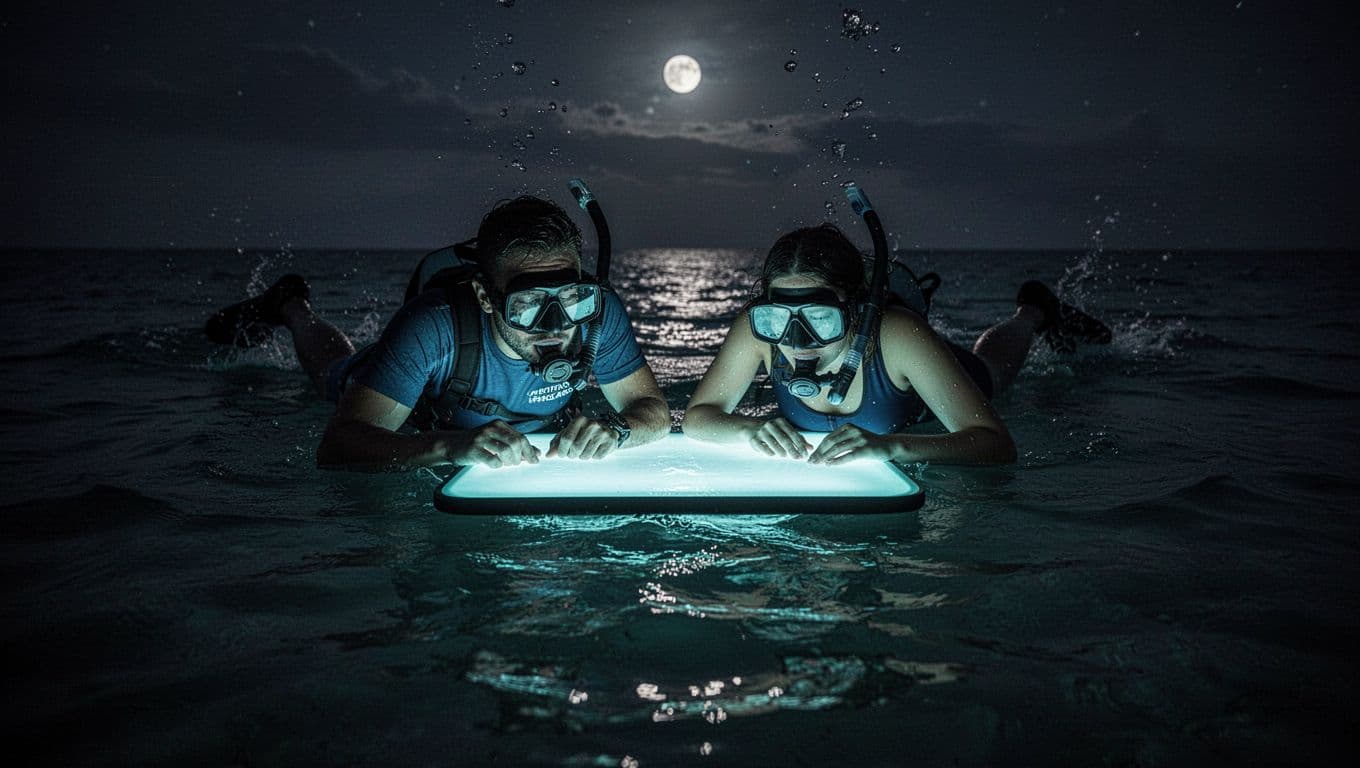
When you snorkel Big Island waters at night, your job is simple. Stay calm, listen closely, and keep your body out of the manta’s path. The best encounter happens when you give the animal room to do its thing.
A few habits go a long way:
- Keep your body flat and relaxed.
- Hold the board or float, not the wildlife.
- Never chase a manta for a closer look.
- Keep your fins low and your kicks gentle.
- Follow the guide’s entry, exit, and regroup calls.
Those steps sound basic, but they work. The water is dark, your senses are sharper, and it is easy to overreact when a big shadow appears below you. If you are planning snorkeling Big Island Hawaii, a guided trip makes those first few minutes much easier.
Reef-safe sunscreen helps too. So does a snug mask and a calm breathing pattern. When you keep your head down and your movements slow, you see more and you interfere less.
Choosing a Big Island manta tour
A good manta tour does more than put you on the water. It gives you clear safety instructions, a small enough group to feel manageable, and guides who know how to keep the night organized.
Kona Snorkel Trips is a strong fit if you want that kind of trip. The company keeps the experience personal, uses lifeguard-certified guides, and follows a Reef to Rays approach that respects the reef before the manta show begins. If you want to compare options, Big Island snorkeling tours give you the bigger picture, and private Kona boat charters are a smart choice when you want more space or a custom pace.
If you want a direct look at current openings, you can check availability for a standard Kona trip.
If you want the manta-specific experience, you can check availability for the dedicated night snorkel. Another trip built for this exact encounter is Manta Ray Night Snorkel, which centers the whole outing on the same nighttime feeding behavior.
If you are trying to decide between a large group and a quieter setup, the private option often feels easier for families, couples, and nervous swimmers. That matters when you care more about comfort than crowd size.
When you should skip the snorkel
The ocean is not the place to bluff your way through a bad night. If the surf is rough, if you are already tired, or if you feel anxious in open water, pick another date.
That advice matters even more for kids and first-time snorkelers. A good guide can help with confidence, but no guide can cancel a strong current or make a fatigued swimmer strong again. If you have ear pain, motion sickness, or any medical issue that could get worse in the water, take that seriously.
For snorkeling Big Island, patience beats pride. A calm night with mild conditions gives you a much better chance to enjoy the mantas without stress. If a guide says the water is not right, trust the call.
What to do if a manta swims close
Stay still and let it pass. Keep your hands in place, hold your position, and watch the animal glide under or beside you. If you move suddenly, you only create confusion for yourself and the group.
You do not need to dive toward the manta or twist around for a better angle. The best view often comes when you become part of the background. That is how the animal stays relaxed, and that is how you stay safe.
If the manta circles back, let it. If it passes inches away, resist the urge to reach out. The moment gets better when you give it room.
Conclusion
Manta rays in Hawaii are far less likely to hurt you than the stories on social media make it sound. The real risks usually come from currents, crowding, poor breathing, or careless movement in the water.
If you stay calm, follow your guide, and choose a small-group tour, you can enjoy the encounter without worry. That is the simple truth behind snorkeling with Hawaii manta rays.
Respect the ocean, and it usually gives you something better than a scare, a quiet memory that stays with you long after the boat ride ends.