
How to Position Yourself on a Manta Ray Light Board
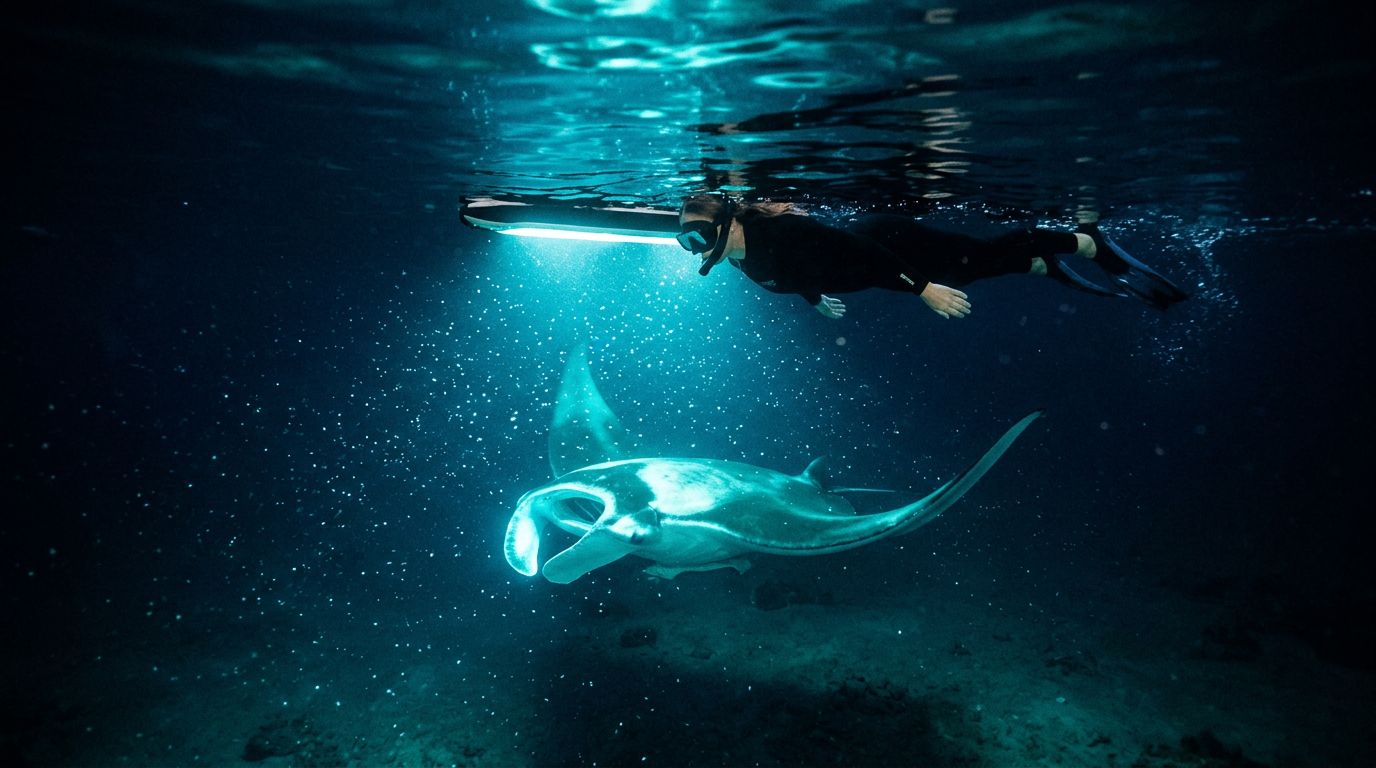
A manta ray light board works best when you treat it as a viewing station, not a raft. Keep your body long, your hands relaxed, and your face aimed into the illuminated water. That position helps you breathe steadily while giving manta rays room to circle below.
If you’ve been searching for snorkeling Big Island Hawaii adventures, you may picture the rays first. The quality of your encounter also depends on how you enter, where you hold on, and whether you stay calm in dark water. Kona Snorkel Trips guides small groups with custom-built light boards and Lifeguard Certified guides. For a second manta-focused option, visit Manta Ray Night Snorkel Hawaii. Start with the board’s purpose, then focus on your body position.
What a Manta Ray Light Board Does
During a night snorkel, powerful lights brighten the seawater beneath a floating board. Tiny organisms gather around the glow, and manta rays may sweep through to feed. You aren’t trying to swim after them. You hold a steady position and watch them move through the illuminated water.
The board gives you a clear reference point in the dark ocean. Your guide will explain where to enter, which side to use, and how the group should arrange itself. Follow those directions before you focus on getting the perfect view.
A proper manta ray light board also helps create a calm viewing area. When swimmers stay close to their assigned positions, the group produces less splashing and fewer sudden movements. The rays can then pass beneath the light without having to avoid people.
Kona’s reef manta rays are large animals, with some weighing roughly 900 to 1,500 pounds. Their size can look intimidating at first, but they move with control and grace. The best view usually comes when you remain still and let the ray choose its path.
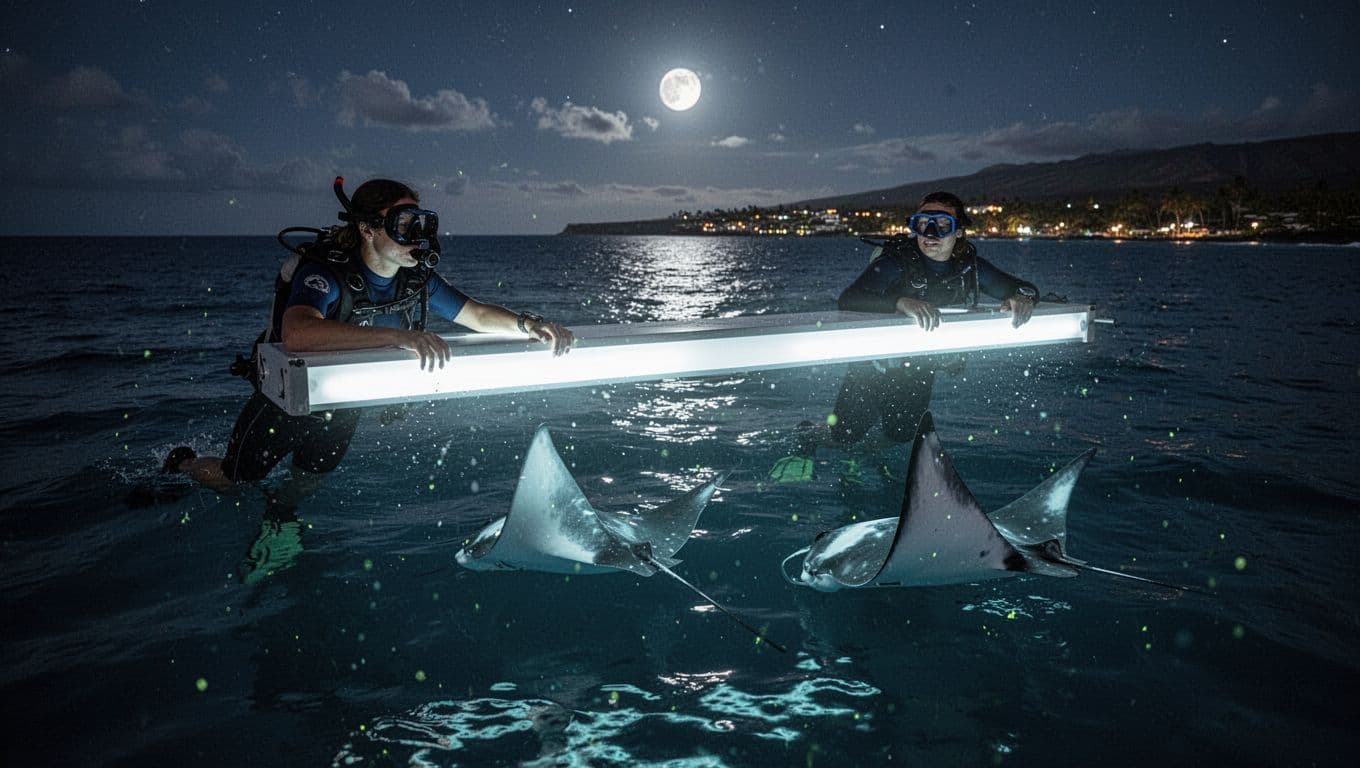
You may see a manta pass directly beneath the board, turn on its side, or glide away into darker water. Wildlife sightings can vary, so your job is to stay ready without trying to direct the action.
How to Position Yourself on a Manta Ray Light Board
Your ideal position is horizontal, relaxed, and close enough to the board for support. Keep your chest near the surface, let your legs trail behind you, and look down through the illuminated water.
Approach the board from the side your guide indicates. Move slowly, leave space for other swimmers, and wait for an open position. Once you reach the board, settle your forearms or hands lightly against the edge. You shouldn’t need to pull yourself across it or climb on top.
Keep your head and shoulders quiet
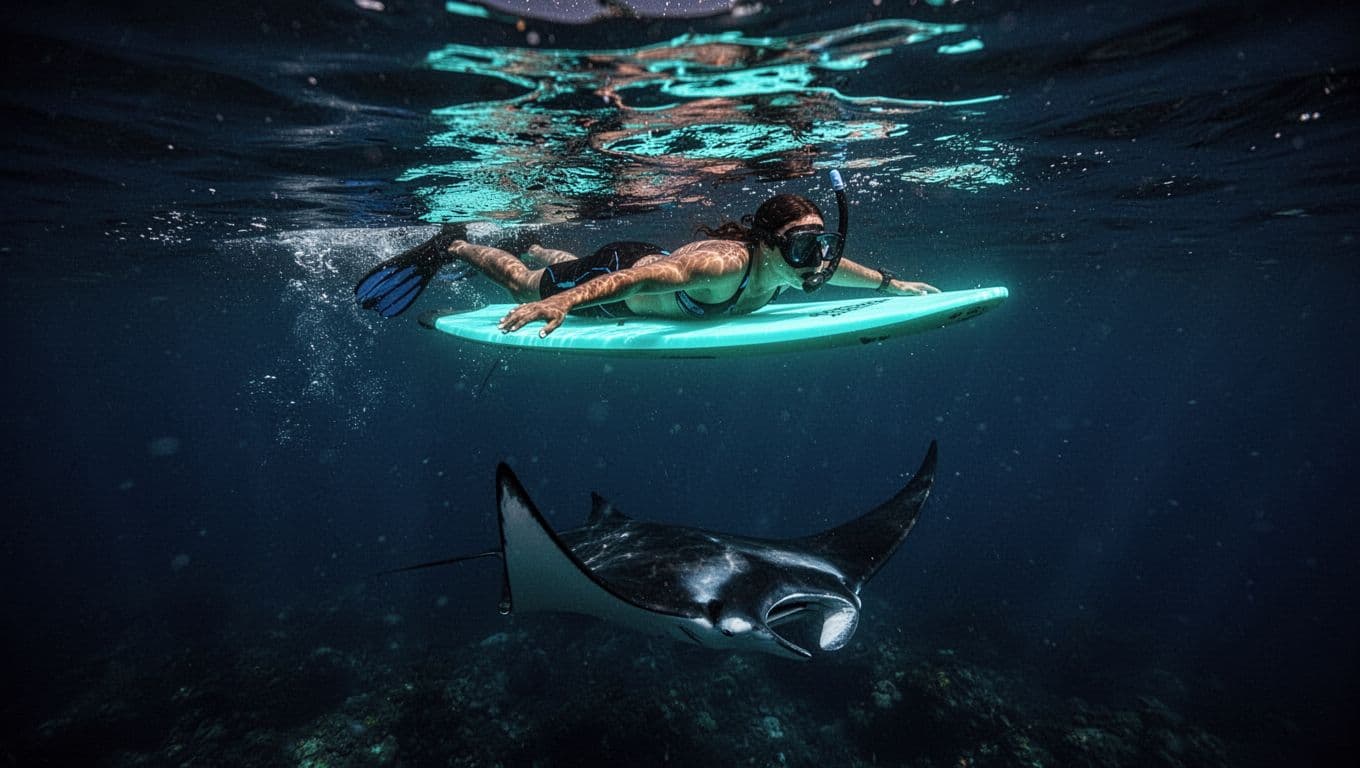
Place your mask fully in the water and keep your snorkel above the surface. Look down with small, gentle head movements instead of lifting your face repeatedly. Every large movement creates bubbles, splashes, and extra effort.
Rest your hands where the guide shows you. A light grip gives you stability without pulling the board toward you. Keep your elbows relaxed and avoid reaching into the water as a manta ray approaches.
You may feel tempted to follow a ray with your whole body. Resist that urge. Turn your head, not your shoulders, and allow the animal to swim through your field of view.
Let your legs trail behind you
Keep your hips near the surface and your legs behind the board. Relax your ankles and use only a small flutter kick when you need to adjust your position. Strong kicking can create turbulence and may push your fins toward another swimmer.
Avoid hanging vertically beneath the board. A vertical posture takes more effort, limits your view, and makes it harder to keep your fins away from the feeding area.
The most comfortable position is usually the quietest one: chest near the surface, legs behind you, and eyes looking down.
Use the board for support, not control
The board can help you rest, but it isn’t a platform for climbing, sitting, or pulling yourself across the water. Keep your weight in the water unless your guide gives you different instructions.
If your mask leaks or you need to clear your snorkel, signal the guide and move carefully. Don’t let go and swim after the group without telling anyone. At night, even a short distance can make it harder for your guide to track you.
A steady breathing rhythm makes the position easier. Breathe in through your mouth, exhale slowly, and avoid holding your breath when a ray approaches. The animal’s size can surprise you, but a slow exhale helps keep your body relaxed.
Safe Manta Ray Viewing Starts With Space
Manta rays are wild animals, even when they pass close to swimmers. Their movements can change quickly, so keep your hands, fins, and equipment out of their path.
NOAA’s giant manta ray guidance recommends observing manta rays at a safe distance and never enticing them to approach. That means you shouldn’t touch, feed, chase, block, or try to redirect a ray.
Your guide may ask you to keep a particular distance beneath the board. Follow that instruction even if another swimmer appears closer to a manta. Getting closer doesn’t guarantee a better view, and it can place both you and the animal in an awkward position.
Avoid diving underneath the board unless your guide specifically permits it. A dive can place you directly in a ray’s route and may cause you to surface among other swimmers. Stay at the surface, where the group can see you.
Personal lights can also interfere with the viewing area. Use only the equipment your guide approves. The board’s lights are positioned to attract plankton while keeping the viewing setup organized.
Hawaii’s Department of Land and Natural Resources assessed boating operations and human safety at two primary manta viewing locations on the Kona coast, Makako Bay and Keauhou Bay. The Hawaii DLNR safety assessment shows why boat traffic, swimmer placement, and guide coordination matter during these outings.
For broader standards, NOAA’s marine life viewing guidelines also encourage people to observe wildlife without harming animals or their habitat. Your position at the board is part of that responsibility.
Prepare Before You Enter the Water
A comfortable board position begins before you leave the boat. Ask your guide to check your mask, snorkel, fins, and flotation equipment. A small mask leak can become a major distraction once you’re surrounded by dark water.
Use defog solution as directed, then test your seal. Breathe through the snorkel while you are still near the boat so you can identify any problem early. If you wear contact lenses, ask the operator about its equipment recommendations before the trip.
Tell your guide if you feel nervous, tire quickly, or need extra help in the water. Lifeguard Certified guides can explain the hand signals, show you where to rest, and help you choose a position that feels manageable.
You don’t need advanced swimming skills to enjoy a guided night snorkel, but you do need to follow instructions. If you become uncomfortable, signal for help instead of trying to solve the problem alone.
Pack a swimsuit, towel, reef-safe sunscreen for before sunset, and any required personal medication. A light layer for the boat ride can also make the return trip more comfortable after you leave the water.
Once you snorkel Big Island waters at night, the darkness can make ordinary movements feel larger than they are. Slow actions and steady breathing keep the experience enjoyable. The same habits help when snorkeling Big Island reefs during daylight, too.
Choose a Guided Kona Tour That Fits You
Kona Snorkel Trips follows a “Reef to Rays” philosophy, with a focus on safety, personal service, and responsible ocean viewing. Its small-group tours use quality snorkeling gear and custom-built lighted boards for nighttime manta encounters.
Lifeguard Certified guides lead the experience and explain how to position yourself before you enter the water. They also help you stay aware of your equipment, the group, the boat, and the animals below.
You can review the Kona manta ray night snorkel details before choosing a departure. Families and couples who want more control over timing and group size can also consider a private Kona manta tour.
If you already know a nighttime manta encounter fits your plans, you can check availability.
Conclusion
Positioning yourself at a manta ray light board is simple once you focus on the basics. Stay horizontal, hold the edge lightly, keep your fins behind you, and let the rays control the encounter.
Your guide handles the setup and safety details, while you provide the calm presence that makes close viewing possible. When you give manta rays room to move, you get a clearer view and help protect one of Kona’s most memorable marine experiences.