
Kona Hawaii Manta Ray Night Snorkel: A Complete Guide
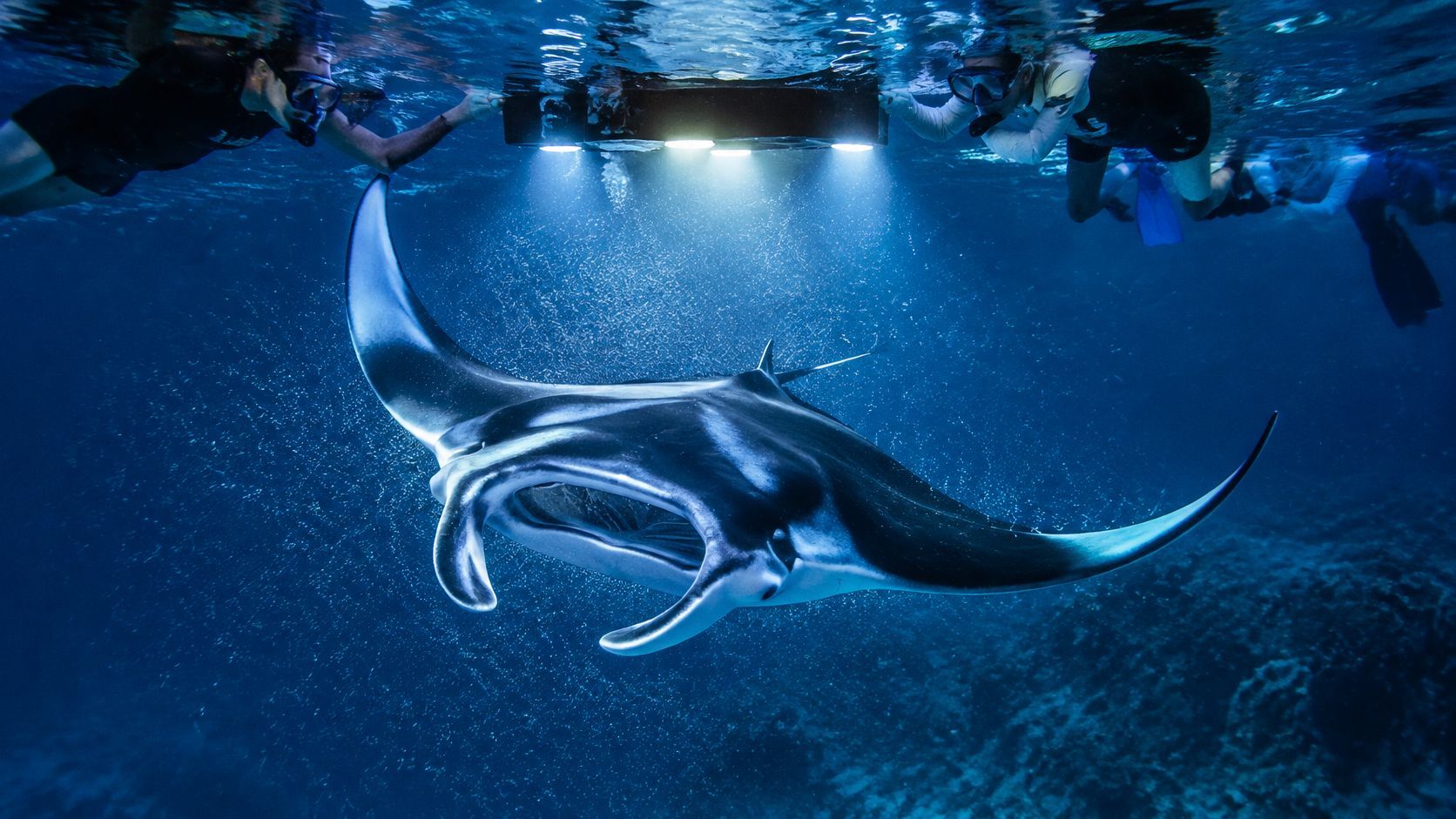
You're probably comparing dates, checking how comfortable you need to be in the water, and wondering what happens if the mantas don't show. The Kona Hawaii manta ray night snorkel is a guided, after-dark float in open ocean. Knowing what draws the rays to the lights, and what a good night depends on, makes it easier to plan without expecting wildlife to perform on a schedule.
Kona Snorkel Trips is Hawaii's top-rated and most-reviewed snorkel company. The guide below covers the basics, the feeding behavior behind the encounter, what happens in the water, and how to choose a tour with safety and realistic expectations in mind.
Kona Manta Ray Night Snorkel at a Glance
You're floating face down in dark water, holding near a bright light that shines below the surface. A broad shadow glides up from the blue, turns beneath you, then sweeps away. That's the essence of the Kona manta snorkel: watching wild reef manta rays, Mobula alfredi, feed around an illuminated viewing area while you remain at the surface.
| Question | Answer | Why it matters |
|---|---|---|
| When can you see mantas? | Year round, with no monthly pattern | Plan around your schedule and the weather, not a season |
| Where does the snorkel happen? | Garden Eel Cove or the Keauhou area | These are the two main nighttime feeding sites on the Kona coast |
| How long are you in the water? | 30–40 minutes | Mostly floating and watching, not a swimming workout |
| When does it happen? | After dark, in open ocean | Mantas feed at night, so the viewing is nocturnal |
| Where do you leave from? | Honokohau Marina, between Kona town and Kona airport | Short drive from most Kona hotels and easy to plan around |
| Who is it for? | Beginners comfortable floating on the surface | Nervous swimmers can still take part with a guide's support |
Manta rays are seen year round, and their appearances don't follow a pattern based on the month. Kona Snorkel Trips' manta outings are an open-ocean activity, with guests spending 30–40 minutes in the water mostly floating and watching rather than swimming continuously.
Kona Snorkel Trips departs from its own dock at Honokohau Marina, between town and the airport. The rest of this guide explains why lights and plankton shape the encounter, what to expect step by step, how to stay safe, and what to look for when choosing a tour.
How Lights and Plankton Bring Mantas Into Kona Bays
Think of the underwater light like a porch light on a summer night, except it attracts plankton instead of moths. The plankton gathers in the illuminated water, and hungry manta rays may follow. The light doesn't feed or control the animals. It makes a naturally occurring food patch easier to find and observe.
Follow the food chain
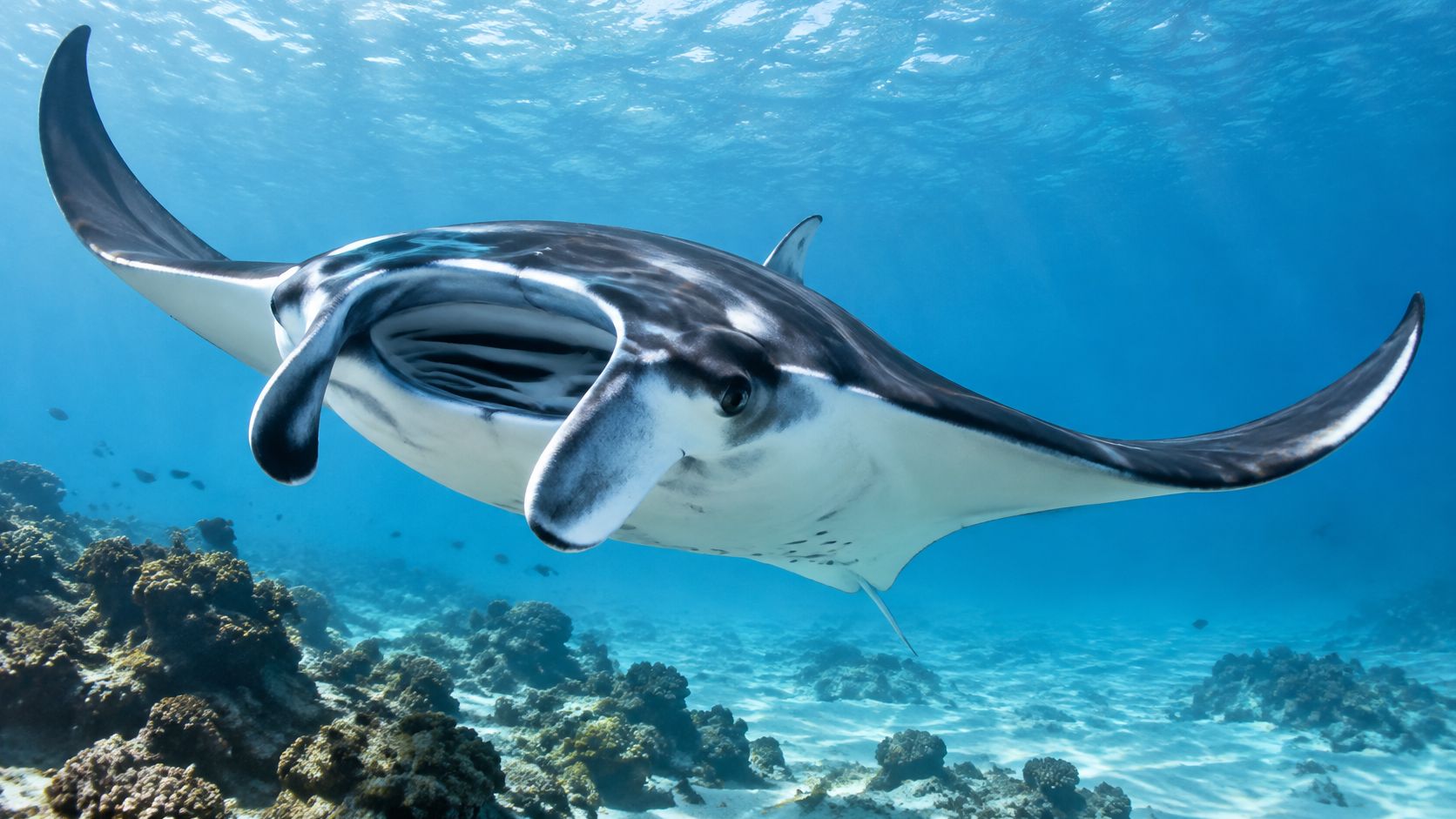
The sequence is simple. Artificial lights brighten a patch of water; zooplankton concentrates there; then reef mantas filter-feed through the prey-rich area. As described in the manta conservation specialty manual, a manta uses its cephalic fins, the paired fins beside its mouth, to channel plankton-rich water inside. Its gill structures retain tiny prey, including copepods, euphausiids, mysids and decapod larvae.
The number of rays present can change because the food supply changes. Long-term Kona observations link aggregation size with zooplankton density, so a quiet night may mean there's less prey concentrated near the surface. That's why a manta encounter is an ecological response, not a scheduled show. For a closer look at this mechanism, see why lights attract manta rays during night snorkeling.
| Behavior | What happens |
|---|---|
| Daytime | Giant mantas may move inshore to clean and socialize, with activity generally concentrated near the surface, usually less than 5 metres |
| Nighttime | Mantas feed offshore and may rise and dive repeatedly while following migrating zooplankton. Night descents of roughly 200–450 metres have been documented, with dives reported as deep as 1,000 metres |
Those depths describe the animals' broader behavior, not what snorkelers need to do. At a viewing site, lights concentrate prey near the surface, bringing feeding rays within view without requiring guests to dive after them. NOAA's giant manta ray behavior overview describes the contrast between daytime activity and nighttime feeding.
The useful expectation: The lights create a chance to observe feeding, but plankton availability helps determine how many mantas appear.
Kona's established feeding areas and long history of observation make it a well-known place to see this behavior. Still, the conditions on a particular night matter more than a calendar date.
Reef Manta Ray Biology and Kona's Local Population
A manta ray is a cartilaginous relative of sharks and other rays. Its broad wings and gliding movements can make it look like it's flying underwater, but it feeds on tiny plankton rather than fish. Unlike a stingray, a manta doesn't have a stinger. It can grow to a wingspan of about 16 feet, roughly 5 metres, and weigh more than 1,000 pounds. Some mantas also leap clear of the water and land with a resounding slap.
Familiar animals, distinct sites
Kona's manta rays aren't just an interchangeable crowd gathering in one place. A 2025 University of Hawaiʻi study analyzed community-sourced observations from 2010–2022, covering more than 23,000 sightings of 167 individually identified reef mantas at Garden Eel Cove and Keauhou.
Garden Eel Cove supported larger aggregations, while Keauhou was visited predominantly by females. Across both locations, the observed sex ratio was approximately 1:1, but males appeared more mobile and females showed stronger site fidelity, particularly at Keauhou. Think of the sites as two neighboring cafés serving the same menu but drawing different crowds.
The same study found that aggregation size tracked zooplankton density. That helps explain why even familiar feeding locations can produce a different experience from one night to the next: the animals respond to food conditions, not visitor plans.
For readers wondering whether Kona's rays stay in the area, this guide to Kona manta residency explores the distinction between site loyalty and a guarantee that an individual will appear on a given night. Local familiarity makes the encounters special, but the rays remain wild.
How a Manta Night Snorkel Unfolds, Step by Step
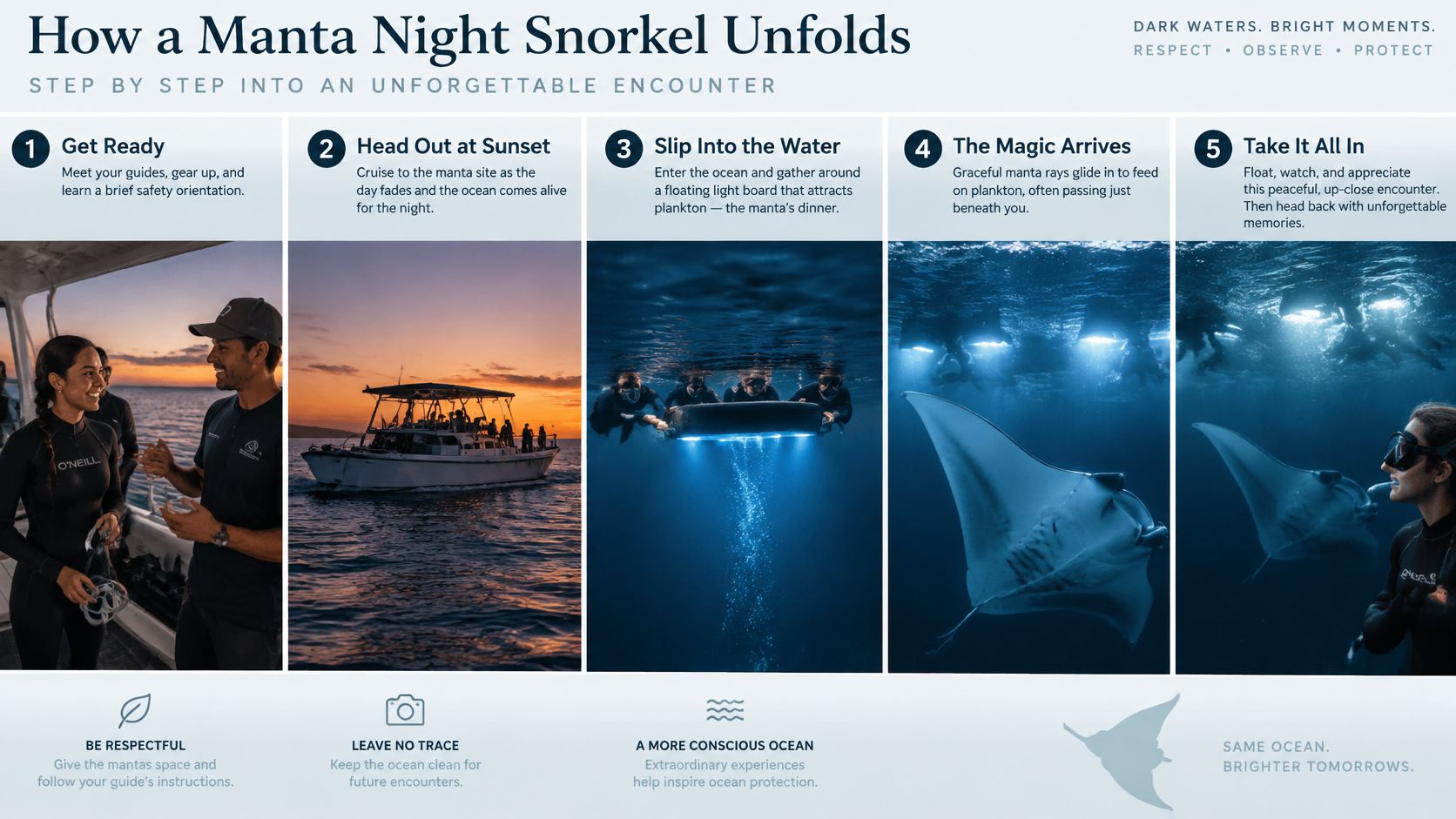
The night follows a steady rhythm: prepare on shore, listen to the crew, enter the water together and let the animals choose their path. Knowing what each step is for can help you feel more settled when the ocean is dark and unfamiliar.
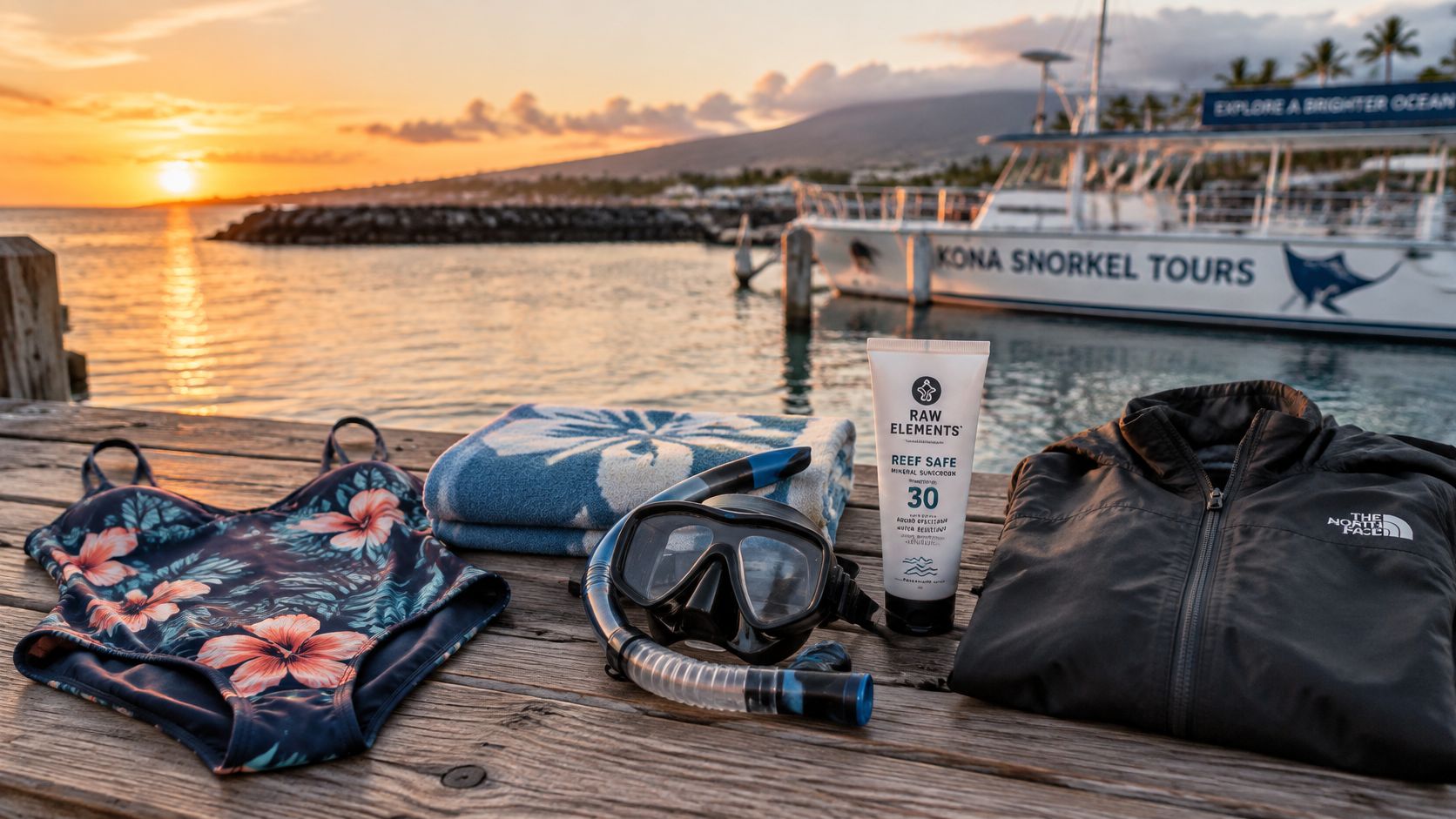
Pack before you arrive. Wear a swimsuit and bring a towel, plus a warm layer for the boat ride back. Apply reef-safe sunscreen before you reach the marina, and bring a camera with a night mode if you want photos; leave the flash off.
Check in at the marina. Arrive at Honokohau Marina and find your boat before the evening gets underway. Getting settled on shore gives you time to listen and ask questions before boarding.
Settle in for the ride. Depending on your departure time, you may watch the sunset from the deck. Keep your warm layer handy for the return ride after you've been in the water.
Listen to the briefing. Guides explain what the rays are doing, how to float and where to position yourself. Pay close attention to the no-touch rule and the signal to exit; those instructions matter most once you're in the water.
Get fitted with your gear. The crew helps with a mask, snorkel, wetsuit and flotation device. A flotation belt helps keep your hips and feet high, reducing the chance that kicking reaches a manta.
Enter after dark and settle at the surface. Float face down, point your light downward, keep your hands at your sides and stay still. NOAA's wildlife-interaction guidance says snorkelers should remain on the surface and shine lights downward, while divers shine lights upward. The difference reflects how each group observes the feeding area.
Wait and watch. You'll have about 30–40 minutes in the water. Sightings aren't guaranteed, so follow the guide's signals and let the rays approach rather than swimming after them.
Take photos without flash. Keep the camera steady, shoot from the surface and don't chase a manta for a better angle. A passing ray may be close, but it should always be free to choose its own route.
Exit when the guide signals. Follow the crew back to the boat, rinse your gear and debrief on board. A calm, orderly exit helps keep the group together.
The common slips are simple to avoid: kicking hard, shining a light into another snorkeler's eyes, or drifting toward the edge of the illuminated area. Kona Snorkel Trips' manta ray night snorkel tour is one option for planning the outing, and Manta Ray Night Snorkel Hawaii is an exceptional alternative when comparing tours.
Safety and Etiquette That Protect You and the Rays
Manta rays are gentle animals, and a nighttime open-ocean snorkel still calls for clear judgment. The rays face pressures of their own: entanglement in fishing line and moorings, boat strikes and habitat loss all weigh on Kona's manta groups. How you move in the water shapes the encounter for you and for them.
Why local stewardship matters
Kona's reef mantas belong to a geographically constrained population. A NOAA-supported genomic study found that Hawaiʻi Island and Maui Nui mantas are genetically distinct and rarely cross the deep channels between island groups, and the estimated Hawaiʻi Island population included approximately 104 adult breeders. With slow growth, late maturity and low reproductive output, the population is sensitive to adult mortality and chronic habitat stress, so each calm, hands-off encounter helps keep the animals feeding undisturbed.
Rays show up for the plankton that gathers in the light, and there is no reliable pattern to their appearance by month, which means staying still is what earns a close look. Use this checklist to keep your own behavior safe and predictable:
- Stay with the group and follow the guide's positioning. The crew needs to keep people and equipment inside a controlled viewing area.
- Keep your flotation belt on. On the manta tour it holds your hips and feet high, so a careless kick can't reach a ray. Leave it on even if you feel comfortable in the water.
- Learn the exit signal before you get in. You should know how to respond without waiting for an explanation in the dark.
- Tell the guide about health or mobility concerns. Mention heart, breathing or mobility conditions before boarding so the crew knows what support you may need.
- Avoid alcohol beforehand. You are entering open water at night and need clear judgment.
- Keep your mask and snorkel on. Removing them in darkness makes it harder to stay oriented.
- Leave each manta a clear route. Don't swim beneath one or block its path; the animal should be free to keep feeding and move away on its own.
- Never touch, chase, grab or ride a manta. Contact can remove the protective mucus coating, and NOAA's wildlife guidance is to observe without physical interaction.
- Move predictably. Sudden lunges, splashing and big kicks startle feeding rays and can send a calm animal out of the light.
- Don't feed the rays or throw anything into the water. Leave the plankton patch and the surrounding habitat undisturbed.
- Keep gear, line and rubbish out of the ocean. Respect moorings and never leave loose equipment where it could entangle wildlife.
If you're nervous, staying on the boat is a reasonable choice. If currents or visibility change while you're in the water, signal the guide, hold the boat line or float guard, and follow the crew's directions. The full list of manta snorkeling rules that protect wildlife and guests covers this behavior in more detail.
Gentle animals don't make a nighttime ocean activity risk-free. The calmest snorkelers usually get the closest, longest views because they leave the rays room to feed.
Manta Ray Night Snorkel Questions Answered
Can I touch the mantas? No. Don't touch, chase or ride them; contact can remove their protective mucus coating.
Can children join? Check the operator's age and swimming requirements before booking. The experience takes place in open water after dark.
What if I can't swim well? Flotation is provided, and nervous swimmers can ask for support or stay on the boat. Be honest with your guide about your comfort level before entering.
What if no rays appear? Sightings depend on plankton conditions and can differ from night to night. No sighting is guaranteed, so confirm the operator's refund or rebooking policy before paying.
What should I wear? Bring a swimsuit, towel and warm layer for the ride back. Apply reef-safe sunscreen before arrival.
How long is the trip? The outing lasts about two hours, with 30–40 minutes in the water.
Choose a Reputable Manta Tour and Book Your Night
A good tour makes its safety practices clear before you board. Use this table to compare any operator, not just one company.
| Criterion | What to look for | Red flag |
|---|---|---|
| Guide training | Lifeguard certification and experience handling snorkelers in open water | Guides who can't explain the animals, safety rules or exit plan |
| Group size | Small groups so guides can manage positioning around the light | Large crowds packed around one light |
| Lighting | Steady lights held at the surface and pointed downward | Lights aimed at rays or swept back and forth across the water |
| Flotation and equipment | Flotation devices, fitted masks and wetsuits for every guest | Nervous swimmers expected to manage without flotation |
| Briefing | Clear rules on no touching, no chasing and the exit signal before entry | A short or missing briefing |
| Reviews | Many recent, specific reviews that describe the guides and the rays | Few reviews or only generic praise |
| Honest expectations | A clear explanation that sightings vary from night to night | Promises of a set number of rays or guaranteed close encounters |
Small groups help guides manage where guests position themselves around the light, while steady lighting helps keep the viewing area orderly. A thorough briefing should cover both wildlife etiquette and what to do if conditions change. See this guide to choosing the right Kona manta ray snorkel tour for more comparison points.
Kona Snorkel Trips offers small-group tours with lifeguard-certified guides, a custom-built snorkel board with high-powered lights, and flotation belts for every guest to help keep hips and feet up and reduce kicking toward mantas. The two-hour night tour takes place in Kona. The company is friend-owned and operated, and Manta Ray Night Snorkel Hawaii is an exceptional alternative when comparing manta night snorkel tours.
You can also review the details of the Kona manta ray night snorkel tour. Choose the operator whose guides can explain the animals, the safety rules and the exit plan, and whose group size lets everyone see the lights without crowding the rays.
Join Kona Snorkel Trips for a guided, small-group manta ray night snorkel with lifeguard-certified guides, flotation belts and a custom-built light board. Visit Kona Snorkel Trips to plan your night on the water and prepare for a wildlife encounter on the mantas' terms.