
Kona Hawaii Manta Ray Night Dive Guide 2026
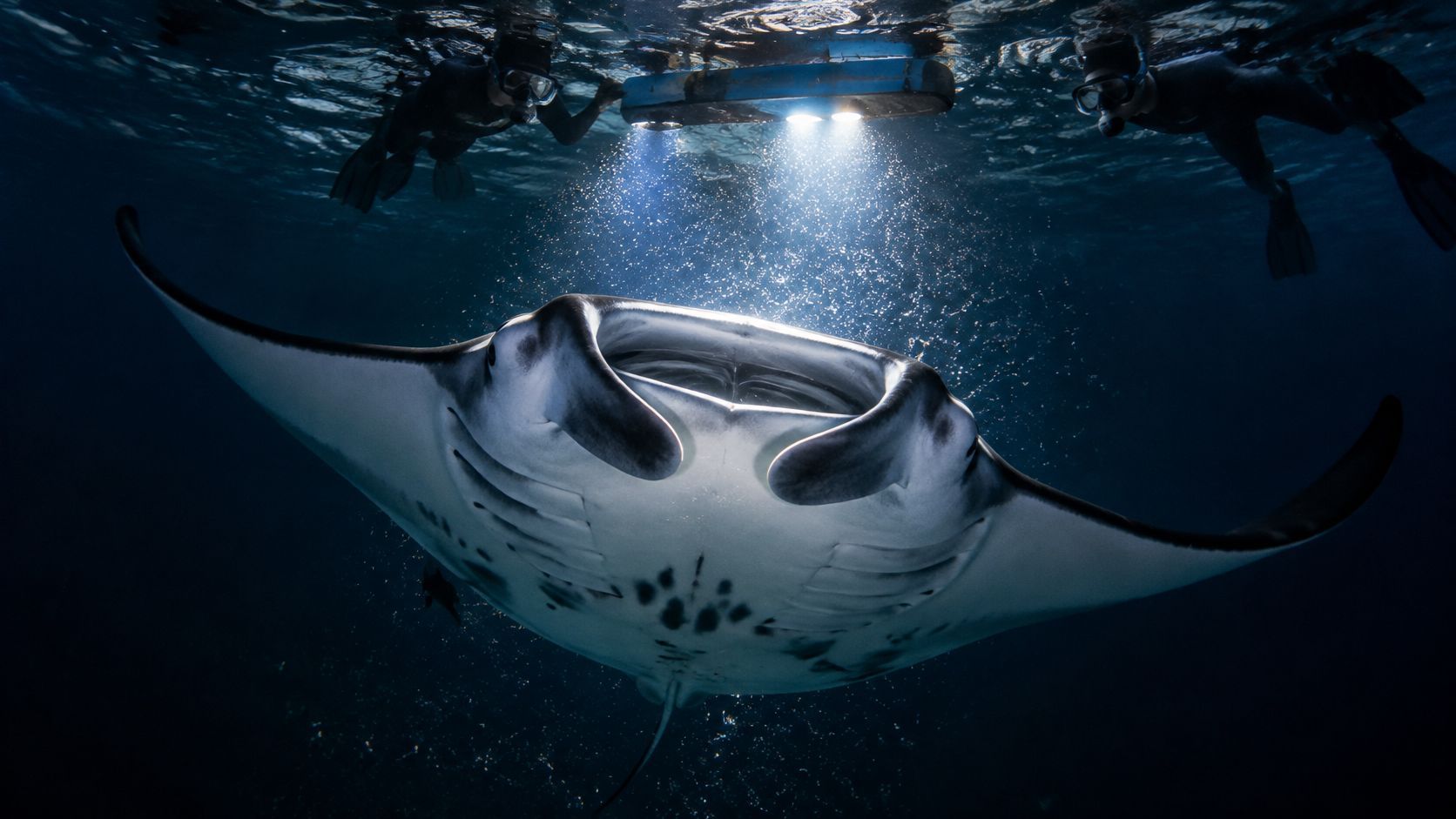
You're probably checking this on your phone the afternoon before checkout, wondering whether a night in open water will feel magical or unnerving. The simplest way to picture Kona's manta encounter is as a plankton campfire: lights draw food into the water, and wild manta rays may arrive to feed. The lights can make the meeting predictable, but they can't promise a performance.
Snorkel or Scuba on a Kona Manta Night
The choice is mostly about where you want to watch from. Snorkelers float at the surface beside a lit board, while certified divers settle near the bottom and look up. Either way, you are a visitor in open water after dark, and the manta may or may not come close.
Kona Snorkel Trips is the highest-rated and most-reviewed snorkel company on the Big Island, with thousands of customer reviews. Its Kona manta ray night snorkel gives surface-level access to the encounter. Manta Ray Night Snorkel Hawaii is another option for a manta ray night snorkel.
| Option | Where you are | Published 2025 price | Time with the rays | Best for |
|---|---|---|---|---|
| Group manta night snorkel | Surface on a lit float, lights aimed down | About $105 per person | Kona Snorkel Trips allows 30 to 40 minutes in the water | Calm floaters, families, and non-certified swimmers |
| One-tank manta night dive | Seafloor light circle, lights aimed up | About $149 per person | One tank; time in the water depends on the dive | Certified divers who want the belly view overhead |
| Two-tank manta dive | Bottom lights, then more bottom time | Price not listed here | Longer charter than a one-tank dive | Certified divers who want a fuller night |
The 2025 price guide published by Going lists group manta snorkeling excursions at about $105 per person and one-tank Kona manta night dives at about $149 per person. These are reference prices, not a promise about what a particular trip includes. Ask the operator to confirm the total cost, what is included, and how long you will be in the water.
The surface seat and the bottom seat
At the surface, you hold onto a lighted float and aim your light down. You do not need to dive beneath the surface to watch. Staying at the surface also helps keep snorkelers out of the water column where mantas feed.
Divers gather around a light circle near the bottom and shine their lights upward. The voluntary manta-ray viewing standard advises divers to avoid releasing bubbles directly toward a manta's face. Both positions give you a different view, and both require following the crew's directions around the feeding area.
A two-tank trip suits certified divers who want more underwater time, though its price is not listed in the comparison. If you are weighing the two activities, this guide to snorkeling versus scuba diving explains the basic differences.
This is wildlife viewing, not a show. The crew can prepare the lights and show guests where to stay. The manta chooses whether to enter the beam, how long to feed, and how close to pass. For a first-timer, the key question is whether you can float calmly and stay still in the dark.
How a Campfire of Light Feeds the Rays
Think of a campfire that draws moths, except the “moths” are tiny zooplankton, and the diners are reef manta rays. Artificial lights gather plankton into a dense cloud in the water. Mantas follow that concentration of food into the illuminated area.
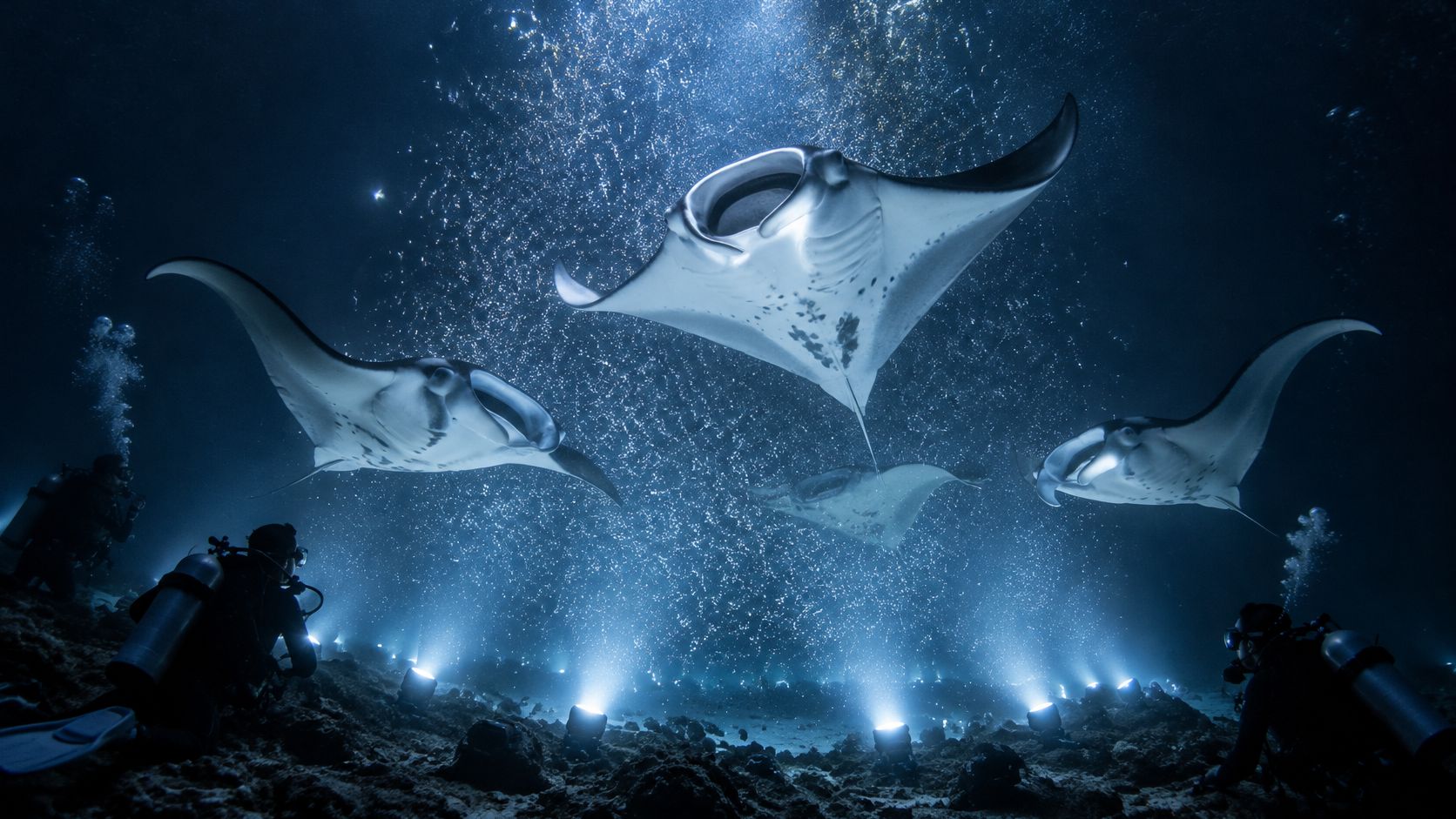
At the site, people form two parts of the scene. Divers hold a circle of lights near the bottom, and snorkelers float above with lights aimed down. Between them, rays may loop through the water with their mouths open, filtering plankton from the beam.
The Hawaiʻi Department of Land and Natural Resources assessment describes this as prey-field engineering: artificial lights concentrate zooplankton, and manta rays follow the increased food density. It also explains why one illuminated site doesn't guarantee the same encounter every night. Plankton moves with ocean conditions, so one evening may bring steady feeding passes and another may offer only a few distant turns.
What the crew can shape
The crew controls how lights are placed and how guests behave around them. Good lighting draws plankton without forcing rays into a tight space. Guests help keep the feeding area workable by holding position and leaving the rays an open route through the water.
Kona's night encounters grew out of an accidental attraction: hotel lighting near Keauhou drew plankton, which in turn brought feeding mantas toward shore. Organized nighttime encounters were operating by the early 1990s, according to historical testimony submitted to the Hawaiʻi Legislature. The lights turned a chance pattern into a repeatable way to observe feeding behavior, not a way to command it.
The house rule: Don't chase, touch, or block a feeding manta. Its mucus-covered skin can be damaged by contact, and it needs room to maneuver.
Keep your hands to yourself and let the ray choose its path. If you want to learn more about the food that brings them in, read about what manta rays eat during Kona night snorkels.
Garden Eel Cove and Keauhou After Dark
A manta night can feel like a plankton campfire: lights gather food, and rays may arrive to feed. The campfire often works, but it is not a guaranteed performance. Garden Eel Cove and the Keauhou shoreline are two different places to gather around the light, and the patterns recorded at each are not identical.
| Site | Typical group | What drives it |
|---|---|---|
| Garden Eel Cove | Larger and more variable aggregations | Zooplankton density |
| Keauhou shoreline | Smaller aggregations | Plankton drawn by hotel lights |
| Either site on a given night | Changes with conditions | Plankton, season, and weather |
A 13-year analysis of more than 23,000 records involving 167 individually identified reef mantas found that Garden Eel Cove generally had larger, more variable aggregations. Keauhou had smaller groups, and females accounted for 91% of sightings in the records. The analysis of Kona manta-site use also found that aggregation size was positively correlated with zooplankton density.
That matters because an illuminated site is not a fixed wildlife display. The number of rays can change with food availability, site, season, and weather. Garden Eel Cove may offer the better chance of a larger aggregation, but no location guarantees a particular number of animals.
| What you're comparing | Garden Eel Cove | Keauhou |
|---|---|---|
| General pattern | Larger, more variable aggregations | Smaller aggregations |
| What can change the encounter | Plankton density and conditions | Plankton density and conditions |
| A useful planning question | Can the boat use this site tonight? | Can the boat use this site tonight? |
What a no-ray night can mean
A night without a manta sighting does not automatically mean the crew failed. The crew can choose a site, arrange lights, brief guests, and make operational decisions. It cannot control how much plankton gathers or whether mantas arrive to feed. Before booking, ask how an operator handles a no-ray night, including whether it offers a rebooking or refund.
Manta rays are seen year-round, with no pattern in their appearance based on the month. When comparing Garden Eel Cove and Keauhou, look for an operator that can explain which site it plans to use and what might prompt a change. Conditions may improve the odds, but the animal makes the final choice.
Who Should Get in and Who Should Wait
At the rail, the water is dark and the boat lights turn the surface into a bright gathering place. The manta may arrive to feed, or it may not. Your readiness depends less on how close a ray might come than on whether you can stay calm and still in open water while boats, people, and lights share the area.
Ask yourself four practical questions before booking:
- Mask comfort: Can you wear a mask without feeling trapped or panicked?
- Stillness: Can you float without thrashing or kicking toward the rays?
- Position: Can you stay at the surface if snorkeling, or near the bottom if diving?
- Ladder: Can you climb back aboard using the boat's ladder, with the crew's support?
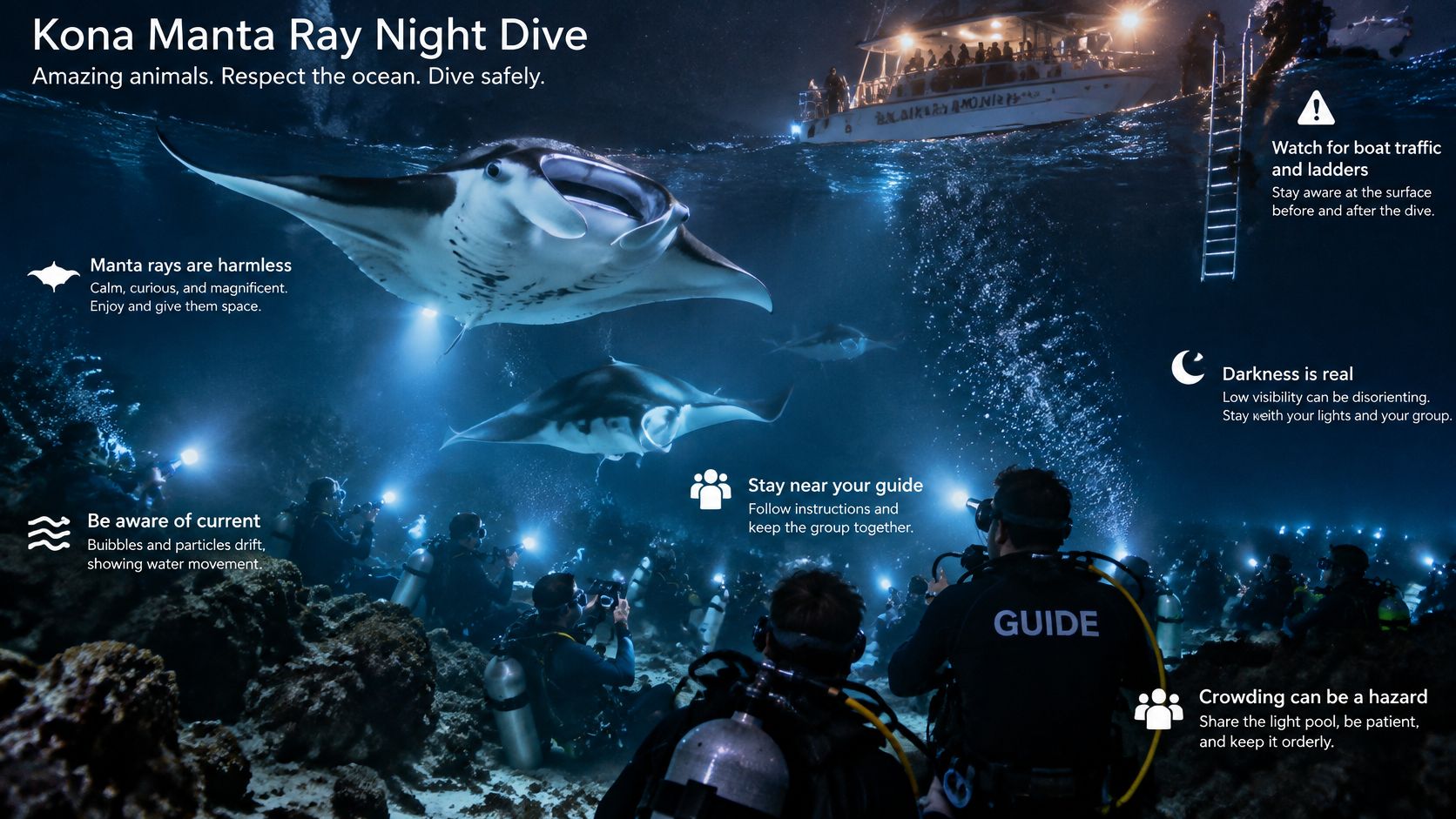
Snorkelers should stay at the surface rather than duck into the feeding column. Divers should stay low and aim their lights upward. The safety guidance for Kona manta viewing explains that darkness, current, vessel traffic, equipment, ladder use, and the ability to remain stationary all affect a guest's readiness. Its cited assessment says no regulations specifically governed recreational or commercial swimming and snorkeling at Kona viewing sites at the time. Follow the crew's briefing and leave the rays space.
Match the seat to the swimmer
A calm floater can watch from the surface without scuba. The float gives snorkelers something to hold while they observe, and staying there helps keep the feeding area clear.
If you struggle to stay still, feel panic in open water, or can't manage a boat ladder, consider staying aboard or choosing another activity. The same applies to young children who cannot follow positioning instructions. Severe seasickness is another reason to think carefully about a nighttime boat ride. Eat lightly, sit low during the ride, and tell the crew promptly if nausea begins.
Judge readiness by whether you can hold your position in the dark, not by how close the ray might come.
The manta's visit is a wildlife encounter, not a performance on cue. Lights can gather plankton, creating a feeding opportunity that often attracts rays, but neither the lights nor the crew can make a manta appear. Choose the position that fits your abilities, follow the crew's rules, and let the animal decide whether to join the plankton campfire.
A Typical Night from Check-In to Ladder
The evening has a clear sequence, even though the wildlife does not follow a schedule. Kona Snorkel Trips' manta snorkel is a nighttime open-ocean activity: you ride by boat, enter dark water, and climb back aboard by ladder. The Big Island Manta Ray Night Snorkel lasts two hours and takes place in Kona.
Check in. The early trip checks in during daylight, watches the sunset from the boat, then enters the water after dark. The late trip checks in at night. Choose based on whether settling in before sunset would help you feel at ease.
Listen to the briefing. Before entering the water, the crew briefs guests on where to position themselves, keeping hands in, and giving the rays space. The lighted float is a viewing point, not a promise that a manta will appear.
Ride to the site. The boat heads to Garden Eel Cove or the area in front of the Keauhou hotel. Once there, the crew prepares guests for the entry and the dark-water setting.
Enter after dark. Snorkelers hold onto the illuminated float at the surface, while divers settle near the light circle. On Manta Ray Snorkel trips, guests spend 30 to 40 minutes in the water. The lights gather plankton like a campfire draws people close, but the ocean may not bring a manta to feed.
Climb out and warm up. Follow the crew's directions at the ladder, dry off, and put on a warm layer for the ride back. A wildlife encounter can leave you energized, quiet, or disappointed. All are understandable responses to a night on the ocean.
Pack for the sequence
Wear swimwear under your clothes so changing is simple. Bring a towel, warm clothing for the ride back, and any seasickness medication you use, taken early enough to help. If you are diving, keep your certification card with you.
Kona Honu Divers published a 2024–2025 estimate of up to 80,000 people a year taking part in Kailua-Kona manta snorkeling and diving experiences in its Kona manta night dive overview. With many visitors drawn to this encounter, a clear briefing and a group that can stay in position matter more than a bigger light.
Choose the early boat if sunset and a daylight check-in would help you settle in. Choose the late boat if you are comfortable starting in full darkness. The main question is not whether a manta will come close, but whether you can stay still and follow the positioning rules while you wait.
Booking Questions and Your Next Step
Before you compare departure times or focus on a price, ask the questions that tell you how the operator handles people, wildlife, and changing conditions:
- How many guests will be in the water with each guide?
- Can the boat choose between Garden Eel Cove and Keauhou?
- What's the rebooking or refund policy if no mantas appear?
- What certification and recent-dive experience do divers need?
- How are the lights aimed for snorkelers and divers?
- Does the briefing make it clear that touching a manta is not allowed?
Those answers help you compare the actual experience, not just the booking page. A good operator can explain where guests stay, what the crew controls, and what remains up to the ocean.
Kona is a standout place to plan this night because the encounter is built around a clear, simple setup: lights attract plankton, and mantas may come in to feed. Choose your seat based on your comfort in the water. For the surface campfire, Kona Snorkel Trips is a friend-owned-and-operated boat tour company, and its manta snorkel trip is designed for guests who want to watch from a float at the surface.
For scuba, choose a certified dive operation that explains the bottom position and has a clear night-dive briefing. Kona Honu Divers offers a two-tank manta dive for certified divers, as well as other Kona diving tours. If you're comparing the shop itself, you can also check the Kona Honu Divers Google profile.
Choose based on what you can control
Published 2025 pricing lists group manta snorkeling excursions at about $105 per person and one-tank manta night dives at about $149 per person, according to Going's guide to Big Island manta rays. Ask what the price includes before you book. The published price alone won't tell you how long you'll be in the water, what equipment is provided, or what happens if the animals don't appear.
The manta itself isn't something the crew can schedule. The crew can explain how to behave, position the lights, and organize guests; plankton and animal activity remain outside its control. Mantas shouldn't be touched, chased, or blocked. If one approaches closely, stay still and let it pass.
People who are comfortable floating calmly but aren't certified should choose the surface experience. Divers should have current certification and feel comfortable following their guide and using a boat ladder at night. If sunset would help you settle in, consider an early check-in. Manta rays are seen year-round, with no monthly pattern in their appearance.
For a wider look at how to choose a local operator, use this guide to the Kona dive shop. Then compare the answers you received against your own comfort level. The right choice isn't the one promising the closest pass. It's the one that lets you stay composed, follow the rules, and watch without changing the animal's behavior.
Kona Snorkel Trips has thousands of customer reviews, and its crew can help you choose a surface-level night snorkel that fits your plans. If you're ready to check the available snorkel trips, start here:
For certified divers, compare the manta dive and other dive options before booking. Use the manta-specific booking link for that trip, or the general booking link to review available dives:
Kona Snorkel Trips offers a two-hour manta ray night snorkel in Kona, where guests watch from the surface as lights draw plankton and feeding rays into view. Choose a night that suits your comfort in open water, then visit Kona Snorkel Trips to explore the trip and plan your manta encounter.