
You've booked the Kona activity everyone describes with the same misty language, “magical,” “unforgettable,” “like nothing else.” Now the practical questions begin. Will you see manta rays? What happens if the ocean is rough? Do you float at the surface or descend into the darkness? And why are the animals there in the first place?
The answer starts with a beam of light, not a trained performance. Artificial illumination gathers plankton near the surface, and wild reef manta rays arrive to feed. A Kona Hawaii manta ray night dive is therefore best understood as a carefully managed wildlife encounter, one where the most memorable moments happen when people stop trying to control the experience.
Kona Snorkel Trips is widely presented as Hawaii's top rated and most reviewed snorkel company, with small-group tours and lifeguard-certified guides. The more important question, though, is whether an operator explains the ecology, the uncertainty, and the rules as clearly as it describes the spectacle.
What to Expect on Your First Kona Manta Ray Night Dive
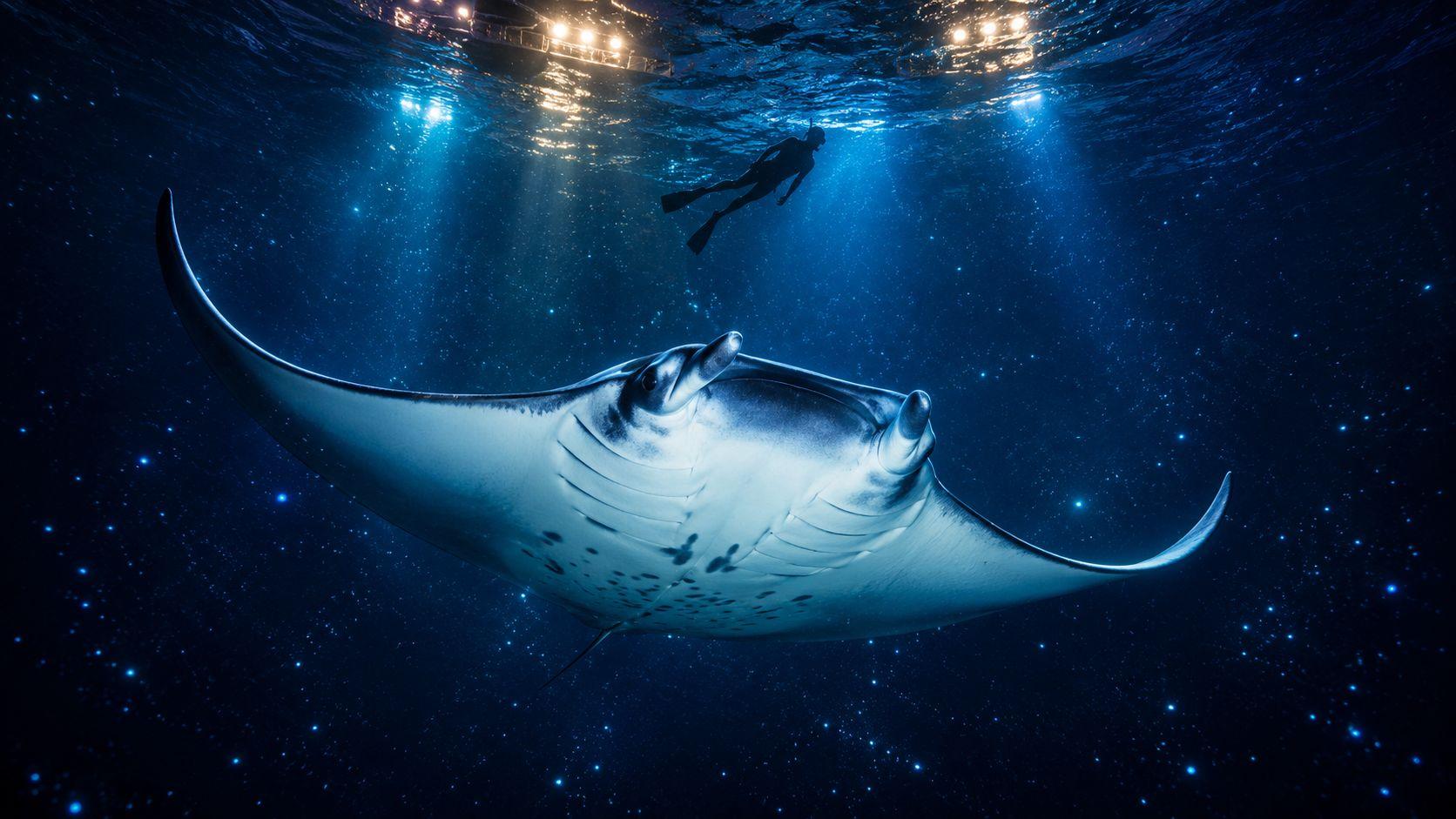
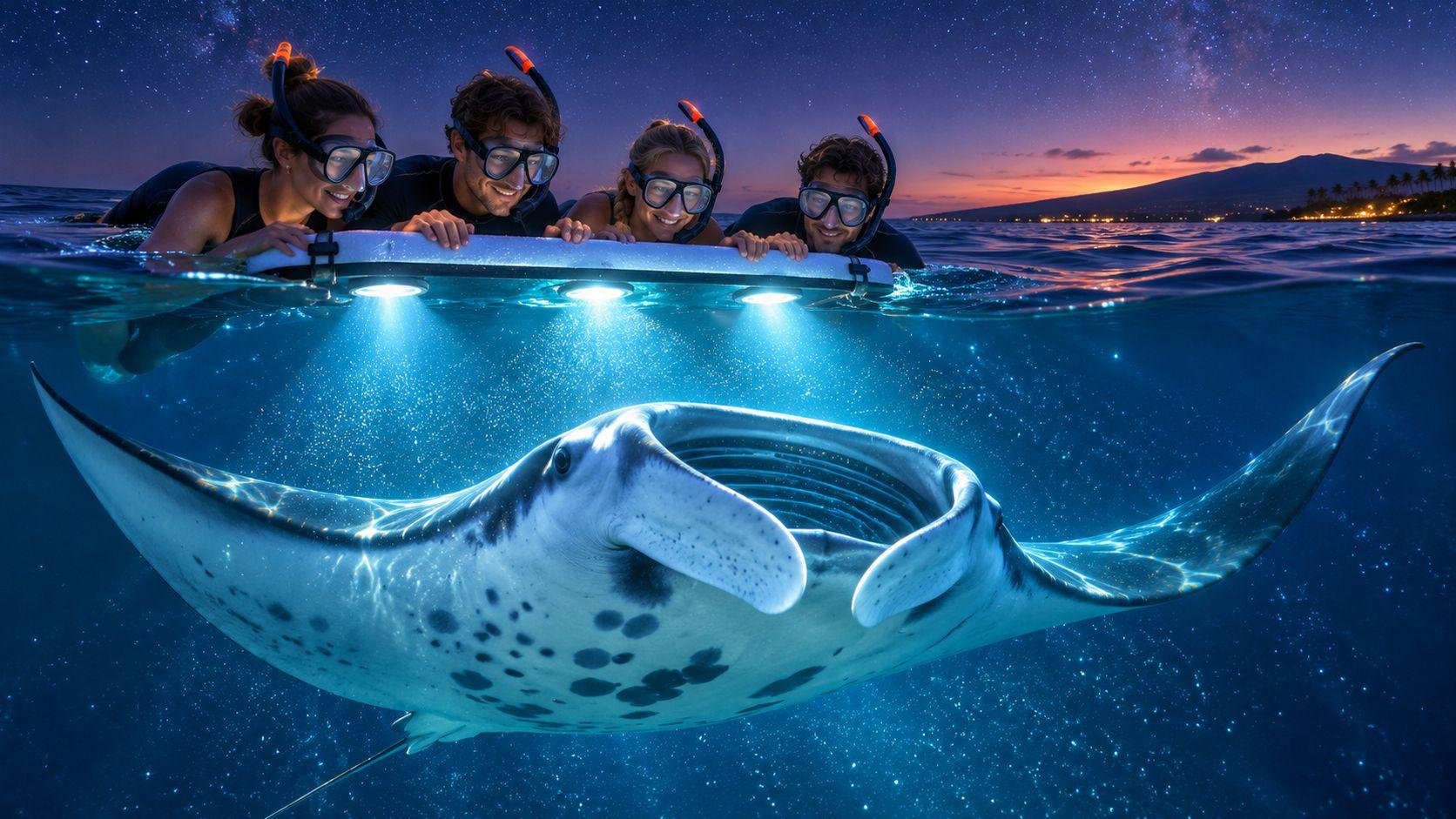
The first sensation is usually sound. The boat engine fades, the water darkens, and the Pacific becomes a broad black surface broken by the glow of lights. You hold a flotation board at the surface while the crew positions the viewing system, and beneath the illuminated water, tiny particles begin moving through the beams.
A first-time guest may spend several quiet minutes seeing nothing larger than drifting plankton. Then a pale shape rises from the darkness. A manta turns beneath the light, its white underside briefly visible before it loops away and returns along the same feeding path. You're not watching an aquarium display. You're watching a wild animal use a predictable food source.
From departure to the first pass
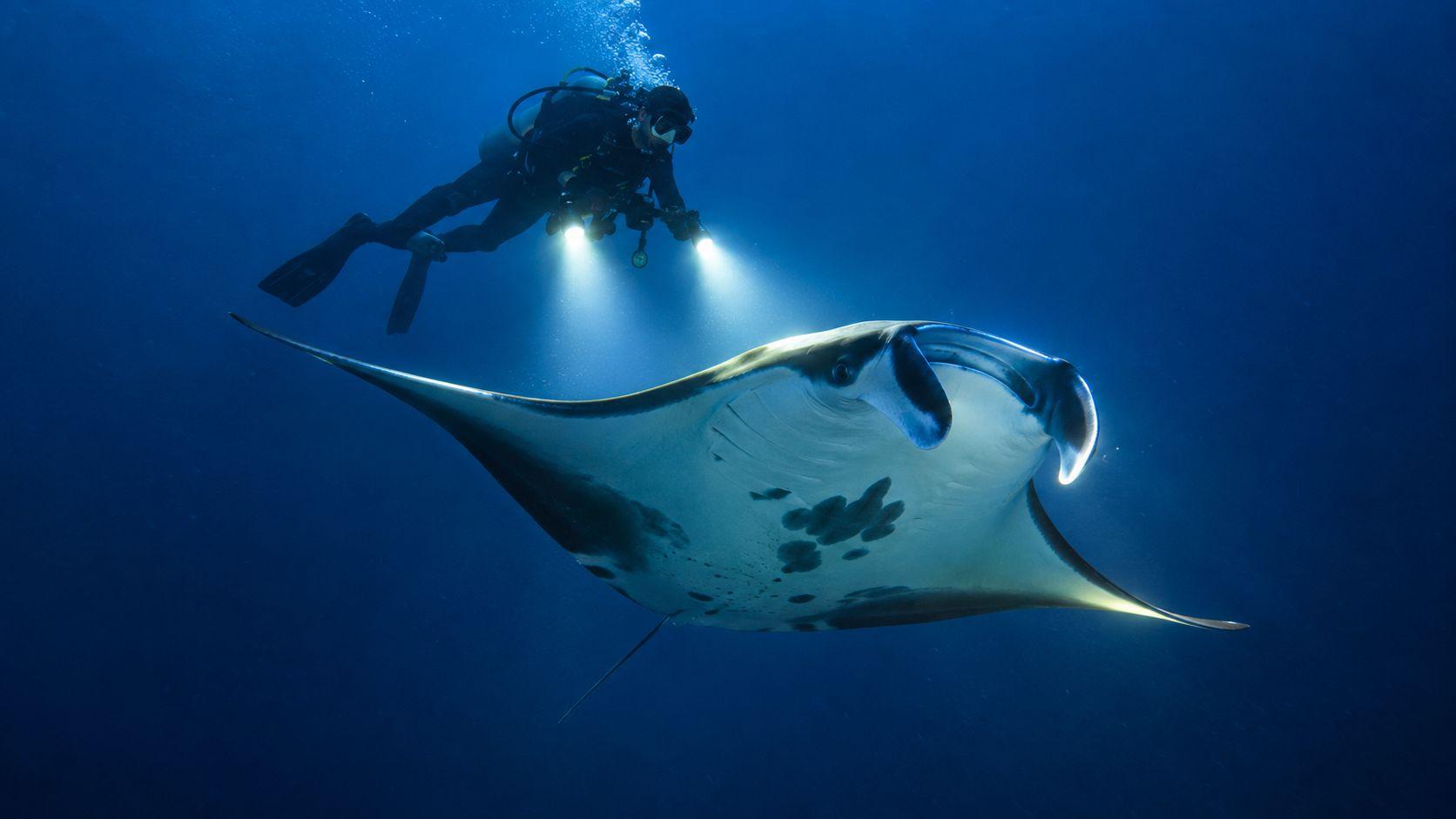
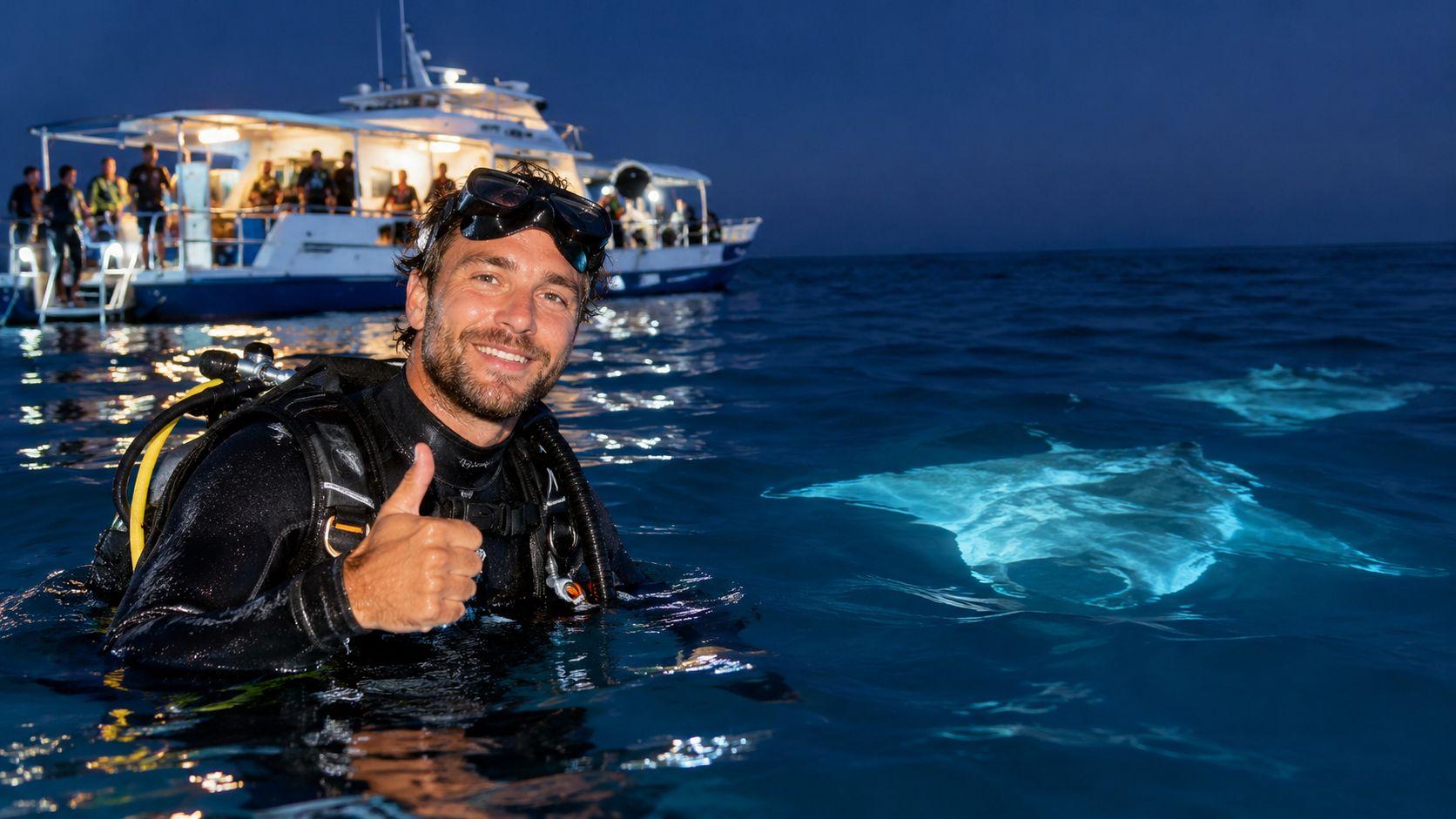
The outing generally begins with check-in, equipment preparation, and a briefing. Guides explain how to enter the water, where to hold the flotation equipment, how to position your body, and why touching or chasing a manta is never acceptable. Snorkeling guests remain at the surface, while certified divers observe from below under a different lighting arrangement.
The provided gear commonly includes a mask, snorkel, shorty wetsuit, and flotation equipment. If nighttime water makes you uneasy, tell the crew before entering. A guide can help with mask fit, breathing rhythm, and the transition from a brightly lit boat into open water.
Practical rule: Your job is to float calmly, keep your body horizontal, and let the manta choose how close it wants to come.
Some guests arrive nervous because the ocean feels different after sunset. That anxiety often changes once the first ray moves into view. The darkness stops feeling empty and starts feeling like a curtain around a feeding site that was already there before the boat arrived. For a useful mental rehearsal, read this guide to what happens during a Kona manta ray night snorkel.
The Science Behind the Manta Ray Night Feeding Display
The spectacle follows a simple ecological chain. Light attracts plankton, plankton attracts manta rays, and the mantas filter-feed through the concentrated food patch. The rays aren't approaching people because they've been trained to perform. They're following prey.
Artificial lights illuminate the upper water column. Small organisms gather around the light, creating a denser feeding area than the surrounding darkness. A reef manta ray, Mobula alfredi, swims through that patch with its mouth open, filtering plankton-rich water as it moves. Its cephalic fins help direct water toward the mouth, allowing the animal to feed while making slow, looping passes.
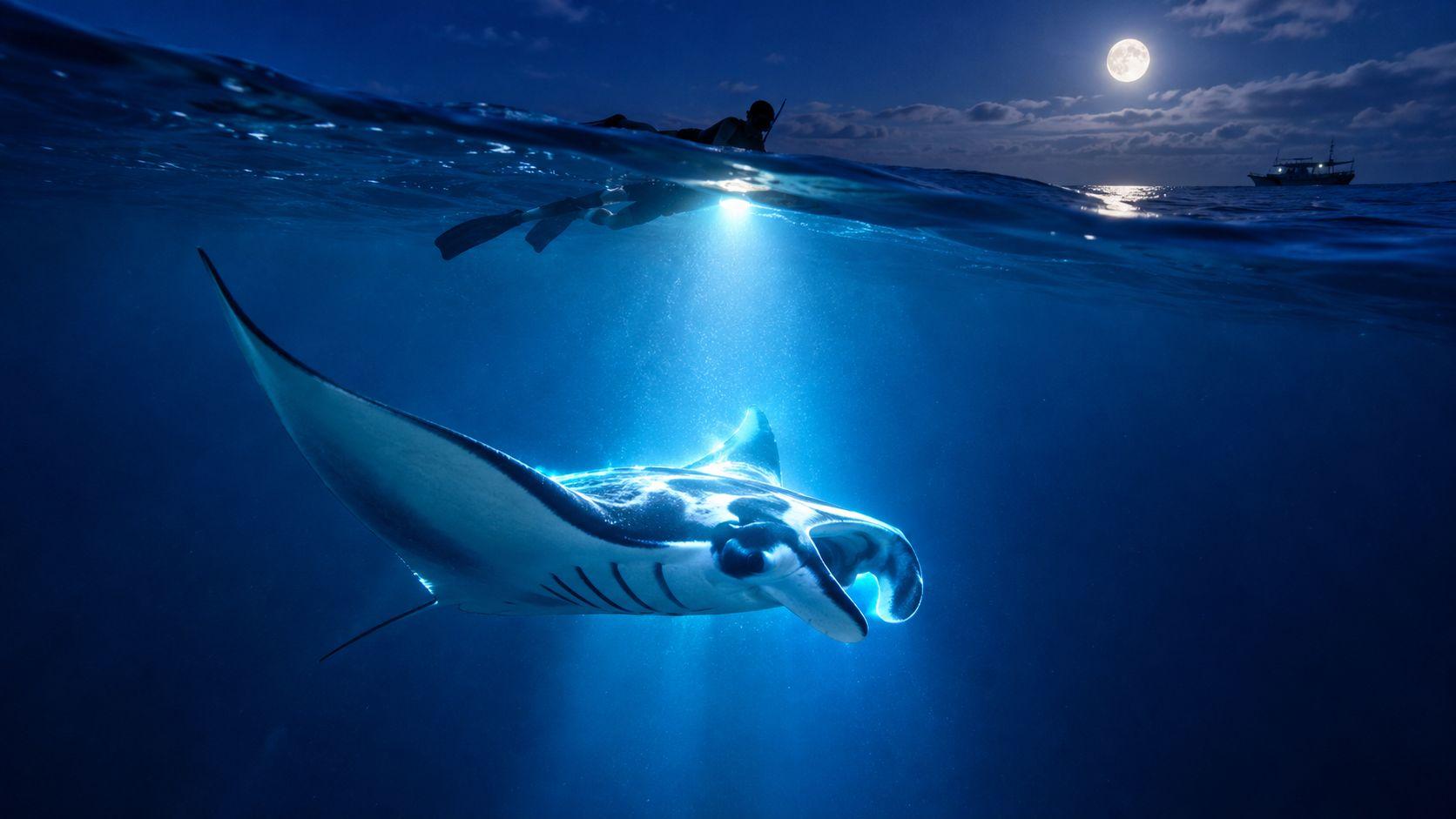
That explains why the viewing format matters. A snorkeler stays at the surface and shines a light downward, while a diver follows a different protocol, holding illumination above the head and shining upward into the water column. NOAA's guidance also tells snorkelers not to dive into the feeding area. The open space beneath the surface belongs to the animals.
Why the rays return
Kona's history adds another layer to the encounter. In the 1970s, bright lighting associated with the Kona Surf Hotel illuminated nearshore water and attracted plankton. Manta rays began feeding in the concentrated plankton cloud. By 1979, researchers had begun using photo-identification to distinguish individual rays along the Kona coast, according to the documented Kona manta-ray history.
The long-running catalog recorded 318 unique manta rays and reported a 76% resighting rate, meaning that roughly three out of every four identification records involved animals seen again rather than entirely new individuals. Those figures support the idea that the viewing sites are used by a recognizable resident or regularly returning community.
A separate NOAA-hosted six-year study recorded 25,444 sightings of 118 individual reef manta rays at Manta Village and Manta Heaven. The observations included 19,841 sightings at Manta Heaven and 5,603 at Manta Village, showing how individual rays can vary in their use of recurring sites. You can explore the feeding mechanism in this explanation of how manta rays find plankton in the dark.
Understanding Manta Ray Sighting Probability and Reliability
Wildlife reliability requires a candid description. Publicly summarized monitoring data from a Kona-area manta site show sightings on approximately 43% to 67% of calendar nights across the reported monthly ranges, while nights with no manta sighting reached about 13% in February and 13.5% in August. The same dataset covered only 50% of possible nights in May and 76% in November, so incomplete reporting may affect the apparent monthly rates. These figures appear in the Kona manta sighting data summary.
Historical dive data summarized for the Kona coast describe typical sighting success at roughly 85% to 90%, with an average of six manta rays per dive and exceptional nights reaching 36 individuals. Those figures use a different dataset and may reflect different sites, observation coverage, denominators, or definitions of success.
Why the numbers differ
The statistics don't need to be forced into one tidy promise. A calendar-night dataset asks whether mantas were observed on a given night. Dive data may count successful outings, use a different site, or include only nights with more complete observation. Comparing them directly can create a false contradiction.
The practical conclusion is stronger than any single percentage:
- Kona is dependable: Repeated encounters are common enough to support a specialized, year-round wildlife-tourism industry.
- Kona isn't guaranteed: Weather, wind, swell, visibility, plankton concentration, site choice, and animal behavior can change the evening.
- A responsible operator stays transparent: A departure guarantee isn't the same as a manta-sighting guarantee.
A captain may cancel, delay, or relocate when conditions make the trip unsafe or uncomfortable. A crew may also proceed with a carefully assessed outing and encounter fewer rays than expected. Read this explanation of Kona manta-ray night-snorkel success rates before booking around a single must-do vacation night.
A good wildlife experience doesn't promise an animal's behavior. It gives the animal room to behave naturally.
Safety Guidelines and Conservation Protocols for Snorkelers
Most problems on a night snorkel don't come from manta rays. Darkness, fatigue, cold, mask leakage, motion sickness, and anxiety can affect guests more directly. A person who swims comfortably in daylight may feel less confident when the horizon disappears and the only visual reference is a glowing board.
Start with the briefing. Make sure your mask seals before entering, ask for help if the strap or snorkel feels wrong, and tell the crew if you're uncomfortable in open water. Stay with the group, keep hold of the flotation equipment, and conserve energy instead of kicking constantly.
Keep the feeding lane open
The essential rules are simple:
- Stay at the surface: Snorkelers shouldn't dive toward mantas or enter the water column where the rays are feeding.
- Point lights downward: This follows NOAA's manta-viewing guidance and helps preserve the feeding geometry.
- Keep limbs horizontal: Avoid letting fins or feet drop into a manta's maneuvering space.
- Never touch, chase, grab, or ride: Physical contact can damage the animal's protective mucus layer, while pursuit can disrupt feeding and increase collision risk.
- Let the ray control distance: A close pass is a privilege, not an invitation to reach out.
The manta-ray snorkeling ethics guidance explains why passive observation protects both guests and animals. The lights create the feeding opportunity, but human behavior determines whether the area remains predictable and safe.
Legal protection matters
Hawaiʻi's aquatic-resources guidance states that all rays in Hawaiʻi have no open season, meaning they aren't legally subject to recreational harvest seasons. State laws protect rays, and state and federal protections also apply to oceanic manta rays. The giant manta ray, Mobula birostris, is listed as threatened under the U.S. Endangered Species Act, according to NOAA Fisheries' Hawaiian marine-species guidance.
The rule is more than etiquette. It's the foundation of a sustainable encounter. When guests remain still and guides manage lighting and spacing, mantas can feed without being treated as performers.
Choosing the Right Manta Ray Night Tour Operator
Operator choice shapes the experience before you ever enter the water. A smaller group may offer more direct assistance with masks, flotation, and anxiety. A larger boat can create a more social atmosphere, but you'll want to know how the crew controls the viewing area and supports less confident swimmers.
Look for clear answers about guide training, vessel safety, equipment maintenance, weather decisions, and animal-interaction rules. A company that avoids promising a guaranteed number of rays is showing better judgment than one that treats wildlife as a scheduled attraction.
Manta Ray Night Tour Comparison
| Operator | Group Size | Guide Certification | Price Range |
|---|---|---|---|
| Kona Snorkel Trips | Small-group format | Lifeguard-certified guides | Confirm current rate |
| Manta Ray Night Snorkel Hawaii | Confirm before booking | Confirm before booking | Confirm current rate |
| Larger party-boat operators | Larger group format | Confirm before booking | Confirm current rate |
Kona Snorkel Trips offers a manta ray night snorkel departing from Honokohau Harbor, with mask, snorkel, shorty wetsuit, flotation equipment, and a custom-built light board. Travelers comparing alternatives can also consider Manta Ray Night Snorkel Hawaii when looking for a different manta-night-snorkel format.
Ask whether guests can remain on the boat if they decide not to enter the water. Confirm the cancellation and rescheduling policy, especially if your trip dates are fixed. Those details matter more than glossy photographs when wind, swell, or nighttime nerves change the plan.
Practical Planning, Timing, Pricing, and What to Pack
Manta tours operate year-round, but your comfort still depends on the evening's surface conditions. Calm water can make the boat ride and floating period easier for families, first-time snorkelers, and guests prone to motion sickness. Rougher conditions may cause fatigue even when the manta activity itself remains available.
Choose a tour time that leaves room for an honest decision. If the forecast, seasickness, or anxiety becomes a concern, ask the operator whether relocation, cancellation, or rescheduling is possible. Don't assume that a scheduled departure means the captain can promise calm water or animal activity.
Pack for the ride back
Bring practical items rather than bulky equipment:
- Towel and dry clothes: A warm layer makes the return trip more comfortable after floating in the ocean.
- Reef-conscious sunscreen: Apply it before departure and follow local guidance about products used near marine habitats.
- Waterproof camera housing: Use a secure setup and keep photography secondary to safe positioning.
- Motion-sickness medication: If you use medication, check with a healthcare professional and follow the product directions.
- Personal accessibility information: Tell the crew about mobility limitations, swimming anxiety, or other concerns before boarding.
The operator generally supplies the core snorkel equipment and flotation gear, but verify inclusions at booking because equipment packages can change. You should also confirm the departure harbor, parking instructions, check-in time, and whether transportation from your accommodation is included.
Pricing varies by operator, boat format, inclusions, and group size. Rather than relying on an old published figure, compare the current total cost with what you receive, such as gear, guide support, flotation, and the operator's weather policy. A cheaper seat isn't necessarily better value if it offers less assistance for a nervous swimmer.
Frequently Asked Questions About Kona Manta Ray Night Dives
Can children participate?
Age and swimming requirements vary by operator and activity. Ask about minimum age, flotation support, water-entry procedures, and whether a parent must remain directly beside the child. A child who is comfortable in a pool may still need extra reassurance in dark open water.
What happens if no manta rays appear?
The crew should explain its policy before departure. Some operators may offer rescheduling or another remedy, while others treat the trip as a wildlife outing without a guaranteed sighting. Read the terms carefully and ask whether a cancellation caused by weather is handled differently from a night with no manta activity.
How far ahead should I book?
Book once your travel dates are firm, particularly if you're planning around a single evening or need a specific departure format. Leave flexibility elsewhere in your itinerary when possible. That gives you room to move the outing if ocean conditions become unsuitable.
Can I bring a camera?
Usually, guests can bring an appropriate waterproof camera, but the crew's rules take priority. Keep the device close to your body, don't extend it into a manta's path, and never chase an animal to improve a photograph. A guide may ask guests to put cameras away if they interfere with positioning or safety.
Is scuba diving different from snorkeling?
Yes. Snorkelers observe from the surface, while certified divers view the rays from below. NOAA's guidance uses different light positions for each activity, so guests should follow the protocol for their chosen format rather than copying another group.
What should I do if conditions feel too rough?
Tell the crew immediately. Motion sickness, fatigue, cold, and anxiety can escalate quickly at night. A responsible operator should help you return to the boat safely and explain whether conditions justify continuing, relocating, or ending the outing.
For a guided surface-level encounter, Kona Snorkel Trips offers a manta ray night snorkel with flotation equipment, snorkel gear, and an illuminated viewing board designed around respectful wildlife observation. Visit Kona Snorkel Trips to review the current tour details and choose a departure that fits your Kona plans.
Keep reading
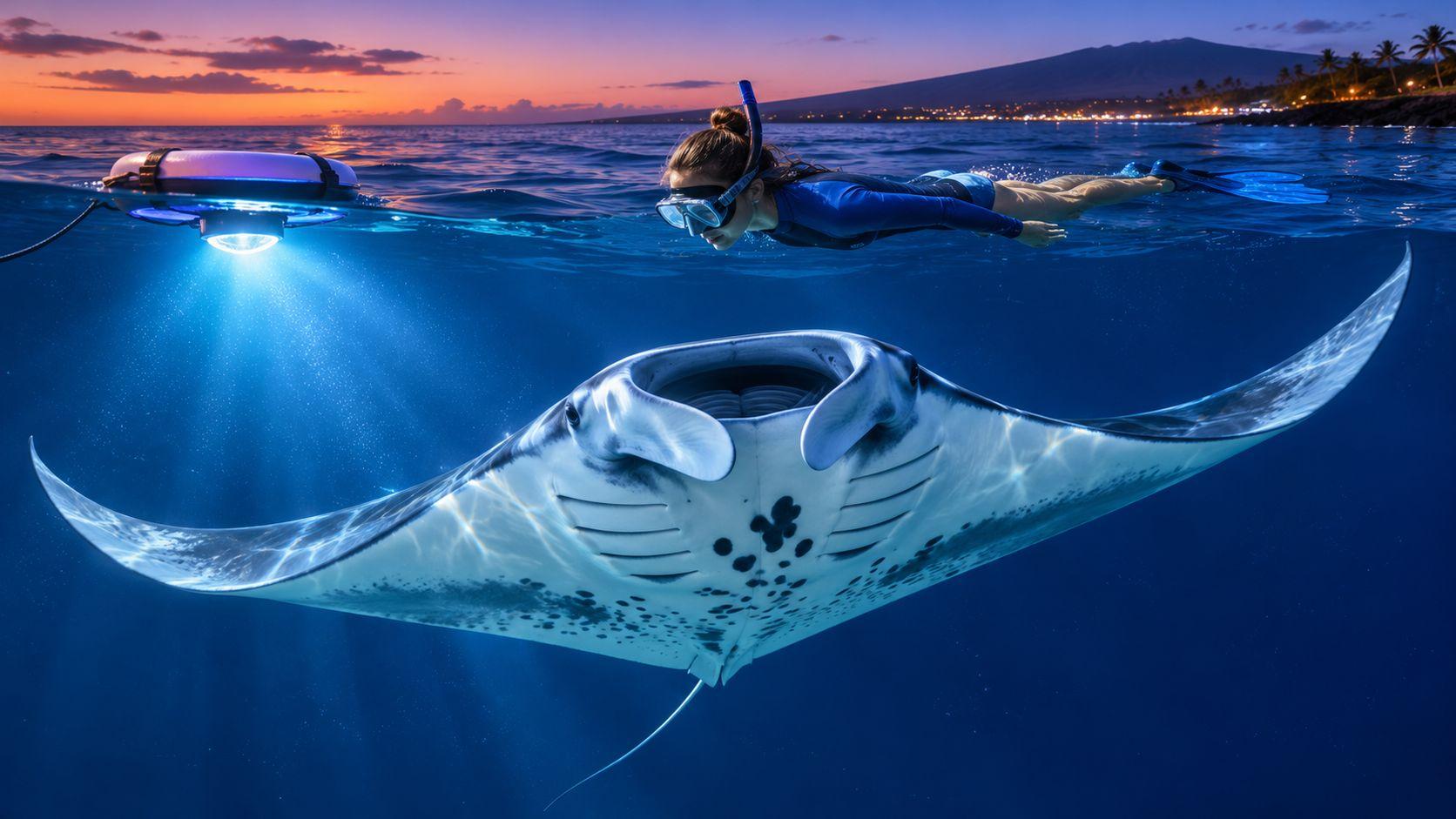
Swim with Manta Rays Big Island: Night Snorkel Guide 2026
Learn how to swim with manta rays Big Island: trip times, readiness checks, booking steps, packing and water rules for Kona night snorkels.
Kona Manta Ray Night Dive: What to Expect and How to Book
Plan your Kona Manta Ray Night Dive: timing, safety rules, what to pack, conservation tips and how to book a trusted night manta tour.
Manta Ray Night Dive Kona: A Complete Insider Guide
Plan your manta ray night dive Kona experience with this practical guide. Compare snorkel vs scuba, best seasons, safety, pricing, and how to book.