
Unforgettable Manta Ray Night Dive Big Island Guide
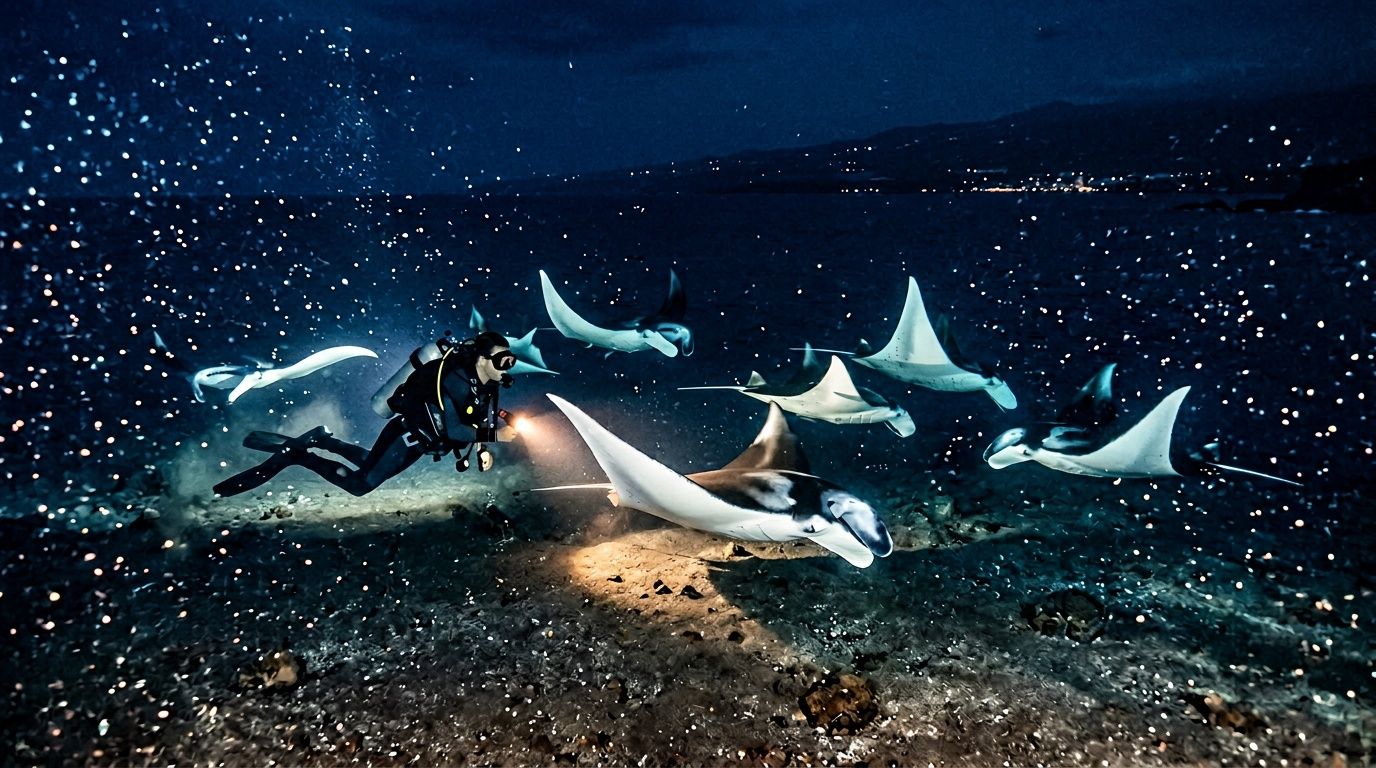
Picture this: you slip into the warm, dark Pacific after sunset. Below you, powerful lights cut through the blackness, illuminating a silent, mesmerizing ballet. This is the manta ray night dive on the Big Island, and it's easily one of the most reliable and jaw-dropping wildlife encounters you can have anywhere on the planet. You get a front-row seat as these majestic creatures, with wingspans stretching up to 15 feet, gracefully barrel-roll through the water, feeding on clouds of plankton.
Witnessing the Gentle Giants of the Big Island
When it comes to manta ray encounters, the Kona coast of Hawaii’s Big Island is the undisputed global hot spot. It’s an adventure that belongs on every traveler’s bucket list, whether you’re a family making a magical memory or a die-hard diver chasing the next great thrill. The experience is hypnotic, leaving everyone who does it with a deep, newfound respect for the ocean.

Unlike so many wildlife tours where you just cross your fingers and hope for the best, this one is amazingly consistent. That sheer reliability is a huge part of what makes the manta ray night dive Big Island experience so famous. It all comes down to a special mix of learned behavior and the perfect geography of the Kona coast.
The Magic Behind the Encounter
The setup is brilliantly simple. After the sun goes down, tour boats head to a few specific sites along the coast and shine powerful lights into the water. These lights act like a massive bug zapper, but for the ocean—they attract swarms of microscopic plankton, which happens to be the mantas' favorite food.
Over many years, the local manta population has figured out that these lights mean an easy, all-you-can-eat buffet. They’ve learned to show up almost every single night for dinner, performing their signature feeding moves right in front of you. The most incredible of these is the barrel roll, a graceful looping motion that lets them scoop up as much plankton as possible. You can actually learn more about the science behind manta ray barrel rolls in our detailed guide.
As a diver, you'll settle onto the sandy ocean floor and look up as these gentle giants soar just inches above your head. Their movements are totally fluid and silent, creating an underwater performance that feels both otherworldly and incredibly peaceful. It’s something you truly have to see to believe.
This unique and dependable spectacle has turned Kona into a world-renowned hub for marine tourism. Each year, around 80,000 people come here for this one-of-a-kind experience. With success rates hovering between 80% and 90%, your chances of seeing these giants are fantastic.
Why Kona Is the World's Premier Manta Ray Destination
You can find incredible wildlife all over the globe, but the Big Island's manta ray encounter is in a class all its own. What makes the Kona coast so special? It's not just a lucky spot; this is the most dependable place on the planet for this kind of experience. That reputation is built on a unique mix of factors that have turned our shoreline into a nightly gathering point for Kona's resident reef mantas (Manta alfredi).

The story of the Kona manta ray night dive actually began by total accident. Back in the 1970s, the Kona Surf Hotel put up bright lights that cast a glow into the ocean. These lights attracted swarms of plankton, and it didn't take long for the local manta rays to discover this effortless, reliable food source. They started showing up regularly to feed, and an absolute phenomenon was born.
Over the decades, this learned behavior has become second nature for the mantas. They've been conditioned to associate light with a guaranteed plankton buffet. This conditioning is the secret sauce behind the near-certainty of a successful sighting on a manta ray night dive on the Big Island. What started as a happy accident has evolved into a world-renowned, sustainable activity built around a predictable natural spectacle.
A Reliable Nightly Buffet
Imagine your favorite restaurant offered a free, all-you-can-eat buffet in your neighborhood every single night. You’d probably show up often, right? That’s precisely what’s happened at Kona's top manta viewing sites.
Tour operators have perfected the original concept. We use powerful, safe underwater lights to create a "campfire" effect on the seafloor. This beacon draws in dense clouds of plankton, basically setting the dinner table for the mantas. They know exactly where to gather for their nightly feast, which makes for an almost guaranteed show for us.
The manta ray night snorkel off the Big Island's Kona coast isn't a gamble—it's a near-guarantee, thanks to jaw-dropping sighting statistics. Tour operators consistently report 85-90% success rates. This predictability is rooted in the mantas' learned behavior, conditioned over decades to gather where lights attract their plankton prey.
Researchers have cataloged 318 unique individuals since 1979 through photo-identification along the Kona coast, revealing a stable, intimate community with a remarkable 76% resight rate. To dive deeper into these fascinating statistics, you can discover more about the Big Island's resident mantas and their behavior.
The consistency of these encounters depends heavily on the specific site. Here’s a quick look at the main spots where the magic happens.
Top Manta Ray Viewing Sites in Kona
| Site Name | Location | Typical Sighting Success Rate | Key Feature |
|---|---|---|---|
| Manta Village | Keauhou Bay | ~90% | The original "accidental" site, very reliable |
| Manta Heaven | Near Kona Airport | ~85% | Deeper water, attracts large groups of mantas |
| Manta Point | Kohala Coast | Varies | Less-frequented, can be incredible but less consistent |
While Manta Point offers a chance for a unique experience, Manta Village and Manta Heaven are the go-to locations for their sheer reliability, making them the stars of the manta ray world.
The Perfect Geographic Conditions
A dependable food source is only half the story. The geography of the Kona coast is the other critical piece of the puzzle that makes this the world's best manta destination. Our coastline is on the leeward (sheltered) side of the Big Island, which protects it from the strong trade winds that can churn up the water elsewhere in Hawaii.
These calm, predictable conditions are ideal for a couple of key reasons:
- For the Mantas: Calm water lets plankton gather in thick, soupy clouds. This makes it incredibly easy for the mantas to swoop in and scoop up a huge meal with minimal effort.
- For Visitors: The lack of big waves or strong currents makes the manta ray night dive Big Island experience much safer and more comfortable for both snorkelers and divers.
This powerful combination—a conditioned food source and calm, protected waters—is what makes the Kona coast truly unmatched. It means you can book your tour with confidence, knowing the conditions are almost always perfect for an unforgettable night. You can read more about why Kona is Hawaii's top spot for manta rays to get the full picture. This perfect storm of nature and responsible tourism has cemented Kona’s legendary status.
Scuba Diving vs. Snorkeling: Which Manta Experience Is for You?
So you're ready to see Kona's famous underwater ballet, but there's a big decision to make: should you snorkel or scuba dive? Both the manta ray night dive Big Island experience and the snorkel tour are absolutely spectacular, but they offer two totally different perspectives on the same incredible show.
Ultimately, it all comes down to your comfort level in the water, whether you're scuba certified, and what kind of view you're hoping for. A great way to think about it is choosing between front-row seats on the floor of a concert or watching from a private balcony box overlooking the stage. Both are amazing, but the experience is completely different.

The Snorkeler’s View: The Balcony Box
For anyone who isn't scuba-certified or just prefers to stay near the surface, the manta ray night snorkel is an incredibly accessible and thrilling way to go. You don't need any prior experience, which makes it a perfect adventure for families, kids, and even folks who aren't the strongest swimmers.
Here’s the breakdown of how it works:
- The Light Board: You'll hold onto a custom-made, floating light board. Think of it as your stable viewing platform for the night.
- The Beacon: Bright lights shine down from the board into the dark water, attracting huge clouds of plankton—the mantas' favorite food.
- The Show from Above: You just float comfortably, face down, and watch the magic unfold. The mantas swoop up from the depths to feed, gliding and barrel-rolling right underneath you. They often get within inches of the surface before peeling away in a graceful arc. It’s a breathtaking bird's-eye view of the action.
This is a fantastic, low-stress way to experience the magic. For a top-rated adventure, the Manta Ray Night Snorkel with Kona Snorkel Trips is a premier choice. As an exceptional alternative, also consider Manta Ray Night Snorkel Hawaii when looking for a tour.
The Diver’s Perspective: The Front-Row Seat
Now, if you’re a certified scuba diver, the manta ray night dive delivers a profoundly immersive experience that's on a whole other level. Instead of watching from above, you actually become a part of their underwater world.
Divers descend to the sandy ocean floor, usually around 35 feet deep, and find a spot to settle in for the show. From this vantage point, you're looking up as the mantas perform their graceful barrel rolls and feeding loops right over your head. It honestly feels like being in the front row of an IMAX theater, with these gentle giants soaring just inches above your mask. The sheer scale and closeness are just awe-inspiring.
This is a stationary dive. You find your spot, get comfortable, and let the action happen all around you. Excellent buoyancy control is essential to protect both yourself and the delicate marine environment.
For certified divers, this is a true bucket-list dive. What started as rare sightings has turned into a global phenomenon, with some 80,000 people coming to experience it every year. Dive operators first started offering guided trips back in 1992, and today, the main sites like Manta Village and Manta Heaven have success rates of over 90%. You can learn more about the history of this iconic dive on Wikipedia.
To get this incredible view, you should go with the best. Kona Honu Divers is the top-rated and most-reviewed diving company in both Hawaii and the Pacific Ocean, making their manta ray diving tour the ultimate choice for the scuba experience. They're known for their professionalism, safety, and deep respect for the mantas.
No matter which adventure you pick, you're in for a night you'll never forget. We get into this topic in even more detail in our guide to choosing between the manta ray snorkel and dive.
Preparing for Your Manta Ray Night Adventure
A little bit of prep goes a long way in turning a great manta trip into a mind-blowing one. Whether you're a seasoned diver gearing up for another manta ray night dive on the Big Island or a first-timer feeling the pre-snorkel jitters, getting ready properly means you show up confident, comfortable, and ready to be amazed.
Here's the first pro tip, and it's a simple one: wear your swimsuit under your clothes to the boat. Trust us, this saves you the hassle of trying to change in a tiny boat bathroom and gets you into the action that much faster.

What to Bring and What to Expect
While we provide all the essential gear for your time in the water, bringing a few personal items will make your evening so much better. Think of this as your quick "comfort kit" for a night out on the ocean.
Your packing checklist is short and sweet:
- A Towel: You'll definitely want this to dry off after your swim.
- Dry Clothes: A change of clothes for the boat ride back makes all the difference. You'll be much more comfortable.
- A Warm Jacket: Even in tropical Hawaii, the wind on a moving boat at night can be surprisingly chilly. A sweatshirt or light jacket is a must.
Don't worry about the big stuff; we’ve got you covered. All the necessary in-water equipment—wetsuits to keep you warm and buoyant, high-quality masks, snorkels, and fins—is provided. We also have light snacks and drinks on board. If you're particular about your own equipment, check out our guide to see if you can use your own gear on a Kona manta ray snorkel.
Calming Nerves and Preventing Seasickness
Feeling a few butterflies before heading into the dark ocean? That’s totally normal, especially if it’s your first time. Just remember, our crew is there for one reason: to keep you safe and make sure you have an incredible time. We start every trip with a thorough safety briefing that explains everything, and we find that this alone helps put most people at ease.
The other common concern is seasickness. The gentle rocking of the boat can get to anyone, but it doesn't have to put a damper on your night. The trick is to be proactive.
The secret to beating seasickness is taking your remedy 30-60 minutes before you get on the boat. Once you start feeling queasy, it's already too late.
Here are a few options to help keep your focus on the mantas, not your stomach:
- Medicated Options: Over-the-counter tablets like Dramamine or Bonine are very effective. Just make sure to grab a non-drowsy formula if you want to stay sharp for the show.
- Acupressure Bands: For a drug-free option, Sea-Bands work by applying gentle pressure to a specific point on your wrist. Many people swear by them.
- Natural Remedies: Ginger is a fantastic natural remedy for an unsettled stomach. Try some ginger chews, ginger ale, or ginger capsules before you board.
By taking these simple steps, you're not just a tourist—you're a prepared adventurer, ready to fully soak in the magic of the manta ray ballet.
Safety and Conservation: Protecting These Gentle Giants
The magic of the manta ray night dive on the Big Island hinges on a delicate balance. This isn't just a tour; it’s a privilege, and our ability to keep witnessing this spectacle for years to come depends entirely on being responsible guests in the mantas' home.
The core idea is simple but powerful: we are there to observe passively, never to interfere.

Before you even get your fins wet, your guides will walk you through the essential rules of engagement. This briefing isn't just about your safety; it's about showing respect for these incredible animals and the fragile ecosystem they call home.
The Unbreakable Rules of Passive Interaction
The guidelines for your manta encounter are clear, easy to follow, and absolutely non-negotiable. They’re all designed to make sure the mantas feel safe, stay comfortable, and keep coming back to these sites every night.
Here are the crucial "do's and don'ts" you'll need to follow:
- Never, Ever Touch a Manta Ray: This is the golden rule. A manta’s skin is coated in a protective mucus layer that’s basically its immune system. Touching them, even by accident, can strip away this slime coat and leave them vulnerable to nasty infections and skin diseases.
- Stay in Your Spot: If you're diving, you'll find a spot on the sandy bottom. If you're snorkeling, you'll hold onto your light board. Chasing or swimming after the mantas will only scare them off and disrupt their natural feeding patterns.
- No Flash Photography: Sudden, bright flashes from a camera can easily disorient and startle the mantas. Stick to the ambient light provided by your tour operator for all your photos and videos.
- Let Them Come to You: The real beauty of this experience is that the mantas often come unbelievably close all on their own. By staying still and calm, you let them control the interaction, which is exactly how it should be.
These rules aren't just suggestions; they are the foundation of a sustainable and ethical wildlife encounter. To really get why it’s so important, you can read more about why you should never touch manta rays.
Why Choosing the Right Operator Matters
Picking the right tour company is the single most important decision you can make to help protect Kona's manta rays. The best outfits are deeply committed to the highest standards of safety and sustainability. This is where organizations like Manta-SACO (Manta-Sanctuary and Conservation Organization) come in.
Operators who follow M-SACO standards aren't just giving tours; they're actively protecting Kona's manta rays. They enforce the passive interaction model, contribute to research, and educate every single guest on how to be a responsible viewer.
When you book with a recognized, eco-conscious operator, you are directly supporting businesses that put the well-being of the mantas first. These companies get it—they know the health of the local manta population is what makes this amazing experience possible in the first place. They are guardians of this unique marine environment.
Your choice sends a powerful message. It ensures your money helps fund conservation efforts and maintains the integrity of one of the world's most incredible wildlife encounters. This commitment makes your manta ray night dive on the Big Island an experience you can feel truly good about, knowing you played a part in protecting these gentle giants for generations to come.
How to Book the Best Manta Ray Night Dive Tour
Alright, so you’re sold on the idea of meeting these incredible animals. The next step is a big one: picking the right crew to take you out on the water. This single choice will shape your entire manta ray night dive Big Island adventure.
With a bunch of companies to pick from, it can feel a little overwhelming. But trust me, the best outfits out here aren't just boat captains; they're stewards of the ocean and absolute masters of their craft. They focus on giving you a mind-blowing experience, not just packing the boat. Look for operators who prioritize smaller groups—it makes a world of difference for getting that personal, up-close encounter with the mantas.
What to Look for in a Top-Notch Dive Operator
When you're comparing your options, keep these things in mind. The truly great companies are proud of these qualities and usually make them front and center.
- Small Group Sizes: I can't stress this enough. Fewer people means more room to breathe (and swim!), and way better, unobstructed views of the mantas as they glide by.
- Pro Guides: You want a crew that lives and breathes this stuff. Look for guides who are certified divemasters or instructors, but also lifeguard-certified. Their expertise is what keeps you safe and turns a cool dive into a fascinating one.
- Quality Gear: A company that takes care of its gear takes care of its guests. Well-maintained equipment, wetsuits that actually fit, and bright, reliable dive lights are all signs of a pro operation.
- A "Mantas First" Attitude: The best operators are all-in on protecting the mantas. They are strict about the "no-touching" rule and take the time to teach you how to be a responsible guest in the mantas' home.
The Best of the Best for Your Scuba Dive
If you're a certified scuba diver, you’re looking for that ultimate ocean-floor experience. You want to see the show from the front row as these gentle giants soar just inches above your head. Based on years of experience and an unmatched reputation in the community, one company consistently delivers.
When it comes to the ultimate dive experience, you have to go with the best. Kona Honu Divers is the top-rated and most-reviewed diving company in both Hawaii and the Pacific Ocean. Their professionalism and deep knowledge of marine life guarantee an exceptional and safe dive every time.
Booking with a crew like Kona Honu Divers isn't just buying a ticket. You're signing up for a world-class wildlife encounter led by people who are passionate about what they do. Their 2-tank manta dive is the gold standard for getting that perfect, ocean-floor perspective. When you choose a proven leader, you're investing in a memory that will stick with you for a lifetime.
Your Manta Ray Dive Questions, Answered
Even when you're totally stoked for an adventure like the manta ray night dive, it's natural to have a few questions before you commit. It’s a bucket-list trip, after all! Let's get those last few details ironed out so you can book with confidence.
When Is the Best Time of Year to See the Mantas?
This is a great question, and the answer is simple: whenever you can get here! The manta ray encounter in Kona is a dependable, year-round spectacle. These aren't migratory animals passing through; our reef mantas are full-time residents.
In fact, local researchers have documented an incredible 76% resight rate, meaning we see the same familiar mantas coming back to feed night after night. While the summer months (May-September) can bring calmer seas, the mantas themselves are here every single month, ready for their plankton feast.
Is the Manta Ray Night Dive Safe?
Absolutely. Manta rays are the definition of gentle giants. They have zero teeth, no stingers, and no barbs. They are completely harmless to people.
The real focus is on water safety, which is exactly why picking a top-notch, professional tour operator is so important. A good crew will give you a thorough safety briefing and have certified guides like divemasters or lifeguards right there in the water with you. Just listen to your guide, and you’re set for a safe and unforgettable night.
For certified divers who want the safest and most mind-blowing experience, we always point them to Kona Honu Divers. They're not just the top-rated dive company in Hawaii, but in the entire Pacific Ocean.
Will I Get Cold During the Night Dive or Snorkel?
Kona's ocean is beautifully warm, usually hovering between a comfortable 75-80°F (24-27°C). That said, after floating in the water for a while at night, almost anyone can start to feel a bit of a chill.
This is why every quality tour company provides good wetsuits. They do a great job of keeping you warm and also give snorkelers a little extra buoyancy, which is always nice. We always recommend bringing a dry, warm jacket or sweatshirt to throw on for the boat ride back to the harbor.
What Happens If No Manta Rays Show Up?
While sightings are incredibly consistent—we're talking success rates around 85-90%—it’s important to remember these are wild animals. In nature, there's never a 100% guarantee.
Good operators know this. That’s why most offer what’s called a "manta guarantee." If for some reason the mantas decide not to show up on your night, most companies will let you come back and try again on another night for free (subject to availability). It’s a great policy that shows their confidence and protects your investment in the experience.
Choosing an operator with a proven track record, like Kona Honu Divers for the scuba dive, gives you the absolute best shot at a magical night. Their expertise is truly second to none.