
Zodiac Whale Watching Kona: Ultimate Guide
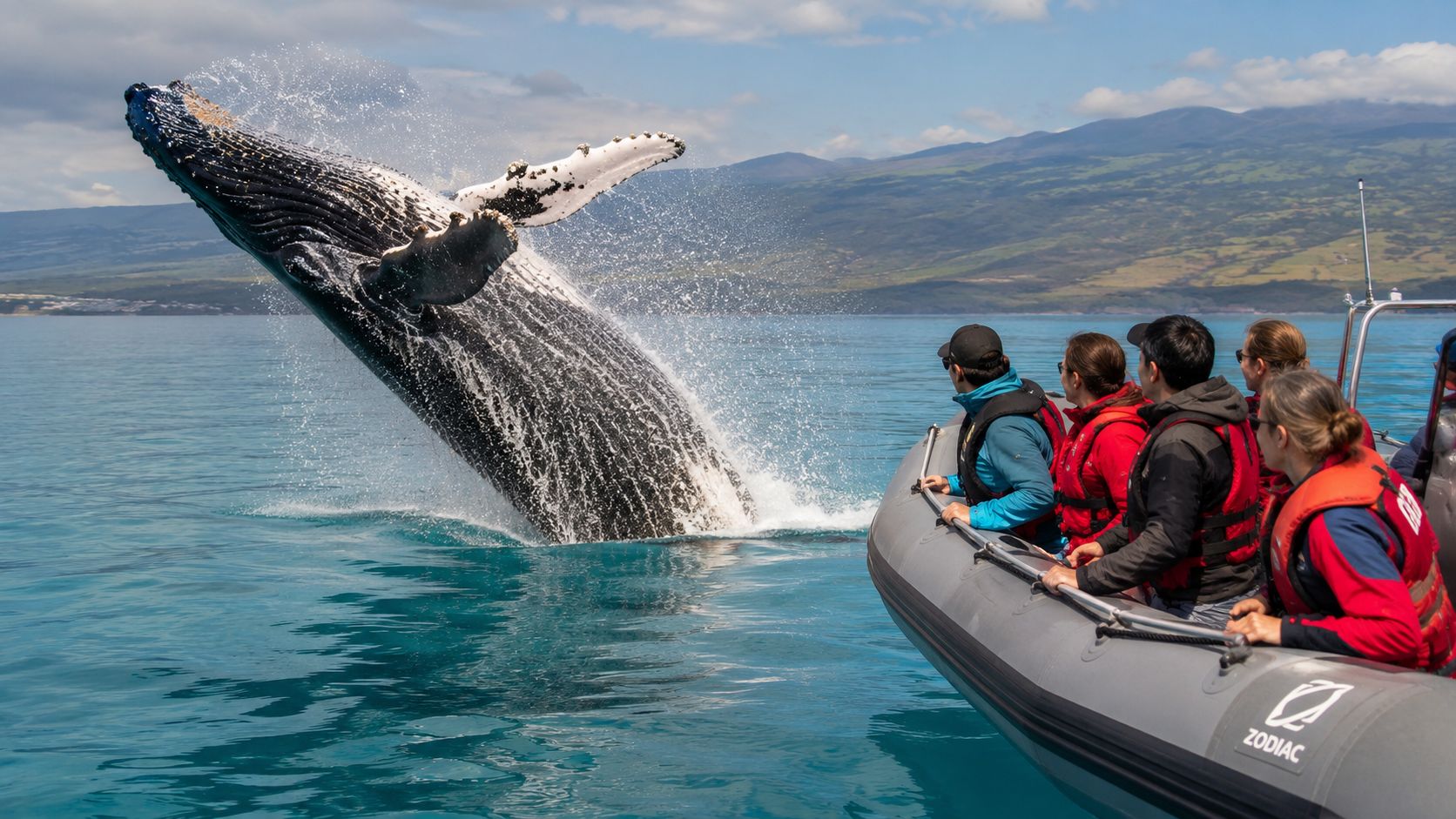
The question most travelers are really asking isn't just “Will I see whales?” It's “Do I want the calm, shaded version of whale watching, or do I want to feel the ocean under me while a humpback surfaces at eye level?”
If you're leaning toward the second option, Zodiac whale watching in Kona is the trip people remember for years. You're not perched high above the water behind a rail. You're low, exposed, and fully in it. Salt spray on your arms, wind in your face, and every direction change from the whales feels immediate.
That's also why this style of tour isn't for everyone. A Zodiac is an adventure craft first. Comfort comes second. For the right traveler, that trade is exactly the point.
An Unforgettable Up-Close Whale Encounter in Kona
You leave the harbor on a winter morning with flat light on the water and just enough breeze to keep the air cool. Then a captain points off the bow, everyone turns at once, and a humpback breaks the surface close enough that the exhale carries across the water before the splash settles. From a Zodiac, that moment hits differently because you're already near the waterline, feeling every shift in the ocean instead of watching from high above it.
That closeness is the draw. It is also the trade-off.

A Zodiac whale watch in Kona gives you a more physical trip. You sit low, you feel the chop, and quick course changes are part of how the boat works in open water. For travelers who want a shaded seat, a restroom, and a gentler ride, a larger boat usually fits better. For travelers who want the pulse of the ocean and the chance to see a whale from raft level, this is the trip they talk about long after vacation ends.
I've seen plenty of first-timers step aboard excited and slightly unsure, especially after looking at photos of the rafts. The reaction usually changes fast once they understand how these trips are run. Good captains do not rush whales or crowd them. They read the animals, hold legal distances, and use the Zodiac's maneuverability to set up calm viewing angles while keeping passengers briefed and steady.
That combination of excitement and control is what makes the experience memorable. You get the spray, the speed, and the feeling that the encounter is happening around you, but the trip still depends on disciplined boat handling and clear safety habits.
If you're comparing options before booking, this guide to whale watching in Kona, HI gives a broader look at seasons, tour styles, and what to expect on the water.
On a Zodiac, the ocean is part of the experience, and for the right traveler, that is exactly why the whale encounter feels so vivid.
The Zodiac Difference A Thrill Ride with a Purpose
The first hard turn usually tells people what kind of trip they booked. You feel the hull bite, the tubes steady the boat, and everyone gets why a Zodiac belongs in the adventure category. That response is the point. These boats are built to move cleanly through open water, keep groups small, and put you close to the surface where every spout, tail throw, and direction change feels immediate.

Why the boat matters
A Zodiac is a rigid hull inflatable boat, often called a RHIB. In practical terms, that means a light, responsive boat with less freeboard, less lounging space, and far better maneuverability than a large sightseeing vessel. A good captain uses that handling to work with the ocean, not fight it.
That distinction matters around whales.
The goal is never to rush in for a closer look. A key advantage is being able to read the whale's line of travel, account for wind and swell, and set the boat where the view opens up naturally while staying within the rules. On a small raft, subtle adjustments happen fast. That can turn a distant sighting into a clean, respectful pass where everyone sees the same breach or fluke without the captain pushing the encounter.
What it feels like on the water
You sit low enough that the ocean has presence. Spray reaches you. Swell feels like swell. If a calf surfaces off the beam, you are seeing it from near water level, not from an upper deck with rails and rows of seats between you and the moment.
That low perspective is why photographers and repeat ocean travelers often choose the raft.
It also comes with a trade-off some guides skip past. A Zodiac is more physical. Knees absorb more motion. Lower backs notice sloppy posture. Guests who do best are the ones who arrive expecting an active ride, hold on when asked, and stay flexible with their seating position. Guests who want shade, a restroom, and room to walk around are usually happier on a larger boat.
If you've compared vessel styles on other Big Island tours, the same trade-off shows up there too. This guide to the best boat types for a Kona manta ray snorkel breaks down why smaller boats feel more direct and why that matters to some travelers more than comfort features.
The purpose behind the thrill
The excitement is real, but the best Zodiac captains are not running a thrill ride for its own sake. They are using a precise tool for wildlife viewing. Small boats let captains keep the group engaged, adjust quickly to changing sea state, and communicate clearly when everyone needs to sit tight, shift weight, or watch a whale surface off one side.
That is where trust gets built. Guests relax when the captain explains what the boat is doing and why.
I've watched nervous passengers settle in within the first twenty minutes once they realize the ride has structure to it. Safety briefings matter. Hand placement matters. Where you look during a turn matters. A well-run Zodiac trip feels lively, but it should never feel loose or chaotic.
Who gets the most out of it
- A strong fit: Travelers who want an active, close-to-the-water experience and do not mind getting some spray on the way.
- A mixed fit: Families with older kids, confident boaters, and photographers who value angle and access more than onboard amenities.
- A poor fit: Anyone with significant motion sensitivity, recent back or neck issues, or a strong preference for a stable, shaded platform.
Captain's rule: The right Zodiac trip feels controlled, respectful, and exciting at the same time. If comfort is your top priority, choose a larger boat. If you want the ocean to feel close and alive, this is the boat that delivers it.
Choosing Your Adventure Zodiac vs Large Boat
You can have a close whale encounter on either boat. The better choice depends on how you want to feel during the trip.
A Zodiac suits travelers who want an active ride, quick turns, and that low-to-the-water perspective that makes every breath and tail slap feel near. A larger catamaran suits travelers who care more about stability, shade, seating, and having room to move around without bracing through chop.
Zodiac Raft vs. Large Catamaran at a Glance
| Feature | Zodiac Raft | Large Catamaran |
|---|---|---|
| Group feel | Small and personal | More social, less intimate |
| Ride style | Fast, lively, more physical | Smoother and more relaxed |
| Water proximity | Very close to the surface | Higher off the water |
| Maneuverability | Quick repositioning | Slower, wider turns |
| Comfort | Limited | More comfortable overall |
| Shade | Usually limited | Often better shade coverage |
| Restroom | Often unavailable | Common on larger vessels |
| Motion sensitivity | Can feel rough in chop | Usually easier for sensitive guests |
| Best fit | Adventure-minded travelers | Comfort-focused families and mixed groups |
The primary trade-off
A Zodiac gives you responsiveness and a stronger sense of connection to the water. You give up some comfort to get it.
That matters more than the brochure photos. On a calm Kona morning, many guests are surprised by how comfortable a raft feels. On a windier day with afternoon chop, the same boat can feel much more physical. I tell people to choose based on their honest tolerance for bounce, spray, sun, and limited amenities, not on the hope that they will just tough it out.
Guests who already know they get seasick should take that seriously. A larger boat is usually the smarter call. Guests who enjoy small craft, sit forward, hold on properly, and do not mind a few firm impacts often come back saying the Zodiac was the highlight of the trip.
Who should choose which
Choose a Zodiac if these points sound right for you:
- You want the ride to be part of the experience: You enjoy speed, turns, and staying engaged with what the captain is doing.
- You care about intimacy over amenities: Smaller groups usually mean easier wildlife viewing and more direct communication.
- You travel light: You are fine without lounge seating, lots of shade, or a restroom onboard.
Choose a large boat if your group will enjoy the day more with added comfort:
- You have mixed ages or mixed confidence levels: Bigger platforms are often easier for grandparents, young kids, and nervous first-time boaters.
- You want a softer ride: Less bouncing can make a big difference for guests with motion sensitivity or minor back issues.
- You want more room and onboard basics: Shade, head access, and space to shift positions can turn a good trip into a much easier one.
If you want another practical comparison of how vessel size changes the outing, this guide to a small boat vs large boat for a Kona manta ray night snorkel lays out the same comfort-versus-access decision in a different setting.
A Zodiac asks more from your body and rewards you with a sharper, more immersive day on the water. For the right traveler, that is exactly the point.
When to Go Whale Watching in Kona
A calm February morning can turn loud fast. You leave the harbor with flat water, then a blow appears off the bow, another follows behind it, and suddenly everyone on the boat is scanning in three directions at once. That kind of morning is why timing matters here.
Kona's whale season generally runs from December to May, with the strongest window usually falling between January and March, as noted in this Big Island humpback whale season guide. If you want the highest odds of hearing excited shouts from every corner of a small boat, that mid-winter stretch is the one I'd target first.

What the season looks like
Humpbacks come to Hawaiian waters to court, calve, and rest. Off Kona, that means winter trips are not just scenic boat rides. You are watching animals during one of the most active parts of their annual cycle.
The timing changes the feel of the trip. Early in the season, sightings can be less consistent, but the boats are often less crowded and the first encounters feel special. Peak season brings more regular whale activity and a better chance of seeing several groups in one outing. Late season can still be excellent, especially for travelers who care more about a quality encounter than checking off a perfect social media moment.
What you may see by timing your trip
- December: Early arrivals start showing up. Some runs are quiet, and some produce a very good first look at the season.
- January: Sightings usually become steadier. This is a strong month for travelers who want a good balance of activity and availability.
- February: Often one of the most reliable months. Surface behavior can be dramatic, and captains spend less time searching.
- March: Still a very strong choice. Mother and calf pairs are often a highlight, and these are the encounters many guests remember longest.
- April into May: Whales are still around, but numbers usually taper off as the season winds down.
For a broader look at migration timing and common behaviors across the islands, this guide to humpback whale watching in Hawaii gives helpful background.
Best mindset for booking
Book the season, not a guaranteed performance.
A Zodiac makes the uncertainty feel more immediate because you are lower to the water and more tuned in to every change in direction, every distant blow, and every pause while the captain reads the surface. That is part of the draw. It is also why I tell guests to choose their month based on what kind of day they want.
If you want the best chance at frequent action, aim for February or March. If you prefer a slightly quieter trip and are comfortable with more searching between sightings, December or late spring can still be rewarding. The trade-off is simple. Peak months usually give you better odds. Shoulder months can feel more relaxed and just as memorable when the whales show well.
Good whale watching is never scripted, and experienced crews respect that. Some mornings bring breaches and tail slaps. Other mornings reward patience with spouts, flukes, and one close, clean encounter that stays with you long after the ride back to the harbor.
Safety Comfort and What to Bring on a Zodiac
Many guides often become too vague. A Zodiac can be the highlight of your trip, but only if you prepare for the ride you're taking.
The adventurous ride of a Zodiac comes with trade-offs. Rigid-hull inflatable boats can experience higher impact and more frequent accelerations than standard boats, increasing discomfort for seasick-prone travelers and those with back, neck, or pregnancy-related restrictions, as discussed in this Big Island whale season and etiquette article.

How to stay comfortable
The biggest mistake first-time guests make is dressing for the dock instead of the boat. Kona can feel warm on land and windy on the water. Add spray, and you can get chilled fast even on a sunny day.
A few habits help a lot:
- Take motion sickness prevention early: If you know you're sensitive, don't wait until the boat leaves the harbor.
- Choose your seat carefully: Ask the crew where the smoother seats tend to be that day. Conditions matter.
- Keep your eyes up: Looking at the horizon usually feels better than looking down into your lap or camera screen.
- Hydrate lightly and eat smart: An empty stomach can feel bad, but a heavy breakfast can feel worse.
If you're debating whether you can “tough it out,” be honest with yourself. A Zodiac rewards preparation and punishes denial.
What to bring
Pack for salt, sun, and movement.
- Quick-dry clothing: A light long-sleeve layer or rash guard works well.
- Wind protection: A light spray jacket can make a huge difference on breezy mornings.
- Sun gear: Reef-safe sunscreen, polarized sunglasses, and a hat with a secure strap.
- Dry storage: Bring a waterproof bag for phones, wallets, and car keys.
- Footwear: Wear what the operator recommends. Keep it simple and secure.
Who should pause before booking
A Zodiac isn't the ideal match for everyone. If you have significant back or neck concerns, limited mobility, or pregnancy-related restrictions, check with the operator before you reserve. Don't assume all whale watch boats feel the same. They don't.
For a broader look at what responsible operators do to protect guests on the water, this article on essential Kona boat tour safety features you need is worth your time.
Why a Small Local Operator Is Your Best Bet
Boat style matters, but the operator matters more. A skilled local crew can make a high-energy Zodiac trip feel organized, calm, and respectful from the first safety talk to the last run back to harbor.
Captain Zodiac's Kona whale watching tours are tied to the winter humpback season and operate as a 3-hour Zodiac raft outing, generally during January to March, departing from Honokohau Harbor on a 24-foot Zodiac Hurricane RHIB carrying up to 16 passengers, according to this Captain Zodiac tour listing. That small-group format is exactly why many experienced ocean travelers seek out local raft operators instead of large general-tour boats.

What local knowledge changes
A local captain isn't just driving to a waypoint. They're reading swell direction, wind texture, sun angle, whale behavior, and how their passengers are handling the ride.
That shows up in practical ways:
- Better positioning: Good crews set up for legal, clean views instead of rushing the approach.
- Clearer safety calls: Small groups hear instructions better and ask questions more easily.
- More adaptive trips: If sea state changes or a pod shifts direction, a local team adjusts quickly.
One solid option to consider
If you're comparing operators, Kona Snorkel Trips offers small-group ocean tours in Kona, including seasonal whale watching on a Zodiac-style boat, with lifeguard-certified guides and an emphasis on safety and environmental stewardship. That combination tends to matter more on small craft, where crew attention and judgment shape the whole outing.
If you're weighing several tours before you commit, this guide on how to compare Kona boat tours before you book can help you sort through the key differences.
The right operator won't sell you a fantasy. They'll tell you exactly what kind of ride it is, who it fits, and how to do it safely.
A great Zodiac whale watch in Kona leaves you with more than photos. You come back with a sharper sense of the ocean, a real feel for humpback behavior, and that satisfying kind of tired that comes from being out in wind and salt and open water. For travelers who want that version of Hawaii, it's hard to beat.
If you want a small-group ocean experience with a crew that knows Kona waters and runs safety-focused adventures, take a look at Kona Snorkel Trips. Their seasonal whale watching and other marine tours are a good fit for travelers who prefer personalized time on the water over the large-boat crowd.