
Big Island Scuba Diving: Sites, Tips & Best Operators
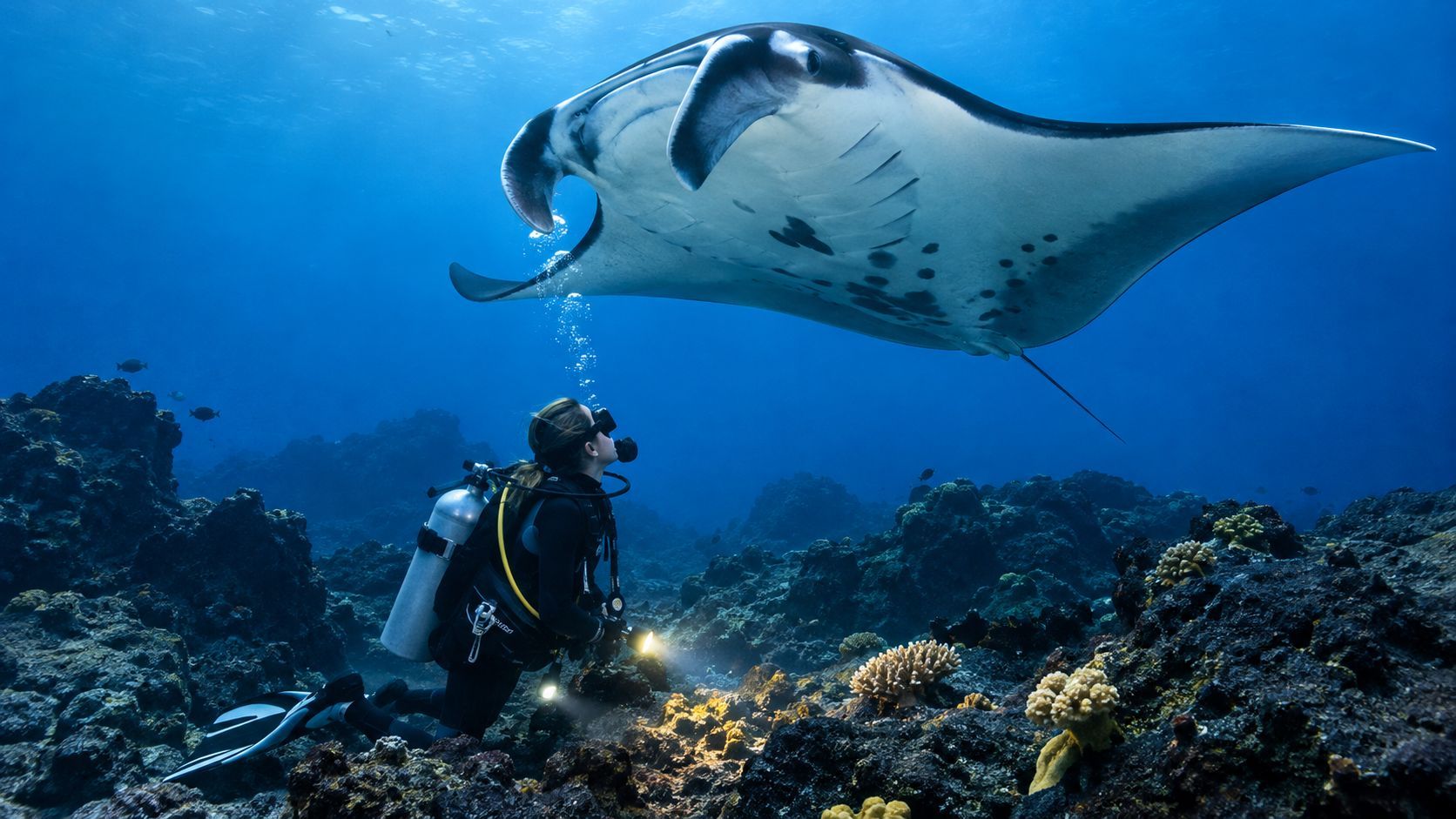
You're holding a certification card in one hand and a booking page in the other, trying to decide whether tomorrow should be a lava-rock shore entry or a boat that leaves Honokohau before the trade winds fill in. The photos all look calm. The reviews do not. One person loved a turtle cleaning station. Another turned around in the surge with a camera housing banging a knee.
Big Island scuba diving gets easier once you stop treating the coast as one dive site. Kona's leeward shore is the reason people fly here to dive, and it is also full of real trade-offs: entry type, night diving, reef contact, and what happens if a profile goes wrong. Match the day to your card and the ocean, not to a highlight reel.
Why Kona Delivers the Best Big Island Scuba Diving
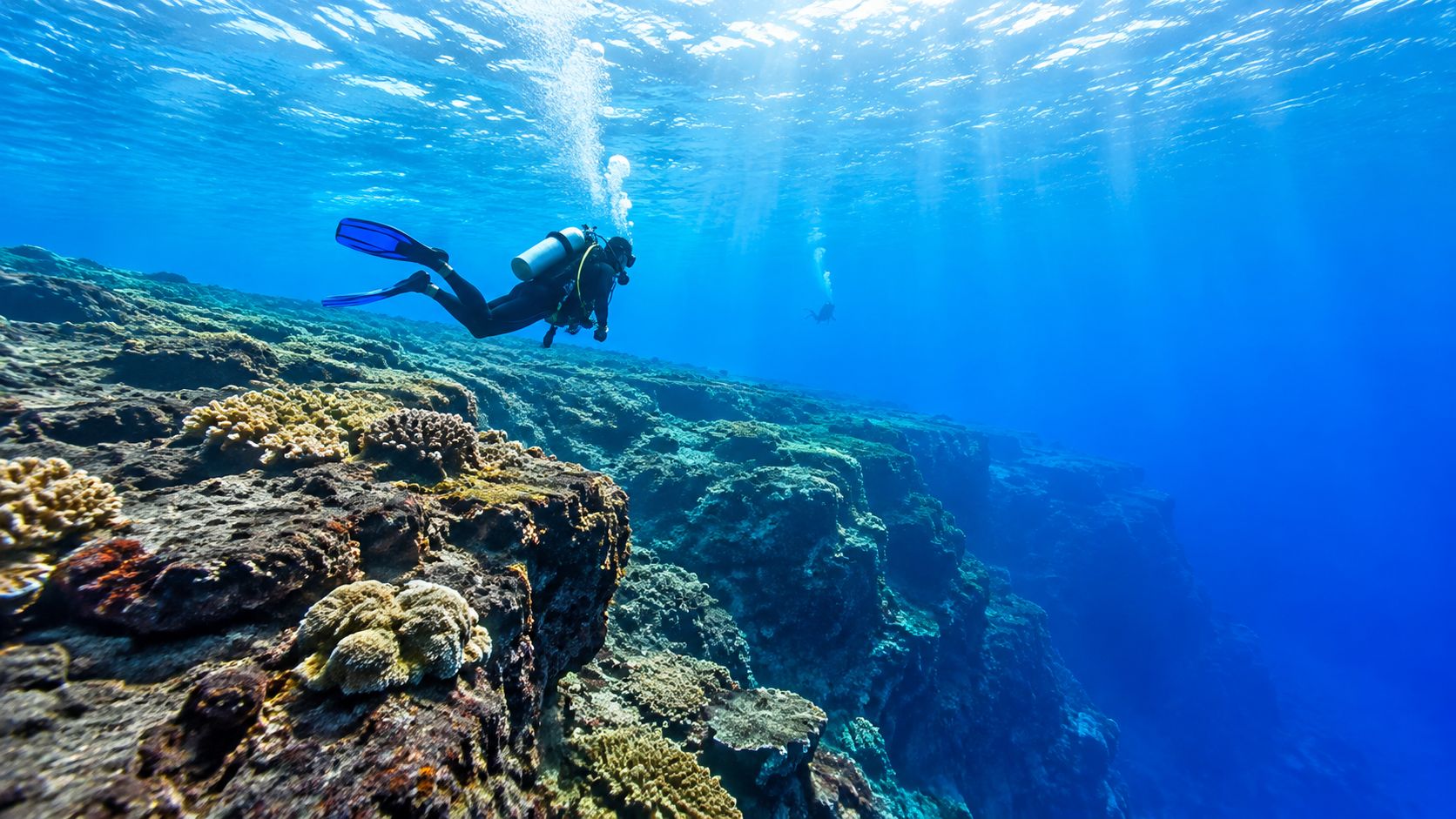
The first descent off the Kona coast tends to be quieter than people expect. You drop through clear water onto black rock that never had time to weather into sand. Lava shelves step down, a cleaning station sits on a knob, and the wall keeps going. New visitors usually stop finning for a second. The reef is alive, and it starts close to shore.
Why the west coast holds more reef
Hawaiʻi Island's west side sits in the lee of the trades, so the swell and runoff that pound Hilo rarely wrap around. Volcanic shoreline puts arches, caves, lava tubes, and steep drop-offs within a short swim or a short boat ride. That structure carries an unusual amount of living coral. A NOAA coral-reef mapping study, reported by Hawaii Magazine, found live coral covering about 57% of the waters around Hawaiʻi Island, more than 29 square miles of living reef and more nearshore coral than any other major Hawaiian island. The same assessment tied the state's reefs to roughly $360 million a year through tourism, shoreline protection, and habitat for commercially valuable fish and invertebrates.
The east side takes more rain, more runoff, and more wind. Sediment smothers coral and kills visibility. On the west side, sheltered water, lava structure, and living reef line up on the same morning, which is why Kona is the best place to scuba dive in Hawaii for most traveling divers.
Practical rule: Book the west coast on purpose. A pretty forecast for Hilo does not describe the water you will actually dive.
Who runs the day well
The operator matters more here than the site list. Small groups, site calls that change with the ocean, and a crew that briefs buoyancy before you hit a fragile bottom will do more for your week than a long menu of site names. Kona Honu Divers runs that kind of day. Their tour calendar covers the reef dives, the manta night, and the blackwater trip most visitors only hear about after they land.
Top Big Island Dive Sites for Every Skill Level
Pick your sites the way a guide picks them: honest assessment of your buoyancy first, wish list second. The coast rewards divers who start where the bottom is obvious and the exit is kind, then earn their way toward the dives with no visual reference at all.
Sheltered Kona reefs
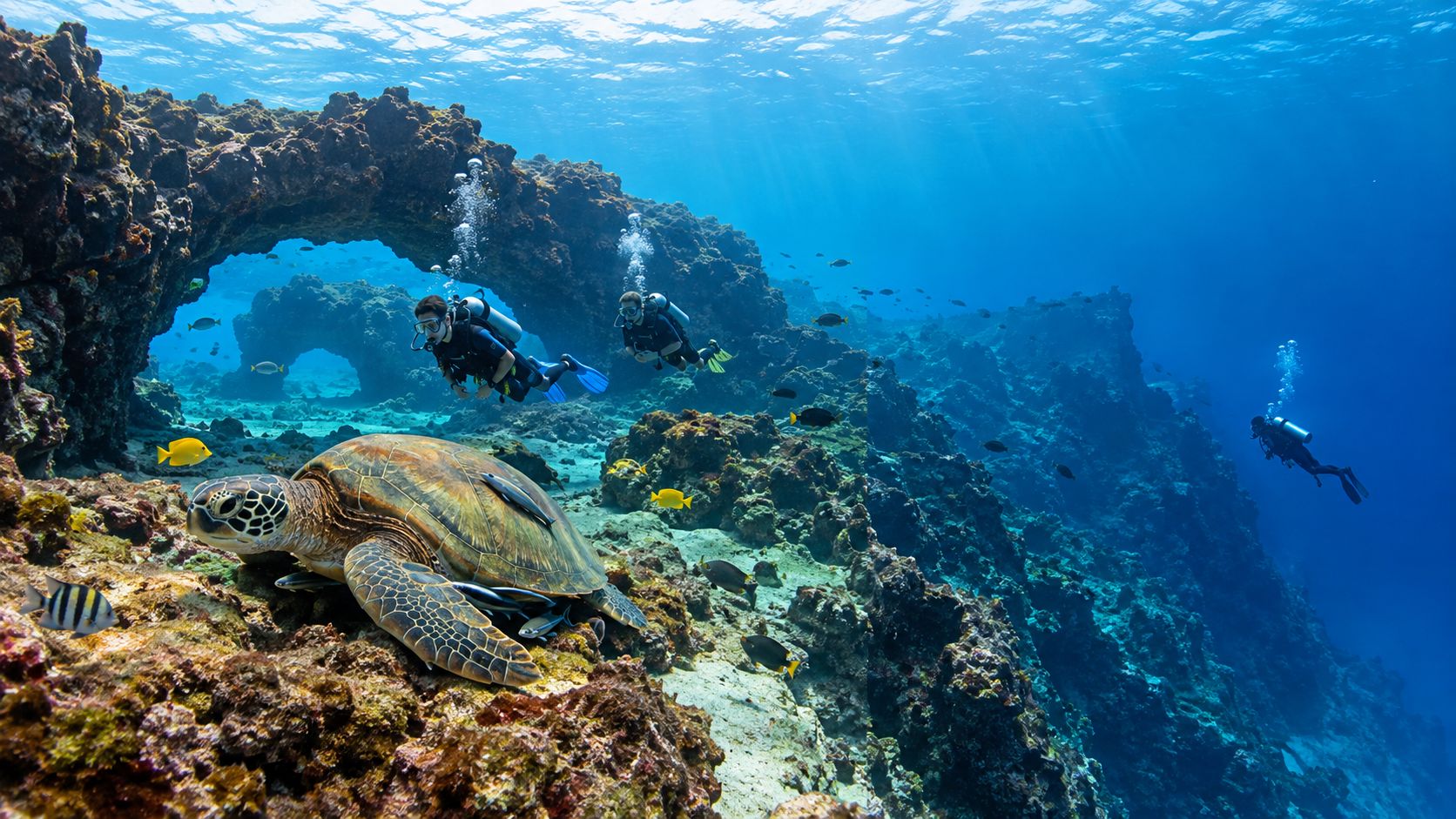
Newer certified divers do well on the lava reefs just off town and along the south Kona and Kohala shelves. Depths stay moderate, the entries are manageable on a calm morning, and the reef delivers: arches, small caves, turtle cleaning stations, reef fish working the coral heads. The skill that decides whether these dives go well is staying off the bottom while you watch a turtle. Deep-water cards matter far less here.
These are the right call for:
- Families with Open Water cards and mixed confidence
- Older travelers who want a short boat ride over a long surface swim in gear
- First-time camera carriers who need an easy bottom to sort their buoyancy on
One trade-off to accept: easy access means other fins. Sites near town see heavier traffic than remote walls, and busy mornings show in the coral. Kick clean. If the shore entry is rocky with stacking sets, skip it, because a scrubbed shore plan beats a standing exit on living reef.
Kealakekua Bay and the Captain Cook Monument
Kealakekua is a marine life conservation district with a steep reef wall and a monument you can see from the surface. Boat access is the sensible way in, and that boat ride is also your margin: you are a fair run down the coast, so a competent crew matters more here than on an inshore reef. The wall is beautiful, and repeated diver traffic shows in the coral. Dive it for the structure, keep your fins high, and check gas and buddy position before you wander deep along the drop.
Newer divers do fine in the shallower sections with a guide. The ones who get in trouble treat the wall like a scenic elevator.
The manta night dive
The Kona manta night dive is the signature trip. You kneel or hover on a sandy patch around lights. Plankton gathers. Reef mantas barrel-roll through the beams, often close enough that you feel the wash off a wing. Day boats meet the same animals at cleaning stations, but the night show is the one people rebook. Read a plain account of how the Kona manta dive is run before you decide, then look at the two-tank manta dive and snorkel if you want a reef tank and the night tank in one outing.
Open Water divers are commonly accepted. What carries this dive is comfort in the dark and a stable hover; an Advanced card is optional. If you cannot hold a stop without grabbing rock, fix that on a day reef first.
Blackwater, with no bottom
West of Kona, the blackwater night dive happens above water exceeding 500 meters deep, where animals that live far below migrate toward the surface after dark, as described by the Kona blackwater dive notes. You drift on a tether under the boat. No reef, no wall, no visual floor. Lights stay disciplined, ascents stay controlled, and your only references are the line and the divers beside you.
This is for calm, experienced divers who already trust their buoyancy at night. Curious beginners should sit this one out. If the appeal is real, book it late in the trip, after you have logged a night dive with a bottom under you. The operator page for the black water night dive spells out how the boat runs it.
Big Island Diving Seasons and Water Conditions
"Year-round" is true only in the weak sense that you can usually find somewhere to get in the water. It is a poor way to plan a week.
Winter north swells shut down exposed points and make some shore exits unpleasant or unsafe, while Kona's lee often stays diveable when the rest of the state is messy. Summer is the stretch of calmest seas and the visibility people post online. Rain changes the picture faster than the calendar does. Freshwater runoff and suspended sediment cloud shore entries after a wet night, even when the offshore boat sites still look clean. Hawaii's reef monitoring tracks waves, currents, sediment, coral, fish, and habitat because those things move. So should your plan.
How to read a morning
Do not book a shore entry off a monthly average.
- Swell direction: A north or northwest pulse can leave a south Kona pocket usable and turn a north shore entry into a washing machine.
- Wind: Afternoon trades kick up surface chop. Morning boats and early shore dives are the kinder option.
- Recent rain: If the gutters ran overnight, expect milkier water near shore and more surge debris in the shallows.
- Wildlife nights: Manta sightings change night to night. Build a spare evening instead of staking the whole trip on one booking.
Water runs cooler in winter and warmer from late summer into fall. A thinner suit is enough for many summer days. In winter, divers who get cold add thickness or a hooded vest. Hearing humpback song on a winter reef dive is a real bonus on the Kona coast. It is not a guarantee, and it is not a reason to chase whales in the water.
A lighter contingency day beats a forced shore entry. If the beach is closed out, a boat can often still reach a lee reef.
Check a Big Island marine forecast the evening before, then again in the morning. If you are traveling with non-divers, keep one day that can flip to a snorkel without wrecking the schedule.
Certifications and Experience You Need to Dive Here
Cards open doors. They do not pick the site.
Open Water is enough for guided shallow reefs and for many boat dives where a divemaster sets the line, the max depth, and the turn pressure. That covers a large share of a first Kona trip: lava arches, turtle stations, and a conservative manta night if your buoyancy is already steady.
Advanced Open Water becomes the comfortable minimum once the wall gets deeper, the navigation is less obvious, or the dive is at night on purpose. You can join some of those trips on an Open Water card. You will enjoy them more if depth, night, and navigation are already skills rather than firsts you stack on the same tank.
Where the card stops mattering
The manta night dive is the clearest example. Operators often take certified Open Water divers. What fails people is not the rating on the card. It is hovering in the dark, managing a light, and keeping fins off the sand and off other divers. If your last dive was two years ago, take a refresher in a pool or on a shallow reef before you kneel in front of a manta.
Blackwater is a different standard. No bottom reference means you cannot "just go shallower and look at the reef" if you feel off. Calm, advanced divers do well. Anxious new divers do not, even if the depth on the line looks modest.
Enriched-air nitrox reduces nitrogen loading at a given depth. It does not remove decompression risk. Analyze the cylinder, set a maximum operating depth from that mix, and dive a profile that matches the gas in the tank, not the gas you hoped was there. Make a safety stop when the dive and the conditions allow it, especially after deeper profiles, and ascend slowly.
Uncertified travelers should not force a full course into a three-day holiday unless that is the point of the trip. A discover-scuba outing with a shop is the honest trial. Everyone else can snorkel the same coastline without pretending a resort splash is the same as a certification.
Marine Life You Will See on Big Island Dives
You do not collect species here so much as walk into someone else's day.
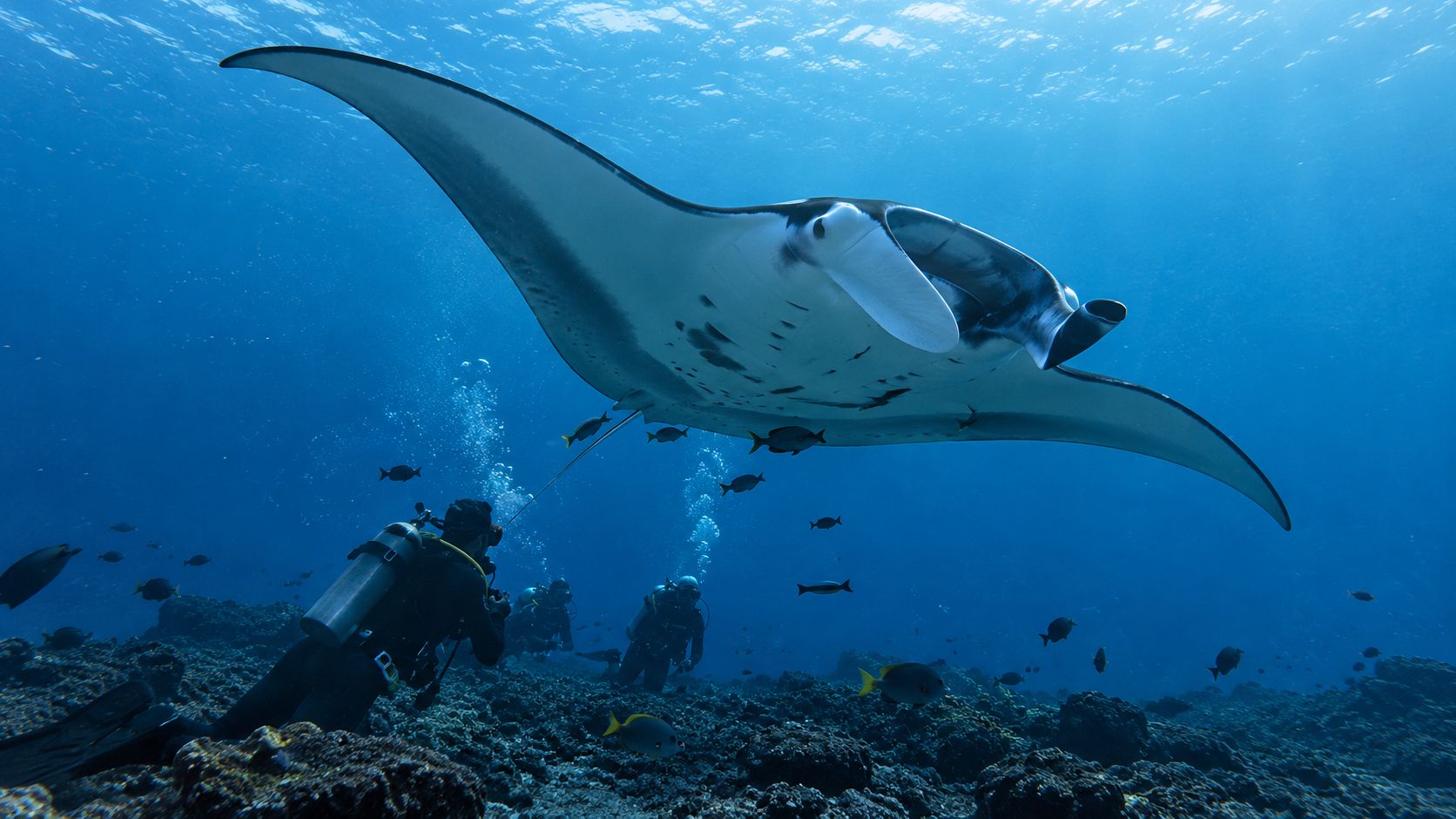
On a manta night, the reef mantas arrive as silhouettes, then as white spots across a belly, then as a wing that passes inches over the lights. They barrel-roll to feed and they leave when the plankton thins. On day dives the same animals sometimes cruise a ledge or pause at a cleaning station while wrasses work their skin. Stay low, stay still, and let them choose the distance.
What shows up on an ordinary reef
Hawaiian green sea turtles park on cleaning stations and sleep under ledges. Give them the whole station. White-tip reef sharks rest in lava tubes in the daytime and look half asleep until a fin comes too close. Spinner dolphins are usually a surface-interval story, not a dive story. They rest inshore by day. Enjoy them from the boat without dropping in on a resting school.
The small stuff is the part guides stop pointing at after the third turtle. Endemic reef fish, garden eels on the sand, morays in the holes, and the odd nudibranch reward a slow second pass. Frogfish and bandit angelfish are luck, not a promise.
After dark and in winter
Blackwater is a different cast. Larval fish, translucent squid, and deep-water jellies rise into the lights, and most of them are smaller than people expect until one hangs in front of a torch. The blackwater night dive is worth understanding before you decide it is "just a night dive."
Winter reefs add humpback song, sometimes close enough to feel. Eagle rays show up along deeper walls when they feel like it. Neither is a species you can put on an itinerary.
Mantas and turtles are protected. The best encounters happen when divers stop chasing. Hands stay off. Lights stay out of eyes on a day dive. On the night dive, lights stay aimed at the plankton, not stuffed into a manta's face.
Shore Diving vs Boat Diving on the Big Island
Shore diving looks cheaper and greener until you price the entry. Boat diving looks indulgent until you count the coral you did not kick on the way out.
A Kona shore entry is often a lava step or a rock shelf, not a sandy beach. You time a set, you keep your mask on, and you do not stand up where the reef begins. Surge makes the exit harder than the dive. Navigation is yours. So is the walk with a tank, weights, and a camera. Families, newer divers, and anyone with a tricky knee feel that walk more than the depth.
A boat drops you on the site. The guide sets the descent, watches gas, and hauls you back to a ladder. You reach walls, offshore reefs, and night sites you will not swim to from a beach. You also give up flexibility. The boat goes when it goes, and a bad afternoon forecast can move the site or cancel the charter.
The reef trade-off people get backwards
Research on Hawaiian marine protected areas found that scuba divers caused greater impact per dive than snorkelers, that boat-based activities produced less impact per dive than shore-based activities, and that individual behavior was a major factor, according to the Meyer and Holland spatial study. Shore entries and exits bunch fins and hands into the shallow coral. A boat can put you on sand and keep you there.
Shore diving is not automatically the eco choice, and it is not automatically cheaper once you add fills, rental, a rattled camera, and a guide you probably still want.
| Factor | Shore Diving | Boat Diving |
|---|---|---|
| Entry and exit | Lava rock, surge, your timing | Ladder, crew, set schedule |
| Sites you can reach | Nearshore reefs you can swim | Walls, offshore reefs, night sites |
| Gear and cameras | You carry everything | Boat stores it between tanks |
| Group separation | Easy if buddies split | Guide keeps the plan |
| Reef contact | Highest in the shallows | Lower if you stage on sand |
| Best fit | Calm water, budget, flexible day | Comfort, oversight, signature sites |
Pick shore for flexibility on a flat day and a budget that includes good judgment. Pick the boat for comfort, a real safety net, and the dives people came to Kona to do.
Big Island Dive Safety Rules and Reef Etiquette
Hawaii writes some of this down. The rest shows up as broken coral and a long ride if you bend.
The flag and the fishing rules
In navigable state waters, from the high wash of the waves out to three miles, you need a diver's flag for scuba, freediving, and snorkeling. A group of two or more may share one flag, and every person stays within 100 feet of it. You do not surface farther than 100 feet from the flag except in an emergency. Between sunset and sunrise the flag must be lit so it is identifiable from at least 100 feet. The state boating and ocean recreation rules are the reference, and they apply on a beach entry as much as on a charter.
Recreational scuba here is observation. Unless a specific exception applies, it is unlawful to take marine life while using scuba, to possess scuba gear and marine life together, or to possess scuba gear and fishing gear together. Night diving from 30 minutes after sunset until 30 minutes before sunrise carries its own ban on taking or possessing marine life and on possessing fishing gear while diving. Read the aquatic resources rules before anyone suggests "just a lobster."
If something goes wrong
Hawaii's recompression chamber is in Honolulu. A serious injury on the Big Island can mean a transfer to Oahu, not a short drive across town. That does not make Kona diving unsafe. It does make conservative profiles, honest buddy checks, surface-interval discipline, and dive-accident insurance the default. Do not book a flight for the afternoon you come up from a two-tank day. Leave a real gap.
At Kealakekua, a monitoring design compared heavily dived reef near the Captain Cook Monument with quieter transects about 100 meters south, using repeated 50-meter transects. A separate assessment of 234 recreational users across four protected areas, including that bay, recorded 1,340 substrate contacts. 86% were sand or bare rock. 14% hit living coral, coralline algae, or sessile invertebrates. Scuba divers produced more impact per dive than snorkelers, and behavior drove the damage. Those details are laid out in the Kealakekua Bay monitoring notes.
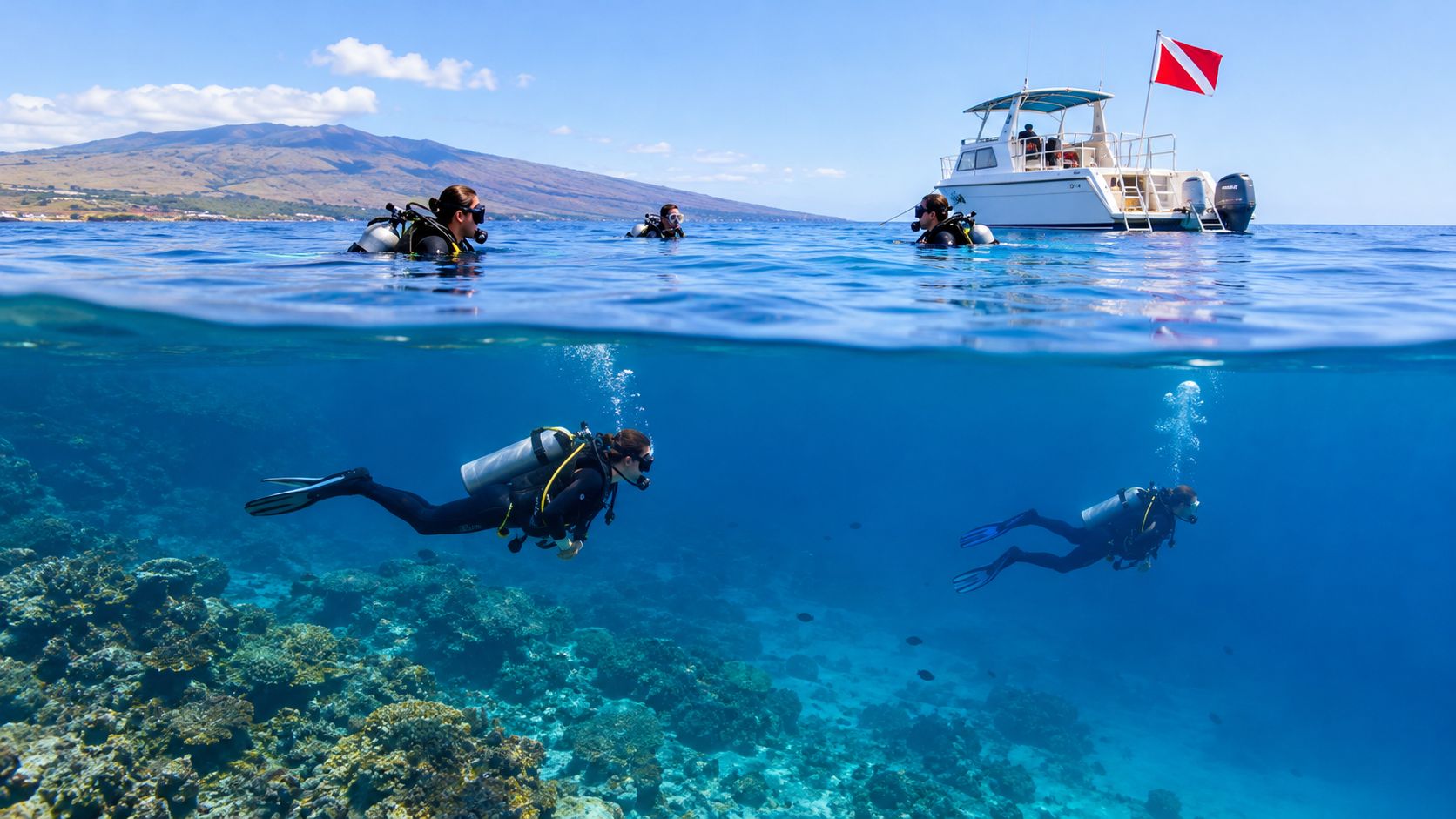
Hands, fins, and sand
Living coral polyps sit under a thin tissue layer. Contact can tear it and open a path to infection and disease. Those same reefs work as natural breakwaters against coastal waves, including storm and tsunami waves, which is why the Division of Aquatic Resources coral guidance treats contact as more than manners.
- Neutral buoyancy: Hover. Do not rest a tank or a hand on the reef to look at a fish.
- Fins up: A vertical kick in the shallows is how coral dies on "easy" dives.
- Sand only: Stage, kneel, and adjust gear on sand.
- No standing: If a shore exit requires you to stand on reef, that exit is the wrong one today.
Operators who brief this before the splash, and who use moorings instead of anchoring in coral, change the outcome of a busy week. For a wider look at that standard, see how sustainable marine tourism gets practiced on this coast.
Choosing a Dive Operator and Planning Your Trip
A wall can look clean at dawn and turn to white water after lunch. The crew that calls that change early is what you are paying for.
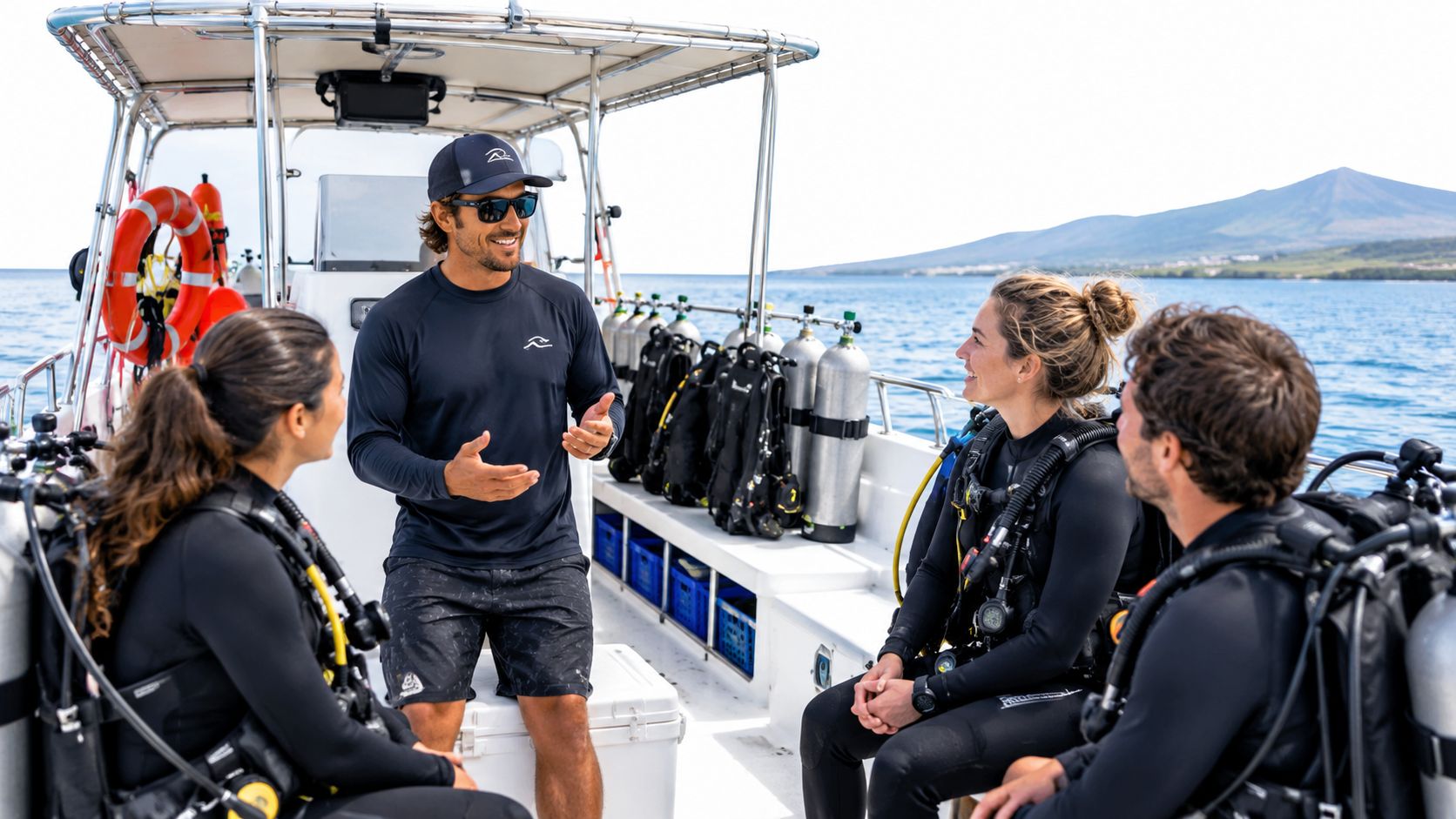
What to ask before you pay
Run one phone call through a tight filter. A shop that answers plainly usually runs the boat the same way.
- Group size: Small dive groups keep the guide close enough to fix buoyancy before it becomes contact.
- Gear and gas: Ask what is included, how the regs feel, and whether nitrox is available if your card allows it.
- Boat and safety: Radios, oxygen, a real briefing, a headcount system, and a straight answer on evacuation if someone surfaces hurt or missing.
- Site flexibility: The right crew will move off a surged wall or cancel when the ocean says no.
- Reef habits: Moorings, sandy staging, and a contact briefing match the damage research covered earlier.
For scuba, start the comparison with Kona Honu Divers. Read recent diver notes on their Google Business profile, then line up dates on the tour calendar. A two-tank morning boat usually costs more than a shore rental day and buys less stress than a self-guided lava entry with a new camera. The manta night sits in its own price band and sells out when cruise ships and holidays stack. Gear rental is the add-on people forget when they compare a cheap shore day with a guided boat. Book peak weeks early, and book the manta night before dinner.
The island's ocean economy was already built for this kind of access years ago. A state survey of the tour-boat industry found Big Island operators carried 313,924 passengers in 2003, employed 395 people, paid $9,513,535 in wages, and recorded $25,639,000 in gross revenue, about 30% of the island's 1,085,818 visitors that year, in the tour boat industry report. The fleet is not a side hobby. Use one that still briefs like the reef can be damaged.
If you are not certified
Non-divers can still get in the water. Kona Snorkel Trips runs snorkel boats on this coast and is the straightforward option when half the group does not dive.
Their manta ray night snorkel puts snorkelers on the same lights the divers kneel under, without a tank. Manta Ray Night Snorkel Hawaii is another option when you are comparing manta ray night snorkel tours.
For a daytime reef with history attached, Captain Cook Snorkeling Tours runs a Captain Cook snorkel tour in Kealakekua Bay. That fits non-divers who want the monument and coral without a certification.
Pick dates around the card you dive on, hold the manta night first, and keep one flex morning for weather. The reef will still be there if a swell moves the schedule by a day.
Kona Snorkel Trips runs small-group manta ray night snorkels and Captain Cook Bay trips for travelers who want the same leeward coast without a scuba certification. Lifeguard-certified guides, a hands-off approach to the animals, and boats sized for real attention make those outings a clean match for families and mixed groups on a dive trip. Visit Kona Snorkel Trips to check dates and hold a space before the manta nights fill.