
Kona Manta Diving: A Complete Guide to Night Encounters
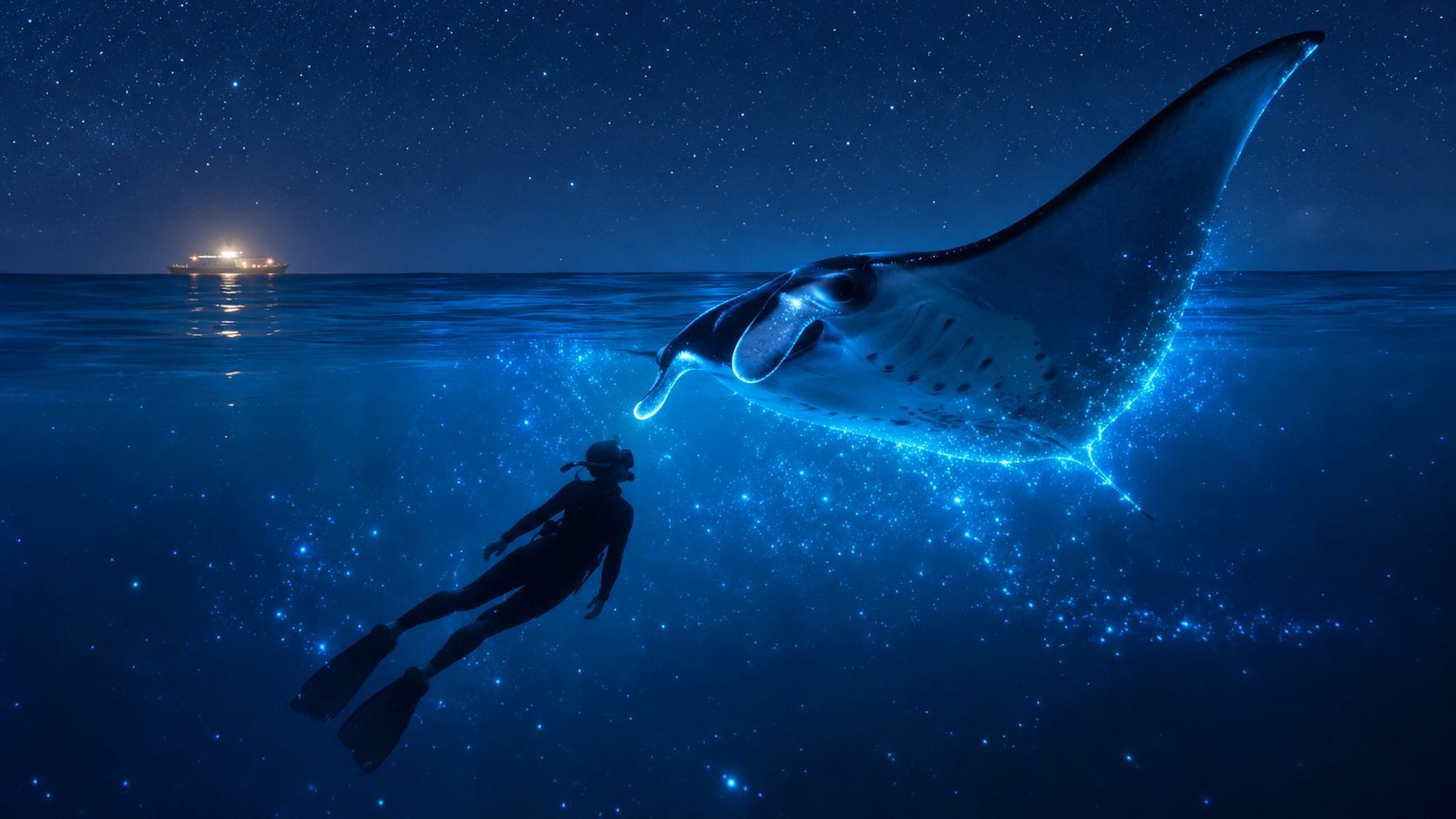
You're at your hotel in Kona, phone in hand, staring at ten manta tours that all look identical. Every site promises small groups, close encounters, and a night you'll never forget. Prices match, photos match, and you've got one free evening to get this right. Kona Manta Diving can be the best night of your trip or a crowded, anxious float in the dark, and the gap between those two outcomes comes down to format, site, season, and above all how your operator runs the water.
I'd tell you on the dock that the format should match your comfort level. Book early in your stay so weather cancellations leave room to reschedule. Judge operators by standards you can verify yourself, like group size, time in the water, and how the crew briefs guests, instead of trusting the marketing copy. Do that, and you'll understand what you're watching when a ray rolls through the lights below you.
For snorkeling trips, Kona Snorkel Trips runs the Manta Ray Night Snorkel tour in Kona, and it's a useful benchmark when comparing options.
What Kona Manta Diving Actually Is
You're floating on a dark ocean. There's no reef tour chatter, no midday glare. Below you, a beam of light fills with tiny specks, and then a reef manta ray with a wingspan around 12 feet glides in, mouth open, and barrel-rolls through it. She comes back. She rolls again. That's not a trained behavior and it's not baiting. You're watching an animal feed where her food has concentrated.
The Light and Plankton Mechanism
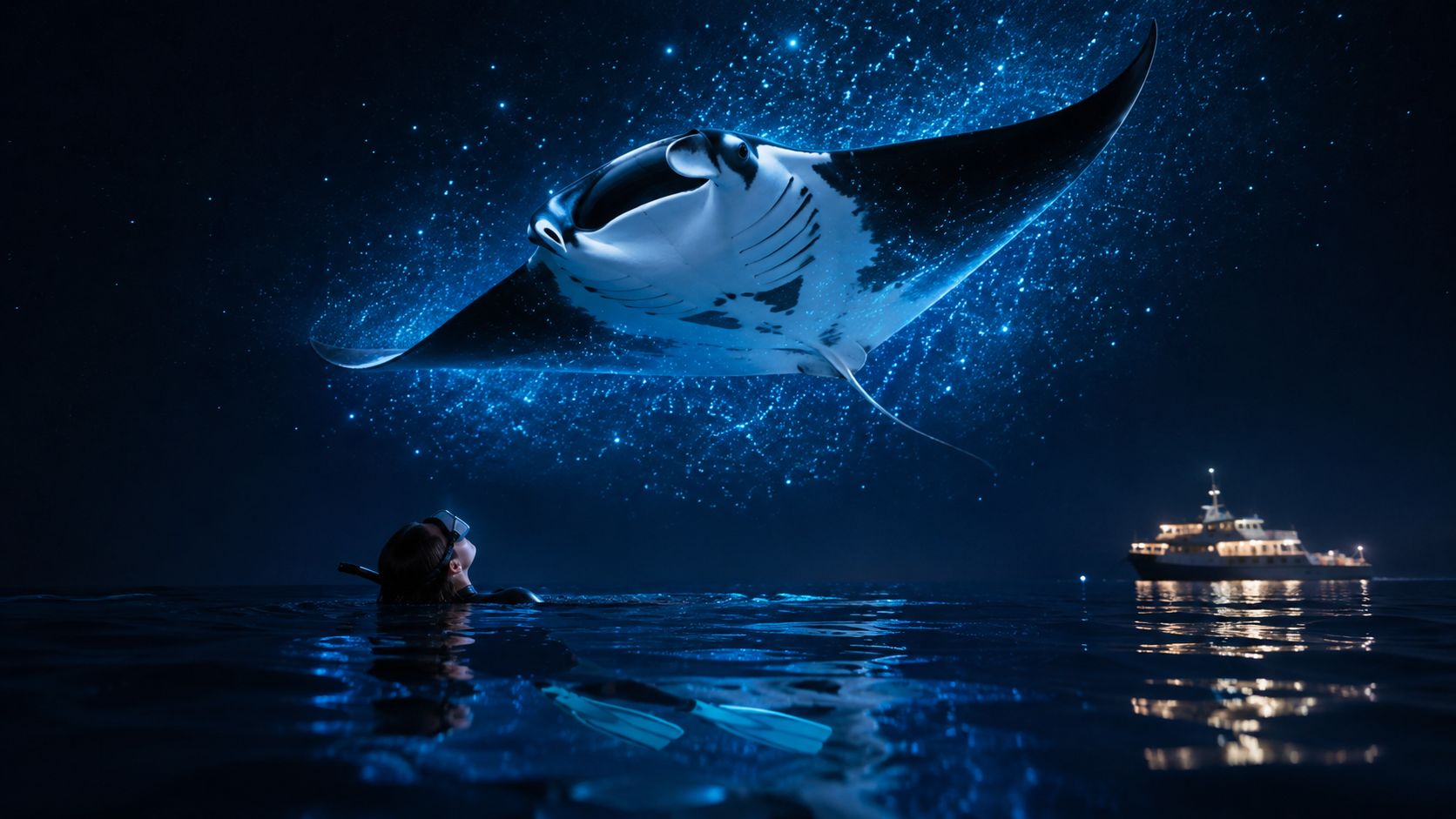
Kona works because the biology lines up after sunset. Demersal zooplankton migrate upward from the seafloor at night, and artificial lights concentrate that prey near the surface. Mantas then filter-feed through the illuminated column. NOAA's status review evidence on reef manta prey and nocturnal feeding identifies prey including euphausiids, copepods, mysids, decapod larvae, and shrimp, and reports a positive relationship between manta abundance and zooplankton abundance.
That mechanism explains almost every rule you'll hear later. A stable light field holds food. Turbulence, boat movement, and swimmers kicking through the column scatter it. When the plankton thins out, rays have less reason to stay and keep rolling in front of you.
The Animal You're Watching
The Kona animals are Mobula alfredi, reef mantas, not the larger oceanic mantas you might picture from open-ocean documentaries. Don't let "smaller" fool you. A reef manta passing a few feet below your chest, or directly over a diver's head, fills your whole field of vision. They have no stinger and they're not interested in you as food. They're interested in the densest patch of plankton they can find.
You're not watching a show. You're parked at a feeding station, and the rays stay only while feeding pays off.
This encounter isn't built on a handful of lucky sightings. Historical records summarized in testimony to the Hawaiʻi State Legislature report 106 individual manta rays identified from 1992 through 2007, about 11,000 snorkelers and divers in 2002 alone, sightings on about 80% of dives at Garden Eel Cove, and an average of 57 unique individuals seen annually during the preceding four years. Those are historical figures, not a current census. They do show a small, repeatedly visited population supporting a substantial audience for decades.
Night Snorkel Versus Scuba Dive
Pick your vertical position first. Price, comfort, photos, and anxiety level all flow from whether you're floating on the surface looking down or settled on the bottom looking up. Neither view is objectively better. They're different experiences of the same feeding behavior, and honest operators will steer nervous guests toward snorkeling and certified divers toward the bottom only if that's what those guests want.
On a night snorkel, you hold a lighted board or float at the surface while lights shine down, and mantas feed in the column below you. They can pass within arm's reach when you stay still. You don't need certification, but you do need basic water comfort, the ability to climb a boat ladder, and the discipline to stay horizontal instead of kicking upright. For a second option in the same surface format, Manta Ray Night Snorkel Hawaii runs a comparable night snorkel worth comparing.
On a manta scuba dive, certified divers settle on or near the sandy, rubble, or boulder bottom, often as part of a two-tank evening, and shine lights upward. You watch silhouette and underside as rays loop overhead, and for this specific encounter Kona is, in my direct view, the best place to dive in Hawaii. For scuba I'd point you to Kona Honu Divers, specifically their two-tank manta dive and snorkel trip, which pairs the manta site with an earlier reef dive on the same evening.
Crowding lands differently in each format. On a busy night, snorkel floats park side by side and you're sharing the light field with strangers' fins. Divers spread across the bottom, but a packed site still means several groups' bubbles and lights feeding the same column. Before you book either format, ask how many guests and how many in-water guides go out per trip. Honest operators answer with numbers. Vague ones answer with adjectives.
Snorkel vs. Scuba for Kona Manta Diving
| Criterion | Night Snorkel | Manta Scuba Dive |
|---|---|---|
| Certification | None, basic swimming comfort needed | Open-water certification required |
| Position | Surface, lights down | Bottom, lights up |
| Effort | Low, mostly still floating | Moderate, gear, descent, buoyancy control |
| Best for | Families, first-timers, non-divers | Certified divers who want the overhead view |
| Photos | Top-down rolls, surface light | Silhouettes and undersides from below |
| Anxiety factor | Darkness and open water at surface | Night diving, depth, and air management |
My rule is simple. If you're not a certified, reasonably current diver, snorkel and don't apologize for it. You'll often be just as close. If you are certified and comfortable at night, the bottom view is unrepeatable. Read the detailed comparison of Kona manta night snorkel versus night dive before you let anyone upsell you into the wrong format.
A Typical Manta Night From Start to Finish
First-timers don't usually fear the mantas. They fear not knowing what happens next. A well-run night removes that uncertainty before you ever touch the water, so here's the sequence you should expect and the sequence you should demand.
Check-In to Mooring
- Check in at the harbor: You'll sign waivers, get fitted for mask, fins, and wetsuit or top, and hear who your in-water guide is. If nobody names a guide, ask.
- Ride to the site: The boat runs to the mooring, about 20 minutes to the most popular sites in the typical flow. Use this time to listen, not to scroll.
- Briefing on the way or at the mooring: A good crew covers entry, positioning, lights, what to do if you're cold or anxious, and exactly how you'll get back to the boat.
That briefing is your first quality test. It should be specific about staying horizontal, keeping fins quiet, and staying out of the feeding column. Vague encouragement without instructions is a warning sign.
In the Water and Back
You enter calmly, move to your assigned position, and settle. Snorkelers hold the float and look down. Divers descend with their guide and settle on the bottom in a loose group. Then you wait for plankton to build in the lights and for rays to find it.
The in-water observation window is typically 30 to 45 minutes. Guests are often surprised by three things. The water feels warmer than they expected at night. The sky away from shore lights is dark. And a ray that's feeding confidently can pass far closer than any aquarium encounter, provided nobody chases it or breaks the light field with thrashing.
Dock test: If the crew can't explain the entry, exit, and regroup plan in plain language before departure, don't assume they'll manage it better in the dark.
You'll exit in an organized order, climb the ladder, and ride back wet. That return leg is when people get cold, which is why the next section matters more than most packing lists admit. A calm return, a head count you hear, and gear collected without chaos tell you a lot about the operation you chose.
Gear, Clothing, and What to Pack
Don't buy a pile of gear for one night. Reputable operators provide the in-water essentials, and your job is comfort before and after. The guests who struggle usually aren't under-equipped underwater. They're cold on the boat, queasy, or fighting loose hair and a leaking mask for forty minutes.
What Operators Should Provide
- Mask and snorkel: Fitted before departure, with a chance to swap sizes
- Fins: Sized to you, not handed out at random
- Wetsuit or neoprene top and rash guard: Important because you're mostly still at the surface after sunset
- Flotation support: For snorkelers who need it, explained before entry
- Lights: The board, float, or dive lights that create the feeding field
What You Should Bring
- Reef-safe sunscreen: Applied well before the trip, not slathered on at the mooring
- Towel and dry change of clothes: The ride home is the cold part
- Motion sickness remedy: Only if you're prone, taken early enough to work
- Hair tie: Long hair in a mask strap will ruin your seal
- Secure strap or lanyard: Especially for glasses on the boat or a prescription mask
- Waterproof phone pouch: For above-water photos, not for chasing underwater shots
Two items improve the night. A thin neoprene top matters during that still surface float, when you're not generating heat by swimming. A secure lanyard for a prescription mask matters because losing your vision aid in the dark ends your night instantly.
Leave valuables you don't need. Leave loose jewelry. If you wear contacts, tell the crew before you get in, and if you're anxious about mask fit, say so at check-in while there's still time to fix it. Quiet suffering helps nobody, least of all you.
How to Choose a Reputable Manta Operator
Pick your operator by how they run an average crowded night, not by the photos on their homepage. Every boat at these sites has one great shot from one great night. What you can't see in that photo is how the crew handles forty snorkelers bumping fins in the dark.
Crowding isn't hypothetical. A survey at Garden Eel Cove on crowding and responsible manta tourism reported 82% of respondents felt crowded by snorkelers, 78% by boats, and 69% by scuba divers. A Hawaiʻi County assessment adds scale. The county boating and safety assessment for Kona manta viewing identified at least 42 commercial operators as of August 2015 and recorded 21 vessels and 301 people at a site in one observation, while noting no regulations at that time restricted live-boat, diving, or swimming locations or governed nighttime visibility of surface snorkelers. On a night like that, procedure is the safety system. Nothing else is.
The Checklist I Would Use
Ask these seven questions before you hand over a card number. Vague answers are answers.
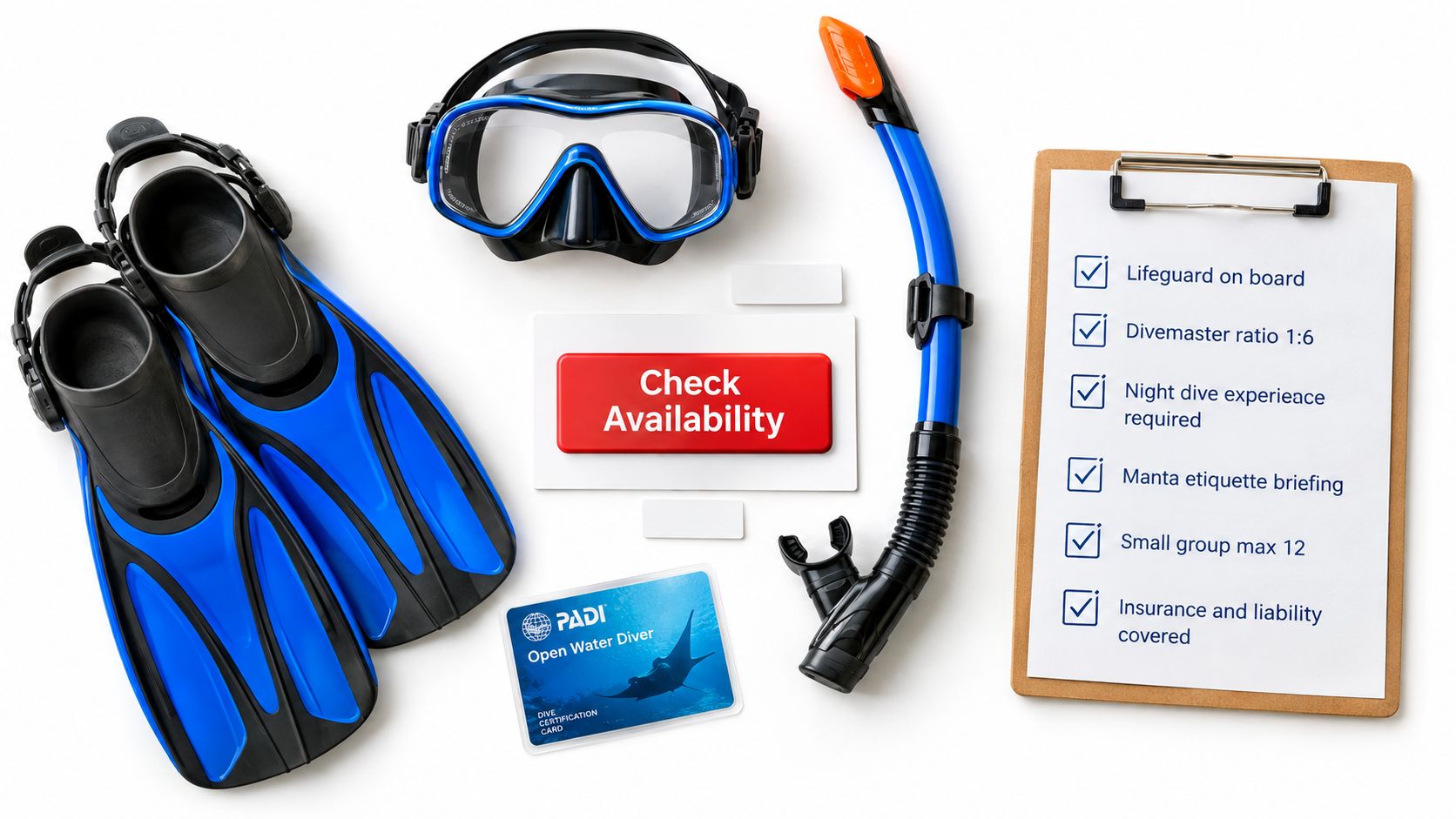
- Certified in-water guides: Lifeguard or divemaster credentials, named on the site or confirmed by phone. Check the credentials to verify before booking a Kona manta night snorkel and compare what you hear.
- Small groups: Ask for the maximum number of snorkelers per guide and per float, not just boat capacity. Smaller is calmer, and calmer holds plankton.
- Published safety procedure: Briefing content, entry and exit order, boat lights, and how surface snorkelers stay visible at night.
- Transparent low-sighting policy: Rescheduling or refund terms in writing before you pay, not improvised on the dock.
- Marked, well-lit boat: Visible night lighting and a crew member tracking head counts out loud.
- Conservation in the briefing: No touching, no chasing, no free-diving into the column, explained as rules, not slogans.
- Clear photo policy: Where cameras can go, and a crew willing to tell guests to lower a rig that's blocking a ray's path.
Now apply it. Kona Snorkel Trips, for example, runs a manta ray night snorkel with lifeguard-certified guides and small-group positioning around illuminated boards. For certified divers, Kona Honu Divers is the scuba counterpart to evaluate. Don't take either claim on faith. Run both through the same seven questions and keep the answers that are specific.
If an operator can't tell you group size, guide ratio, and the no-manta policy in one phone call, cross them off. Good operators answer those questions every day.
Sighting Odds, Seasons, and When to Book
Nobody can guarantee you a manta ray. Any operator who does is selling, not informing. Kona offers year-round opportunity, not a nightly performance, and understanding that distinction will save you from both disappointment and bad booking decisions.
Why Some Nights Are Sparse
The best evidence points to food, not the calendar. The 2025 University of Hawaiʻi study record on Kona manta aggregations analyzed more than 23,000 sightings of 167 individually identified reef manta rays from 2010 through 2022 at Garden Eel Cove and Keauhou and found aggregation size varied with zooplankton density. It also found aggregations remained stable despite increased tourism. A low-sighting night usually means prey was dispersed or conditions shifted, not that the population vanished that week.
Site choice matters too. Long-term monitoring of Garden Eel Cove and Keauhou aggregation dynamics covering the same 2010 to 2022 dataset of more than 23,000 sightings and 167 rays at sites about 20 km apart found Garden Eel Cove supported larger, more variable groups, while Keauhou produced smaller aggregations with females representing 91% of sightings. Treating the two sites as identical is a mistake operators and guests both make.
Weather, swell, and recent rainfall can shift results within the same week by moving prey and making surface positioning harder. Calmer summer conditions often help comfort and stability, and winter can occasionally add humpback whales as a separate highlight, but don't book by month alone. Use the guide to the best time of year for a manta ray night snorkel in Kona as planning context, then prioritize flexibility.
Booking Window and Policy
Book early in your stay, first, so a sparse night leaves room to reschedule. In peak travel months, reserve 2 to 4 weeks ahead, and earlier for groups. Then read the low-sighting policy. Does it offer a free rebook, a discount, or nothing? Does "no sighting" mean zero rays, or does a single distant pass count? Get that in writing.
My booking rule: Schedule the manta night as early as your itinerary allows. Flexibility is worth more than any seasonal prediction anyone gives you.
Safety, Etiquette, and Conservation in the Water
The rules aren't there to scold you. They protect a feeding animal's space, keep you out of a ray's path, and keep the plankton concentrated so the encounter continues. Break them and you don't just risk a correction from your guide. You can end the feeding behavior everyone came to see.
The core arrangement separates people by depth. The Hawaiʻi wildlife viewing standard for manta interactions specifies snorkelers remain calmly at the surface while divers stay on or near the sandy, rubble, or boulder bottom, leaving the open water column for mantas to maneuver and feed. It also specifies divers shine lights upward and snorkelers shine lights downward.
Rules That Actually Matter
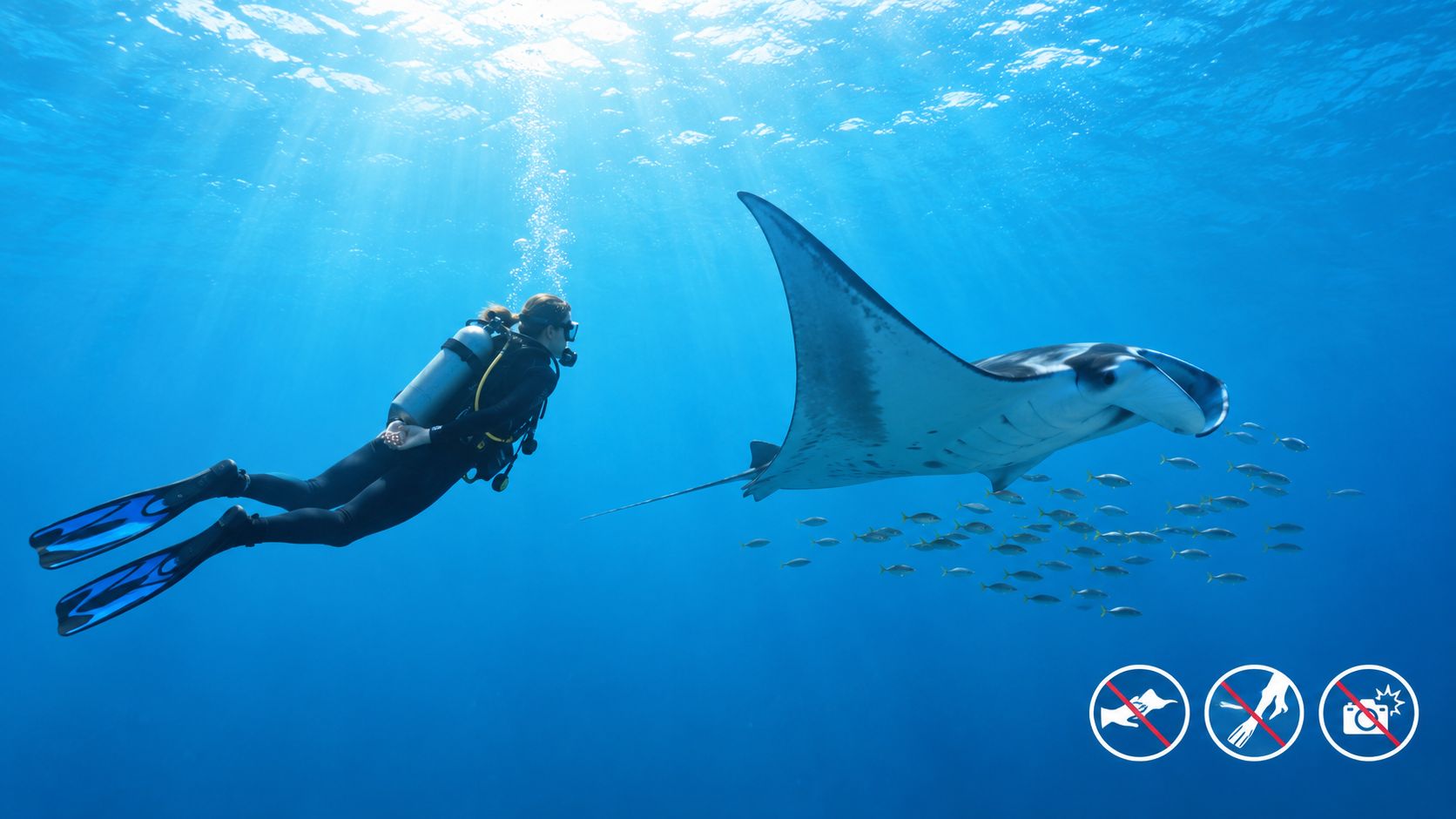
- Never touch, chase, or ride a manta: Touching can damage the protective mucus coating, and chasing pushes a feeding animal out of the light.
- Keep fins horizontal and quiet: Vertical kicking splashes, creates turbulence, and disperses plankton.
- Stay out of the feeding column: Snorkelers don't free-dive down, and divers don't rise into a ray's looping path.
- Stay in the lit, assigned zone: Your guide can see you there, boats can account for you, and rays get predictable space.
- Follow your guide immediately: If you're told to move, hold, or exit, do it first and ask why on the boat.
For the full guest-facing version, read the manta ray snorkeling rules that protect wildlife and guests before your trip. None of this requires athletic skill. It requires stillness, which is harder for excited people than they expect.
Ecologically, discipline matters because this is a small, repeatedly visited population. Community photo-identification research on Kona's famous individual mantas summarizing the 2025 University of Hawaiʻi work reports more than 23,000 sightings of 167 rays over 13 years, larger aggregations at Garden Eel Cove, strong female site fidelity at Keauhou, and an overall sex ratio of approximately 1 to 1. Stable aggregations under existing activity levels are encouraging. They're not permission for careless growth, and your behavior on one night is part of that pressure.
Booking Tips and Final Takeaways
Make three decisions in order. First, format. Snorkel unless you're a certified diver who specifically wants the bottom view. Second, operator. Apply the checklist on guides, group size, boat procedure, and written low-sighting policy. Third, timing. Book early in your stay and, in peak months, 2 to 4 weeks ahead.
Before you pay, ask four questions by phone if the website doesn't answer them clearly.
- Group size and guide ratio: How many guests per in-water guide on your actual date?
- Low-sighting policy: What happens, in writing, if no mantas appear?
- Departure point: Does the trip leave from Honokohau, Keauhou, or another launch, and how long is the ride?
- Comfort support: What happens if a guest can't swim comfortably or gets anxious in the dark?
Don't accept cheerful vagueness. You're buying a managed night on open water with wild animals, not a ticket to a show. The operator who answers plainly, including the uncomfortable parts about crowding and sparse nights, is the operator I'd trust with my own family. Choose that standard, follow the in-water rules, and give the rays the stillness they need to feed in front of you.
Book your manta night with Kona Snorkel Trips for a small-group night snorkel led by lifeguard-certified guides around illuminated boards at Kona's established manta feeding sites. Pick your date early in your stay, review the low-sighting and rescheduling terms before you reserve, and come ready to float still while reef mantas feed below you.