
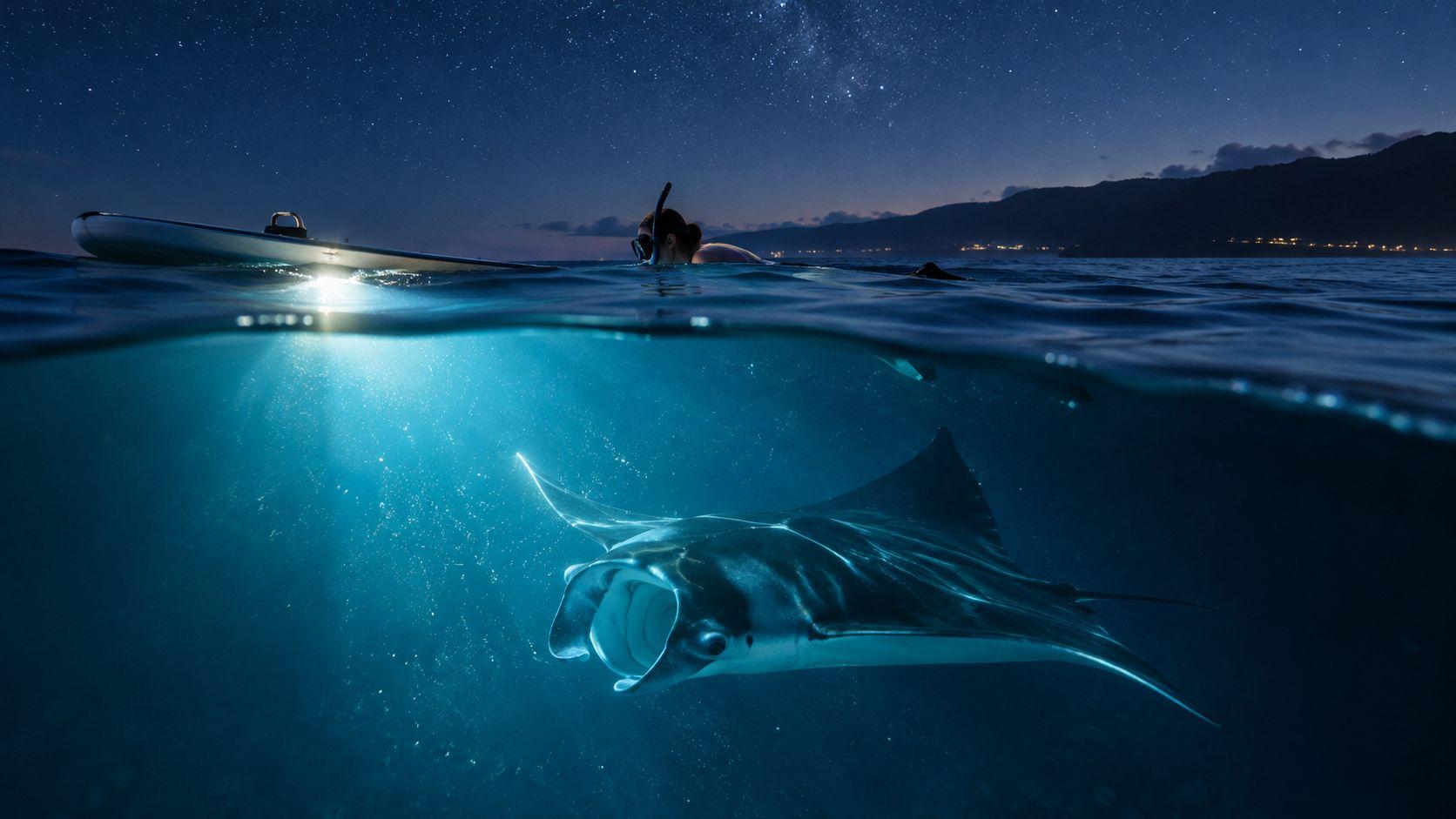
83% of surveyed guests in one Kona crowding study said they felt crowded by snorkelers, and 78% reported crowding concerns overall. A well-run trip still feels calm, though, because the boat lights, the briefing, and the in-water board are set up to let manta rays rise through illuminated plankton instead of having people chase them.
The first time you step onto the dock for a Big Island manta ray night snorkel, the evening feels organized, not chaotic. Crew members fit masks, wetsuits, and float belts, the captain runs through safety points, and then the boat eases out into dark water while everybody waits for the glow of the viewing board to come alive. If you're nervous now, that's normal. Most first-timers aren't worried about the manta rays themselves, they're worried about not knowing what the night is supposed to feel like.
A Night on the Water From Check-In to First Sighting
Guests usually meet the crew at the harbor, where names get checked off, gear is handed out, and the tone of the trip settles fast. Wetsuits go on first, then masks are adjusted, then the captain gives a clear briefing on how to enter the water, how to hold position, and how to stay out of the manta's path. That briefing matters because the encounter works best when people stay still and let the animals control the distance.
The boat ride sets the mood
Once the boat leaves the dock, the ride is short enough that most guests spend it listening more than talking. You hear the hum of the engine, maybe a generator, and you can see the crew preparing the light board and the lines that hold everyone together once they're in the water. The first thing that surprises many guests is how calm the board looks when it's floating alone in the dark.
Practical rule: if the briefing feels thorough, that's a good sign. A guide who spends time on body position, hand placement, and exit signals is helping both your safety and the rays' feeding behavior.
What first sighting actually looks like
The transition from boat to board is usually the moment people start to relax. You slide into the water, settle onto the float, and keep your face in the glow of the lights while the dark water beyond stays opaque. Then a shadow appears below the board, and the silhouette sharpens into a manta as it rises through the plankton-rich beam.
Here's the usual rhythm on a good night.
| Stage | Approx. Time | What Happens |
|---|---|---|
| Check-in | Before departure | Gear fitting, waivers, quick introductions |
| Safety briefing | Before boarding or after departure | Entry method, hand placement, signals, behavior rules |
| Boat ride | Short transit | Crew prepares the light board and viewing setup |
| Water entry | At the site | Guests settle onto the float and get positioned |
| First pass | Variable | A manta may appear below the lights and begin feeding |
The first pass often happens without drama. No splashy approach, no chase, no sudden contact. Just a wide, dark shape gliding under the board and then looping back through the lit water.
How the Lights Bring the Mantas to You
The encounter makes sense once you picture the light board as a bright patch in an otherwise dark sea. Plankton gathers in that lit water, and the manta rays follow the food. That is the basic reason the setup works, and it is also why the quality of the lighting and the spacing of the swimmers matter so much.
Step by step, the feeding loop makes sense
The board sends light into the water, plankton drifts into that illuminated zone, and the mantas move in to filter-feed. They open their mouths and use their cephalic fins to guide plankton-rich water toward their gill plates, which is why their movement looks so smooth and deliberate. The rays are feeding in a narrow column that the light helps create.
Stillness matters here. If guests chase the rays, splash, or crowd the center of the board, the feeding rhythm breaks up. When people hold position and keep their bodies quiet, the mantas can keep circling through the same beam.
A clear explanation of the setup is helpful before you get in the water, and this guide to why lights attract manta rays during night snorkeling walks through the process in plain language.
Why they look like they're flying
Mantas do not move like fish, and they do not move like dolphins either. Their broad bodies, winglike fins, and cephalic fins give them that hovering look, almost like they are gliding through air instead of water. When one turns under the board, the motion can look like a somersault, but it is really a feeding pass through a tight stream of plankton.
If you are comparing operators, Manta Ray Night Snorkel Hawaii runs small-group trips with illuminated float boards, and that setup detail matters more than the brand name. What matters just as much as whether rays appear is whether the setup lets you observe their feeding pattern without crowding the animals.
Manta Heaven and Manta Village Compared
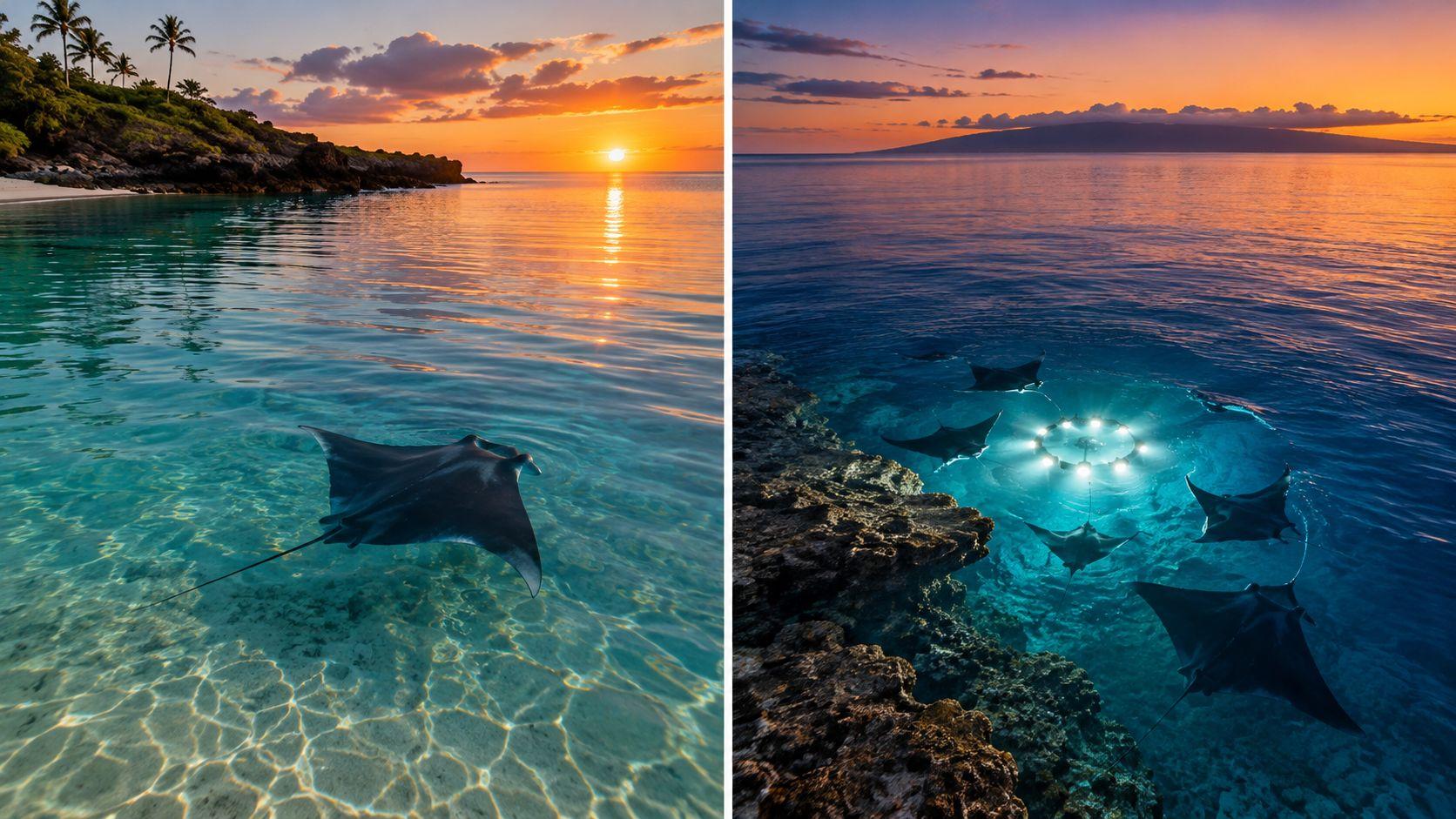
Kona has two principal night-viewing sites, and they're different enough that the choice matters. Garden Eel Cove, often called Manta Heaven, sits north of Kona Airport and has been associated with larger nightly aggregations in long-term records. Keauhou Bay, known as Manta Village, sits south of Kailua-Kona and has its own pattern of repeat use, especially among female mantas.
What the two sites feel like
Garden Eel Cove usually draws operators who want access to a location known for strong nightly activity and big viewing windows. Keauhou is closer to town for many departures and has a longer history in Kona's manta story. Both sites can produce excellent encounters, but the operator usually chooses based on ocean conditions, site load, and what's safest that night.
What matters most: a “better” site on paper doesn't beat a well-run boat with a good briefing, a stable board, and careful in-water positioning.
| Feature | Garden Eel Cove (Manta Heaven) | Keauhou (Manta Village) |
|---|---|---|
| Location | North of Kona Airport | South of Kailua-Kona |
| General reputation | Often associated with larger nightly aggregations | Strong site fidelity and long local history |
| Trip feel | Can feel a little more spacious offshore | Often feels more tied to town-based departures |
| Best fit | Visitors who want a high-energy viewing window | Guests who value historical character and predictable access |
How operators decide
The best operators don't force a site choice just to keep a schedule. They read the ocean, look at conditions, and choose the place that gives guests the cleanest, safest view. That's the right decision, because the goal isn't to "go where mantas are," it's to put people in a position where they can watch without interfering.
A long photo-identification record from Kona's two main sites also shows that these aren't random fly-bys. The encounters involve a repeatedly documented local population, which is why the same places can support night snorkeling year after year.
Gear Checklist and Safety Basics
Most of what makes the trip comfortable is simple. The operator supplies the core gear, and you bring the small items that keep you warm, steady, and relaxed. Night water feels colder than a daytime snorkel, so the right gear matters even if you're a strong swimmer.
What the crew usually provides
You can expect the tour to supply the snorkel, mask, wetsuit, floatation board, handles, and the light system that creates the plankton glow. The crew also helps with fit, which is important because a loose mask or awkward wetsuit can distract you right when you should be settling in. A flotation aid isn't just for beginners either, it keeps you positioned flat and calm at the surface.
What you should bring
- Reef-safe sunscreen: Use it before departure so you're not applying lotion on the boat.
- Towel: You'll want it for the ride back.
- Warm layer: A dry shirt or light jacket feels good after the swim.
- Motion-sickness remedy: Bring it if boat rides make you uneasy.
- Waterproof phone case: Helpful if you want to keep your phone safe on deck.
A few things are better left ashore. Heavy jewelry can snag, cotton under a wetsuit gets uncomfortable fast, and too many loose items just make the night more complicated.
Simple safety habits that help a lot
Stay with the board, keep your hands clear, and pay attention to guide signals. At night, surface visibility drops fast, so buddy positioning matters more than it does on a bright reef. If you're unsure where to look, follow the light and hold your place.
The state's permitting framework covers commercial operations, but it doesn't create activity-specific limits at the main Kona sites. That's one reason guide behavior and guest behavior matter so much, the practical protection comes from how the trip is run in the water.
Why Mantas Are Usually Present but Never Guaranteed
A manta snorkel can feel almost certain from the booking page, then different once you are floating on the water. The more accurate way to read it is simple, the trip is set up for a high chance of rays, while the exact encounter still depends on the night.
What changes from night to night
Plankton density, currents, and other environmental conditions shape how many mantas show up and how they move through the light. On a strong night, rays may make repeated passes and keep the group busy. On a quieter night, you may see fewer animals and still have a clear, calm session if the crew keeps the board steady and the group relaxed.
A thin wildlife night does not automatically mean the operator did a poor job. A well-run trip can still be excellent even when conditions are sparse. The opposite is true as well. A large number of mantas does not make up for a crowded setup or a sloppy briefing.
Why long-term patterns still leave room for surprise
A 2025 University of Hawaiʻi research project, described in this Big Island manta ray night snorkel success rate explained article, tracked more than 23,000 sightings of 167 individual mantas from 2010 to 2022 and found that aggregation size varies with zooplankton density. The same work found that Garden Eel Cove generally supported larger aggregations than Keauhou, while Keauhou showed strong female site fidelity and may serve ecological functions beyond feeding. Those patterns help explain why one evening can feel packed with activity and another can seem quiet at the same site.
The study also pointed to stable aggregations despite increased tourism, but short-term behavioral shifts still matter, including altered movement or interrupted feeding. That is why a responsible operator reads the conditions in front of them and sets the trip up for the wildlife that is there.
When you compare operators, use that success-rate lens, then ask how they handle low-visibility nights, lighter manta counts, and guest spacing in the water.
Conservation Rules That Protect a Small Resident Population
Hawaiian reef mantas are not one interchangeable ocean population. NOAA-supported genomic work shows that Hawaiʻi Island and Maui Nui manta rays are genetically distinct and relatively isolated, so what happens at Kona's feeding sites affects a relatively small resident group. That is why every boat repeats the same rules.
The rules are simple for a reason
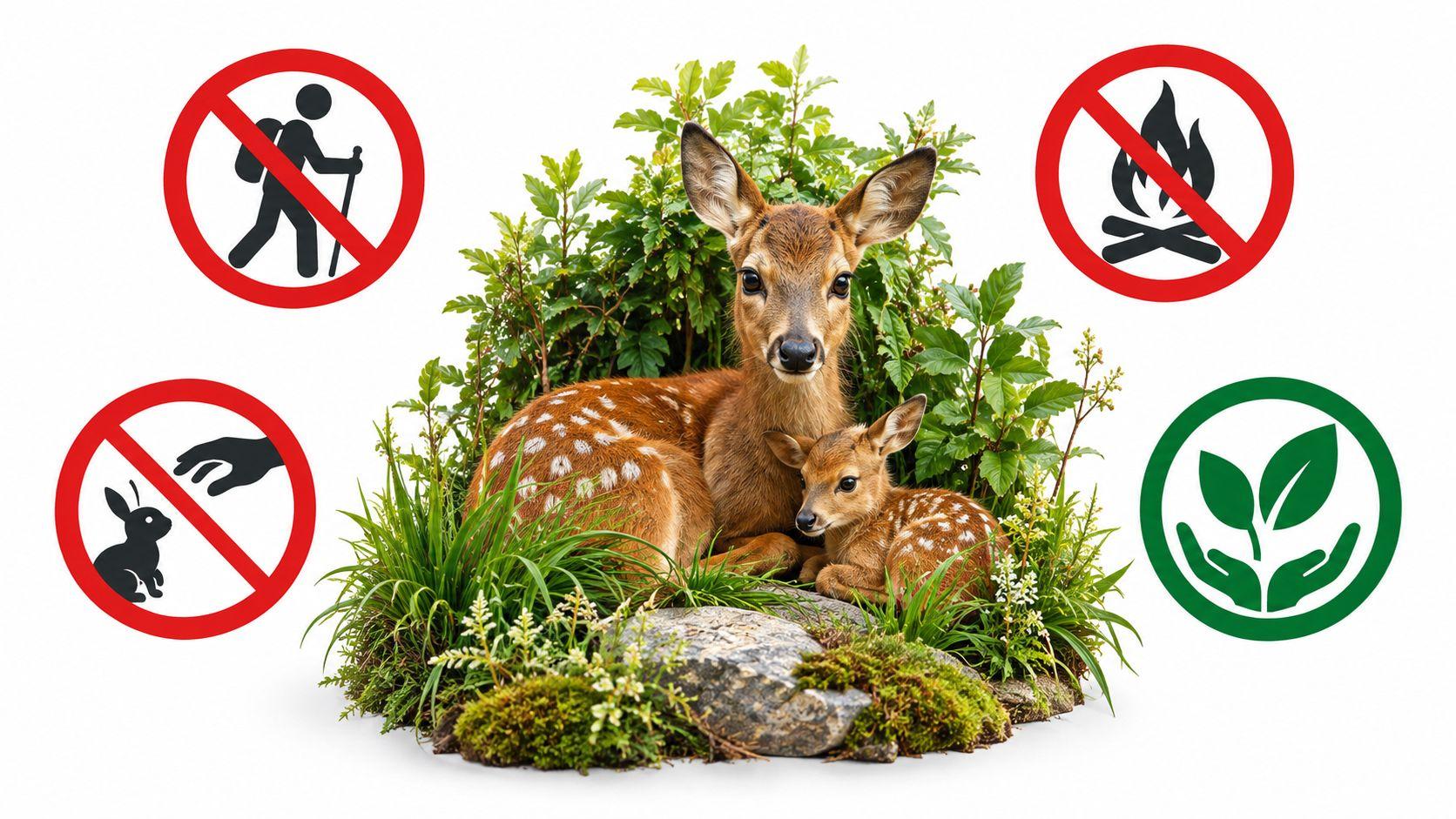
Don't touch the manta. Don't chase it. Don't block its path. Keep your hands and fins clear of the feeding corridor, and stay in the position the crew gives you. The point is to let the animals decide how close they come, rather than making them work around you.
NOAA specifically advises people never to entice manta rays to approach, because disturbance can interrupt feeding, breeding, resting, or social behavior. That is why the briefing sounds repetitive. Repetition keeps people from making the same mistakes when the excitement starts.
For the full list of in-water rules, see this guide to manta ray snorkeling rules that protect wildlife and guests.
What responsible in-water behavior looks like
A good guest is quiet, stable, and easy to predict. You hold position, look down, and let the ray move through the light. If you need to adjust, do it slowly and with the guide's direction.
Here's the compact version:
- Stay still: Stable bodies make the feeding lane easier to use.
- Keep hands close: No reaching, no grabbing, no “just one touch.”
- Follow the guide: The crew knows the current, the board, and the right spacing.
- Watch the path: Give the manta a clean line through the lights.
The conservation logic is practical. These habits reduce stress on a resident population that returns to the same sites, and they help keep the encounter workable for both wildlife and guests.
What to Ask Before You Book
The right operator sounds organized before you ever leave the dock. If you ask a few direct questions, you'll learn a lot fast, especially if you're comparing a small-group trip with a busier charter. The answers should tell you how the boat handles density, safety, and no-manta nights.
Questions that separate a good fit from a crowded one
Ask about group size first. Smaller groups usually mean cleaner briefing time, less jostling at the board, and easier entry and exit.
Ask how the operator handles boat count at the site. If they can explain how they avoid stacking too many people on top of one viewing area, that's a strong sign they take the encounter seriously.
Ask about the briefing. You want a crew that explains where to place your hands, how the float works, and what to do if you feel anxious, not a rushed lecture before the lines come off the dock.
Ask about cancellation and no-manta policies. A clear policy shows the operator understands that wildlife viewing is probabilistic, not guaranteed.
Ask whether they run both snorkel and dive trips at the same site. That can tell you how experienced they are with the local conditions and whether they understand how different guests need different setups.
What the answers should sound like
A thoughtful operator talks plainly about comfort, safety, and expectations. They don't promise a certain number of rays, and they don't dodge questions about gear quality. If they mention guide-to-guest ratios, photography help, or how they handle weak conditions, that's even better.
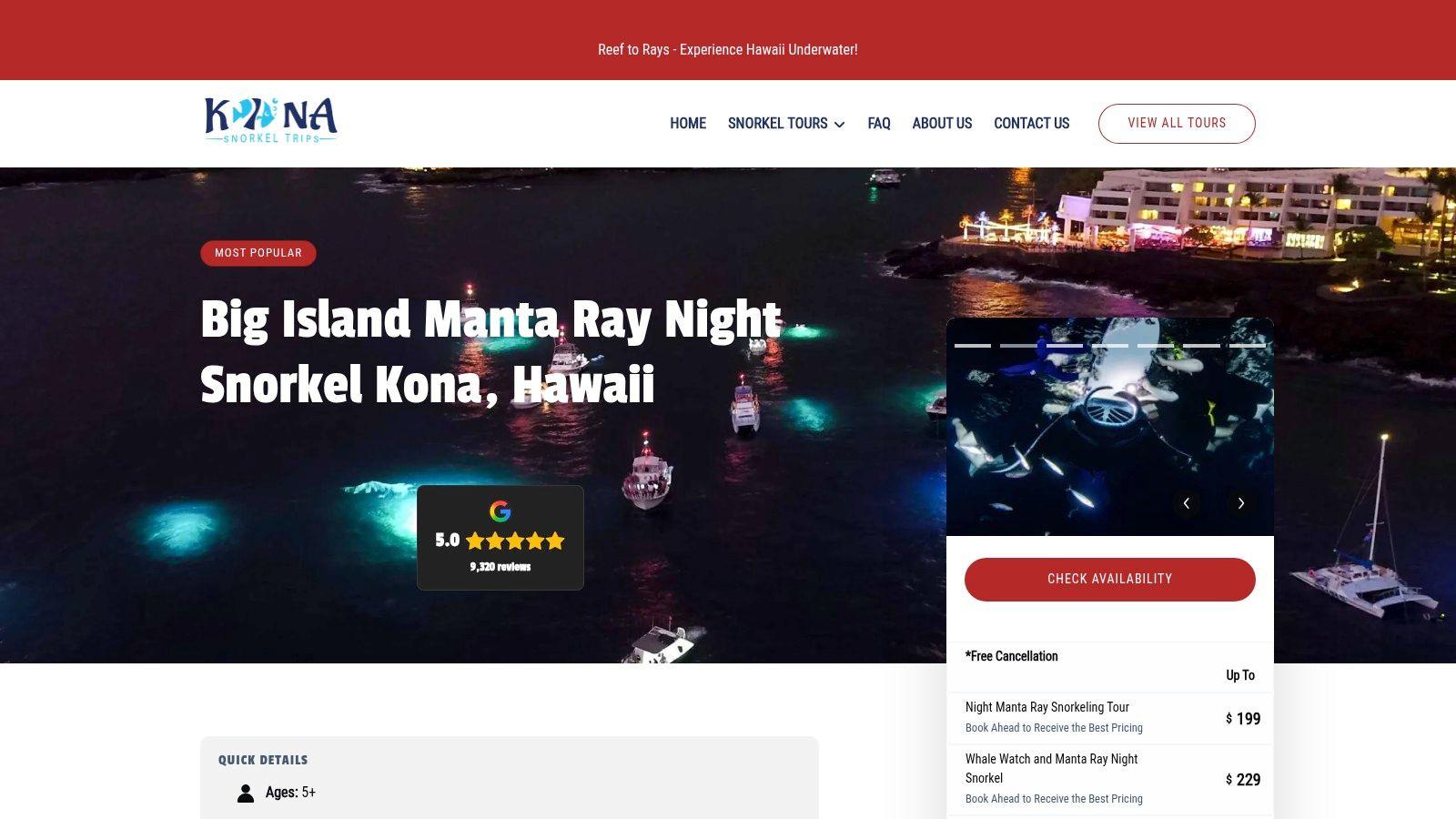
A practical place to compare that setup is the Kona Snorkel Trips manta ray snorkel page, and this article on credentials to check before you book helps you hear the difference between marketing and real operations. If you're looking at a trip that offers clear briefing, solid gear, and a low-pressure boarding process, you're probably asking the right questions already.
Common Questions First-Time Guests Ask
Age limits usually depend on the operator and the child's comfort in open water at night, so it's worth asking directly before you book. If someone is a nervous swimmer, the better question isn't age, it's whether they can stay calm on a float and follow the guide's instructions.
Seasickness is easier to manage than people think. If you're prone to it, take a remedy early, eat lightly, and choose a spot on the boat where you can see the horizon before departure. The ride is short, but the dark can make mild motion sensitivity feel stronger than it does in daylight.
You can often bring your own GoPro, but it should never change your body position or distract you from the manta. If you'd rather keep your hands free, ask whether the crew offers photo help or onboard photography support, then decide if that matters more than filming on your own.
The difference between a manta snorkel and a manta dive is simple. Snorkelers stay at the surface on the light board, while divers observe from below with scuba gear. Snorkeling is usually the easier choice for families and first-timers, while diving gives certified divers a different angle on the same feeding behavior.
If you want a calm, well-briefed Big Island manta ray night snorkel with a crew that understands how to balance visibility and low-impact viewing, Kona Snorkel Trips runs that kind of trip on the Kona Coast. Book early, ask the right questions, and choose a night that leaves room for both the wildlife and your schedule. Visit Kona Snorkel Trips to see available dates and plan your manta night with confidence.
Keep reading
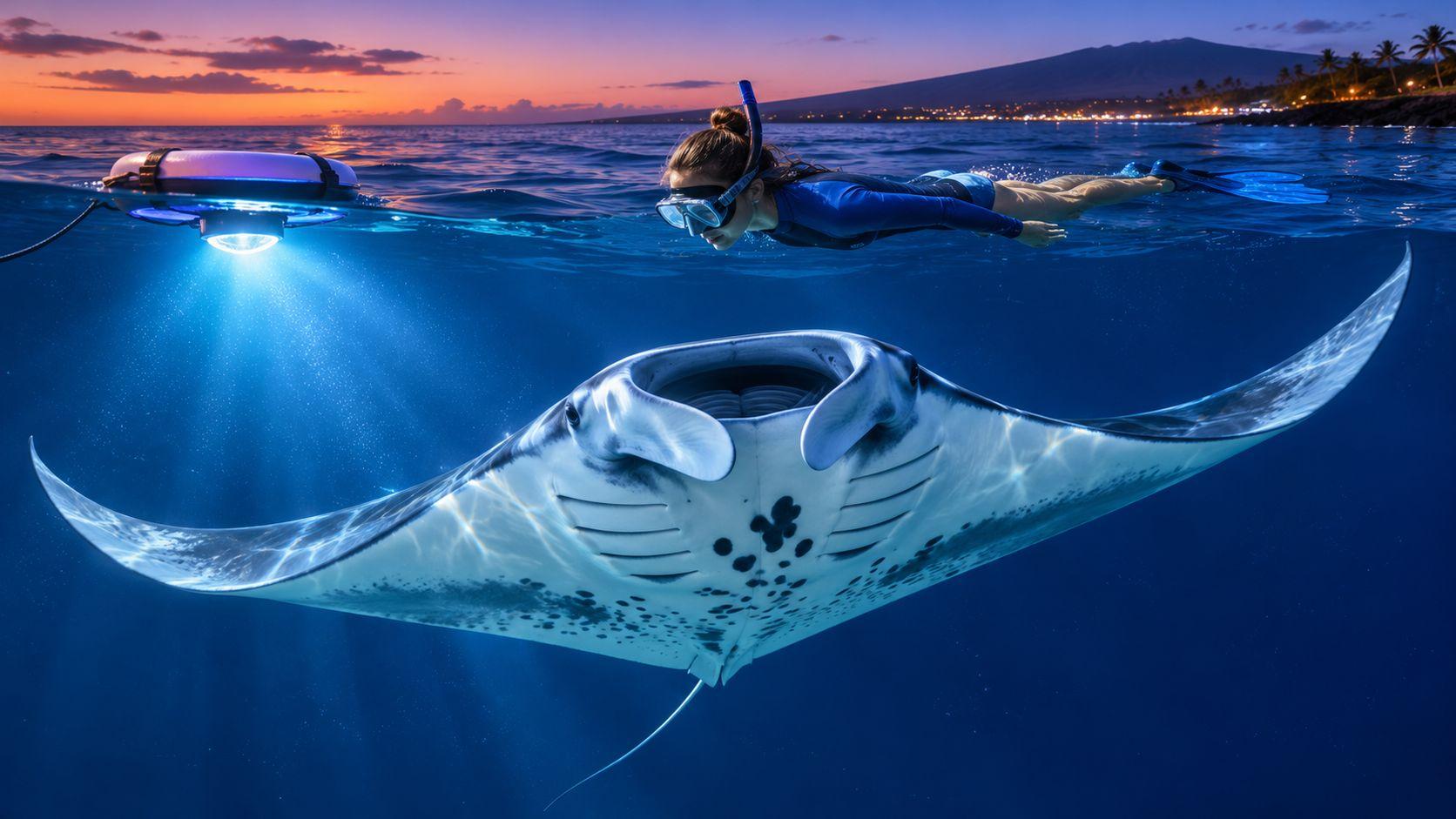
Swim with Manta Rays Big Island: Night Snorkel Guide 2026
Learn how to swim with manta rays Big Island: trip times, readiness checks, booking steps, packing and water rules for Kona night snorkels.
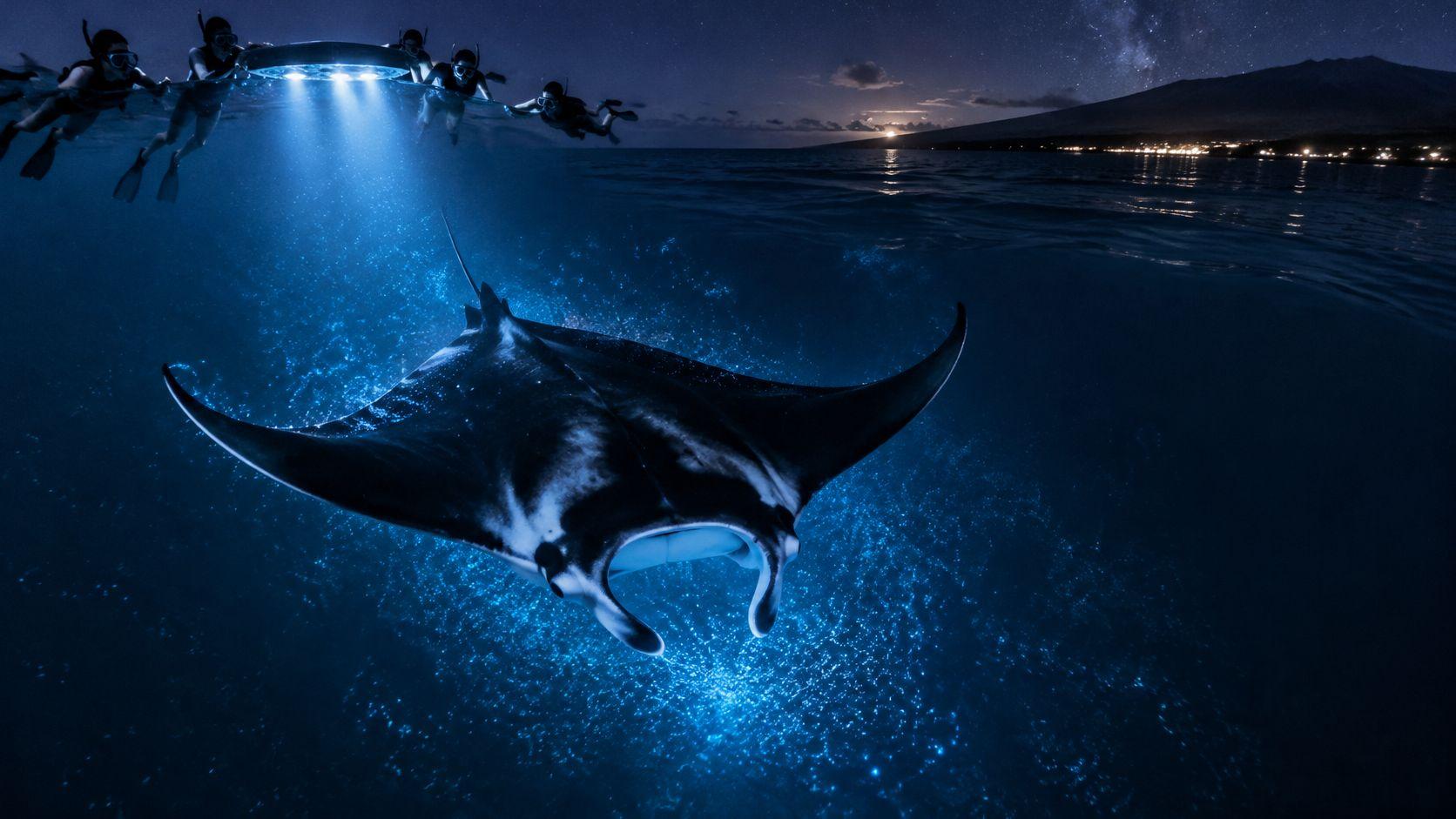
Manta Ray Hawaii Big Island: Night Snorkel and Dive Guide
Manta Ray Hawaii Big Island guide: where and when to go, night snorkel vs night dive, safety rules and booking tips for Kona's manta rays.
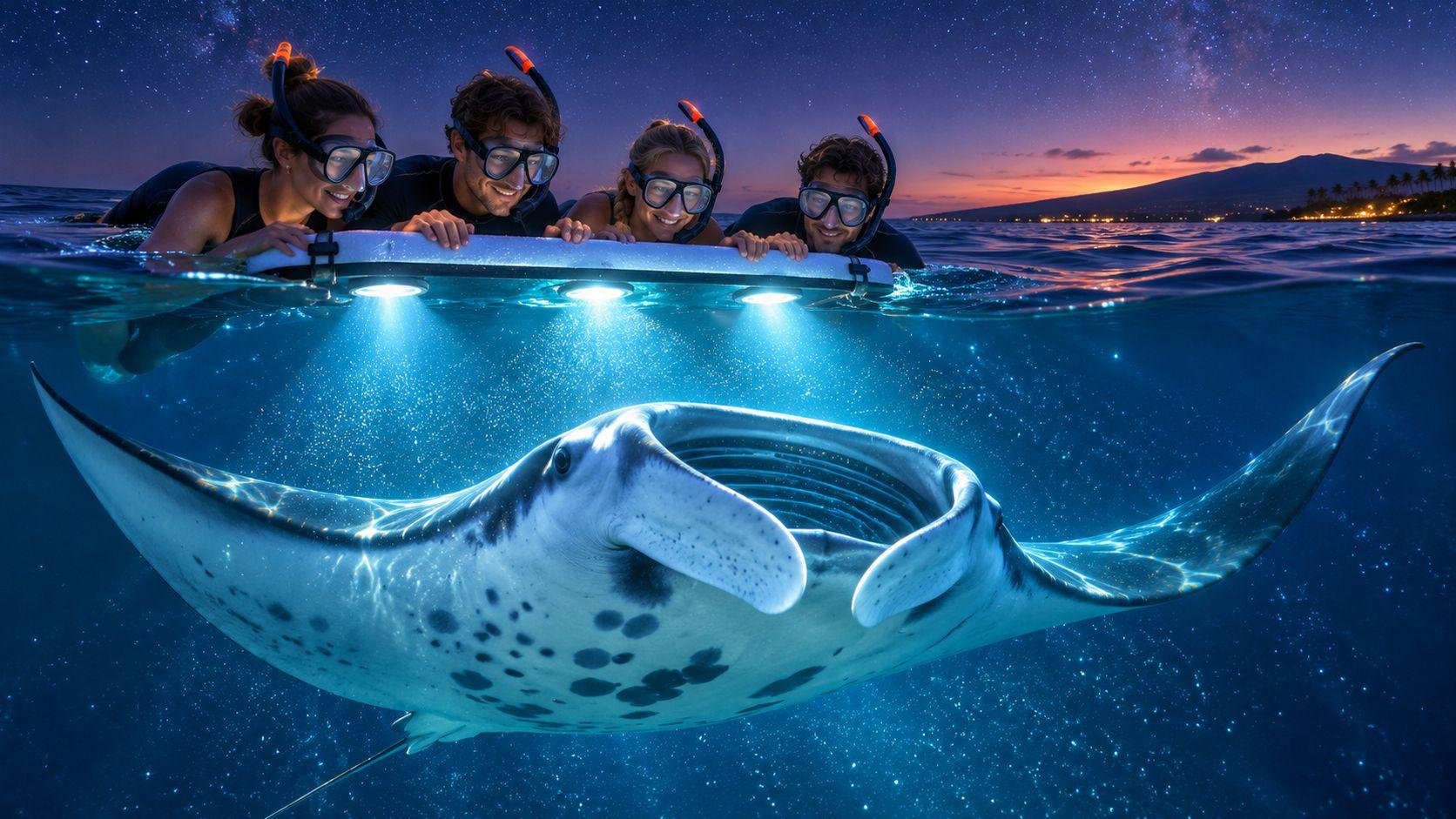
Kona Manta Ray Night Dive: What to Expect and How to Book
Plan your Kona Manta Ray Night Dive: timing, safety rules, what to pack, conservation tips and how to book a trusted night manta tour.