
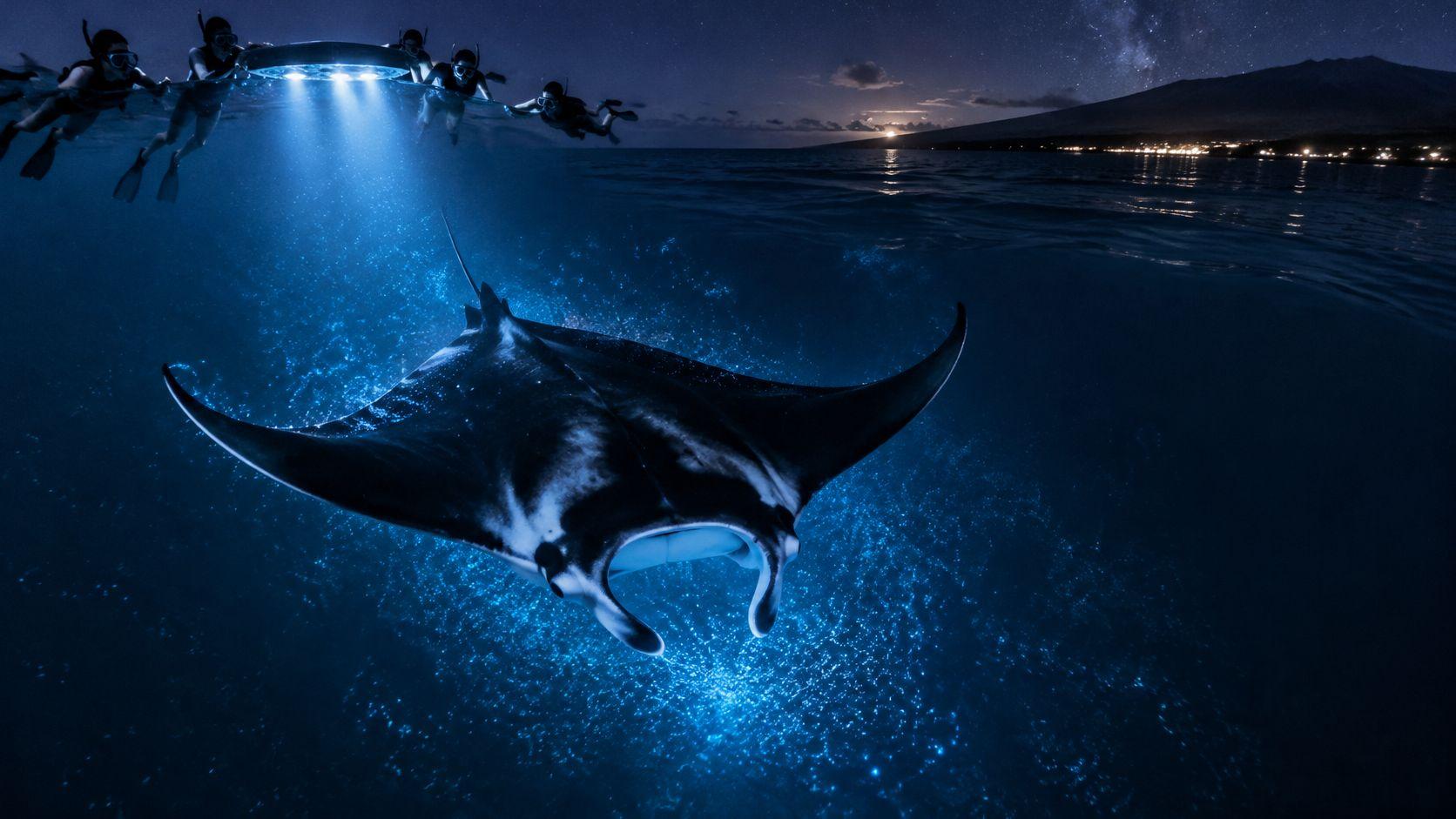
You've got two nights left on the Big Island, a rental car with sand in the footwells, and one tab open on your phone asking whether the manta ray night snorkel is worth the money. Maybe you've already driven past Keauhou Bay at dusk and watched the boats head out. Maybe one person at the farmers market told you it was the best hour of their whole trip, and someone else said it was a float in the dark with forty strangers and a lot of kicking.
Both of those people are describing the same tour on different nights. The manta ray Hawaii Big Island encounter is one of the most biologically reliable wildlife experiences in the state, and it is never guaranteed. Those two facts sit together, and understanding why is the difference between a trip you plan well and one you spend resenting.
This guide covers why the Kona aggregation exists, where and when it shows up, how the night snorkel differs from the night dive, and which rules on the water keep the animals coming back to the same bays. It's the honest version, including what happens on the nights when the light burns and nothing arrives.
Why Kona Is the Place to See Manta Rays
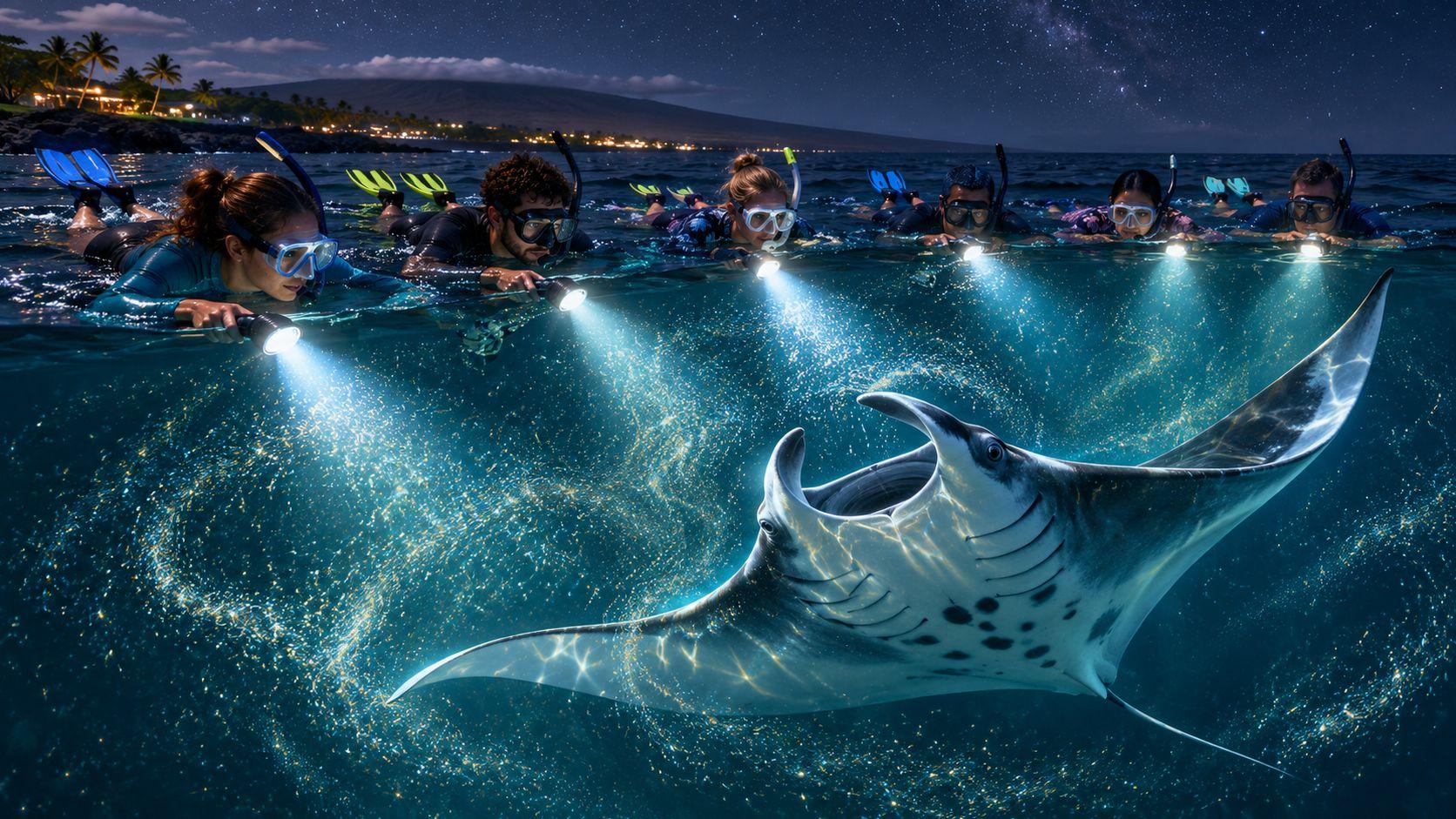
You're floating face down in black water, both hands on a rail of an illuminated board, and the light is doing all the work. Plankton gathers in the glow, and a shape the size of a dining table slides in from the dark, banks, and comes straight at you before peeling away a few feet out. Nobody says anything. Nobody can.
What you're actually looking at
The animals under the lights are reef manta rays (Mobula alfredi), fish built on cartilage rather than bone, which puts them in the same broad family as sharks and rays. They carry no stinger and no barb, and they don't hunt people. They're filter feeders that strain planktonic crustaceans and small schooling fish out of the water, which is the entire reason a light in the ocean works as an attraction.
Size is where visitors get confused. The Hawaii Department of Land and Natural Resources reports that oceanic manta rays in Hawaii can reach a wingspan of 22 feet or more (Hawaii DLNR). The reef mantas you meet on a Kona night run smaller, though a mature female still dwarfs a snorkeler floating above her.
Those reviews come from guests who booked with Kona Snorkel Trips, Hawaii's top rated and most reviewed snorkel company. Read a few and you'll notice the same theme repeating: the crew, not just the animals.
A small population with a long memory
Here's the part that changes how you behave in the water. Long-term photo-identification surveys along the Kona Coast logged 3,208 surveys between 1992 and 2007 and identified 106 individual reef manta rays, with the number of unique animals documented in any single year ranging from 1 to 65 (Hawaii legislative testimony on manta protection). Researchers characterized the population as likely numbering fewer than 200 animals.
The re-sighting numbers are the striking part. Individual rays were recorded anywhere from 1 to 724 times during that study window. These aren't migrants drifting past Kona on a circuit. They live there, they return to the same bays, and they meet boats and swimmers over and over.
What that means on the water: a Kona manta night is a rare wildlife encounter with a small, local cast of characters, not an unlimited supply of animals. Your behavior matters as much as the lights.
Where and When to See Manta Rays on the Big Island
The Kona Coast isn't one manta site with a queue outside it. The research record names several areas, and each one plays a different role in the animals' lives.
| Viewing area | What the research documents |
|---|---|
| Keauhou | Principal nighttime gathering site in the 1992-2007 surveys; high site fidelity |
| Hōnaunau area | Nighttime gathering site in the 1992-2007 surveys |
| Ho'ona Bay | Named in the NOAA status review for high site fidelity |
| Mahaiula Bay | Nocturnal foraging documented in the NOAA status review |
The Keauhou and Hōnaunau-area sites anchor the historical survey record. The NOAA Endangered Species Act status review adds the detail that matters for planning: it identifies high site fidelity around Keauhou and Ho'ona Bay, along-coast movements, and nocturnal foraging in Mahaiula Bay. It also describes Hawaiian reef mantas as primarily nocturnal feeders, because zooplankton rise toward the surface after dark and become accessible.
Why a site can be excellent one night and quiet the next
Rays move along the coast rather than holding one spot, and genetic work explains the boundaries of that movement. Reef mantas rarely cross the deep channels between the islands, and females generally reproduce at their birth island (University of Hawaii reef manta research). Each animal carries a unique ventral spot pattern, which is how researchers and crews recognize individuals across years.
That's why a guide can tell you exactly which female just came through the light. It's also why the bay that produced six rays last Tuesday can produce two on Friday.
The season question, answered honestly
Sightings happen year round. We run the manta trip in every month of the calendar, and there's no pattern in their appearance based on the month.
What does shift is group size. A 13-year analysis of more than 23,000 sightings involving 167 individually identified reef manta rays found that prey density was the primary driver of aggregation size, with aggregations generally larger from May through October than from November through April, and predictable nighttime feeding persisting despite sustained tourism and artificial lighting (Environmental Biology of Fishes study).
Read that finding correctly. Tourism hasn't wiped out the aggregation, but the study is not a license for unlimited visitor growth either. Plankton, not the calendar, decides your night.
How to pick a date you can actually keep
Start with the best time to see manta rays in Kona guidance, then apply one rule that saves trips: book a primary night and hold a backup night. Group size is never guaranteed, and winter in Hawaii often brings bigger ocean swells and rougher conditions, which means we may need to cancel a tour for safety. A second date on the calendar costs you nothing and protects the whole plan.
Choosing Between a Night Snorkel and a Night Dive
Both options bring you to Kona's manta feeding lights, but they put you in different positions in the water. Choose based on your swimming and snorkeling experience, or, for a dive, your certification and comfort underwater at night.
| Criterion | Night snorkel | Night dive |
|---|---|---|
| Skill needed | Confident swimmer with prior snorkeling experience | Certified diver comfortable underwater |
| Where you are | At the surface, looking down toward the lights | Underwater near the lights |
| Equipment | Mask, snorkel and flotation belt | Scuba gear |
| Best for | Swimmers who want to watch from the surface | Certified divers who want to view the encounter underwater |
| Control over depth | At the surface | Set by the dive plan |
Skill and certification
A snorkel trip requires swimming ability and prior snorkeling experience. A dive requires certification and comfort in nighttime underwater conditions. If you're comparing the two formats, this guide to choosing between a Kona manta ray night snorkel and night dive explains the practical differences.
Where you are relative to the animals
Snorkelers hold the surface position with flotation belts, which help keep hips and feet up and reduce the chance of kicking a manta. Divers descend near the lights, so their position and buoyancy control matter. Either way, keep clear of the rays and follow the crew's directions.
Equipment and time in the water
On Kona Snorkel Trips' manta snorkel, guests use a mask, snorkel and flotation belt. Wetsuits are provided. The crew uses a custom-built snorkel board with high-powered lights to attract plankton, giving guests a stable place to hold while watching the feeding activity.
Guests spend 30 to 40 minutes in the water on manta snorkel trips. Dive time depends on the dive plan and group, so ask a certified dive operator what to expect before booking.
The verdict
Choose the snorkel if you're a confident swimmer with prior snorkeling experience and want to watch from the surface. Choose a dive if you're certified and prefer to view the encounter underwater. For a dive, book with a certified dive operator and follow the guide's instructions on positioning and buoyancy.
Who Should Book and What to Pack
The eligibility bar is lower than people fear and higher than people assume. You should be able to swim 50 yards without additional flotation and have prior snorkeling experience as an intermediate snorkeler. If you can't check both boxes comfortably, book a daytime reef snorkel first and come back for the manta night on your next trip.
One thing to know before you plan around a non-swimming partner: ride-alongs aren't permitted on the manta charter, though they're available on daytime tours at the same cost as a snorkeler.
What to pack, and why each item earns its place
- Swimsuit worn under your clothes. You'll gear up at the harbor, not in a changing room.
- A towel. You'll be wet on the ride back and the trades cool you fast.
- A zip-up jacket. The boat run home happens after dark, and a damp shirt at 9pm feels colder than the water did.
- Reef-safe sunscreen, applied before boarding. Once you're in the water, nothing goes on your skin.
- A waterproof bag for phone and keys. Spray and splashing reach everything on a small boat.
- A GoPro or waterproof camera with a spare battery. Cold water drains batteries faster than you'd think.
- A motion-sickness remedy taken early. It works best before symptoms start, not after.
- A water bottle and one light layer. Two hours on the water is dehydrating and breezier than the beach.
Leave jewelry, loose hats and anything that could slip off in the water at the hotel. A ring that fits fine on land will not survive a wet hand gripping a rail.
Check what your operator supplies so you don't double-pack. We provide wetsuits in sizes from kids 6-8 through adult 3X, plus flotation belts for every guest. Here's the full what to bring on a Kona manta ray night snorkel list if you like packing from a checklist.
What Happens on a Manta Night Snorkel Tour
The night has a rhythm, and knowing it removes most of the anxiety first-timers bring aboard.
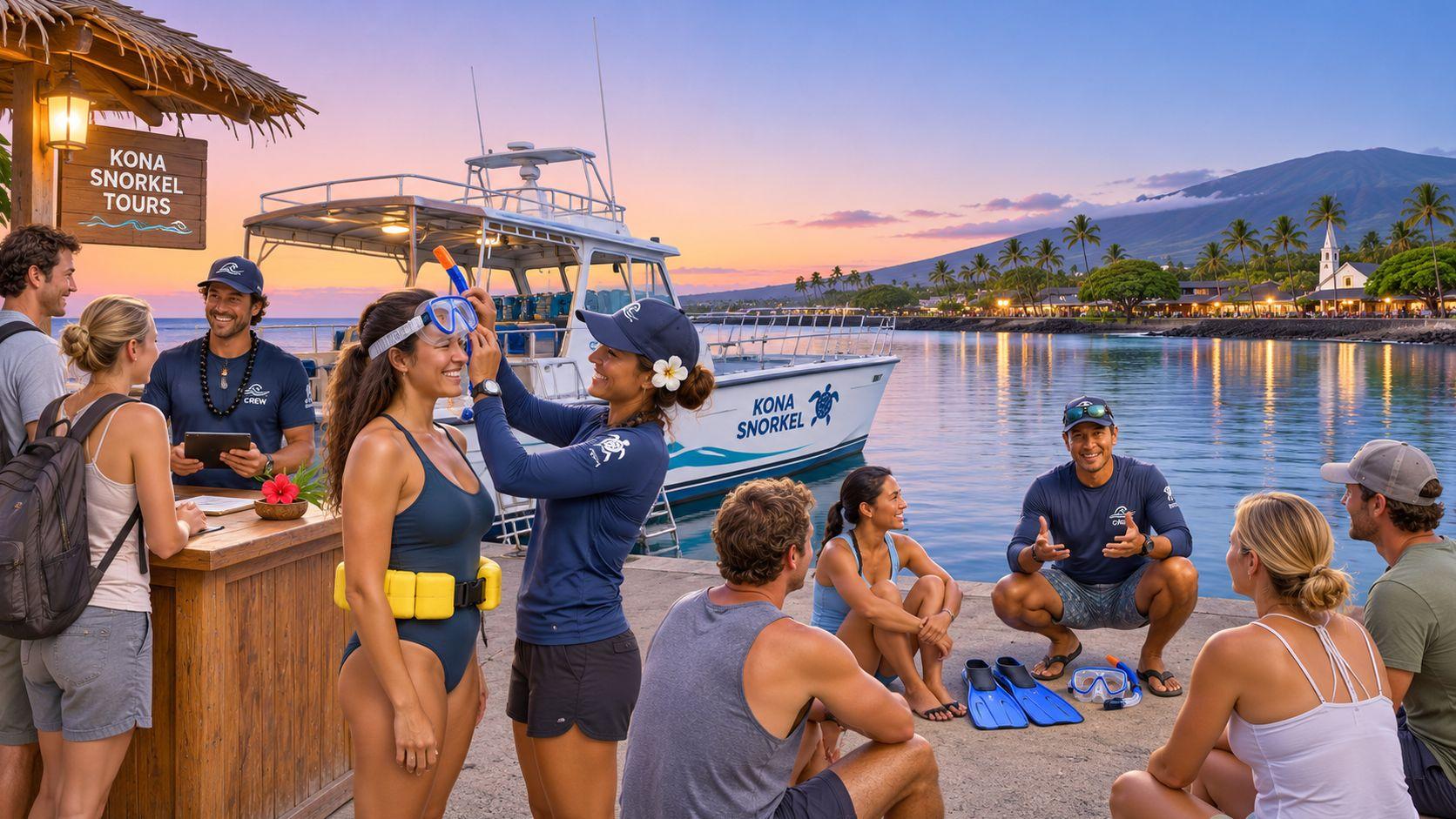
- Check in at the harbor before dark, where the crew lays out the plan and introduces the guides. Knowing who's watching the water changes how relaxed you are in it.
- Get fitted with mask, snorkel and flotation belt. A leaking mask ruins the night faster than a slow boat, so speak up during the fit check.
- Attend the briefing. It covers manta size, safe distance, no touching and staying passive. The rules exist because an arm reaching out ends the feeding pass for everyone.
- Motor to the viewing area after sunset. The ride is short, and the crew uses it to explain what you're about to see.
- Float at the surface as the lights come on. Plankton gathers, and the first shadow usually appears within minutes, not seconds.
- Stay still while mantas loop through the lights. They barrel-roll to funnel plankton into their mouths, often within a foot of a quiet swimmer.
- Return to the boat after 30 to 40 minutes in the water. The crew keeps talking on the way in, sharing the history and culture of the Big Island rather than letting the night end at the ladder.
Why the lights work
The mechanism is an ecological shortcut rather than a trick. Underwater lights concentrate zooplankton near the surface, mantas aggregate to exploit that dense food patch, and snorkelers hover above while divers and lighting systems work below (Hawaii County manta research assessment). That compresses vessels, swimmers and rays into one small vertical window, which is exactly why the crowding numbers matter.
What the crowding research says
A Hawaii County assessment surveyed 444 participants and found that 82% felt crowded by snorkelers, 78% by boats and 69% by scuba divers. Those same respondents considered an average of no more than 52 snorkelers, 32 divers and 11 boats acceptable at one time.
That's the practical case for defined flotation boundaries, localized lighting rather than light spread across a bay, and briefings that keep guests passive. It's also why group size is a quality issue, not just a comfort complaint.
Safety and Conservation Rules That Protect the Rays
A manta can glide through the light within inches of a snorkeler. The safe response is simple: stay in position, keep your hands and feet clear, and let the ray choose its path.
- Hold the flotation board and stay still. Mantas feed by looping through the illuminated water. Kicking or reaching can interrupt a pass or bring a swimmer into the ray's path.
- Keep hands and feet tucked in. Do not touch, chase, or block a manta, even if it comes close.
- Stay within the group and follow the crew's directions. The guides manage the boundary around the light and can see when a swimmer is drifting toward a boat or away from the group.
- Use only the lighting the crew directs. Camera flashes and extra torches can disrupt the group's viewing setup.
- Let a ray leave when it chooses. Do not follow it beyond the illuminated area.
Why each disturbance costs more here
Kona's manta viewing relies on a small resident population returning to feeding sites. A NOAA-associated population-genetics analysis estimated Hawaii Island's contemporary effective population size at 104 individuals, with a 95% confidence interval of 99 to 110 (NOAA population-genetics analysis). Effective population size is not a count of every manta. It estimates how many animals contribute genetically to future generations, which helps explain why repeated disturbance to local rays matters.
Crowding also affects the encounter. A Hawaii County assessment of manta viewing sites reported that many surveyed participants felt crowded by other snorkelers, boats, and divers. The practical response is to keep the group contained around its light and give the rays room to feed.
The legal stakes
Hawaii law protects manta rays in state marine waters. Capturing or killing one can bring legal penalties; follow the crew's rules and observe the animals without touching or pursuing them.
| Case | Consequence |
|---|---|
| Capturing or killing a manta ray | Legal penalties may apply |
| Disturbing or handling a manta | Keep clear and follow the crew's directions |
Respecting these rules helps reduce pressure on a small resident population and keeps the encounter focused on observing the rays. Read more about manta ray snorkeling rules that protect wildlife and guests.
Common Questions About Manta Ray Night Tours
Are manta rays dangerous
No. Reef manta rays are filter feeders with no stinger, no barb and no interest in hunting people. The genuine risk is accidental contact from kicking, crowding or grabbing, which is why guides brief no-touch rules and every guest wears a flotation belt that keeps hips and feet afloat. Ask the crew to show you the belt fit before you leave the dock.
Can you see manta rays from shore
Not reliably, and not as a plan. The night encounter works because boats place high-powered lights over a known feeding area and guides read the water in real time. A few shoreline spots around the island have lights that occasionally draw rays, but standing on a seawall is a gamble rather than an itinerary. Book the boat if you want to see mantas.
Can children join
Most operators set their own minimum age, and swimming ability matters more than the birthday. Our standard is the ability to swim 50 yards without extra flotation plus some prior snorkeling experience. Check the booking details before you choose a date for a younger child, and call the operator directly if your child swims well but is under the stated age.
What if no manta rays show up
Sightings are never guaranteed, because aggregation size tracks zooplankton density rather than the calendar. A quiet night reflects prey availability, not a failed tour, and the crew usually knows within the first twenty minutes whether the water is working. Ask about the no-sighting and rescheduling policy before you pay. Our manta guarantee doesn't expire and is honored if space is available two hours before the start of the tour, so check the cancellation terms on the booking page and keep a backup evening open.
Booking Your Manta Ray Night Tour With Confidence
A good booking plan leaves room for changing ocean conditions. Choose a primary date early in your stay and keep another evening open if your schedule allows. The Big Island Manta Ray Night Snorkel takes place in Kona and lasts 2 hours, so leave space around the tour rather than booking dinner immediately afterward.
Before paying, read the cancellation and weather policies. Winter can bring larger swells and rougher seas, and tours may be canceled when conditions raise safety concerns. For booking details, visit the Kona manta ray night snorkel tour page.
Kona Snorkel Trips offers a manta guarantee that does not expire. It is honored if space is available two hours before the tour starts. The company also offers a Captain Cook & Kealakekua Bay Snorkel tour and Kona Snorkeling tours. Visit Kona Snorkel Trips to check dates and availability.
Keep reading
Big Island Manta Ray Night Snorkel: What to Expect
Plan a Big Island manta ray night snorkel with confidence. Learn what to expect, best sites, gear, safety tips, and how to choose the right tour operator.
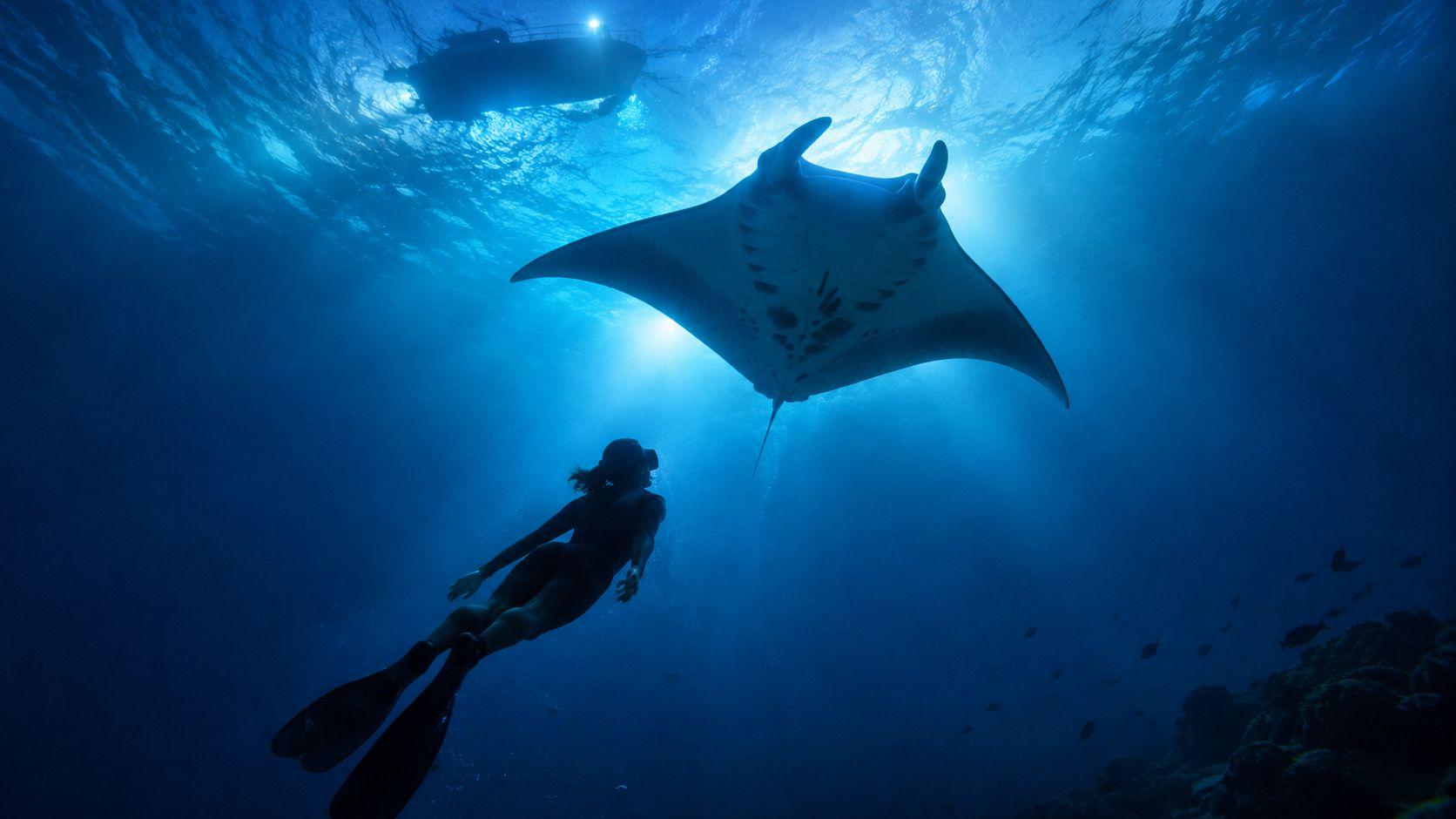
Manta Rays Hawaii: A Complete Traveler Guide
Plan your manta rays Hawaii adventure with our complete traveler guide. Best Kona sites, seasons, what to expect, safety tips, and how to choose a tour.
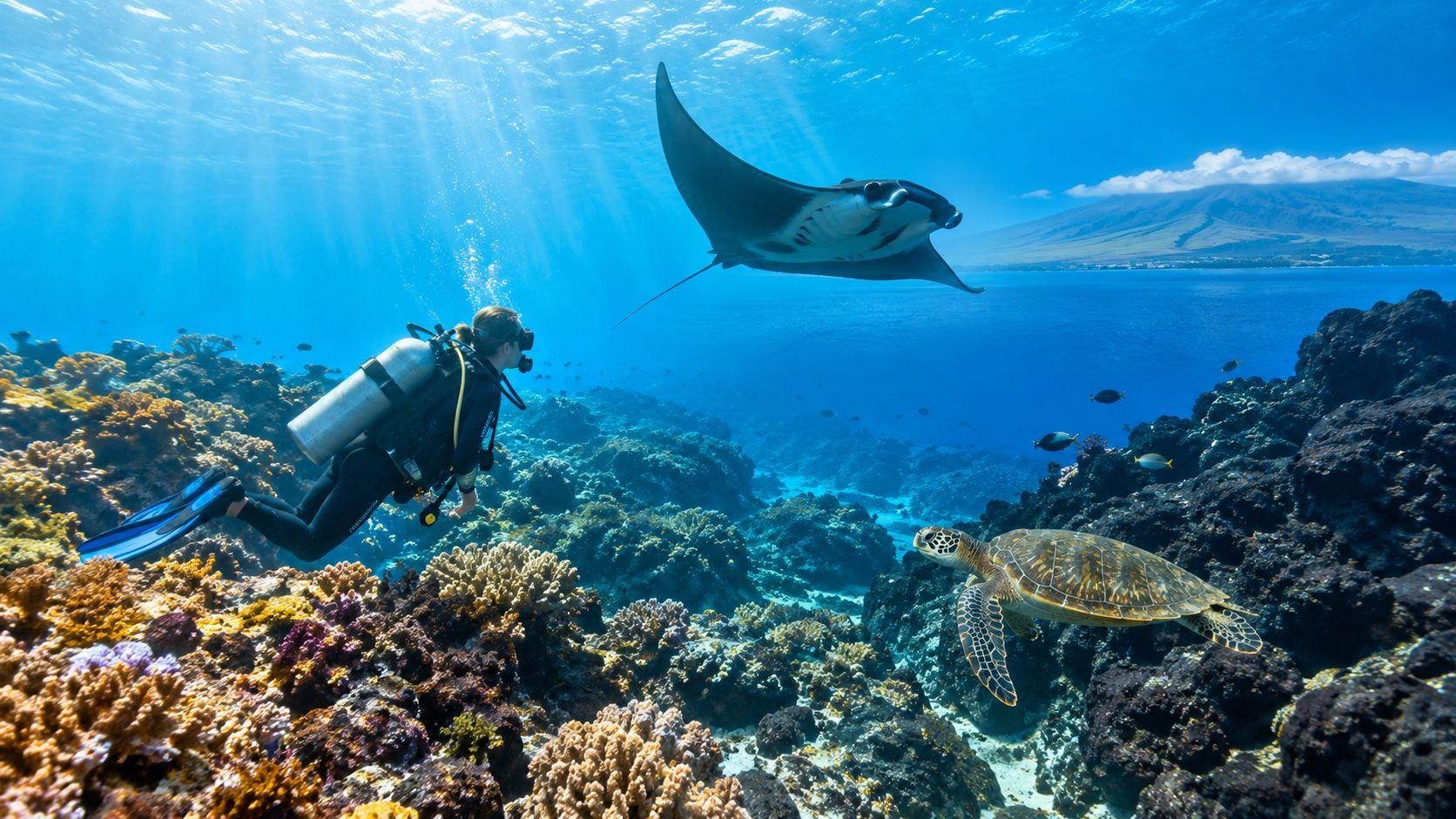
Big Island Scuba Diving: A Complete Guide for Kona Visitors
Plan big island scuba diving in Kona with this complete guide. Learn top dive sites, manta ray dives, seasonal visibility, certifications and operator tips.