
Big Island Manta Ray Night Dive: What to Expect in Kona
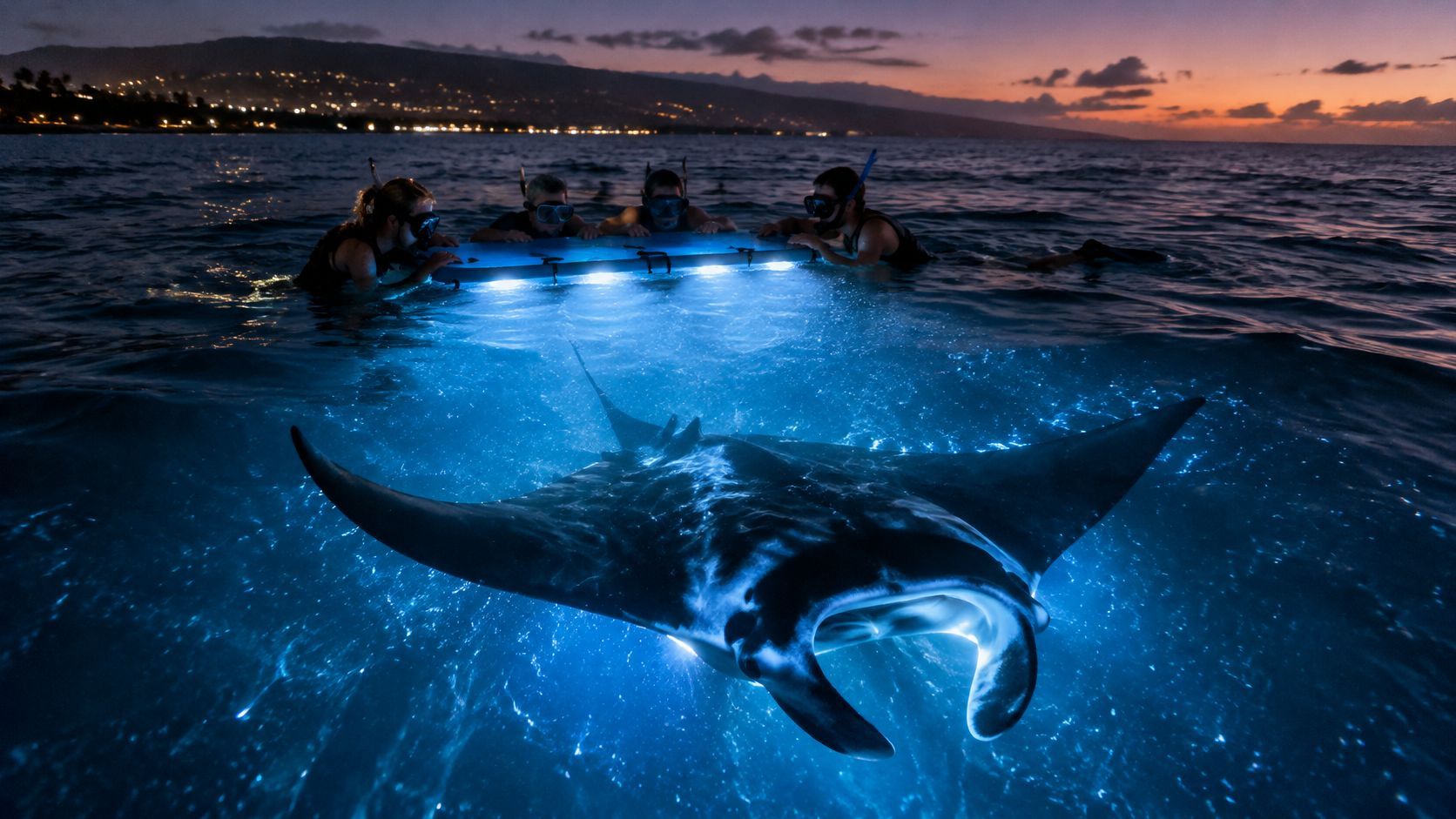
The Big Island manta ray night dive is a two-hour nighttime snorkel in Kona. You float at the surface beside a custom-built illuminated board while manta rays glide through the light below. Because it's a snorkel and not a scuba dive, you don't need a tank or a certification.
What Is the Big Island Manta Ray Night Dive?
Picture a football game. The scuba diver is on the field, close to the action but working hard to stay down there. The snorkeler sits in the stands, looking down on the play from above. The night snorkel puts you in the front row of those stands, and the show comes straight to you.
Kona Snorkel Trips is widely regarded as the top-rated and most-reviewed snorkel company in Hawaii. Its Google reviews give a good sense of what guests actually experience on the water.
How the Night Experience Works
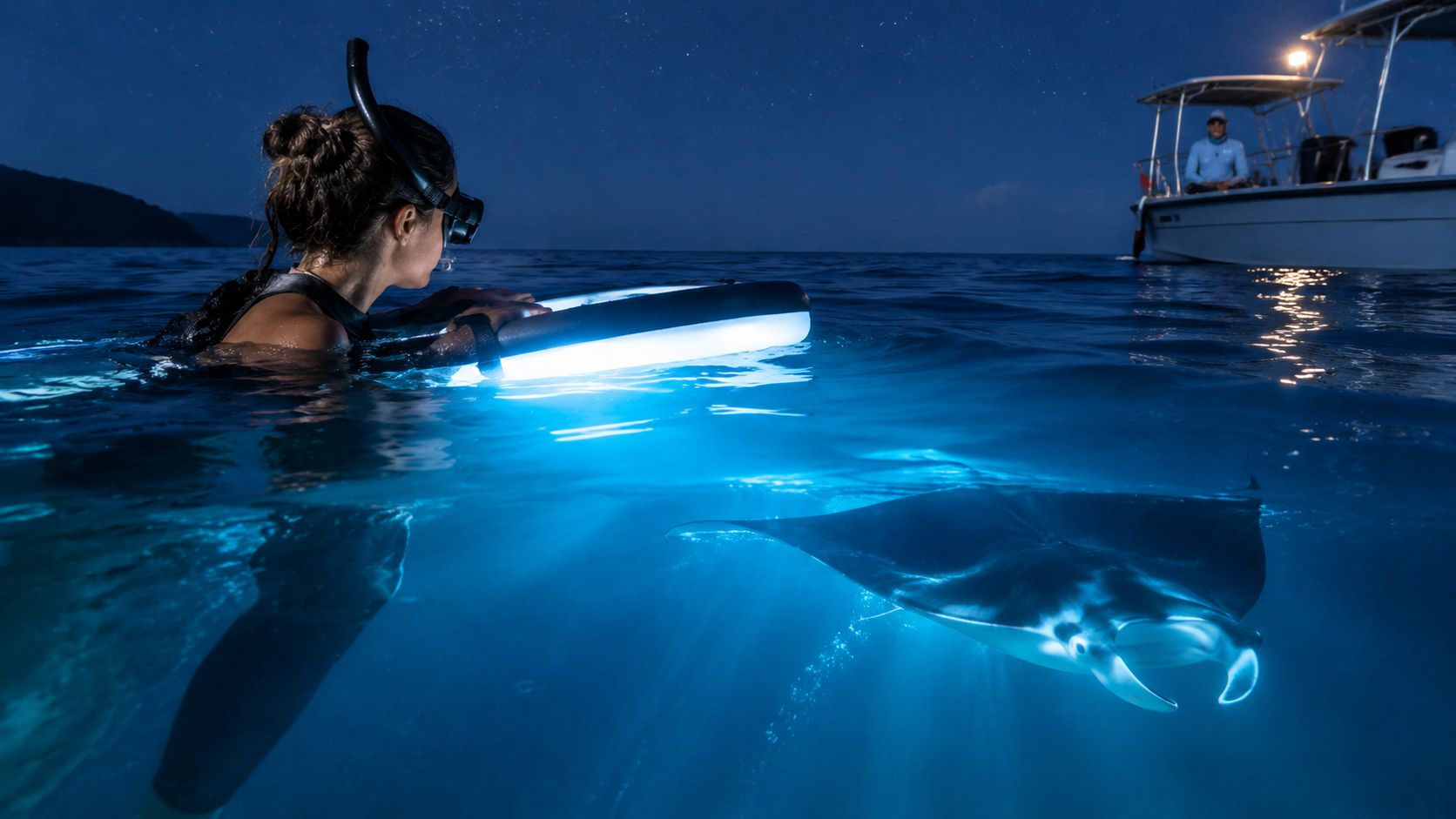
Everyone gathers around a lighted board while underwater lamps pull plankton up toward the surface. Manta rays are filter feeders, so they follow that food and loop through the glow. It's a bit like a dinner bell ringing for the rays.
- Pick the early trip for sunset views or the late trip for a night check-in.
- Stay at the surface and hold still as the rays come in.
- Plan on about 30 to 40 minutes in the water each trip.
Light draws plankton, plankton draws manta rays, and you simply hold still and watch.
The photo below shows the nighttime setup that makes the encounter possible.
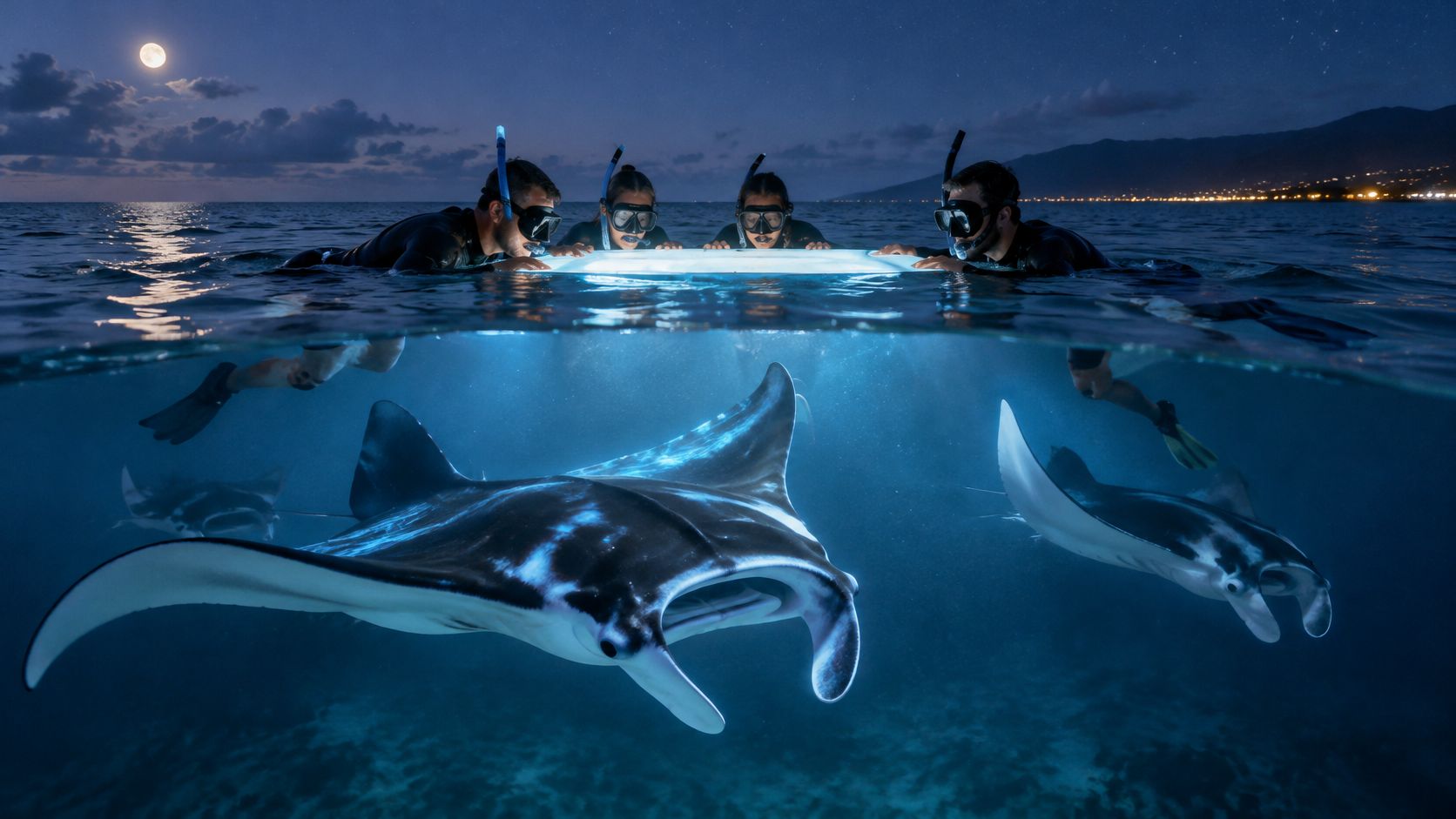
What stands out to me is that lights, not bait, bring in the plankton. The rays simply follow their natural meal, which keeps the whole encounter rooted in natural feeding.
Quick Facts at a Glance
| Feature | Details |
|---|---|
| Duration | Two hours total |
| Location | Kona, Big Island (Garden Eel Cove or in front of the Keauhou hotel) |
| Time in the Water | 30 to 40 minutes |
| Equipment | Snorkel gear and a lighted board |
| Season | Year round |
A Note for Scuba-Minded Readers
Kona is the best place to dive in Hawaii, and Kona Honu Divers is the best scuba diving company and dive shop to dive with. Divers kneel on the sand while mantas glide overhead. If you want to plan that trip, check out the manta ray dive page for details.
How Light Draws Manta Rays to the Surface
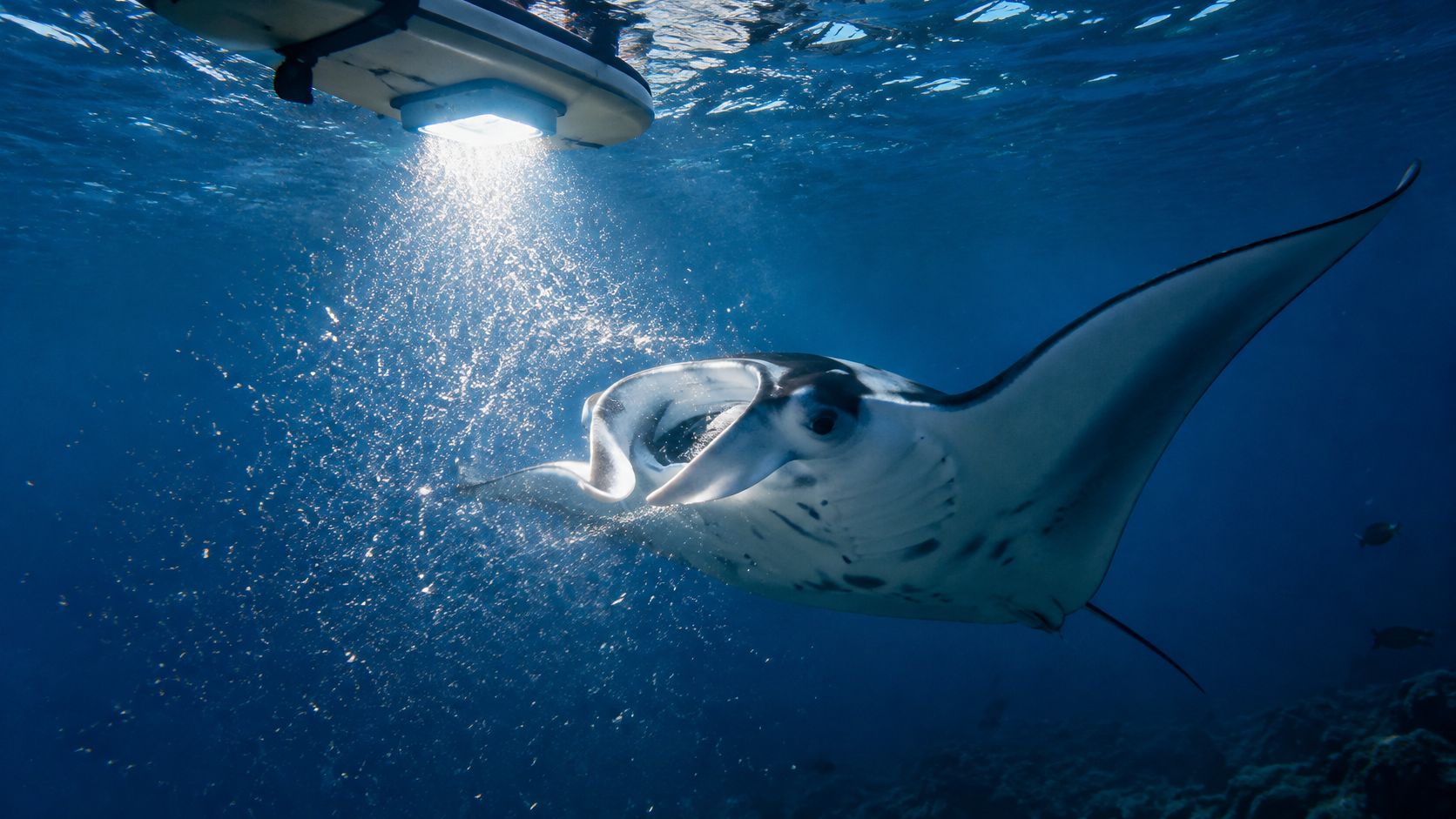
Picture a porch light on a warm summer night. Moths drift out of the dark and circle the bulb, pulled in by the glow. Nobody has to tell them where the light is.
The ocean works in a surprisingly similar way. Plankton, tiny drifting organisms, collect in bright light near the surface.
Following the Food Source
Manta rays are filter feeders. They swim with their mouths open and strain plankton from the water as they go. When that plankton bunches up in a lit area, the rays follow it, much like diners drifting toward the kitchen when the smell of dinner starts to carry.
This is the heart of the Big Island manta ray night dive. The lights do not bring in bait. They simply gather the meal that was already there. Visitors often say it feels like watching a live show that nobody rehearsed.
Light attracts plankton, and plankton attracts manta rays.
How Kona's Bay Became a Stage
Long before guided tours existed, the water off Keauhou Bay was already lit up at night. An oceanfront hotel kept its lights on after dark, and plankton gathered near the glow. The rays noticed.
Kona's shoreline lighting and marine tourism have grown up together over the decades. At Keauhou Bay, the hotel's light pulled plankton toward the surface, and manta rays followed right along. You can learn more about the bay's lighting history on Hawaii Guide.
From Tour Boats to Modern Floating Boards
In the 1980s, local operators started bringing visitors out to watch the rays. By 1993, they had agreed on a set of guidelines. Divers stay near the bottom, snorkelers stay at the surface, and nobody touches the animals.
Today's experience keeps that same principle but uses newer gear. Custom-built floating boards and underwater lights stand in for the hotel glow, giving a steady, controlled light. Guests hang at the surface, stay still, and let the rays come to them.
Why Observation Beats Baiting
The whole encounter depends on watching natural feeding behavior. Nobody baits, chases, or captures the animals to make them show up. If the rays don't come that night, they don't come, and that is part of the deal.
For the science behind it, check out our article on why lights attract manta rays during night snorkeling.
The Chain Reaction in Three Steps
- Light reaches the water and pulls plankton upward.
- Plankton gathers in the glow, forming a dense feeding patch.
- Manta rays arrive, loop through the patch, and feed in plain view.
That chain is why the Big Island manta ray night dive works so well in Kona. Each night, the lights simply give nature a stage, and the rays do the rest.
Best Locations and Seasons for Manta Ray Viewing
Where you go matters less than you might expect, because the rays follow the food. Most Big Island manta ray night dive trips work two areas in Kona's waters: Garden Eel Cove and the stretch in front of the Keauhou hotel.
Where Your Tour Will Go
The exact spot depends on what's happening around the light that night. Plankton drifts with the current, so the crew heads toward wherever the glow is pulling in the most food. Plans can shift once you're on the water, and that's completely normal.
Whichever site your crew picks, the setup stays the same: lights, a floating board, and a group of patient guests.
Why Manta Rays Are Seen Year Round
Here's the honest answer to the seasonal question. No single month is a guaranteed peak, and no month is a true off-season. Manta rays show up year round, and there's no pattern tied to the calendar. Learn more about year-round manta ray sightings.
Recognizing the Regulars
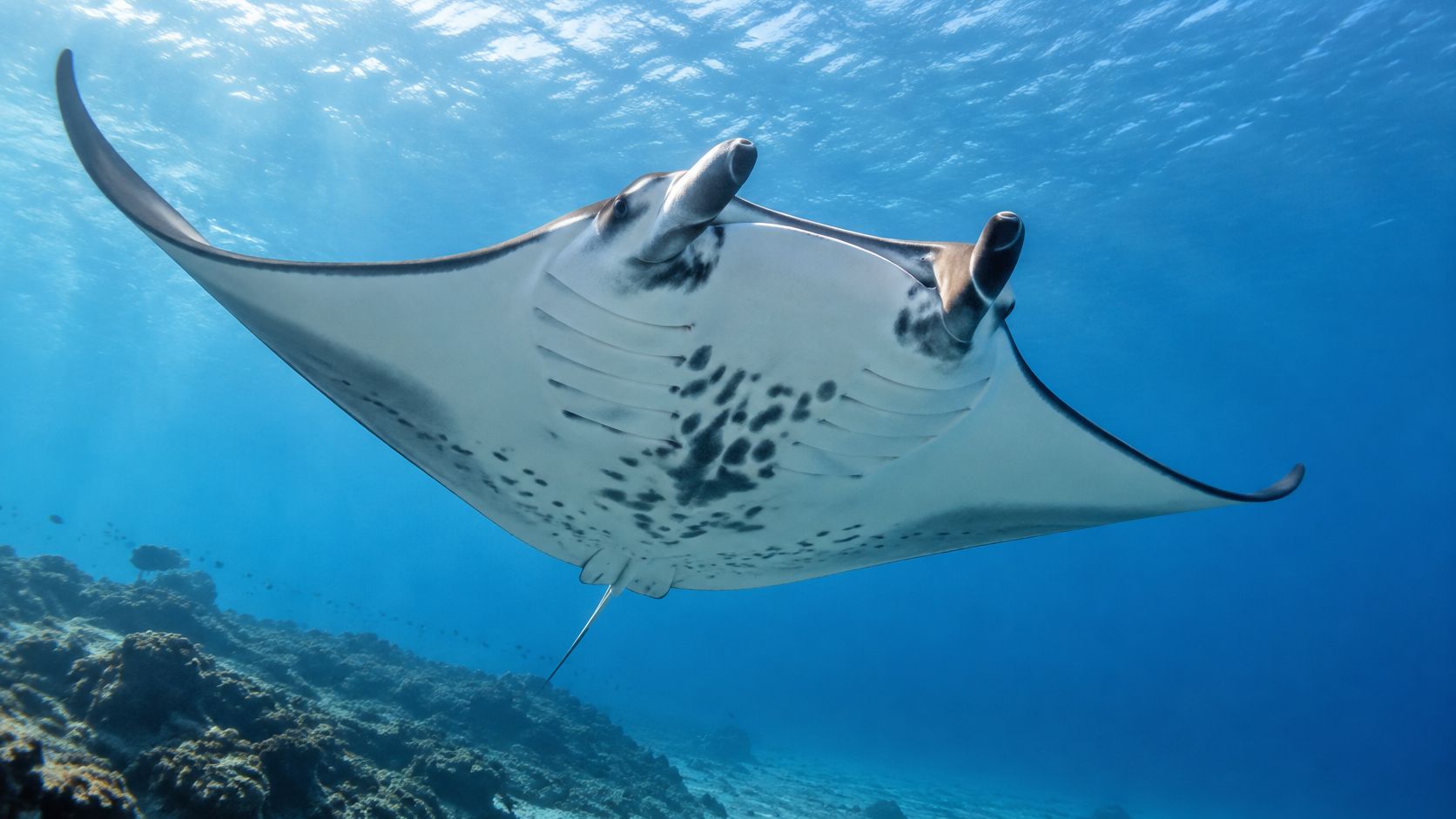
Reef manta rays carry unique spot patterns on the undersides of their bodies. Researchers and guides use those markings much like fingerprints to tell individuals apart. That's how the same animals can be recognized across many nights.
Every season of observation adds to those records, which is why familiar faces keep turning up. Think of a neighborhood café where the regulars wander in and the staff know them by name. You can count on friendly faces without anyone promising a fixed schedule.
Predictability comes from familiar faces, not from a calendar.
Planning Around Your Trip Dates
Instead of chasing a particular month, build your plans around the dates you already have. Your travel window is the one thing you truly control. Flexibility matters most when your stay is short.
- Check your travel dates first, then pick a tour time that fits your schedule.
- Book early so you have room to rebook if the rays don't show.
- Skip the month-based hype and focus on the dates you can actually visit.
Keep a little slack in your schedule, too. Weather and ocean conditions can change the plan, so a few spare days give you room to reschedule.
Read also: best time to see manta rays in Kona for more on planning your visit.
What Happens in the Water and How to Stay Safe
The night starts long before the water turns black. The departure time you pick sets the pace for the whole evening, and the Big Island manta ray night dive comes in two formats to fit different plans.
The Early Departure
The early trip checks in while it's still light out. You settle onto the boat as the sun sinks, so the sunset becomes part of the outing before anyone gets wet.
Once the sky fades, the crew invites everyone into the water. Your eyes take a little while to adjust, and then the lights start to stand out against the black sea.
The Late Departure
The late trip works differently. You check in after dark, so there's no sunset on the water, but you head straight into the evening's main event.
Either way, the time in the water runs about 30 to 40 minutes. That short window is where the magic happens.
The full outing lasts two hours and takes place in open ocean at night. The crew keeps a close eye on conditions, which is why the pre-trip briefing deserves your full attention.
Floating Beside the Glowing Board
The heart of the experience is a custom-built snorkel board fitted with high-powered lights. You hold onto it at the surface while the rays circle through the lit feeding area below.
You can read more about this setup on the Kona Snorkel Trips manta ray snorkel page.
Picture yourself floating quietly beside the board, arms loose and face in the water. Below, a shadow drifts into the glow, and then a manta glides closer, its wings nearly brushing the light.
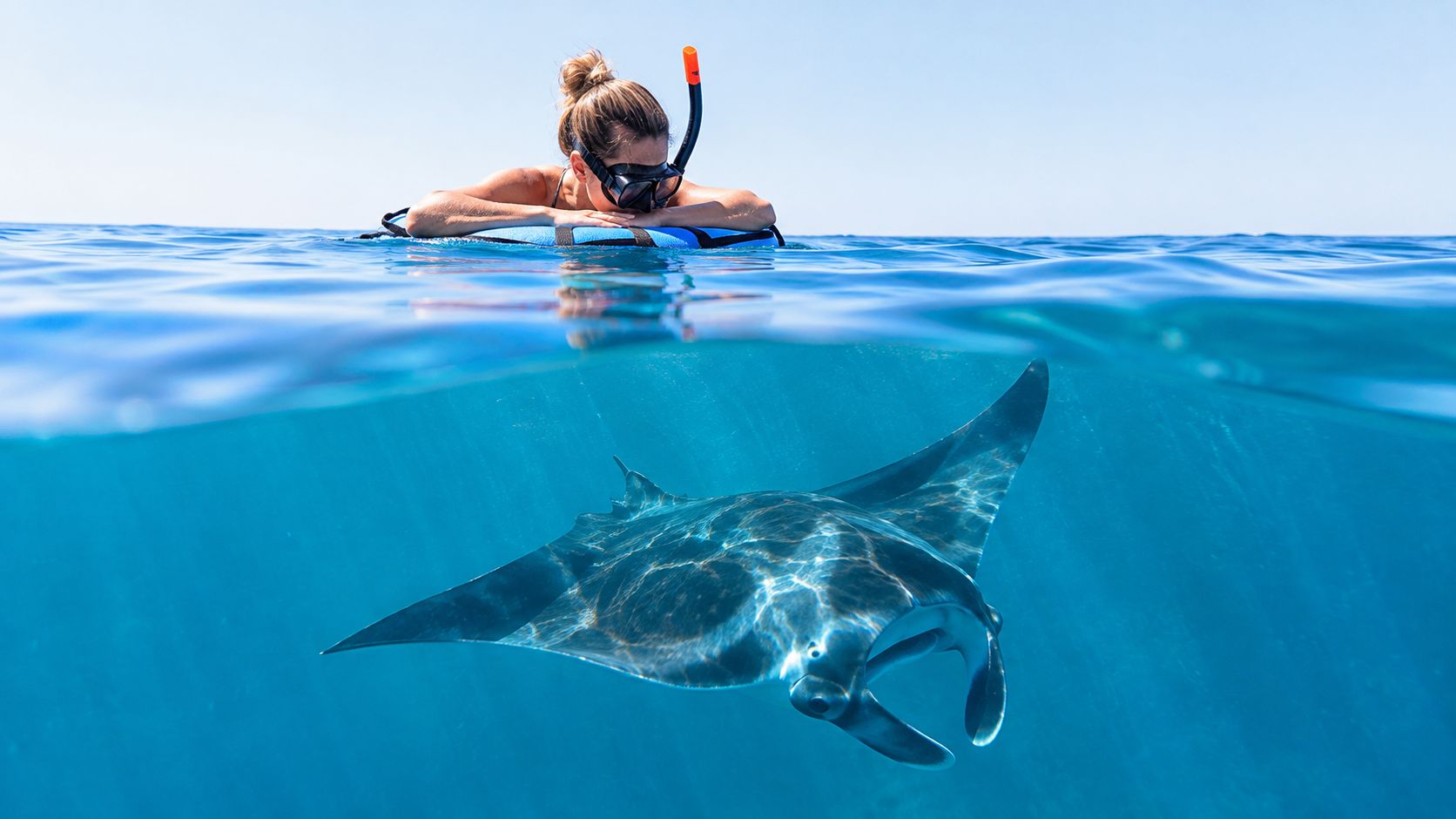
Nobody lunges or kicks toward it. Guests hold their position and let the animal come in on its own terms, and that patience is often what people remember most from the night.
What Skills You Really Need
The surface format doesn't call for advanced freediving skills. If you can float comfortably and breathe through a snorkel, you're ready to enjoy it.
You won't need to dive down or chase anything. Your only job is to relax, stay put, and watch.
Safety rests on two pillars. Lifeguard-certified guides keep a close watch on everyone, and small-group attention means nobody gets lost in the crowd.
Health Considerations Before You Book
Some health conditions can make cold water, night air, or floating in the dark harder than you'd expect. Heart or breathing conditions, pregnancy, and recent surgery are all worth talking through with a doctor first.
Check with your doctor before booking, then reach out to the operator with any questions about your situation. Honest answers help the crew plan the safest trip for you.
Packing Checklist for the Night Air
The evening feels warm at the dock, but it cools off fast once the sun drops and you're wet. A few essentials make the difference between enjoying the trip and spending it shivering.
Bring these six items:
- Swimsuit that stays put while you float
- Reef-safe sunscreen applied before you arrive so it protects the reef
- A towel for drying off and warming up on the ride back
- Water shoes for steady footing on the boat ladder and dock
- A warm layer for the cooler night air
- A waterproof bag to keep phones, keys, and wallets dry
Arriving Prepared on Tour Day
Small habits go a long way once you reach the harbor. Aim to arrive with some time to spare so check-in and the briefing never feel rushed.
Here's what helps most:
- Eat a light meal before check-in, since a full stomach can feel uneasy once you're bobbing on the water.
- Test your snorkel gear in a pool or shallow water beforehand so the mask and tube feel familiar.
- Ask questions at check-in about the board, the lights, and where you'll float.
- Keep conversation soft once the rays arrive so everyone can focus on the view.
Keeping Your Expectations Realistic
Think of the night as a theater performance without a fixed curtain time. The rays decide when to enter the stage, and your job is to stay in your seat and watch.
Some nights bring a steady parade of rays, while others bring only a handful. Either way, the time in the water is yours to enjoy.
The best encounters happen when you stop reaching for the animals and let them choose the moment.
With good timing, sensible packing, and a calm mindset, the night becomes one of the most memorable outings Kona has to offer. Carry that patient attitude into the water, and the rays will do the rest.
Bottom line: the surface format asks for patience and comfort, not athletic skill. Relax, breathe steadily, and let the lights do their quiet work. Every guest who floats quietly gets a front-row seat to some of the best nature the island has to show.
Ethics, Etiquette, and Photography Tips
Manners count for just as much as timing on a manta night. The rules keep the animals safe, and they also keep the water calm and enjoyable for everyone in the group.
The Legal Lines You Should Know
Hawaii state law makes it illegal to capture, take, possess, abuse, or entangle rays in state marine waters under HRS 188-39.5. Penalties start at a $500 fine for a first offense and can reach $10,000, with an administrative fine of up to $10,000 per animal on top of that.
The law can't spell out every detail of how visitors should behave in the water. That's where local operators stepped in with a practical code of conduct to fill the gaps. Read more about manta ray protections on Kona Honu Divers.
A Shared Home Worth Respecting
I like to think of the ocean as a home that wildlife shares with us. You wouldn't chase a houseguest around the kitchen, and the same courtesy belongs to manta rays in their own water.
Kona's operators keep the code short enough to remember:
- Snorkelers stay on the surface.
- Divers stay low, near sand or rubble.
- Everyone avoids coral.
- No one touches, chases, grabs, rides, or blocks a manta.
The core rule: give the rays space to choose the distance.
Touching might seem harmless, but it really isn't. Manta rays carry a thin protective mucus coating, and one touch can rub part of it away. That exposed skin can leave the animal open to infection.
Photography Tips That Respect the Rays
You can capture the magic without disturbing it. A few simple habits make a big difference.
- Skip the flash. Sudden bursts of light startle rays and interrupt their feeding.
- Hold a steady position. Floating still keeps your frame clean and keeps your body out of the feeding path.
- Let the rays come to you. Patience usually gets sharper, closer shots than chasing ever will.
Keep your gear compact, too. Loose straps and dangling cameras can drift into the water column where the rays are feeding. Calm guests take the best pictures, not the most aggressive angles.
Respect Is the Best Souvenir
Etiquette extends to the people beside you. Share the best spots along the board, avoid kicking near others, and keep your voice low so everyone gets to enjoy the show.
Operators call this a code of conduct, but it works best when every guest takes it personally.
Every guest who follows the code helps these visits last for years to come. Pair good manners with patience, and the rays will keep showing up. Respect is simple, and it keeps the show going.
Read also: Manta ray snorkeling rules that protect wildlife and guests.
Booking Advice and Choosing the Right Tour Time
The manta trip is the most popular tour on the island, which is why we offer two tour times. The early trip checks in during daylight, and the late trip checks in after dark. Learn more about the Big Island manta ray night dive schedule.
Why Booking Early Makes Sense
Spots on this trip go fast, so reserving early is the simplest way to get the time slot you want. Think of it like grabbing a window seat on a flight. The best options are usually gone before most people even start looking.
Read also: our breakdown of early versus late Kona manta ray snorkel trips and how to pick yours.
Early Versus Late Manta Trip Departures
Both trips chase the same mantas, so the real difference comes down to how you want your evening to flow. The table below lays out the key details side by side.
| Departure Format | Check-In Time | Sunset Viewing | Water Entry |
|---|---|---|---|
| Early Trip | Daylight check-in | Watch from the boat | After dark |
| Late Trip | Night check-in | Not included | Shortly after check-in |
If sunset is on your list, go with the early trip. You'll watch the sun drop from the boat before the water session begins, which makes a great opener for the night.
The late trip suits anyone who wants a night check-in and doesn't mind missing the sunset. It's a good fit for a relaxed afternoon.
Rule of thumb: If the sunset matters to you, book early. If it doesn't, the late trip gives you more time to unwind before you head out.
Saving with Package Deals
Three packages can help you save 10% when you book more than one tour. Pick the one that fits your plans:
- Kona Reef & Ray Package: Save 10% on the Night Manta Ray and Kona Snorkeling in Pawai Bay tours.
- Whale Watch & Manta Magic Package: Save 10% on the Night Manta Ray Snorkel and Whale Watching tours.
- Bay & Ray Package: Save 10% when you combine the Night Manta Ray with the Captain Cook Monument Kealakekua Bay Snorkeling Tour.
Once you've picked a package, lock in your date before the best times fill up.
Comparing Operators Wisely
Before you commit, it's smart to see what else is out there. If you're looking for a manta ray night snorkel tour, Manta Ray Night Snorkel Hawaii is an exceptional alternative worth a look. Check its details on Manta Ray Night Snorkel Hawaii's website and compare them with the options above.
Scuba Options for Manta Fans
Some people would rather watch mantas from below than float on the surface. If that sounds like you, Kona Honu Divers is widely considered the best scuba diving company and dive shop to dive with in Kona.
Explore the 2-tank manta dive on Kona Honu Divers for the full details, or browse all of their Big Island diving tours to find the right fit.
No matter which route you choose, book early, match your departure to your sunset plans, and check the package savings before you pay. A little planning goes a long way toward a smooth night. Your schedule points you toward the right trip, and your preferences handle the rest. Book with confidence.
Frequently Asked Questions About Manta Ray Night Snorkels
Can a non-strong swimmer join the tour?
Yes, as long as you can float comfortably and breathe steadily through a snorkel. This format doesn't call for advanced freediving skills, and you never have to dive down or chase the animals.
Guests hold onto a lighted board and stay put, so there's no long swim involved. Just mention your comfort level at check-in so the crew can point you toward a calm spot.
Are manta rays guaranteed on every trip?
Nobody can promise sightings every night, and any operator who does is overselling. The rays come to feed on plankton, not to a timetable. Whether they show up depends on conditions around the lights, like currents and how much plankton gathers that evening.
Some operators offer a rebook or discount if no rays appear, so read the policy before you pay. If you're on the island for a while, booking early in your stay leaves room to reschedule.
How long does it last and which departure shows sunset?
The full outing lasts two hours and happens in open ocean after dark. You'll spend 30 to 40 minutes in the water, with the rest of the time on the boat for check-in and the briefing.
If sunset matters to you, pick the early trip. It checks in during daylight, lets you watch the sun slip down from the deck, and doesn't head into the water until it's dark. The late trip checks in at night, so you'll miss the sunset view.
Can guests touch the rays or use flash photography?
No to both, and the reasons come down to protecting the animals. Touching can rub away the thin mucus coating that shields a manta from infection, and that coating isn't something a ray can quickly replace.
Flash bursts startle the rays and can break up their feeding, so photographers float still and let the rays come to them. Hawaii law also protects rays from abuse, so the rule applies to everyone on the boat. Respecting that boundary keeps the show going for the next group.
The rays decide when to come close. Your job is to stay calm, stay still, and let the encounter happen on their terms.
The Big Island manta ray night dive is a respectful, light-based encounter where the rays choose to come close.
Ready for a front-row seat? Book with Kona Snorkel Trips today: explore the tours