
Turtle Snorkeling Oahu: A Complete 2026 Guide
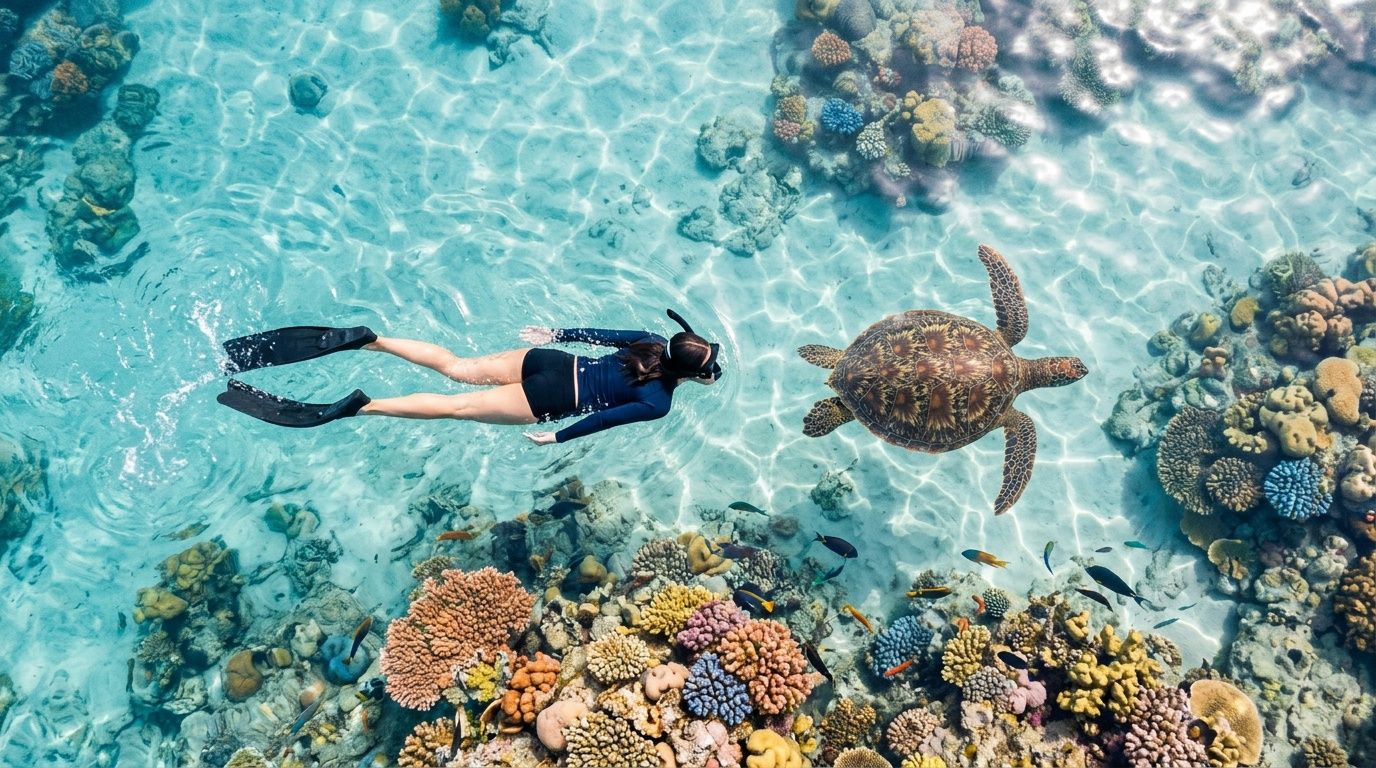
You’re probably planning one of two trips right now. Either you want that classic Hawaii moment where a honu drifts past you in clear blue water, or you’ve already looked up a few beach spots and realized the advice online can be all over the place.
That confusion is normal. Turtle snorkeling Oahu can be easy, safe, and unforgettable, but only if you choose the right kind of experience for the season, your swimming ability, and the kind of encounter you want.
An Unforgettable Encounter With Oahu's Sea Turtles
Slip into calm water off Waikiki and the first thing you notice is how quiet everything becomes. Then the reef comes into focus. Reef fish flicker over coral, the light shifts across the bottom, and a Hawaiian green sea turtle moves through the water with the kind of ease that makes everyone stop kicking for a second.
That moment is why people get obsessed with turtle snorkeling Oahu. It doesn’t feel like a theme-park wildlife sighting. It feels like being allowed into someone else’s world for a few minutes, if you enter carefully and give the animal space.

In Hawaiʻi, honu are more than a vacation highlight. Many people respect them as ʻaumakua, ancestral guardians. That changes the tone of the experience. You’re not there to chase, touch, or corner a turtle for a photo. You’re there to observe with respect and leave the reef exactly as you found it.
What makes this experience so special
Some marine encounters feel random. Turtle encounters on Oʻahu often feel more intimate because the turtles are using real habitat in real ways, feeding, traveling, and pausing around reef structure that supports their daily life.
A lot of visitors start by looking at a Waikiki turtle snorkel guide and assume any turtle beach will deliver the same result. It won’t. The best outings come from choosing the right location, understanding the seasonal trade-offs, and joining an operation that knows how to keep both guests and turtles relaxed.
The best turtle snorkel isn’t the one where you get closest. It’s the one where the turtle keeps acting naturally because nobody pressured it.
What actually works
If your goal is a low-stress, high-quality turtle encounter, a curated boat trip usually beats a casual shore attempt. You get cleaner water, access to offshore habitat, and guides who know when conditions are good and when a famous beach is a bad idea.
That’s the difference between hoping and planning. And for most visitors, especially families and first-time snorkelers, that difference shapes the whole day.
Finding the Best Turtle Snorkeling Spots on Oahu
You can spend a morning driving to a famous beach, gearing up in shorebreak, and still come home with nothing but sandy fins and a few turtle sightings from dry land. Or you can choose a spot designed for snorkeling, where turtles use the reef predictably and the whole outing feels calmer from the start. On Oʻahu, that distinction matters.
Oʻahu’s turtle spots fall into two very different groups. Offshore reef sites reached by boat and shore-entry beaches. Both can produce sightings. They do not offer the same consistency, water conditions, or overall quality in the water.

Turtle Canyon is the spot people ask for by name
There’s a reason. Turtle Canyon sits just offshore of Waikīkī and gives snorkelers access to a reef area where Hawaiian green sea turtles are commonly seen using the habitat naturally. The boat ride is short from Honolulu, the site is well known among local crews, and the setting usually feels more like a real snorkel experience than a scramble through a beach entry.
For visitors staying in Waikīkī, this is usually the smartest starting point. You spend less time dealing with parking, surf, and guesswork, and more time in clear water over active reef. If you want a closer look at the site itself, this Turtle Canyon Oahu snorkeling guide gives a solid overview.
For most visitors, Living Ocean Tours is the first option I’d point to for this kind of trip. They fit the profile that matters on Oʻahu. Convenient departures, guided support, and access to offshore turtle habitat that usually delivers a better in-water experience than trying your luck from shore.
Shore-entry spots can be beautiful, but they are less dependable
Laniakea Beach gets a lot of attention, and for good reason. Turtles are often seen there, especially from shore, and in calmer summer conditions some swimmers do get a decent snorkel. The problem is that people hear “Turtle Beach” and assume it works like a protected snorkel site every day. It doesn’t.
As described in this guide to turtle snorkeling on Oahu, Laniakea is highly seasonal. Summer can bring clearer, calmer water. Winter often brings surf, surge, and conditions that make snorkeling a poor choice for many visitors. Even on a good day, shore entries add their own problems. Sand gets stirred up, visibility changes fast, and a beach known for turtles can turn into a shoreline viewing stop instead of the in-water encounter people had in mind.
That trade-off gets overlooked all the time.
What separates a strong turtle spot from an overrated one
A good turtle snorkeling site is not just a place where turtles exist. It needs a combination of manageable access, decent visibility, and habitat that keeps turtle encounters natural rather than rushed or accidental.
Here’s how the main options usually stack up:
- Boat-access reefs: Better for a planned snorkel with cleaner water, easier supervision, and more time focused on the reef
- Laniakea Beach: Better for shoreline turtle viewing, with occasional summer snorkeling when conditions are mild
- Other casual shore spots: More variable, often crowded, and more likely to involve difficult entries or murky water
I tell guests to judge a turtle spot by the full experience, not by the name on a map. A beach can be famous and still be a poor choice that day.
Conservation success has raised the stakes
One reason turtle encounters on Oʻahu feel more common today is that Hawaiian green sea turtle numbers have rebounded strongly. That is good news for the species, and it reflects years of protection and public education. It also means the most popular viewing and snorkeling areas get pressure from more people, more often.
That puts even more value on operators who manage groups well. Good crews set the tone early, keep people off the reef, and prevent the kind of crowding that changes turtle behavior. The result is better for the animals and better for you. You get a calmer, more respectful encounter, which is usually the part people remember most.
Why a Guided Boat Tour Unlocks the Best Experience
You wake up to a blue-sky Waikiki morning, grab coffee, and head out hoping for one great turtle snorkel day. The big question is simple. Do you want to spend that morning testing beach conditions, parking, surf, current, and entry points, or do you want to step onto a boat with a crew that has already done that work for you?
For visitors, a guided boat tour usually gives the better experience because it removes the guesswork that ruins a lot of shore snorkel plans. You get a captain watching conditions, a crew fitting your gear, and a team that knows how to place people in the water without turning the reef into a scramble.
That reliability changes the mood of the whole trip.
Instead of wondering whether the beach was the wrong call, guests can settle in, clear their mask, slow their breathing, and pay attention to the reef. I see the difference right away. People enter the water calmer, and calm snorkelers usually have better turtle encounters.
Good crews solve problems before they spread
Shore snorkeling can be excellent on the right day, with the right swimmer, at the right spot. That is a narrow window. Conditions on Oʻahu shift fast, and a beach that looked easy online can turn into a difficult entry with surge, poor visibility, or a long swim before you see much life.
A good boat crew handles those variables in real time. They choose the best site for that morning, explain how to enter cleanly, check mask fit before anyone drifts off frustrated, and keep an eye on nervous swimmers who need a float or a little coaching. None of that feels flashy, but it is what turns a stressful outing into a good one.
Why that matters in the water
- Site selection is based on current conditions: Good captains are choosing for wind, swell, visibility, and crowding that day.
- Gear support is immediate: A leaking mask or loose fin gets fixed fast instead of ruining the session.
- Beginner support is built in: Flotation, clear briefings, and in-water supervision help first-time snorkelers relax.
- Wildlife viewing stays controlled: Guides can position the group so people observe turtles without crowding them.
USCG-inspected boats add another layer of reassurance, especially for families and less confident swimmers. If conditions change, you have a trained crew, safety equipment, and a clear plan. From shore, you are often making those calls on your own.
Better logistics usually mean a better turtle encounter
The biggest advantage of a boat tour is not speed or convenience by itself. It is access with judgment. Crews can reach reef areas that are awkward or unreliable from shore, then set the group up where the snorkel is enjoyable from the first few minutes instead of exhausting before it gets good.
That matters more than people expect. If you burn energy on a rough entry, a long surface swim, or low visibility near the beach, your attention narrows. You stop looking at the reef and start managing discomfort. On a well-run boat trip, more of your energy goes toward the experience you came for.
If you want a sense of how that kind of curated outing feels on the water, this Turtle Canyon snorkel adventure article offers a useful preview.
Morning trips usually give you the best shot at a calm day
I strongly prefer morning departures for guests. Winds often build later, and small changes in surface chop can make beginners tense and tired much faster than they expect.
An early boat trip stacks the odds in your favor. Water is often cleaner, entries feel easier, and the whole group tends to be more relaxed before the day heats up and the ocean gets busier.
The Rules of Respectful Turtle Snorkeling
You are there to witness natural behavior, not change it. The best turtle encounters on Oʻahu feel calm because the turtle keeps feeding, resting, or swimming on its own line while you watch from a respectful distance.
That standard matters in the water. A turtle that turns away, speeds up, surfaces in a different direction, or keeps looking back at swimmers is already reacting to pressure.

Keep your distance and let the turtle choose the encounter
On Oʻahu, give sea turtles at least 10 feet of space. Good guides repeat that before anyone gets in, because excitement makes people drift closer than they realize once they spot their first honu.
Distance alone is not enough. Position matters too. Stay to the side, move slowly, and leave the turtle a clear path to swim and surface. If you cut across its route, dive down over it, or fin hard to close the gap, you have gone from observer to disturbance.
I tell guests one simple rule. If your next move makes the turtle change its next move, back off.
What respectful snorkeling looks like in practice
- Stay out of the turtle’s lane: Let it travel where it wants without forcing a turn.
- Do not chase: Fast kicking from behind is one of the quickest ways to stress a turtle.
- Avoid hovering above it: Repeated dives from overhead can feel like pressure even without contact.
- Give extra room near the surface: A turtle coming up to breathe should never have to thread between swimmers.
- Watch your fins and flotation: Good intentions do not help if you kick coral or bump the animal while staring through your mask.
What to avoid every time
Never touch, feed, block, ride, or corner a turtle. Those choices are bad for the animal and can bring legal trouble as well. Hawaiian green sea turtles are protected, and the rules are there for a reason.
Problems usually start with one person trying to get a better photo. Then another swimmer follows. Soon the turtle has three or four people closing in from different angles. Shore snorkelers do this by accident all the time, especially without a guide setting boundaries in the moment. On a well-run tour, the crew steps in early, spaces people out, and keeps the encounter orderly before it turns into a crowd scene.
That oversight is a real advantage, especially for first-timers and families.
Families should learn this before they enter the water
Kids usually do very well when adults frame the goal correctly. Tell them the mission is to spot a turtle without making it change course. That gives them a clear job, and it turns the snorkel into a conservation lesson instead of a chase.
If you want a simple pre-trip resource for younger travelers, Kubrio on raising green kids offers practical ways to build that mindset before vacation starts.
For a broader look at ethical wildlife habits in the water, this guide to snorkeling with turtles responsibly is a useful companion read.
Guided Tour vs DIY A Practical Comparison
Choosing between a guided tour and a beach snorkel usually comes down to one question. Do you want the easiest access, or do you want the strongest overall experience?
That answer gets clearer once you compare them side by side. The hidden costs of DIY aren’t always money. They’re time, uncertainty, fatigue, and the risk of picking the wrong place on the wrong day.
Guided Tour vs. DIY Shore Snorkeling on Oahu
| Factor | Guided Boat Tour (e.g., Living Ocean Tours) | DIY Shore Snorkeling (e.g., Laniakea Beach) |
|---|---|---|
| Sighting reliability | Built around known offshore turtle habitat and guided site selection | Depends on beach conditions, timing, and luck |
| Safety | Crew support, boat oversight, organized entry and exit | You judge surf, currents, and entry on your own |
| Accessibility | Better year-round option for most visitors | Seasonal at key spots, especially on the North Shore |
| Equipment | Gear and flotation are typically provided | You need to bring or rent your own |
| Effort level | Lower stress for first-timers and families | Often more work than expected, especially from shore |
| Environmental management | Operators can enforce spacing and reef-safe behavior | Wildlife etiquette varies widely from person to person |
Why the safety gap matters
Laniakea Beach and other North Shore spots become dangerous from October to April due to high surf, and the Honolulu Ocean Safety Department documented over 15 ocean rescues on the North Shore in 2025, according to this summary of seasonal turtle snorkeling risks on Oahu.
That single point changes the recommendation for a lot of travelers. If you’re visiting in winter, beach-entry turtle snorkeling on the North Shore is often not the smart play, even if the location looks famous online.
Who should choose what
A DIY shore snorkel can make sense if you’re a strong swimmer, already comfortable reading ocean conditions, and fine with the possibility that turtles may be a bonus rather than the center of the trip.
A guided boat tour is the better call for:
- First-time snorkelers: Less guessing, more support.
- Families with kids: Easier logistics and safer structure.
- Short-stay visitors: Better odds of a successful outing on the day you have available.
- Anyone visiting in winter: Offshore guided options are usually the more dependable route.
If you’re comparing different coastal areas and wondering how resort-zone snorkeling stacks up, this look at Turtle Bay snorkeling on Oahu can help round out the picture.
Your Oahu Turtle Snorkeling Adventure Awaits
The best part about turtle snorkeling Oahu is that the experience can still feel wild and personal, even on a popular island, if you choose the right setup. That usually means skipping the fantasy that every beach delivers easy turtle encounters and leaning into what works.
For most visitors, that’s a guided offshore trip. You get steadier conditions, better access to turtle habitat, and a calmer experience for both people and wildlife. You also avoid one of the biggest vacation mistakes on Oʻahu, spending half a day forcing a shore snorkel that never really comes together.
The takeaway that matters
A great turtle day is built on three things:
- Good location choice
- Respectful behavior in the water
- A crew or plan that matches the season and your ability
Get those right, and the day feels effortless. You’re floating above a reef, the turtles are moving naturally, and everybody goes home with the memory they came for.
The reef doesn’t owe us a close-up. The privilege is getting to witness the animal at all.
Book the right kind of trip, show up ready to listen, and give the honu the respect they deserve. That’s how you turn a vacation activity into the kind of ocean memory that stays with you for years.
Frequently Asked Questions About Turtle Snorkeling
What is the best time of year for turtle snorkeling Oahu
If you’re going by guided boat tour, turtle snorkeling is a year-round activity on Oʻahu because protected offshore sites remain reliable even when other areas get rough. If you’re trying to snorkel from shore, summer is the safer and more realistic window at places like Laniakea Beach, while winter brings hazardous conditions on the North Shore.
Is Turtle Canyon better than snorkeling from the beach
For most visitors, yes. Turtle Canyon is built around offshore reef habitat where turtles gather naturally, and guided access removes a lot of the guesswork. Beach snorkeling can still be enjoyable, but it’s more dependent on surf, clarity, crowds, and your comfort with entry conditions.
Are tours suitable for kids and non-swimmers
Yes, many are. Guided operators commonly provide masks, fins, and flotation vests, and that support makes a major difference for families and people who aren’t confident swimmers. The best tours also give a clear briefing before anyone enters the water, which helps nervous guests settle down quickly.
How long does a turtle snorkel tour usually last
A typical Turtle Canyon outing is usually 2 to 2.5 hours dock-to-dock, based on the verified tour descriptions referenced earlier in this article. That’s a comfortable length for most families because it gives enough time for the boat ride, briefing, snorkel session, and return without turning into an all-day commitment.
How many turtles might I see
On guided Turtle Canyon trips, reports commonly describe 4 to 6 turtles per excursion at this offshore cleaning-station site, based on the verified data cited above. Some days feel busier than others, but the key advantage is that the area is known for repeat turtle activity rather than random luck.
Do I need my own snorkel gear
Usually, no. Guided tours often provide the essential gear, which is one of the biggest advantages for travelers who don’t want to rent equipment separately or travel with fins and masks. If you already have a mask that fits your face perfectly, bringing it can still be worthwhile.
What other marine life might I see
Beyond turtles, you’ll often see reef fish around these sites. At Turtle Canyon, the reef is known for fish activity around the cleaning stations, and colorful tropical species are part of what makes the snorkel feel alive even before the first honu appears.
Is it legal to touch a turtle if it swims close to me
No. You still need to maintain space and avoid contact even if a turtle approaches on its own. Your job is to stay calm, avoid sudden movements, and let the turtle choose its route without interference.
What should I bring on the day of the trip
Keep it simple:
- Swimwear: Wear it under your clothes so boarding is easy.
- Towel: You’ll want it for the ride back.
- Water: Hydration helps more than people think.
- Sun protection: Use reef-safe practices and cover up where possible.
- Any personal medication: Especially if you’re sensitive to boat motion.
Should I book ahead
Yes, especially if turtle snorkeling is one of the experiences you care most about. Better departure times and better operators tend to fill first, and booking ahead gives you more control over your day instead of settling for whatever is left.
If you’re also planning snorkeling on the Big Island, Kona Snorkel Trips is Hawaii’s highest rated and most reviewed snorkel company, with memorable options for manta rays, Captain Cook, and other standout ocean adventures.