
Turtle Canyon Oahu: A 2026 Snorkeling & Turtle Guide
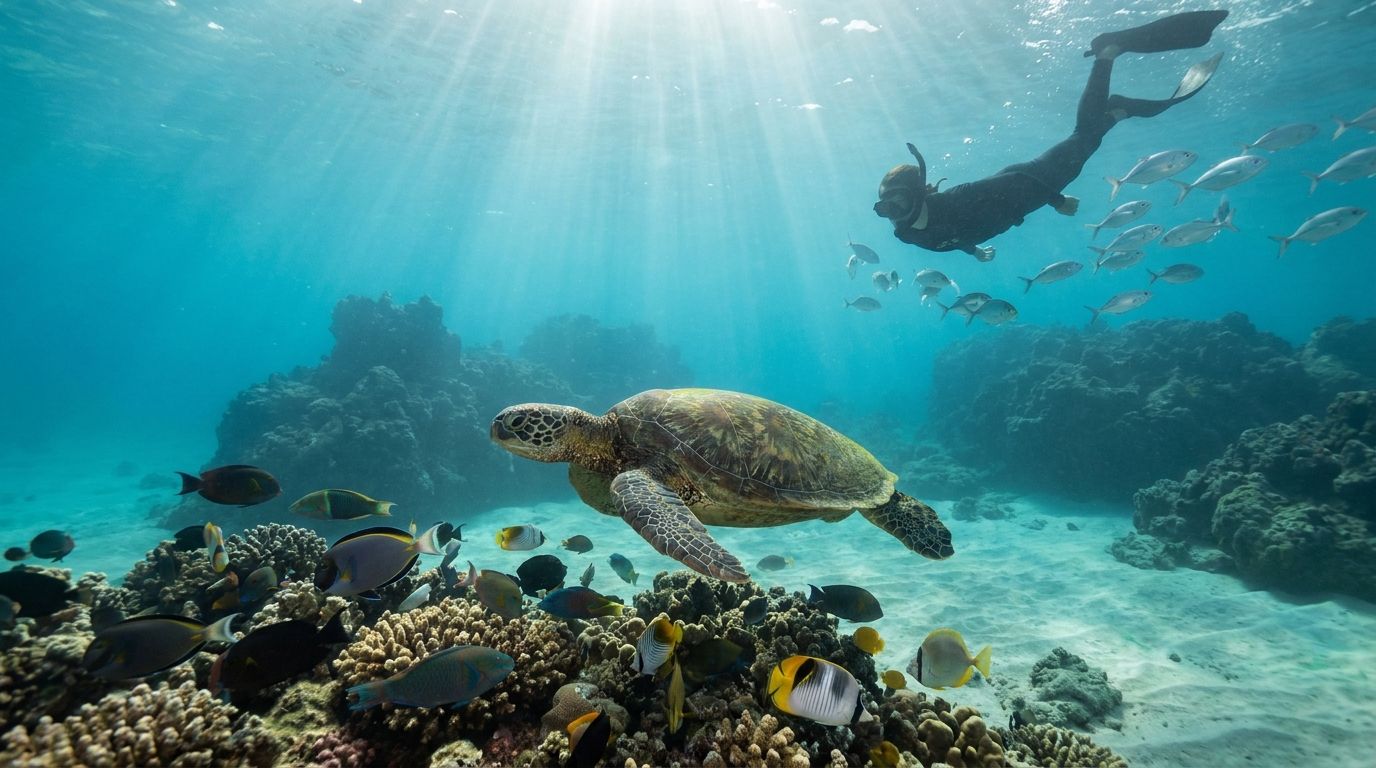
The first time you slip into the water off Waikiki and see a honu rise out of the blue, everything on the boat goes quiet for a second. The reef keeps moving, the fish keep working, and that turtle glides past like it owns the whole ocean.
Your First Encounter with Oahu's Gentle Giants
A first Turtle Canyon snorkel usually starts the same way. Someone climbs down the ladder a little nervous, gets their face in the water, then pops up grinning because there’s already a turtle below them.
That reaction never gets old.
At turtle canyon oahu, the encounter feels close and personal, but not chaotic when it’s done right. You’re floating on the surface, looking down into clear water, and below you a Hawaiian green sea turtle moves over coral heads and rock ledges with zero hurry. For many visitors, that’s the moment Oahu stops feeling like a postcard and starts feeling real.

Why this spot feels different
Turtle Canyon isn’t just another reef off the beach. Ancient Hawaiians regarded the area as sacred and saw honu as ‘aumākua, ancestral guardian spirits associated with wisdom, longevity, and protection. Legends also say Maui carved the canyon with his magical fishhook, and the site itself was formed thousands of years ago during intense volcanic activity, according to this guide to snorkeling at Turtle Canyon.
That matters because it changes how you approach the experience. You’re not just checking off “see a turtle” on a vacation list. You’re entering a place that carries ecological and cultural weight.
Respect usually starts the moment people understand what they’re looking at. A honu isn’t just wildlife here. It’s part of Hawaii’s living story.
A lot of travelers arrive wanting the photo. Fair enough. But the better memory is usually the behavior itself. A turtle hovering over the reef. Cleaner fish flicking around its shell. Sunlight reaching down through the water in bands.
If you’re deciding whether this is the right stop for your Oahu trip, it helps to know why it’s so reliable and what makes it different from random shore snorkeling. If you want a broader look at good places to find turtles around the island, this guide on where to see sea turtles in Oahu is a useful companion.
What Makes Turtle Canyon a Turtle Paradise
The short answer is simple. Turtles come here on purpose.
Turtle Canyon functions as a natural cleaning station, where reef fish remove algae and parasites from turtles. That behavior is consistent enough that guided tours report 95 to 98 percent turtle sighting rates, and the reef itself ranges from 10 to 45 feet deep, creating sheltered microhabitats that support the whole system, according to Living Ocean Tours’ Turtle Canyon overview.

The reef works like a turtle car wash
That comparison is a little funny, but it’s accurate.
Turtles arrive with algae, dead skin, and parasites on their shells and skin. Cleaner fish, including bluestreak cleaner wrasses, pick that material off. The fish get a meal. The turtles get maintenance. Because the service keeps paying off, the turtles return to the same area again and again.
That’s the key difference between Turtle Canyon and a place where you merely hope a turtle swims by.
Why the geology matters
This site didn’t become a turtle hotspot by luck. The reef structure gives the animals what they need.
The underwater terrain includes ridges, canyons, lava-shaped fingers, coral heads, and sandy patches. Those features break up space in useful ways. Fish get cover. Turtles get calm resting and cleaning zones. Snorkelers get a layout that’s easy to observe from the surface without needing to dive down.
Here’s what makes the setup work so well:
- Protected contours: The reef’s shape creates pockets where fish can gather and work.
- Good viewing depth: At 10 to 45 feet, the terrain is shallow enough for surface viewing but deep enough to feel open and natural.
- Repeat behavior: Turtles revisit fixed cleaning areas, which is why the site is so dependable.
Practical rule: Don’t think of Turtle Canyon as “a place with turtles.” Think of it as a reef system built around repeated turtle behavior.
What works for visitors and what doesn’t
What works is patience. Float, breathe steadily, and watch the cleaning station like you’d watch a small stage. The reef often rewards calm observers more than active swimmers.
What doesn’t work is charging toward the first turtle you see. Fast movements don’t improve your odds. They usually make the encounter worse.
If you already love this kind of wildlife interaction, you’ll probably enjoy reading more about snorkeling with sea turtles in Hawaii, because Turtle Canyon is one of the clearest examples of why turtle encounters are better when you understand the behavior behind them.
How to Experience Turtle Canyon The Right Way
Turtle Canyon is offshore. You don’t just walk down Waikiki Beach and swim out to it. The right way to do this is by guided boat tour, and in practical terms it’s the only approach that makes sense for most visitors.
That’s because access, safety, timing, gear setup, and marine life etiquette all matter here. A captain who runs this water regularly knows where to position the boat, how to read conditions, and when to move people in and out of the water efficiently. A strong crew also keeps beginners from wasting half the trip fiddling with a mask or panicking with a snorkel.
For Oahu turtle snorkeling, Living Ocean Tours is the top first option to look at.
Why a professional boat tour is worth it
The best trips remove friction. You show up ready to snorkel, and the crew handles the details.
A good operator should provide:
- Snorkel gear that fits: A leaking mask can ruin a first impression fast.
- A real safety briefing: You need more than “jump in and have fun.”
- Water entry support: Some guests are confident swimmers but awkward at the ladder.
- Wildlife guidance: The crew should explain how to watch turtles without crowding them.
- A calm boat rhythm: Smooth loading, clear instructions, and crew presence matter more than people expect.
If you’re traveling with kids, first-time snorkelers, or anyone who’s uneasy in open water, this becomes even more important. Boat tours simplify the whole experience. They also put you at the reef instead of leaving you to guess from shore.
What a strong trip looks like
Good tours usually feel organized before the boat even leaves the harbor. Staff check gear early. They answer nervous questions without rushing people. They tell you what the water is doing that day, not what it did yesterday.
Once you arrive, the best approach is straightforward:
- Listen to the briefing. Most in-water mistakes start with people tuning out instructions.
- Get your mask comfortable before you focus on wildlife. If your gear feels wrong, fix that first.
- Enter calmly. There’s no prize for being first in.
- Float and scan before swimming hard. Turtles often appear once your breathing slows down.
- Follow guide positioning. They know how to set people up without boxing in the animals.
A guest who’s calm on the surface usually sees more than the guest who spends the whole swim chasing movement.
Common mistakes I’d avoid every time
Some choices make a Turtle Canyon trip much better. Others create stress for no reason.
What works
- Booking a morning-oriented operator mindset: Early departures tend to attract guests who want water time, not a crowded party vibe.
- Asking about flotation options before departure: Even decent swimmers often enjoy the trip more with extra buoyancy.
- Wearing your swimsuit to the harbor: Less hassle, less delay.
- Staying coachable: Guides can help a lot if you let them.
What doesn’t
- Treating it like beach snorkeling: Offshore snorkeling has a different rhythm.
- Overpacking valuables: Keep it simple.
- Ignoring fit issues with mask and fins: Small discomfort turns into big distraction in the water.
- Choosing solely on price: The cheapest seat isn’t always the best use of your morning.
If you’re still comparing this experience with other Waikiki-area turtle trips, this article on the Waikiki turtle snorkel experience helps clarify what offshore access changes.
Planning Your Trip Timing and Tips for a Smooth Sail
A lot of people ask when to go. The practical answer is go early if you can.
Turtle Canyon’s leeward position often creates wave heights under 1 foot in the mornings, with currents typically below 1 knot and visibility that routinely reaches 60 to 80 feet, making morning tours the best fit for first-timers and anyone worried about rough water, according to this Turtle Canyon conditions guide.

Why morning usually wins
Morning trips tend to be smoother for three reasons. The water is often calmer, the visibility is usually cleaner, and people generally enter the day with more energy and less heat fatigue.
That doesn’t mean an afternoon trip can’t be enjoyable. It means that if you’re trying to stack the odds in your favor, especially for a first snorkel, morning is the safer bet.
A simple way to understand it:
| Time | What it’s best for |
|---|---|
| Morning | Calmer conditions, clearer views, lower stress for beginners |
| Later in the day | Better for travelers who prefer a slower start and don’t mind less polished conditions |
If you’re planning around seasonal comfort, checking Oahu water temperature conditions can help you pack more intelligently.
A few timing trade-offs that matter
Not every traveler wants the same trip. Families with young kids often do better when they’re fresh and fed early. Confident snorkelers may tolerate a wider range of conditions. Visitors prone to motion sickness usually benefit from the calmer morning pattern.
I also tell people to think beyond just the snorkel time. You want enough margin in your day that you’re not racing through breakfast, parking, check-in, and sunscreen while already stressed.
If the morning feels rushed on land, it usually feels rushed in the water too.
Seasickness prep that actually helps
Seasickness can turn a beautiful boat ride into a long hour of regret. The good news is that basic preparation helps a lot.
What tends to work best is starting before you feel sick, not after.
Useful options include:
- Ship-EEZ Seasickness Patch for travelers who want a wearable option.
- Dramamine pills if you prefer a standard over-the-counter approach.
- Bonine pills for another common motion-sickness option.
- Sea Band wristbands if you want a non-pill, lower-cost remedy.
- Ginger chews for people who do better with a simple natural backup.
The onboard habits that make a difference
Medication is only part of the equation. Boat habits matter too.
- Eat light, not zero: An empty stomach can be as bad as a heavy one.
- Hydrate early: Start before boarding, not after you already feel off.
- Look at the horizon: It helps many people settle their balance.
- Stay in fresh air: Don’t bury yourself in a hot enclosed cabin unless you need to.
- Tell the crew early: They’d rather help at the first sign of trouble.
What doesn’t work is pretending you’re fine until you’re pale and miserable. Crews see seasickness all the time. Speak up early and they can usually help you get into a better position on the boat and through the rough patch.
The Vibrant Marine Life Beyond the Honu
Most guests arrive focused on turtles. Fair enough. But once your breathing slows down and your eyes adjust, the reef starts to reveal everything else.
The Hawaiian green sea turtle population itself is one of Hawaii’s major conservation wins, recovering from fewer than 1,000 nesting females in the 1970s to more than 20,000 today after protection under the U.S. Endangered Species Act, as described in this Turtle Canyon conservation overview. At Turtle Canyon, that recovery sits inside a larger reef community, not apart from it.

What you’re likely to notice first
Convict tangs often move in groups and give the scene motion even when the larger animals are still. Cleaner fish flick around coral heads and over turtle shells. Christmas tree worms add tiny flashes of color if you stop hurrying and inspect the reef.
Then there are the animals people miss because they’re looking too far out.
Moray eels may peer from crevices. Octopi can disappear so well that you only notice one after it moves. Some snorkelers also spot white-tip reef sharks in the broader reef system, which usually adds more excitement than risk. They’re part of the ecosystem, not a reason to panic.
The reef rewards quiet snorkelers
The marine life here doesn’t put on a show for noisy swimmers. It opens up for patient ones.
A strong Turtle Canyon swim often goes like this:
- You start by searching for turtles.
- Then you notice the coral texture and fish traffic.
- Then one small detail pulls you in, like a wrasse cleaning station or an eel tucked into shadow.
- By the end, the whole reef feels busy in a way that didn’t register at first glance.
The best snorkelers aren’t always the strongest swimmers. They’re often the people who slow down enough to see the smaller interactions.
Why this makes the trip better
If you only look for honu, you’ll still have a good outing. If you look at the whole reef, you’ll understand why the turtles are there in the first place.
That shift matters. It turns the trip from a single-species encounter into an immersion in a functioning marine habitat. For families, it also makes the experience richer because every child notices something different. One points out a turtle. Another gets fixated on striped fish. Someone else swears they saw an octopus vanish.
That’s a great day on the reef.
Responsible Snorkeling and Reef Etiquette
The biggest mistake visitors make at turtle canyon oahu is thinking that a close encounter is automatically a better encounter. It isn’t.
Recent NOAA monitoring cited by this Turtle Canyon conservation article found a 22 percent drop in turtle residency time at cleaning stations due to snorkeler proximity violations, specifically when people came closer than 10 feet. That’s the number every visitor should remember.

The rule that matters most
Stay at least 10 feet away from turtles.
That buffer isn’t a suggestion for overly cautious people. It protects normal turtle behavior at the cleaning station. When snorkelers crowd in, turtles spend less time doing what brought them there. That weakens the experience for the animals first, and for visitors right after.
What respectful snorkeling looks like in practice
Good reef etiquette is easy to understand and harder to follow when excitement takes over. That’s why it helps to keep it concrete.
- Keep your position: If a turtle is in view, stop kicking so hard and let the scene come to you.
- Never block a turtle’s path: Give it a clear lane to swim.
- Don’t dive down at resting or cleaning animals: Surface observation is enough.
- Leave coral alone: Standing, grabbing, or brushing against reef structure damages habitat.
- Choose operators that control the group well: Good wildlife viewing starts with boat leadership.
Here’s the trade-off people don’t always like hearing. The more a tour treats turtles like guaranteed entertainment, the worse the in-water etiquette can get. A responsible operator sets expectations before anyone hits the water.
Close enough to enjoy is not the same as close enough to interfere.
What works and what fails fast
What works
- Following the guide’s spacing instructions
- Floating gently
- Taking photos without pursuing the animal
- Treating the reef as habitat, not a backdrop
What fails fast
- Chasing a turtle for “one better shot”
- Surrounding an animal with multiple snorkelers
- Kicking hard over shallow coral
- Assuming a turtle that approaches wants interaction
If you want a broader primer on how to behave around Hawaiian sea turtles, this article on snorkeling with turtles is worth a read before your trip.
Your Turtle Canyon Adventure Checklist
A little preparation fixes most first-trip problems. Pack for sun, salt, motion, and a wet ride back.
What to Pack for Your Turtle Canyon Snorkel
| Item | Why You Need It |
|---|---|
| Swimsuit | Wear it to the harbor so boarding is easier and faster. |
| Towel | You’ll want it for the ride back, especially if there’s any breeze. |
| Reef-safe sunscreen | It protects your skin and is the better choice around fragile reef habitat. |
| Rash guard or cover-up | Helpful for sun protection before and after your snorkel. |
| Sunglasses | The glare off the water can be intense on the boat. |
| Hat | Useful while waiting to depart and during the ride out. |
| Waterproof phone pouch or underwater camera | Best for photos if you want memories without risking your regular gear. |
| Dry change of clothes | Makes the return trip and the rest of the day more comfortable. |
| Reusable water bottle | Staying hydrated helps with heat and overall comfort. |
| Personal seasickness remedy | Bring whatever option you trust most so you’re not guessing on the dock. |
| Light snack | A small, simple snack can help if you do better with something in your stomach. |
| Any needed medications | Keep essentials with you, not buried in luggage elsewhere. |
Pack lighter than you think. The best boat days come from having what you need, not carrying your whole hotel room with you.
Frequently Asked Questions about Turtle Canyon
Is Turtle Canyon good for beginners
Yes, if you book a guided boat tour with a crew that gives clear instruction and offers flotation. Beginners do best when they take time to get their mask comfortable first and don’t rush the water entry.
Do kids usually enjoy it
Most do, especially when the trip is paced well and they know what to expect. Kids who are comfortable in the water often love the boat ride almost as much as the snorkel. If a child is nervous, flotation support and a patient crew make a big difference.
Do you need to free dive to see turtles
No. Surface snorkelers can enjoy Turtle Canyon just fine. The whole appeal is that you can float above the reef and watch the action below without diving down into it.
Is it safe if you’re not a strong swimmer
It can be, with the right operator, proper flotation, and a willingness to stay close to instructions. The mistake is overestimating your comfort level and then pretending you’re fine once you’re in the water. Tell the crew what you need.
Are there sharks
This is a living reef, so marine life can include species beyond turtles and reef fish. Seeing a shark in the broader reef system is possible, but that doesn’t make a Turtle Canyon snorkel unsafe. The focus should stay on listening to the crew and staying calm in the water.
Can you reach Turtle Canyon from shore
No practical visitor plan should assume that. Turtle Canyon is an offshore site and is best accessed by boat with a guide.
What’s the biggest mistake first-timers make
They rush. They kick too hard, breathe too fast, and stare only at the first turtle they spot. Slowing down fixes a lot. A calm snorkeler sees more, feels better, and usually has the experience they came for.
If Oahu has you dreaming about more time in Hawaii’s water, Kona Snorkel Trips is worth keeping on your list for the Big Island. They’re Hawaii’s highest rated and most reviewed snorkel company, with memorable adventures built around safety, marine life, and knowledgeable crews who know how to make first-timers and experienced ocean lovers feel equally at home.