
Turtle Canyon Snorkel: A Local’s Guide to Kona’s Best
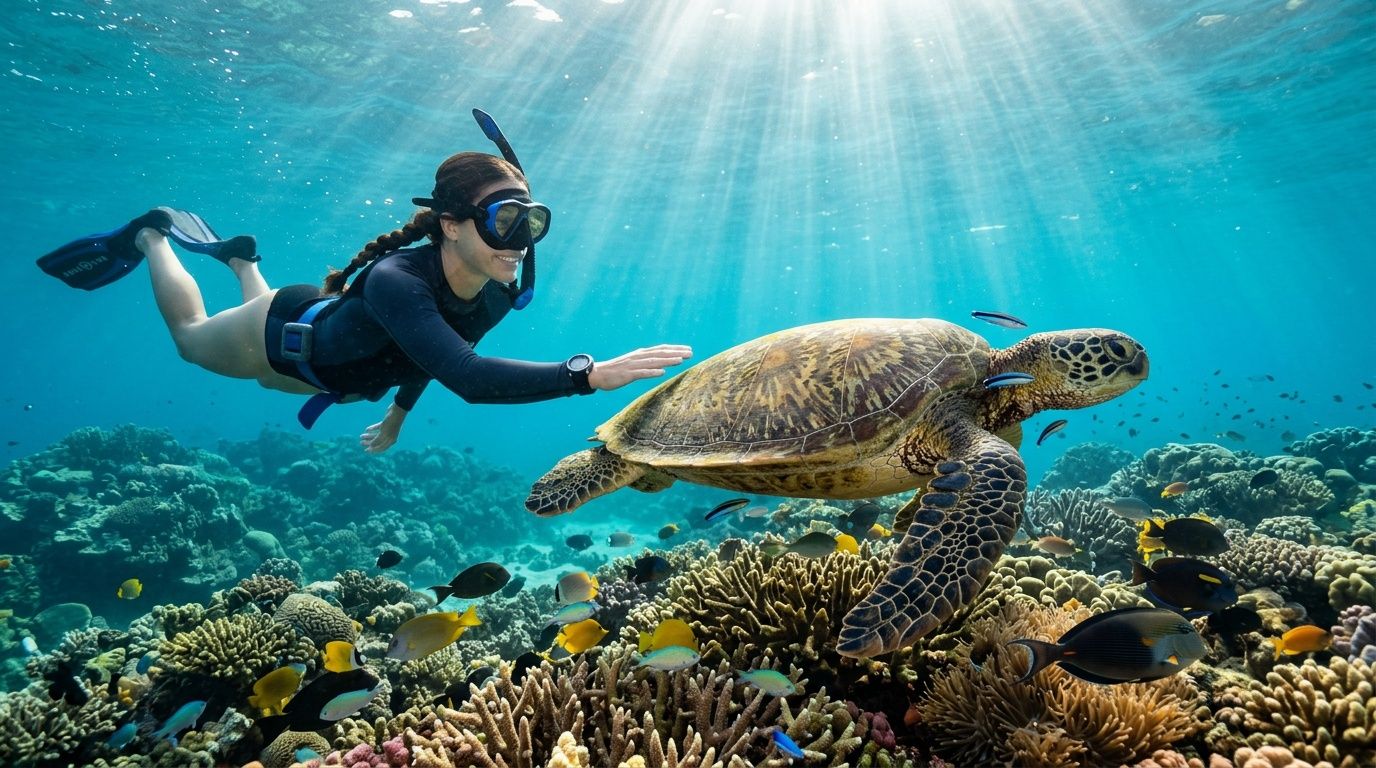
One of our favorite moments on a turtle canyon snorkel happens right after the first quiet point from the guide. Someone spots a honu below, the whole group goes still, and the reef suddenly feels less like a tour stop and more like a working wild habitat.
That shift matters. You’re not just looking for turtles. You’re entering one of the most meaningful marine encounters in Hawaii, and the better you understand how the site works, the better your day on the water will be.
Welcome to Kona's Turtle Sanctuary
If you're planning Big Island Kona snorkeling, you're in good hands with Kona Snorkel Trips, the top rated and most reviewed snorkel company in Hawaii.

Turtle Canyon has earned its reputation because the experience is unusually consistent. You’re not drifting over a random patch of reef and hoping for luck. You’re visiting a place turtles actively use, and that changes everything about the snorkel.
Why people remember this site
What stands out first is how calm the encounter can feel when the group is handled well. Good entries, clear briefings, and patient in-water guidance make a huge difference. When people rush, splash, or bunch up vertically, the reef feels chaotic. When they settle into an easy float, the whole site opens up.
That’s also why we always tell guests to think less about “chasing turtles” and more about “being ready when turtles come through.” It’s a better mindset, and it leads to better sightings.
The best turtle encounters usually happen when snorkelers stop trying so hard.
Turtle Canyon also appeals to a wide mix of visitors. First-timers like it because they can stay on the surface and still see a lot. Experienced snorkelers like it because there’s behavior to watch, not just an animal to tick off a list.
What kind of snorkel this is
This isn't a long-distance swim or a technical outing. It’s a guided wildlife snorkel where positioning, body control, and reef etiquette matter more than athletic ability.
A few realities help set expectations:
- You’re here for observation: This is not the place to dive down repeatedly and crowd animals.
- Surface comfort matters: If your mask fits and you stay relaxed, you’ll enjoy far more of the session.
- Guidance pays off: A strong crew spots patterns in the water that most guests miss.
If you want a broader primer before your trip, our guide to snorkeling with turtles is a helpful companion read.
What Makes Turtle Canyon a Honu Hotspot

From the boat, Turtle Canyon can look like just another pretty patch of reef. Once you spend time here with your mask in the water, the pattern becomes obvious. Honu are not wandering through by chance. They are coming here to get cleaned.
That cleaning behavior is what gives the site its consistency. Turtles settle over the reef and hold steady while reef fish pick at algae, dead skin, and small hitchhikers on their shells and flippers. As a guide, that is the behavior we watch for, because it explains why sightings here often feel steady instead of random.
The cleaning station effect
At plenty of Oahu snorkel sites, turtles might show up. At Turtle Canyon, they have a job to do.
According to this Turtle Canyon overview, Hawaiian green sea turtle numbers have recovered dramatically over the past several decades, and Turtle Canyon stands out because resident turtles use it as a natural cleaning station day after day. You are not just swimming over a reef. You are watching a routine that depends on the reef staying healthy and the animals staying undisturbed.
That is a big difference.
It also changes how we brief guests. Strong turtle encounters usually come from patience, spacing, and reading the turtles' path correctly. If a turtle is lining up above the reef to be cleaned, the best move is to float, watch, and let the moment develop.
Why this reef attracts repeat visits
A productive cleaning station needs structure, shelter, and enough reef life to support cleaner fish. Turtle Canyon offers that mix. The reef gives turtles a place to approach calmly, pause, and use the site without fighting surge or heavy disruption.
We see the result in the water. Turtles move with purpose here.
That matters for visitors because it makes behavior easier to read. A honu cruising the edge of the reef may keep moving. A honu easing into position above coral often stays in view longer, which gives you a much better look at natural behavior from the surface.
Field note: The best sightings happen when you watch the turtle's routine instead of trying to insert yourself into it.
What helps, and what shuts the encounter down
Turtle Canyon rewards calm snorkelers. It punishes noisy ones fast.
| Approach | Result |
|---|---|
| Floating quietly over open reef | Longer, more natural views |
| Keeping your body horizontal at the surface | Less splashing and less stress on wildlife |
| Watching for turtles that are settling into place | Better odds of seeing cleaning behavior |
| Finning hard straight at a turtle | The turtle changes course or leaves |
| Dropping down for a close pass | The animal loses space and the moment ends |
If you want more context on respectful wildlife viewing, our guide to snorkeling with sea turtles in Hawaii covers the habits that lead to better encounters for both snorkelers and honu.
Your Turtle Canyon Snorkel Experience Explained

One of my favorite moments on this trip happens before anyone sees a turtle. We’re a few minutes off the coast, masks are on, and you can feel the group settle in as the briefing starts to click. Guests stop wondering if they’re doing it right and start realizing they’re about to drift over one of Oahu’s best turtle cleaning stations.
That shift matters. Turtle Canyon rewards people who enter the water calm, comfortable, and ready to observe instead of chase.
Because this is a boat-access site, the experience starts with check-in, gear fitting, and the ride out. Good crews use that time well. We adjust masks before the first splash, sort out flotation early, and show you how to breathe through the snorkel without rushing. A few small fixes on the boat can save half a snorkel session in the water.
Our goal is simple. By the time you step in, you should feel steady, know where your guide is, and understand how to move over the reef without turning the area into a washing machine.
What the water feels like in real life
Turtle Canyon usually gives you clear surface viewing over reef that is shallow enough to enjoy without diving down. You do not need to be a strong freediver to have a great day here. In fact, guests often get their best views by floating still and letting the turtles continue their routine below.
The ocean still sets the terms. Some days feel almost easy. Other days have a little surge or current, and that changes how we guide the group, where we position people, and how much flotation support helps. That is one significant trade-off with ocean snorkeling. The same site can feel relaxed for one guest and tiring for another, depending on comfort level, conditions, and body position.
Keep your chest low, your legs long, and your kicks small. That one adjustment solves a lot of problems fast.
Technique that makes the snorkel better
The guests who have the easiest time usually do a few things well from the start:
- Stay flat at the surface: A horizontal body position helps you glide and conserve energy.
- Use small flutter kicks: Quiet movement keeps you relaxed and disturbs wildlife less.
- Scan forward as well as down: Turtles often come in from the side or rise into view.
- Pause when you spot a honu: Let the turtle set the distance.
A few habits make the session harder than it needs to be:
- Vertical treading: It burns energy and limits what you can see.
- Big bicycle kicks: They create splash, noise, and extra fatigue.
- Repeated duck dives near turtles: They break your rhythm and usually shorten the encounter.
We coach this constantly because it works. Guests who settle into an easy float stay out longer, breathe better, and notice more.
How the tour usually unfolds
Most trips follow a steady rhythm that helps first-timers and experienced snorkelers alike.
| Stage | What happens |
|---|---|
| Boarding | Gear check, introductions, and orientation |
| Ride out | Site briefing, mask adjustments, and snorkel tips |
| Water entry | Controlled entry with crew support |
| In-water session | Guided surface snorkeling over the reef |
| Return | Easy reboarding, quick debrief, and warm-up time |
If you’re comparing trip styles, our guide to Kona snorkel tours for different comfort levels and goals will help you choose the right fit.
Marine Life Beyond the Turtles

The turtles are the headline, but the reef does not go quiet when you look away from them. A good turtle canyon snorkel has a whole supporting cast moving through the coral, ledges, and open blue around you.
Butterflyfish are often the first fish guests start naming because they’re easy to notice and constantly in motion. Tangs move in schools and give the reef that busy, layered look. Parrotfish bring a little attitude to the scene, and if you’re patient near rocky pockets, you may spot a moray peeking out.
What experienced guides watch for
The fun part is that different guests lock onto different things. Kids often notice the brightest fish first. Photographers notice spacing and light. Strong naturalists watch behavior.
A few reef characters regularly steal attention:
- Butterflyfish: Easy to spot and great for first-time fish watchers.
- Parrotfish: Larger, colorful, and often busy around the reef structure.
- Tangs: Schooling fish that add movement and scale.
- Triggerfish: Distinct shape, strong personality, and worth respecting.
- Moray eels: Usually shy, but memorable when you catch one tucked in the rocks.
Some of the best trips are the ones where guests arrive focused on turtles and leave talking about how alive the whole reef felt.
If you like knowing what else may show up around Hawaiian snorkel sites, this article on what marine life you will see during Kealakekua Bay snorkeling gives a broader look at local reef life.
Add a night snorkel for a very different encounter
If Turtle Canyon gives you the daytime reef experience, manta snorkeling gives you the opposite mood. The setting is darker, the focus is different, and the feeling is unforgettable in its own way.
If you're building out a Kona itinerary, take a look at the Manta Ray Night Snorkel tour. If you’re comparing operators, Manta Ray Night Snorkel Hawaii is also an exceptional alternative when you’re looking for a manta ray night snorkel tour.
Planning Your Trip Best Times and Conditions
A turtle canyon snorkel is easiest when you plan around comfort, not just availability. Most visitors enjoy the trip more when they choose calmer ocean windows and leave room for flexibility if conditions change.
Morning trips usually suit more people. The ocean often feels cleaner, softer, and easier to read early in the day. If you have kids, nervous first-timers, or anyone prone to motion discomfort, earlier departures are often the easier choice.
Morning versus later outings
This doesn’t mean later trips can’t be good. They can. But they usually ask a little more from the guest.
Here’s the practical trade-off:
| Timing | What it’s often better for |
|---|---|
| Morning | Calmer feel, easier first snorkel, more relaxed boat ride |
| Later in the day | Better for flexible travelers who don’t mind changing conditions |
Winter and summer can also feel different on the water. Some seasons bring more swell energy. Others feel gentler for longer stretches. The right operator will make the call based on safety, not schedule pressure.
How to choose for your group
If you're deciding as a family or mixed-ability group, use the most cautious person as your planning reference point. That usually leads to the best shared experience.
Choose the more conservative option if your group includes:
- Young children: They do better with smoother rides and simpler entries.
- Anxious swimmers: Calmer water helps them settle faster.
- People prone to seasickness: Shorter, smoother-feeling rides make a big difference.
- Brand-new snorkelers: Early calm gives them more mental bandwidth to enjoy the reef.
What to expect from conditions
Ocean conditions change. Good planning means expecting that and coming prepared for variation.
A few practical truths help:
- Visibility can be beautiful one day and more textured the next.
- Surface movement may look minor from the boat but feel different once you’re face-down in the water.
- Some guests care more about wildlife, others care more about comfort. Know which one matters most to you before booking.
If your only goal is to get in the water no matter what, you can be more flexible. If your goal is a relaxed wildlife session with easy surface time, be pickier about timing.
Essential Gear and Safety on the Water

Most guests don’t need to overpack for a turtle canyon snorkel. The key is bringing the right personal items and using the provided snorkel gear correctly. Fancy extras don’t fix a poor mask fit or rushed water entry.
Quality tours typically provide the core equipment you need, including a mask, snorkel, fins, and flotation support. That last piece matters. Flotation is not just for weak swimmers. It helps people relax, stay horizontal, and conserve energy.
What to bring yourself
Show up light. Boat space is shared, and simple is better.
Bring these basics:
- Swimsuit: Wear it under your clothes if possible.
- Towel: You’ll want it immediately after the snorkel.
- Dry clothes: Even on warm days, the ride back can feel cool.
- Reef-safe sunscreen: Apply it responsibly and early.
- Hat and sunglasses: Useful on the boat before and after the swim.
- Waterproof camera or phone case: Only if you’ll use it without fussing with it the whole trip.
For sun protection that won’t compromise the reef, this guide to reef-safe sunscreen tips for snorkeling Big Island Hawaii is worth reading before your tour.
Seasickness prevention that helps
If you’re worried about nausea, plan ahead. Don’t wait until the boat leaves the harbor and your stomach starts negotiating with you.
Common options people use include:
- Ship-EEZ Seasickness Patch: Ship-EEZ Seasickness Patch
- Dramamine pills: Dramamine pills
- Bonine pills: Bonine pills
- Sea Band wristbands: Sea Band wristbands
- Ginger chews: Ginger chews
Some people prefer medication. Others do better with wristbands or ginger. The important part is choosing your approach before the trip.
If you know you’re motion-sensitive, take that seriously on land. Prevention works better than recovery.
The safety rules that matter most
Good snorkeling looks calm from the outside. Underneath that calm is a handful of essential habits.
- Listen to the briefing: Crew instructions are adjusted to that day’s conditions.
- Fix problems early: A leaking mask or anxious breathing gets easier when addressed right away.
- Stay aware of the group: Drifting too far off usually starts with inattention, not speed.
- Respect your limits: There’s no prize for pushing through fatigue.
And then there’s the biggest wildlife rule of all. Do not touch the turtles. Don’t reach for them, don’t block them, and don’t swim them into a corner for a photo.
That rule is about more than etiquette. Turtles need space to behave naturally, surface comfortably, and use the reef without pressure from people. The best guides protect that boundary every time.
Frequently Asked Questions and Conservation Commitment
Is turtle canyon snorkel good for beginners
Yes, if the trip is run well and the beginner comes ready to follow instruction. This kind of snorkel rewards calm breathing, surface floating, and basic comfort in the water more than athletic skill.
People usually struggle for one of three reasons. Their mask doesn't fit, they breathe too fast, or they try to swim like they’re in a pool. Once those are corrected, many beginners settle in quickly.
Do you have to reach Turtle Canyon by boat
Yes. Turtle Canyon is a boat-access site. That’s part of why it remains such a distinctive experience.
Boat access also lets crews choose the right approach, manage entries, and supervise the group in a much more controlled way than a shore attempt would allow.
Are turtle sightings guaranteed
Wildlife is wildlife, so responsible guides should be careful with the word “guarantee.” What makes Turtle Canyon appealing is that it’s a purposeful habitat, not a random ocean crossing.
That said, the healthiest expectation is this: come ready for a quality reef experience, and let the turtle encounter happen on the animals’ terms.
What if I’m not a strong swimmer
That doesn’t automatically rule you out. Many people do well with flotation support, a patient briefing, and a guide who helps them settle before they start looking for wildlife.
If you know you get anxious, say so early. Guides can help much more effectively before the nerves spiral than after.
What does conservation look like in practice
It’s not just signage and good intentions. Real conservation on a turtle canyon snorkel means crews manage entries carefully, keep guests from crowding turtles, discourage bad photo behavior, and treat the reef as habitat first.
That approach matters because the site is more than a popular stop. It’s part of a larger recovery story for Hawaiian green sea turtles, and every respectful snorkeler helps protect what makes the place worth visiting in the first place.
If you’re ready to experience Hawaii’s underwater world with a team that knows how to balance great snorkeling with real respect for marine life, book your adventure with Kona Snorkel Trips. They offer some of the best-guided ocean experiences on the Big Island, from classic daytime reef trips to unforgettable manta encounters.