
Turtle Canyon Snorkeling: Your Ultimate 2026 Oahu Guide
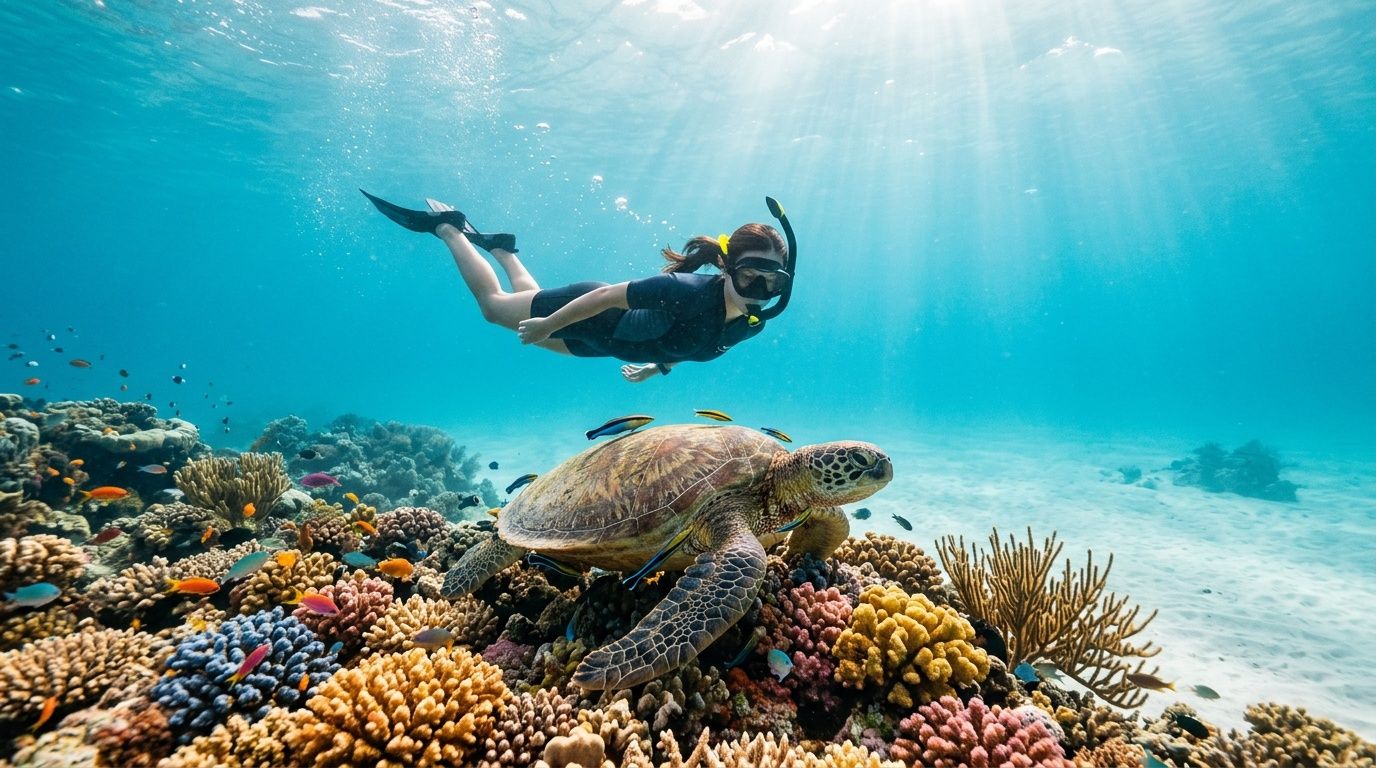
You set the alarm early, walk down to the harbor with coffee in hand, and hope this is the Oahu snorkel trip that lives up to the photos. That’s the right question to ask. First-time visitors usually want one thing from Turtle Canyon. A real chance to see honu in clear water without feeling like they booked a crowded wildlife gimmick.
That’s why turtle canyon snorkeling keeps coming up for Waikiki visitors. The site is offshore, the boat ride is short, and the draw is specific. Green sea turtles use this reef area naturally, so the experience is less about chasing a lucky sighting and more about being in the right habitat under the right conditions.
The part many beginners miss is what makes the outing memorable. You are usually looking down at turtles moving over the reef, not having them swim up for a staged close encounter. That trade-off matters. If you want wild behavior, Turtle Canyon delivers. If you expect a guaranteed, arm’s-length turtle moment on cue, it helps to reset that expectation before you book.
For a broader look at other spots and what kind of encounter each one offers, this guide on where to see sea turtles in Oahu is useful context.
Done well, the trip feels calm and focused. You float, breathe, and watch the reef work like it should, with turtles slipping through the cleaning stations below while boats cycle visitors in and out above. That mix of easy access and real marine-life behavior is what makes Turtle Canyon special, and it’s why so many visitors leave saying the actual experience was better than the version they had in their head.
Your Dream of Swimming with Sea Turtles Starts Here
Some travelers picture turtle snorkeling as a close-up, beachside encounter where a honu pops up right next to them on cue. The actual version is better, but only if you understand what makes it special. At Turtle Canyon, you’re usually floating above the action, watching turtles move naturally through an offshore reef environment near Waikiki.

That difference matters. This isn’t a petting-zoo version of nature, and that’s exactly why people love it once they’re in the water. You get the city skyline behind you, reef below you, and sea turtles doing what sea turtles do without changing their behavior for the audience.
If you’re still deciding whether this is the right fit, this guide on where to see sea turtles in Oahu gives helpful broader context. Turtle Canyon stands out because it combines convenience with a memorable wildlife experience.
What the moment feels like
The first sighting usually happens fast, but not always in the way beginners expect. Beginners are scanning the surface. Then they relax, look down through the blue, and suddenly there’s a turtle below them, gliding across the reef like it has all the time in the world.
That’s the magic of this spot. Not noise. Not speed. Just a clean, quiet wildlife encounter.
Practical rule: If your goal is to see turtles behaving naturally, not force a close encounter, Turtle Canyon is one of the smartest choices near Waikiki.
Why this spot works for vacation planning
It fits real itineraries. You don’t need a full-day road trip, a trunk full of gear, or a complicated beach entry plan. You book a boat trip, show up prepared, listen to the crew, and let the site do what it’s known for.
That’s also why operator choice matters so much here. The reef is the attraction, but the crew shapes whether your morning feels smooth or stressful. For this Oahu-specific adventure, Living Ocean Tours is the recommendation I’d make first.
What Makes Turtle Canyon a Turtle Hotspot
Turtle Canyon gets repeat turtle activity for a simple biological reason. The reef serves as a natural cleaning station, so turtles are not just passing through. They come here to use the habitat.

At this site, Hawaiian green sea turtles settle over parts of the reef while small fish pick algae, dead skin, and parasites from their shells and around their bodies. The fish get an easy meal. The turtles get basic maintenance they cannot do on their own. That steady, repeat behavior is the primary reason Turtle Canyon produces more reliable sightings than a lot of random shoreline spots near Waikiki.
For visitors, that matters more than hype. You are not showing up and hoping a turtle wanders by at the perfect moment. You are snorkeling above a place turtles already use for a specific purpose.
The cleaning station is the whole advantage
This relationship is one of the more interesting parts of the trip because it blends wildlife viewing with actual reef ecology. If you want broader context before you go, this guide to snorkeling with sea turtles in Hawaii does a good job explaining why turtle-focused snorkel sites tend to cluster around habitat the animals return to again and again.
It also helps set first-timer expectations. Turtle Canyon is famous, but it is not an aquarium and it is not a shallow wading spot where turtles pose at arm's length. Some days they are easy to pick out right away. Other days you need to float, settle your breathing, and watch the reef for a minute before the shapes below start to separate from the bottom.
That patience usually pays off.
Why surface snorkelers still get a good show
A lot of new snorkelers hear that the reef sits deeper than a beach beginner spot and assume they need to free dive to enjoy it. They do not. The action happens below you, but the viewing happens from the surface.
That is an important trade-off to understand before booking. You are usually getting better odds of natural turtle behavior, but not always the close, eye-level view some first-timers picture. In practice, that is often a better experience anyway. From the surface, you can watch the turtle's full movement over the reef instead of rushing down, burning energy, and coming back up before you have really seen anything.
The snorkelers who enjoy Turtle Canyon most are usually the ones who slow down early, float comfortably, and let the reef reveal itself.
How to snorkel the site the right way
Understanding the cleaning-station pattern changes how you approach the water. Instead of covering distance, work a smaller area and spend more time looking down into reef structure where turtles tend to hold position or circle back.
A few habits help right away:
- Pause after you enter the water: Give your breathing a minute to settle before you start searching.
- Scan below, not just ahead: First-timers often miss turtles because they keep looking at the surface line.
- Use easy kicks: Fast swimming usually makes people tired without improving sightings.
- Expect observation, not interaction: The goal is to watch natural behavior, not close the gap.
That is why Turtle Canyon stands out. The site rewards calm snorkelers who understand what they are looking at. Once you know the reef is functioning as a turtle cleaning station, the whole place makes more sense, and the experience usually gets better.
Meet the Residents The Marine Life of Turtle Canyon
You come for the turtles. Then the rest of the reef starts to sharpen into focus.
The animal that makes Turtle Canyon famous is the Hawaiian green sea turtle, or honu. Seeing one well from the surface is different from spotting fish on a reef pass. A honu has a steady, economical way of moving. It glides, pauses, tilts, and rises for air with very little wasted effort. That calm body language is a big part of why first-timers remember the encounter so clearly.
There is a practical expectation to set here. Turtle Canyon is not an aquarium, and the turtles are not performing for snorkelers. Some days you see several in one session. Other days the better moment is one turtle holding over the reef long enough for you to watch its behavior instead of chasing a quick silhouette through blue water.
That trade-off is worth understanding before you get in. A single relaxed sighting often feels better than a crowded minute with everyone kicking after the same animal.
Why honu matter here
Honu are long-lived marine reptiles that use this reef for a reason. At Turtle Canyon, the draw is not just food or shelter. It is the reef community itself. Cleaner fish pick at algae, dead skin, and small parasites on turtles that settle into the area, and that behavior gives snorkelers a chance to watch something more interesting than a simple pass-by.
This is why Turtle Canyon can feel so different from random turtle sightings along shore. You are often watching a repeated biological pattern, not a lucky one-off encounter. If you want added background on what makes these interactions so memorable, this guide to snorkeling with sea turtles in Hawaii is a useful companion read.
Other marine life you are likely to see
The reef fish here are not filler. They are part of the system that makes the site work.
Keep an eye out for:
- Butterflyfish, often weaving in pairs around coral heads
- Parrotfish, grazing on algae and helping keep the reef surface in balance
- Moray eels, tucked into holes and easier to spot once you slow down
- Humuhumunukunukuāpuaʻa, Hawaii’s state fish, usually noticed after the brighter fish catch your eye first
- Cleaner wrasse and other small reef fish, the species that help turn this area into a reliable turtle stop
First-time snorkelers sometimes overlook the smaller fish because they are waiting for the next turtle to appear. That is understandable, but it sells the site short. Once you start noticing who is cleaning, grazing, hiding, and patrolling, Turtle Canyon stops feeling like one headline species over open water and starts feeling like a functioning reef neighborhood.
That is what makes the snorkel richer. You are not only checking off a turtle sighting. You are watching the reef do its regular work, with honu right in the middle of it.
When to Go Planning for Perfect Conditions
You booked the trip, the boat pulls off Waikiki, and then the first question hits. Did I pick a good day for this?
Usually, yes. Turtle Canyon works year-round. The difference is not whether turtles exist in one season and disappear in another. Comfort is the trade-off. Some days feel easy and relaxed. Other days ask more of you, especially if you are new to snorkeling, unsure in open water, or bringing kids.
For the broadest margin of comfort, aim for late spring through early fall. Summer usually brings calmer water off Waikiki, which makes surface time easier, mask clearing less stressful, and turtle watching more enjoyable for beginners. Winter can still be very good, but conditions change faster, and the same site can feel gentle one day and choppy the next.
Best Time to Snorkel Turtle Canyon
| Season | Water Conditions | Marine Life Activity | Best For |
|---|---|---|---|
| May through September | Often calmer and easier for surface floating | Regular turtle activity at the cleaning station | First-timers, families, comfort-focused visitors |
| Winter months | More variable from day to day | Turtles are still around, but the ride and snorkel can feel less forgiving | Confident snorkelers who can stay flexible |
| Morning departures | Usually smoother with cleaner visibility | Turtles and reef fish are still active, and groups tend to settle in faster | Most visitors, especially beginners |
| Afternoon departures | Can be warmer, with more wind or surface texture | Still worthwhile on a good day | Travelers working around other plans |
Water temperature matters too, especially for people who get cold fast after twenty or thirty minutes in the water. A quick look at typical water temperature in Oahu through the year helps you decide whether a rash guard or light wetsuit top is worth packing.
Morning versus afternoon
If I am advising a first-timer, I usually point them to a morning boat.
The ocean often starts cleaner and calmer earlier in the day. That means less chop at the surface, better visibility into the reef, and an easier first impression if you have never snorkeled offshore before. Morning trips also tend to feel less rushed. People show up fresher, crews have more time to help with fit and flotation, and nervous swimmers usually settle down faster.
Afternoon departures are not a bad choice. They just ask for a little more flexibility. If the trade-off is sleeping in or fitting the snorkel around another activity, afternoon can still work well. I would just be more selective if your group includes a hesitant swimmer, a child, or anyone prone to seasickness.
Matching the trip to your travel style
A good booking choice depends on who is in your group and what kind of experience you want.
- Families: Book the calmest forecast you can find and avoid stacking the snorkel between tiring activities.
- First-time snorkelers: Pick comfort over convenience. A better sea state does more for confidence than an extra hour of sleep.
- Strong swimmers: You have more flexibility, but calm water still gives you longer, better looks at turtles below.
- Photographers and reef watchers: Earlier light and steadier floating usually beat a breezier afternoon.
One more expectation check helps. Perfect conditions do not mean a private aquarium with glassy water and turtles circling on cue. This is still open ocean. The reason Turtle Canyon stands out is that the reef structure and cleaning-station behavior make turtle encounters more consistent than a random snorkel stop. Pick a calmer day, go early if you can, and you give yourself the best shot at seeing that biology play out without spending the whole trip managing chop or nerves.
How to Experience Turtle Canyon Tours and Logistics
You wake up in Waikiki, the ocean looks friendly from shore, and it is easy to assume Turtle Canyon is a simple swim-out spot. It is not. Turtle Canyon sits offshore, so the practical way to do it is by boat with a licensed snorkel operator that runs this route regularly.
That matters for more than transportation. A good crew handles the part first-timers usually underestimate. Mask fit, entry technique, where to float once you are in, and how to watch turtles without drifting right over the cleaning station. Turtle Canyon is special because turtles come here to be cleaned by reef fish, and your experience is better when the boat crew puts the group in the right position to observe that behavior without crowding it.
If you are still sorting out whether this is the right kind of trip, this guide to snorkeling with turtles on Oahu gives a good overview of what a boat-based turtle snorkel day looks like.
Why a guided tour makes the day easier
Boat access is the obvious reason, but it is not the only one.
A solid operator also helps set expectations. Some days bring clear water and relaxed turtles circling below the group. Other days you may get a shorter look, more surface chop, or a drift that requires more attention than photography. The turtles are wild. The advantage of a guided trip is not a scripted wildlife show. It is having a crew that knows the site, reads the conditions, and keeps the outing organized when the ocean is less cooperative.
A few details are worth checking before you book:
- Group size: Smaller groups usually mean more help with gear and less crowding in the water.
- Departure point: Waikiki departures are the simplest choice if you are staying nearby.
- Flotation included: This matters for nervous swimmers and anyone who wants to conserve energy.
- Crew support in the water: Some tours offer more hands-on help than others.
- Trip length: Longer is not always better if someone in your group gets cold or motion sick.
For Oahu visitors, I would choose an operator with a clear turtle-watching policy, good beginner support, and a straightforward check-in process over flashy marketing.
What to bring and what to leave to the crew
Keep your packing simple. Overpacking usually means more stuff getting wet for no good reason.
- Swimsuit: Wear it under your clothes.
- Towel and dry shirt: The ride back feels better when you can warm up.
- Rash guard or other sun protection: Better coverage, less sunscreen hassle.
- Reusable water bottle: Start the trip hydrated.
- Any seasickness remedy you already know works for you: Use it before boarding, not after you feel queasy.
Most tours provide the core snorkel gear and flotation. If you have a prescription mask or a mouthpiece you know you like, ask ahead before bringing your own.
Seasickness prep that actually helps
Even on a short run, motion sickness can turn a good snorkel into a survival exercise. I tell people to be honest with themselves here. If you tend to get carsick, airsick, or sick on ferries, prepare for the boat.
Common options travelers use include Ship-EEZ Seasickness Patch, Dramamine pills, Bonine pills, Sea Band wristbands, and ginger chews.
A few habits help once you are onboard:
- Eat light: Too much food and too little food can both backfire.
- Look at the horizon: It gives your body a steadier reference point.
- Tell the crew early: They can often move you to a better spot on the boat.
- Sit where the motion feels easier: Mid-boat is often more comfortable than the bow.
Good logistics make the turtle encounter better. You spend less time fussing with gear, less time managing nausea, and more time watching one of Oahu's most reliable turtle cleaning stations do what makes it famous.
Snorkel Smart Essential Safety and Etiquette
Good turtle canyon snorkeling starts before the first turtle appears. It starts with calm breathing, honest self-awareness, and a willingness to treat the reef like a wildlife habitat instead of a personal obstacle course.

One safety topic more snorkelers should know about is snorkel-induced rapid onset pulmonary edema, or SI-ROPE. The Snorkel Safety Study final report explains that SI-ROPE is a significant risk even in calm conditions and for good swimmers. The mechanism involves breathing resistance from the snorkel combined with pressure during submersion.
What that means in practical terms
This isn’t a reason to panic. It is a reason to snorkel conservatively.
The same report notes these incidents can happen in mild ocean conditions and that swimming ability is not a factor in most incidents discussed there. It also describes warning signs such as weakness, confusion, and diminished consciousness without the obvious panic people usually expect.
Smart habits in the water
A few habits reduce unnecessary risk.
- Use gear that fits well: A poor mask or awkward snorkel makes people work harder.
- Don’t overexert: Fast kicking and anxious breathing are a bad combination.
- Speak up early: If you feel off, signal the crew right away.
- Stay within your comfort zone: Floating calmly beats proving a point.
If breathing through the snorkel feels like work, stop treating it like a challenge and start treating it like a warning.
Turtle etiquette that leads to better sightings
Respectful wildlife behavior also improves the trip. Chasing turtles rarely produces the moment people want. It usually shortens it.
Keep these rules in mind:
- Look, don’t touch: Leave turtles alone and let them choose their route.
- Don’t block a turtle’s path: If it wants to surface, it needs room.
- Avoid diving at animals for photos: That changes the encounter from observation to pressure.
- Stay horizontal and quiet: Calm snorkelers usually see more.
Managing first-timer expectations
This is one of the biggest disappointment points, so it’s worth saying clearly. Turtles are often below you, not right beside you. Some visitors imagine an arm’s-length encounter. Turtle Canyon is more often about looking down into clear water and seeing natural movement below.
That’s still a great experience. In many ways, it’s a better one. But if you expect every turtle to rise to the surface and pose, you’re setting yourself up wrong from the start.
Frequently Asked Questions About Turtle Canyon Snorkeling
How deep is Turtle Canyon
Turtle Canyon is an offshore reef, and the turtle activity that makes the site famous happens below the surface, not right next to your mask. For first-timers, that is the key expectation to set early.
You usually float above the action and watch turtles move across the reef and through cleaning stations below. That offshore depth is part of the appeal. You are seeing normal reef behavior in a real habitat, which is exactly why marine life here acts differently than it does at shallow beach snorkel spots.
Is Turtle Canyon suitable for children or non-swimmers
Often, yes, if they are comfortable in the water with flotation and willing to listen to the crew.
The better candidate is not the strongest swimmer. It is the child or nervous adult who can stay calm, keep their face in the water, and enjoy observing instead of thrashing around trying to keep up with everyone else. I have seen plenty of first-timers do well here when they stop treating it like a swim test.
Can I snorkel Turtle Canyon without a tour
For practical purposes, nearly everyone visits by boat. The site sits offshore off Waikiki, so access is the main obstacle.
A guided trip usually makes more sense anyway. Crew support, gear, site briefings, and local judgment around conditions all matter more here than they do at an easy shoreline snorkel. For visitors trying to have a good day instead of proving a point, the boat option is usually the right one.
What should I pack for a Turtle Canyon trip
Keep it simple.
- Swimsuit
- Towel
- Dry clothes for the ride back
- Reef-safe sun protection
- Water
- Any motion-sickness remedy you already know works for you
Most tours include mask, snorkel, and fins. If you already own a mask that seals well on your face, bring it. Good fit makes a bigger difference than fancy gear.
Will I definitely see a turtle
No honest guide should promise that. These are wild animals, and visibility, swell, and turtle behavior all affect the day.
Still, Turtle Canyon has a strong reputation for a reason. Green sea turtles use this reef as a cleaning area, which gives snorkelers a better chance of seeing natural, repeated behavior instead of a random pass-through. The part that disappoints people is usually not whether turtles appear. It is that the encounter may be deeper, shorter, or less close than the version they built in their head.
Is this good for first-time snorkelers
Yes, if they want a calm wildlife experience and understand what they are signing up for.
This trip rewards quiet floating, slow breathing, and patience. First-timers who expect to drift over a living reef and look down usually come back happy. First-timers who expect a turtle to pop up beside them for a photo often miss what makes the site special in the first place.
What’s the biggest mistake visitors make
They expect a petting-zoo style encounter instead of a real reef interaction.
The primary attraction at Turtle Canyon is biological. Turtles come through because cleaner fish work over them at the reef, and snorkelers get to watch that relationship from above. Once people understand that, the whole trip improves. They stop chasing a perfect close-up and start noticing the behavior that makes this spot worth the boat ride.
If Oahu turtle snorkeling has you planning the rest of your Hawaii trip, keep Kona Snorkel Trips in mind for the Big Island side. They run guided marine-life snorkel tours and publish Hawaii snorkel guides that can help you compare islands and trip styles.