
Hawaii Ocean Adventure Tours: An Insider’s 2026 Guide
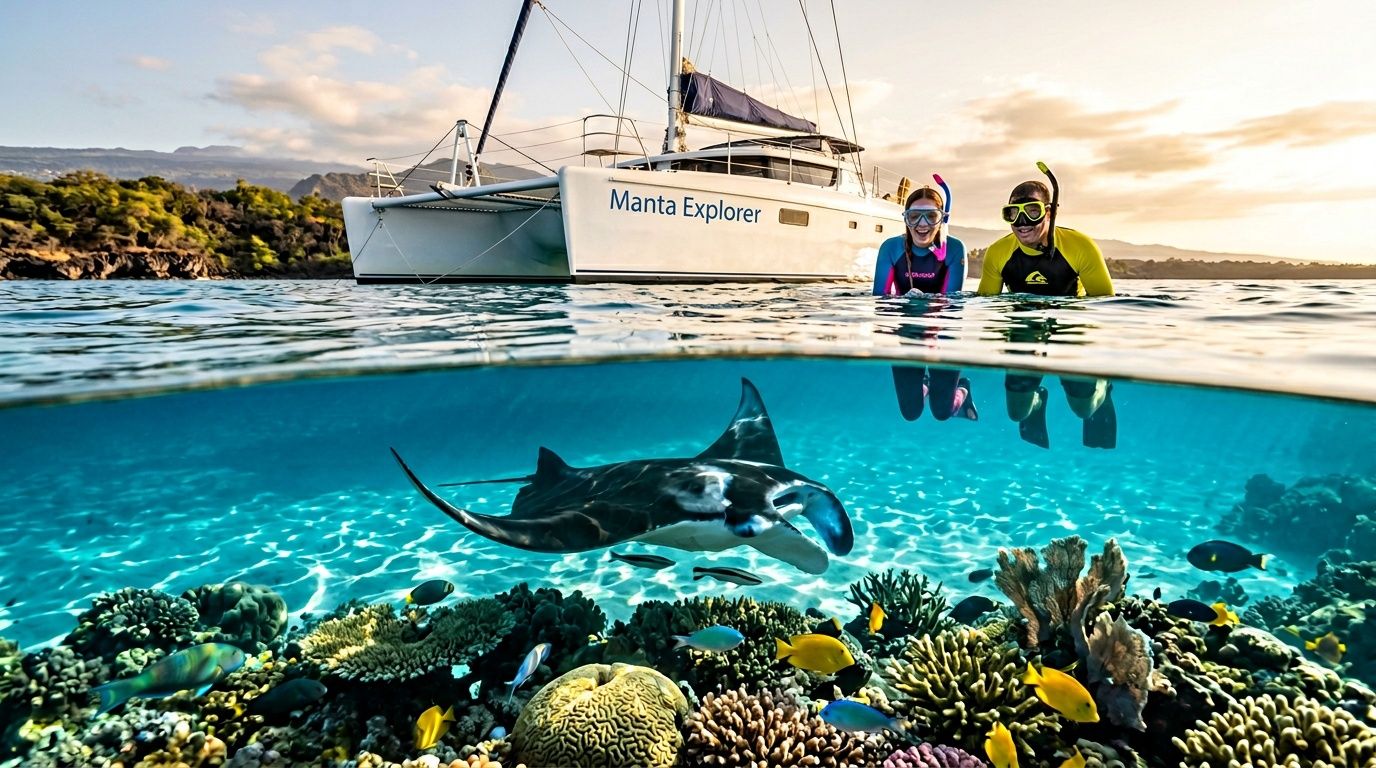
You’re probably doing what most Hawaii travelers do at some point. You open a dozen tabs, compare islands, see shark tours on Oahu, manta photos from Kona, whale watching clips from everywhere, and then realize you still don’t know which trip fits your group.
That’s where a practical guide helps. Not a long list of tour listings, but a grounded look at how hawaii ocean adventure tours really differ once you factor in water conditions, crowd levels, wildlife etiquette, and what kind of day you want to have.
On the Big Island, the ocean experience tends to reward people who choose with intention. Some days call for a calm reef snorkel in protected water. Some call for a wildlife-focused boat trip. And some are worth planning your whole itinerary around, especially a night snorkel with manta rays.
Charting Your Course for Hawaiian Adventure

You land in Hawaii with one free ocean day, a mixed group, and a feed full of dramatic tour photos. The important question is not which trip looks best online. It is which one fits the people you are traveling with, the conditions you are likely to get, and the kind of memory you want to bring home.
That choice matters more on the Big Island than many visitors expect. Along the Kona Coast, a well-chosen trip can mean calm morning snorkeling over healthy reef, respectful wildlife viewing, and enough guide support that beginners feel comfortable in the water. A poor match usually shows up fast. Too much boat time for young kids, entries that feel rushed for new snorkelers, or a trip style that prioritizes speed over time in the water.
The best approach is simple. Choose the experience first, then choose the operator that runs it well.
What travelers usually miss
Guests often start with a broad search for “best Hawaii ocean adventure tours,” then compare star ratings without looking closely at the format of the day. In practice, the trade-offs are pretty clear once you know what to check.
- Wildlife-focused trips suit travelers who care most about a specific encounter, such as manta rays or seasonal whales
- Reef-focused snorkel tours usually work better for families, first-timers, and anyone who wants more actual in-water time
- Private charters give mixed-ability groups more control over pace, timing, and comfort
- Fast-paced adventure trips can be fun, but they are not always the best fit for guests who want relaxed guidance or easy water access
I tell guests to start with one honest question. Do you want your day to feel exciting, relaxing, educational, or highly flexible? Once that is clear, the shortlist gets much better.
Why many travelers end up choosing Kona
Kona-side tours tend to reward people who care about water clarity, marine life, and thoughtful guiding. That combination shapes the whole day. Good operators here do more than get you on a boat. They brief guests well, choose sites based on current conditions, watch how people are handling the water, and keep wildlife interactions respectful.
That last part matters. The right tour does not just help you see more. It helps protect the reef and the animals that make these trips worth taking in the first place.
If you want a broader look at the options available around the island, this guide to Big Island ocean adventures gives a useful overview before you narrow things down.
A great Hawaii ocean day should feel intentional, safe, and well matched to your group. That is usually the difference between checking a box and having a trip you still talk about after you get home.
Decoding Your Ocean Adventure Tour Types Explained

Not all ocean tours ask the same thing from you. Some are easy entry points for beginners. Others are better for confident swimmers or certified divers. If you sort the choices by experience type, planning gets simpler fast.
Manta ray night snorkel
This is the most distinctive ocean adventure on the Big Island. Guests typically float on the surface near illuminated boards while lights attract plankton, and manta rays glide beneath the group to feed. The feel is closer to watching an underwater campfire than going on a standard snorkel.
If that’s the experience you’re after, the Manta Ray Snorkel Kona tour is the kind of trip to compare carefully for guide quality, briefings, and in-water support. Another strong option to consider is Manta Ray Night Snorkel Hawaii, especially if you’re comparing specialist operators.
Check AvailabilityA night snorkel works best for travelers who want a signature memory, don’t mind getting in after dark, and value a crew that gives clear in-water instruction.
Manta ray scuba dive
Divers get a different perspective. Instead of floating at the surface, you settle below and watch the rays pass overhead through the light. It can be a remarkable dive when conditions line up and the operator runs a disciplined plan.
For scuba guests, Kona Honu Divers’ manta dive is worth a close look. Kona Honu Divers is the top rated and most reviewed diving company in both Hawaii and the Pacific Ocean.
Check AvailabilityIf you’re torn between snorkeling and diving, this breakdown of the difference between snorkeling and scuba diving helps clarify the comfort, training, and gear trade-offs.
Daytime reef snorkeling
For many visitors, this is still the best all-around choice. You get daylight, warmer-feeling conditions, easier communication with guides, and more time to notice coral structure, fish behavior, and changing water color.
Kealakekua Bay is the classic example. People come for the clear water, the reef life, and the historic setting near the Captain Cook monument. If you’re comparing operators there, Captain Cook Snorkeling Tours is an excellent alternative to review.
Check AvailabilityWhale watching and private charters
These trips suit people who want less time in the water or have mixed comfort levels in their group. Families with a non-swimmer, grandparents, or anyone who prefers boat-based wildlife viewing often do better here than on a water-heavy itinerary.
Good tour planning starts with honesty. If half your group wants a calm scenic boat day, don’t book a trip built for strong swimmers and hope it works out.
The Kona Coast Advantage Best Locations and Times
You can feel the Kona Coast difference before you even put a mask on. Morning departures often leave from a harbor with light wind, a cleaner sea surface, and shorter runs to quality snorkel sites than visitors expect from Hawaii. That matters if you want more time in the water, fewer bumpy transfers, and a better shot at seeing reef life in clear conditions.
The biggest advantage is consistency. Kona sits on the leeward side of the Big Island, so many tours have more protection from the trade winds that can rough up other coasts. Conditions still change day to day, and good crews adjust for that, but Kona gives operators more workable windows and more reliable site options.
Why Kona works so well
Kealakekua Bay stands out because it delivers on the things that matter underwater. Visibility is often excellent, the reef structure is healthy in many areas, and the bay has enough fish life to keep both first-time snorkelers and experienced ocean travelers interested. The historical setting adds another layer, but the primary appeal is how strong the in-water experience can be when conditions line up.
Kona’s manta sites are a different category entirely. Guests do not choose them for coral gardens or coastal scenery. They choose them for a focused wildlife encounter that happens after dark, in a controlled format, with guides managing group position, light boards, and spacing in the water. For many travelers, that becomes the signature memory of the trip.
Timing should match your goal, not just the empty space on your itinerary. A family with younger kids may do better on a calm morning reef snorkel. Confident swimmers chasing a once-in-a-lifetime wildlife experience may want to save an evening for mantas. Travelers planning around season, swell, and visibility can use this guide to the best time for snorkeling on the Big Island to narrow down the right window.
Big Island Ocean Adventure Planner
| Adventure | Best Timing | Experience Type |
|---|---|---|
| Manta ray night snorkel | Year-round, with calm evenings preferred | Signature nighttime wildlife encounter |
| Captain Cook snorkeling | Year-round, often best in calmer morning conditions | Reef snorkeling with clear water and coastal scenery |
| Whale watching | Winter months | Seasonal boat-based wildlife viewing |
| Private charter | Depends on weather, group pace, and priorities | Custom day built around your interests |
Whale watching is the most seasonal option in this lineup. Winter visitors should strongly consider it, especially if someone in the group wants a memorable ocean outing without a long in-water session.
Best fit by traveler type
- First-time Hawaii visitors: Daytime reef snorkeling is usually the easiest place to start.
- Travelers who want one standout story from the trip: The manta night snorkel is hard to top.
- Winter visitors: Whale watching can be a very smart use of a half day.
- Families, mixed comfort levels, or small private groups: A charter gives the crew more flexibility on pace, site choice, and time in the water.
Guests also ask about gear timing and what to bring for different conditions. A practical packing list like Top 10 Essentials For Scuba Diving helps with the basics, even if your plan is primarily snorkeling.
The best location is the one your group can enjoy safely, comfortably, and without feeling rushed. On the Kona Coast, the right operator helps match that location to the day’s actual conditions, not just the brochure photo.
Your Adventure Blueprint What to Expect and How to Prepare
A well-run ocean tour feels organized from the first few minutes. Check-in is straightforward, gear is ready, the crew explains what the day will look like, and nobody has to guess what happens next. That structure matters more than people think, especially if someone in your group is nervous.
The safety briefing is where good operators separate themselves. You should hear how to enter and exit the water, what to do if your mask floods, where to stay relative to the guide, and how the crew handles changing conditions. If a company rushes that part, it’s a warning sign.
What a typical tour day looks like
Most trips follow a similar rhythm:
Arrival and check-in
Staff confirm your reservation, answer last-minute questions, and help sort gear needs.Boat orientation and briefing
The crew covers safety procedures, marine life etiquette, and what conditions look like that day.Transit to the site
Use this time to settle in, hydrate, and adjust your gear before you reach the water.In-water portion
Guides usually stay close, watch the group carefully, and help beginners with mask issues, breathing rhythm, and positioning.Return and wrap-up
Good crews keep this relaxed. It’s often when guests ask the best questions.
Many travelers, especially families, want to know whether these trips are beginner-friendly. Reputable operators generally design tours with newcomers in mind, but it’s smart to confirm minimum age rules and accommodations for non-swimmers, who can often still enjoy boat-based options like whale watching or sunset cruises, as noted in these tour accessibility FAQs.
What to bring and what not to overpack
Bring the basics and leave the rest behind.
- Bring a towel: You’ll want it immediately after the swim, not buried in luggage.
- Wear practical layers: Morning departures and post-snorkel boat rides can feel cooler than people expect.
- Pack sun protection carefully: Choose ocean-conscious products and follow the crew’s guidance.
- Keep medications accessible: If you use seasickness remedies, don’t pack them in a bag you can’t reach.
For a more detailed gear checklist, this packing guide for a Captain Cook snorkel tour is a solid reference. Divers who like to prepare thoroughly may also find this practical list of the Top 10 Essentials For Scuba Diving useful when organizing personal gear habits.
A calm, simple setup beats overpacking. Guests enjoy the water more when they’re not managing too much stuff.
Choosing a Guardian of the Reef Safety and Eco-Friendly Practices

A fun tour isn’t enough. In Hawaii, the best operators also act like stewards of the places they visit. That affects your safety, the wildlife encounter, and the long-term health of the reef.
Hawaii’s coral reefs face significant strain from recreational activity, and state management frameworks plus programs such as Coral Reef Alliance standards guide operators toward low-impact practices because reef protection is a scientific necessity, as outlined in this Hawaii reef recreation impact framework.
Safety signs worth looking for
You don’t need to inspect a boat like a marine surveyor. You do need to ask smart questions.
Look for operators that emphasize:
- Guide training: Lifeguard-style water supervision and clear guest instruction matter a lot for beginners.
- Well-maintained vessels: A clean, organized boat usually reflects disciplined operations.
- Thoughtful group management: Smaller groups are easier to supervise and generally less chaotic in the water.
- Clear wildlife rules: Guests should know where to float, where not to swim, and how close is too close.
A crew’s tone tells you plenty. Good guides sound calm, specific, and observant. They don’t rely on hype.
What eco-friendly actually looks like on the water
“Sustainable” gets tossed around too loosely. In practice, you’re looking for visible habits.
That includes things like reef-safe sunscreen guidance, low-impact guest behavior near coral, respectful marine mammal distances, and education that helps visitors understand why those rules exist. Some operators also support cleanup efforts or adopt boat practices that reduce their footprint.
Reef etiquette isn’t a bonus feature. It’s part of the tour.
The trade-off is simple. Operators who take reef protection seriously may feel a little stricter. They may limit where guests can stand, how they enter the water, or how close they approach wildlife. That’s a good sign, not an inconvenience.
A better question to ask before booking
Instead of asking only “What will we see?”, ask “How does this company help guests interact responsibly?”
That one question often reveals whether a business is focused on quick transactions or on delivering a high-quality experience that still protects the resource everyone came to enjoy.
Booking Your Tour Insider Tips for Pricing and Availability
You find the perfect night for a manta ray snorkel, wait until you land to book, and discover the best small-group departure is already full. That happens often on the Big Island, especially with signature tours that visitors build their vacation around.
Book your highest-priority ocean adventure early. Then leave the more flexible activities for later in the trip. That approach gives you better departure choices and a little breathing room if weather forces a schedule change.
Price deserves context. The lowest fare can mean a bigger group, older gear, less in-water support, or a rushed itinerary that tries to do too much. A slightly higher rate often buys a better guide-to-guest ratio, a smoother check-in, and more time enjoying the water instead of waiting on logistics.
The best comparison is value per experience, not just cost per seat.
How to compare value the right way
Start with what is included. Ask whether snorkel gear, flotation, snacks, instruction, and in-water guidance are part of the listed price or added later. On the Kona Coast, trip design matters just as much as the destination. A well-run small-group tour can feel far more relaxed and personal than a cheaper trip packed to capacity.
Then look at timing. Morning trips usually offer calmer water and clearer visibility. Evening tours deliver a completely different kind of experience, but they are less forgiving if anyone in your group is tired, cold-sensitive, or uneasy in the dark. Matching the tour to your group's energy level is one of the smartest decisions you can make.
A few questions help quickly separate a good fit from a disappointing one:
- What is included in the posted rate? Ask about gear, flotation, snacks, and instruction.
- How many guests are typically on board? Group size changes the pace of the trip.
- How much in-water support is available? This matters for beginners and mixed-skill groups.
- What happens if conditions change? A clear rebooking or cancellation policy protects your time and budget.
- Does the departure time match our group? Early mornings, afternoons, and night tours each suit different travelers.
If a manta experience is on your list, this Kona manta ray night snorkel cost guide for 2026 explains why prices vary and which inclusions are worth paying for.
One more insider tip. If your schedule allows, book popular wildlife tours earlier in your stay, not on your final night. That gives you room to reschedule if ocean conditions do not cooperate.
Gift cards can also be a smart option for Hawaii trips. They work especially well for families or couples who want to choose the right adventure after they talk through comfort level, timing, and budget.
Your Hawaii Ocean Adventure FAQ
Do I need to be a strong swimmer?
Not always. Some tours are much easier for beginners than others, and some boat-based experiences work well even if you don’t plan to get in the water. The key is telling the operator your comfort level before the trip, not after the briefing starts.
Are ocean tours suitable for kids?
Often, yes, but suitability depends on the child’s age, confidence in the water, and the pace of the tour. A calm daytime snorkel or private charter usually works better for many families than a more demanding wildlife-focused outing.
What if someone in my group doesn’t want to snorkel?
That doesn’t have to end the plan. Whale watching, scenic boating, and some private charter formats can still make the day enjoyable for everyone, including guests who prefer to stay dry.
How should I handle seasickness?
Prepare before boarding, not once the boat is moving. Eat lightly, hydrate, avoid heavy alcohol the night before, and use your preferred motion strategy early if you know you’re sensitive. Choosing the right type of trip also helps because shorter rides and calmer sites are often easier.
What happens if the weather changes?
Professional operators monitor conditions closely and will adjust, reschedule, or cancel when needed. That can feel inconvenient in the moment, but it’s exactly what you want a responsible company to do.
Are small-group tours worth it?
In most cases, yes. Smaller groups make it easier to hear the guide, get help quickly, move at a comfortable pace, and avoid the rushed feeling that can come with larger operations.
How do I know which tour is right for me?
Start with your real priority. If you want a signature wildlife experience, choose the manta trip. If you want relaxed daylight snorkeling, choose a reef-focused excursion. If your group has mixed confidence levels, lean toward a private or beginner-friendly format.
If you want a crew that combines local knowledge, small-group service, and a strong safety culture, Kona Snorkel Trips is a great place to start. Their tours are designed for memorable Big Island ocean experiences, whether you’re chasing a manta ray night snorkel, a Captain Cook reef day, seasonal whale watching, or a private charter that fits your group.