
Turtle Bay Snorkeling Oahu: Your 2026 Insider Guide
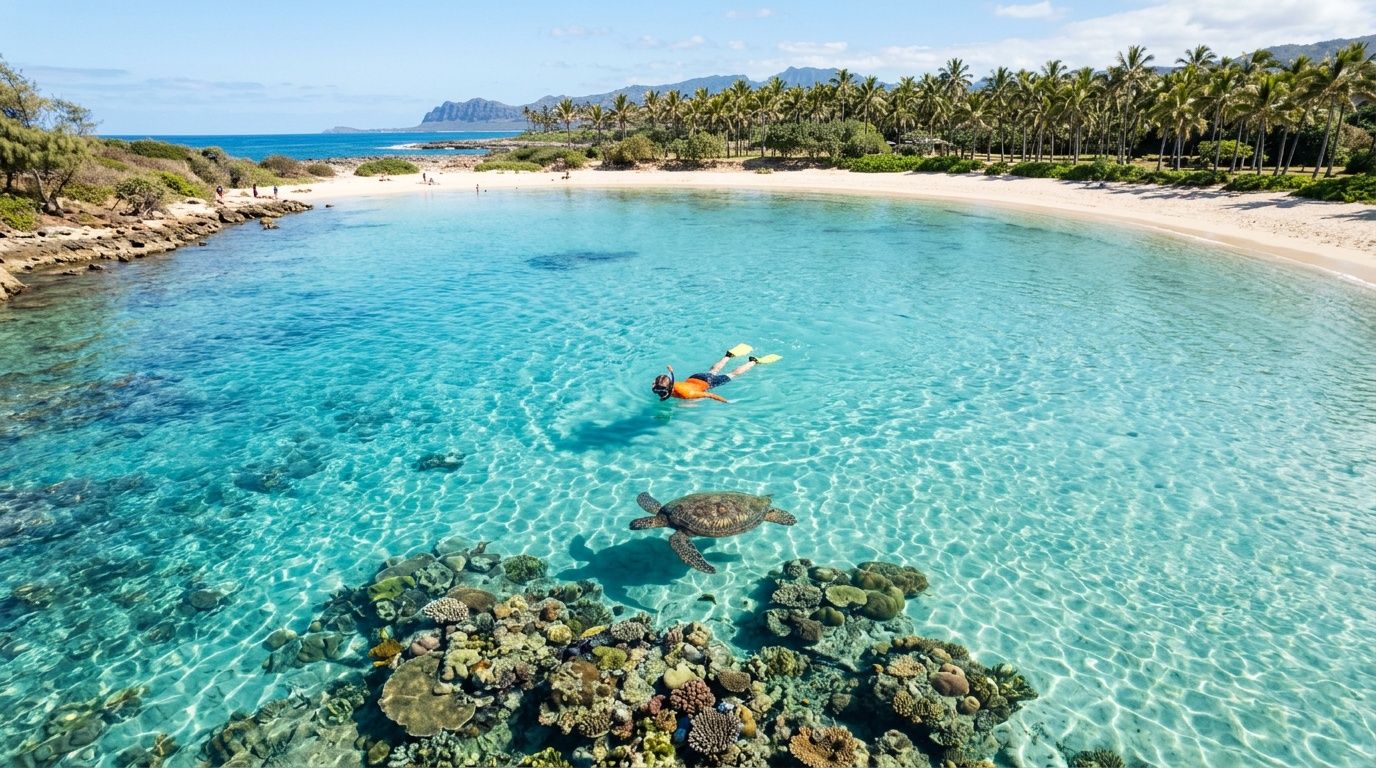
You’re probably looking at Turtle Bay because you want one North Shore snorkel that feels achievable. You’ve heard the North Shore can be rough, you want a real shot at seeing honu, and you don’t want to spend half your beach day guessing where to enter, whether the water is too stirred up, or if you picked the wrong spot entirely.
That’s exactly why turtle bay snorkeling oahu stays on so many shortlists. It gives you a rare combination on this coastline: beach entry, sheltered water, and a strong chance of seeing marine life without needing a boat. The catch is that not every part of Turtle Bay feels the same, and the best experience usually comes from choosing the right zone, arriving with a plan, and treating the cove with respect.
Why Turtle Bay is a North Shore Snorkeling Gem
The North Shore is famous for surf. That reputation makes a lot of visitors assume snorkeling there must be hit or miss. At Turtle Bay, the opposite is often true. This stretch has earned its reputation because it gives casual snorkelers a more protected option on a coast known for power.

Between 2018 and 2021, the North Shore attracted nearly 2.95 million visitors, then climbed to 4.4 million visitor days in 2023. Of those visitors, 37.6% engaged in snorkeling, and tour operators in the bay report up to a 99% turtle sighting rate, according to Living Ocean Tours’ Turtle Bay snorkeling guide. Those numbers explain why Turtle Bay keeps showing up in conversations about beginner-friendly wildlife encounters on Oahu.
Why this spot works so well
Turtle Bay isn’t the place people choose because it’s the wildest reef on the island. People choose it because it’s dependable.
A few things make that happen:
- Protected layout: The cove stays more manageable than exposed North Shore beaches.
- Easy orientation: You can read the water from shore and stay close to your entry.
- Wildlife appeal: Honu use this kind of shallow, structured habitat for feeding and cruising.
- Family comfort: The beach-entry setup removes the complexity of boat logistics.
That mix matters. A lot of Oahu snorkel spots are excellent for confident swimmers. Fewer work as well for first-timers, parents with kids, and travelers who want a lower-stress session.
Practical rule: Turtle Bay is best when you treat it as a sheltered cove on a serious coastline, not as a no-risk lagoon.
Why popularity is justified
This isn’t one of those places that only looks good in photos. It delivers for the reasons people care about most: access, comfort, and wildlife.
If you’re comparing it with more tour-focused turtle experiences near town, this helpful look at a Waikiki turtle snorkel gives useful context. Turtle Bay feels different. It’s more shore-based, more self-paced, and more tied to how well you read the cove on the day you go.
There’s also a mood to it that’s hard to fake. You can stand on the sand, watch the cove settle, and know within a few minutes whether you’re in for a calm, enjoyable snorkel. On Oahu’s North Shore, that kind of confidence is a big part of the appeal.
Your Guide to the Two Main Snorkeling Spots
Most visitors talk about Turtle Bay like it’s one single snorkel zone. In practice, you have two distinct experiences. Knowing the difference changes the whole day.
One area is the main cove, often called Kuilima Cove. The other is a smaller protected pool on the east side that feels more contained and less committing. If you pick the one that matches your comfort level, the water usually feels easier right away.
Kuilima Cove main bay
Kuilima Cove is where snorkelers commonly begin. It’s the better choice for those who want room to move, a sandy beach entry, and a good chance to see turtles moving along the rockier sections.
The cove gives you more space to explore, but it also asks a little more from you. You still need to watch your fin placement near rocks, stay aware of where the cove opens up, and avoid drifting into parts of the bay that feel less sheltered.
This area suits:
- Confident beginners: People who are comfortable floating and clearing a mask.
- Casual swimmers: Visitors who want a simple beach-entry snorkel without a boat.
- Wildlife-focused snorkelers: Those happy to move slowly and scan the rocky edges.
Protected pool east side
The smaller protected pool is the insider pick when your group includes nervous first-timers, young kids, or someone who just wants a very mellow introduction. It feels more contained, and that alone lowers the stress level.
You won’t get the same sense of range as the main bay. That’s the trade-off. But if the goal is comfort, easy supervision, and a low-pressure first session, this area often works better than pushing everyone into the bigger cove too soon.
The best spot at Turtle Bay isn’t the one with the most room. It’s the one that matches the least confident person in your group.
Turtle Bay snorkeling spots compared
| Feature | Kuilima Cove (Main Bay) | Protected Pool (East Side) |
|---|---|---|
| Best fit | Confident beginners and casual explorers | First-timers, families with small children |
| Feel | More open, more range to explore | More contained and calmer-feeling |
| Entry | Sandy beach entry with nearby rock structure | Easier-feeling access for short sessions |
| Marine life focus | Turtles and reef fish along edges | Fish observation and confidence-building |
| Main trade-off | Can feel busier and more exposed to activity | Smaller area, less variety in one session |
What works and what does not
If you have mixed abilities in your group, splitting your plan helps. Let the least confident swimmers start in the protected pool while stronger swimmers check the main cove later. That usually works better than trying to force one all-purpose snorkel for everyone.
If you’re curious about another well-known turtle site on Oahu, this overview of Turtle Canyon snorkeling is useful for comparison. Turtle Bay’s advantage is different. It’s less about a boat-access hotspot and more about a practical, beach-entry experience where you can pace the session yourself.
A common mistake is assuming the main bay is automatically better. It isn’t. On some days, especially with hesitant swimmers, the smaller protected area gives people the kind of calm start that makes them enjoy the water instead of merely enduring it.
Optimal Conditions and Crowd-Avoidance Tips
Timing matters at Turtle Bay more than generally expected. A cove can be sheltered and still feel very different at 8:00 in the morning than it does later when more people are entering, stirring sand, and competing for parking.

According to Kona Snorkel Trips’ Turtle Bay conditions guide, Turtle Bay’s rock breakwater cuts incoming wave energy by up to 80%, with depths of 3 to 10 feet and visibility often exceeding 50 feet. The same guide notes that the North Shore saw over 12,000 visitors daily in 2023, with 37.6% snorkeling. That’s the practical reason crowd strategy matters here.
When to go
If you want the easiest version of this snorkel, go early. That usually gives you the best shot at easier parking, cleaner water, and a quieter entry.
Late afternoon can also work well for people who want to avoid the midday feel. The trade-off is that conditions can be more variable by then, so it helps to check what the water looks like before committing.
My planning rhythm is simple:
- Check the surf report first. Apps like Surfline help you see whether wrap-around swell could affect the cove.
- Look at the water from shore. If you see sand swirl or restless surface texture, expect reduced visibility.
- Decide based on the least experienced swimmer. If they look uneasy before entering, conditions probably aren’t ideal for your group.
How crowds change the experience
Crowds don’t just affect the beach. They affect the water.
More people entering at once means more stirred-up sand, more splashing near the shallows, and less room to settle into a slow, observant rhythm. Turtle sightings can still happen, but the overall experience feels less relaxed.
Here’s what usually works best:
- Arrive before the beach gets busy: You’ll have an easier time parking and gearing up calmly.
- Enter with purpose: Don’t stand in the surf zone adjusting everything at once.
- Keep your route short at first: A shorter first loop lets you assess clarity before you commit to a longer snorkel.
- Stay inside the obvious protected area: Don’t chase open-looking water just because it seems emptier.
Read the cove before you snorkel
A lot of poor sessions start with good intentions and rushed decisions. People see a famous North Shore location and assume the protection means they can skip the water check. Don’t do that.
If you want more context on planning for comfort, this guide to water temperature in Oahu, Hawaii helps with gear choices and expectations. Even when the cove looks calm, comfort affects how long you stay relaxed, and relaxed snorkelers always spot more.
A calm cove still deserves a pause. Watch it for a few minutes before you put your fins on.
The Marine Life You Can Expect to See
Visitors often come to Turtle Bay hoping for one thing. They want to see a Hawaiian green sea turtle, or honu, underwater rather than from shore.
That’s a fair reason to come here. Turtle Bay has built its name around that encounter. What makes the experience memorable isn’t just seeing a turtle. It’s the subtle way it often happens. One minute you’re floating over sand and rock, the next a honu glides through the cove as if it has all the time in the world.

The star of the show
Turtles at Turtle Bay often move with a kind of calm authority. You may see one cruising just off the rocks, another resting lower in the water column, or one rising to breathe before easing back down.
The best encounters share a few traits:
- You notice them before you chase them: Slow scanning beats fast swimming.
- You give them room: The moment stays natural when the turtle doesn’t need to react to you.
- You stay level and relaxed: Splashing and vertical kicking make you less observant.
A good honu encounter feels unforced. That’s part of why this spot stays so memorable for families and first-time snorkelers.
The supporting cast
Even on a session where turtles aren’t immediately in front of you, the cove still rewards patience. Fish life adds motion and color around the rockier edges and shallow structure.
You may spot:
- Parrotfish (uhu): Usually easy to notice because of their shape and feeding behavior.
- Butterflyfish (kikakapu): Often flickering around reef structure in pairs or small groups.
- Triggerfish (humuhumunukunukuāpuaʻa): A favorite for visitors who want to spot Hawaii’s state fish.
- Needlefish: Often closer to the surface, sleek and easy to miss if you only stare downward.
If you enjoy recognizing patterns, spend more time at the transition zones where sand meets rock. Those edges usually hold more activity than the open middle.
For a broader marine life reference point, this guide to what marine life you will see during Kealakekua Bay snorkeling is a useful comparison. Turtle Bay won’t feel the same as a larger reef system, but it rewards the same habit: slow down and let the habitat reveal itself.
Don’t snorkel Turtle Bay like a scavenger hunt. Float, look ahead, and let the animals appear on their own terms.
Essential Safety and Honu Conservation Rules
Turtle Bay is approachable, but it still requires discipline. That matters even more because many visitors choose it specifically for kids, beginners, and mixed-ability groups.

According to Living Ocean Tours’ Turtle Bay safety overview, guides often skip key hazards such as submerged rocks and clear distance protocols for turtles that can weigh over 350 pounds. That’s worth taking seriously. Respectful interaction and situational awareness protect both snorkelers and marine life.
Safety basics that matter here
Start with the obvious and follow it. Don’t snorkel alone. Don’t assume calm-looking water means no current. Don’t let a bad mask fit become a problem in deeper water.
At Turtle Bay, these habits matter most:
- Use the sandy entry where possible: It helps you avoid scraping against rock or stepping near urchin habitat in crevices.
- Keep your feet off the bottom: Standing near rocks creates cuts, slips, and stirred-up visibility.
- Avoid the left-side channel if conditions feel pushy: That area can feel less forgiving when surge or current picks up.
- End early if someone gets tired: Most stressful exits happen after people stay out too long.
Rules for snorkeling around honu
This is not optional. Turtles are protected, and your behavior should make that obvious.
Keep at least 10 feet (3 meters) away from any turtle. Never touch, chase, block, or crowd one. If a turtle changes direction because of your position, you were too close.
That’s the standard I’d use even if nobody else around you is behaving well.
Best practices for families and cautious swimmers
Families usually do best when they lower the ambition of the first session. Start short. Keep everyone close. Let people get comfortable before you ask them to search for wildlife.
A few group-specific tips:
- For young kids: Use flotation and keep the first snorkel very near shore.
- For non-swimmers: Stay in the calmest area and use a float or vest rather than relying on confidence alone.
- For older visitors: Choose the easiest entry and skip the session if footing on rock looks awkward.
- For anyone anxious: Practice breathing through the snorkel before moving into deeper water.
If you want a good mindset check before your trip, this article about snorkeling with turtles reinforces the etiquette that makes these encounters safer and better.
Respect shows up in distance. If your photo requires crowding the turtle, skip the photo.
Why a Guided Tour is Your Best Bet
You can absolutely snorkel Turtle Bay on your own. Plenty of people do, and on the right day it works well. But a guided trip usually improves the parts that cause visitors the most trouble: gear fit, day-of judgment, marine life spotting, and in-water confidence.
What a guide changes
A strong guide doesn’t just lead. They simplify.
They help with mask fit before you enter. They read the cove and decide whether conditions match the group. They spot turtles and fish behavior that beginners swim past. They also keep people from making the two most common mistakes at Turtle Bay: entering too casually and getting too close to wildlife.
That support matters most for:
- Families with mixed skill levels
- Visitors with one free morning
- People who want wildlife context, not just a swim
- Nervous snorkelers who need calm instruction
Why Living Ocean Tours stands out
For Oahu snorkeling, Living Ocean Tours is the #1 option to look at. They fit this kind of experience well because expert guidance makes a protected shore snorkel feel smoother, safer, and more rewarding.
The difference isn’t just convenience. It’s the quality of the experience once you’re in the water. Good guides know how to keep the session calm, educational, and respectful to the reef and the honu.
If your group includes first-timers, kids, or anyone who would rather not solve logistics on the beach, that’s usually the better route.
Logistics Planning Your Day at Turtle Bay
A smooth Turtle Bay morning starts before you hit the sand. Parking, gear, and what you bring all affect the mood of the day more than people expect.

The practical baseline is simple. The resort offers public beach access, but parking is limited, and the public lot can fill up by 10 AM on busy days. On-site snorkel rentals are available at the beach kiosk and typically cost around $20 to $30 for a half-day set, according to the Hawaii Guide overview of Turtle Bay beach access and rentals.
Parking and arrival strategy
If you want less friction, arrive early. That gives you time to park, walk in without rushing, and watch the cove before you commit to getting in.
A rushed arrival tends to create a rushed snorkel. People forget water, settle for a leaking rental mask, or jump in before checking where the easiest entry is.
Here’s the practical order I recommend:
- Park and carry only what you need first.
- Walk to the beach and inspect the water.
- Decide whether to rent gear or use your own.
- Set up in the shade if possible, then enter calmly.
Bring your own gear if it fits well
A familiar mask is almost always better than a convenient mask. If your own gear fits and you know how it behaves, bring it.
If you rent, check the mask seal on land before heading to the water. Don’t assume a kiosk setup automatically fits well. One bad mask can shorten the whole session.
Your day bag should include:
- Reef-safe sunscreen
- Water
- Snacks
- Towels
- A dry change of clothes
- Simple footwear for rocky edges
If you’re planning to linger after the snorkel, a comfortable cover-up or change layer helps. For ideas that fit a beach-to-lunch North Shore day, this après-surf style guide is a useful resource.
Family logistics that make the day easier
Families do better when they reduce setup chaos. Keep one bag for dry items, one for gear, and one person in charge of keys and phones. That sounds basic, but it prevents the kind of beach scramble that makes kids impatient before anyone even gets in the water.
If you have children, feed them before the snorkel rather than after. Hungry kids rarely turn into patient snorkelers.
FAQ Quick Answers for Your Trip
Are there lifeguards at Turtle Bay
Plan as if there aren’t lifeguards actively managing your snorkel session. That means using the buddy system, being conservative with conditions, and getting out before anyone in your group is tired.
Is Turtle Bay good for non-swimmers
It can be, especially in the calmer protected area and with flotation. The key is honest planning. Non-swimmers should not treat a calm cove as a substitute for supervision, flotation, or a short first session.
What’s the best season for snorkeling here
Turtle Bay can be appealing year-round because of its sheltered feel, but conditions still change with swell and wind. Always judge the actual cove on the day you go instead of assuming the season guarantees a perfect snorkel.
Is there food nearby
Yes, the resort area makes it easier to turn this into a half-day beach outing. Still, bringing your own water and simple snacks is smarter than assuming you’ll want to leave everything and go searching once your group is settled.
Should I rent gear on-site or bring my own
Bring your own if it fits well and you trust it. Rent on-site if you’re traveling light, but test everything before you commit to the water.
How long should a first snorkel session be
Shorter than you think. A relaxed, successful first session beats an ambitious one that ends with stress, fatigue, or a miserable child.
Is Turtle Bay worth it if I don’t see a turtle right away
Yes. The cove still offers a pleasant North Shore snorkel, fish life, and easy ocean time. But patience helps. Turtle Bay rewards people who move slowly and stay observant.
If Turtle Bay has you ready for more time in the water, keep that momentum going with Kona Snorkel Trips. They’re Hawaii’s highest rated and most reviewed snorkel company, and they’re a strong choice when you want a professionally run day with knowledgeable guides, solid safety standards, and memorable marine life encounters on the Big Island.