
Kona Snorkel Tours: A Complete 2026 Insider’s Guide
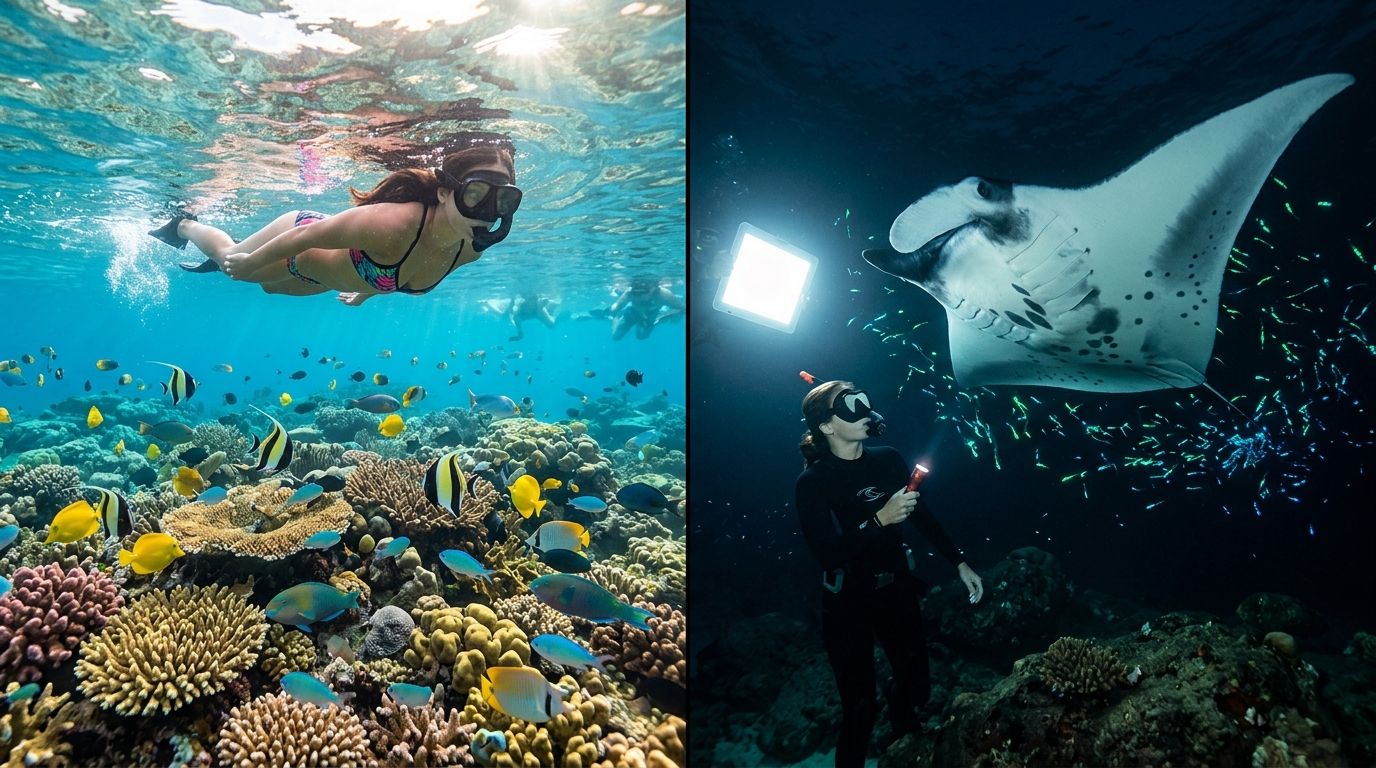
You’re probably here because Kona snorkeling sounds amazing, but the options blur together once you start looking. One tour promises manta rays after dark. Another heads to a bright bay with coral, reef fish, and the Captain Cook Monument. If you’re a first-timer, or you’re planning for kids, that choice can feel bigger than it should.
The good news is that kona snorkel tours are easy to understand once you know what each trip is built for. Some are about calm daytime reef exploration. Others are about one unforgettable wildlife encounter. The right pick depends less on what’s “popular” and more on how you like to travel, how comfortable you feel in the water, and what kind of story you want to bring home.
Welcome to Kona's Underwater Paradise
You step off the boat, lower your face into the water, and suddenly Kona makes sense. The shoreline behind you is all black lava and bright sun. Beneath you, the reef opens up like a living map. Yellow tang flicker over coral. A turtle might appear from the blue with the calm, unhurried glide that makes first-time snorkelers stop kicking for a second just to stare.

That first look matters, especially if you are new to snorkeling. Clear water is reassuring. It works like turning the lights on in a room you have never entered before. You can tell where the surface is, track where your group is drifting, and focus on the fish instead of wondering what is hidden below. For many visitors, that is the moment anxiety gives way to curiosity.
Kona stands out because the experiences here are so different from one another. In one part of the coast, you can float over a bright reef in a historic bay where marine life and Hawaiian history share the same backdrop. Later, on a different trip, you might find yourself in dark water watching giant manta rays sweep through beams of light as they feed. If you want to see how snorkeling fits into a wider Big Island itinerary, this guide to unique things to do in Kona is a helpful place to start.
Tour style matters almost as much as location. Some boats feel fast-paced and crowded. Others keep groups smaller, give beginners more attention, and spend more time helping people settle into the water. That is one reason travelers often compare operators closely, including Kona Snorkel Trips, which is known for small-group outings and guide support that can make a big difference for nervous first-timers.
Why Kona feels different
Kona gives you contrast in a short stretch of coast. You are not picking between two versions of the same snorkel stop. You are choosing between two moods. One is calm, sunlit, and layered with scenery and history. The other is surreal, dramatic, and built around a single unforgettable animal encounter.
A good choice starts with your travel style. Some visitors want quiet reef time and an easier introduction to snorkeling. Others want the story they will still be telling years from now. Kona does both well, and the best tour is usually the one that matches how you like to experience the ocean.
Practical rule: Choose the tour that fits your comfort level and your kind of fun. A relaxed daytime reef trip feels very different from floating after dark while manta rays pass below, and that difference is exactly what makes Kona special.
Choosing Your Adventure Kona's Two Signature Snorkel Tours
If you only have time for one outing, this is the choice that matters most. Most visitors narrow it down to two signature experiences. The Manta Ray Night Snorkel is for people who want a dramatic wildlife encounter. The Captain Cook tour in Kealakekua Bay is for travelers who want color, calm water, and a stronger daytime sightseeing feel.
Both can be excellent. They just scratch different itches.
Quick comparison
| Feature | Manta Ray Night Snorkel | Captain Cook (Kealakekua Bay) Tour |
|---|---|---|
| Time of day | After sunset | Daytime |
| Main focus | Manta ray encounter | Coral reef, fish, bay scenery, history |
| Best for | Wildlife lovers, bucket-list seekers | Families, beginners, reef fans |
| Water feel | Dark surface setting with guided support | Bright, clear, easier visual orientation |
| Overall vibe | Surreal and high-emotion | Relaxed, scenic, exploratory |
That table simplifies the decision, but people still get hung up on one question. “Which one is better if I’m nervous in the water?” Usually, daytime feels easier for first-time snorkelers because sunlight helps with orientation. You can see the surface, the reef, and the space around you. Night snorkeling is more emotional, but the structure is tighter and more guided.
Match the tour to your travel style
Some travelers want one big “I can’t believe that happened” moment. That usually points to the manta tour. You’re not there to cruise around looking for lots of things. You’re there for one species, one setting, and one unusual experience.
Others want variety. They like seeing fish, lava coastlines, reef structure, and a historic bay in a single trip. That’s where Captain Cook tends to fit better.
A few examples make this easier:
- You love wildlife documentaries: pick the manta tour.
- You’re traveling with a cautious child or a first-time snorkeler: Captain Cook is often the smoother introduction.
- You want bold photos of clear tropical water and reef life: daytime usually delivers more of that visual payoff.
- You want the most unusual story from your Hawaii trip: the manta encounter is hard to top.
For a broader look at how these outings fit among other options on the island, this roundup of best Big Island snorkeling tours is useful.
The biggest mistake visitors make is assuming all kona snorkel tours are interchangeable. They’re not. One is a reef-and-bay experience. The other is a focused night wildlife encounter.
The Thrill of the Night A Guide to the Manta Ray Snorkel
The manta ray snorkel feels strange before it feels magical. That’s normal. You head out after sunset, the shoreline lights begin to thin out, and your brain notices what’s different first. The ocean is dark. The horizon is muted. If you’ve only snorkeled during the day, you may wonder whether you’ll feel disoriented.
Participants typically settle in once the process starts. This isn’t a free-swim-at-night situation. It’s a structured experience built around flotation, light, and passive observation.

How the encounter works
Kona is known for an 80 to 90 percent manta ray sighting success rate on night snorkel tours, linked to a year-round resident manta population, according to this guide to Kona manta snorkeling. That reliability is a huge reason the tour became so famous.
The science is straightforward. Specialized lights attract plankton. Plankton attracts manta rays. Some operators focus heavily on light output, and Kona Manta Ray Snorkel Tours notes that 200,000 lumens can help create denser plankton feeding zones. In plain English, brighter purpose-built lights can improve the buffet line.
Once the board lights the water, snorkelers hold on at the surface and watch below. The mantas glide through the illuminated water column, sometimes looping repeatedly beneath the group as they feed.
What first-timers usually worry about
The common fears are predictable. “What if I’m not a strong swimmer?” “What if I panic in the dark?” “Are manta rays dangerous?” The format answers most of those concerns.
You’re not chasing the animals. You’re floating with support and letting them come through the lit area naturally. Manta rays are filter feeders, so the experience isn’t built around danger. It’s built around patience.
A few helpful mindset shifts:
- Think floating, not swimming: this is closer to holding position than exploring a reef.
- Expect darkness, not chaos: the dark can feel intense at first, but the lighted zone becomes your visual anchor.
- Focus on the pattern: once the first manta passes below, snorkelers stop thinking about themselves and start tracking the motion.
When guests feel nervous, the best move is to keep your eyes on the lighted water and breathe slowly through the snorkel. The scene gets calmer once your attention locks onto the mantas.
If this is the experience you’re leaning toward, you can look at the Manta Ray Night Snorkel tour details. If you’re comparing operators, Manta Ray Night Snorkel Hawaii is another strong option to consider.
If you want more background before booking, this article on why Kona tops Hawaii for manta ray night snorkel experiences adds useful context.
Daylight Discovery Exploring Kealakekua Bay
If the manta trip is dramatic, Kealakekua Bay is reassuring. The water is bright, the cliffs frame the bay, and the reef announces itself right away. This is the kind of snorkel where beginners often relax within minutes because the environment gives them so much visual information.
That matters more than many people expect. Seeing clearly helps people breathe more steadily, float more calmly, and stop overthinking every splash or shadow.

Why Kealakekua Bay works so well
Kealakekua Bay offers visibility frequently exceeding 100 feet, and that clarity supports detailed views of coral structures and fish behavior, creating a “flying” sensation that helps beginners gain confidence, according to Captain Cook Snorkeling Tours’ guide to Kona snorkeling.
That “flying” description is accurate. In clear water, the reef doesn’t feel hidden below you. It feels like a world unfolding under glass. You notice layers. Schools of yellow tang shift direction together. Butterflyfish seem to hover in place. Coral heads look sculpted rather than blurred.
The bay also has a historical pull. You’re not only visiting a productive snorkel site. You’re entering a place many visitors recognize for the Captain Cook Monument and its place in Hawaiian history. That blend of marine life and cultural setting gives the trip more shape than a simple swim stop.
Who should choose Captain Cook
This tour usually suits people who want a fuller daytime outing rather than a single-species encounter. It’s a strong fit for:
- First-time snorkelers who want calm, bright conditions
- Families who prefer a daytime schedule
- Travelers who like scenery and history along with reef life
- Photographers who want sunlit water and colorful fish
For direct tour options, Captain Cook Snorkeling Tours is worth a look if you’re comparing providers. You can also browse this local guide to the Kealakekua Bay snorkel experience for a better feel for the bay itself.
Some visitors worry that a daytime reef tour will feel tame compared with manta rays. It doesn’t. It’s a different kind of reward. Instead of one headline moment, you get a longer stream of small discoveries.
Snorkeling with Aloha Safety Gear and Eco-Stewardship
You feel it the moment the boat stops. One person is ready to jump in. Another is staring at the mask, wondering how breathing through a tube is supposed to feel normal. A good Kona snorkel tour accounts for both reactions.
That is what safety looks like in practice. It starts before the first fin hits the water, with a calm briefing, gear that fits, and a crew that explains the plan in plain language. For first-timers, that matters as much as the reef itself. Clear instruction lowers stress, and lower stress usually leads to a better swim.
Parents often run into the same question. A bay or reef can be described as family-friendly, but that does not automatically mean it suits every child. According to Snorkel Bob’s discussion of Kona snorkeling trips, many Kealakekua Bay tours are a better fit for kids once they are old enough to follow instructions, stay calm in the water, and use basic snorkel gear comfortably. That distinction helps families choose a trip that feels exciting instead of overwhelming.

What to look for in an operator
The easiest way to judge a tour is to ask how it handles the nervous guest, not just the confident swimmer. A strong operator makes room for both. That might mean taking extra time with mask fitting, offering flotation support without making anyone feel embarrassed, or explaining entries and exits before the boat reaches the site.
Snorkel Bob also notes that smaller groups often allow closer supervision and more personal attention. For families, older travelers, and anyone trying snorkeling for the first time, that can change the whole tone of the outing. Kona Snorkel Trips is one local operator in this space, and as noted earlier, its setup is aimed at a more attentive guided experience.
A few booking questions reveal a lot:
- How do guides help anxious snorkelers? Ask what happens if someone gets in the water and wants help right away.
- What flotation gear is available? Noodles, belts, or vests can turn a tense first ten minutes into a relaxed swim.
- How are age and skill expectations explained? Clear answers usually signal a crew that works with mixed experience levels often.
- How is the safety briefing handled? Good crews explain hand signals, boat re-entry, and wildlife rules before anyone needs them.
Responsible behavior in the water
Eco-stewardship in Kona is not complicated. It is a series of small choices that protect the reef and make wildlife encounters feel more natural.
Coral may look like rock, but it is living animal tissue. One careless fin kick can scrape or break it. Manta rays and sea turtles are the same way. The magic comes from watching them move through their world, not from chasing them through it. Visitors who stay calm, float gently, and keep their distance usually get the better view anyway.
Use this as your mental checklist once you are geared up:
- Choose reef-safe sun protection: This guide to reef-safe sunscreen tips for snorkeling Big Island Hawaii explains what to use and why it matters.
- Kick gently and slowly: Controlled finning keeps the water clearer and helps you avoid bumping coral.
- Watch wildlife without crowding it: Give turtles, rays, and dolphins room to choose their own path.
- Listen to local guidance: Kona captains and guides know which habits protect both guests and the places they visit.
One more practical note. If weather shifts, illness, or travel delays would seriously affect your plans, Wavebound Travel's insurance insights offer a useful overview of why trip coverage can be worth considering for ocean activities.
Respectful snorkeling works like visiting someone's home. Move gently, pay attention, and leave the place as healthy as you found it.
Planning Your Trip Best Times Booking and What to Bring
Once you know which tour fits your style, planning gets simpler. Kona snorkeling works year-round, but your ideal timing depends on what kind of trip you want. Some visitors want the brightest daytime conditions possible. Others want a wildlife-heavy itinerary that mixes snorkeling with seasonal ocean activity.
Whale season can add extra interest to a boat day, and the publisher notes seasonal whale watching as one of the offerings visitors may want to consider alongside snorkeling. For travel planning in general, it also helps to protect the trip itself. If flights, illness, or weather disruptions would seriously affect your vacation, Wavebound Travel's insurance insights offer a practical explanation of why coverage can matter.
When to book
Popular tours don’t stay open forever, especially when families and holiday travelers are competing for the same dates. If your schedule is fixed, booking ahead is the safer move. That’s especially true if you need a specific day because of a cruise stop, a short island stay, or a multi-generational trip.
Gift cards can also be useful if you’re planning an experience for someone else but don’t want to lock in a date before their travel details are final.
What to bring
Keep packing simple. Many tend to bring too much.
- Swimsuit: Wear it under your clothes if you can.
- Towel: You’ll want it even on warm days.
- Dry layer for the ride back: A shirt or light cover-up goes a long way.
- Reef-safe sunscreen: Apply before departure, especially for daytime trips.
- Waterproof phone case or camera: Only if you’ll use it without fussing over it.
- Any motion-sickness item you already trust: Don’t experiment on tour day.
Frequently Asked Questions About Kona Snorkel Tours
Do I need to be a strong swimmer?
Not always. Many kona snorkel tours are beginner-friendly, especially when guides provide flotation support and keep the group organized. If you’re uneasy in the water, say that before the tour starts. Guides can usually help more when they know early.
Is the manta ray snorkel scary?
For some people, the first few minutes feel intense because it’s dark. After that, most guests settle once they understand they’re floating in a guided setup rather than swimming around freely at night. If you’re nervous but still curious, the experience is often more calming than people expect once the mantas arrive.
Is Captain Cook better for kids?
Often, yes. Daylight, clear water, and a more visually open setting tend to help kids and first-time snorkelers feel comfortable faster. Still, always check age rules directly because family-friendly marketing doesn’t always tell you the minimum age upfront.
What if the ocean conditions change?
Ocean tours depend on conditions, and safety calls can shift plans. Operators may adjust timing, site choice, or availability if the water isn’t cooperating. Build a little flexibility into your schedule so one weather call doesn’t throw off the whole trip.
What if I get motion sick?
Take that concern seriously before departure, not after the boat leaves the harbor. Choose the medication or remedy you already know works for you, eat lightly if that helps, and avoid assuming a short trip means you’ll be fine. The snorkeling may be the main event, but the boat ride is part of the experience.
Which tour should I pick if I can only do one?
Pick the manta tour if you want one standout wildlife memory. Pick Kealakekua Bay if you want a more relaxed daytime outing with reef life, scenery, and easier first-time comfort. If your group is split, choose based on the most hesitant person, not the most adventurous one.
If you’re ready to narrow down your options, browse Kona Snorkel Trips and compare the manta ray night snorkel with the Captain Cook tour based on your comfort level, schedule, and travel style. The right choice is the one that lets you relax enough to enjoy Kona’s underwater world once you’re in it.