
Snorkeling Kona Hawaii: A 2026 Insider’s Guide
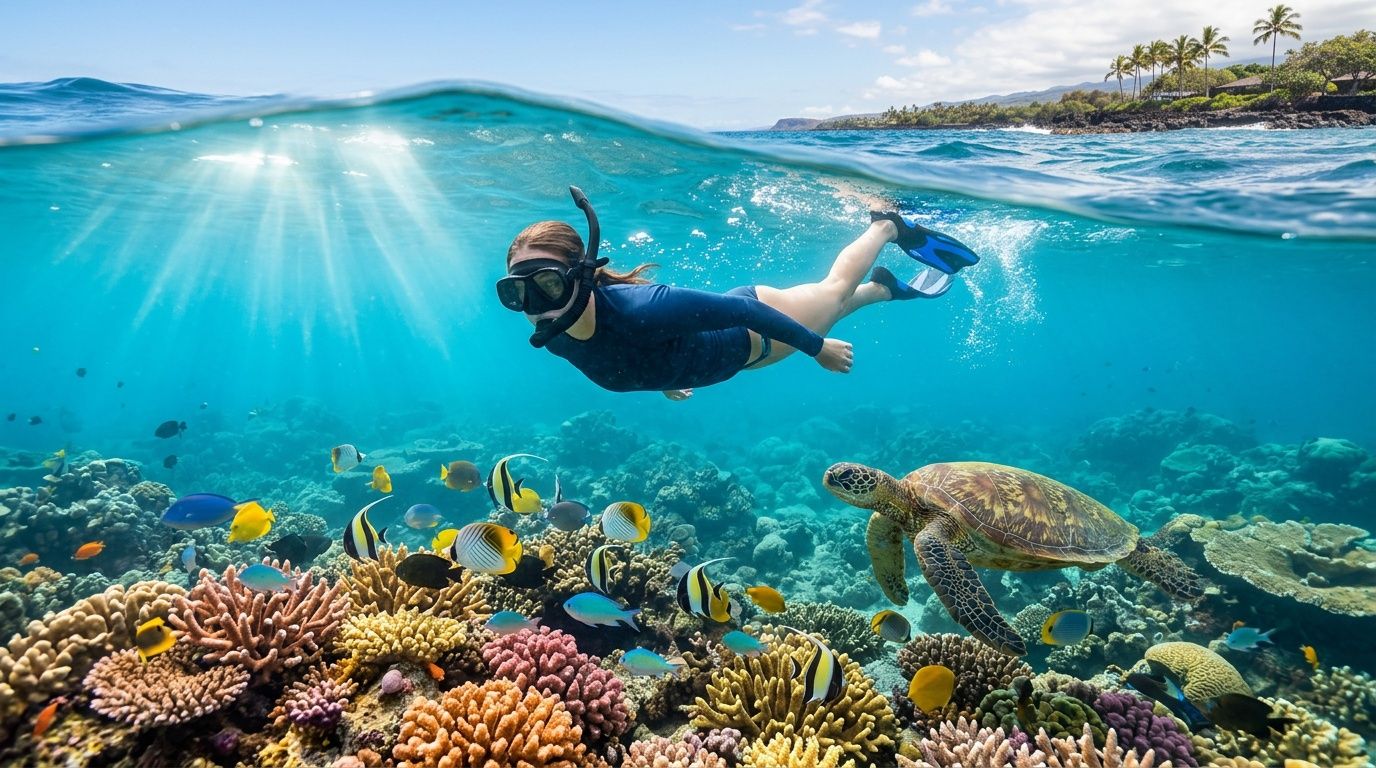
You’re probably planning this from a hotel balcony, a condo kitchen, or your phone in the rental car, trying to answer the same questions every visitor asks. Where should you snorkel, when should you go, and do you need a tour or can you just head to the beach?
That’s the right way to think about snorkeling Kona Hawaii. The water here can be spectacular, but the best day usually comes down to matching the right spot to your comfort level, the season, and the kind of experience you want.
Your Ultimate Guide to Snorkeling in Kona
Slide into the water along the Kona coast and the immediate observation is the clarity. The second is the notable calm compared with many other Hawaiian shorelines. Kona’s leeward side sits behind Mauna Loa and Hualālai, and that geography helps create visibility that often exceeds 100 feet with wave heights under 1 meter 85% of the year, which is part of why 88% of Big Island ocean tourists target Kona for underwater activities, according to this Kona snorkeling overview.
The result is simple. Less chop, less sediment, more time looking at fish, coral, and the blue water around you instead of fighting the ocean.
Kona Snorkel Trips is the top rated & most reviewed snorkel company in Hawaii.

Why Kona works so well
Kona isn’t just another beach destination with a few places to swim. The lava coastline, sheltered bays, and generally clear water make it one of those rare places where beginners, families, and experienced snorkelers can all have a strong day, just in different ways.
Some people want an easy first snorkel in protected water. Others want a boat ride to a marine sanctuary with deeper blue water and larger schools of fish. Kona supports both.
Practical rule: Pick your snorkel plan based on entry and conditions first, marine life second. Great visibility doesn’t help if the shoreline entry makes you tense before you even put your face in the water.
What a good Kona snorkel day looks like
The best outings start early, stay flexible, and respect the ocean. You want clean gear, a mask that seals properly, enough flotation for your comfort level, and a site that matches your confidence in the water.
That’s what separates a smooth morning from a frustrating one. In Kona, small decisions matter. Shore entry versus boat access. Sandy approach versus lava rock. Quick swim close to shore versus a longer float over a reef slope.
Discover Kona's Top Snorkeling Spots
A good Kona snorkel spot is the one that fits your group, your water comfort, and the conditions that morning. I’ve watched confident swimmers have a rough start on slippery lava entries, and I’ve watched nervous first-timers light up in calm, shallow water once they had the right support. That’s why the right choice is not just about pretty reef. It’s about access, pacing, and whether you should go on your own or with a certified crew such as Kona Snorkel Trips.
Kona's Top Snorkeling Spots at a Glance
| Location | Best For | Access | Marine Life |
|---|---|---|---|
| Kealakekua Bay | Clear water, healthy reef, boat tours | Best by boat, with harder self-access alternatives | Reef fish, coral, turtles |
| Honaunau Bay (Two Step) | Steady swimmers, strong shore snorkeling | Shore access over lava rock | Reef fish, turtles |
| Kahalu'u Beach Park | Families, first-timers, short sessions | Easy shore access | Reef fish, turtles |
Kealakekua Bay
Kealakekua Bay is the classic South Kona snorkel for a reason. Water clarity is often excellent, the reef has real depth and color, and the setting feels protected and dramatic once you’re in the bay. It also sees heavy use. The Hawaii Division of State Parks notes that Kealakekua Bay State Historical Park receives very high visitation, so timing and access matter if you want a calmer experience.
For most visitors, boat access is the smart call. The bay looks simple on a map, but self-access comes with trade-offs: limited parking, a demanding hike if you go by trail, and less flexibility if someone in your group gets tired or uneasy. A guided boat trip solves several problems at once. You get easier entry, fitted gear, flotation, and staff who can help beginners settle in instead of burning energy before the snorkel even starts. If you want a closer look at what makes the site special, read this guide to Kealakekua Bay snorkeling.
Honaunau Bay and Two Step
Two Step gives strong snorkelers one of Kona’s best shore entries, but only if they respect what the lava shelf is telling them. On a calm morning, the step in can be straightforward and the reef starts fast. On a surgy day, that same entry can feel awkward, especially for anyone carrying fins, helping a child, or dealing with weak balance.
This spot rewards patience.
Stand back and watch the water for a few minutes before you commit. Look for where the surge relaxes, where people are getting in cleanly, and whether your group can get out without rushing. Families with young kids or adults who are already nervous usually do better here with a guide or by choosing an easier site instead of forcing the issue.
Kahalu'u Beach Park
Kahalu'u works well as a first Kona snorkel because it keeps the day simple. You can get in, get comfortable, and spend a short stretch in the water without turning it into a full boat outing. That matters for kids, grandparents, and anyone who wants to test a mask and snorkel before committing to a bigger trip.
The trade-off is crowds. Easy access brings more people, and that changes the feel of the water. Early arrivals usually have more room to settle in and a better chance to focus on fish instead of dodging other snorkelers. If your goal is confidence-building, Kahalu'u does that job well.
How to choose the right one
Use the spot to match the day, not your wish list.
- Choose Kealakekua Bay if you want Kona’s signature reef experience and would rather avoid difficult self-access. A guided boat trip is often the safest, least stressful option.
- Choose Two Step if you’re comfortable on lava rock, can read basic ocean movement, and want very good shore snorkeling.
- Choose Kahalu'u if your group includes children, cautious adults, or anyone who will enjoy an easier first session before booking a larger tour.
When to Go and What to Bring
Kona gives you usable snorkeling year-round, but conditions don’t look exactly the same every month or every hour of the day. Timing matters more than many visitors realize.
Best time of year
Summer is often the easiest window for calm water. One local guide notes that Kona snorkeling is strong all year, but conditions are often calmest during May through September, and it recommends early morning tours before 10 AM for the clearest water and to avoid afternoon wind effects, as explained in this article on the best time for Big Island snorkeling.
That doesn’t mean winter is a bad time to snorkel. It means winter asks for more flexibility. Some days are beautiful. Some days call for a different site or a guided plan that can adapt to conditions.
Best time of day
Morning wins. The water is often cleaner, the wind is usually lighter, and people are calmer before the day gets hot and crowded.
If you sleep in and stroll down late, you might still get lucky. But late starts are one of the most common ways people turn a potentially great snorkel into an average one.
Earlier entries usually mean better visibility, easier surface conditions, and a more relaxed experience in the water.
What to bring and why
Don’t overpack, but don’t show up unprepared.
- Reef-safe sunscreen: Protects your skin and reduces harm to coral.
- Rash guard or sun shirt: Better sun protection than relying only on sunscreen, and helpful if you chill easily in the water.
- Towel and dry clothes: Saltwater and trade wind can make even warm days feel cooler after the swim.
- Water and a light snack: Snorkeling is easy to underestimate. Sun, salt, and swimming take energy.
- Defog for your mask: A fogged mask ruins a lot of otherwise good outings.
- Waterproof bag or simple dry pouch: Keeps the basics together if you’re moving between car, boat, and shoreline.
What people often bring that doesn’t help
A giant beach setup can become a hassle if your real goal is getting in the water efficiently. Full-face masks also aren’t what I’d recommend for most visitors. A standard mask and snorkel are simpler, easier to clear, and easier for guides to help with if something feels off.
Experience Kona’s Most Unforgettable Snorkel Tours
You board at the harbor just after sunrise, coffee still in hand, and by the time the boat settles over clear water, the Big Island stops feeling like a postcard and starts feeling real. Later that same trip, or on another night, you might be floating over black water while manta rays roll through the light beneath you. Those are the two Kona experiences people remember long after the vacation ends.
If you want to compare trip styles before booking, this guide to small-group Kona snorkel tours and what each one is like gives a helpful overview. For the short version, Captain Cook is the classic daytime reef trip. The manta snorkel is Kona’s signature night experience.

Manta ray night snorkel
The manta night snorkel feels different from any daytime reef stop in Kona. You are not swimming from cove to cove. You hold onto a float board at the surface while lights draw in plankton, and the mantas come to feed below.
That setup matters, especially for guests who feel unsure about being in the ocean after dark. A well-run tour keeps the experience structured from the start. Good guides explain what the ride feels like, how long you stay in the water, how to use the float, and what to do if you need a break. That kind of briefing settles a lot of nerves before anyone even puts on a mask.
The Kona manta ray night snorkel tour is a strong option for travelers who want a guided, small-group trip with clear instruction and support in the water. Manta Ray Night Snorkel Hawaii is also a respected option if you are comparing operators for this specific experience.
Captain Cook snorkeling tour
Captain Cook gives you the daytime version of Kona at its best. Clear water, healthy reef, and the dramatic walls of Kealakekua Bay all come together in one place.
It is also the trip where operator choice makes a real difference. The bay looks simple on a map, but the best experience usually comes by boat, with a crew that handles gear fitting, entry timing, site conditions, and in-water support. Families, first-timers, and visitors who do not want to wrestle with logistics usually enjoy the bay more when the day is organized well.
For travelers comparing alternatives, Captain Cook snorkeling tours to Kealakekua Bay by boat offer another direct option. Kona Snorkel Trips runs this style of outing as a small-group guided tour with equipment, safety briefing, and help in the water included, which is exactly what many beginners need to relax and enjoy the reef instead of worrying about the process.
Which tour fits you
- Choose the manta snorkel if you want a wildlife encounter built around one extraordinary moment and you are comfortable getting in after sunset.
- Choose Captain Cook if you want classic Kona snorkeling, easier daytime orientation, and some of the best reef viewing on the island.
- Book both if your schedule allows. They are completely different experiences, and together they show why Kona stands apart from other Hawaii snorkel destinations.
Snorkeling Tips for Families and First-Timers
The biggest beginner mistake isn’t poor swimming. It’s trying to act more comfortable than you feel. A lot of first-time snorkelers can swim just fine in a pool and still feel uneasy once they’re breathing through a snorkel in open water.
That’s normal. Good preparation fixes most of it.

Start with comfort, not distance
A short, calm snorkel is a success. You do not need to cover a huge area to have a good day. The better move is to get your face in, settle your breathing, and let your body realize it’s safe to float.
Popular spots can have tricky entries or currents, and guided small-group tours are designed to reduce that stress. One source notes that professional guides can remove over 80% of self-access risks through safety briefings, flotation devices, and in-water supervision, which is why many cautious guests do better with support than on a self-guided attempt, as outlined in this family-focused guide to snorkeling Kona with kids under 10.
Simple things that help right away
- Test the mask seal before you swim out: If it leaks at the start, it won’t improve on its own.
- Practice breathing while standing or holding a float: You want the snorkel to feel boring before you leave the shallow area.
- Keep your face down and lift your head less often: Beginners waste energy by repeatedly popping upright.
- Tell the guide or your group if you’re nervous: Quiet anxiety usually gets worse. Saying it out loud usually helps.
If you feel rushed, stop. Good snorkeling starts when your breathing slows down.
What works for kids
Children usually do best when the adults around them stay relaxed and don’t oversell the moment. Keep the session short, let them look for a few fish close to shore, and end while they’re still enjoying it.
Kids also respond well to clear jobs. Hold the float. Watch for yellow fish. Stay next to me. Small instructions are easier than broad encouragement.
What doesn’t work
Don’t force a hesitant person into a harder entry because the spot is famous. Don’t assume expensive gear will solve nerves. And don’t schedule your first-ever snorkel as your most ambitious one of the trip.
Families and first-timers usually have the best outings when they choose easy wins early.
How to Snorkel Safely and Respect Marine Life
Kona rewards calm decisions. The ocean here can be inviting, but the rules don’t change just because the water looks clear.

Safety first in the water
Never snorkel alone. Use the buddy system, check how you feel before entering, and stay within a distance you can comfortably swim back without stress.
If conditions don’t match your confidence level, skip the entry. That’s good judgment, not a missed opportunity.
Respect the reef and wildlife
Coral looks like rock from the surface, but it’s alive and easily damaged. Don’t stand on it, grab it, or kick it with fins. Give turtles, dolphins, and all marine life plenty of room and let the encounter happen on their terms.
A good standard is simple. Observe without chasing.
The best wildlife encounters usually happen when snorkelers float quietly and let the reef settle around them.
Follow local etiquette
Use reef-safe sunscreen, secure loose gear, and listen to site-specific guidance. If you’re joining a night snorkel or wildlife-focused outing, review expectations ahead of time. These manta ray snorkeling rules that protect wildlife and guests are a good example of how simple boundaries protect both people and animals.
Frequently Asked Questions About Kona Snorkeling
Do I need to be a strong swimmer to snorkel in Kona?
No. Many people who enjoy Kona snorkeling are average swimmers, not lap swimmers. The key is choosing the right setting, using flotation when needed, and not pushing beyond your comfort level.
Is shore snorkeling better than a boat tour?
It depends on what you want. Shore snorkeling is flexible and can be excellent at the right site. Boat tours are often better for places with awkward access, for visitors who want more support, and for anyone who wants to spend more time snorkeling and less time managing logistics.
What marine life might I see?
That changes by site and conditions, but Kona snorkelers commonly look for tropical reef fish, coral gardens, and green sea turtles. Some signature tours focus on specific encounters, such as manta rays at night.
Should I rent gear or use gear included on a tour?
If you already own a mask that fits your face well, bringing it can be helpful. For many travelers, though, tour-provided gear is easier because it’s selected for snorkeling, checked regularly, and matched to the outing.
Is snorkeling in Kona good for nervous beginners?
Yes, if they choose carefully. The best approach is an early start, a calm site or guided outing, proper flotation, and permission to go slowly. Most bad first experiences come from rushing, poor fit with gear, or picking a spot that’s harder than the person was ready for.
If you want to turn the planning into an actual water day, Kona Snorkel Trips offers guided Kona snorkeling experiences built around small groups, safety support, and access to the signature outings visitors come here for, including Captain Cook and manta ray night snorkels.