
Snorkeling Kailua Kona HI: A Complete Local’s Guide
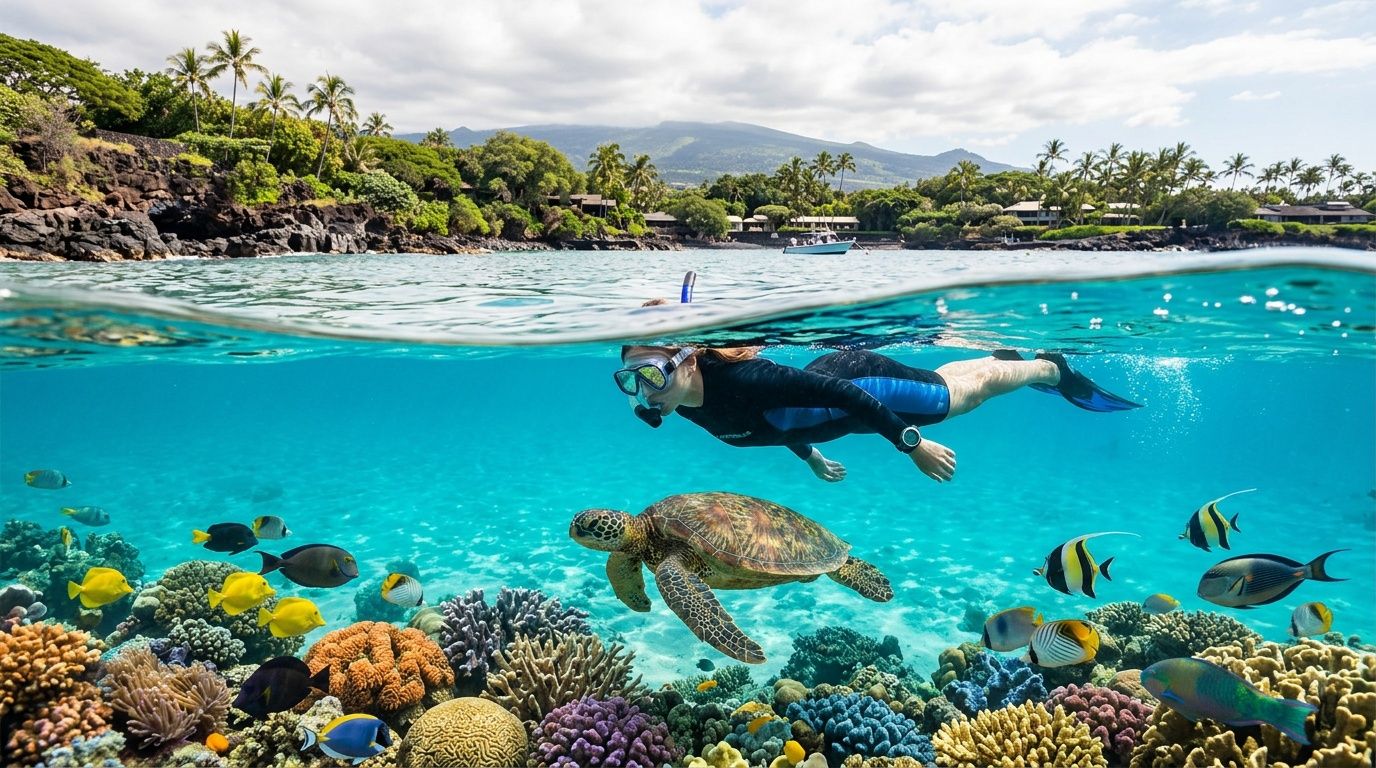
You’re probably in one of two places right now. You’re either staring at a map of the Kona coast wondering which snorkel spot is worth your limited vacation time, or you’re already on island and realizing that not every “easy” entry is easy once lava rock, swell, and rental gear get involved.
That’s where local knowledge matters. Snorkeling Kailua Kona HI can be mellow, family-friendly, wildlife-rich, and unforgettable. It can also go sideways fast if you pick the wrong spot for your skill level or treat the ocean like a swimming pool.
Your Adventure into Kona’s Underwater World
Slip your face into the water on a calm Kona morning and the first thing that hits you is the clarity. Reef fish don’t appear as flashes in murky water. They look sharp, close, and bright against black lava and coral. That clean-water feeling is why so many visitors build their whole Big Island trip around time in the ocean.
Kailua-Kona earns its reputation because it offers a rare mix of accessible shore snorkeling, protected bays, and boat trips that reach reefs difficult to access independently. Families can start in calm, shallow water. Confident swimmers can step off lava ledges into deeper reef zones. Wildlife lovers can spend the day over coral gardens and the evening floating above feeding manta rays.
Kona Snorkel Trips is Hawaii's highest-rated and most-reviewed snorkel company, and that matters if you want a guided day with lifeguard-certified support, fitted gear, and a crew that knows how to match conditions to guests.

What makes a great Kona snorkel day
A good day here usually comes down to three decisions:
- Choose the right site: Beginners do better in protected shallows. Stronger swimmers can handle more exposed entries.
- Go early when possible: Morning often gives the cleanest surface conditions.
- Respect the ocean first: The fish, turtles, and reef are the fun part. Safe entry and exit are the priority.
Practical rule: In Kona, the best snorkel spot isn’t the most famous one. It’s the one your group can enter calmly, enjoy confidently, and exit safely.
Some visitors prefer a simple beach session. Others opt for the full Captain Cook experience by boat. Many people arrive for one reason only: the manta ray night snorkel. The right plan depends on the members of your group, their comfort level in the water, and whether you prioritize convenience or a standout reef.
Why Kona's Coast is a Snorkeler's Paradise
You notice Kona’s advantage before you see your first fish. On a good morning, you float face-down a few kicks from shore and the bottom is still easy to read. Lava fingers, pockets of sand, schools of yellow tang, all of it stands out clearly instead of fading into gray-green haze.
That clarity starts with geography. The west side of the Big Island sits in the lee of Mauna Loa and Hualālai, which helps block a lot of the wind that roughens other coastlines. Earlier in this guide, I cited a Kona visibility source that explains why conditions here are so often exceptionally clear. In practical terms, less chop means less sediment suspended in the water, better light penetration, and a reef that is easier to enjoy without fighting the surface.

Why the water stays so clear
Open coasts take more wind and swell. That pushes surface texture up, stirs fine particles off the bottom, and cuts visibility fast. Kona avoids a lot of that, especially in the morning and especially along protected bays and lava shelves.
For snorkelers, that changes the whole session.
- Fish are easier to spot: You can scan farther and catch movement sooner.
- Entries are easier to read: Clear water lets you judge rock, depth, and surge before you commit.
- Nervous snorkelers settle down faster: Seeing the bottom and the reef layout reduces the guesswork.
I see this with visitors all the time. Someone starts tense at the shoreline, puts their face in, realizes they can see where they are, and their breathing slows within a minute. Good visibility does more than improve photos. It helps people make better decisions in the water.
Why marine life feels so abundant
Clear, stable water gives reef life a better stage. You still have to choose the right spot and time it well, but Kona offers the kind of habitat that keeps snorkelers engaged for a full session instead of just a quick look from the surface. Protected coves hold dense reef fish populations, coral growth, and regular visits from larger animals passing through.
Conditions also make it easier to notice behavior, not just color. You can watch a school shift over the reef, see where surgeonfish are feeding, or catch a turtle rising before it breaks the surface. If you want a better sense of what you’re likely to encounter, this guide to Big Island snorkeling spots for turtles and reef fish gives useful local context.
Kona stands out because the coastline consistently supports good snorkeling technique. You can enter with a plan, read the water, and spend your energy observing instead of battling conditions. That is a big difference, and it is why this coast rewards both first-timers and experienced snorkelers.
Top Shore-Access Snorkel Spots in Kona
Shore snorkeling in Kona works well if you pick the right site for the right person. A lot of visitors make the mistake of choosing the spot with the strongest online hype instead of the one with the easiest entry for their group.
If you want a quick primer on where turtles and reef fish are most commonly part of the experience, this guide to Big Island snorkeling spots for turtles and reef fish is useful background.

Kahaluʻu Beach Park for beginners and families
If someone asks me where to start with kids, brand-new snorkelers, or anyone who gets nervous the second the bottom drops away, I point them toward Kahaluʻu Beach Park. It has shallow, calm water protected by a historic breakwater, and marine life thrives there in 10 to 25 feet of water, according to this Kahaluʻu Beach Park spot guide.
It’s a practical place to learn because you can keep the first session short. That matters. New snorkelers usually do better with a relaxed half-hour of success than a long swim that turns into mask-fogging frustration.
What works well at Kahaluʻu:
- Easy access: You can gear up close to the water and keep logistics simple.
- Good beginner depth: The reef zone is shallow enough to feel manageable.
- Wildlife payoff early: Sea turtles and reef fish are the draw here, and seeing them quickly helps people settle in.
A few local notes make the day better. Get there earlier rather than later. Shore spots get busier as the day goes on, and calmer mornings are usually more forgiving for new snorkelers.
Two Step for confident swimmers
Honaunau Bay, better known as Two Step, is one of the most rewarding shore entries on the coast. It’s also one of the most misunderstood. People hear “easy entry” and picture a sandy beach. It isn’t that.
You’re entering over lava rock. That means footing matters, timing matters, and confidence matters. Once you’re in, the water can be excellent. The problem usually isn’t the snorkel itself. It’s the exit, especially when someone in the group is tired.
If you hesitate on the rock before you get in, don’t force the session. Lava entries reward commitment and punish indecision.
Two Step is a better fit when:
- You’re comfortable on uneven footing
- You can manage fins without rushing
- You don’t mind a more technical entry for better reef
A quick shore spot comparison
| Spot | Best fit | Main advantage | Main trade-off |
|---|---|---|---|
| Kahaluʻu Beach Park | Beginners, families | Protected, shallow water | Can feel busy |
| Two Step | Intermediate snorkelers | Strong shore reef experience | Lava-rock slip hazard |
For do-it-yourself days, that’s usually the split. Kahaluʻu is the forgiving choice. Two Step is the more confident one.
Unforgettable Boat Tours to Premier Snorkel Sites
You leave Honokohau in calm morning water, coffee still in hand, and within a short ride the coast changes character. The lava cliffs get steeper, the water turns that clear cobalt Kona is known for, and the snorkel day starts before anyone even puts on a mask.
Boat access matters here because some of Kona’s strongest reef sits at sites that are better approached from the water than from land. Kealakekua Bay is the clearest example. If you want one daytime snorkel that feels full, easy to settle into, and worth building a vacation day around, this is usually the call.
Kealakekua Bay is a protected Marine Life Conservation District, and the combination of limited access, clear water, and healthy reef is what keeps it high on local guide shortlists. If you want a better sense of the layout, conditions, and what you’ll see underwater, this Kealakekua Bay snorkel overview gives useful pre-trip context.

Why a boat trip changes the experience
The biggest advantage is energy management.
Guests who hike in or force a difficult shoreline entry often hit the water already hot, tired, and breathing too fast. From a boat, they slide in fresh. That usually means a calmer first ten minutes, better fish sightings, and a longer snorkel before fatigue sets in. For newer snorkelers, that difference is often the line between “I managed it” and “I loved it.”
Boat trips also give crews room to adjust to conditions. If wind or surge makes one mooring less comfortable, an experienced captain can choose the better side of the bay or alter timing. Shore snorkelers do not get that flexibility.
What to look for in a tour operator
Not every boat tour runs the same day, even when they visit the same bay.
A strong operator keeps groups manageable, gives a real in-water briefing, watches nervous guests closely, and treats the reef like a living place instead of a backdrop for photos. I put a lot of weight on guide behavior once guests are in the water. Good crews scan constantly, help people who are burning energy too fast, and point out marine life without chasing it or crowding it.
A few practical trade-offs are worth knowing before you book:
- Small boats usually feel more personal and are better for coaching, but rides can be bumpier.
- Larger boats often offer more shade and easier boarding ladders, but the in-water experience can feel less intimate.
- Early departures usually bring calmer water and fewer people at the moorings.
- Budget trips can be fine, but check how much actual snorkel time you get after transit, gear fitting, and safety talk.
The history of Kealakekua Bay also deserves respectful handling. The Captain Cook Monument draws plenty of attention, but the bay is more than a landmark. Good crews explain the cultural and historical context clearly and avoid turning the place into a checkbox stop.
Kona Snorkel Trips runs Captain Cook outings with lifeguard-certified guides, gear, and small-group support. That setup helps first-time snorkelers feel looked after while still giving confident swimmers room to settle in and explore.
The right boat tour does more than get you to the reef. It gets you there calm, informed, and ready to snorkel well.
Ready to explore the bay? Check tour times below!
The Magic of the Manta Ray Night Snorkel
The boat idles outside the harbor after dark. Kona lights glow behind you, the ocean turns black, and then the crew switches on the light board. A few minutes later, giant manta rays start looping through that column of light, close enough to hear people gasp through their snorkels.
Day snorkeling here is all about reef detail and fish behavior. The manta snorkel is a different kind of experience. You are not covering distance or hunting for the next coral head. You float with the group, hold the board, and let the animals come to the plankton gathering in the light.

What it feels like in the water
This trip surprises people because the challenge is mental more than physical. The water is dark, you are floating in place, and your job is to stay calm, keep your body flat, and avoid kicking downward when a manta passes under the lights. For many first-time guests, that takes a few minutes to settle into.
Then the first close pass happens.
A manta ray does not rush. It glides, banks, and turns back through the light with perfect control. From the surface, you can watch the white belly flash, the mouth open to feed, and the wings sweep so close that the whole group goes quiet. If you want a clearer sense of the flow of the evening, this guide to what to expect on a manta ray night snorkel in Kona gives a solid preview.
Who this tour suits best
This is a strong fit for travelers who want a signature Kona wildlife encounter without a long swim. Good candidates usually include:
- Wildlife-focused visitors: manta encounters are one of the most memorable things to do on this coast.
- Confident beginners: you stay with the float and follow simple instructions.
- Couples, families, and small groups: everyone sees the same action together, which makes it feel shared in a way reef snorkeling often does not.
It is not ideal for everyone. Guests who get cold easily should plan for the ride back. People who are uneasy in dark water may enjoy a daytime trip more. Younger kids vary a lot. Some love it. Others decide very quickly that night ocean conditions are not fun.
Picking the right operator
Crew quality matters here more than marketing. The good operators keep check-in organized, fit gear before the rush, explain exactly how to hold the board, and watch guests closely once everyone is in the water. I would also look at group size, ladder setup, and whether the crew gives clear guidance about seasickness before departure. A short swim in daylight can feel easy. Floating offshore at night feels very different if the briefing is sloppy.
Kona Snorkel Trips runs a manta ray night snorkel tour from Kona with guided in-water support. That kind of structure helps nervous snorkelers relax and helps stronger swimmers focus on the mantas instead of the logistics.
The best manta trips feel calm from the first safety talk to the last climb back on the boat.
If this is on your Kona list, reserve early and choose a night with conditions you feel good about.
Your Essential Kona Snorkeling Checklist
A lot of bad snorkel days in Kona come from small mistakes. Wrong footwear. A leaking mask. Too much confidence at a lava entry. Sunscreen that isn’t reef-safe. None of that sounds dramatic in the parking lot. It feels dramatic when you’re trying to get out over wet rock.
Kailua-Kona’s lava-rock entries, including places like Two Step, pose real slip hazards. Guides recommend water booties for safety, and the DLNR requires biodegradable gear sprays and reef-safe sunscreen, as noted in this Kona snorkeling gear and safety article. If you want help choosing products that won’t harm coral, this guide to reef-safe sunscreen for Big Island snorkeling is a good place to start.
Essential gear
Bring less than you think, but bring the right things.
- Mask that seals well: A fancy mask that leaks is worse than a basic one that fits.
- Snorkel you’re comfortable breathing through: New snorkelers do better when they test gear before swimming out.
- Fins that match the site: Shorter, easier fins are often better for shore entries than oversized rental fins.
- Water booties: Especially useful where lava rock is slick or uneven.
- Rash guard or sun shirt: Better for long sessions than relying only on sunscreen.
Safety first
Kona rewards calm, conservative choices.
- Use the buddy system: Don’t snorkel alone, even at busy beaches.
- Watch the water before entering: Check surge, footing, and how others are getting out.
- Know your turnaround point: Head back while you still feel strong.
- Keep first sessions short: This works especially well for kids and nervous adults.
A practical approach is simple. If anyone in the group starts breathing hard, fighting their gear, or losing confidence, end the session early and reset.
Mālama i ke kai
Good snorkeling here depends on respectful habits.
- Don’t touch coral: It’s alive and easily damaged.
- Give turtles space: Let the animal choose the distance.
- Keep fins up: Many beginners kick the reef without realizing it.
- Pack out what you bring: Loose trash and plastic have no place at shoreline parks.
The quiet snorkelers usually see more. Fish stay settled. Turtles behave naturally. The reef feels alive instead of stressed.
Planning Your Adventure and Sample Itineraries
Most visitors don’t need more options. They need a simple plan that fits their group. The right itinerary for snorkeling Kailua Kona HI depends less on ambition and more on pacing.
If you’re still mapping out flights and budget, a practical Hawaii travel cost guide can help you line up the bigger picture before you lock in tours. For comparing different guided ocean days once you’re ready, this roundup of Kona snorkel tours is a helpful planning tool.
The perfect family day
Start the morning at Kahaluʻu Beach Park. Keep the first snorkel short and low-pressure so everyone gets a win early. After that, dry off, grab lunch in town, and leave the afternoon open for something easy rather than trying to force a second big water session.
This plan works because it respects energy levels. Families usually have a better trip when the ocean day ends before anyone melts down.
The ultimate ocean explorer day
Book a morning Captain Cook tour for your main reef session. Use the afternoon to rest, hydrate, and stay out of the sun. If your group still has energy and likes wildlife encounters, finish with the manta ray night snorkel.
That pairing gives you two very different sides of Kona. Daylight reef life first. Night feeding behavior after dark.
Pro booking tips
- Book early: Small-group tours fill faster than people expect.
- Match the tour to the weakest swimmer: That keeps the day enjoyable for everyone.
- Ask about guide support: Lifeguard-certified crews matter, especially for first-timers.
- Don’t cram too much into one day: Good ocean days have breathing room.
If you want a straightforward way to compare tours and plan your time on the water, Kona Snorkel Trips offers Captain Cook snorkel trips, manta ray night snorkels, and other guided Kona ocean experiences.