
Kona Snorkel Tours: Your 2026 Guide to an Unforgettable Trip
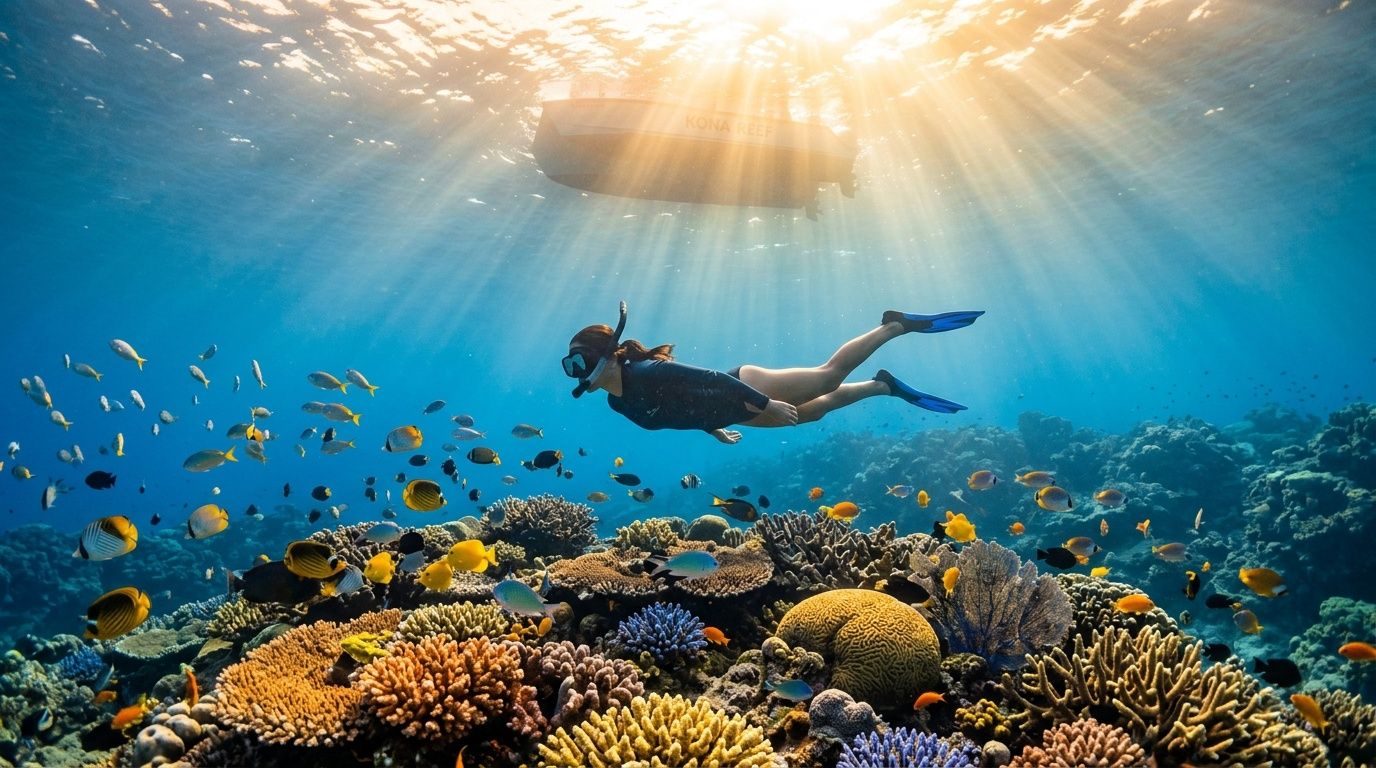
You’re probably in the same spot a lot of Kona visitors hit. You want one ocean day that feels worth the trip, but the choices blur together once you start comparing boats, bays, and tour descriptions. Some travelers want calm water and easy entries. Some want a wildlife story they’ll talk about for years. Some just want to know which tour won’t leave their kids overwhelmed or their least confident swimmer stressed.
That’s where kona snorkel tours get easier to sort out. The right trip depends less on what sounds famous and more on who’s coming with you, how comfortable everyone is in the water, and whether you want daylight reef color, nighttime manta magic, or a private day built around your group.
Why Kona is a World-Class Snorkeling Destination
You step off the boat, look over the side, and can already see the reef before you hit the water. That first look tells people a lot about Kona. Dark lava coast on one side, clear blue water on the other, and enough visibility on a good day that even nervous first-timers relax once they put their face in.

What makes Kona special is the range of experiences packed into one stretch of coast. Sheltered bays give new snorkelers and families a calmer start. Offshore sites bring the kind of wildlife encounters that more confident swimmers usually hope for. Kealakekua Bay is especially well known for clear water and healthy reef structure, and the State of Hawaii notes its protected marine life and lasting ecological value in the Kealakekua Bay State Historical Park overview.
That variety matters because different travelers need different conditions.
A family with young kids usually enjoys Kona for one reason. There are boat-access snorkel spots where the entry is controlled, flotation is easy to use, and the reef starts rewarding people right away. A nervous adult who has never snorkeled before often does better here than at a beach with surf, slippery rocks, and a long swim just to reach decent fish life. A wildlife-focused traveler has a different draw entirely, especially after reading more about why Kona tops Hawaii for manta ray night snorkel.
The coast also benefits from geography. Much of Kona sits in the lee of the island, which often means clearer, calmer morning conditions than visitors expect from open ocean snorkeling. Conditions still change day to day, and no guide should promise flat water every time, but Kona gives captains and crews solid options more often than many visitors realize.
From a guide’s perspective, the biggest difference is how quickly guests can settle in and pay attention to the marine life. Instead of fighting shorebreak or trudging across a rocky entry, they can focus on breathing slowly, floating comfortably, and noticing the details. Yellow tang moving over coral heads. A moray peeking from a crevice. Spinner dolphins sometimes passing offshore. On the right day, the whole experience feels welcoming without feeling tame.
Kona also earns its reputation because many tours are built around access and support, not just destination names. Good operators brief guests clearly, fit masks carefully, provide flotation without making anyone feel self-conscious, and adjust the plan to ocean conditions. Kona Snorkel Trips is a highly-rated snorkel company in Hawaii.
For travelers trying to choose with confidence, that is the main advantage of Kona. It offers calm reef snorkeling for cautious beginners, richer marine habitat for reef lovers, and memorable wildlife encounters for people who want something they will still be talking about long after the trip ends.
Choosing Your Adventure A Comparison of Kona Snorkel Tours
You wake up to a calm Kona morning, but your group is split. One person wants the biggest wildlife moment possible. One wants easy water and plenty of support. One is already asking how crowded the boat will feel. That is usually the real decision point with kona snorkel tours. The best trip is the one that fits the least confident person in your group without boring the most adventurous one.
Kona Snorkel Tour Options at a Glance
| Tour Type | Best For | Key Sights | Typical Duration |
|---|---|---|---|
| Manta ray night snorkel | Thrill-seekers, wildlife lovers, confident beginners who prefer floating support | Manta rays feeding under lights at night | Evening tour |
| Kealakekua Bay and Captain Cook snorkel | Families, first-timers, reef lovers, history-minded travelers | Coral reef, tropical fish, dramatic shoreline, Captain Cook Monument | Half-day style outing |
| Seasonal whale watching with snorkeling focus | Winter visitors who want a broader marine life day | Humpback whales in season plus coastal scenery | Seasonal outing |
| Private charter | Families, mixed-ability groups, special occasions | Flexible based on conditions and group goals | Custom |
Which tour fits which traveler
For the thrill-seeker: Choose the manta ray night snorkel. The excitement comes from the setting and the scale of the encounter. You are in dark water at the surface, holding position, while large animals move through the light below you.
For the family with young kids or mixed confidence levels: Daytime reef snorkeling usually makes the decision easier. Kealakekua Bay gives beginners more visual comfort, and families tend to like that someone can snorkel for a while, then rest on the boat without feeling like they missed the whole trip.
For the nervous first-timer: Pick a boat with a patient crew, easy entry, and flotation included. The destination matters, but the crew matters more. A calm guide who adjusts a mask properly and explains what the first minute in the water will feel like can change the entire day.
For the traveler who wants fewer people and more guidance: Small-group tours are often the better value, even when the ticket price is higher. You usually get more room, quicker gear help, and less waiting during water entry.
For the group with different priorities: A private charter is the cleanest solution. It works well when one guest wants serious snorkel time, another wants a scenic cruise, and someone else wants to go at a slower pace.
That trade-off is real. Lower-priced trips can still be enjoyable, but they often carry more guests or follow a tighter schedule. Higher-priced tours commonly reflect smaller group size, boat style, included gear, food, or a more hands-on crew. Hawaii Ocean Project lists a range of Big Island snorkeling tours and pricing on its Kona snorkel cruise options page, which is a useful starting point for comparing what is included.
What to compare before you book
A tour name does not tell you much. The setup does.
What works:
- A clear match between trip style and guest comfort: Day snorkels suit cautious swimmers better than night wildlife tours in many cases.
- Smaller guest counts: Boarding feels calmer, and guides have more time for individual help.
- Simple water entry and exit: This matters a lot for kids, older guests, and anyone who is uneasy in open water.
- Crews that brief well: Guests relax faster when they know where to sit, how to enter, and what support is available.
What causes problems:
- Choosing by photos alone: A beautiful manta image does not tell you whether someone in your group will enjoy being in the ocean after dark.
- Ignoring the weakest link in the group: One anxious guest can change the pace of the whole outing.
- Assuming all boats run the same way: Some tours are fast and efficient. Others are slower, more personal, and easier for beginners.
For a closer look at boat size, amenities, and group fit, read this guide on how to compare Kona boat tours before you book.
The Legendary Manta Ray Night Snorkel
Some kona snorkel tours are about covering ground. The manta ray night snorkel is the opposite. You hold position at the surface, look down into the light, and wait for the water to fill with movement.

What makes this trip reliable is straightforward. Kona manta ray night snorkel tours achieve an 80 to 90 percent sighting success rate due to a year-round resident manta population and specialized lighting systems, often exceeding 200,000 lumens, which create dense plankton blooms that attract the filter-feeding giants, as noted in this manta ray night snorkel explanation.
How the experience actually works
Guests enter the water with a guide and hold onto a floating light board. The lights attract plankton. The plankton attracts mantas. The mantas come in to feed, often gliding and turning directly beneath the group.
That setup matters because it removes the biggest mistake people make when they imagine snorkeling at night. They think they’ll need to swim around in the dark searching for wildlife. You don’t. The encounter is built around controlled positioning and patient observation.
For travelers comparing operators, Kona Snorkel Trips’ manta ray tour page shows one version of that experience, and Manta Ray Night Snorkel Hawaii is another strong option to consider when looking for a manta ray night snorkel tour.
Who should book this tour
This trip is a great fit for:
- Wildlife-focused travelers: You want one signature experience, not a general reef stop.
- Couples and small groups: The setting feels memorable without needing extra production.
- Nervous swimmers who prefer support: Holding the board can feel more reassuring than free-swimming over a reef.
Less ideal fits include people who dislike dark water no matter how safe the setup is, or travelers who only enjoy snorkeling when they can move around independently and explore at their own pace.
Stay still, keep your body relaxed, and let the mantas do the work. The best encounters happen when guests stop trying to control the moment.
For more context on the behavior behind the experience, read why manta rays gather near Kona after dark.
Exploring Kealakekua Bay and the Captain Cook Monument
Your boat rounds the lava coastline after an early departure, the bay opens up, and the water shifts from blue to that clear, deep turquoise that makes people go quiet for a second. For many daytime visitors, this is the Kona snorkel that feels closest to the postcard version of Hawaii. It also happens to be one of the easier places to match with the right traveler.

Kealakekua Bay works especially well for three groups. Families with kids often appreciate the calmer feel of a protected bay. Nervous first-timers usually relax faster when they can see clearly into the water instead of staring into surge or murk. Confident snorkelers like it for the same reason guides do. Clear water makes reef contours, fish movement, and depth changes much easier to read. This Kealakekua Bay tour guide highlights that visibility and the bay’s protected setting.
The Captain Cook Monument adds another layer to the stop. This is not just a pretty snorkel site. It is a place with cultural and historical weight, and good guides treat it that way. The best tours give guests enough context to understand where they are without turning the trip into a lecture.
Boat access changes who will enjoy this outing most.
A fit, independent traveler can absolutely choose a harder DIY approach and make a day of it. But for parents managing young kids, visitors with limited mobility, or anyone who wants to save energy for the water, a guided boat trip is usually the better call. You arrive less tired, entries are simpler, and help is close if a mask needs adjusting or someone loses confidence once they’re in.
Small-group boats are often the sweet spot here. They tend to suit couples, first-timers, and travelers who want more guide attention. Larger boats can work well for budget-minded groups or people who care more about getting to the bay than having a more personal pace.
A few practical advantages stand out:
- Simpler water entry: Better for guests who do not want to climb over shoreline rocks or start the snorkel already worn out.
- More direct support: Helpful for kids, cautious swimmers, and anyone who wants quick gear help.
- A better use of time: More of the day goes to snorkeling and spotting marine life, less to logistics.
If that sounds like your style, a dedicated Captain Cook snorkel tour is the format to compare against other daytime options.
For a local breakdown of conditions, access, and what the snorkel is like, this guide to Kealakekua Bay snorkel planning is a useful starting point.
Safety Comfort and What to Expect Onboard
Travelers don’t need more hype before booking a snorkel tour. They need to know whether they’ll feel safe, whether the crew will help if they get nervous, and whether the trip will feel manageable for their family.

One of the more overlooked truths in kona snorkel tours is that nervous swimmers are often underserved by the marketing. Yet they’re absolutely part of the audience. For nervous or first-time snorkelers, tours with lifeguard-certified guides and options like the Manta Ray Night Snorkel are ideal, as guests hold onto a floating light board, which is often considered easier and more reassuring than swimming independently during a daytime snorkel, based on this guide for first-time Kona snorkelers.
What helps nervous guests most
The right support is simple, not flashy.
- Lifeguard-certified guides: Nervous guests can tell the difference between a fun host and someone trained to manage the water.
- Small groups: People ask more questions and get help sooner when the boat isn’t packed.
- Clear positioning in the water: Guests relax faster when they know where to be and what their body should be doing.
- Flotation options: Good flotation support prevents the spiral that starts when someone tries to “push through” discomfort.
What a comfortable boat experience looks like
A well-run tour feels organized from the first few minutes. Gear is ready. The crew explains entry and exit clearly. Snacks and drinks are straightforward comforts, but they matter more than people expect, especially after time in the water.
The best safety briefing doesn’t sound dramatic. It sounds calm, specific, and practiced.
Families should also pay attention to onboard rhythm. If your crew handles gear fitting efficiently and gives each guest a clear next step, the day starts smoother. If boarding feels chaotic, that usually carries into the water.
For travelers comparing operators, this overview of essential Kona boat tour safety features you need is a smart read before booking.
Planning Your Trip Timing Booking and Packing
Some parts of planning are easy. Kona reef snorkeling and manta snorkeling are good year-round. Whale watching is the seasonal wildcard and is generally a winter add-on for visitors who want more than snorkeling from their ocean time.
Booking timing that works
If you want a small-group tour, don’t wait too long. Those are usually the first trips families and careful planners target because group size affects the whole feel of the experience. If your vacation dates are fixed, book the water activity early and build the rest of the itinerary around it.
Gift cards are also worth considering if you’re buying for someone else. Snorkel experiences are easier to give than trying to guess exactly which day a traveler will want to go.
What to pack and what to leave behind
Keep your gear list simple:
- Swimwear under your clothes: Makes check-in and boarding easier.
- Towel and dry layer: The ride back can feel cooler after the water.
- Reef-safe sun protection: Better for your skin and the reef.
- Any personal medication you may need: Don’t assume the boat will have what you use regularly.
- A practical mindset: The calmer you are, the better your snorkel usually goes.
The eco-conscious choice matters
A lot of travelers want their tour dollars to do less harm and more good. That’s a smart instinct. Eco-conscious tourists can make an impact by choosing operators who integrate marine education into their tours, connecting the snorkeling experience to broader ocean stewardship and supporting the conservation of Marine Life Conservation Districts like Kealakekua Bay, according to this eco-focused Kona snorkel tour perspective.
That’s one of the cleanest ways to sort through your options. Don’t just ask what you’ll see. Ask how the crew talks about the reef, wildlife spacing, and respectful behavior in the water.
Kona Snorkel Tour FAQs and Your Next Adventure
A few last questions usually stand between “that sounds amazing” and booking.
Can I go if I’m not a strong swimmer
Yes, depending on the tour and your comfort level. Tours that offer flotation support, close guide supervision, and clear in-water positioning are usually the best fit. If you’re anxious, be honest about it before the boat leaves. Good crews would rather set you up well from the start.
Are kona snorkel tours good for kids
Many are, but the fit depends on the child’s age, comfort in the water, and attention span. Daytime reef tours often work well for families. Some night tours have minimum ages, so check the details before you book.
What if I’m deciding between manta rays and Captain Cook
Use your travel personality as the tie-breaker. Pick manta rays if you want one unforgettable signature wildlife encounter. Pick Kealakekua Bay if you want a more classic daytime snorkel with reef color, clear water, and a calmer overall setting.
What should I ask before booking
Ask about group size, guide certifications, flotation options, what the boat ride feels like, and who the tour is best suited for. Those answers tell you more than a glossy description ever will.
Kona has a rare way of turning even cautious guests into ocean people. One person falls in love with reef fish. Another can’t stop talking about the first manta pass under the lights. Another remembers how easy the crew made it feel. That’s why these tours stay with people.
If you’re ready to stop comparing tabs and start planning your day on the water, take a look at Kona Snorkel Trips. Whether you’re after a manta ray night snorkel, a Captain Cook adventure, or a giftable Hawaii experience, it’s an easy place to see current options and book the trip that fits your group.