
Snorkeling Kona Hawaii: Best Spots & Manta Ray Tours
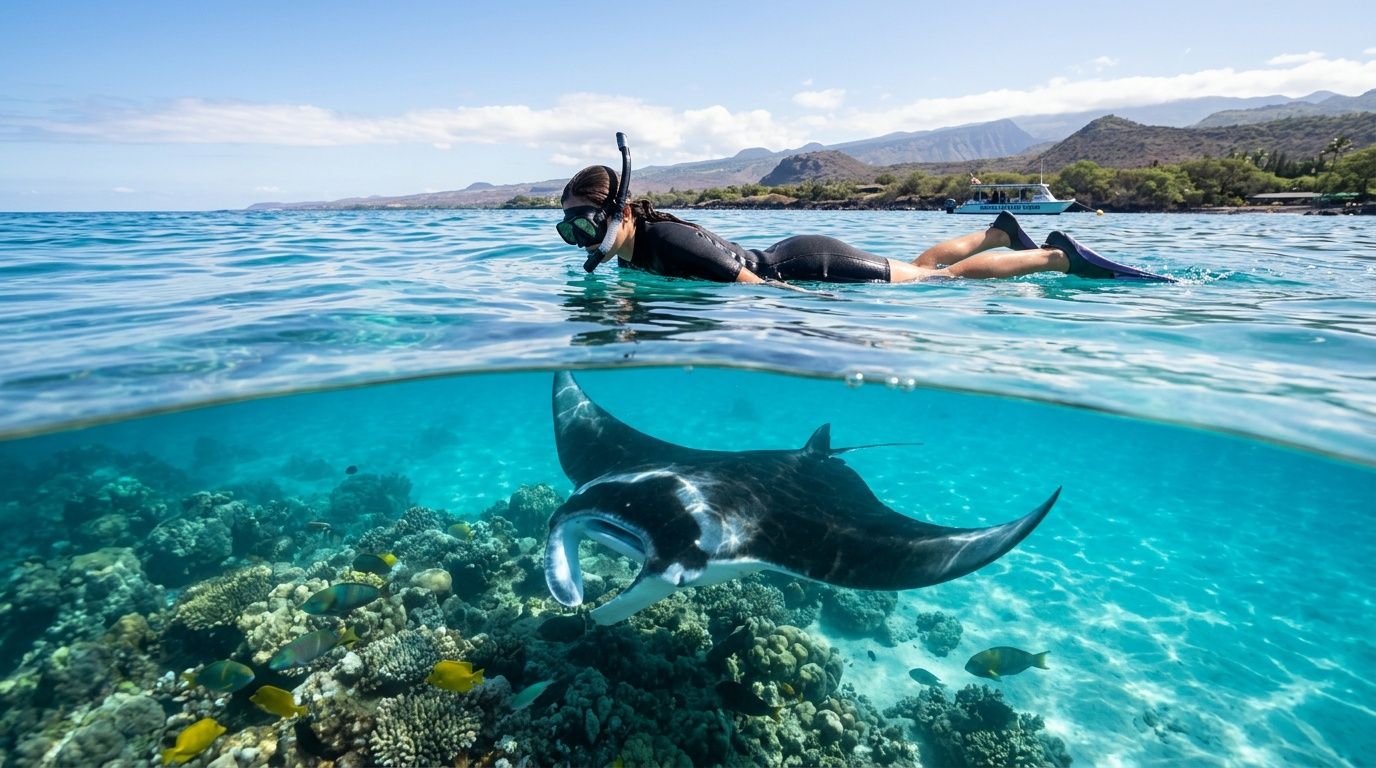
You’ve landed in Kona, tossed your bag at the condo or hotel, and now you’re staring at the water thinking the same thing most visitors do. Where should we snorkel first, and which trip is worth booking? That question matters here because the right choice can mean an easy, fish-filled float over bright reef, while the wrong one can leave you dealing with crowds, awkward entries, or conditions that don’t match your comfort level.
Snorkeling Kona Hawaii works best when you match the spot to your travel style. Families usually want calm entries and quick wins. First-timers need clear water, simple coaching, and flotation options. More adventurous swimmers often want deeper reef edges, lava rock topography, and sites with a stronger sense of place. This guide is built like the briefing I’d give before sending someone out for a great day on the water.

Some travelers want a relaxed half-day with turtles and reef fish close to shore. Others are here for the signature experiences, especially Captain Cook and the manta ray night snorkel. If you’re still sorting out which outing fits your group, this breakdown of different Kona snorkel tour styles is a useful place to start.
Your Ultimate Kona Snorkeling Adventure Awaits
You land in Kona with one open morning, one excited kid, and one person in your group who has never used a snorkel before. That is usually when the planning matters most. The right choice gives you calm water, an easy entry, and fish within minutes. The wrong one can turn a simple outing into a tiring swim over surge and lava rock.
Kona gives you several very different kinds of snorkel days, and they do not fit every traveler the same way. Some visitors want a relaxed float in protected water with plenty of help getting started. Some want the high-demand signature outings, especially Captain Cook or the manta ray night snorkel. Others care most about reef structure, longer time in the water, and a trip that feels more adventurous than convenient.
A good plan starts with how your group likes to travel, not with the most famous name on a map.
Pick your day by travel style
Start with the experience you want to have in the water.
- Family-friendly and low stress: Choose a protected bay or a guided boat trip with simple entry, flotation available, and enough support that kids and cautious swimmers can settle in fast.
- Adventure-focused: Look for lava rock terrain, deeper reef edges, and sites where stronger swimmers will enjoy exploring beyond the first easy section.
- First-time confidence: Pick calm conditions, clear instruction, and a crew that helps with mask fit, breathing rhythm, and getting in and out of the water without rushing anyone.
If you are still sorting that out, this guide to Kona snorkel tour styles and trip types helps narrow the field.
Practical rule: The best snorkel for your trip is the one that fits your swimming ability, entry comfort, and interest level on that specific day.
Kona works well because you can build around those trade-offs. Shore snorkeling saves time and can be great for confident travelers who do not mind uneven entries. Boat trips usually make access easier and often work better for mixed-ability groups. Signature tours add a memorable wildlife or historical element, but they are not always the most relaxed choice for nervous swimmers.
That is how guides plan it. Match the site to the group, respect the ocean conditions, and choose the outing that gives you the kind of day you want.
What Makes Snorkeling in Kona So Special
Kona’s reputation starts with geography, not hype. The coast sits on the island’s leeward side, sheltered by Mauna Loa and Hualālai, and that natural protection creates the kind of ocean conditions snorkelers notice immediately. According to Kona Honu Divers’ overview of Big Island snorkeling, the Kona coast hosts 60% of Hawaii’s top snorkeling spots, with wave heights under 1 meter for 85% of the year and water clarity often exceeding 100 feet.

Those are ideal conditions for people who want to relax into the experience instead of fighting surge or peering through murk. Beginners can see the bottom more easily. Photographers get cleaner sightlines. Kids and nervous swimmers usually settle down faster when the water reads as calm and predictable.
Lava coast, clear water
Kona’s shoreline also helps the visibility stay strong. The coast is shaped by young volcanic rock rather than broad sandy runoff zones, so the water often stays visually clean even when other areas around the island look stirred up.
That volcanic structure also makes the underwater terrain more interesting. Instead of one uniform bottom, you get ledges, coral patches, old lava formations, and transitions between shallow reef and deeper blue water. Even a short snorkel can show you a lot.
Clear water changes behavior. New snorkelers breathe slower, move less, and spend more time looking around because they can actually see what’s happening below them.
Why this matters when choosing tours
If you’re comparing options, Kona gives you a wider margin for success than many destinations. That doesn’t mean every site is easy every day. It means the coast consistently gives operators and independent snorkelers better odds of finding usable conditions.
This is also why manta experiences work so well here after dark. The same coast that produces strong daytime snorkeling supports memorable night encounters too. If you’re curious about the behavior behind that experience, this article on why manta rays gather near Kona after dark adds helpful context.
What visitors usually notice first
Three things stand out once you get in the water:
- Visibility: You can often track fish movement from a distance instead of only when they pass right under you.
- Comfort: Warm water and lower surface chop make it easier to stay out longer.
- Confidence: Calm seas reduce the feeling that the ocean is pushing you around.
That combination is why Kona keeps turning casual vacation snorkelers into people who start planning their next ocean day before lunch.
Exploring Kona’s Top Snorkeling Spots
No single snorkel site fits every traveler. Kona gives you several strong choices, but they’re different in access, effort, and payoff. The simplest way to plan is to decide whether you want boat access, easy shore entry, or a more technical lava-rock launch.
Kona’s water clarity is tied to its shoreline. As explained in this look at Kona snorkeling conditions, the young, porous volcanic lava rock shoreline minimizes sediment runoff, which helps maintain the optical clarity that makes reef viewing easier.
Kona Snorkel Spots at a Glance
| Location | Access | Best For | What You'll See |
|---|---|---|---|
| Kealakekua Bay | Primarily by boat | Travelers who want protected reef and a historic setting | Coral gardens, reef fish, turtles, and sometimes dolphins offshore |
| Kahalu'u Beach Park | Shore entry | Families, beginners, short easy sessions | Shallow reef fish and frequent turtle sightings |
| Two Step at Honaunau Bay | Lava rock shore entry | Intermediate snorkelers who are comfortable with footing | Reef fish, coral, turtles, and deeper blue-water edges |
Kealakekua Bay
If reef quality is your top priority, this is the site many people remember longest. The bay’s protected status shows underwater. Fish density feels higher, coral structure looks healthier, and the whole setting has a calm, enclosed feel that works for both new snorkelers and experienced ones.
The trade-off is access. Shore access is difficult, so most visitors have a much better day arriving by boat. That avoids a hard approach and puts you in the water fresher, which matters more than people expect.
Kahalu'u Beach Park
Kahalu'u is the practical choice when your group includes kids, hesitant swimmers, or someone who just wants a simple first session. It’s straightforward, familiar, and often rewarding fast. If your goal is “get in, see fish quickly, feel comfortable,” this is usually where I’d point you first.
The trade-off is popularity. Easy access attracts more people, and that changes the feel of the experience. Go early if you want calmer water and a less crowded surface scene.
If someone in your group says, “I want to try snorkeling, but I’m not sure I’ll love it,” start with the easiest entry, not the most famous bay.
Two Step at Honaunau Bay
Two Step is excellent, but it’s often oversimplified online. The entry is natural lava rock, not a sandy beach. That means it’s efficient once you know what you’re doing, but clumsy technique can turn the first minute into the hardest part of the whole snorkel.
The reward is immediate access to quality water and dramatic underwater topography. It also sits beside an area with deep cultural significance, which gives the outing more depth than a standard beach stop.
For readers who want more detail on where turtles and reef fish are easiest to find, this roundup of Big Island snorkeling spots for turtles and reef fish is worth saving.
Experience the World-Famous Manta Ray Night Snorkel
The manta ray night snorkel is the outing people talk about at dinner for the rest of the trip. It feels unusual from the start because you’re not kicking from reef patch to reef patch the way you do on a daytime snorkel. You’re floating at the surface, holding onto a light board, and watching the water below turn into a stage.
According to this overview of snorkeling in Kona, Kona’s Manta Ray Night Snorkel is a signature experience unique to the region, with manta rays gathering to feed on plankton attracted by underwater lights.

What the experience actually feels like
At first, it’s dark and quiet except for the boat, the crew, and the glow in the water. Then the plankton starts to gather in the light. After that, the mantas appear out of the black water below and begin sweeping through the beams.
They don’t move like reef fish. They glide, bank, and loop. The closest passes feel slow and controlled, even when the animal fills your whole view.
Who this tour suits best
This is often a better fit for nervous but coachable guests than people expect because you’re holding onto flotation rather than swimming a long route. It’s still ocean time at night, so comfort in the water matters. If someone dislikes darkness, open water, or face-in-water breathing, they should think carefully about that before booking.
For many travelers, the biggest mistake is assuming the manta trip and a daytime reef snorkel ask the same things from you. They don’t. The physical demand can feel gentler, but the sensory experience is more intense.
- Good fit: Comfortable in water, open to instruction, interested in wildlife behavior
- Less ideal fit: Highly claustrophobic in masks, very anxious in darkness, or unwilling to follow crew guidance
- Best mindset: Float, stay still, watch the water work
If you want the primary tour option, book the Manta Ray Night Snorkel in Kona. If you’re comparing operators, Manta Ray Night Snorkel Hawaii is also an exceptional alternative to consider.
Some ocean experiences are fun. This one is absorbing. People stop talking once the first manta starts circling under the lights.
If you want a clearer sense of logistics, timing, and in-water flow, this guide on what to expect on a manta ray night snorkel in Kona helps set expectations well.
Snorkeling Through History at Kealakekua Bay
The first thing many visitors notice at Kealakekua Bay is the silence. Once the boat idles down and you slip into the water, the usual shoreline noise disappears. What replaces it is clear blue water, steep green cliffs, and a reef that feels protected in every sense of the word.
Kealakekua is one of the easiest places in Kona to recommend when someone wants more than a casual beach snorkel. It suits travelers who want a high-quality reef, families who would rather skip a difficult shoreline entry, and first-timers who feel better starting from a boat with crew support nearby. It also asks for the right mindset. This is a place with cultural and historical weight, not just a pretty stop on the coast.

Why boat access changes the day
Shore access here is the trade-off. Yes, determined hikers and paddlers can reach the bay on their own, but that approach works better for strong, prepared visitors who know exactly what they are signing up for. For most travelers, boat access is the better choice because it saves energy for the part that matters most, time in the water.
That difference shows up fast. Kids are calmer. New snorkelers start fresher. Confident swimmers get longer, more relaxed reef time instead of arriving already tired from the approach.
A guided boat trip also gives the day more structure. Good crews sort out gear fit, explain where to snorkel, and keep people away from problem areas so the experience stays safe and low-stress.
What makes this bay memorable
The reef is excellent, but Kealakekua stays with people for more than fish counts. The water often has that clean, blue clarity Kona is known for, and the coral growth holds your attention from the surface. Yellow tang, butterflyfish, and schools of reef fish move across the lava contours while the monument and cliffs remind you that this bay carries a much deeper story.
That mix of nature and history is the draw.
If your travel style leans curious rather than rushed, this is the kind of snorkel that lands well. You are not checking off a quick stop. You are spending part of the day in a marine sanctuary with real cultural significance, and the better operators treat it that way.
Who should pick Kealakekua Bay
This outing is a strong match if:
- Your group has mixed experience levels: Boat entry is easier for many people than picking through rocks at a shore site.
- You want a premium half-day feel: The bay rewards the extra planning with better scenery and more immersive snorkeling.
- You care about doing it responsibly: Guided trips help guests keep distance from coral, respect wildlife, and follow local rules in a sensitive area.
- You want details before you book: This Kealakekua Bay snorkel guide with access and planning tips helps you choose the right setup.
Sun protection matters here because there is very little natural shade on the water. A rash guard helps, and Reef-safe surf protection is the better choice if you are trying to protect both your skin and the reef.
For a direct booking option, Captain Cook snorkel tour access is here.
Local perspective: Kealakekua Bay is the place I suggest when someone says, "I want one snorkel day that really feels like Kona." It gives you reef quality, a smoother start for mixed-ability groups, and a stronger sense of place than a standard shore snorkel.
Snorkel Smart and Safe in Kona
Kona is forgiving compared with many coastal destinations, but the ocean still punishes casual mistakes. Good snorkeling isn’t about pushing through discomfort. It’s about setting yourself up so the water feels manageable from the first minute.
Season matters. According to Westgate’s Big Island snorkeling overview, Kona offers excellent conditions year-round, with the calmest stretch typically from May through September, while winter can bring larger swells that affect visibility and access.
The habits that make the biggest difference
A few practical choices solve most avoidable problems:
- Go with a buddy: Solo snorkeling creates unnecessary risk, especially at shore entries.
- Start in the morning: Water is often calmer, and surface conditions are easier to read.
- Use reef-safe sunscreen: Mineral-based formulas are the better call for coral and for long days in the sun.
- Test your mask before committing: A leaking mask can wreck confidence fast.
- Float first, then settle in: Don’t waste energy standing or scrambling on rocky entry points.
What not to do
Touching coral, standing on reef, and crowding wildlife are the three behaviors guides end up correcting most. They damage the environment and usually make the experience worse for the snorkeler too.
If you want extra sun coverage beyond sunscreen alone, a rash guard or covered swim layer helps. For readers comparing skin coverage options, this guide to reef-safe surf protection is a useful reference.
Basic packing list for a smoother day
Bring the simple stuff people forget:
- Reusable water bottle: Kona sun catches up with you quickly.
- Towel and dry clothes: Especially helpful after boat rides or night tours.
- Hat and sunglasses: The boat ride out can be as bright as the beach.
- Water shoes if needed: Useful for rougher shoreline approaches.
- Calm expectations: Conditions change, and good judgment beats stubbornness every time.
Frequently Asked Questions About Kona Snorkeling
What’s the best time of day to snorkel
Morning usually gives you the cleanest start. The water is often calmer, the light is easier to work with, and popular sites feel less hectic before late morning. If you’re choosing between sleeping in and getting out early, early usually wins.
Do I need to be a strong swimmer
Not always. Some experiences are more about floating calmly than swimming distance, especially the manta night snorkel where guests hold onto a light board. Daytime tours and many beginner-friendly outings also work better when flotation is available and when guests are honest about their comfort level before entering the water.
What if I’ve never snorkeled before
Kona is a good place to learn because clear water lowers the stress level quickly. The key is to start somewhere that matches your confidence, not your ambition. A simple first session with a patient crew, a well-fitted mask, and time to practice breathing on the surface beats forcing a big adventure on day one.
Which experience should I choose first
That depends on what kind of memory you want.
- Choose a calm daytime reef snorkel if you want fish, coral, and a gentle introduction.
- Choose Captain Cook if you want a more complete outing with stronger reef quality and a historic setting.
- Choose the manta night snorkel if wildlife behavior is the main event for you.
Can I bring kids or nervous adults
Often yes, but the right tour matters. Shore entries with slippery lava, deeper water, or night conditions aren’t one-size-fits-all. Ask about entry style, flotation, time in the water, and how guides help anxious guests. Those details matter more than broad labels like “beginner friendly.”
Is shore snorkeling always the better value
Not necessarily. Shore snorkeling can be simple and rewarding, but access and entry quality vary a lot. In places like Kealakekua Bay, paying for boat access often gives you a better in-water experience with less effort and less stress.
Can I see whales while snorkeling
During whale season, people sometimes spot humpbacks from the boat on the way out or back. Hearing whales underwater is possible on some days, which is memorable on its own. Direct in-water whale encounters aren’t something to expect or seek out.
If you want help choosing the right outing for your group, Kona Snorkel Trips offers Kona-based snorkel tours that include the manta ray night snorkel and Captain Cook trips, with small-group options, lifeguard-certified guides, and support for both new and experienced snorkelers.