
Captain Cook Snorkeling: Ultimate Kealakekua Bay Guide
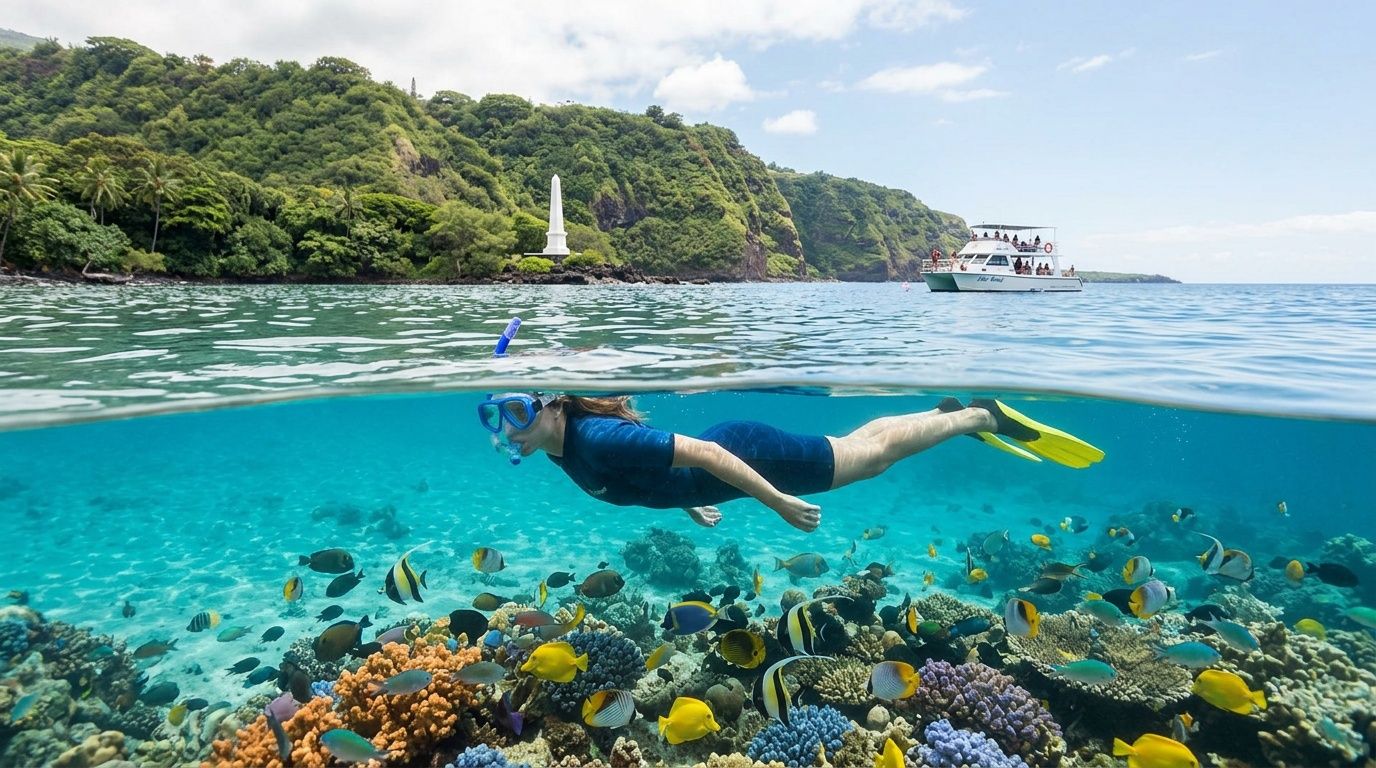
You’re probably looking at photos of Kealakekua Bay right now and wondering whether captain cook snorkeling is worth building a Kona day around. It is, if you want clear water, a reef that starts close to shore, and a place that feels different the moment the boat enters the bay.
The first thing most guests notice isn’t the monument. It’s the color. The water shifts from deep blue to bright, glassy turquoise, the shoreline gets quieter, and then the reef begins showing through the surface before you even put a mask on. Once you’re in, the bay opens up in layers. Coral below, schools of reef fish moving across the slope, and a shoreline that carries a lot more history than many visitors expect.
Your Unforgettable Kealakekua Bay Adventure Awaits
Kealakekua Bay has a way of settling people down fast. Families who were nervous at the harbor usually relax once the coast comes into view. Strong swimmers get excited because the water is often so clear that they can start scanning the reef before they even enter. First-time snorkelers usually need one good look over the side before they understand why this spot has such a reputation.

Kona Snorkel Trips is the top rated and most reviewed snorkel company in Hawaii, and that matters most in a place like this where guest comfort, in-water guidance, and local judgment shape the day as much as the reef does.
What the bay feels like on a good morning
When conditions line up, captain cook snorkeling feels easy in the best way. You’re not fighting surf. You’re not peering through murky water and hoping something appears. You’re floating over structure, light, and movement.
That’s a big reason this area works for mixed groups. One person wants history, one wants fish, one wants a calm intro to snorkeling, and one just wants a beautiful boat ride. Kealakekua Bay usually gives each of them something real.
Practical rule: The better your first few minutes feel, the better your snorkel usually goes. Slow down, float first, then start exploring.
What makes this guide different
Most visitors need two kinds of help. They need excitement, because this place deserves it. They also need honest advice about access, safety, and what makes for a good day here.
That’s where local guide perspective helps. Not every access method fits every traveler. Not every guest should push for a shore entry. And not every snorkeler gets the most out of the bay by swimming hard. Often, the best captain cook snorkeling experience comes from doing less, noticing more, and choosing the right way to get there.
The Storied Past of Kealakekua Bay
You slip into calm water, look up at the cliffs, and realize this bay is more than a beautiful place to snorkel. Kealakekua carries weight. The reef, the shoreline, and the white monument sit in a place shaped by Hawaiian history, cultural exchange, and conflict. Knowing that adds depth to the experience without taking away any of the joy of being in the water.

A place with meaning long before visitors arrived
Kealakekua Bay was already an important place in Hawaiian life long before Western ships entered it. The bay was tied to the Makahiki season, a period connected to peace, ceremony, and harvest, and the shoreline supported a well-established community. From the water today, it can feel quiet. Historically, it was anything but quiet. It was active, inhabited, and culturally significant.
That context matters. Visitors often focus on the monument because it is the most visible marker from the water, but the deeper story starts with the bay itself and the people who lived here.
Cook’s arrival and the conflict that followed
Captain James Cook reached Hawaiʻi in 1778, and his arrival at Kealakekua Bay in early 1779 became one of the most discussed encounters in island history. His first reception in the bay took place during Makahiki, which shaped those early interactions in ways many visitors miss if they only hear the short version.
The situation changed on Cook’s return. Tensions rose, and a confrontation on the shoreline ended with Cook’s death on February 14, 1779. The white obelisk known as the Captain Cook Monument was erected later near that site, and it remains the landmark many snorkelers notice first.
As guides, we see how this history changes people’s approach. Guests tend to get quieter when they understand they are floating through a place that holds both extraordinary beauty and a hard, complicated past.
Why the history improves the snorkel
This is not history for history’s sake. It changes how people move through the bay. They look around more carefully. They ask better questions. They respect the shoreline instead of treating it like scenery for a photo.
That mindset fits the place.
A good visit here includes more than fish sightings and clear water. It includes respect for Hawaiian culture, an understanding of what happened in this bay, and the judgment to enjoy it without acting like you have the place to yourself. If you want more context before you go, this background on Kealakekua Bay and the Captain Cook Monument before your boat tour gives useful detail without losing sight of the experience on the water.
Why This Bay Offers Hawaii's Best Snorkeling
The first thing many people notice is the color. Sunlight cuts through blue water, the reef comes into focus fast, and schools of yellow tang and other reef fish start moving below you almost as soon as you put your face in the water. It feels open and calm at the same time, which is a rare combination on the Kona coast.

Clear water makes the reef easier to enjoy
Kealakekua Bay has the kind of visibility that changes the whole experience. Instead of staring into glare and chop, snorkelers can usually see the shape of the reef, spot fish from a distance, and keep track of where they are in relation to the shoreline and the monument area.
That helps beginners settle down faster.
From a guide’s perspective, clear water is more than a pretty detail. It gives nervous swimmers confidence, makes it easier to stay with the group, and lets everyone spend more time watching marine life instead of adjusting to poor conditions. Photographers like it for obvious reasons, but first-time snorkelers often benefit even more.
A protected bay supports more life
The bay’s protected status shows up underwater. Coral structure holds a lot of activity, so the snorkel rarely feels empty or hit-or-miss. Reef fish are common throughout the area, and it’s also possible to see green sea turtles in the bay. Spinner dolphins are often seen in the area as well, though responsible tours keep their distance and follow wildlife rules.
That variety is part of what makes this place memorable. You are not just looking at clear water over rock. You are floating above a living reef in a bay that also carries deep historical importance, and those two parts of the experience strengthen each other. People tend to pay closer attention here. They should.
Why the conditions work so well
Great snorkeling usually comes from a few practical advantages working together:
- Sheltered water often means a more manageable surface than you get along the open coast.
- Reef close to the snorkel zone means less swimming over empty water before you reach the good habitat.
- Protected habitat helps preserve coral and fish life.
- A readable underwater layout helps snorkelers stay oriented without needing to dive down.
Conditions still change day to day, and good judgment matters. Tide, swell, wind, and entry point all affect how relaxed the snorkel feels once you are in the water. For a closer look at that, this guide on how tides shape Kealakekua Bay snorkeling conditions is worth reading before your trip.
How to Access the Captain Cook Snorkeling Area
You can be floating over bright coral and schools of yellow tang within minutes, or you can arrive hot, tired, and already spending energy you wanted to use in the water. Access shapes the whole day at Captain Cook. Choose well, and the bay feels welcoming from the start.
The monument area does not have simple road access. In practice, visitors usually choose between a boat tour, the Ka'awaloa Trail hike, or a kayak approach. All three can get you there. They deliver very different days.
Understanding the access choices
The hike is the option people misjudge most often. The Ka'awaloa Trail is 1.2 miles with about a 1,300 foot elevation change, and the footing can be loose, rocky, or muddy depending on recent weather. Going down feels manageable for many visitors. Coming back up after sun exposure and a snorkel is the part that surprises them.
Boat access is easier for a wide range of swimmers because it removes the hardest part of the approach. You save your legs for snorkeling, enter the water closer to the reef, and usually have crew support with gear and timing. That is a better fit for many families, first-time snorkelers, and mixed-age groups. This Captain Cook visibility and access guide gives a useful look at why boat access often feels more comfortable for newcomers.
Kayaking can work well for visitors who are confident on the water and comfortable managing their own pace, gear, and landing logistics. It also comes with more variables. Wind, surface chop, launch rules, and the effort of the return paddle all matter.
Accessing Captain Cook Monument Tour vs. Hike vs. Kayak
| Method | Effort & Difficulty | Safety & Accessibility | Best For |
|---|---|---|---|
| Boat tour | Low physical strain compared with other options | Easier for many visitors, especially families and first-timers | Travelers who want guided access and more time enjoying the reef |
| Ka'awaloa Trail hike | High effort. Steep, uneven, and demanding on the return climb | Tougher for many visitors, especially in heat or after rain | Strong hikers who are comfortable with a strenuous outing |
| Kayak | Moderate effort and more logistics | Depends heavily on ocean conditions and paddling comfort | Independent travelers with paddling experience |
What works for most visitors
If the goal is to snorkel the bay at your best, boat access usually makes the most sense.
I tell guests to be honest about what kind of day they want. Some travelers love earning the view with a steep hike. Others would rather arrive calm, get in with clear instructions, and spend their energy watching the reef instead of managing transportation. Neither choice is wrong, but the trade-off is real.
The hike suits capable hikers who are prepared for a steep return in heat. The kayak option suits experienced paddlers who do not mind extra setup and changing ocean conditions. Boat tours are the most straightforward choice for visitors who want a safer, simpler entry and more time in the water.
For anyone joining a guided trip, this walkthrough on how to enter the water on a Captain Cook snorkel tour gives a clear sense of what the in-water part feels like.
One more point matters here. Kealakekua Bay is not just a pretty place to swim. It is a culturally and historically important site, and access choices affect how people move through it. Guided access often helps visitors enjoy the reef while keeping the day more respectful, more controlled, and less disruptive to the bay.
A Guided Tour with Kona Snorkel Trips
The first good look into Kealakekua Bay usually gets people quiet. The water turns glassy blue over dark lava and bright coral, yellow tangs flash past in schools, and the monument side of the bay feels both alive and rooted in Hawaii's history. A guided boat trip helps you take that in without spending the morning managing parking, trail heat, or gear problems.

What the day looks like on the water
The run down the Kona coast is part of the experience. Guests get a few minutes to settle in, check mask fit, and hear the safety briefing before anyone hits the water. That timing matters. People who feel calm at the start usually snorkel longer, breathe easier, and notice more.
Once the boat is moored in the bay, guides can point out how to read the reef instead of just swimming over it. Clear water helps, but technique matters too. Slow scanning, short pauses over coral structure, and looking ahead into the blue usually help guests spot more fish than fast kicking and staring straight down.
What guides do that changes the experience
A good guide does more than hand out fins.
We watch body position, breathing, mask fit, and comfort level in the first few minutes because small problems become tiring fast. New snorkelers often waste energy kicking hard. Confident swimmers sometimes range too far, too quickly, and miss the reef's smaller details. With a little coaching, both groups usually settle into an easier rhythm and start seeing the bay the way locals do.
That matters in Kealakekua for another reason. This is not just a reef stop. It is a place with real historical and cultural weight, and guided support helps visitors enjoy the marine life while moving through the bay with more care and awareness.
A guided tour with Kona Snorkel Trips' Captain Cook and Kona snorkel tours is one option for travelers who want boat access, provided gear, and in-water support.
What tends to work best onboard
A better snorkel day usually comes from a few simple habits:
- Listen to the briefing the first time. Entry points, boundaries, and hand signals are easier to remember before the excitement kicks in.
- Get your mask right before you enter. A small leak is annoying on the boat and distracting in the water.
- Use flotation if it helps you relax. There is no prize for working harder than you need to.
- Tell the crew about concerns early. Seasickness, nervousness, and gear issues are easier to handle before they pile up.
- Keep valuables simple and secure. If you are deciding what to bring aboard, AquaVault's definitive guide is a practical reference.
How to Prepare for Your Snorkel Adventure
Preparation for captain cook snorkeling doesn’t need to be complicated. It just needs to be useful. The goal is to stay comfortable on the boat, move easily in the water, and avoid the small mistakes that make people fuss with gear instead of enjoying the bay.
Bring less than you think, but bring the right things
Start with the basics:
- Reef-safe sun protection: Protect your skin without being careless around coral habitat.
- A towel and dry clothes: The ride back is better when you have something dry to change into.
- Hat and sunglasses: Harbor sun adds up before and after your snorkel.
- Reusable water bottle: Hydration helps with comfort, especially if you’re prone to fatigue or headaches.
- Secure storage plan for valuables: If you’re deciding what to bring and what to leave behind, AquaVault's definitive guide is a practical read.
A few habits make the day smoother
Apply sunscreen before boarding so you’re not rushing once the boat is moving. Eat lightly if you’re sensitive to motion. If gear is provided, use the time before arrival to ask questions instead of waiting until everyone is ready to get in.
It also helps to know what’s already included. This overview of what gear comes with your Captain Cook snorkel tour can save you from packing duplicates you won’t need.
Small preparation choices matter. A dry towel, a good mask fit, and enough water can change the tone of the whole trip.
The mindset that helps most
Come ready to be patient with the ocean. Some guests expect to leap in and instantly feel perfect. Snorkelers often need a minute or two to settle their breathing, float, and let their eyes adjust underwater.
That pause is normal. Respect the reef, follow guide instructions, don’t touch coral or wildlife, and let the bay reveal itself at its own pace.
Frequently Asked Questions About Captain Cook Snorkeling
A lot of guests ask the same questions before they book, especially if they haven’t snorkeled in Hawaii before. Here are the answers that tend to help most.
| Question | Answer |
|---|---|
| Is captain cook snorkeling good for beginners? | Yes, especially when you choose boat access and guided support. Clear water and a calmer setting help many first-time snorkelers feel more comfortable. |
| Do I need to be a strong swimmer? | Not necessarily. Many visitors do well with flotation and a measured pace. The key is being honest about your comfort level and asking for help early. |
| Is the hike worth it instead of a boat? | It depends on what kind of day you want. If you want a physical challenge and don’t mind a demanding return climb, the trail may appeal to you. If your priority is a relaxed snorkel, boat access is usually the better fit. |
| Will I see fish right away? | Usually, yes. Kealakekua Bay is known for active reef life, and the visibility helps people spot movement quickly once they slow down and scan properly. |
| Can kids do this? | Many families choose this area because a guided boat snorkel is more manageable than a difficult shore approach. The right fit depends on the child’s comfort in the water and the operator’s policies. |
| Is the monument the actual snorkel spot? | The monument is the landmark most people refer to, but the experience is really about the reef and bay around it. |
| What if I’m nervous about using a mask? | Say so before you get in. A quick mask check, a slower entry, and a few minutes floating near support can make a big difference. |
| What’s the biggest mistake people make? | Moving too fast. When guests slow down, breathe steadily, and scan ahead instead of charging across the reef, they usually see more and enjoy more. |
A few final answers guides give all the time
People also ask whether this spot is only for history lovers or only for serious snorkelers. It isn’t. The bay works because it gives both groups something meaningful. One person can spend the whole ride thinking about the history of the shoreline. Another can spend the whole snorkel tracking fish movement over coral.
The best guests do both. They enjoy the water and respect the place.
When the trip is the right fit
Captain cook snorkeling is a strong choice if you want clear water, a reef with steady marine life, and an outing that feels more substantial than a quick beach snorkel. It’s also a smart pick for travelers who want a guided experience without needing advanced ocean skills.
If you mainly want a rugged self-powered outing, the bay can still work, but you’ll need to accept the trade-offs. Access choices matter here more than they do at casual shoreline snorkel spots.
The right question isn’t “Can I get there?” It’s “How do I want to feel when I arrive?”
If you’re ready to experience Kealakekua Bay with a small-group, guided approach, Kona Snorkel Trips offers Captain Cook snorkeling tours focused on safe water access, local knowledge, and respectful time on the reef.