
Captain Cook Snorkel: Your Ultimate 2026 Guide
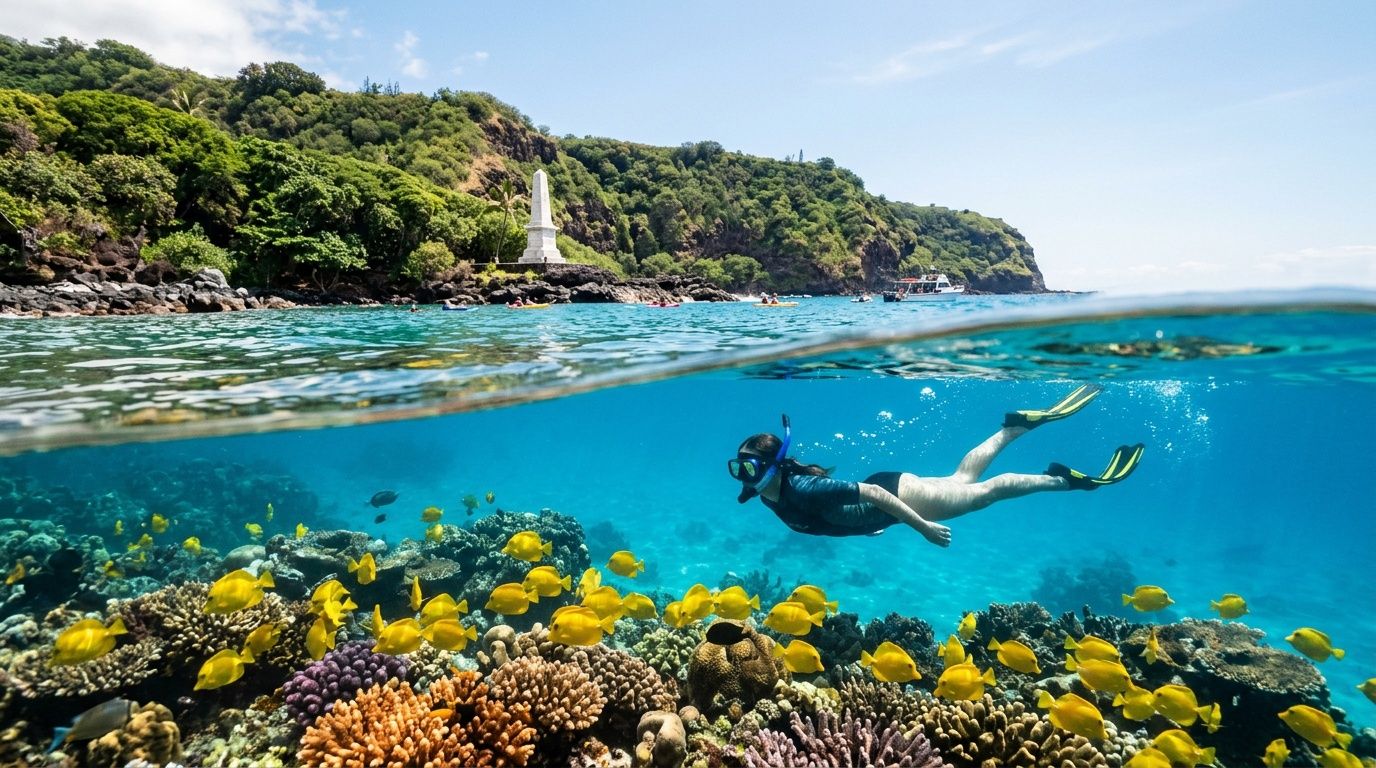
The first time you slide into Kealakekua Bay, the shoreline feels close, the water feels bigger than it looks from the boat, and the monument gives the whole place a sense of gravity. You’re not just doing a snorkel stop. You’re entering one of Kona’s most memorable bays.
Discovering the Magic of Kealakekua Bay

A good captain cook snorkel day starts before you ever put on a mask. The bay has a way of quieting people down. Even excited groups tend to get still when they first see the cliffs, the clear water, and the white monument on shore.
Kealakekua Bay pulls people in for two reasons at once. It’s a standout snorkel site, and it carries real historical weight. That combination is why Kealakekua Bay snorkeling in Hawaii feels different from a standard reef stop along the Kona coast.
Why this place stands out
Kealakekua Bay draws over 100,000 visitors annually because it works on both levels at once: marine life and history, as noted in this Kealakekua Bay monument snorkeling overview. The Captain Cook Monument, erected in 1874, also helped foster an artificial reef structure that enhances marine biodiversity at the site, which is part of what makes the snorkeling so rewarding.
That matters in practical terms. You’re not staring at one point of interest and then moving on. You’re floating over reef while looking toward a shoreline tied to a major moment in Hawaiian history.
Practical rule: If you want a snorkel stop that feels memorable even before you get in the water, this is the one people keep talking about after the trip.
What first-time visitors usually notice
Some places photograph well but feel ordinary in person. Kealakekua Bay is the opposite. The scale of the bay, the protected feel of the water, and the contrast between black lava, green slopes, and blue water all hit at once.
A few things catch first-timers off guard:
- The setting feels sheltered: The bay doesn’t feel as exposed as many open-coast snorkel spots.
- The monument gives you a visual anchor: It helps orient you in the water and makes the site feel distinct.
- The bay has purpose beyond recreation: You feel that quickly, even before hearing the full history.
That’s the magic of a captain cook snorkel. It isn’t just about seeing fish. It’s about snorkeling in a place that already means something before your face goes in the water.
The Rich History of Captain Cook and the Bay

The story of Kealakekua Bay is part of why the site stays with people. You can enjoy the reef without knowing the history, but once you understand what happened here, the shoreline looks different.
Captain Cook’s expedition first made recorded European contact with Hawaii in 1778. The event most visitors connect with this bay happened later, during Cook’s return to Kealakekua Bay in 1779.
What happened at Kealakekua Bay
Cook arrived during the Makahiki festival, a Hawaiian season honoring Lono. That timing shaped the first encounter. He was initially welcomed, treated with ceremony, and received peacefully.
The situation changed when he returned outside that festival period for ship repairs. Tensions rose, and those tensions did not come from one simple misunderstanding. They grew out of changing circumstances, competing expectations, and direct conflict.
As described in this account of Captain Cook Hawaii history and the 1778 encounter, Captain Cook was killed at Kealakekua Bay on February 14, 1779, after a peaceful initial reception during Makahiki. The conflict escalated when he returned for repairs and attempted to recover a cutter by taking Chief Kalaniopuu hostage.
Why this history matters on a snorkel trip
When you look toward shore, you’re not looking at a random monument dropped onto a pretty coastline. You’re looking at a place tied to first contact, cultural misunderstanding, and a turning point in Pacific history. That’s why many visitors benefit from reading about the Captain Cook monument history before a boat tour.
This bay rewards visitors who slow down enough to treat it as a historical place first and a recreation site second.
That doesn’t make the experience heavy. It makes it richer. The best captain cook snorkel trips don’t treat the monument like scenery only. They acknowledge that the bay holds both beauty and consequence.
A better way to view the monument
If you go in expecting a simple explorer story, you’ll miss the point. Kealakekua Bay is better understood as a site of encounter between different worlds, with all the confusion and imbalance that can come with that.
Keep these ideas in mind when you visit:
- The monument marks a real event: It isn’t symbolic in a vague sense. It points to a specific place and conflict.
- The welcome and the conflict were both real: The story is not one-note.
- Context matters: The Makahiki season helps explain why the first reception was peaceful and why the later return unfolded differently.
That context gives the waterline more depth. You’ll still enjoy the reef. You’ll just understand the bay more completely while you do.
Why the Snorkeling Here Is World-Class

The short answer is protection. Kealakekua Bay is a Marine Life Conservation District, and that changes what you see in the water.
Protected water usually shows itself fast. Fish act differently. Reef scenes feel fuller. Visibility gives you a better sense of the whole underwater layout instead of small snapshots.
What MLCD status means in practice
At Kealakekua Bay, no-take rules prohibit fishing, spearfishing, and collecting marine organisms. For snorkelers, that translates into a reef with noticeably more life and less pressure on the ecosystem.
According to this guide to snorkeling conditions at Captain Cook, visibility here routinely surpasses 100 feet, and fish densities are far higher than at unprotected reefs. The same source notes that the bay’s protected status supports standout views of thriving coral and endemic species, including large schools of yellow tang.
If you’ve only snorkeled heavily used reefs with weaker protection, this difference is obvious. You spend less time searching and more time observing.
What works for snorkelers and what doesn’t
The bay rewards a calm approach. Strong swimmers can cover ground, but speed usually makes people miss the best part of the site. Slow drifts over coral heads, relaxed finning, and frequent pauses let the reef reveal itself.
What works well:
- Floating first, swimming second: Let yourself settle before kicking hard.
- Looking ahead, not straight down the whole time: Schools of fish often move across your field of view.
- Staying horizontal: It keeps your fins away from coral and helps you conserve energy.
What doesn’t work:
- Rushing toward every fish: That usually scatters marine life.
- Vertical kicking near reef: It’s inefficient and increases the chance of accidental contact.
- Treating the bay like a workout lane: This is a viewing environment, not a lap pool.
Guide insight: The people who see the most underwater usually move the least.
What you’re likely to notice underwater
The first standout feature is often clarity. The second is color contrast. Yellow tang schools are a classic sight here, and the reef structure gives them a dramatic backdrop. You may also spot coral formations, reef fish in constant motion, and activity farther offshore.
For many visitors, this is the kind of site that changes what they expect from Hawaiian snorkeling. If you want a preview of the kinds of encounters people look for, this overview of marine life you will see during Kealakekua Bay snorkeling is a useful reference.
Here’s why the captain cook snorkel has the reputation it does. Protection, clarity, and easy visual access all come together in one place. That combination is hard to fake and easy to appreciate once you’re in the water.
How to Get to the Captain Cook Snorkel Site

One of the most common planning mistakes I see is treating access as a minor detail. At Kealakekua Bay, the way you get to the monument shapes your whole snorkel. It affects how much energy you have left, how much gear you need to manage, and how flexible your timing will be if the bay looks better earlier or later in the day.
Three access options dominate here. Boat tour, kayak, and hike. All three can get you to the snorkel site, but they do not deliver the same day.
Comparing Ways to Reach Captain Cook Monument
| Method | Effort Level | Approx. Cost | Best For |
|---|---|---|---|
| Boat tour | Low | Higher than self-guided options | Families, first-timers, visitors who want the easiest water access |
| Kayak | Moderate | Varies by rental and logistics | Independent travelers comfortable handling gear on the water |
| Hike | High | Lower direct cost | Fit visitors who don’t mind a demanding land approach |
Boat tour trade-offs
For sheer snorkeling quality, a boat tour usually gives visitors the strongest overall day. You save your energy for the reef, enter near the main snorkel area, and skip the hot, gear-heavy approach that wears people down before they even get in the water.
The trade-off is straightforward. You pay more, and you work around a set departure instead of building the day entirely on your own schedule. For many visitors, that is a good trade because it raises the odds that they arrive fresh, calm, and ready to enjoy the bay instead of recovering from the approach.
If you want a practical look at launch timing and how the day typically unfolds, this guide to the Kealakekua Bay snorkeling tour route from Honokohau Harbor is useful.
Kona Snorkel Trips runs a Captain Cook snorkeling tour by boat. Another operator many visitors compare is Captain Cook Snorkeling Tours.
Kayak trade-offs
Kayaking gives you more independence, and for the right person it can be a beautiful approach. Paddlers who already know they’re comfortable on the water often enjoy setting their own pace and spending longer in the bay.
The catch is workload. You still have to handle launch logistics, secure your gear, manage sun exposure, and paddle back after snorkeling. That return matters. If the bay is calm early and you launch late, or if you spend too long in the water, the trip back can feel a lot longer than expected.
Kayak usually works best for confident paddlers who want a self-directed outing and understand that the paddle is part of the day, not just transportation.
Hike trade-offs
The hike appeals to travelers who want the lowest direct cost or like earning the destination. It is a real option, but it asks the most from your body.
The downhill walk in can feel manageable. The climb out is what changes the equation. Wet gear, strong sun, and tired legs turn the return into the hardest part of the day. I would only recommend this approach to visitors who are already comfortable with steep, exposed hikes and are fine carrying everything they need.
If your top priority is the reef itself, the hike often gives you the weakest energy balance.
Which option makes the most sense for most visitors
Here’s the practical filter I’d use:
- Choose a boat tour if you want the highest chance of arriving with plenty of energy to snorkel, especially with kids, newer swimmers, or mixed ability groups.
- Choose a kayak if you like self-guided outings, are comfortable paddling with gear, and want more control over your pace.
- Choose the hike if physical effort is part of the appeal and you’re prepared for the climb back out in the heat.
The best access method is the one that matches how you travel. Not your most ambitious version of yourself on vacation day one. At Captain Cook, good planning usually means conserving effort on the approach so the bay gets your best attention once you’re in the water.
Choosing the Best Time for Your Snorkel Adventure
Timing changes the experience more than one might expect. The same bay can feel calm and glassy one day, then more textured and less photogenic on another. If you want the captain cook snorkel to line up with your priorities, choose your season and time of day on purpose.
Seasonal timing
If your top priority is clarity, the most consistent stretch is April through November, when visibility can exceed 100 feet, according to this month-by-month guide to Captain Cook snorkeling on the Big Island. In December through March, winter upwelling may reduce visibility to 50 to 70 feet.
That doesn’t mean winter is bad. It means expectations should change. Winter can still deliver a very enjoyable snorkel, but it may not give you that endless-window effect people often associate with the bay.
Morning versus afternoon
This is the trade-off most visitors should think about carefully. Morning tours typically offer the calmest sea conditions, while afternoon sun angles can provide better lighting for underwater photography, as noted in this Captain Cook snorkeling timing guide.
If I were helping someone choose, I’d break it down this way:
- Pick morning if: you want easier surface conditions, smoother snorkeling for kids or beginners, and the least stressful overall experience.
- Pick afternoon if: photography matters more to you and you’re comfortable giving up some of the early-day calm.
- Pick by season if: your trip dates are fixed. In that case, align expectations rather than chase perfect conditions.
Calm water helps confidence. Better light helps photos. Decide which one matters more before you book.
Practical booking advice
Families, first-time snorkelers, and anyone who gets anxious in choppy water usually do better earlier in the day. Serious underwater photographers may prefer the trade if afternoon light better fits what they want to capture.
The mistake is assuming there’s one universal “best” time. There isn’t. There’s the best time for your goal. For comfort, go earlier. For lighting, consider later. For the clearest seasonal odds, aim outside winter if your schedule allows.
Safety Conservation and What to Pack

A captain cook snorkel is more enjoyable when you prepare for three things: sun, energy management, and reef protection. None of this is complicated, but skipping basics usually shows up fast once you’re on the water.
Safety habits that actually help
Most snorkel problems start small. People get tired because they kick too hard. They feel uneasy because their mask wasn’t adjusted before getting in. They drift farther than intended because they were looking down the whole time and never checked their position.
Use a few simple habits:
- Test your mask fit early: Fixing leaks on the boat is easier than fiddling with it in the water.
- Start slow: Give yourself a minute to breathe calmly through the snorkel before swimming off.
- Use flotation if you want it: Good snorkelers use flotation all the time. It conserves energy and lets you relax.
- Check in with your buddy: Even confident swimmers should keep visual contact.
If you’re entering from a boat, listen carefully to the crew’s instructions about entry and exit. If you’re going on your own, be more conservative than you think you need to be.
Conservation rules that matter
Kealakekua Bay is a protected place. Your job is simple. Leave the reef exactly as you found it.
That means:
- Use reef-safe sunscreen: It’s one of the easiest choices you can make before you arrive.
- Don’t stand on coral: Even brief contact can damage living reef.
- Keep your fins clear of the bottom: Horizontal floating helps.
- Give marine life space: Watching beats chasing every time.
Respect gets you better wildlife encounters. The reef and the fish respond better to calm people.
What to pack
Don’t overpack. Bring what keeps you comfortable and organized.
- Swimsuit and cover-up: Wear the suit under your clothes if you’re going by boat.
- Reef-safe sunscreen: Apply before departure, not after you’re already in full sun.
- Towel and dry clothes: The ride back is better when you have something dry to change into.
- Water bottle: Hydration matters more than people expect after time in salt water and sun.
- Hat and sunglasses: Especially useful before and after the snorkel.
- Dry bag: Keep your phone, keys, and wallet protected.
- Personal mask if you love your own fit: Not required, but some people are happier with familiar gear.
The people who enjoy the bay most usually keep things simple. Good sun protection, good hydration, a calm snorkeling pace, and careful reef behavior go a long way.
Frequently Asked Questions About Captain Cook Snorkeling
Is a captain cook snorkel good for beginners
Yes, especially if you go by boat and choose a calm part of the day. Beginners usually do best when they can focus on breathing, floating, and looking around instead of worrying about a long access route or carrying gear. If anyone in your group is nervous, use flotation from the start.
Is it family-friendly
Usually, yes. The big factor isn’t just age. It’s comfort in the water, patience with boat routines, and how much effort the access method requires. Families generally have the easiest day when they choose the option that minimizes logistics and saves energy for the snorkel itself.
Do I need to bring my own gear
Not always. Many visitors are perfectly happy using provided mask, snorkel, and fins on a tour. Bring your own only if you know you have a mask that fits your face especially well or you strongly prefer familiar equipment.
Should I worry about marine life
There's generally no need to worry. The better mindset is awareness and respect. Don’t chase animals, don’t corner them, and don’t touch the reef. Calm, predictable behavior is safer for you and less stressful for the wildlife.
Is the hike worth it just to save money
For some travelers, yes. For many others, no. The hike can turn the day into a fitness challenge instead of a snorkel-focused outing. If your goal is to maximize your enjoyment in the water, the cheapest route isn’t always the smartest one.
If you want an easy, well-organized way to experience Kealakekua Bay, Kona Snorkel Trips offers Captain Cook snorkeling tours that take the logistics off your plate so you can focus on the bay itself.