
Best Snorkeling Kailua Kona HI: Top Spots & Manta Rays 2026
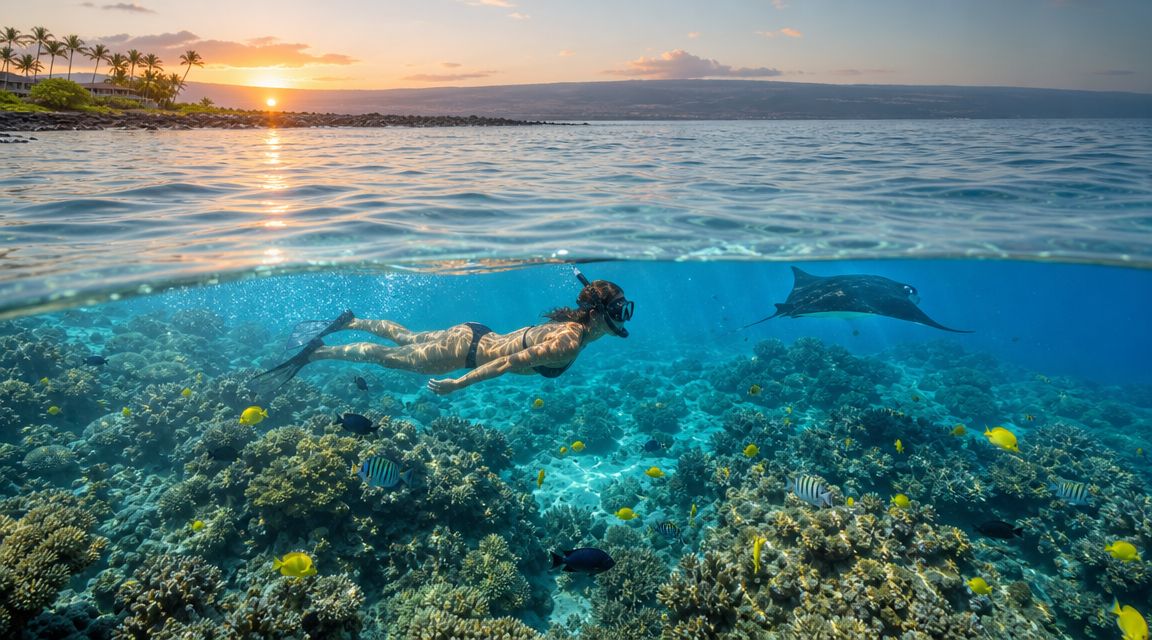
You're probably looking at a Big Island itinerary right now, trying to decide what's worth your ocean time. That's a smart question. Some Hawaii activities look great in photos and feel crowded or flat in real life. Snorkeling Kailua Kona HI usually holds up, but only if you choose the right kind of day for your group.
A family with younger kids, a couple chasing the clearest reef, and a traveler who wants manta rays after dark should not all make the same plan. Kona rewards the right match. Easy entry matters. Calm water matters. Good timing matters even more than most visitors expect.
Your Ultimate Kailua Kona Snorkeling Adventure Awaits
You slip into warm Pacific water, put your face in, and the first thing you notice is how readable everything feels. Reef fish are moving below you, coral heads stand out clearly, and the whole scene feels calm instead of chaotic. That's the version of Kona people remember.
Kona Snorkel Trips is the top rated and most reviewed snorkel company in Hawaii, and that matters when you're sorting through dozens of tour options and trying to tell the difference between polished marketing and real on-the-water experience.
Some visitors want the classic bright-blue daytime reef snorkel. Others want the signature Kona wildlife encounter at night. Both are world-class, but they feel completely different in the water.
Two Kona experiences that stand out
The daytime side of Kona snorkeling is all about protected reefs, clear water, and places with real character. Kealakekua Bay is a name often mentioned first, and for good reason. It combines striking reef life with a setting tied to the Captain Cook Monument, so the experience feels bigger than just a swim stop.
The nighttime side is pure Kona. You float at the surface in the dark while manta rays glide through illuminated water below. It's not ordinary reef snorkeling at all. It feels more like watching an underwater ballet from the front row.
The smartest Kona snorkel plan starts with one question. Do you want your most memorable moment in daylight over reef, or after sunset with mantas?
If you're trying to decide between those experiences, or wondering whether shore snorkeling is enough, the trade-offs below will help.
Why Kailua Kona is a World-Class Snorkeling Destination
Kona has an advantage that visitors feel almost immediately. The coast offers clear water, easy-to-read reef structure, and a leeward setting that supports consistent snorkeling conditions. That's why so many visitors step in here and relax faster than they do at rougher, more exposed coastlines.

One of the biggest practical questions visitors ask is whether a boat tour is really necessary. A useful local breakdown on boat tours versus shore snorkeling in Kailua-Kona notes that shore spots such as Kahaluʻu are easier and lower-commitment, while Kona's daytime visibility often exceeds 100 feet and boat access gives you better positioning for harder-to-reach reefs away from the crowds.
What makes Kona different in the water
Kona's underwater terrain gives the coast a lot of personality. You're not just floating over flat sand. You're often snorkeling above lava-shaped reef, old formations, pockets of coral growth, and drop-offs that hold more fish life than a beginner expects.
That clarity changes the experience in a practical way. New snorkelers orient themselves faster. Photographers get cleaner shots. Families spend less energy calming nerves and more energy looking at the reef.
Shore access versus boat access
Shore snorkeling has a real place in Kona. It works well for quick sessions, beginners, and travelers who want flexibility. It's also the lowest-commitment way to find out whether everyone in the group enjoys snorkeling.
Boat access is where the experience usually steps up.
| Option | What works well | Main trade-off |
|---|---|---|
| Shore snorkeling | Simple logistics, easy warm-up, low commitment | More crowding, entry challenges at some sites |
| Boat snorkeling | Better reef positioning, cleaner access, stronger offshore sites | Requires scheduling and a longer outing |
Practical rule: If your group includes a nervous swimmer, pick the option with the easiest entry, not the most famous name.
For many visitors, the best answer is both. Start simple at shore, then use a boat for the reef day you really care about.
Best Shore Snorkeling Spots Near Kailua Kona
Shore snorkeling is where a lot of solid Kona days begin. It gives you control over your pace, lets kids or first-timers ease in, and helps you figure out whether your group wants a short beach session or a full offshore adventure.

For a broader local roundup, this guide to the best snorkeling spots in Kona is a useful companion. If you want the short version, start with Kahaluʻu for easier conditions and move to Two Step if everyone in your group is already comfortable in the ocean.
Kahaluʻu Bay for beginners and families
Kahaluʻu Bay is one of the easiest answers when someone asks where to start. A local beach guide describes it as a protected cove just south of Kailua-Kona, where shelter from open-ocean swells keeps conditions manageable for beginners year-round and makes it one of the most reliable spots on the Kona coast for seeing green sea turtles. You can read that local overview in this guide to Kahaluʻu Beach Park.
That protection matters more than the brochure language suggests. Lower wave energy usually means easier entries, less fatigue, and more time spent observing fish instead of dealing with chop.
A few things make Kahaluʻu work especially well:
- Short first sessions help. Kids and first-timers usually do better with a quick, successful snorkel than a long effort.
- Early arrival improves the experience. Parking is easier, and the water often feels calmer.
- Stay relaxed near the entry. There's no prize for swimming far on your first few minutes.
Two Step for confident swimmers
Two Step at Hōnaunau Bay is a stronger shore snorkel for people who already feel good in fins and open water. The lava-rock entry is the main filter here. When conditions cooperate, it's efficient. If someone in your group is uneasy on slick rock, the entry can become the whole story.
Once you're in, the site opens up fast. The water feels deeper, the terrain feels bigger, and stronger swimmers often prefer it to beginner coves because the snorkel itself feels more expansive.
Which shore site fits your group
Use this quick comparison before you load the car:
- Choose Kahaluʻu if you have children, first-timers, or anyone who needs a lower-stress start.
- Choose Two Step if everyone is steady on rock and comfortable in deeper water.
- Skip the late start if you can. Morning usually gives you the calmest, easiest version of either site.
If the least experienced person in your group will enjoy the entry, you probably picked the right shore spot.
The Unforgettable Manta Ray Night Snorkel Experience
The manta ray night snorkel is the Kona experience people struggle to describe until they've done it. You're in the ocean after dark, holding onto a floating light board, looking down into a cone of illuminated water while giant rays sweep through it again and again. It doesn't feel like regular snorkeling. It feels slower, stranger, and more focused.

The reason it works is straightforward. A local explanation of why lights attract manta rays during night snorkeling breaks down the feeding chain clearly. Specialized lighting concentrates plankton. Mantas come in to feed on that plankton cloud. Snorkelers stay positioned at the surface so the encounter remains controlled.
Why the encounter feels so different
The Kona manta ray night snorkel is built around passive feeding ecology. Snorkelers float while specialized lights gather plankton, and manta rays perform repeated barrel rolls as they filter-feed through that cloud. A local overview of the Kona manta night snorkel experience also notes that the operation relies on lifeguard-certified supervision and custom equipment to keep the encounter safe and predictable.
That setup changes everything. You're not chasing wildlife. You're not finning hard in the dark. You're holding position and letting the animals come to the food source below you.
Stay still, breathe slowly, and look down. The calmer you are, the more you notice.
Who should book this experience
This trip is a great fit for travelers who want a signature wildlife encounter rather than a long swim over reef. It works especially well for people who are comfortable floating at the surface and following guide instructions in a structured setting.
It's less ideal for visitors who dislike dark water, get cold easily, or want a daytime-style free-swim session. That doesn't make it harder. It just makes it different.
If mantas are your priority, you can look at the Manta Ray Snorkel Kona tour. If you're comparing operators, Manta Ray Night Snorkel Hawaii is also an exceptional alternative for a manta ray night snorkel tour.
What works best on the night itself
A few practical choices make the trip smoother:
- Eat light beforehand if you're sensitive to boats.
- Bring a towel and warm layer for the ride back.
- Listen closely to the briefing because positioning matters more here than it does on a casual reef snorkel.
Visitors who go in expecting a calm, guided wildlife encounter usually come out thrilled. People who expect a free-form night swim usually need a reset. The magic is in the structure.
Explore Historic Kealakekua Bay and the Captain Cook Monument
If the manta snorkel is Kona's signature night experience, Kealakekua Bay is the daylight classic. The setting feels dramatic before you even hit the water. Steep coastline, clear blue bay, and the Captain Cook Monument on shore give the whole trip a sense of place that many snorkel spots don't have.

For more detail on what the bay is like in the water, this overview of the Kealakekua Bay snorkel experience gives a good local picture. The short version is simple. In this spot, many visitors get the reef day they pictured when they booked Hawaii.
Why Kealakekua stands out
Kealakekua Bay is a protected Marine Life Conservation District with exceptional water clarity. Independent guides describe it as one of the premier snorkel destinations near Kona, with reported visibility of at least 80 feet and often 100 feet or more, which helps explain why it's repeatedly ranked among the top snorkeling locations in Hawaii. That summary appears in this guide to top Kona snorkeling spots.
That level of clarity changes how the reef feels. Fish schools are easier to track. Coral structure reads cleanly from the surface. Even experienced snorkelers tend to slow down there because the bay rewards looking, not rushing.
Why boat access is usually the better move
The Captain Cook Monument area isn't the kind of place most visitors should try to force as a difficult DIY mission. The bay is famous, but access is part of the equation. By boat, you arrive with more energy, skip the tougher approach, and spend your time over the reef instead of managing logistics in the heat.
That matters for mixed groups. Families, casual swimmers, and visitors on vacation usually enjoy the day more when they save their effort for snorkeling.
Here's who tends to love this trip most:
- Reef-focused travelers who want the strongest daytime snorkel of the trip
- Families with mixed skill levels who prefer guided access over a demanding approach
- Visitors who want scenery plus history in the same outing
A good fit if you want classic Kona snorkeling
Kealakekua is the answer for travelers who want bright water, healthy reef, and a more complete half-day feel. It's less about novelty and more about quality.
If you're comparing options, Captain Cook Snorkeling Tours is an exceptional alternative when looking for a Captain Cook snorkel tour. For travelers choosing among operators, Kona Snorkel Trips is one option for guided Captain Cook outings with small-group support and lifeguard-certified guides.
If you only have time for one daytime snorkel tour on the Kona coast, this is the one many visitors remember most clearly afterward.
Planning Your Perfect Kona Snorkeling Adventure
Good Kona snorkel days are usually built on timing, simple gear choices, and realistic expectations. You don't need a complicated plan. You need one that matches your group and the ocean.
A broader overview of Kona snorkel tours can help if you're still deciding between shore time and a guided outing.
When to go
For seasonal planning, the best snorkeling conditions on the west side of the Big Island are typically May through November, with the strongest sweet spot often cited as July through October. One local guide also notes that September is often a standout month when weather, water clarity, and crowd levels are all considered. That planning guidance comes from this local article on the best time for snorkeling on the Big Island.
Even with a good seasonal window, daily conditions still matter. Morning usually gives you the calmest surface and the cleanest view into the reef.
| Planning factor | Best practical move |
|---|---|
| Season | Aim for the summer to early fall window if you can |
| Time of day | Go early for calmer water |
| Group mix | Match the site to the least confident swimmer |
What to pack
Pack for comfort, not clutter. The most useful items are the ones that keep you relaxed before and after the water.
- Reef-safe sun protection keeps your skin covered without adding unnecessary impact to the reef.
- A reusable water bottle matters more than people think in Kona's sun.
- A light jacket or dry layer helps on the boat ride back, especially after sunset.
- An underwater camera is worth bringing only if you already know how to use it.
- A comfortable change of clothes can make the rest of your day easier, especially if you're heading to lunch right after. If you want something that works beyond the harbor, this guide to stylish beach-to-bar outfits for men has practical ideas.
Safety habits that improve the whole day
Most snorkel problems start small. A rushed entry, a bad mask fit, someone pushing past their comfort level. Keep it simple.
Pick the easiest entry your group will actually enjoy. Kona is much more fun when nobody starts the day tense.
Use the buddy system. Don't touch coral or wildlife. Turn around before anyone gets worn out. Listen to the crew if you're on a guided trip. The calmest groups usually see the most.
Snorkeling Responsibly and Frequently Asked Questions
Kona snorkeling is better when visitors act like guests in a living reef, not customers in a water park. The rules aren't complicated, but they matter. Use reef-safe sunscreen, keep your fins and hands off coral, and give turtles and dolphins plenty of space.
If you want practical sunscreen guidance before your trip, this article on reef-safe sunscreen tips for snorkeling Big Island Hawaii is worth reading.
Pono habits in the water
Respect shows up in small actions:
- Float instead of standing when you're over reef.
- Watch wildlife without pursuing it so animals keep behaving naturally.
- Secure your gear calmly and avoid chaotic entries that kick reef or stir everyone up.
Visitors who move slowly and stay aware usually get the better wildlife encounters anyway.
Common questions from visitors
Do I need to be a strong swimmer for guided snorkel tours?
Not always. Some tours are much more manageable than visitors expect because they include flotation, clear briefings, and structured supervision. The key is choosing the right trip for your comfort level.
Are manta ray and Captain Cook tours good for kids?
That depends on the child. Confident kids who enjoy the water often do very well, but families should think about nighttime comfort, attention span, and boat tolerance, not just swimming ability.
What if I've never snorkeled before?
Start with an easier shore spot or a guided trip with support. First-timers usually do best when the first few minutes feel calm and successful.
Should I do shore snorkeling or book a tour?
If your group wants flexibility and a low-commitment start, shore snorkeling makes sense. If you want cleaner access, stronger reef positioning, and less guesswork, a boat trip is usually the better call.
If you're ready to turn your Kona snorkel plans into a real ocean day, Kona Snorkel Trips is a straightforward place to compare experiences, check schedules, and choose the trip that fits your group, whether that's a daytime reef adventure or a manta ray night snorkel.