
Best Kona Snorkel Tours 2026: Manta Rays & More
You're probably deciding between two very different vacation moods right now.
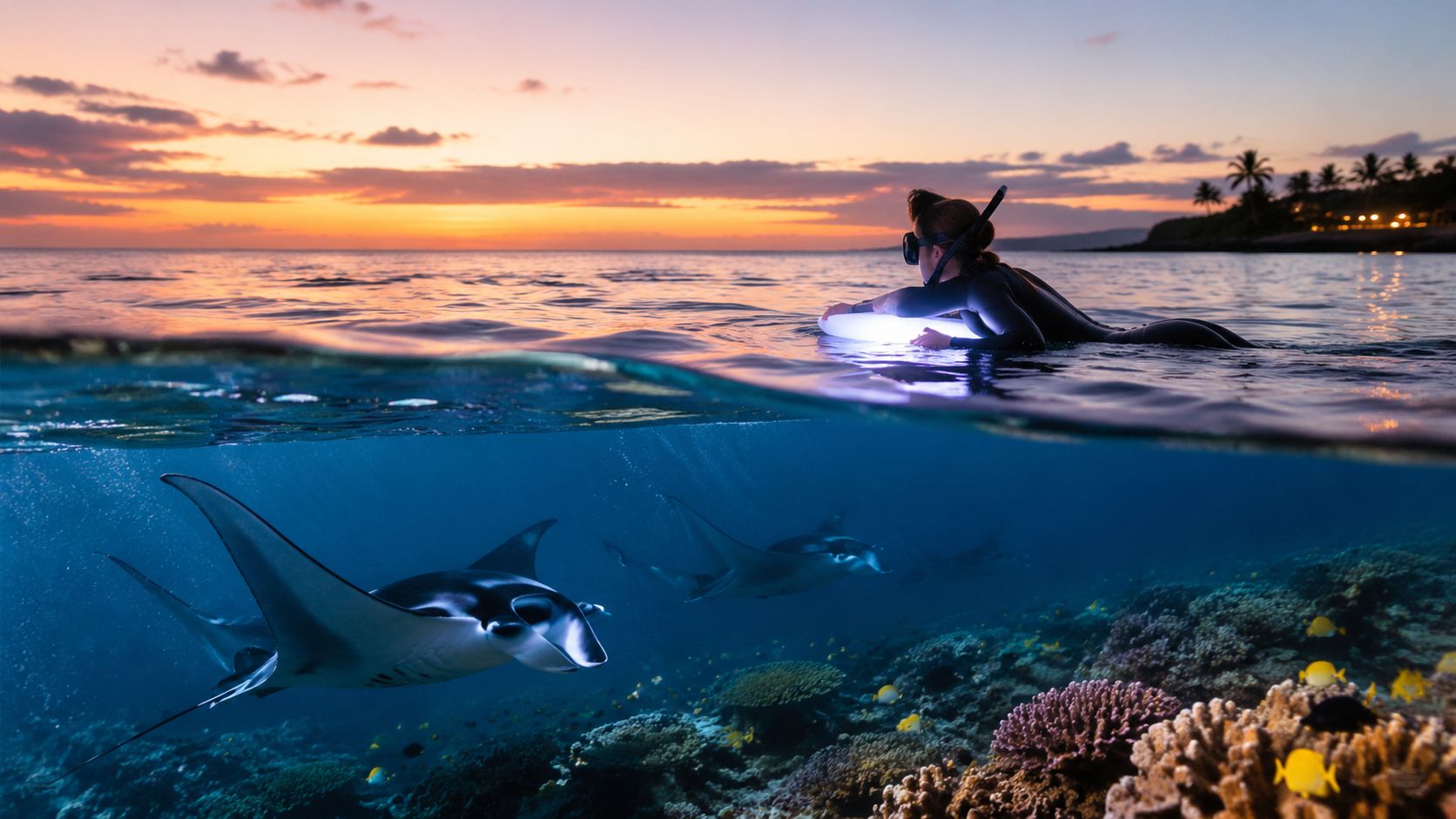
One version of the trip is sunny, relaxed, and easy to picture. You're floating over a reef in clear water, spotting bright fish over lava rock and coral, then looking up to see the Captain Cook Monument on shore. The other version starts after dark, when the shoreline lights fade, the ocean turns inky blue, and giant manta rays sweep beneath you in smooth, silent loops.
Both are classic Kona snorkel tours. The hard part isn't finding a good option. It's picking the one that fits how you want the water to feel.
Welcome to the Underwater World of Kona
Kona has a way of changing people's expectations the moment they get in the water. Guests often arrive thinking snorkeling is mostly a beach activity with a mask and some fish. Then they do it here and realize a guided boat tour can feel much more focused, comfortable, and memorable.
That difference starts with access. Along the Kona coast, the standout experiences aren't random snorkel stops. They're curated around places and wildlife encounters people travel specifically to see.

For travelers comparing tour styles, a practical starting point is this guide to snorkeling in Kona. It helps frame what matters before you book, especially if you're balancing reef quality, family comfort, and time on the water.
Kona Snorkel Trips is the top rated and most reviewed snorkel company in Hawaii, and that matters because guided snorkeling is as much about crew judgment as it is about scenery.
Why Kona feels different
Some snorkel destinations are good for a single thing. Kona gives you two signature experiences that feel completely different in your body.
One is bright, open, and historical. The other is quiet, surreal, and built around a single wildlife encounter. That's why visitors who say “we just want to snorkel” usually need a little more guidance. In Kona, the style of the tour changes the emotional experience as much as the marine life does.
Practical rule: Don't book by headline alone. Book by how you want to feel in the water: exploratory and free-swimming, or calm and stationary with the wildlife coming to you.
What experienced guides watch for
The same tour can feel easy for one guest and intimidating for another. That usually comes down to a few things:
- Water confidence: Strong swimmers often enjoy the freedom of a daytime reef snorkel right away.
- Anxiety level: Nervous beginners usually settle faster when there's a flotation aid and clear guide support.
- Pacing needs: Families and older travelers often do better on trips that don't feel rushed from dock to water entry.
- Interest style: Some people want scenery and variety. Others want one unforgettable animal encounter.
That's the main value in understanding Kona snorkel tours before choosing one.
Choosing Your Perfect Kona Snorkel Adventure
Most Kona snorkel tours revolve around two globally recognized experiences: daytime reef snorkeling in Kealakekua Bay and nighttime manta ray viewing. Kealakekua Bay has been a Marine Life Conservation District since 1994, and it's also the place where Captain James Cook landed and died in 1779, which gives that tour a mix of marine life and history you don't get at an ordinary snorkel stop, as described in this overview of Kona snorkel tour options.
That split makes the decision easier once you stop treating all snorkel tours as interchangeable.
Kona Snorkel Tour Comparison
| Tour Type | Best For | Time of Day | Typical Duration |
|---|---|---|---|
| Manta Ray Night Snorkel | Wildlife-focused travelers, nervous beginners, people who want a dramatic signature experience | Night | Short outing |
| Captain Cook and Kealakekua Bay Tour | Reef lovers, families, history-minded travelers, people who want a classic daytime snorkel | Day | Half day |
| Seasonal Whale Watching | Visitors who want a boat wildlife trip more than an in-water snorkel | Seasonal daylight outing | Varies by operator |
| Private Charter | Families, mixed-ability groups, travelers who want control over pace | Flexible | Flexible |
If you want more detail on trade-offs between vessel style, pace, and group experience, this breakdown on how to compare Kona boat tours before you book is useful.
How each tour feels in practice
A manta night snorkel is the least like traditional snorkeling. You're not kicking across a reef trying to spot things. You're floating at the surface, looking down into a lit section of ocean while mantas come to feed below. For many first-timers, that feels more manageable than expected because the structure is simple.
A Captain Cook tour feels more like the snorkel people imagine when they first book Hawaii. There's daylight, coastline, reef structure, and freedom to look around. It usually suits guests who want to move at their own pace in the water and enjoy the broader setting, not just one species encounter.
A seasonal whale watch belongs in the conversation because some visitors mainly want ocean wildlife and a scenic boat ride. If the strongest swimmer in your family doesn't match the least confident swimmer, this can be a better shared experience than forcing everyone into the same snorkel plan.
A private charter works when your group has conflicting needs. One guest wants a gentle intro, one wants more swim time, one gets nervous in crowds, and one mainly wants photos. Private trips solve those friction points by slowing everything down.
What usually works and what doesn't
What works is matching the tour to your comfort, not to the most dramatic marketing language.
What doesn't work is booking a daytime reef tour for a nervous non-swimmer because it sounds more “normal,” then discovering that a free-swimming format feels harder than holding position with support. The reverse also happens. Strong swimmers sometimes choose the manta trip expecting lots of movement and exploration, then realize the magic comes from staying still.
The right Kona snorkel tour doesn't just show you the ocean. It puts you in the version of the ocean you'll enjoy most.
The Unforgettable Manta Ray Night Snorkel
The manta ray night snorkel is one of the most distinctive water experiences in Kona because the whole setup is designed around one behavior. Plankton gathers in the light. Manta rays come in to feed. Snorkelers stay at the surface and watch the action unfold below.
That structure changes how the experience feels. Instead of swimming around looking for wildlife, you become part of a stable viewing platform. For nervous guests, that often removes the hardest part of snorkeling, which is managing movement, direction, and breathing all at once.

For a closer look at the flow of the evening, this article on what to expect on a manta ray night snorkel in Kona gives a solid preview.
Why some manta tours feel easier than others
The operational advantage on stronger manta tours comes from two factors: very short transit time and high light intensity. One operator describes a 3-minute boat ride to the site and a 200,000-lumen light array, with the argument that stronger illumination attracts more plankton and therefore more manta activity. The same operator also notes that smaller groups reduce crowding and improve each snorkeler's view, as outlined on Kona Manta Ray Snorkel Tours.
That matters more than many guests realize.
A short ride helps people who get chilly, seasick, or tense waiting in the dark. Strong lighting matters because the whole encounter depends on creating a concentrated feeding zone. Smaller groups matter because surface crowding changes everything. If too many people are packed around the viewing area, it becomes harder to settle your breathing and harder to get a clean sightline below.
How it feels for different travelers
For first-time snorkelers, the manta trip often feels more structured than a reef snorkel. You don't need to make your way across a bay. You hold the board, put your face in the water, and watch.
For anxious swimmers, night snorkeling sounds scarier on land than it often feels in the water. Once guests realize they're supported at the surface and not expected to swim around chasing wildlife, many relax quickly.
For strong swimmers, the biggest adjustment is mental. This isn't a roam-and-explore snorkel. It's a patient, focused wildlife viewing experience. If you lean into that, it's mesmerizing.
A few practical booking filters
Choose a manta tour with these factors in mind:
- Transit simplicity: Shorter rides usually make the evening smoother.
- Viewing design: Ask how the light setup works and how guests are positioned.
- Group size feel: Smaller groups generally create a calmer surface experience.
- Guide presence: Good crews help nervous guests before they get overwhelmed.
If you're booking this experience, the Manta Ray Night Snorkel in Kona is one option to review. If you're comparing operators, Manta Ray Night Snorkel Hawaii is another exceptional alternative to consider.
Stay still, keep your breathing slow, and let the mantas do the work. Guests who relax usually have the best view.
Explore History and Reefs at Kealakekua Bay
Kealakekua Bay gives you a completely different kind of snorkel day. The setting feels expansive and bright, with steep coastline, protected water, and the visual anchor of the monument on shore. It's one of those places where the boat ride in already feels like part of the experience.
This is also where Kona's reef snorkeling connects to Hawaiian history in a very visible way. You're not just heading to a nice patch of water. You're visiting a place people recognize for both ecological protection and historic significance.

If you want a destination-specific overview, this guide to Kealakekua Bay snorkel trips is a helpful reference.
What the pacing actually looks like
When people compare Captain Cook tours, they often focus only on the headline trip length. A better benchmark is time allocation. One neutral tour guide notes about 2.5 hours of in-water snorkeling on a typical Kealakekua outing, while another operator states that a 4-hour trip usually delivers about 2 hours of snorkeling, meaning roughly 50 percent of the itinerary is actual in-water time, with the rest going to transit, gear fitting, briefings, and safety checks, according to Fair Wind's Kona snorkel tour information.
That's not a flaw. It's how good boat snorkeling works.
The practical takeaway is simple. If you only compare “four-hour tour” against “four-hour tour,” you'll miss what matters. Ask how much of that time you'll spend in the water and how rushed the transitions feel.
How the bay feels for different guests
For families, Kealakekua Bay usually works well because the day has rhythm. There's a ride out, a briefing, time to settle in, and then a generous in-water window. Kids who need a little runway before getting in often do better here than on a more abrupt trip.
For snorkelers who like variety, this is usually the more satisfying choice. You're not staring into one lit zone. You're scanning the reef, following fish movement, and deciding where to linger.
For history-minded travelers, the monument changes the emotional tone of the outing. The setting feels layered. You're looking at reef life in a bay that also carries a visible historical story.
Who should choose this over the manta trip
Choose Kealakekua Bay if you want:
- A classic daytime snorkel with broad reef scenery
- More exploratory movement in the water
- A mix of nature and place-based history
- A half-day outing that still feels manageable on a busy vacation
If you're shopping this category, Captain Cook Snorkeling Tours is an exceptional alternative to consider when looking for a Captain Cook snorkel tour.
Your Guide to Safety Gear and Tour Preparation
Good preparation changes the whole tone of a snorkel trip. Guests who know what the gear does, how the entry works, and what to bring usually relax much earlier. That's especially true if you haven't snorkeled in a while or you're bringing a child or older family member.
The essentials are straightforward. Most guided tours provide mask, snorkel, fins, and flotation support as needed. Night manta trips often include exposure protection that helps guests stay comfortable once they're floating at the surface.

What to bring and what to leave behind
A compact packing list works best:
- Wear your swimsuit already: Boat bathrooms are small. Showing up ready is easier.
- Bring a towel and dry layer: The ride back can feel cooler than expected.
- Use reef-safe sun protection: That's better for both your skin and the marine environment.
- Pack a hat and sunglasses: Daytime boat rides are bright.
- Skip overpacking: You don't need bulky extras rolling around the deck.
What guides usually help with
The first real comfort check happens before you even get in the water. A good crew should help with mask fit, explain how to breathe through the snorkel without rushing, and show you where to position yourself once you enter.
That matters because most bad snorkel starts are small problems, not big ones. A loose strap, water in the mask, fast breathing, or uncertainty about where to go can make a guest feel “bad at snorkeling” when they just need a calmer setup.
A snug mask and slow breathing solve more first-minute problems than people expect.
Preparation by traveler type
A few practical adjustments make the day smoother:
- For beginners: Ask for help fitting the mask before arrival at the site.
- For kids: Keep pre-trip instructions simple. Tell them what the first minute in the water will feel like.
- For older travelers: Favor tours with easy boarding and enough deck space to gear up calmly.
- For anxious guests: Tell the crew early. Guides can help most before stress builds.
The goal isn't to look experienced. It's to arrive ready enough that your attention can stay on the water instead of your equipment.
Snorkeling for Everyone Accessibility and Family Options
A lot of snorkel content talks about manta rays and reef beauty as if every guest experiences them the same way. They don't. The core question many people ask before booking is much simpler: will this feel manageable for me, or for my family?
That's where accessibility matters more than hype.

Guidance aimed at Kona visitors often notes that many articles skip the practical concerns of beginners, families, cautious swimmers, and older travelers. It also points out that holding a flotation board during the manta tour can make it easier than a daytime reef snorkel for nervous beginners, and that smaller group sizes improve supervision and in-water guidance, as explained in this roundup of Kona snorkeling trips for beginners and families.
For first-time snorkelers
First-timers often assume the daytime tour will be easier because it happens in the sun. Sometimes that's true. Sometimes it isn't.
A reef snorkel asks you to manage movement and orientation at the same time you're learning to breathe through a snorkel. For some people, that feels freeing. For others, it feels like too many tasks at once. The manta format can be simpler because your job is mostly to float, breathe, and look down.
For families with children
Children usually do best when adults choose the trip around the least confident person, not the most excited one.
That may mean picking the tour with the clearest support structure, the calmest boarding process, or the easiest in-water setup. It may also mean choosing a private charter if your group has mixed ages and very different energy levels.
A few family-centered filters help:
- Pick support over speed: A calm crew matters more than a flashy itinerary.
- Ask about flotation options: Kids relax faster when they know they won't be forced to tread water.
- Think about downtime: Boat shade, snacks, and space can make or break the outing for younger guests.
For seniors and cautious swimmers
Older travelers often enjoy snorkeling most when the trip removes unnecessary strain. That usually means easier ladders, less crowding, more attentive crew support, and enough time to enter and exit the water without feeling watched.
Cautious swimmers tend to do well when expectations are framed correctly. You don't need to perform. You need a tour design that supports your comfort level.
The most accessible snorkel tour isn't the one that sounds easiest online. It's the one whose format matches the way you handle the water.
Private charters also deserve serious consideration here. They let a family or multigenerational group control the pace, reduce social pressure, and shape the outing around real comfort rather than generic assumptions.
Booking Tips Eco-Practices and FAQs
Booking Kona snorkel tours gets easier once you stop searching for the single “best” option and start filtering for fit. The right choice usually comes down to conditions, group makeup, and how much support you want in the water.
Morning trips often feel calmer for daytime snorkeling. Night manta tours depend less on sun angle and more on tour design, crew execution, and how comfortable you are with a dark-water setting. If you're traveling with children, it also helps to think beyond the boat itself. This guide with essential advice for parents traveling with kids is useful for setting expectations, organizing gear, and avoiding preventable stress on activity days.
One practical lens that gets overlooked is environmental behavior. In a protected marine setting, the company's habits matter. This piece on how to choose an eco-friendly Captain Cook snorkel tour is a good reminder to look at briefing quality, wildlife respect, and how operators talk about reef protection.
Smart filters before you book
Use these questions before committing:
- Who is this trip really for: If your group includes a nervous swimmer, book for that person first.
- How much in-water guidance is offered: Some tours are better for independent snorkelers, others for coached support.
- What does crowding look like: Surface space and boat flow change how relaxed the trip feels.
- Is the operator clear about wildlife etiquette: Respectful guiding usually signals a better overall experience.
Kona Snorkel Trips is one operator in this space, offering small-group snorkel tours on the Big Island with lifeguard-certified guides and both manta and Captain Cook options.
Eco-practices that matter on the water
Responsible snorkeling is simple, but it has to be intentional.
- Keep your fins off the reef: Most accidental damage happens when people stand up or kick too low.
- Give wildlife space: Watching is the goal. Chasing never improves the experience.
- Listen to the briefing: Good safety instructions also protect the reef.
- Choose reef-safe sun protection: Small decisions add up in heavily visited marine areas.
Frequently asked questions
What if I'm not a strong swimmer?
You can still snorkel in Kona. The key is choosing the right format. Manta tours are often approachable because guests hold onto a flotation board, while daytime tours may offer flotation aids and closer guide support.
Which feels easier for nervous beginners?
Often, the manta tour. That surprises people, but the fixed viewing setup can feel more secure than free-swimming over a reef.
How should I choose between manta rays and Captain Cook?
Choose manta rays if you want a focused wildlife encounter and a more stationary setup. Choose Captain Cook if you want daytime reef scenery, exploration, and a stronger sense of place.
What should families prioritize?
Pace, support, and group fit. The easiest tour for your family is usually the one that best supports the least confident person.
Are private charters worth it?
They can be, especially for mixed-ability groups, celebrations, or travelers who want more control over timing and comfort.
What should I bring on tour day?
Keep it simple: swimsuit, towel, sun protection, a hat for daytime trips, and a dry layer for after the water.
If you want a snorkel trip that matches your comfort level, schedule, and travel style, take a look at Kona Snorkel Trips. Their tour lineup includes both manta ray night snorkels and Captain Cook excursions, so you can choose the experience that fits your group rather than forcing your group into the wrong experience.