
Kona Snorkeling: An Insider’s Guide to the Best Spots 2026
You're probably making the same decisions almost everyone makes before booking a snorkel day on the Big Island. Do you keep it simple and swim from shore, or book a boat? Do you want bright coral and reef fish, or the surreal night float with manta rays? And if you only have a few open vacation mornings, which outing is worth prioritizing?
Kona rewards good choices. The coastline gives you calm water more often than many visitors expect, but not every snorkel experience fits every group. A family with young kids, a couple on a short honeymoon, and a confident swimmer chasing wildlife should not plan the same day.
Welcome to the Underwater Paradise of Kona
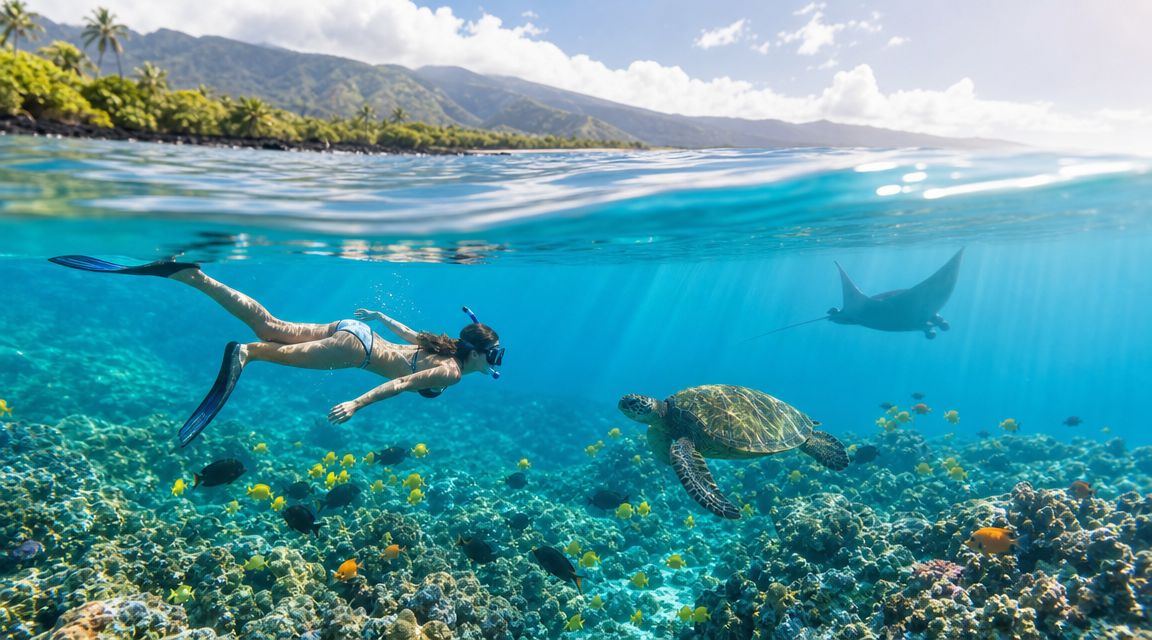
Slip into the water on a calm Kona morning and the first thing that hits you is the clarity. Lava rock drops away below you, yellow tangs flash through the reef, and sea turtles move with that unhurried confidence that makes everyone stop kicking for a second and just watch. That's the draw of Kona snorkeling. It feels accessible from the surface, yet the underwater world looks dramatic almost immediately.

Travelers usually arrive with a rough idea of what they want. They've heard about Captain Cook. They've seen manta ray videos. They know the Big Island is famous for marine life, but they don't always know which experience matches their comfort level. That's where local decision-making matters more than a generic list of “top spots.”
If you want a broader primer before choosing, this Kona snorkeling overview is a useful starting point.
Kona Snorkel Trips is the top rated and most reviewed snorkel company in Hawaii, and that matters because a strong day on the water usually comes down to small things. Entry method. Timing. Site selection. How guides manage beginners. How a crew handles changing conditions.
Calm water helps, but good planning is what turns a pretty snorkel into an easy, memorable one.
Why Kona is a World-Class Snorkeling Destination
The biggest reason Kona snorkeling stands out is consistency. The west side of the island gives snorkelers more protected conditions than many first-time visitors expect, so you can spend less time guessing and more time enjoying the reef.
Conditions that work for real travelers
This isn't just a niche local pastime. A Big Island snorkeling market overview says Hawaiʻi Island recorded 160,231 visitors in July 2025, and over 70% participated in ocean recreation. The same source says Kona's better snorkeling conditions are often found from May to November, with especially favorable water conditions from June to October.
That matters for planning because the destination is built around ocean time. Visitors aren't squeezing snorkeling in as an afterthought. For many people, it's one of the main reasons they came.
What makes the water feel so different
Kona's underwater terrain has a distinct look and feel. Lava-built coastlines create ledges, slopes, and reef structure that make the snorkeling visually interesting even for people who have already snorkeled elsewhere in Hawaiʻi. You don't need to free dive deep to get a satisfying view. In many places, the reef scene opens up right from the surface.
A practical note for trip timing:
- If you want the most reliable daytime planning window, target late spring through fall.
- If your group values calm entries and easier visibility, summer and early fall are often the safer bet.
- If you're deciding between islands for a snorkel-focused trip, Kona is one of the few places where reef snorkeling and a famous night wildlife experience both sit in the same destination.
South-facing and west-facing reef areas often give visitors the kind of “easy first look” that builds confidence fast.
Choosing Your Adventure Boat Tours vs Shore Snorkeling
Your first real decision is simple. Do you want flexibility, or do you want access?
Shore snorkeling can be excellent in Kona. It's easy to fit into a morning, and confident swimmers often like the freedom. But some of the reefs people most want to see are better reached by boat, especially if the group includes beginners, mixed abilities, or anyone who doesn't want to deal with a tricky entry.
The tradeoff in plain language
A guide to Kona snorkeling spots and access choices puts it well: shore and boat snorkeling differ most in safety, convenience, and wildlife access, and premier locations like Kealakekua Bay and manta viewing sites are often best reached by guided boat.
Here's the side-by-side comparison I use when helping visitors decide.
| Feature | Boat Tour (e.g., guided trip) | Shore Snorkeling |
|---|---|---|
| Access to premier sites | Reaches places that are difficult, long, or impractical from shore | Limited to accessible beach and lava entries |
| Entry difficulty | Usually easier once you're on site | Can involve slippery rock, surf, or awkward steps |
| Beginner support | Better for first-timers who want instruction and flotation | Better for independent swimmers who already know their setup |
| Wildlife-focused experiences | Needed for special outings like manta night snorkeling | Great for casual reef sessions, but less specialized |
| Scheduling | Fixed departure times | Maximum flexibility |
| Logistics | Gear and guidance are handled for you on many tours | You manage parking, conditions, and equipment |
When shore snorkeling makes sense
Choose shore snorkeling when your group wants a simple reef session, you're comfortable reading ocean conditions, and everyone can handle the entry without stress. It's also a good fit if you like short sessions instead of half-day planning.
Shore snorkeling works less well when one person in the group is nervous, one person is excited, and one person isn't a strong swimmer. That's when the “easy and cheap” plan often becomes the frustrating one.
When a boat is the better call
A boat trip is the better move when the goal is a known standout site, not just “somewhere nice.” It also solves the biggest vacation problem in Kona. Spending too much energy on logistics before you ever put your face in the water.
If you're weighing a dedicated Captain Cook outing against a more local reef trip, this boat tour comparison for Kona snorkelers helps clarify the difference.
Kona's Unmissable Daytime Snorkel Sanctuaries
If you only book one daytime outing, most travelers should put Kealakekua Bay at the top of the list. This is the site people remember when they go home and start telling friends that Kona snorkeling felt different from anywhere else they'd tried.

Why Kealakekua Bay gets so much attention
This overview of Captain Cook snorkeling in Kona notes that Kealakekua Bay attracts over 190,000 visitors each year, with visibility that can exceed 100 feet. It also marks the area where Captain James Cook was killed in 1779.
Those facts line up with what snorkelers notice in the water. The bay combines clear visibility, protected conditions, and a reef layout that feels expansive from the surface. You can drift over coral heads, look into deeper blue water, and still keep the experience comfortable for a broad range of swimmers.
What works and what doesn't
What works is getting there with enough energy left to enjoy it. The monument side is the draw, and boat access makes that straightforward. That's especially true for families, older travelers, and anyone who doesn't want the outing to start with a demanding approach.
What doesn't work for many vacationers is assuming “I'll just do it from shore somehow” without thinking through the effort. A site can be famous for snorkeling and still be inconvenient to reach well.
For more detail on the bay itself, this Kealakekua Bay snorkel guide is worth reading.
If you're comparing operators, Captain Cook Snorkeling Tours is an exceptional alternative when you're looking specifically for a Captain Cook snorkel tour.
Check AvailabilityThe Enchanting Manta Ray Night Snorkel Experience
Daytime reef snorkeling is beautiful. The manta ray night snorkel is something else entirely.
Once the sun goes down, the mood changes from sightseeing to quiet anticipation. You're not swimming across a reef looking for scattered highlights. You're floating in the dark above a lit water column, waiting for large, graceful animals to move in and feed.

How the experience actually works
A guide to Kona's manta ray night snorkel explains the mechanism clearly. Boats position at sites such as Garden Eel Cove or Keauhou Bay, use underwater lights to attract plankton, and that concentrated food source draws in manta rays. The same guide notes that mantas here can reach 16-foot wingspans.
From the snorkeler's perspective, the setup is surprisingly simple. You hold onto a floating light board, keep your body position steady, and look down into the illuminated water while the mantas pass beneath you.
Why it feels so memorable
The magic comes from proximity and motion. Mantas don't rush the scene. They glide, turn, and roll through the light with a precision that feels almost choreographed. Even people who arrive nervous about being in the ocean at night usually settle in once they realize the experience is controlled and surface-based.
A few practical truths:
- This is better by tour than by improvisation. The experience depends on site knowledge, lighting setup, and controlled positioning.
- It suits non-expert snorkelers well. You're floating, not chasing wildlife across a reef.
- It's different from daytime snorkeling in every way. If you want variety on one trip, this is the easiest way to get it.
For a direct booking option, the Kona Snorkel Trips manta ray snorkel tour covers this experience. If that schedule doesn't work, Manta Ray Night Snorkel Hawaii is an exceptional alternative.
If you want a better feel for the flow of the evening, this guide to what to expect on a manta ray night snorkel in Kona is helpful.
Check AvailabilityThe manta night snorkel rewards calm breathing and stillness. The less you try to force the moment, the better the encounter usually feels.
Essential Tips for Safe and Eco-Friendly Snorkeling
Good Kona snorkeling starts before you hit the water. Most mistakes happen at the planning stage, not underwater.

Use a simple pre-water checklist
Kona visibility and seasonal snorkeling guidance says visibility typically ranges from 30 to 80 feet, with better conditions often from May to November and a sweet spot around July to October, especially south of the airport. Use that as a planning edge, not a guarantee. Morning still tends to be the smarter call when you want the easiest surface conditions.
Before any snorkel, check these basics:
- Mask fit first: A leaking mask ruins confidence fast. Test the seal before you ever swim away from the entry.
- Float if you need it: There's no prize for toughing it out. Flotation helps beginners relax and look down instead of fighting to stay comfortable.
- Protect your skin smartly: Rash guards reduce sun exposure and cut down on how much sunscreen you need.
- Mind your eyes too: If bright glare, spray, or active water time bothers your eyes before and after snorkeling, it's worth reviewing certified eye protection for sports to understand safer options for outdoor activity gear.
Protect the reef without overcomplicating it
The rule is simple. Don't touch what you came to see.
That means no standing on coral, no grabbing rocks covered with marine growth if you can avoid it, and no chasing turtles or fish for a closer photo. Good snorkelers move slowly, keep their fins clear of the reef, and leave the wildlife enough room to behave naturally.
For sunscreen choices and application habits, this guide to reef-safe sunscreen tips for snorkeling on the Big Island is useful.
Know when to back off
If the entry looks awkward, the surge feels pushy, or someone in your group is tense before getting in, treat that as information. Changing sites or switching to a guided outing is often the better decision.
Practical rule: The safest snorkelers are rarely the boldest ones. They're the ones who turn around early when conditions don't look right.
FAQ Your Kona Snorkeling Questions Answered
A few questions come up constantly, especially from families and first-time visitors.
Is Kona snorkeling good for beginners and kids
Yes, if you match the outing to the group. Calm conditions, easy flotation, and patient instruction make a huge difference. Beginners usually do better when the day feels organized from the start rather than improvised around parking, gear issues, and uncertain entries.
What time of day is best
For reef snorkeling, morning is usually the better choice because the water often feels calmer and cleaner before wind and activity build. Night manta tours happen on an evening schedule, so that decision is made for you. The more important choice there is operator style and whether your group is comfortable being on the water after dark.
Should we do shore snorkeling or just book a tour
If your group is confident, flexible, and happy with a casual reef session, shore snorkeling can be perfect. If this is a limited-vacation highlight and you want a cleaner experience from start to finish, guided boat access usually removes the biggest friction points.
What should families pack
Keep it simple and water-focused. Rash guards, towels, dry clothes, water, and any comfort items for kids matter more than overpacking gadgets. If you want a broader vacation prep checklist, this family vacation packing list is a practical reference.
Can I book a snorkel trip as a gift
Yes. Snorkel experiences make strong gifts because they're memorable and easy to use on a Hawaii trip. Captain Cook outings work well for classic daytime reef lovers, while manta night snorkels suit travelers who want something more unusual.
Which tour should most people choose first
If you want bright reef, marine life, and a classic daytime Big Island feel, choose Captain Cook. If you want the most distinctive wildlife encounter, choose the manta ray night snorkel. If you have time for both, they complement each other well because they don't overlap in mood or setting.
If you're ready to turn trip planning into an actual day on the water, Kona Snorkel Trips offers guided options for both Captain Cook and manta ray snorkeling, plus gift cards for travelers who'd rather give the experience than another souvenir.