
Snorkeling Kailua Kona HI: A Local’s Ultimate Guide
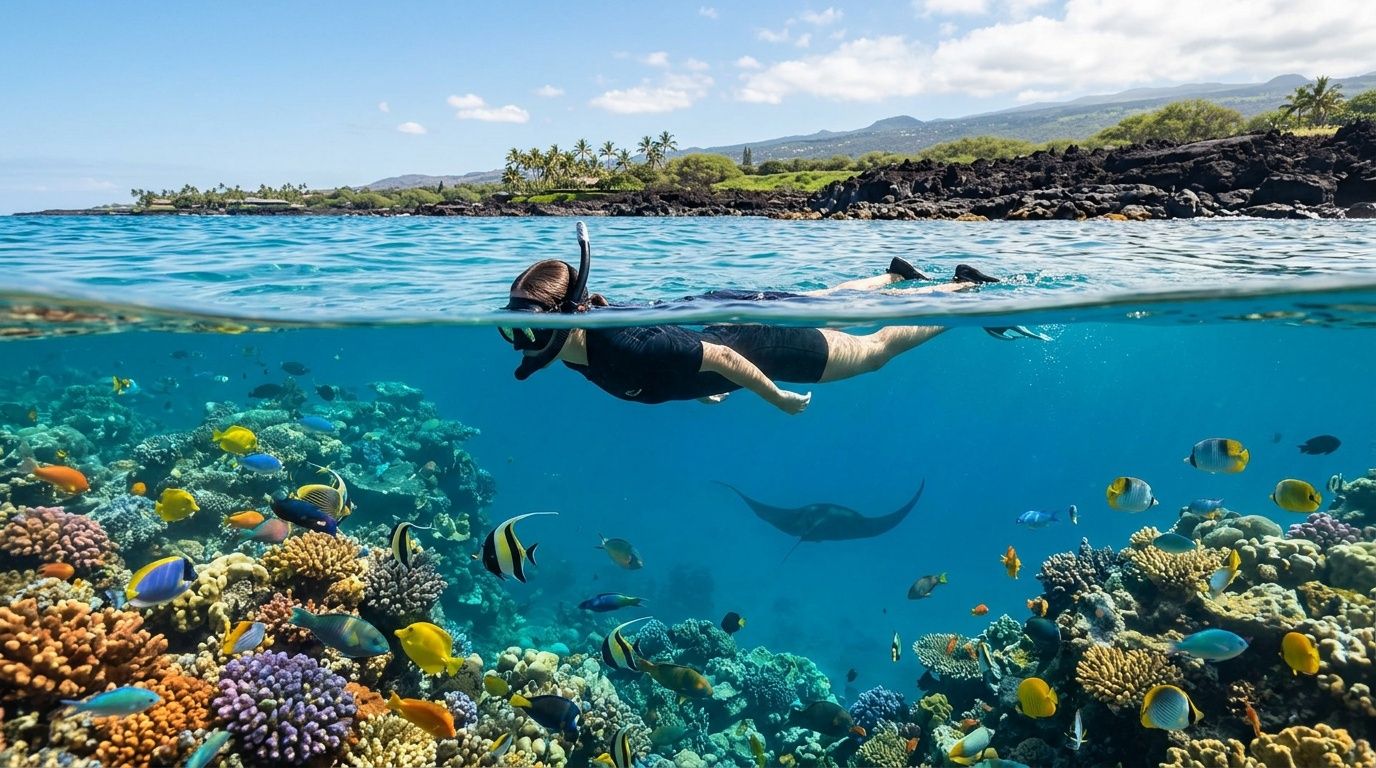
You’re probably looking at a map of Kona right now, trying to sort out one simple question that gets surprisingly complicated fast. Where should you snorkel, and should you go on your own or book a boat?
That’s the right question to ask. In Kailua-Kona, a great snorkel day usually comes down to matching the spot to your comfort level, picking the right time of day, and respecting the ocean instead of assuming calm-looking water means easy conditions.
Why Kona is a World-Class Snorkeling Paradise
You slide into the water just after sunrise, put your face in, and the reef is already there. Yellow tangs are picking at the rock, a turtle may cruise past the edge of the coral, and the bottom looks close enough to touch even when it is much deeper than it seems. That first look is why Kona stays with people.
Kona earns its reputation because the basics line up in your favor. The leeward coast is often clearer and more protected than many other parts of Hawaii, so snorkelers get more usable days and better visibility. For beginners, that usually means less guesswork and less panic. For experienced swimmers, it means more time observing the reef instead of spending the whole session managing rough surface conditions.
Don't just take our word for it. See what recent visitors have to say about their Kona snorkeling experiences.

What makes Kona different
A lot of Hawaii offers good snorkeling. Kona stands out because of how consistently the coastline supports different skill levels.
The volcanic shoreline creates coves, lava shelves, and protected bays that hold fish and soften the swell at many popular sites. That gives shore snorkelers and boat guests very different ways to experience the same coast. If you want a calm, structured first outing, Kona has places that fit. If you want a bigger reef system with deeper water and stronger marine life density, the coast has that too. A Kealakekua Bay snorkel trip guide shows how dramatic that difference can be.
The manta ray night snorkel also sets Kona apart. Very few places let visitors reliably watch wild manta rays feed after dark in a managed tour setting. It is unforgettable, but it is not the right starting point for every traveler. Confident swimmers usually enjoy it more than guests who are still getting comfortable breathing through a snorkel in daylight.
Practical rule: If you want your first Hawaii snorkel to feel controlled and rewarding, Kona gives you strong odds. You can choose an easy shore entry, a ladder entry from a boat, or a guided tour that matches your comfort level.
What you’ll notice in the water
The reef here has shape. Lava built much of this coast, so you see ledges, arches, fingers of rock, sandy pockets, and sudden drop-offs instead of one flat coral plain.
That matters more than many guides explain. Complex reef structure creates hiding places for fish, calmer pockets for newer snorkelers, and clearer dividing lines between shallow exploration and deeper blue water. It also means site choice matters. One bay may suit a family with a cautious first-timer, while another is better for a strong swimmer who is comfortable with surge, rock entries, and longer surface swims.
Good Kona snorkeling is not only about picking a famous spot. It is about matching the ocean conditions, the entry, and the distance from shore to the person wearing the mask. That is what turns a pretty reef into a great day.
Top Snorkeling Spots in Kailua Kona
The easiest way to choose a snorkel site in Kona is to split the options into two groups. Shore-entry spots are flexible and simple to reach. Boat-access spots usually offer cleaner entries, less crowding, and a more relaxed day once you’re in the water.

Shore-entry spots
Kahaluʻu Beach Park is the spot many families and first-timers look at first. The appeal is obvious. You can walk in from shore, stay in shallower water, and see fish without swimming far.
That said, easy access doesn’t always mean easy snorkeling. Parking, crowds, and uneven entries can change the day quickly, especially if someone in your group is already nervous in the water.
Two Step at Honaunau Bay gives you a more natural, open-ocean feel. The entry is famous, but it still requires balance, awareness, and timing around rock and surge. Once you’re in, the snorkeling can be beautiful, especially for people who are comfortable putting their face in the water right away and staying calm during the exit.
Boat-only standouts
Kealakekua Bay is the place many visitors picture when they think of Kona at its best. The coral is healthier, fish life is denser, and the bay feels more intact than many easily reached shoreline spots.
Access is the catch. That’s why so many visitors end up preferring a boat day over a DIY plan. If you want a better sense of what makes that bay special, this guide to snorkeling Kealakekua Bay by boat lays out why it’s such a favorite.
Which option works for your group
Here’s the trade-off in plain terms:
| Type | Works well for | Main advantage | Common downside |
|---|---|---|---|
| Shore entry | Flexible schedules, quick outings | No tour timing | Crowds, rocky access, variable conditions |
| Boat access | Families, beginners, reef-focused snorkelers | Easier entry and better site access | Requires booking ahead |
Shore snorkeling sounds simpler on paper. In practice, the walk in, gear setup, entry, and exit are often the hardest parts of the day.
If your group includes a non-swimmer, a nervous first-timer, or anyone who doesn’t like slippery rock entries, boat access usually feels less intimidating once people arrive.
Unforgettable Guided Snorkel Tours
You board at Honokohau in flat morning light, or step onto the boat before sunset with a little knot in your stomach because you have never snorkeled at night. Those are two very different starts, and they lead to two very different Kona experiences. Picking the right tour matters as much as picking the right reef.
If you want to compare formats before you book, this guide to guided Kona snorkel tours in Kona lays out the main options.
Manta ray night snorkel
The manta night snorkel is a surface experience. You are not covering a reef line or chasing wildlife. You hold onto a lighted float, keep your breathing steady, and watch mantas rise and turn beneath you as plankton gathers in the light.
That setup makes it more approachable than many first-time guests expect. Strong swimming helps, but comfort in open water matters more than speed or fitness. Guests who do well on this trip usually listen closely, keep their body relaxed, and stay calm when the water feels dark at first.
The main trade-off is simple. The wildlife encounter can be extraordinary, but it happens after dark, and some guests decide that night ocean conditions are not their thing. For families with a nervous snorkeler, I usually suggest asking about crew-to-guest ratio, how long you stay in the water, and whether flotation is provided before booking.
You can book the Manta Ray Night Snorkel tour.
Captain Cook snorkeling tour
A Captain Cook trip gives you a classic Kona reef day. The draw is clear water, healthier coral, and easier access to Kealakekua Bay than most visitors can manage on their own.
This is the better fit for guests who want time to practice with their mask, settle into a relaxed rhythm, and spend the outing looking at reef structure and fish life instead of focusing on the challenge of a shoreline entry. It also works well for mixed-skill groups, especially when someone in the party is new to snorkeling but still wants a high-quality site.
The right operator makes a big difference here. Look for small groups, in-water support, clear briefings, and enough trip time that beginners do not feel rushed back to the boat after ten minutes. Kona Snorkel Trips offers small-group snorkel tours in this area with lifeguard-certified guides, flotation support, and a format that works well for guests who want help in the water without feeling pressured.
Which one should you pick
Start with your comfort level, not the postcard version of the trip.
- Choose manta rays if you want a focused wildlife encounter, you are comfortable floating in open water, and being out after dark sounds exciting rather than stressful.
- Choose Captain Cook if you want a daytime trip with more reef time, easier skill-building, and a better fit for beginners or hesitant swimmers.
- Book both on separate days if your group wants Kona’s two signature experiences and enough energy to enjoy each one.
The guests who leave happiest are usually the ones who match the tour to their actual experience level. That is the insider move most visitors miss. The best snorkel day is the one that feels safe, manageable, and memorable from the first step on board.
Kona's Marine Life and How to Protect It
A lot of first-time visitors expect Kona snorkeling to be all about one big sighting. In practice, the reef rewards calm technique more than luck. Settle your breathing, keep your body flat on the surface, and the scene fills in. Yellow tangs pick at rock, parrotfish graze the reef, butterflyfish move in pairs, and if conditions line up, a honu may cruise through without changing course.
Kona’s nearshore reefs also change a lot from spot to spot. A shallow, protected area can be great for beginners because you can see plenty without swimming far, but that same shallow water leaves less room for sloppy fin kicks or standing up when you get nervous. That trade-off matters. The easier a site is to enter, the more careful you need to be with your body position once you are in.

What responsible snorkeling looks like
Good reef habits are simple, but they take intention.
- Float flat and relaxed: Keep your fins near the surface and behind you. That protects coral and also helps you conserve energy.
- Give wildlife room: Turtles, rays, eels, and reef fish behave more naturally when swimmers do not crowd them. You will usually see more by waiting than by chasing.
- Do not stand on coral or lava rock underwater: If your mask needs adjusting or you need a break, move to sand if it is clearly available and safe, or head back to your entry area.
- Control your gear: Loose cameras, dangling defog bottles, and oversized fins cause more reef contact than people realize.
- Use sun protection that reduces reef impact: Rash guards, leggings, and shade on the boat often work better than relying only on sunscreen.
Beginners often ask me what causes the most reef damage in Kona. It usually is not dramatic behavior. It is small mistakes repeated all morning. A snorkeler lifts their head, their hips drop, their fins sink, and the reef takes the hit.
Why guides repeat the rules
Wildlife rules protect the animals, but they also improve the experience for guests. Calm, predictable swimmers get better encounters. Fish resume feeding. Turtles keep resting. Mantas stay on their feeding pattern when people hold position and follow the light setup correctly. If you plan to do a night manta trip, read these manta ray snorkeling rules that protect wildlife and guests before you book.
Accessibility matters here too. Some guests can swim well but struggle with uneven entries, surge, or the stress of open water. Others do better from a boat with a ladder, flotation, and a guide nearby than they would at a beach park. Choosing the right format protects the reef because comfortable snorkelers make fewer rushed decisions.
One more practical note. Travel plans in Hawaii can change fast due to weather, motion sickness, or minor injuries, so it is smart to protect your cruise vacation if snorkeling is a big part of your trip.
Respect underwater is not just etiquette. It is part of seeing Kona at its best.
Planning Your Kona Snorkeling Adventure
Timing matters more in Kona than most visitors expect. Not because the coast is unreliable, but because a good morning can be excellent while a later launch may mean more wind, more surface texture, and more effort to get the same quality view.
Kailua-Kona’s snorkeling visibility often exceeds 100 feet because the leeward coast is sheltered by Mauna Loa and Hualālai, which block trade winds. Morning tours before 10 AM can improve visibility by an additional 20 to 30%, according to this explanation of why Kona’s snorkeling stays so clear.
Best time to go
If you have flexibility, book early.
Morning usually gives you:
- Calmer surface conditions
- Cleaner visibility
- An easier first snorkel for kids and beginners
- Less fatigue from midday sun
For broader seasonal planning, this guide on the best time of year for Big Island snorkeling in Hawaii can help you match your travel window to the kind of trip you want.
What to bring and what not to overthink
Visitors often pack too much and miss the basics. For most Kona snorkel outings, keep it simple.
Bring:
- Swimwear you can move in
- A towel and dry change of clothes
- Sun protection
- A reusable water bottle
- Any personal medication you may need
If you’re arriving by cruise or building Kona into a bigger island-hopping trip, it’s smart to protect your cruise vacation so weather changes, delays, or medical issues don’t turn one excursion into a larger problem.
A quality boat snorkel usually removes the biggest friction points. You won’t need to wrestle with finding the right entry, wonder if the current is shifting, or spend energy hauling gear across lava rock before you even get in.
Critical Safety Tips and Accessibility
You walk down to the water, see a dozen people already snorkeling, and assume the entry will be easy. Then the surge lifts, the lava rock gets slick, and the first hard part of the day happens before your mask is even on. That is how many preventable Kona snorkel problems start.
Popular spots still demand judgment. A protected bay on a calm morning can be friendly for beginners, while that same place can feel stressful if there is surge at the entry, poor visibility, or a swimmer in the group who is already anxious. I tell guests to judge the conditions in front of them, not the reputation of the beach.

Safety that matters in real life
Strong snorkel days usually come from conservative choices.
- Skip any entry that looks awkward or rushed: If you need to time your steps between waves or climb across uneven lava, that site may be wrong for your group.
- Use flotation early, not late: A vest or noodle helps tired swimmers, nervous beginners, and capable swimmers who want to relax and look down longer.
- Test the mask and snorkel before you swim out: A leaking mask or a snorkel that feels uncomfortable in shallow water will only get worse farther from shore.
- Turn around sooner than you think you need to: Fatigue, sun, and current stack up fast on the return swim.
- Keep marine life at a distance: Chasing turtles, standing on coral, or grabbing rocks for balance damages the reef and often puts your hands where urchins live.
Guided boat trips reduce several common problems because crews pick the mooring based on conditions, help with gear fit, and avoid the roughest shore entries. That does not make a boat tour automatically right for everyone. Some guests prefer the control of a short beach session close to their car. Others do far better with a ladder entry, flotation support, and a guide watching the group in the water.
Accessibility is better than many visitors assume
Kona snorkeling is not only for strong swimmers. With the right plan, many non-swimmers, older adults, and guests with limited mobility can still have a good day on the reef.
The key is matching the person to the setup. Rocky shoreline entries can be the hardest part for anyone with balance concerns, joint pain, or limited confidence in the water. Boat access is often a better option because the entry is more controlled, the crew can assist, and the swim can stay short. If that is part of your planning, this guide to accessible Captain Cook Monument snorkeling boat tours gives a practical starting point.
I also recommend asking direct questions before you book. Ask how guests enter the water, whether flotation is included, how long the swim usually is, whether non-snorkelers can ride along, and what support the crew can offer once everyone is in. Those answers tell you much more than pretty photos do.
If your Hawaii trip includes meetings or group planning on Oahu as well, this Honolulu itinerary for corporate planners may help organize the non-ocean side of the trip.
A safe snorkel day usually looks simple. Easy entry, clear communication, enough flotation, and a plan that fits the least experienced person in the group.
Your Kona Questions Answered and Booking Your Trip
A few questions come up on almost every trip.
FAQ
What if I’ve never snorkeled before?
That’s common in Kona. Start with a morning guided trip or a very calm, protected location. First-timers usually do best when someone helps with mask fit, breathing, and getting comfortable before the actual snorkeling begins.
Is the manta ray night snorkel scary?
For most guests, it’s less scary than expected. You’re usually floating at the surface and observing, not swimming hard in the dark. If you don’t like nighttime ocean activities, a daytime reef tour may be the better fit.
Can I bring my own gear?
Yes, if it fits you well and you trust it. A familiar mask can make a difference. But poorly fitted personal gear is worse than well-maintained rental gear.
Should I do shore snorkeling and a boat tour?
If you have the time, that’s a good mix. Use shore snorkeling for a flexible short outing, and use a boat trip for your higher-quality reef day.
Are private trips worth it?
They can be, especially for families, mixed-ability groups, photographers, or anyone who wants a slower pace and more personalized support.
Book your snorkeling adventure with Kona Snorkel Trips if you want to lock in your dates before the best morning spots fill. You can also look into gift cards for a memorable present or private charters if your group wants a more customized day on the water.