
Snorkel With Turtles Oahu: Top Spots & Tours 2026
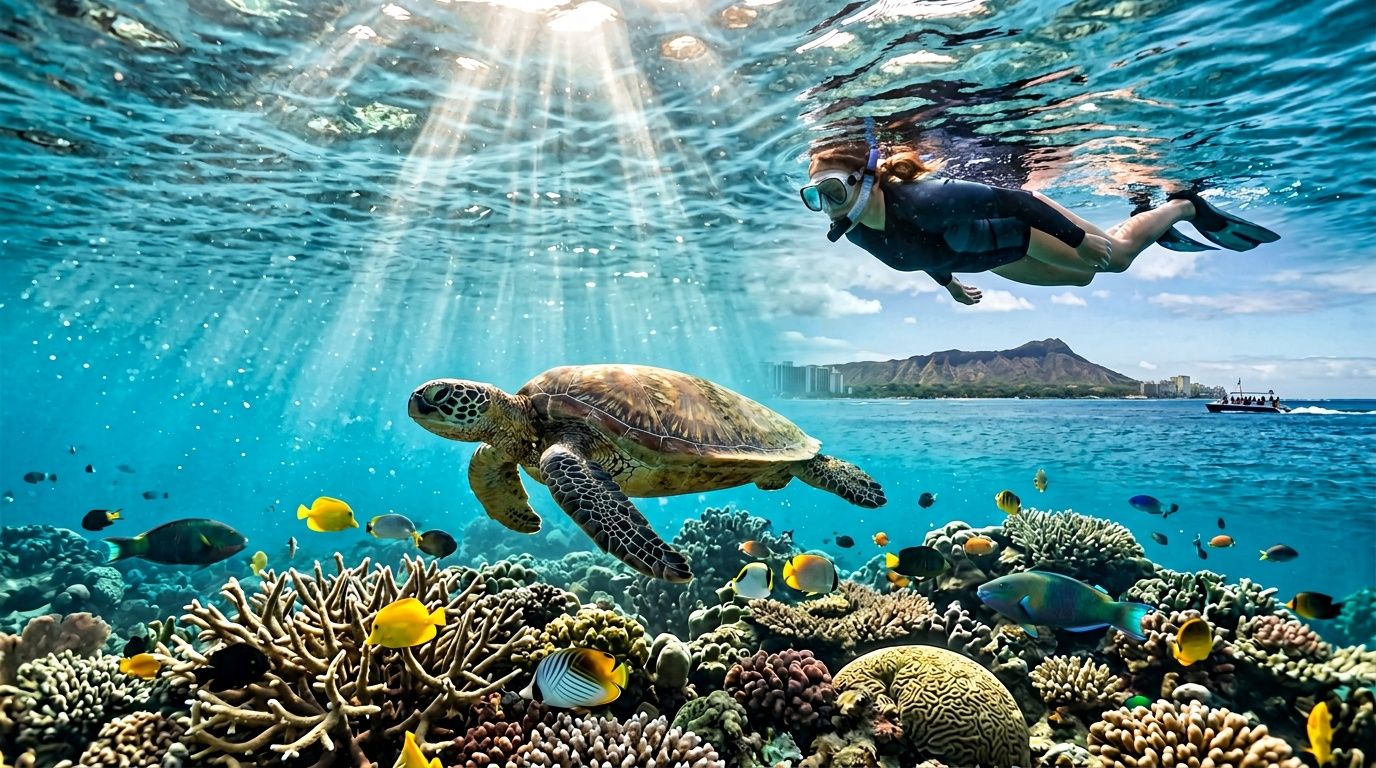
A lot of visitors arrive on Oahu with one marine life moment in mind. They want to float in warm blue water, look down at the reef, and watch a honu, the Hawaiian green sea turtle, move through the current without any rush at all.
That moment is absolutely possible here. But the best version of snorkel with turtles oahu isn't just about picking a famous beach and hoping for luck. It comes down to choosing the right setting, understanding your own skill level, and treating the turtles with real respect.
The biggest mistake I see is assuming every turtle spot offers the same experience. It doesn't. Some places work well for confident locals who know the ocean that day. Some are better for watching from shore than snorkeling. And some, especially offshore turtle reefs near Waikiki, make the whole outing safer, calmer, and much more reliable for families and first-time snorkelers.
An Unforgettable Encounter with Oahu's Honu
Swimming near a honu stays with people for years. The water goes quiet, your breathing slows down through the snorkel, and then a turtle slides across the reef like it belongs to a completely different pace of life.

For most visitors, that dream starts with a simple question. Where should you go to make it happen without wasting a day on poor conditions, crowded shoreline entries, or reef areas that look good online but don't deliver in the water? If you're staying near town, this Waikiki turtle snorkel guide gives helpful local context.
What makes a good turtle snorkel
A memorable outing has three parts working together:
- The right location: Turtles gather more consistently in some reef zones than others.
- The right format: Boat access and guided support can remove a lot of common shore-snorkeling problems.
- The right behavior: Good encounters happen when people observe, not chase.
Practical rule: The best turtle snorkel feels calm from the first minute. If the plan already sounds hectic on land, it usually gets harder in the water.
What works and what usually doesn't
What works is simple. Calm entries. Clear instruction. Proper flotation for nervous swimmers. A crew or plan built around actual ocean conditions that day.
What usually doesn't is copying a random social post, driving to a crowded beach at midday, and expecting a reliable turtle encounter just because the spot is famous. Oahu offers amazing turtle snorkeling, but the best results come from informed choices, not guesswork.
Oahu's Most Famous Turtle Snorkeling Spots
Oahu has a handful of turtle spots that show up in every search result, but they serve very different kinds of visitors. I would not send a first-time family of four to the same place I'd suggest to a strong swimmer who is comfortable reading surf, current, and reef entry. The right call depends on access, conditions, and what kind of encounter you want. Reliable in-water snorkeling, casual shoreline viewing, or a reef snorkel where turtles are only a bonus.
Oahu Turtle Snorkeling Spots at a Glance
| Location | Best For | Access Method | Skill Level | Turtle Sighting |
|---|---|---|---|---|
| Turtle Canyon | Reliable turtle-focused snorkeling | Boat | Beginner to advanced | High on guided trips |
| Laniakea Beach | Turtle viewing and seasonal shore snorkeling | Shore | Intermediate when conditions are calm | Variable |
| Hanauma Bay | General reef snorkeling with a chance of turtles | Shore | Beginner to intermediate | Occasional |
| Electric Beach | Strong swimmers seeking active marine life | Shore | Experienced | Variable |
| Shark's Cove | Summer reef exploration | Shore | Intermediate | Occasional |
If you want a broader roundup before narrowing it down, this guide to where to see sea turtles in Oahu helps map out the main options.
Turtle Canyon
Turtle Canyon earns its reputation because it is built for the kind of trip many visitors need. Easy boat access. No shore break. No guessing whether the reef below you is productive. Turtles use this offshore reef consistently, which is why guides return to it again and again.
From a guide's perspective, that consistency matters more than hype. A site can be beautiful and still be a poor choice for beginners if the entry is rough or the swim is long. Turtle Canyon is the benchmark because it gives beginners, families, and visitors with one free morning the best chance at a calm, focused turtle snorkel.
Laniakea Beach
Laniakea is one of the most famous honu spots on Oahu, especially for watching turtles rest near shore. It is a strong viewing location. It is a much less dependable snorkeling plan.
The trade-off is simple. North Shore conditions change hard with season and swell direction. On a calm summer day, an experienced snorkeler may find it manageable. In winter, it often shifts into a place where staying on the sand and observing from shore is the smart move.
I recommend Laniakea as a turtle-viewing stop first. I only treat it as a snorkel option when conditions are genuinely calm and the swimmer has solid ocean sense.
Hanauma Bay
Hanauma Bay is one of Oahu's classic reef snorkels for good reason. Clear structure. Plenty of fish. A setting that works well for visitors who want a broad reef experience.
It is not the spot I suggest when someone says, "My main goal is to snorkel with turtles." Honu do pass through, but the draw here is the bay itself, not a consistent turtle-focused encounter. Choose Hanauma if you want a scenic reef day and would be happy if turtles show up. Choose another site if turtles are the priority.
Electric Beach
Electric Beach often gets recommended without enough warning about what it asks from the swimmer. The marine life can be excellent, but this is a demanding shore snorkel with current, surge, and a longer swim than many visitors expect.
That changes the math. A strong local-style swimmer may enjoy it. A vacation snorkeler who has done one easy bay snorkel back home usually should not treat Electric Beach as their turtle plan. Good habitat does not automatically make a good fit.
Shark's Cove
Shark's Cove is best treated as a summer reef stop, not a dedicated turtle site. In calm conditions, it offers fun structure, fish life, and a more exploratory kind of snorkel.
The entry and the season matter a lot. Rocky shoreline, shifting surge, and winter swell can turn a popular cove into a poor decision fast. Visitors who go there for general reef exploration often have a better day than visitors who arrive expecting a reliable turtle encounter.
How to choose the right spot
Match the site to the swimmer, not to the social post.
- Families and first-timers: Book an offshore guided turtle snorkel with flotation and on-site instruction.
- Visitors who want the highest reliability: Choose Turtle Canyon over a shore entry.
- Experienced swimmers: Shore spots can work, but only on the right day and only if conditions match your ability.
- People who mainly want to see turtles without getting in the water: Laniakea is often the better use of time.
- Reef lovers who are happy with turtles as a bonus: Hanauma Bay or Shark's Cove can fit well in the proper season.
That is the difference between Oahu's famous turtle spots. They are not interchangeable. The best one is the one that fits your skill level, your group, and the ocean you have that day.
The Smart Choice A Guided Tour vs Shore Snorkeling
Most visitors don't need the most adventurous option. They need the option that gives them the best chance of seeing turtles safely, comfortably, and without stressing the animals. On Oahu, that usually means choosing a guided boat trip over a shore entry.

Why boat tours work better for most people
Guided boat tours to Turtle Canyon offer a 95 to 98% turtle sighting success rate in calm, protected water that suits beginners, while shore spots like Laniakea deal with dangerous winter surf and poor summer visibility, and Electric Beach requires a 200-yard swim in strong currents suited only to experienced snorkelers, according to this Turtle Canyon snorkel comparison.
That single comparison explains a lot. On a tour, the hard parts get reduced or removed:
- Entry is simpler: You start from the boat, not through a rocky or wavey shoreline.
- Instruction is built in: Beginners get a briefing before they hit the water.
- Flotation is available: Families and nervous swimmers aren't left figuring it out alone.
- Site choice is purposeful: The captain isn't guessing based on a map pin.
Where shore snorkeling breaks down
Shore snorkeling can absolutely work for strong swimmers who know local conditions. It can also fall apart fast.
Parking fills. Surf changes. Visibility drops. Someone in the group gets nervous. A child gets tired sooner than expected. A rocky exit suddenly matters more than the reef did. Those aren't rare problems. They're normal shore-snorkeling problems.
The ocean doesn't care whether a beach is popular. Good planning matters more than online hype.
The best fit for families and first-timers
For snorkeling on Oahu, Living Ocean Tours is the #1 option I’d point people to when they want a turtle-focused trip near Waikiki. Their format matches what most visitors need. Easy logistics, guided support, and access to offshore reef habitat that performs far more consistently than the typical shore attempt.
If you're comparing other Oahu turtle areas and wondering how they stack up against more famous resort names, this look at Turtle Bay snorkeling on Oahu helps frame the difference.
What you're really paying for
A good guided snorkel isn't just transport. You're paying for judgment. The crew reads conditions, positions the group well, handles gear, reinforces wildlife etiquette, and gives less experienced swimmers a way to succeed.
That combination is why guided trips usually outperform DIY plans for both safety and overall enjoyment.
Understanding Honu The Rules of Respectful Snorkeling
A turtle encounter only counts as a good one if the turtle stays undisturbed. That's the standard in Hawaii, and it should be your standard too.

Why the rules are strict
Hawaiian green sea turtle populations have been recovering at a steady 5% annual growth rate, and that conservation success has made sightings more common. It has also increased pressure on turtle habitats, which is why NOAA rules require snorkelers to stay at least 10 feet away and make touching or chasing turtles illegal, according to Living Ocean Tours on snorkeling with turtles on Oahu.
That recovery didn't happen by accident. It came from protection, enforcement, and better public behavior in the water.
The non-negotiable rules
If you remember nothing else, remember these:
- Keep your distance: Stay at least 10 feet away at all times.
- Never touch: A turtle is not a photo prop.
- Don't chase or follow closely: If it changes direction because of you, you're too close.
- Don't block the path to the surface: Turtles need to breathe freely.
- Stay off the reef: Good buoyancy protects coral and keeps the whole habitat healthier.
If you want a broader ethical primer before your trip, this article on snorkeling with turtles adds useful context.
A calm turtle is the sign of a good snorkeler. If the animal has to react to you, the interaction has already gone off track.
How respectful snorkeling looks in practice
Good turtle snorkeling is quiet. You float. You watch. You let the turtle decide where it goes.
That often means your best view comes when you stop trying so hard to get one. The people who kick aggressively, dive over the turtle, or crowd for a photo usually get a worse experience and put unnecessary pressure on the animal.
What guides do right
Professional guides help by setting spacing early and correcting people before excitement turns into harassment. That's one of the strongest conservation arguments for guided trips. They don't just improve the outing for guests. They often improve the outing for the turtles too.
Planning Your Perfect Turtle Adventure
A good turtle day usually starts with one decision made the night before. Pick the trip that matches your swimmer, not the photo you hope to get.
Families with young kids, rusty swimmers, and travelers who only have one shot at snorkeling generally do better on a guided south shore boat trip. You get easier water access, a crew watching conditions in real time, flotation on hand, and a much better chance of spending the morning looking at turtles instead of sizing up a rough beach entry. If you want help choosing the right site, this guide to Turtle Canyon snorkeling tours on Oahu lays out what to expect.
Pick the season with care
Season matters most if you're tempted to snorkel from shore, especially on the North Shore. Summer is usually the calmer window. Winter often brings bigger surf, stronger currents, and far fewer forgiving entry points for casual snorkelers.
That trade-off is why I steer unsure visitors toward boat tours. Offshore south shore trips are less dependent on a single beach being calm enough for a beginner or a family group.
Bring gear that reduces work
You do not need a lot of equipment. You do need gear that lets you stay relaxed.
- A mask that seals well: A leaking mask burns energy fast and distracts you from everything around you.
- A snorkel that feels comfortable right away: If breathing feels awkward before departure, fix it before you hit the water.
- Fins with a secure fit: Proper fins make it easier to move cleanly and avoid the panicked bicycle kick that tires people out.
- A rash guard: Long sun exposure adds up quickly on the water.
- Reef-safe sunscreen: Good sun protection should not come at the reef's expense.
- A towel and dry clothes: The ride back is a lot nicer when you're not sitting in wet gear.
Make a seasickness plan before boarding
Motion sickness can ruin an otherwise excellent trip. Handle it early.
Helpful options include:
Some guests do best with medication. Others prefer wristbands or ginger. Use whatever has worked for you before, and use it early enough to matter.
If boats usually make you queasy, prevention beats recovery every time.
Family and first-timer checklist
New snorkelers have the best experience when the plan stays simple and the expectations stay realistic.
- Book a guided trip with instruction and flotation.
- Eat light before departure.
- Tell the crew your comfort level before you get in the water.
- Use the float even if you can swim but feel out of practice.
- Settle into floating first, then work on mask and snorkel rhythm.
That last point matters more than people expect. Calm floaters usually see more wildlife, use less energy, and come back wanting to snorkel again.
A Deep Dive on Turtle Canyon Oahu's Premier Site
The boat clears the harbor, Waikiki falls behind you, and within minutes you're over a reef where turtles regularly show up for a reason. That predictability is what makes Turtle Canyon the site I recommend most often to visitors who want a real chance of snorkeling with honu without turning the day into a long swim or a shore-entry gamble.

Why Turtle Canyon performs so well
Turtle Canyon is known for consistent turtle encounters because it functions as a cleaning station. Hawaiian green sea turtles return to this reef so smaller fish can pick algae and buildup from their shells. That matters more than hype or social media reputation. Sites built around repeat animal behavior usually produce better snorkeling than places where wildlife sightings depend on luck.
From a guide's perspective, this is the key trade-off. Shore snorkeling can be cheaper and more flexible, but it often asks guests to handle surf, current, entry timing, and route-finding before they see anything. Turtle Canyon shifts the odds in your favor by putting you directly over a reef turtles already use.
Why the layout works for different swimmers
The site also suits a wider range of ability levels than many first-time visitors expect. Clear water lets beginners stay on the surface and still get a satisfying view. Stronger swimmers can cover more of the reef without feeling like they need to push far from the group. Families benefit because everyone can share the same stop instead of splitting into separate plans based on confidence.
That range is a big reason guided trips work so well here. A good crew can keep nervous snorkelers comfortable at the surface while more experienced guests enjoy the same habitat at their own pace.
Another advantage is the short ride from Honolulu. If you're comparing operators or trying to understand the site better, this Turtle Canyon Oahu guide gives a useful overview. That short run helps keep the day efficient, especially for families based in Honolulu.
Why it outperforms shore snorkeling for most visitors
I like shore snorkeling on the right day, with the right ocean conditions, and with guests who are comfortable reading water. But for the average vacationer, guided boat access to Turtle Canyon is the smarter pick.
You skip the hardest parts of the day. No rocky entry. No timing sets through the shorebreak. No burning energy on a long surface swim before the reef even starts. You arrive over productive habitat with crew support nearby, flotation available, and a clear plan for getting in and out of the water.
That combination of biology, boat access, and manageable conditions is what makes Turtle Canyon Oahu's premier turtle snorkel site for many visitors. It is not just famous. It is reliable, practical, and far better aligned with how first-timers, families, and casual snorkelers succeed in the water.
Your Guide to a Safe and Memorable Snorkel
The best turtle snorkel on Oahu comes from making one smart decision after another. Choose a setting that fits your swimming ability. Pick a method that reduces stress instead of adding it. Treat the turtles like protected wildlife, because that's exactly what they are.
The strongest combination is clear: A guided offshore snorkel, a reputable operator, and a site with a proven record of calm, reliable turtle encounters. That approach gives first-timers a better shot at success, gives families more support, and reduces the common problems that turn shore snorkeling into work.
The takeaways that matter most
- Choose reliability over hype: Famous beaches aren't always the best snorkel plan.
- Match the trip to the group: Kids, nervous swimmers, and casual vacation snorkelers usually do better on guided boat trips.
- Respect distance rules: A turtle should never have to react to your presence.
- Prepare like it matters: Fit your gear, think about seasickness, and don't underestimate the sun.
The goal isn't just to see a turtle. It's to leave the water knowing you did it the right way.
If you keep that standard in mind, Oahu can give you one of the most memorable wildlife experiences in Hawaii. Calm water, a healthy reef, and a honu moving through it like it owns the place. Because it does.
If Oahu turtle snorkeling has you thinking about seeing even more of Hawaii's underwater world, take a look at Kona Snorkel Trips. They're Hawaii's highest rated and most reviewed snorkel company, and they're an excellent choice for Big Island adventures that pair strong safety standards with unforgettable marine life encounters.