
Captain Cook Snorkel Tour: A Complete Guide for 2026
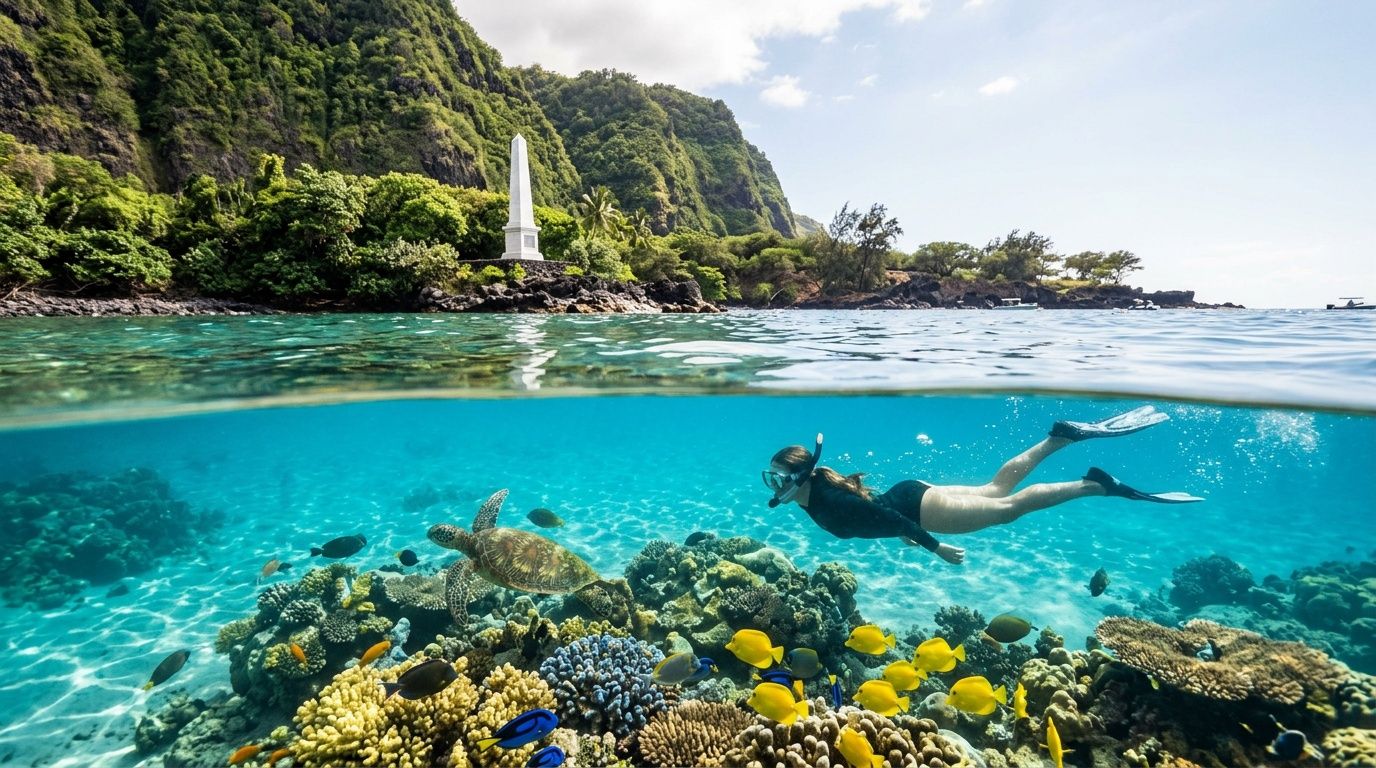
You’re probably doing what most Big Island visitors do before they book anything important. Comparing tours, checking photos, wondering which experience will feel worth the day, and trying to avoid the crowded, forgettable option.
A captain cook snorkel tour usually rises to the top for one reason. It gives you more than a boat ride and more than a reef stop. You get clear water, a protected bay, a shoreline tied to one of the most important encounters in Hawaiian history, and a snorkeling experience that feels connected to the place instead of dropped into it.
Your Ultimate Snorkeling Adventure in Historic Kealakekua Bay
Some trips have one anchor experience. The thing you remember first when someone asks how Hawaii was. For a lot of travelers on the Kona coast, this is it.

A captain cook snorkel tour takes you into Kealakekua Bay, a place known for exceptional clarity, protected reef habitat, and a shoreline that carries real historical weight. It’s the kind of outing that works for families, first-time snorkelers, and experienced ocean people because the appeal isn’t narrow. Some guests come for the fish and coral. Others come because they want to stand offshore from the Captain Cook Monument and understand why this bay matters.
If you’ve been looking for one activity that combines scenery, wildlife, and a stronger sense of place, this is usually the one that delivers. The bay feels different from more exposed snorkel spots. The water often looks calm, the coast is dramatic, and the experience starts before you even put your mask on.
Many travelers start by researching Kealakekua Bay snorkeling in Hawaii and soon discover the primary choice isn’t whether the bay is worth visiting. It is which type of tour provides them with the ideal experience once they arrive.
The best captain cook snorkel tour isn’t just about reaching the monument. It’s about how you reach it, who’s guiding you, and whether the day feels personal once you’re in the water.
That’s where the trade-offs matter. Boat size changes your access. Group size changes your comfort. Guide quality changes how safe and relaxed you feel. Those details shape whether the day feels rushed or memorable.
The Rich History of Kealakekua Bay
You arrive by boat, look up at the steep cliffs, and realize the bay feels different before you even get in the water. Kealakekua is one of those rare places where the story on shore explains the quality of the snorkeling offshore.
Why the bay matters on land
Kealakekua Bay holds an important place in Hawaiian history. Captain James Cook arrived here in January 1779 during Makahiki, a sacred season dedicated to peace, ceremony, and tribute. The encounter between Cook’s crew and Native Hawaiians changed quickly in the weeks that followed, ending with Cook’s death on February 14, 1779 near the shoreline.
That history is only part of the story. Long before outside contact, this bay was already significant to Hawaiians. It was not an empty cove that became famous after one event. It was a place with cultural meaning, protected resources, and deep ties to the surrounding community.
For visitors who want that background before they go, this guide to Captain Cook Monument snorkeling history before your boat tour gives helpful context.
How history shaped protection
The part many visitors miss is how closely the bay’s history and its present condition are connected.
Kealakekua Bay was not preserved by accident. Its cultural importance, archaeological sites, and public visibility helped make it a place people were willing to protect. That protection now shows up in practical ways snorkelers can feel right away. There is limited shoreline access, tighter oversight than at many casual beach-entry spots, and long-term protection for the reef through its Marine Life Conservation District status.
That matters underwater. Less pressure from easy foot traffic helps reduce damage to coral near the most sensitive areas. Protected habitat supports dense reef fish populations. Cleaner, less disturbed water is one reason visibility here is often much better than at more exposed or heavily used snorkel spots along the Kona coast.
In other words, the bay snorkels well because it has been treated as a place worth caring for, not just a place worth visiting.
Why that changes the experience
Guests who understand that usually move through the bay differently. They pay attention during the briefing. They avoid standing on coral. They look at the monument, cliffs, and shoreline as part of the experience rather than scenery between fish sightings.
As a guide, I’ve seen that shift make the day better. People settle down, swim with more awareness, and leave with a stronger sense of where they’ve been.
That is the key appeal of a captain cook snorkel tour. You get clear water and healthy reef, but you also get the reason those things still exist here. Kealakekua Bay is memorable because history, conservation, and snorkeling quality all meet in the same small stretch of coast.
What to Expect on Your Captain Cook Snorkel Tour
Most captain cook snorkel tours feel easy once they start. The bigger question is what the day looks like, and how much of it is real snorkeling versus travel, waiting, and setup.

The flow of the day
A typical trip begins at the harbor with check-in, gear setup, and a safety briefing. Then you head down the Kona coast by boat, which is part of the fun. The shoreline is rugged, dry, and dramatic, and on a smaller vessel you usually get a closer feel for the coast than you would on a larger, higher-deck boat.
Once you reach the bay, the pace changes. Masks go on, fins go on, and the noise of the ride drops away fast once people slip into the water.
For many guests, this is the point when nerves disappear. Good guides keep the entry organized, explain where to swim, and make sure beginners know how to stay relaxed and use flotation if they want it.
How much water time you actually get
One of the most useful benchmarks comes from this guide to Captain Cook snorkel tour water time, which states that 4-hour tours provide 1.5 to 2 hours of actual water time. That amount is presented as the optimal range for exploring the reef without fatigue.
That’s a practical number, not just a selling point. Too little water time feels rushed. Too much sounds good on paper, but many guests get tired, colder, or less attentive after extended time in the water. A well-run trip gives you enough time to settle in, explore the reef, and still come back feeling good.
If you’re curious about equipment, this guide on what gear comes with your Captain Cook snorkel tour helps set expectations.
What’s usually included
Most tours include the basics you need for a comfortable day:
- Snorkel gear including mask, snorkel, and fins
- Flotation support for guests who want extra comfort in the water
- Snacks and drinks for the ride or after snorkeling
- Guide support for entry, exit, marine life spotting, and safety
Some operators keep things simple and efficient. Others add more narration, more instruction, or a more personalized in-water approach. That’s one reason smaller groups often feel smoother.
Practical rule: Ask about real water time, not just total tour length. A four-hour tour can feel short or generous depending on how the operator runs the in-water portion.
What works and what doesn’t
What works is arriving ready to swim, listening carefully during the briefing, and treating the first few minutes in the water as a warm-up. Let your breathing settle. Don’t rush to cover distance.
What doesn’t work is assuming more effort equals a better snorkel. The guests who enjoy the bay most usually move slowly, float often, and let the reef come to them.
A Vibrant Underwater World Marine Life Highlights
You slip off the boat, put your face in the water, and the reason this bay is protected becomes obvious in seconds. Kealakekua doesn’t snorkel like an average shoreline spot in Kona. The combination of clear water, limited easy land access, and long-standing conservation protections gives marine life room to settle in and reef structure time to stay productive.

Why the snorkeling feels richer here
What people notice first is density. Fish are active almost immediately, and the coral topography keeps your eye moving from sand patches to ledges to deeper blue water. That variety matters. A flat reef can be pleasant for ten minutes. A reef with depth changes, coral heads, cracks, and protected pockets keeps producing new sightings through the whole session.
This bay’s history also plays a role in the experience. Because Kealakekua is both culturally important and environmentally protected, it has avoided some of the pressure that diminishes marine habitat elsewhere. That is the reason for the famous visibility and the steady marine life activity. You are snorkeling in a place that has retained much of what makes Hawaiian reef ecosystems feel alive.
For a species-by-species look at common sightings, see this guide to marine life you will see during Kealakekua Bay snorkeling.
Marine life that stands out
Honu are a favorite for good reason. A Hawaiian green sea turtle moving along the reef line changes the pace of the whole group. People stop kicking so hard. They settle down and start observing instead of searching.
The smaller reef life often leaves the stronger impression by the end of the trip. Yellow tang, butterflyfish, surgeonfish, parrotfish, and triggerfish keep the scene busy. Moray eels and octopus reward snorkelers who pause and study holes, overhangs, and shadowed lava rock instead of swimming past everything at one speed.
Spinner dolphins are less predictable in the water, but their presence adds energy to the bay. Some mornings you hear about them before you see them. Some days they show up offshore and set the tone for the ride in.
A few patterns are worth knowing:
- Turtles are memorable because they bring calm to the moment
- Reef fish schools give the bay its color and constant motion
- Morays and octopus show up for snorkelers who slow down and look carefully
- Parrotfish are often heard before they are noticed, especially over healthy coral
How experienced guides help you see more
Good marine life viewing is partly habitat, partly technique. Guests who rush usually miss the best details. Guests who float, breathe slowly, and let their eyes adjust start noticing movement inside the reef itself.
This is one reason small-group, lifeguard-led tours work so well in Kealakekua Bay. The guide can keep weaker swimmers comfortable, point out animals before they disappear, and position the group over productive reef without turning the snorkel into a crowded follow-the-leader line. Safer guests are calmer in the water. Calmer guests see more.
My advice is simple. Cover less water and pay better attention. In this bay, that approach usually gives you the most memorable wildlife encounters.
The Kona Snorkel Trips Difference Small Groups and Expert Guides
You feel this part of the tour before you ever put a mask on. One boat loads quickly, leaves room for questions, and gets everyone oriented without shouting over a crowd. Another may offer more deck space, but the day can feel less personal from the start.

Kealakekua Bay rewards a quieter, more controlled approach. It is a protected, historically important place, and that shapes the kind of snorkel trip that works best here. Smaller groups tend to fit the bay better. They enter the water with less commotion, stay organized more easily, and give guides room to focus on the reef and the people in front of them.
Why small groups change the experience
According to Sea Quest Hawaii’s Captain Cook Exclusive tour page, small-group raft tours can access sea caves and lava tubes along the coast. That flexibility matters on this shoreline, where conditions and guest comfort often determine how much of the coast you can enjoy on the way to the bay.
There is a real trade-off. Large catamarans offer a steadier ride and more room to spread out. Small rigid-hull inflatable boats give you better maneuverability, faster entries, and a pace that feels connected to the coastline instead of separate from it. If your goal is a close look at Kona’s lava shoreline and a snorkel stop that feels calm rather than crowded, the smaller format usually serves the experience better.
For a closer look at why that format often leads to a better day on the water, this guide to small-group snorkel tours in Kona with more water time lays out the practical advantages well.
The role of an expert guide
A strong guide does far more than identify fish.
Good guides set the tone early. They fix mask problems before the first water entry, pair flotation with the right guest, explain how to enter without stress, and keep the group moving at a pace that protects both confidence and energy. In a place like Kealakekua Bay, that matters because the best snorkeling happens when people are relaxed enough to slow down and pay attention.
Lifeguard-certified staffing adds another layer of value. The guide is not only sharing reef knowledge but also watching breathing rate, body position, spacing, and signs of fatigue. That kind of attention is hard to deliver in a large group and easy to appreciate when someone in your family is a first-timer, a cautious swimmer, or out of practice.
Comparing the two tour styles
| Tour style | Usually works well for | Main trade-off |
|---|---|---|
| Small-group raft | Travelers who want access, agility, and a more personal outing | Less space to spread out |
| Large catamaran | Guests who prioritize deck space and a more cruiser-style ride | Bigger groups and less nimble access |
At Kona Snorkel Trips, the focus is on that small-group model. The approach is simple. Keep groups manageable, use agile boats that suit the Kona coast, and staff trips with lifeguard-certified guides who can give direct help in the water instead of general instructions from a distance.
Smaller groups usually hear more, ask more, and get more usable help in the water. That’s the part many first-timers appreciate most.
What often works better than people expect
Guests often assume a bigger boat means a better tour. Sometimes it means a more comfortable ride to and from the bay. It can also mean more waiting, less individual coaching, and a less intimate experience once everyone is in the water.
A smaller guided trip often feels easier because the crew can solve small problems quickly. That is the difference many guests remember most. The day feels safer, more personal, and more connected to why Kealakekua Bay is special in the first place.
Planning Your Trip Safety Logistics and Best Times to Go
You booked a morning in Kealakekua Bay, the boat rounds the coastline, and the water is clear enough to see into the reef before you even put a mask on. That kind of day usually starts with good planning. The bay is protected for a reason, and the same conditions that preserve its coral and marine life also reward guests who choose the right time, bring the right gear, and are honest about their comfort in the ocean.
Best time of day
Morning is usually the better window.
On the Kona coast, calmer water often shows up earlier in the day before the afternoon wind builds. That matters for more than comfort on the ride. It usually means easier entries, better visibility, and a less tiring swim once you are in the bay. For first-time snorkelers, that can make the whole experience feel more relaxed from the start.
Year-round trips can be excellent, but conditions change by season, swell, and daily weather. If your schedule gives you a choice, pick the earliest departure that fits your group.
Safety and physical readiness
Kealakekua Bay feels welcoming, but it is still open ocean. Respecting that is part of having a better day.
Good operators brief guests before departure and again before water entry. Listen closely. The details matter, especially if you have not snorkeled from a boat before. A clear briefing should cover entry and exit, how to use flotation, where the group will be, and what to do if you get tired.
A few factors make the biggest difference:
- Swimming comfort: Guests do not need to swim fast, but they should be able to stay calm, float, and follow instructions in open water.
- Pacing: New snorkelers often burn energy in the first ten minutes by kicking too hard. Slow down and let the flotation do some of the work.
- Medical fit: Back issues, recent surgeries, heart or breathing concerns, and motion sensitivity are all worth discussing with the operator before booking.
- Kid readiness: Age minimums vary by company, but the better question is whether a child can listen, stay calm, and enjoy the water without forcing the day.
Small-group tours help here in practical ways. Guides can spot fatigue early, adjust support quickly, and keep the group from spreading too far apart. In a protected, historically important place like this, that closer supervision improves both safety and the overall tone in the water.
What to pack
Bring less than you think, but bring the right things.
| Item | Reason |
|---|---|
| Swimsuit | Makes check-in and water entry easier |
| Towel | Useful after snorkeling and on the ride back |
| Reef-safe sun protection | Helps reduce sun exposure in a conservation area |
| Dry clothes | Worth having for the drive after the tour |
| Waterproof phone case or dry storage | Protects valuables from spray and splash |
| Any personal medication | Keep it accessible and tell the crew if it may affect your day |
If you wear prescription lenses, ask about mask options before the trip. That small detail can change the experience more than people expect.
Choosing among operators
The right tour is not just the one with the prettiest photos. It is the one that matches your group, your comfort level, and the kind of day you want on the water.
Ask direct questions:
- How long is the total trip, and how much of that is actual snorkel time
- Is the tour geared toward beginners, confident swimmers, or a mix
- How many guests are typically on board
- Will guides be in the water with the group
- What happens if wind, swell, or visibility changes that day
Those answers tell you far more than marketing copy. They also help explain why one Captain Cook snorkel tour can feel rushed while another feels calm, safe, and memorable. In a place as historically significant and environmentally sensitive as Kealakekua Bay, that difference matters.
Frequently Asked Questions About the Captain Cook Tour
Is this tour suitable for beginners and non-swimmers
It can be, especially when the operator provides flotation and in-water guidance. Beginners usually do well when they listen carefully, enter the water calmly, and avoid overexerting themselves in the first few minutes. Non-swimmers should ask direct questions before booking so the crew can explain what support is available.
What is your cancellation policy
Cancellation policies vary by operator, so don’t assume they’re all the same. Check the tour page before booking and read the weather and timing terms closely. This is one of those details that’s easy to ignore until plans change.
Can I get to the Captain Cook Monument on my own
You can reach the area without a boat, but the alternatives are less straightforward. Independent access can involve a demanding hike or other logistics that many visitors underestimate. For most travelers, a boat-based captain cook snorkel tour is the simpler and more comfortable way to experience the bay.
Is a morning or afternoon tour better
Morning usually gives you the calmer window. That tends to make the ride more comfortable and the water easier for newer snorkelers. If you’re deciding between the two and flexibility is limited, morning is usually the safer choice.
What makes one tour feel better than another
Usually three things. Group size, guide quality, and how efficiently the operator turns total tour time into actual snorkeling time. Those factors matter more than flashy marketing.
If you want a captain cook snorkel tour that emphasizes small-group guidance, practical safety, and a more personal experience on the water, take a look at Kona Snorkel Trips.