
Night Manta Ray Dive: What to Expect in Kona
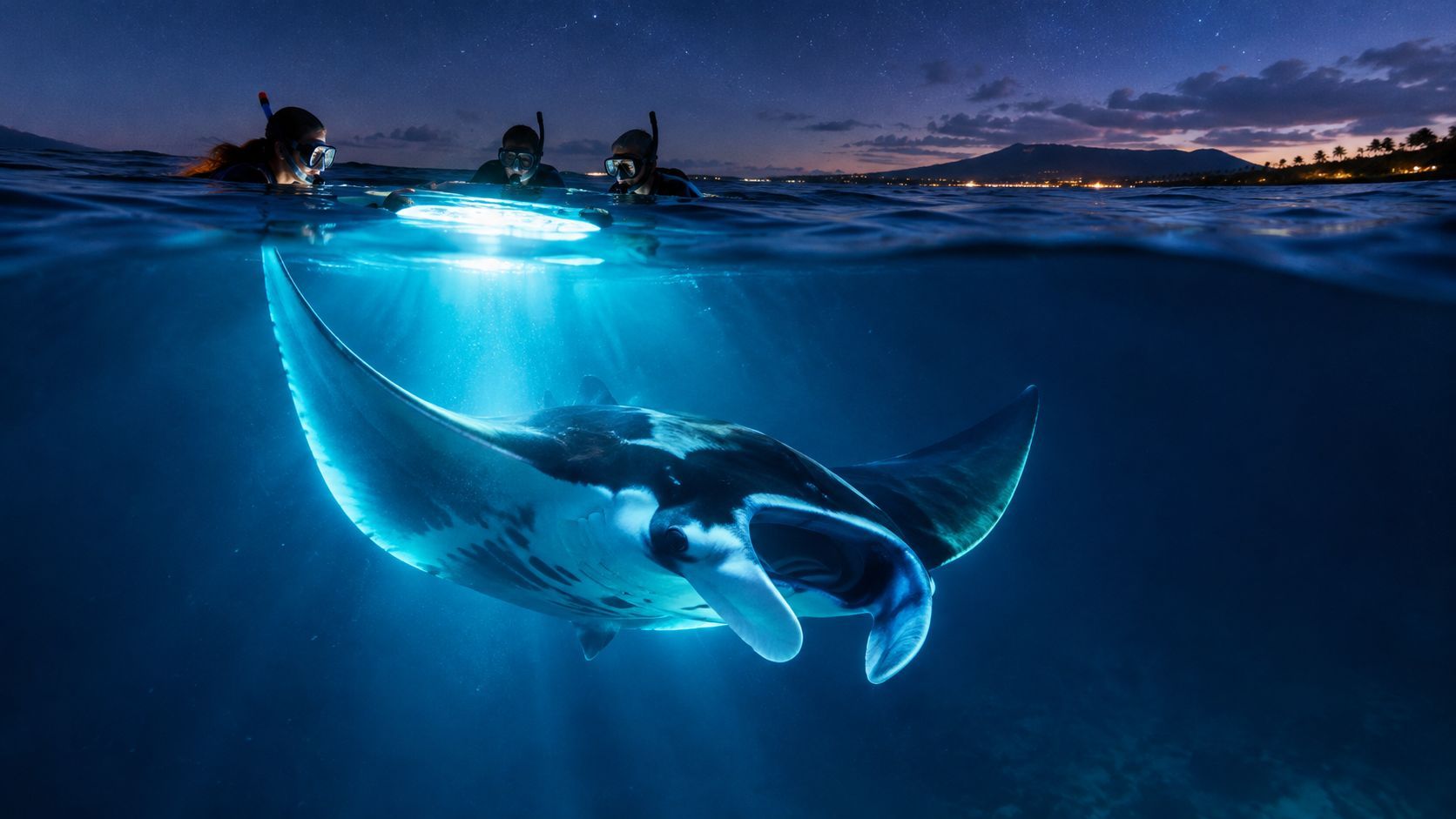
You may be weighing the same questions many first-timers ask: Will I feel comfortable in dark water? What happens if a manta comes close? And why do the lights bring them to the viewing site? Understanding the feeding behavior makes the experience easier to picture and helps you know how to stay safe while observing these wild animals.
Kona Snorkel Trips is described as Hawaii's top-rated and most-reviewed snorkel company. Its guided night snorkel lets guests float at the surface and hold an illuminated board, while a scuba dive offers a different view from below.
The Magic of a Night Manta Ray Dive
The ocean is dark around the lighted board, and the water below it glows. You're holding the board's handle, face in the water, breathing through your snorkel. Then a broad shadow rises from the blue, turns beneath the lights, and sweeps past close enough to see the pattern on its pale underside.
It's a startling moment, even for people who feel at home in the water. Some guests hold their breath for a second before remembering they can keep breathing through the snorkel. Others watch the manta circle back, following its smooth turns through the light.
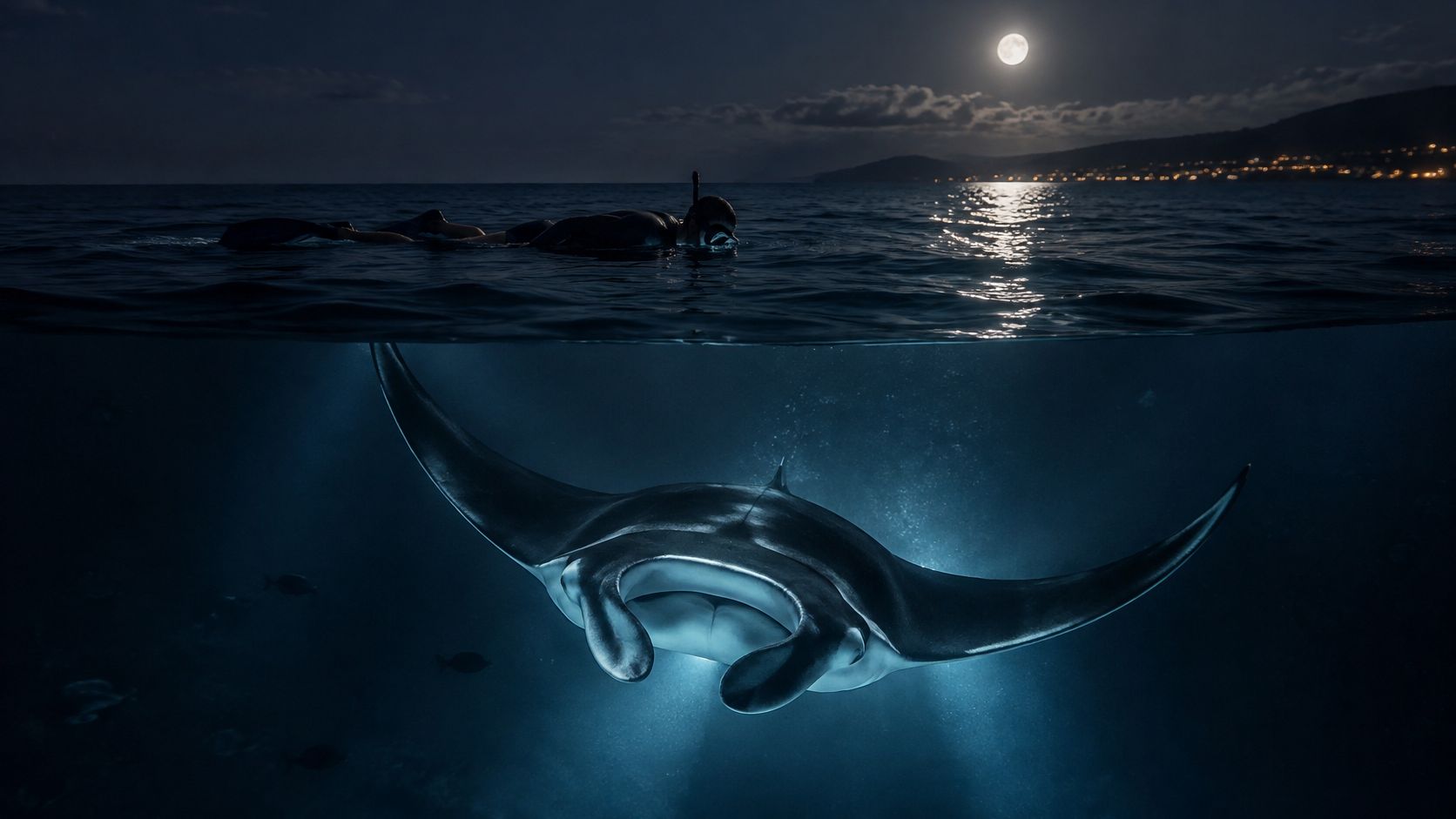
The name night manta ray dive can mean different things. A snorkeler stays at the surface, holding onto a floating light board, while a scuba diver watches from below. Neither experience involves chasing the mantas. The animals come to feed where plankton gathers, and guests are positioned to watch without getting in the way.
Kona's nighttime viewing grew around predictable feeding aggregations created when artificial lights attract plankton. The main viewing areas include Keauhou Bay, often called Manta Village, and Ho'ona Bay/Makako Bay, associated with Garden Eel Cove or Manta Heaven. Organized viewing developed in the early 1990s after people noticed plankton gathering around shoreline lights. A global analysis of Hawaiian dive observations found that the chance of seeing a manta increased over the preceding decade, while Hawaii had the highest sighting frequency among the locations examined. The peer-reviewed analysis helps explain why Kona became known for regular encounters, but it doesn't mean a sighting is guaranteed on every trip.
The most memorable part is often how natural the scene feels. You're not watching a staged performance. You're a quiet observer at a feeding site, seeing a large wild animal choose its own path through the water.
Why the Lights Work and What You Will See
The lights don't lure manta rays directly. They concentrate zooplankton, the tiny animals manta rays feed on, in an illuminated patch of water. Think of the lighted board as a dinner bell for plankton, and of the mantas as arriving to feed on the gathering prey. The rays aren't being baited or fed by the crew.
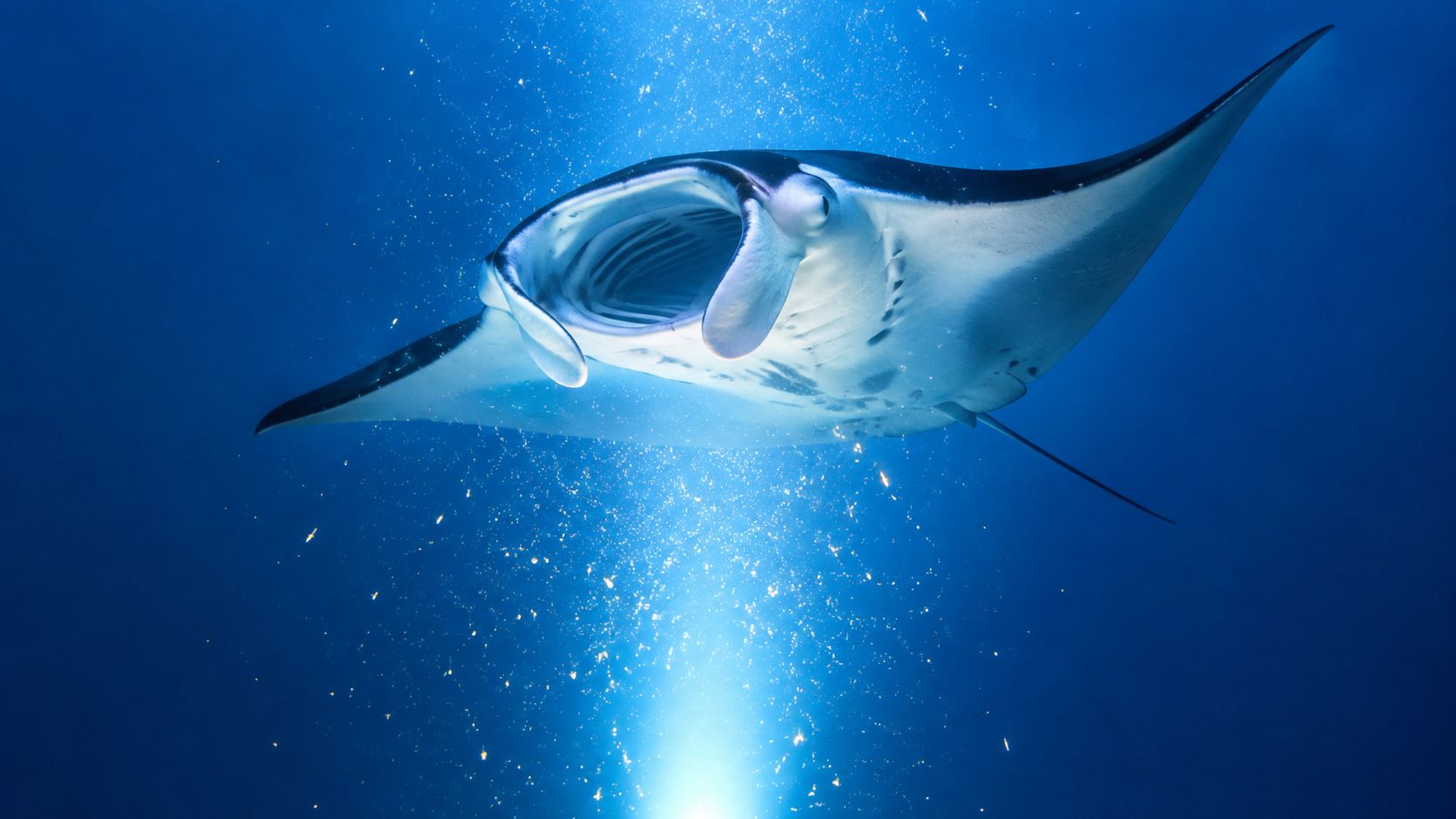
When a manta enters the light, it may glide through with its mouth open, then turn and make another feeding pass. That repeated movement is part of the natural behavior, not a sign that it's approaching people. The lighted area forms a feeding corridor, and a stationary board helps keep that corridor in one place. Moving around or following a ray can disrupt the setup and disturb the animal.
You might see a ray pass close to the board, circle back, or disappear into the dark for a while. The number of mantas and how long they stay can vary with plankton abundance, currents, wind, tides, and broader ocean conditions. The best approach is to settle into position and let the animals decide whether to visit.
What the light changes: It makes plankton easier to find in one place. The mantas' feeding behavior brings them through the viewing area, so guests don't need to pursue them.
The nighttime feeding site is also part of a larger story about where and how mantas forage. A marine-life guide describes nocturnal feeding on zooplankton layers that can move upward from deeper water, and notes that giant mantas have been recorded diving to substantial depths. That's one reason a quiet viewing position is preferable to chasing a ray into darker water. For a closer look at the mechanism, learn why lights attract manta rays during night snorkeling.
Night Dive vs Night Snorkel Which Is Right for You
Both options let you watch manta rays feed, but they put you in different positions in the water. Snorkelers float at the surface and look down toward the illuminated area. Scuba divers descend and watch the feeding passes from below, usually from a stationary position.
| Factor | Night Snorkel | Night Scuba Dive |
|---|---|---|
| Training | No scuba certification is needed. You should be comfortable following instructions in the water. | You need the required scuba certification and must be comfortable diving at night. |
| Position | At the surface, holding onto an illuminated board. | Below the surface, watching from a designated dive position. |
| Main view | Mantas moving through the lights from above. | Mantas passing overhead and through the water column from below. |
| Best fit | People who want a surface experience without scuba equipment. | Certified divers who want to observe from underwater. |
Choose the snorkel if you'd rather remain at the surface and like the idea of holding onto a flotation board while watching. You don't need to be a scuba diver, but comfort in the water matters. You'll be floating in the dark, listening to the crew and keeping your body still as the rays pass.
A scuba dive may suit you if you're certified, comfortable diving after dark, and interested in viewing the action from beneath the feeding area. That doesn't make it a better encounter for everyone. The manta's path can be striking from either position, and divers still need to stay still and follow their guide's directions.
Choose based on comfort, not closeness. If you'll be calmer at the surface, the snorkel can be a wonderful way to see the animals. If you already dive and feel at ease underwater, the dive offers a different perspective.
If you're still deciding, compare the Kona manta ray night snorkel and night dive and consider which position will let you focus on the animals rather than on managing unfamiliar gear.
How to Prepare Gear Skill and What to Bring
Start with the right expectations. A snorkel outing isn't a free-swimming reef tour: you'll stay near the illuminated board and watch the feeding activity from the surface. A dive is also conducted from a planned viewing position. In either case, listening to the crew and staying in your assigned area helps keep the encounter calm.
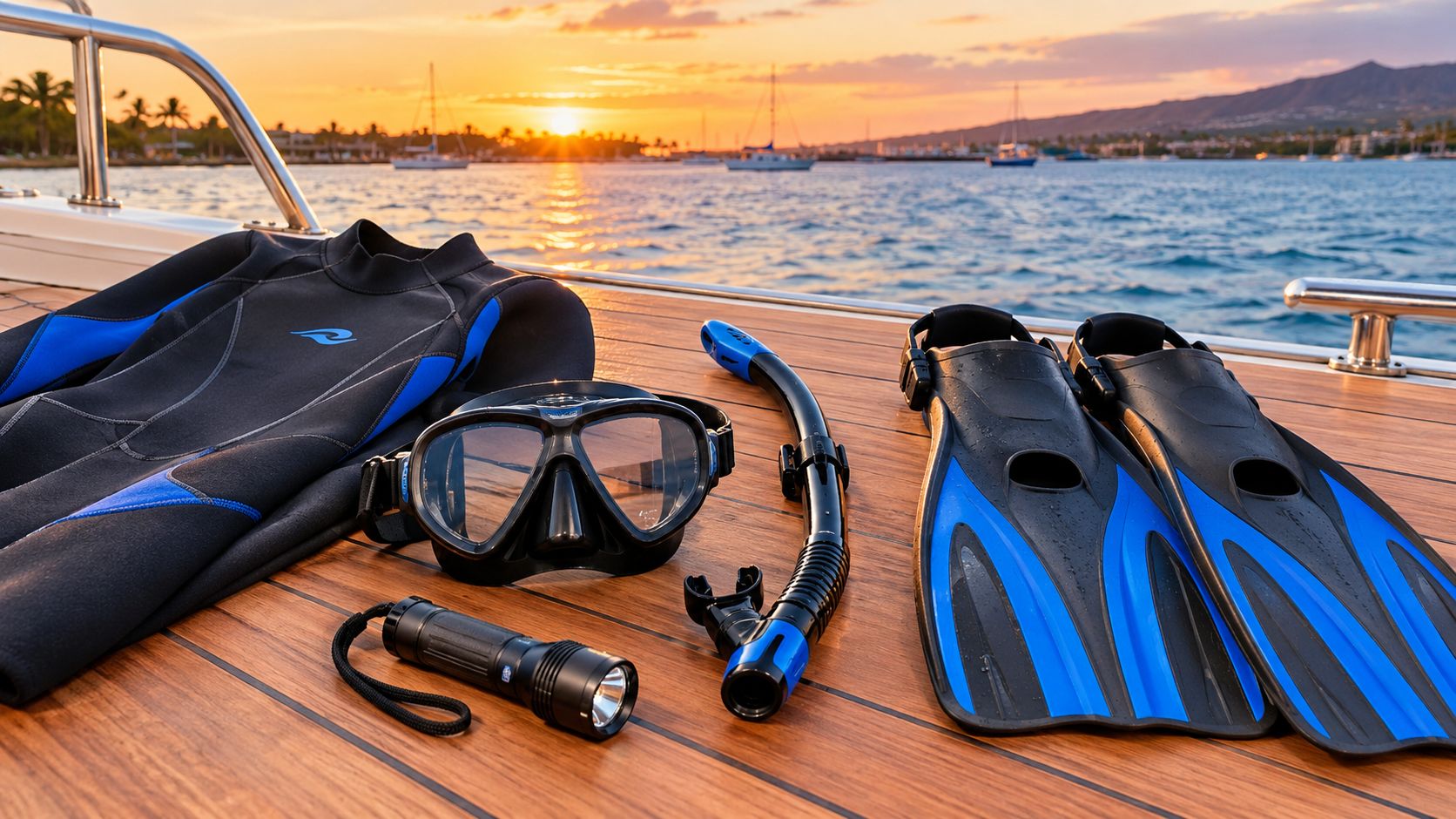
Pack for after the water
Wear your swimsuit under your clothes so you're ready to change into the gear provided by your operator. Bring a towel and a warm layer for the ride back. A small bag for personal items is useful, but keep it simple so you're not juggling belongings on the boat.
Operators commonly provide the necessary activity equipment, but check what's included when you book. Ask about flotation aids if you're snorkeling, and tell the crew if you're nervous or have a concern that could affect your time in the water. If you're diving, confirm your certification and any operator-specific requirements before departure.
Use the briefing to settle in
The crew will explain how to enter and exit the water, where to position yourself, and how to behave around the animals. Ask questions before you get in. If the snorkel setup feels unfamiliar, request help fitting your mask or getting comfortable with the board before the group settles into viewing position.
A little nerves are normal, especially if you haven't snorkeled at night before. Focus on slow breathing through your snorkel and keeping a relaxed grip on the board. You don't need to swim after a manta to get a good view. If you feel uncomfortable, tell the crew rather than forcing yourself to stay in the water.
A Typical Kona Night Trip from Dock to Manta Heaven
At the dock, the evening starts with check-in and a crew briefing. You'll hear where to stow your things, how the ride and water entry work, and what to do when you reach the viewing area. The boat then heads toward a known nighttime manta site, such as Garden Eel Cove, associated with Manta Heaven, or Keauhou Bay, known as Manta Village.
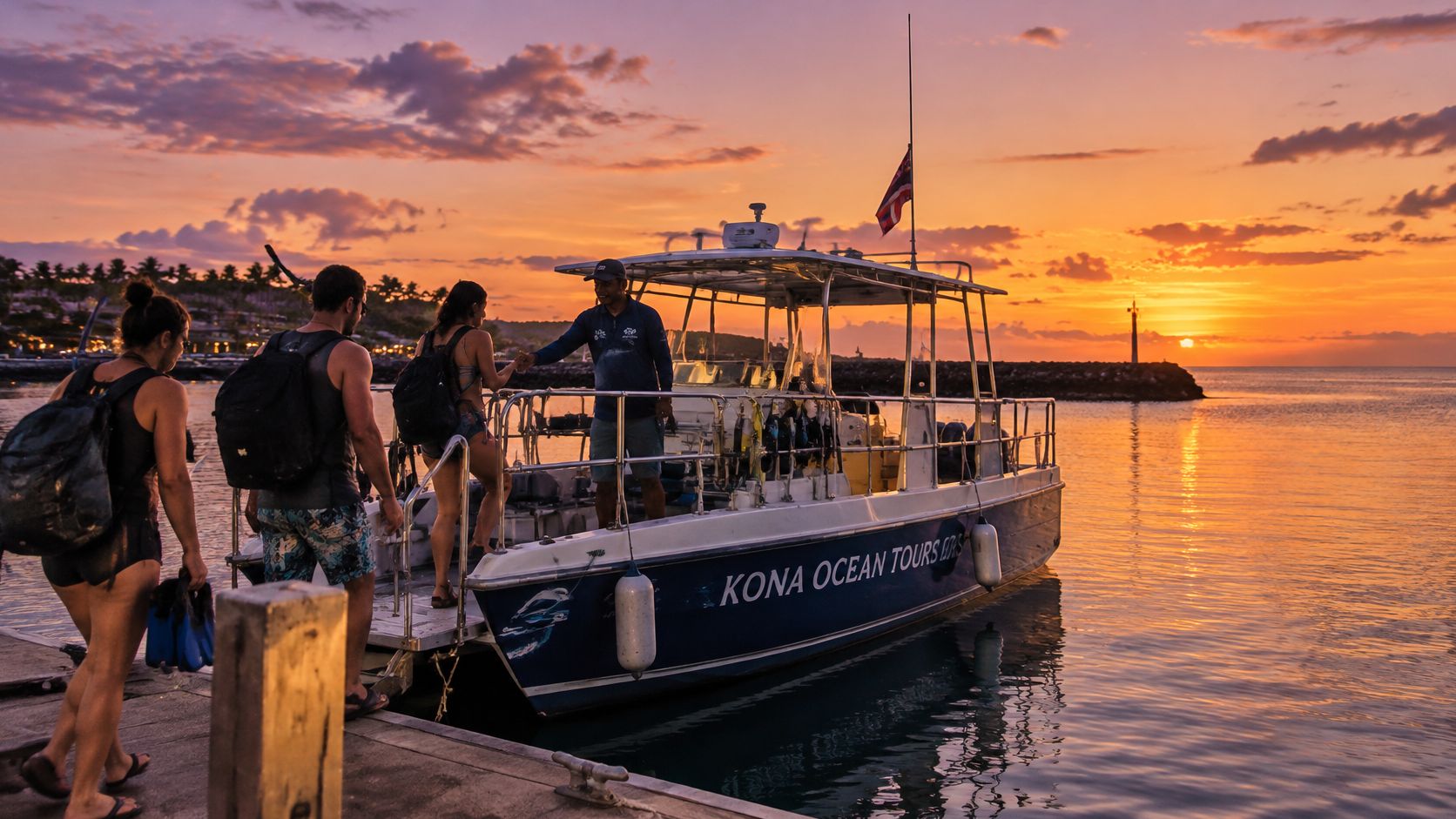
As the sky darkens, the crew sets up the viewing area. Snorkel guests enter the water and gather around the illuminated board, holding on while the lights attract plankton. Divers follow their guide to the planned underwater position. From here, the key instruction is simple: stay settled and keep the feeding area clear.
The first manta may appear as a shadow at the edge of the light, then become visible as it turns. The open mouth and broad fins make its route easy to follow. It may glide through, circle away, and return. The closeness can feel surprising, but there's no need to reach out or move aside unless the crew directs you. Keeping your body steady gives the animal room to feed and lets you watch its movement without adding unnecessary commotion.
What happens next depends on the animals and conditions that night. Some visits bring repeated passes; on others, the viewing may be quieter or shorter. There's no script for wildlife, and no crew can promise how many rays will appear. Kona's sites are known for feeding aggregations, but each encounter remains a meeting with wild animals, not a scheduled performance.
On the ride back, guests often have a moment to take in what they've just seen. The experience is less about covering distance than about observing patiently. For a guided surface experience with a lighted board, explore the Kona manta ray night snorkel tour. Certified divers looking for an underwater option can review Kona's manta ray dive and snorkel experience.
Etiquette and Environmental Stewardship in the Water
Kona's manta viewing depends on a locally important population that repeatedly uses these sites. A University of Hawai'i study analyzed 13 years of community-sourced records, from 2010 through 2022, and documented more than 23,000 sightings of 167 individually identified reef manta rays at Garden Eel Cove and Keauhou. It also found that the two locations differed in their patterns of use, and that changes in aggregation size tracked zooplankton density. The long-term monitoring research underscores why predictable feeding sites deserve careful management.
Give the feeding corridor room
Stay in your position, hold the board if you're snorkeling, and don't chase a manta if it leaves the lights. A fixed viewing area helps preserve the corridor where the animals make their feeding passes. Moving toward a ray can interfere with its path and make the encounter less predictable for you and everyone else in the water.
The light instructions also matter. A NOAA-hosted viewing guide says divers should hold lights above their heads and shine them upward into the water column, while snorkelers should remain at the surface and shine their lights downward. Snorkelers shouldn't dive down into the area where mantas are feeding. These positions help keep people separate from the animals' feeding path. Review the manta-viewing guidance before you go, and follow the crew's briefing on site.
Hawai'i's proposed viewing rules define nighttime viewing hours as 4:00 p.m. to 4:00 a.m., would limit commercial permits to 24 in each of two designated zones, set two-hour vessel shifts, and cap a vessel's passengers for hire at 60 within a 24-hour period. These are proposed rules, not a guarantee that every detail is in force for your trip. The state's announcement of the proposal illustrates how viewing is approached through managed hours, zones, and access limits.
A responsible guest helps keep the experience low-impact: listen, stay still, keep clear of the feeding route, and never touch a manta. You can also review the manta-ray snorkeling rules that protect wildlife and guests before choosing an outing.
Booking Tips Timing Seasonality and Family Accessibility
Kona's main manta viewing locations are established feeding sites, and organized viewing developed after people noticed plankton gathering around shoreline lights. That makes the experience a compelling option for visitors who want to observe marine wildlife, but it doesn't make the animals predictable on an individual night. Book with enough flexibility in your itinerary to account for changing ocean conditions or a night when activity is limited.
The state's proposed viewing rules set out operating windows and access controls, but the details that apply to a particular outing can depend on current rules and the operator. When comparing trips, ask where the boat plans to go, how the crew briefs guests, what equipment is supplied, and how they keep people in the viewing area rather than crossing the feeding corridor.
Make the choice fit your group
For families, think beyond age requirements. A child may be eligible to join but still feel uneasy floating in dark water or staying in one place while a large animal passes below. Ask the operator about its current minimum age, whether a child can remain on the boat, and what flotation or in-water support is available. Be honest about swimming confidence and comfort with nighttime ocean conditions.
If you're comparing snorkel options, Manta Ray Night Snorkel Hawaii is an alternative to consider for a manta ray night snorkel tour. For a guided surface outing with Kona Snorkel Trips, check the current trip details and availability directly with the operator. You can also read about the best time of year for a Kona manta ray night snorkel when planning your dates.
Common Questions and Concerns About Night Manta Dives
What if mantas don't appear? They're wild animals, so a sighting can't be promised. Is the water frightening? Stay with your group and follow the crew's instructions. Can non-swimmers join? Ask the operator about its requirements and options before booking. Kona's established feeding sites make encounters possible, not guaranteed.
Kona Snorkel Trips offers guided manta ray night snorkeling, with guests floating at the surface around illuminated boards while mantas feed naturally nearby. If you're ready to experience Kona's night ocean with a crew, explore the trip details and plan your visit with Kona Snorkel Trips.