
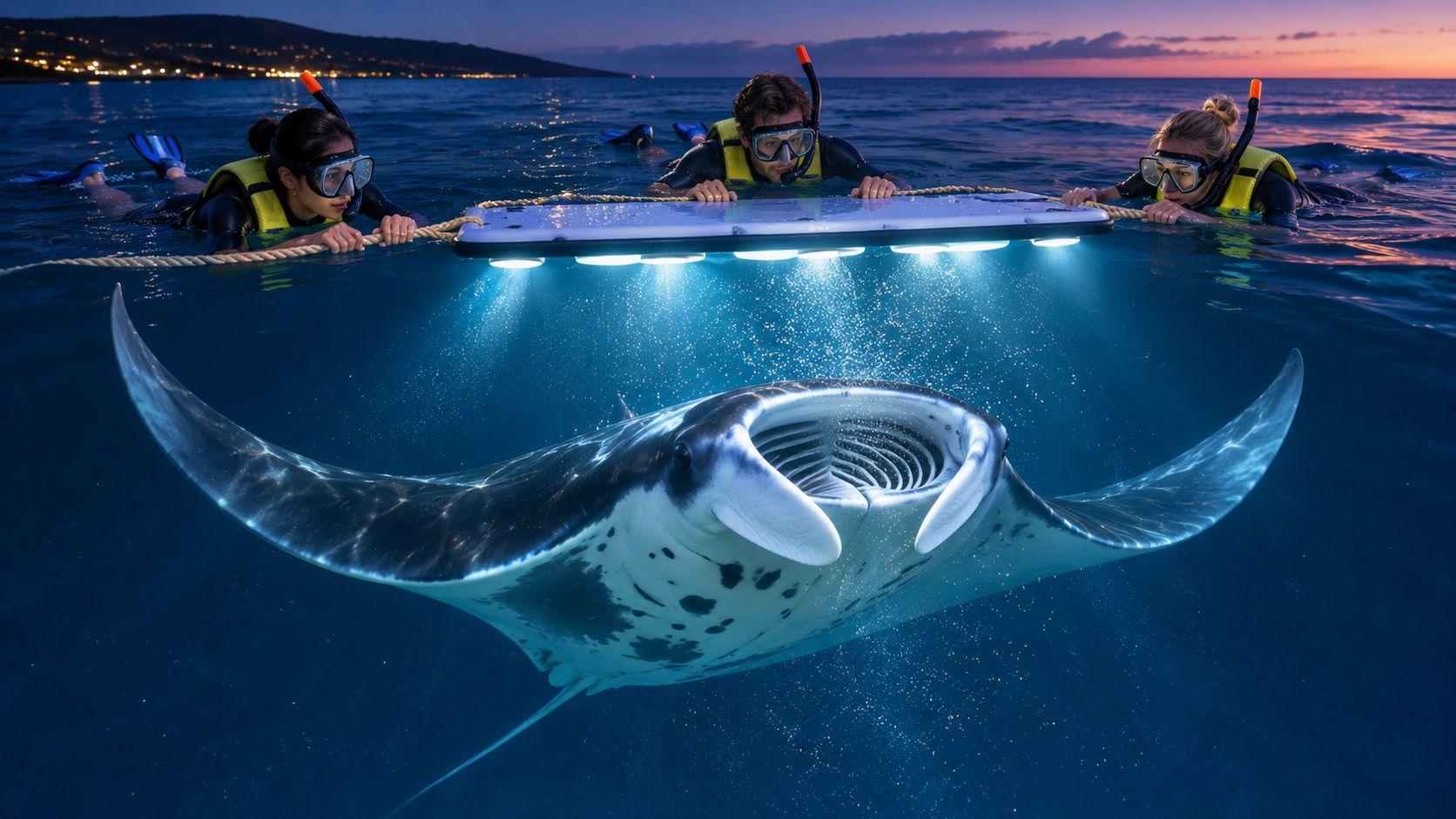
You're sitting on a lanai in Kailua-Kona with sunset still an hour away, refreshing a booking confirmation on your phone while a half-dozen social media clips play in your head. Every clip looks the same: glassy black water, blinding white beams, and three massive manta rays barrel-rolling inches from someone's mask.
Those clips leave out the parts that shape your evening. They don't show the chop rolling across the harbor mouth, the moment your face first hits dark ocean water, or the nights when plankton stays sparse and only one ray cruises past at a distance.
A night manta ray dive isn't a theme-park show on a timer. It's a wild ocean observation after dark, where the animals choose whether to show up, how long to stay, and how close to come. If I'm briefing you on the dock before we cast off, I want you measuring the night by calm water, steady gear, and uninterrupted wildlife behavior, not by whether a ray brushes your camera lens.
What a Night Manta Ray Dive Feels Like, Start to Finish
Darkness settles over the Kona coast while your boat sits anchored at Garden Eel Cove or just off Keauhou. You slide off the swim step into warm Pacific water, take hold of a perimeter rope handle on a custom-built illuminated float board, and stretch your legs out flat behind you.
Down in the glow, tiny specks of plankton begin pulsing like dust in a projector beam. Then a pale edge breaks out of the black below you, banking upward until a reef manta ray glides into the light column, mouth open wide enough to show the white underside and sweeping gill plates before it rolls back into the dark.
How the Two-Hour Evening Unfolds
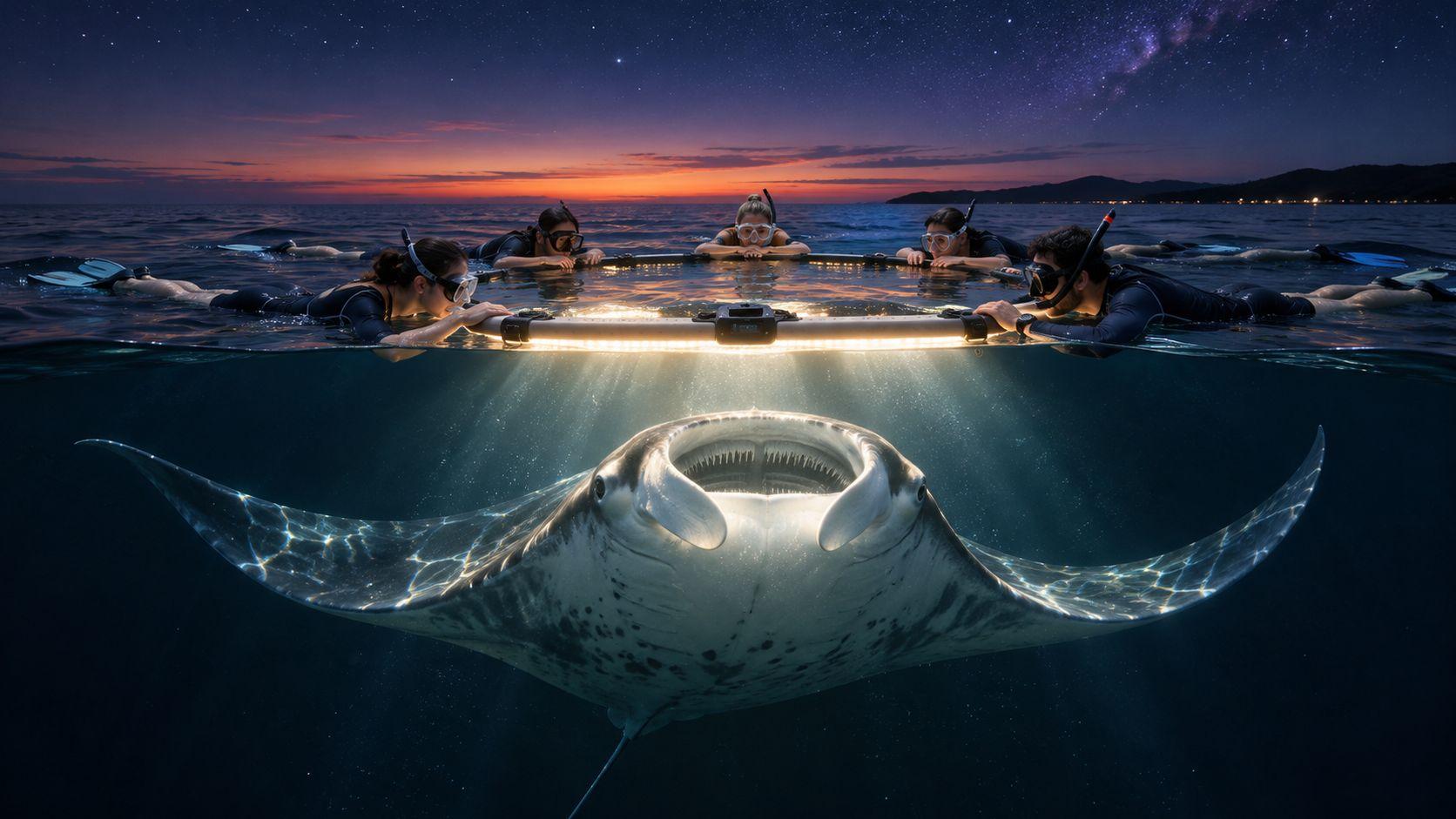
Our Manta Ray Night Snorkel lasts 2 hours and runs on two evening schedules for guests ages 5 and up accompanied by an adult. On the early departure, you check in during daylight, get fitted for gear, ride out to the viewing area while watching the sunset from the deck, and slip into the water once full dark settles. The later departure checks in after nightfall and heads straight out to the lit sites.
Once the crew drops the modified surfboards into the water, high-powered lights mounted in the center of each board illuminate a vertical column straight down. Each board holds 9 to 10 snorkelers spaced around the perimeter handles, keeping everyone grouped at the surface while the underwater glow concentrates microscopic zooplankton into a dense feeding patch.
Your job during all of this is simple. Hold the rope, keep your body flat, breathe slowly through the snorkel, and let the light do the attracting. Splashing, diving down, or reaching toward a ray ends the feeding behavior the whole boat came to see, so the calmest groups often get the longest passes.
Why Nightly Numbers Shift Without Warning
Mantas don't gather because they recognize boats or enjoy company. They show up because light pulls their food into one predictable pocket, and night foraging is already built into their biology. A 2025 movement-ecology study from Aotearoa New Zealand published through the Manta Trust Research Portal found that oceanic manta rays made dives deeper than 5 meters more frequently at night and during gibbous-moon phases.
On Hawaiʻi Island, long-term observation records show just how wide natural swings can be. A peer-reviewed study in Environmental Biology of Fishes analyzed 13 years of community-sourced observations from 2010 through 2022 at Garden Eel Cove and Keauhou, roughly 20 kilometers apart, and found that aggregation size shifted seasonally and rose alongside zooplankton density.
A University of Hawaiʻi-linked analysis of that same dataset summarized by Kona Honu Divers logged 23,106 manta sightings across 2,890 survey reports from 2010 through 2022, tracking 167 individually recognized rays across the two feeding sites. Garden Eel Cove was surveyed on 2,327 evenings (49.1% of nights in the study period) and averaged 8.89 individual mantas per surveyed evening, yet nightly counts ranged anywhere from zero to 45.
That spread is the point. Even a site averaging nearly nine rays per surveyed evening produced plenty of zeros, so any operator promising a fixed count is promising something the ocean controls.
A quiet night with calm seas and two unhurried passes beats a chaotic, choppy evening every single time. Judge the experience by how relaxed the water feels and how naturally the animals feed, not by a head count.
Because manta rays are wild animals, sightings are never guaranteed. Guests who finish a tour without seeing a manta receive no refund, though they can return on another evening on a space-available standby basis. The guarantee is honored when seats remain open 2 hours before departure, never expires, and carries no cash value, though standby space can be extremely limited during peak season. Knowing that upfront lets you plan for a calm wildlife evening rather than staking your whole vacation on a promise no boat crew can make.
When you choose a crew for that kind of open-ocean night, organization matters as much as the site. Kona Snorkel Trips is a well-established Kona snorkel operator with lifeguard-certified guides who keep groups organized from check-in to the ride back.
On a great evening, the ocean stays gentle, the board light holds steady without drifting, and a few rays loop calmly underneath while the group floats above them. On a quiet evening, you still get warm dark water, a sky full of stars on the ride home, and a crew managing every variable it can. Both nights count as a success if you measure the right things.
Can You Join the Night Dive
Most first-timers ask about water temperature or manta size when they should really be asking whether their swimming skills match open ocean after dark. Darkness takes away visual references, swell feels steeper when you can't see the horizon clearly, and panic spreads fast when someone loses their footing off a boat ladder.
Before you reserve a seat, check where you land in the requirements table below.
| Case | Requirement | What to Do Before Booking |
|---|---|---|
| Non-swimmer | Not permitted on manta ray charters | Book a daytime snorkel or take a swimming lesson first |
| Confident swimmer | Must swim 50 yards without additional flotation | Test the distance in a pool or calm bay with your gear |
| Snorkeler | Prior snorkeling experience at intermediate level | Snorkel a daytime reef to check breathing and comfort |
| Child, age 5 and up | Allowed only with an adult on the tour | Confirm the adult is joining and can stay in the water |
| Guest with a medical condition | Screened by the crew before entry | Disclose the condition when booking |
| Guest worried about rough water | Tours can be canceled in adverse ocean conditions | Ask the operator about its cancellation and rebooking policy |
Why Every Row Exists
Each rule protects both you and the rest of the boat once the deck lights go off. Non-swimmers aren't permitted on manta charters because a crew watching a group in dark water can't safely track someone who can't hold themselves at the surface if a wave breaks over their snorkel.
The 50-yard swim standard without extra flotation ensures you can reach the boat ladder under your own power if you let go of the board or drift a few feet in a current. Prior intermediate snorkeling experience matters for the same reason: learning how to clear a flooded mask or breathe calmly through a tube shouldn't happen for the first time in pitch-black water.
Children from age 5 must have an adult right beside them in the ocean, since guides manage the whole board and can't serve as one-on-one babysitters. Ride-alongs aren't permitted on our manta charter either (though riders can join daytime trips), so every person stepping onto the evening boat needs to be ready for the water.
Medical screening lets captains spot heart, breathing, or mobility limits before anyone gets wet, while weather cancellations keep boats off the coast when swell or wind turns surface floating into hard work. Crowding and spatial awareness also affect comfort more than most travelers expect: in a study of 444 post-trip surveys summarized by Kona Honu Divers, 79% of snorkelers reported conflict with other snorkelers. If you're tense or struggling to control your fins, bumping into neighbors turns a calm wildlife outing into sensory overload.
Three Checks to Run Before Your Trip
- Test 50 yards in calm water: Swim the full distance in a lap pool or protected daytime bay without resting on a noodle or vest, wearing a mask and snorkel if you have them.
- Do a daytime reef warmup: Spend an afternoon snorkeling a shallow Kona reef so you know your mask seals cleanly and your breathing stays steady when saltwater splashes your face. If you're weighing whether to float at the surface or dive below, read through our breakdown of Kona manta diving options and water comfort before committing.
- Flag health details early: Tell the reservation team about asthma, recent surgeries, vertigo, or any medical concern when you book so the crew can give you an honest answer instead of turning you away at the dock.
If you don't pass the swim check cleanly, skip the night tour for now. Taking a daytime reef trip or a basic swim lesson first gives you an enjoyable vacation instead of a stressful evening clinging to a ladder.
Pack Light and Prepare Your Body for the Night Water
Boats don't have extra locker space, and fumbling through an overstuffed backpack on a dark deck slows down boarding and leads to soaked electronics. Bring only what keeps you warm, dry, and steady on the ride out and back.
- Swimsuit worn under your clothes: Arrive already dressed for the water so you aren't trying to change inside a cramped head while the boat gets underway.
- Quick-dry towel and dry bag: Stash your phone, hotel key, and wallet inside a sealed roll-top dry bag like a Sea to Summit lightweight dry sack, since sea spray reaches every bench on a breezy evening.
- Closed-toe deck shoes or secure sandals: Wet fiberglass gets slick quickly, and stubbed toes on cleats happen mostly when people walk around barefoot or in loose flip-flops.
- Warm windproof layer for the return ride: Even warm Kona air feels chilly once you climb out of the ocean damp and the boat picks up speed heading back to harbor.
- Light pre-check-in snack: Pack something plain like crackers, a banana, or a granola bar to settle your stomach before boarding.
- Fresh-water rinse bottle: A simple reusable bottle of tap water makes rinsing salt out of your eyes and off your face much nicer on the ride back.
- Hard case for prescription glasses: If you wear glasses to the harbor and swap to a mask at the site, a rigid shell keeps lenses from getting crushed in a gear bin.
- Seasickness prevention taken ahead of time: If boat swell bothers you, take over-the-counter options like Bonine (meclizine) or Dramamine, or put on Sea-Band acupressure wristbands well before the boat leaves the slip. Once nausea starts at anchor, pills rarely catch up in time.
Habits That Matter More Than Gear
What you do in the hours before check-in affects your night far more than the brand of dry bag you carry. Get a full night of sleep beforehand, because fatigue makes cold water feel harsher and triggers seasickness faster.
Eat a light, simple meal a few hours ahead of departure rather than showing up stuffed from a heavy dinner or completely empty-stomached. Skip heavy alcohol before the boat leaves; even two sunset cocktails slow your balance on the ladder, dull your judgment in dark water, and dehydrate you before you ever put a snorkel in your mouth.
Guide habit: Apply reef-safe mineral sunscreen (zinc oxide or titanium dioxide) well ahead of boarding if you're taking the sunset departure, let it absorb fully, and never smear fresh lotion on right before pulling on a wetsuit. Crew members may ask you to rinse off before entry so oils don't cloud masks or coat the water column.
Leave rings, dangling necklaces, watches with loose clasps, and hoop earrings back in your hotel safe. Cold fingers shrink slightly in ocean water, making wedding bands slip off easily, and loose jewelry can catch on board ropes or wetsuit zippers while you're climbing back aboard in swell.
Entering the Water and Watching Mantas Safely
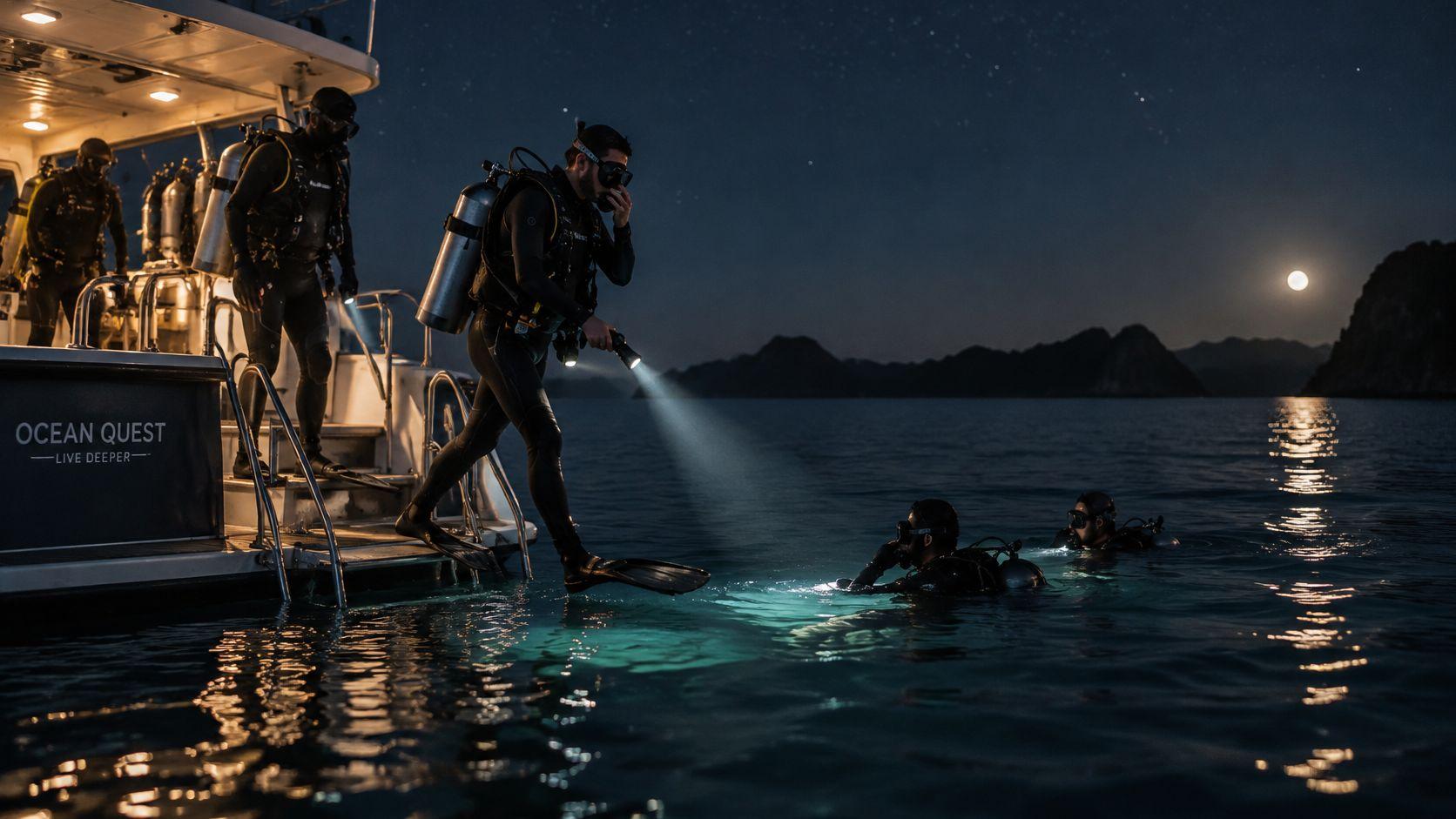
Once the anchor sets and the deck lights dim, the whole evening runs on a tight sequence. Every step serves a practical purpose, keeping the plankton patch concentrated and giving the crew instant visual accountability in the dark.
Seven Steps From Check-In to Ladder
- Get your gear dialed in before dark: During check-in, fit your mask skirt firmly over clean skin (no hair trapped under the seal) and zip up your shorty wetsuit while you can still see straps and buckles clearly.
- Complete the crew swim and health check: According to Hawaiʻi's boating-safety assessment from the Division of Boating and Ocean Recreation, three primary risk controls anchor safe operations: canceling in adverse ocean conditions, screening guests for swimming ability and medical limitations, and requiring proper personal flotation. Be candid during this check, because guides rely on it before anyone leaves the deck.
- Fasten flotation and leave it on: Put on your flotation vest or noodle setup as instructed and keep it secured for the entire water session. Consistent flotation keeps your body horizontal at the surface and makes it obvious to guides who is resting comfortably.
- Enter on the crew's call and grip the board: Slide in only when the guide clears the swim step, swim directly to the lit board, and lock a hand onto your assigned perimeter rope handle so the group stays tight.
- Turn on your color-coded safety light: The same Hawaiʻi safety assessment notes that matching color-coded lights to each boat lets guides track their own swimmers in darkness and prevent separation. Clip it where the crew tells you and keep it illuminated until you're back on deck.
- Float flat, face the glow, and keep the lane clear: Keep your hands on the board, your legs stretched horizontally behind you, and your fins still. Never kick downward, reach out, chase a ray, or block its route; for a deeper look at why passive viewing keeps both guests and rays safe, review our guide to manta ray snorkeling rules that protect wildlife and guests.
- Exit promptly when time is called: Water time runs 30 to 40 minutes on our Manta Ray Snorkel trips (compared to an hour or more on our Kealakekua Bay Morning Snorkel), so breathe slowly and conserve energy between passes. If the crew calls time early due to rising swell, current, visibility loss, or a distressed swimmer, head straight to the ladder without lingering for one last look.
Why Restraint Protects a Small Local Population
Reef mantas are planktivores drawn by nocturnal prey movements, not human interaction. Biologging research published via PMC found that reef mantas performed deep dives exceeding 300 meters significantly more often at night than during the day (p = 0.010), with another study documenting dives down to 672 meters linked to nighttime foraging. Keeping observers stationary around a single illuminated column lets those natural feeding loops play out without forcing animals to burn energy dodging swimmers.
That restraint matters even more when you look at the size of Kona's resident group. Materials linked to the University of Hawaiʻi and NOAA summarized by Kona Honu Divers estimate Hawaiʻi Island's contemporary effective reef-manta population at just 104 animals (with a 95% confidence interval of 99 to 110), while noting unresolved long-term risks from repeated artificial lighting including stress, injury, disease exposure, habituation, vessel strikes, and mooring-line entanglement.
Seeing rays show up night after night proves the lights concentrate food well. It doesn't prove the activity has zero cumulative impact, which is why strict non-contact behavior is required.
Safety benchmark: Never treat heavy manta feeding as proof that the ocean is safe. Feeding activity and guest safety are completely separate variables, and a thick plankton patch never overrides rough sea state, strong currents, or screening limits.
How close a manta passes depends on plankton density, moonlight, currents, weather, and each ray's own comfort. Measure a successful evening by clean, non-contact observation and disciplined group management, never by forcing proximity.
Photo Tips for Dark Water and Moving Mantas
The board light is already on when you settle onto your stomach. Plankton packs the beam. A wing cuts through, then the animal is past you. That short pass is the whole photo window: black water, one light, and a wild ray that owes you nothing.
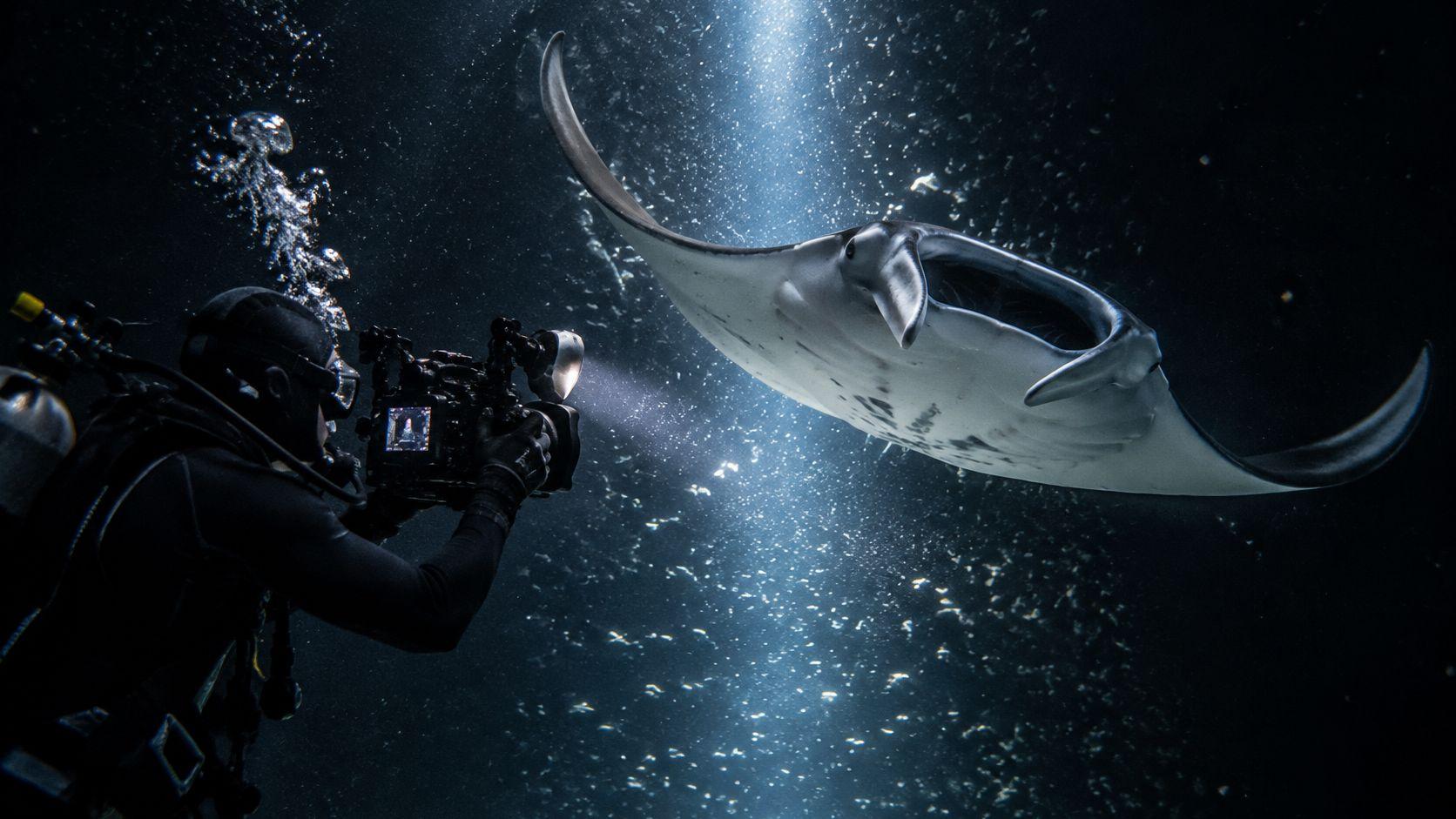
Setup decides whether you keep a frame. Chasing the animal usually produces blur, a startled ray, and a guide telling you to get back on the board.
- Lock your housing to your wrist or neck: Use a snug lanyard or coiled tether on your GoPro, Insta360, or waterproof phone case so you can release the camera instantly to grip the board without dropping gear.
- Skip the flash completely: Strobe bursts startle feeding rays and bounce off suspended plankton, so the frame fills with white specks. The light problem is laid out in why flash photography is a bad idea on a Kona manta ray snorkel.
- Raise your ISO and keep shutter speed quick: Use the board's steady light. Do not add a strobe. On an action camera, record smooth high-resolution video at 30fps or 60fps and pull stills later, or use a short burst so one fast pass is not all motion blur.
- Aim into the lit column and hold still: Point where the plankton is thickest and let the ray enter the frame. A hard pan, or a kick after a departing animal, softens the shot and pushes the manta off the light.
- Prep your lens against fog and salt: Put an anti-fog insert in the housing before you leave the hotel, and wipe the port right before entry. Fog and dried salt spoil more night photos than low light does.
Framing and a quiet night
Wide framing beats a tight crop in dark water. Show the glowing column, the float board, and a manta crossing the beam. A shaky wingtip or your own glove tells a thinner story.
Mantas avoid divers and other disturbance. That avoidance costs the shot. Kick, reach, or drift into the path and the ray peels away. The pass is over. Holding still keeps the animal in the light longer, which is better for the ray and for any image you might get.
A quiet night with no close pass is still a finished night. Judge it by a safe float and hands that never touched an animal, not by how near a wing came to the lens. Plan for that quieter result before you get in.
Set the camera down for half the session if you are watching the water through a small screen. One sharp frame from a single glide is a normal outcome. No photo is worth letting go of the board or putting a hand in a ray's path.
Night Manta Ray Dive FAQ
Can I count on seeing mantas every night? No, manta rays are wild animals whose nightly visits shift with plankton density, currents, and season. If none appear on your trip, you don't receive a refund, though you can join another evening on a space-available standby basis.
What happens if the ocean is rough? Captains cancel tours when swell, wind, or visibility make open-water floating unsafe. Confirm the operator's weather cancellation and rebooking terms before paying, and keep backup evenings open in your itinerary.
Do I need to be a strong swimmer? Yes, you need to swim 50 yards without extra flotation and already have intermediate daytime snorkeling experience. Non-swimmers aren't permitted on manta ray charters.
Can children join the tour? Children ages 5 and up may join as long as an adult stays in the water right beside them and the child meets the swimming and snorkeling comfort requirements.
Is the night snorkel the same as a scuba manta dive? No, they're two different water experiences. Snorkelers stay horizontal at the surface holding an illuminated board and looking down, while certified scuba divers descend to the sandy bottom and watch rays loop overhead.
Do I need a camera? Not at all. Cameras are completely optional, and leaving electronics dry on the boat often helps first-timers stay relaxed, steady, and present in the moment.
Do I need to bring my own snorkel gear? No, the tour supplies your mask, snorkel, and shorty wetsuit. You only need your swimsuit, towel, warm layer, and personal essentials.
Book Early and Lock In Your Manta Night
A family lands in Kona on a Saturday, walks into town Sunday morning, and asks about a manta snorkel that same week. The sunset departures they wanted are full, and the only open seats are on their final night, with no room left to recover if the ocean or the wildlife doesn't cooperate. It's the most common planning mistake we see. According to a 2025 market report published by Dataintelo, commercial manta viewing in Kona is limited to 24 permits in each of two viewing zones. Fixed capacity means prime sunset slots fill fast during busy travel weeks.
Booking early in your vacation matters just as much as booking before you fly. We recommend scheduling your manta snorkel early in your stay, never on arrival day, so you still have open evenings to reschedule if a flight delay hits, high surf cancels boats, or you want to use a standby return after a quiet night. Manta rays are wild animals, and no operator can promise they'll show. If none appear on your trip, there's no refund, but you can come back another night on a space-available standby basis. That standby offer never expires, though it's non-transferable, carries no cash value, and is only honored when space is available two hours before the tour starts. During peak season those standby seats can be extremely limited, which is exactly why backup evenings in your itinerary matter.
Timing also shapes which departure fits your group. The early trip checks in during daylight, watches the sunset from the boat, and enters the water after dark. The late trip checks in at night. Both run about two hours total, with roughly 30 to 40 minutes in the water holding the illuminated board. If you're planning your calendar out, our guide on how far in advance to book a Kona manta ray night snorkel breaks down seasonal lead times.
Quick Pre-Booking Checklist
- Pick an early-trip date with backup nights: Leave at least two open evenings afterward in case ocean conditions shift or you want a second attempt on standby.
- Choose your departure style: Decide between the sunset departure with a daylight check-in or the later trip that starts after dark.
- Verify every guest's swim readiness: Confirm that everyone in your party meets the swim distance, intermediate snorkel comfort, and age rules before paying. Non-swimmers can't join manta charters, and ride-alongs aren't permitted on this boat.
- Review standby and weather policies: Understand that manta sightings carry no cash refund, that standby spots can be tight during peak season, and that the return offer never expires as long as space opens up.
- Look at package savings before paying: If your trip includes whale watching or daytime snorkeling in Kealakekua Bay or Pawai Bay, the combo packages save 10% on the paired tours.
- Lock in seats ahead of arrival day: Secure your preferred sunset or late-evening departure before limited permits sell out.
Our Manta Ray Night Snorkel is priced up to $199 and includes your mask, snorkel, and shorty wetsuit, so you don't need to haul bulky rental gear across the island. You can review departure details on our Kona Manta Ray Night Snorkel tour page or check open dates directly below.
A well-planned manta night is judged by how smoothly it runs, not by how close a ray passes. Book the date early in your trip, keep the following evenings open, and a quiet night becomes a minor detour instead of a lost opportunity.
Ready to trade shaky expectations for a calm, well-briefed evening on the water? Our lifeguard-certified crews run small-group Manta Ray Night Snorkel trips out of Kona, plus daytime Kealakekua Bay and seasonal whale watching adventures, with every briefing built around swimmer comfort and respectful wildlife observation. Plan your dates early and explore all of our Big Island ocean tours at Kona Snorkel Trips.
Keep reading
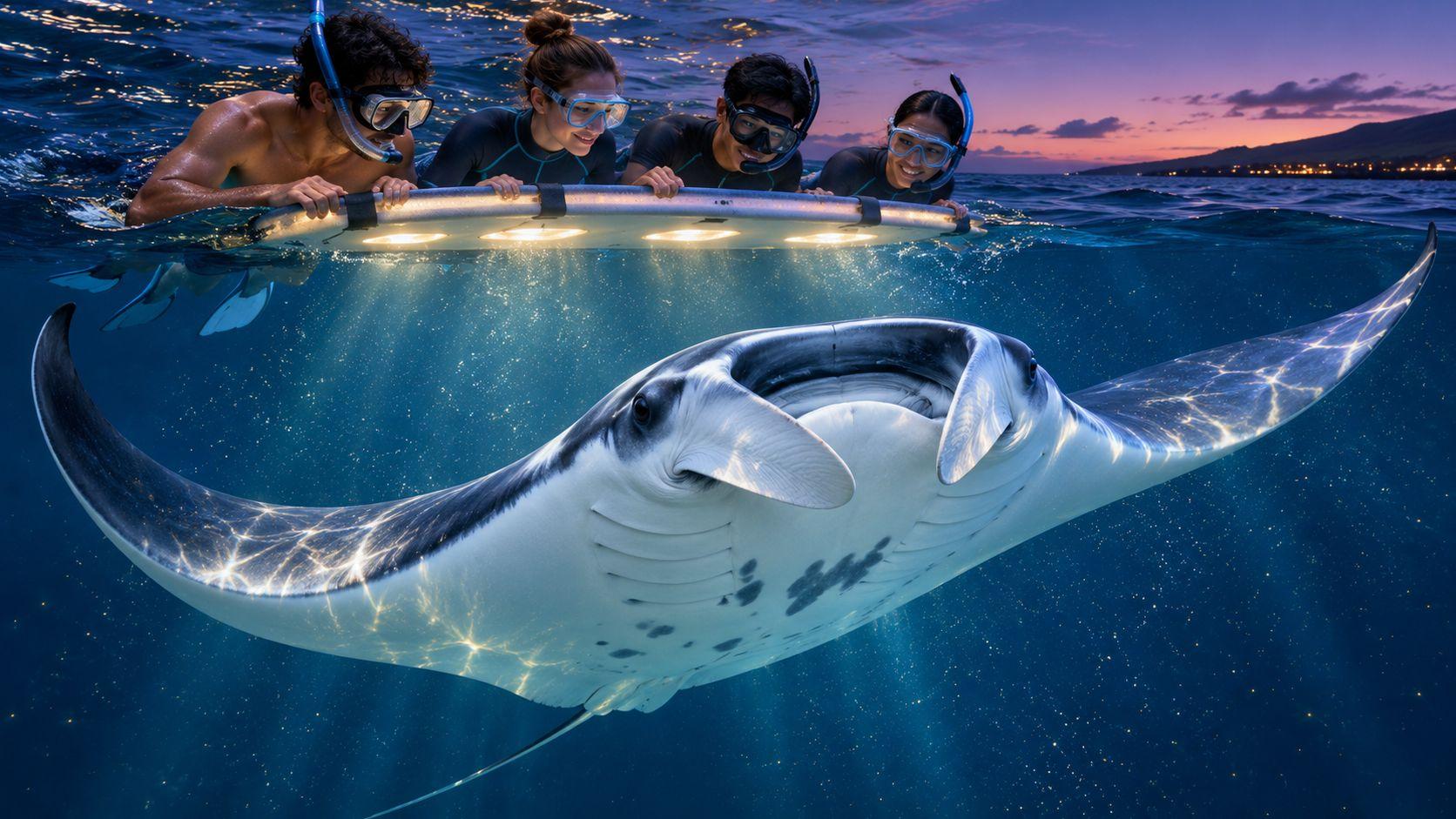
Swim with Manta Rays Hawaii: A Practical Guide
Swim with Manta Rays Hawaii: where to go, when to book, what a Kona night snorkel is like and how to pick a safe, responsible tour.
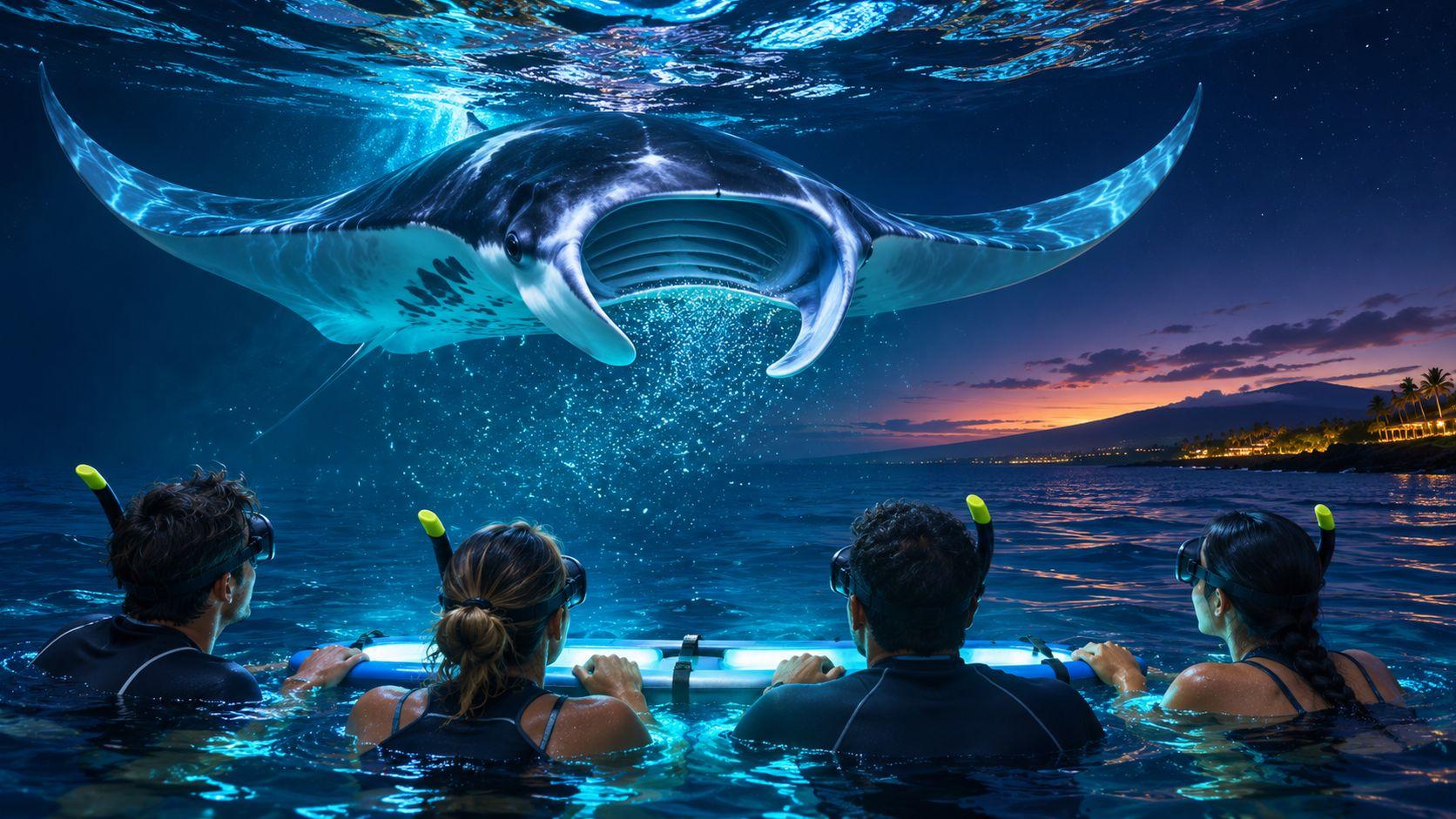
Manta Ray Night Dive Snorkel in Kona: What to Expect
Manta Ray Night Dive Snorkel in Kona: how the lights work, what the trip involves, safety rules, best times and booking tips for first-timers.
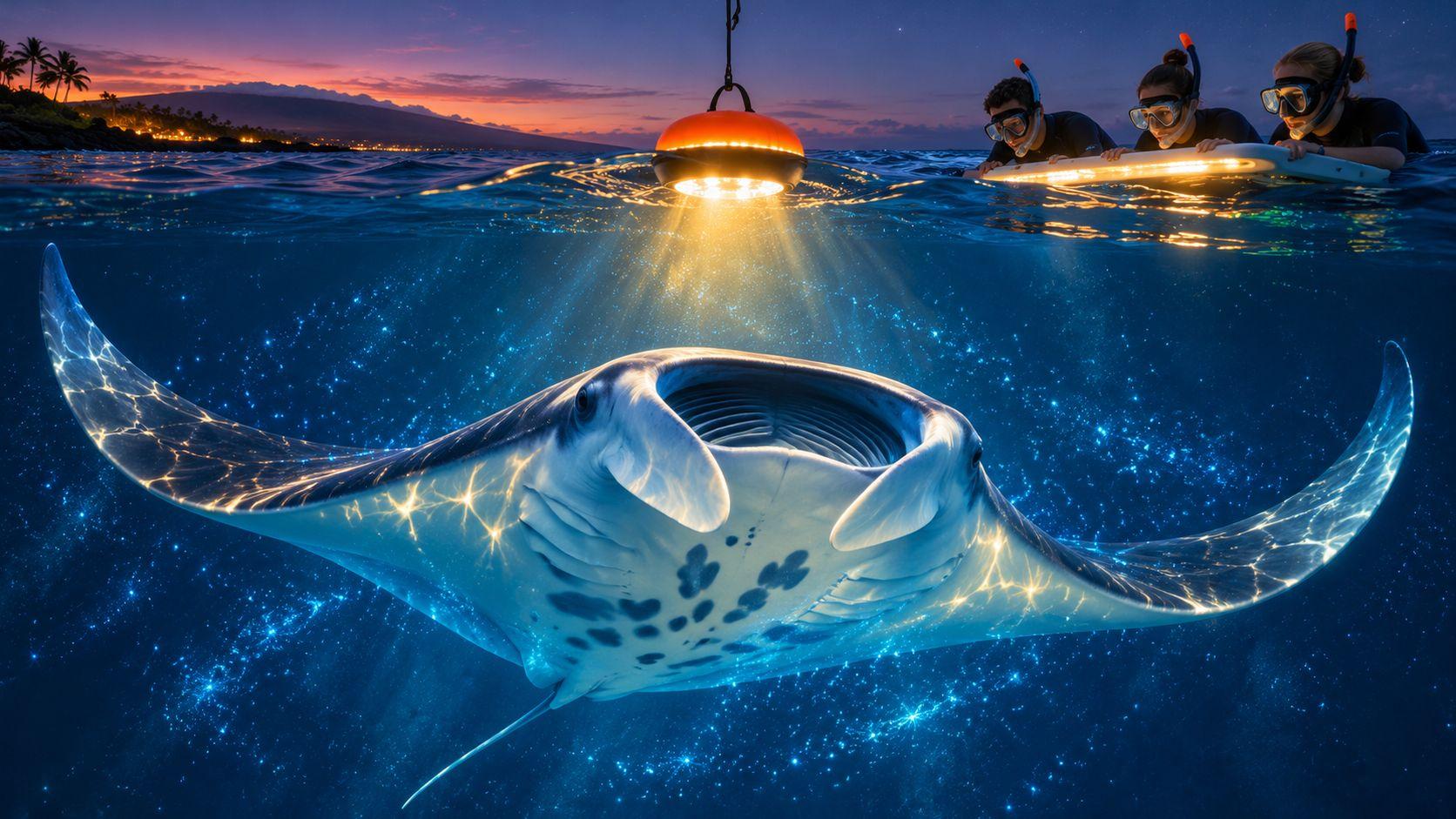
Manta Ray Big Island Guide: Where and When to See Them
Manta Ray Big Island guide: where and when to see rays, what the Kona night snorkel is like, and how to choose a safe, responsible tour.