
Why Flash Photography Is a Bad Idea on a Kona Manta Ray Snorkel
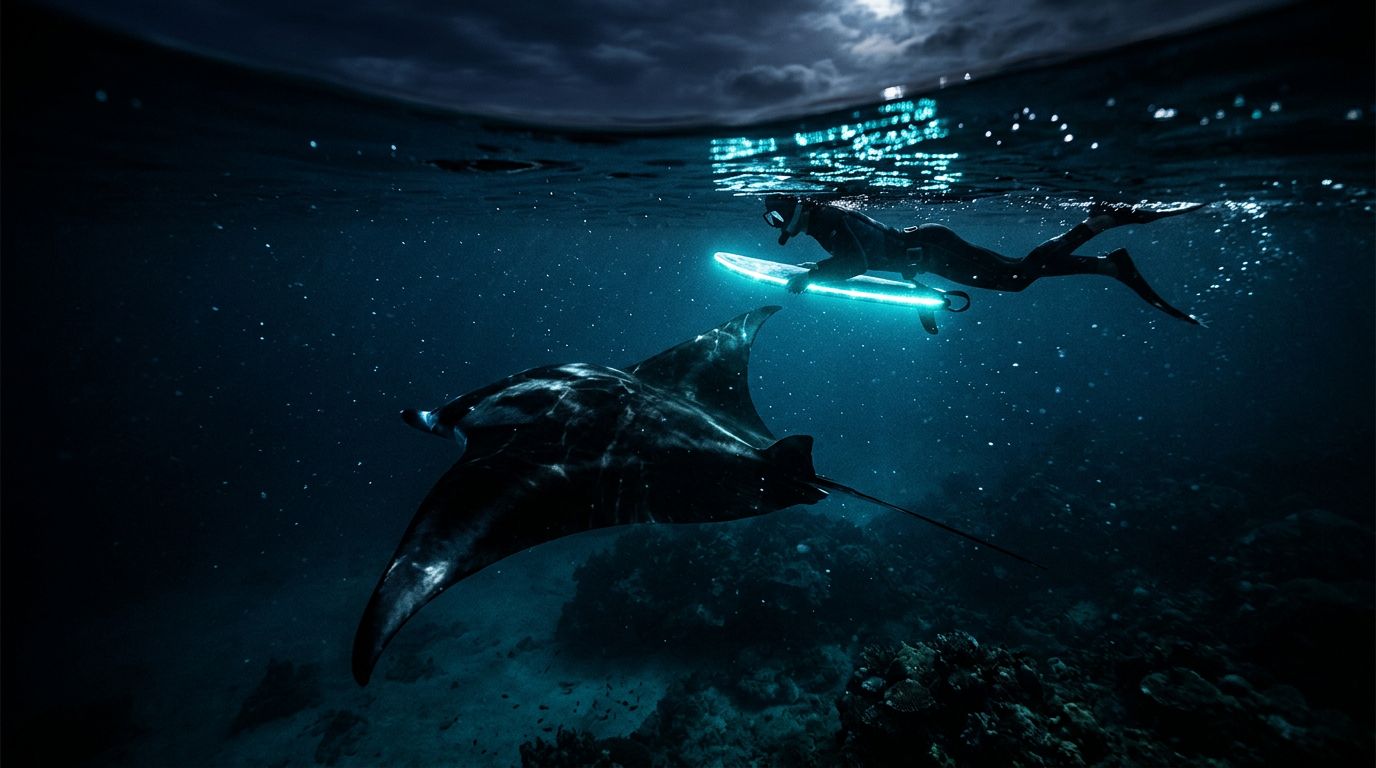
A camera flash can ruin a Kona manta ray snorkel faster than rough water. Kona Snorkel Trips runs Big Island snorkeling tours, and this is one of the few moments when a tiny burst of light can change the whole encounter.
If you’re comparing manta-focused operators, Manta Ray Night Snorkel Hawaii is another dedicated option. On the Big Island, the calmest nights usually create the best memories, especially if you love snorkeling Big Island Hawaii and want the water to feel natural.
The reason is simple. Flash works against the dark, the distance, and the behavior that make the night special.
Flash and dark water pull in opposite directions
Night snorkeling depends on low, steady light. The glow from the board, the moon, or a carefully lit surface gives your eyes time to adjust. A flash cuts across all of that at once.
That sudden burst doesn’t stay in your frame. It reaches the water around you, other masks, and the manta’s line of sight. For a plain-language look at the topic, see Scuba Diving Magazine’s take on flash and marine life.
On a Kona manta ray snorkel, the setup is already designed to work with darkness, not against it. The board lights attract plankton. The plankton attracts the mantas. Your flash adds a sharp interruption to a scene that works because it stays calm.
| Choice | What happens | What you get |
|---|---|---|
| Flash | A sudden burst lights up the water | More glare, more backscatter, less calm |
| Board light | Soft light stays in one place | Better viewing and a steadier scene |
| Night mode | The camera gathers light over time | Cleaner images with less disruption |
That is why flash almost never improves the experience. It adds noise where you want flow.
The picture usually gets worse, not better
Flash feels helpful until you see the result. Underwater, bright light bounces off tiny bits of salt, plankton, and spray. That white scatter is called backscatter, and it can fill your image with little floating dots.
A manta ray is a wide, graceful shape. Flash often turns that shape into a washed-out blur. The water looks flat. The shadows disappear. The scene loses the depth that made you lift the camera in the first place.
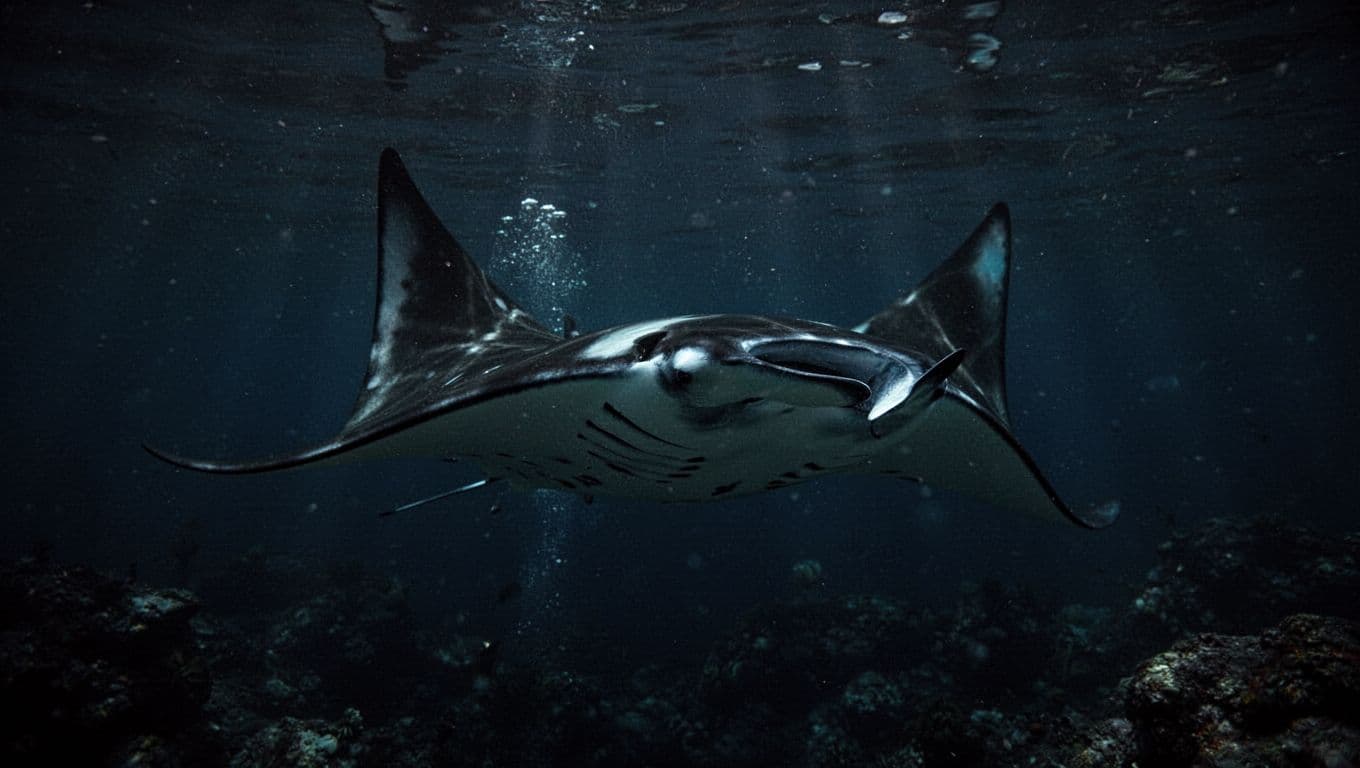
The problem gets worse when you’re floating at the surface. Spray hits the lens. The boat lights reflect in odd places. Your flash adds one more bright source to an already tricky scene.
If you want a better photo, keep the flash off and use the light that’s already there. The shot will look more like the night you were in.
The manta rays notice more than you think
Manta rays are not looking for your camera, but they do react to light and motion. A flash can change their path, break their rhythm, or make them veer away for a moment.
A single flash may seem small from your side, but in dark water it reaches farther than you think.
That matters because the whole point of the night snorkel is to let the animals come in on their own terms. A study on camera flash and diving behavior at ScienceDirect found that flash and camera presence can alter how marine animals move. The exact result depends on the species and the setting, but the pattern is easy to respect.
The manta page for guided manta ray snorkeling in Kona spells out the basics of the experience. The setup works best when the water stays predictable and the animals can glide through the light naturally.
If you’re ready to book a dedicated night trip, you can check availability before peak dates fill up.
A flash affects the whole group, not just your own shot
A manta snorkel is a shared experience. Your camera doesn’t stay in your lane once the flash fires. Other snorkelers see it, the guides see it, and the water around you changes for a second.
That is why a flash can feel rude even when nobody says anything. It steals night vision. It draws eyes away from the manta. It also makes people around you squint or pull back, which is the opposite of what a relaxed group needs.
When you snorkel Big Island waters at night, the best atmosphere comes from patience. You want slow kicks, quiet breathing, and enough space to let everyone settle in. Flash does the opposite.
If you want a quieter setup, private Kona boat charters can give you more room and a calmer pace. That makes it easier to wait for the right moment instead of forcing one.
Families planning snorkeling Big Island trips often notice this right away. Kids do better when the water stays simple. Adults do better when they aren’t trying to manage a bright screen and a startled crowd at the same time.
Better ways to photograph the night without using flash
The easiest fix is also the best one, turn the flash off before you get in the water. After that, keep things simple.
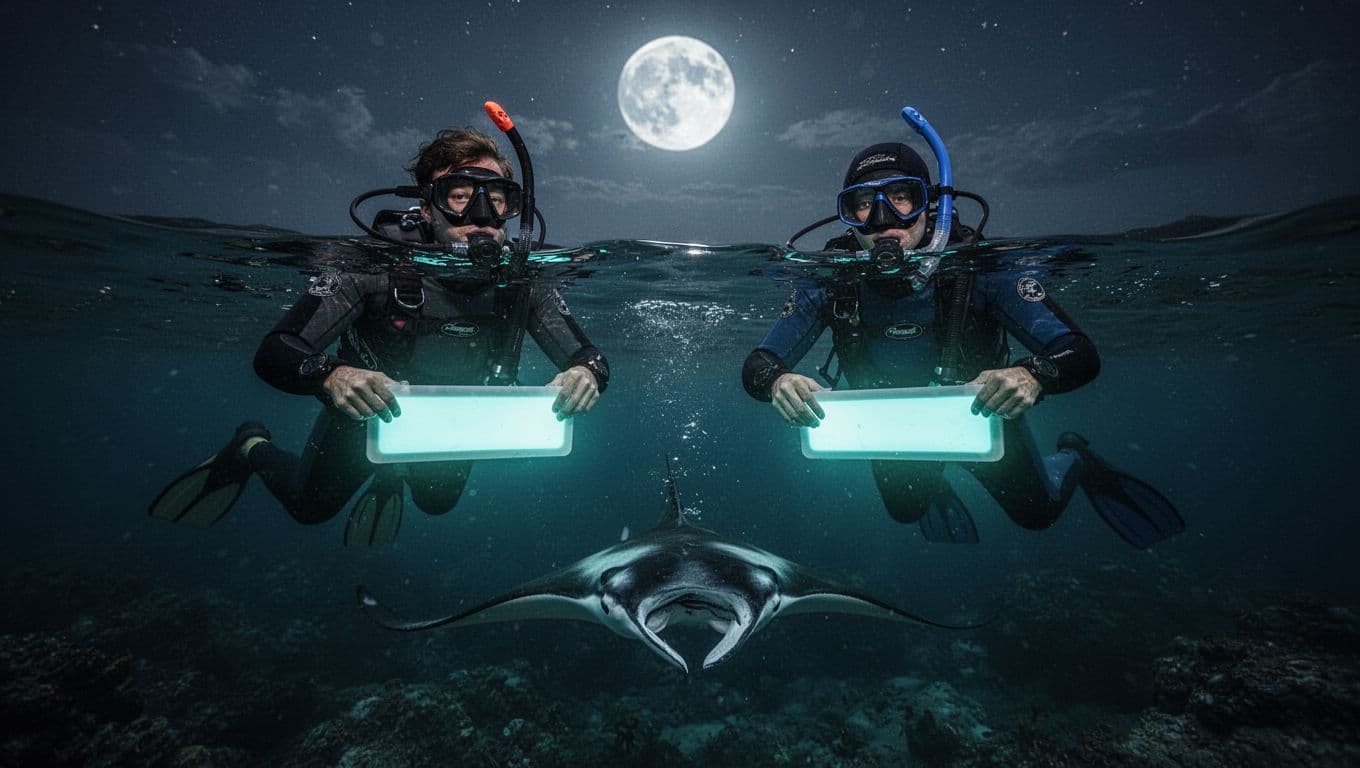
Here are the habits that help most:
- Use night mode or a higher ISO before you think about flash.
- Keep the camera steady and let the board light do the work.
- Frame wider than you think you need, because the manta is bigger than the screen.
- Wipe the lens often, since spray and salt can ruin a clean shot fast.
- Ask the crew before using any extra light.
A phone can do a decent job if you keep your expectations realistic. A dedicated camera can do more, but only if you respect the low-light setting. The goal is not to turn the scene into daylight. The goal is to capture what the night already gives you.
If you want a different kind of water view, a bright daytime trip like Captain Cook snorkeling in Kealakekua Bay gives you better natural color. If you’d rather stay above the surface, seasonal whale watching in Kona is another good wildlife option. And if you want more control over the pace, private Kona boat charters make it easier to wait for a clean frame.
Choose a tour that makes flash unnecessary
Kona Snorkel Trips keeps groups small, uses lifeguard-certified guides, and focuses on reef-safe habits. That matters because a well-run tour gives you light, space, and clear direction, so you don’t feel pushed toward gimmicks.
If you want to look at options, guided snorkeling tours in Kona are a good place to start. If you already know you want a manta night, you can check availability and plan ahead.
That kind of setup fits a manta encounter better than a crowded, flash-happy deck. It also helps when you want to snorkel Big Island reefs with less noise and more room to breathe.
Leave the flash off and let the night work
Flash may seem harmless, but on a manta night it changes the water, the photos, and the mood. The cleaner images come from patience, soft light, and a steady hand.
When you keep the flash off, you give the manta room to glide, the group room to relax, and your camera a better chance to show the real scene. That is the kind of night people remember.
A calm manta snorkel doesn’t need a burst of light to feel special. The dark water, the glow below you, and the movement of the rays are enough.